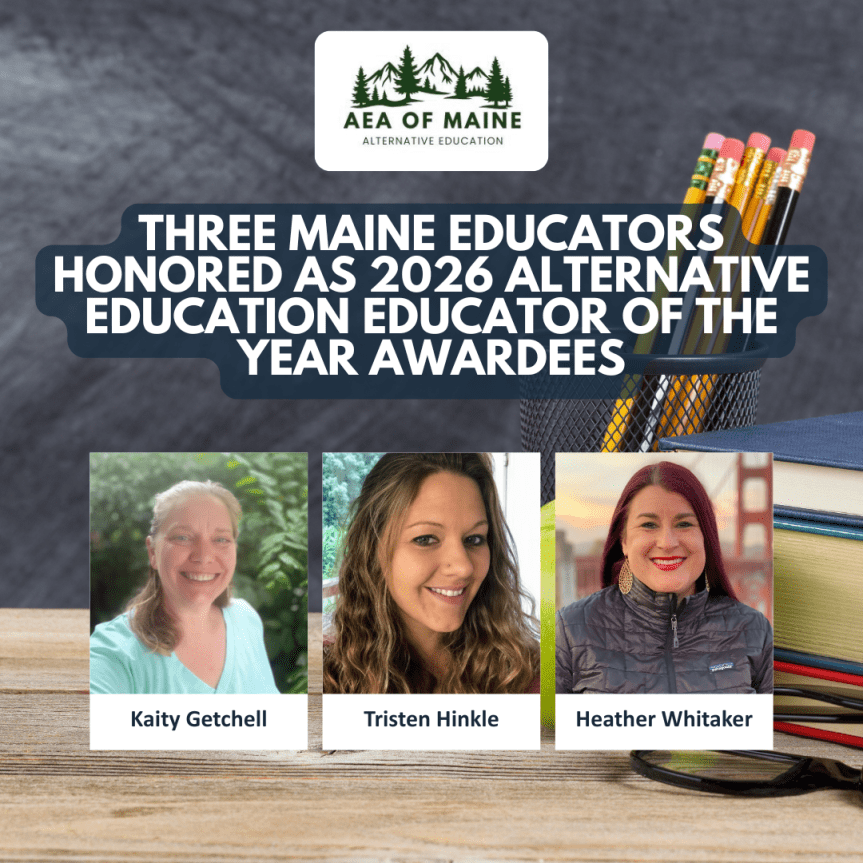
The Maine Department of Education (DOE) is pleased to join the Alternative Education Association of Maine (AEA) in celebrating three outstanding educators as the recipients of the 2026 Alternative Education Educator of the Year Award. This annual award honors alternative educators who make a meaningful and lasting impact on students, create innovative learning opportunities, and demonstrate a strong commitment to advocating for students and the field of alternative education.
The 2026 Alternative Education Educator of the Year awardees are:
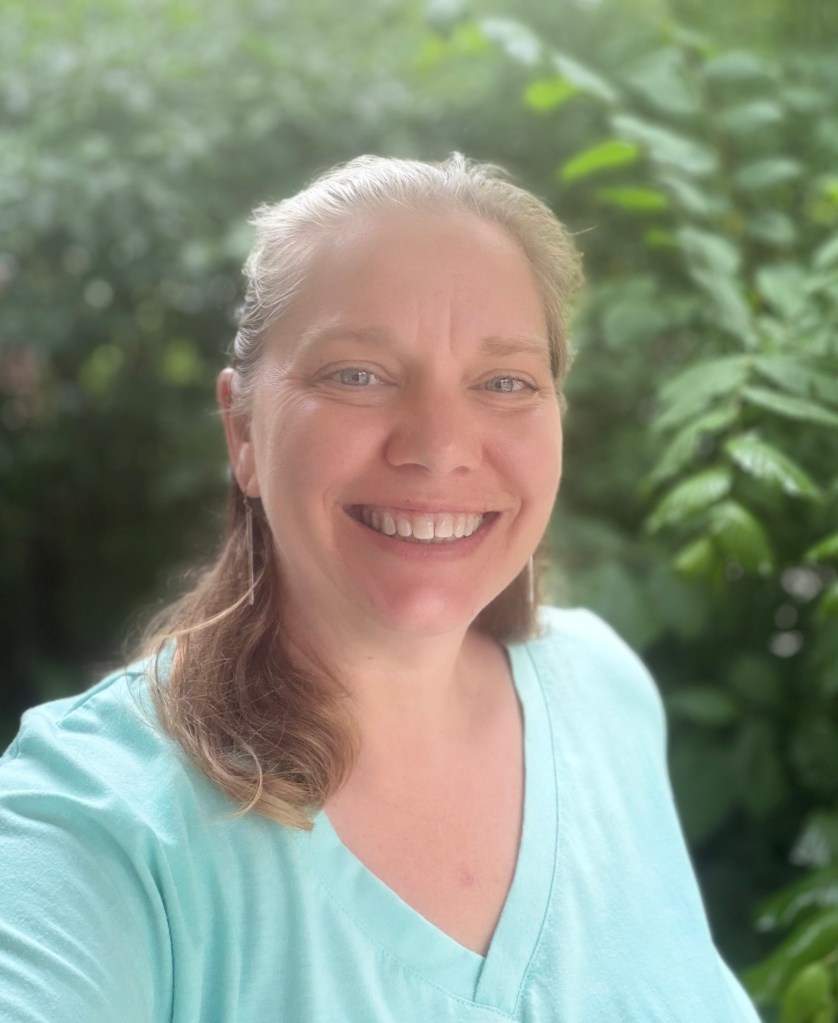
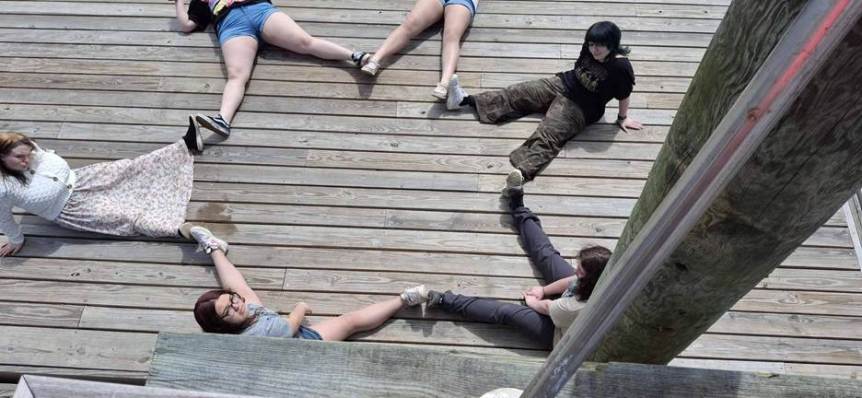
Kathleen (Kaity) Getchell The Learning Center at Frank Jewett – Bonny Eagle High School, MSAD 6
For 16 years, Kathleen “Kaity” Getchell has dedicated herself to supporting students through The Learning Center at Frank Jewett. She is recognized for meeting students where they are, developing specialized learning opportunities, and helping each student reach their full potential.
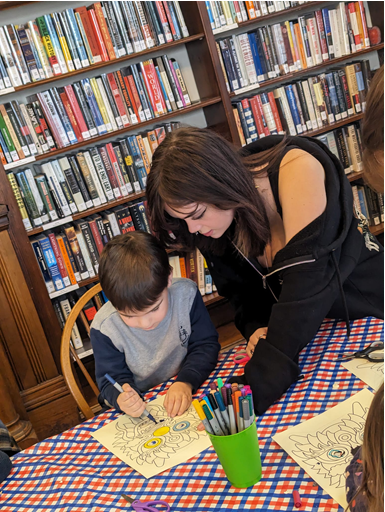
Getchell creates meaningful experiences for students through hands-on activities, trips, school-wide opportunities, and partnerships with school personnel to support postsecondary pathways. Her commitment extends beyond the classroom as she serves as a trusted family liaison, connecting students and families with resources, support, and encouragement when they need it most.
She has organized countless student experiences that provide opportunities for teamwork, personal growth, and the development of life skills. She also works closely with students to help them complete academic requirements, plan for graduation, and remain connected to their larger school community through events and milestones such as prom, yearbook, senior celebrations, and school activities.
Through her compassion, advocacy, and unwavering support, Getchell ensures students in alternative education feel valued, connected, and prepared for their futures.
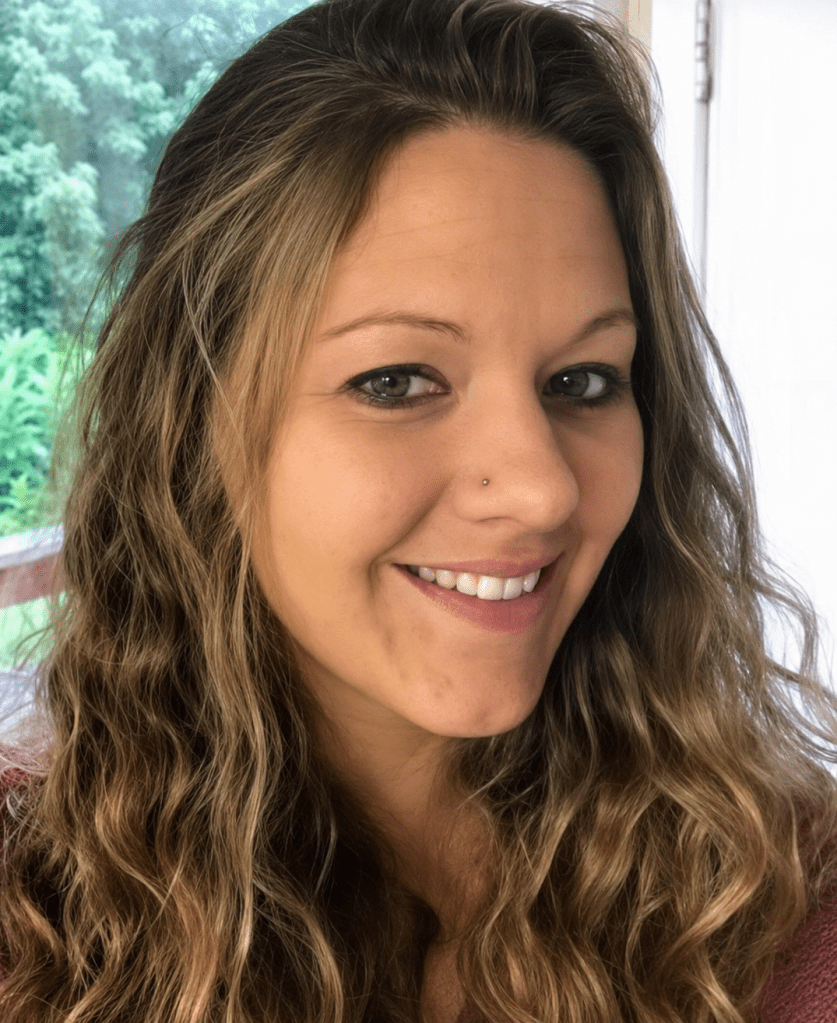
Tristen Hinkle Marti Stevens Learning Center, MSAD 54
Tristen Hinkle has played an integral role in shaping and strengthening the alternative education program at the Marti Stevens Learning Center. She is celebrated for her deep commitment to student success and her ability to build strong relationships with students who need additional support and connection.
Hinkle creates engaging learning experiences by connecting students with community partners, guest speakers, field trips, and opportunities outside the classroom. She uses trauma-informed practices and approaches challenges with patience, compassion, and a solutions-focused mindset.
Beyond her work with students, Hinkle is a strong advocate for alternative education educators and actively supports her colleagues by sharing ideas, resources, and professional learning opportunities. Her dedication to continued growth and collaboration helps strengthen alternative education across Maine.
Heather Whitaker Gorham Middle School
Heather Whitaker exemplifies the dedication, compassion, and creativity that define outstanding alternative education. She approaches her work with joy and a deep commitment to helping students find success through meaningful relationships and innovative learning opportunities.
Whitaker connects students with local resources and community experiences, creating pathways for engagement and achievement. Her work serves as an example of how alternative education can empower students through personalized support and opportunities that meet their individual needs.
In addition to her work with students, Whitaker has contributed to education across Maine through her involvement with various organizations, including Educate Maine, where she has helped design and implement professional learning opportunities for educators statewide through the Teach Maine Center. She also supports and elevates educators through her role as the 2020 Maine Teacher of the Year and her ongoing work with the Maine County and State Teachers of the Year Association (MCSTOYA).
Through her leadership, advocacy, and commitment to students and educators, Whitaker demonstrates the impact one dedicated educator can have on an entire learning community.
The Maine DOE congratulates Kathleen Getchell, Tristen Hinkle, and Heather Whitaker on this well-deserved recognition and thanks them for their continued dedication to Maine students and the field of alternative education.
Content for this article was provided by the Alternative Education Association of Maine (AEA). To submit a good news story to the Maine DOE, please fill out the good news submission form.
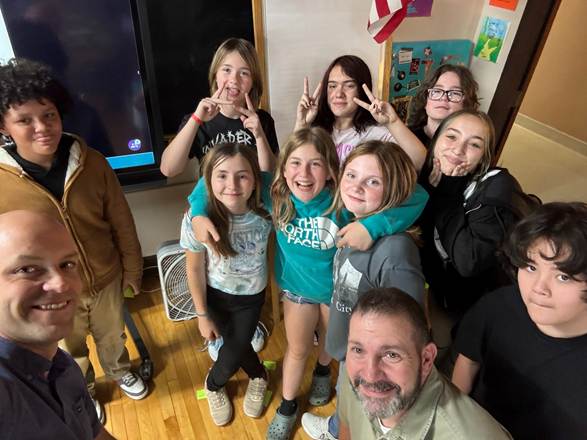
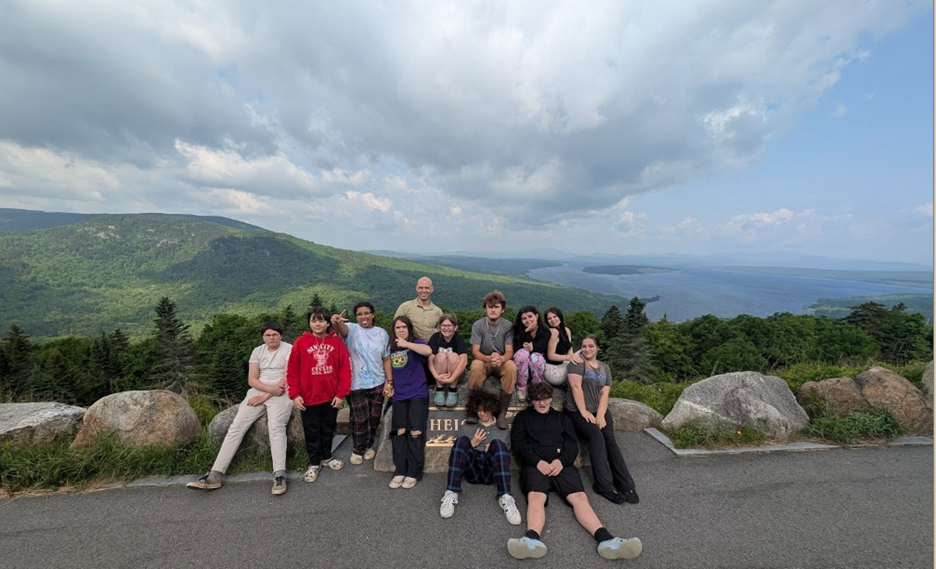
Mountain Valley Middle School alternative education students and teachers Shane Smith and Anthony Mazza gather for a group selfie.
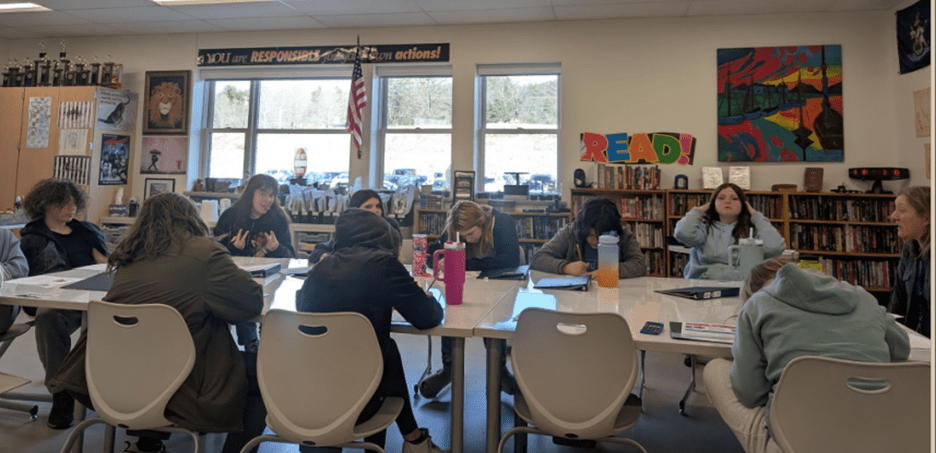
At Mountain Valley Middle School, students in the alternative education program begin each day with breakfast before heading to the gym to reset, move, and prepare for learning. They then gather in a morning circle to review schedules, discuss upcoming activities, reflect on current events, and practice strategies for managing stress and conflict. Co-alternative education teachers Shane Smith and Anthony Mazza use these routines to create consistency, strengthen relationships, and set a positive tone for the day.
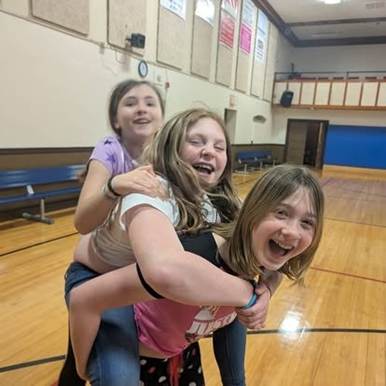
Each day of the alternative education program at Mountain Valley Middle School begins with breakfast, a movement break, and a morning circle.
For many students, the program offers a learning environment built around connection, structure, and support. Launched during the 2023-2024 school year for grades 6-8, the program was designed to provide a flexible, relationship-centered approach for students who benefit from a different path to success than a traditional classroom setting may provide.
“We built the ship as we were sailing it,” Smith said.
What began as a new and evolving program quickly developed through reflection, collaboration, and responsiveness to student needs. During the program’s early stages, students and staff temporarily worked out of a recreation center while school buildings underwent mold remediation. This required creativity and adaptability from everyone involved.
“At the time, we were figuring everything out in real time,” Smith said. “We had difficult days, but we kept reflecting, adjusting, and learning from what students needed.”
The program now operates within the main school building. It’s a transition staff say has strengthened students’ sense of inclusion and connection to the larger school community.
“We’re visible now,” Smith said. “Our students are part of the school community. They aren’t separated or hidden away.”
Building Learning Around Relationships, Engagement, and Community
From the beginning, Smith and Mazza designed the alternative education program as an environment where students feel engaged in their learning.
“It’s important that this isn’t a dumping ground,” Smith said. “We want students to feel supported, challenged, and connected.”
The program serves approximately 14 students with a student-to-staff ratio of about seven7 to one. Students follow a full-day schedule that blends academics, structured supports, and experiential learning opportunities designed to make coursework accessible and meaningful. Core instruction is adapted to meet a range of academic needs. Smith and Mazza use shorter instructional segments, guided practice, and frequent feedback to help students build confidence and remain engaged.
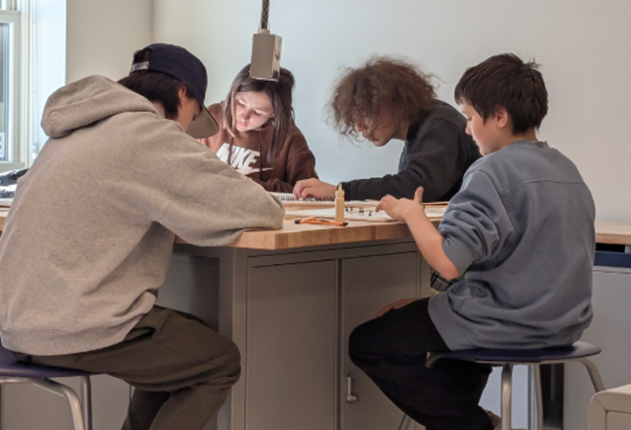
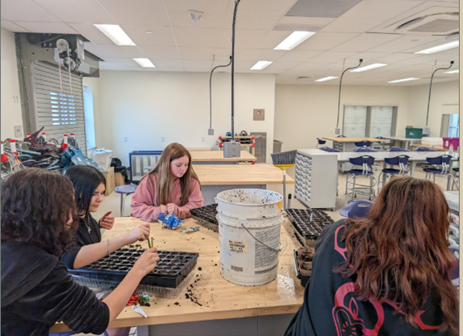
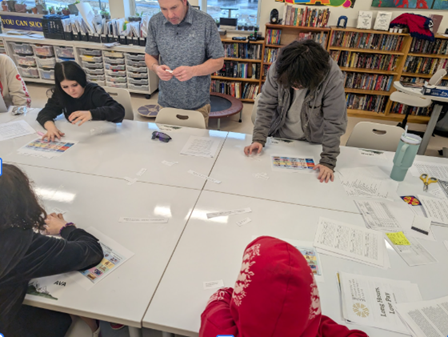
Project-based and place-based learning are also central to the program. Students participate in activities such as designing aquaponics systems, bridge-building challenges, 3D printing, and explorations of local Rumford history that connect classroom concepts to real-world experiences. Collaborative writing, journaling, and creative projects are also implemented regularly to encourage self-expression and communication.
Mountain Valley Middle School alternative education students engage in hands-on, real-world learning experiences—planting seedlings, sorting historical events into patterns of change, and building bridges—applying high-interest activities to strengthen the acquisition and application of knowledge.
“We want learning to feel connected to something real,” Smith said. “Not just something happening on paper.”
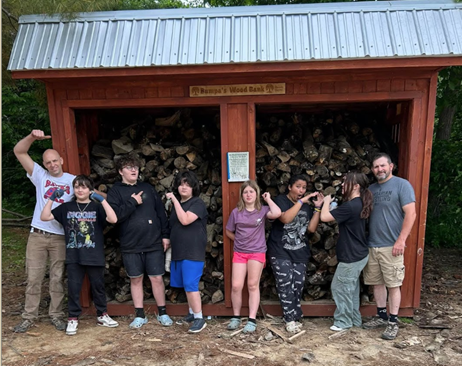
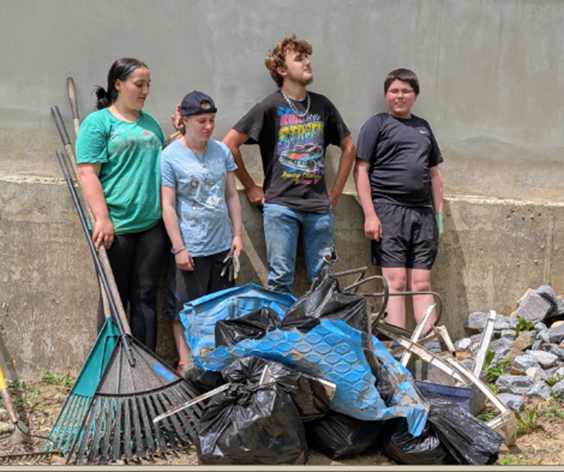
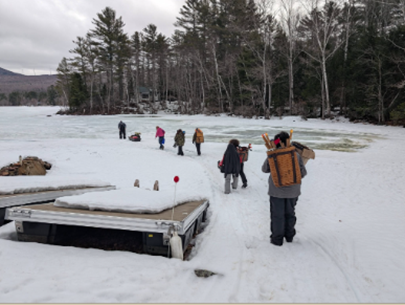
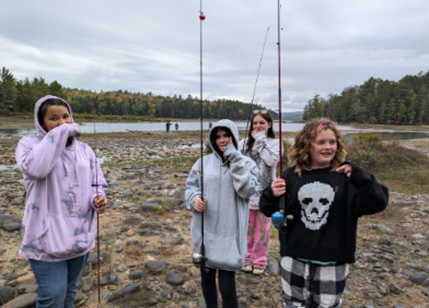
Students regularly participate in field trips, outdoor learning opportunities, guest speaker visits, and service-learning projects that extend learning beyond the classroom. They also contribute through volunteering, food pantry support, and local clean-up efforts, while activities such as hiking and trail walks provide opportunities for reflection, teamwork, and personal growth.
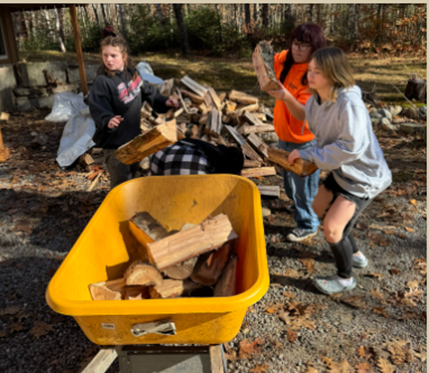
Mountain Valley Middle School alternative education students and teachers Shane Smith and Anthony Mazza fill the community wood-bank and conduct clean-up efforts. These measures help students feel connected to their local community.
“A lot of our students are confined to a small part of town,” Smith said. “Getting outside, exploring, volunteering, and connecting learning to the community makes a huge difference.”
Mountain Valley Middle School alternative education students explore both their local and broader community through experiential, outdoor learning opportunities. Smith shared that, “Being outside lowers stress and cortisol and increases serotonin and happiness levels. Time spent outside improves focus and invites exploration, questioning, and discovery. It’s ever-changing, multi-sensory, and novel. Our trips are challenging and require persistence. Nature is the antidote to heavy screen time and the quick dopamine it provides.”
Across subjects, the focus extends beyond academic completion to helping students develop persistence, confidence, and a stronger sense of belonging in school.
Supporting the Whole Student
Alongside academics, the alternative education program prioritizes emotional regulation, relationship building, and student wellness. Structured morning meetings help students prepare for the day while creating routines that foster stability and predictability.
When students become overwhelmed, Smith and Mazza focus on helping them regulate and re-engage. Students may take a walk or use breathing strategies before returning to instruction. Movement and physical activity are intentionally built into the schedule, giving students opportunities to reset and return to learning more focused and ready to engage.
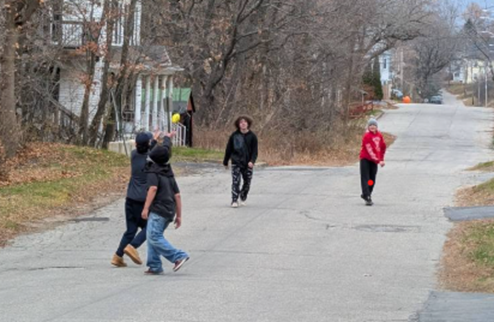
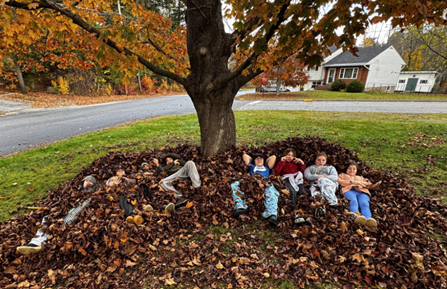
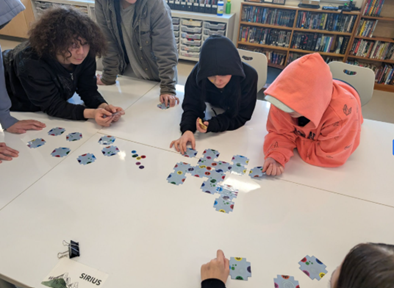
Mountain Valley Middle School alternative education students take quick breaks outdoors (jumping into a pile of fall leaves) and indoors (engaging in “A Gentle Rain,” a silent, collaborative tile-laying game designed to help ground and regulate students before their next class).
The program also incorporates counseling support provided by the school’s counseling and social work teams, helping students build practical coping and communication skills. Smith and Mazza work closely with families and outside providers when needed, recognizing that strong support systems play an important role in student success.
Mountain Valley Middle School alternative education students participate in a daily wellness class twice a week when Sydney Rowe, middle school counselor, helps them to build emotional intelligence skills.
“One thing we’ve learned is that we can’t do this work alone,” Smith said. “Students need systems of support around them.”
As schools across Maine continue exploring ways to support students with diverse strengths and needs, alternative education programs like the one at Mountain Valley Middle School highlight how alternative education can provide innovative, student-centered environments where relationships, flexibility, and meaningful engagement help students build confidence, reconnect with learning, and experience success.
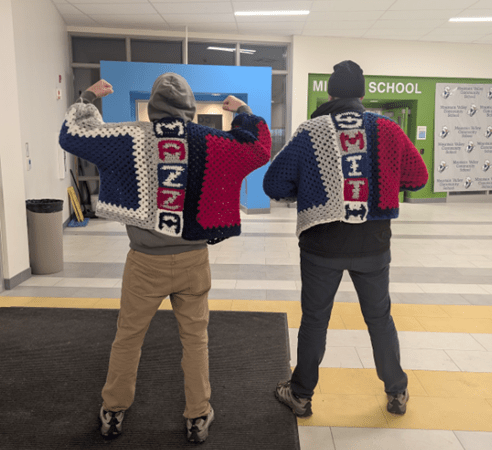
Co-alternative education teachers Mazza and Smith wear matching, handmade crochet sweaters. They say they’re looking forward to the 2026-2027 school year as they continue to grow and craft their middle school alternative education program.
Nearly 1,000 students and educators from across Maine recently gathered at the University of Maine campus in Orono for the 2026 Maine Learning Through Technology Initiative (MLTI) Student Conference, an annual event hosted by the Maine Department of Education (DOE) Learning Through Technology Team. | More
The Maine Department of Education (DOE) has released an updated set of Early Childhood Health and Safety Resources for preschool and early childhood programs. These resources outline approval standards and other official guidance and up-to-date information for school administrative units (SAUs) and early childhood programs across Maine. | More
Carl J. Lamb Elementary School in Springvale opened its doors on Saturday, April 11, 2026, to host the second annual Maine Adaptive Music Summit. Organized by Carl J. Lamb music teacher Hattie Skvorak, the summit brought together music educators, special education teachers, and educational technicians for a full day of professional development focused on adaptive music education. | More
The Rural Educational Alternative Community Middle/High (REACH) School in Bucksport is a private, nonprofit alternative middle and high school program designed to meet students where they are academically, socially, and emotionally. Serving students from RSU 25—which includes Bucksport, Orland, Prospect, and Verona Island—as well as surrounding communities, the REACH School provides an alternative learning environment centered on engagement, relationships, and individualized support for students who have struggled to find success in traditional school settings. | More
The Maine Department of Education (DOE) is offering a free professional learning opportunity for educators interested in becoming trained facilitators of professional learning communities (PLCs) focused on emergent literacy for children aged 3 to 6. | More
The Maine Department of Education (DOE) Offices of Teaching and Learning and Innovation are pleased to announce that registration is now open for EngageMEnt 2026-2027, a statewide professional learning opportunity designed to support educators in exploring innovative, engaging, and impactful practices for teaching and learning. | More
Registration is now open for ElevatED 2026, a dynamic summer professional learning experience designed to inspire, connect, and support Maine’s education workforce through meaningful collaboration and practical learning opportunities. | More
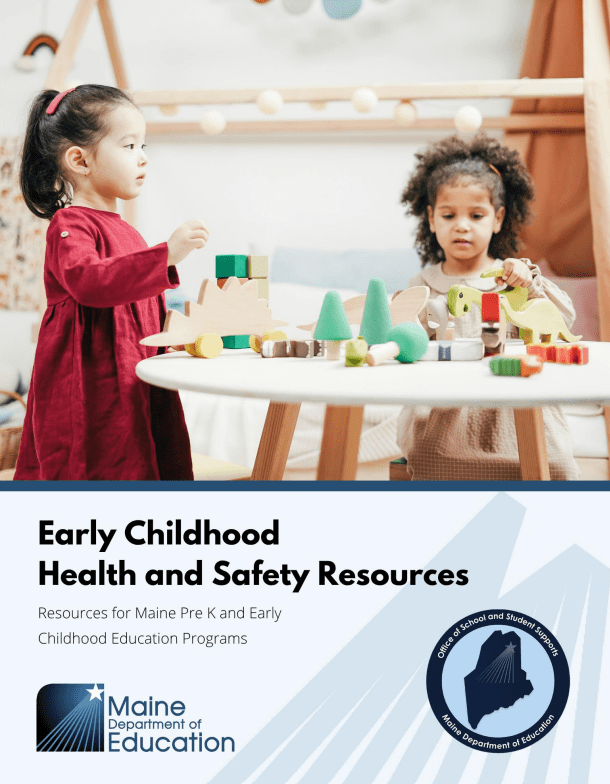
The Maine Department of Education (DOE) has released an updated set of Early Childhood Health and Safety Resources for preschool and early childhood programs. These resources outline approval standards and other official guidance and up-to-date information for school administrative units (SAUs) and early childhood programs across Maine.
These resources may be useful across a range of early childhood education settings. Topics include immunizations, infection control, toileting, nutrition, environmental health, screenings, mental and behavioral health, emergency preparedness, and injury prevention.
The resources, designed for easy digital access in a PDF document, are drawn from state and federal agencies and professional organizations to support safe, healthy, and developmentally appropriate learning environments.
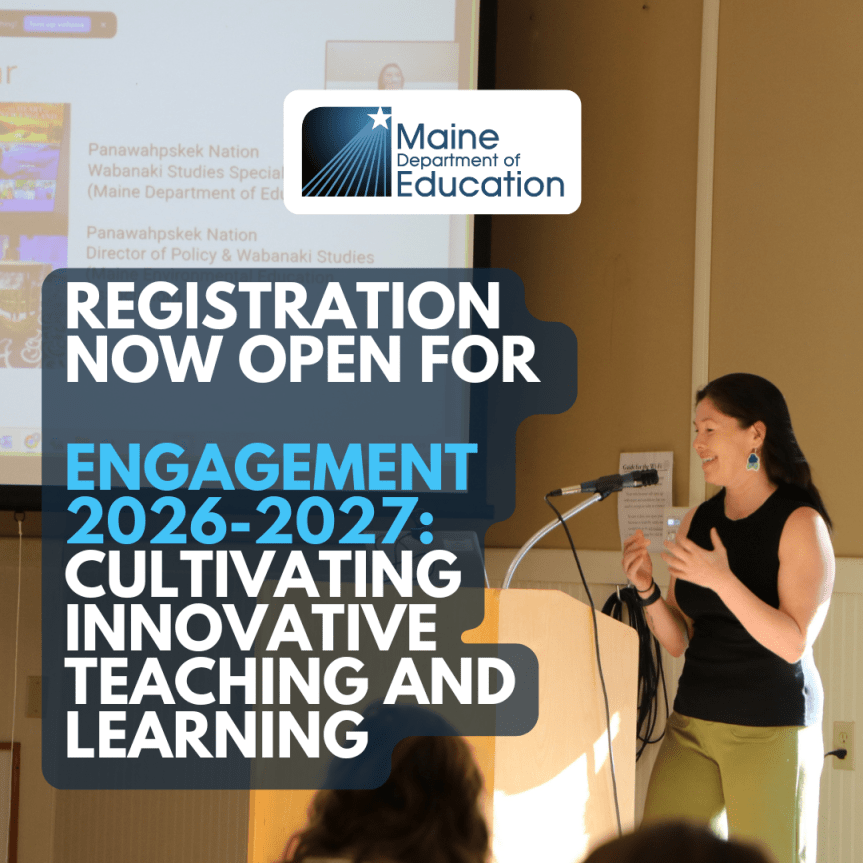
The Maine Department of Education (DOE) Offices of Teaching and Learning and Innovation are pleased to announce that registration is now open for EngageMEnt 2026-2027, a statewide professional learning opportunity designed to support educators in exploring innovative, engaging, and impactful practices for teaching and learning.
Offered in partnership with the University of Maine and University of Southern Maine, EngageMEnt creates opportunities for educators from across the state to learn, collaborate, reflect, and apply new ideas in their classrooms, schools, and communities. The initiative also provides opportunities for practicing educators and pre-service educators to learn alongside one another while exploring current educational priorities and practices.
Building on the success of last year’s implementation and participant feedback, EngageMEnt 2026-2027 has been designed as a year-long learning experience that supports both professional growth and implementation. Rather than attending a single workshop, participants will join a cohort of educators who will continue learning together throughout the school year. The Maine DOE is hopeful that this model will support meaningful changes in practice that ultimately benefit Maine students.
What’s New for 2026-2027?
This year’s model includes:
An in-person fall session on October 9, 2026
A virtual winter follow-up experience
An in-person spring session on March 19, 2027
On both the fall and spring dates:
Morning cohorts meet from 9-11:30 a.m.
Afternoon cohorts meet from 12:30-3 p.m.
This structure is designed to provide educators with opportunities to learn, implement new ideas in practice, reflect on their experiences, and reconnect with colleagues to deepen their learning.
Explore a Wide Range of Learning Opportunities
This year’s cohort offerings include topics such as:
Early literacy and numeracy
Literacy and numeracy across content areas
Outdoor and place-based learning
Climate education
Technology and learning
Multilingual learner supports
Community partnerships
Civic engagement and student advocacy
Arts integration and creative learning
Wabanaki Studies
Participants may register for one cohort or, if desired, one morning cohort and one afternoon cohort.
Cohorts will begin at either the the University of Maine at Orono or University of Southern Maine in October and continue at the partner campus in March, providing opportunities for educators to connect with colleagues from across the state while experiencing both university settings.
A complete guide to cohort offerings, facilitator information, and session descriptions is below.
Registration Information
Registration for EngageMEnt 2026-2027 is now open.
Participants registering for two cohorts should select one morning cohort and one afternoon cohort. Participants are encouraged to review the cohort descriptions carefully before registering.
Questions regarding EngageMEnt 2026-2027 may be directed to Beth Lambert, Maine DOE Chief Teaching and Learning Officer, at Beth.Lambert@maine.gov.
The following cohorts begin at the University of Southern Maine on October 9, 2026, and will continue at the University of Maine at Orono on March 19, 2027:
Morning Cohorts (9-11:30 a.m.):
Cohort
Facilitator(s)
Description
Playful Literacy Strategies for Early Learning, Preschool-Grade 2
Maine DOE Early Learning Team
Explore literacy-rich, play-based practices that support joyful and purposeful learning in early childhood settings.
Applied Learning Lab
Cee Belolan, Maine DOE Interdisciplinary Instruction Specialist
Experience practical approaches to designing engaging, student-centered learning through active application and reflection.
Numeracy Opportunities Within and Across Content Areas
Michele Mailhot, Maine DOE Interdisciplinary Instruction Specialist
Learn how to identify and intentionally incorporate numeracy opportunities across disciplines using Maine’s Numeracy Playbook resources.
Inquiry, Advocacy, Authentic Learning: Leading Students from Apathy to Activism
Geoff Wingard, Maine DOE Interdisciplinary Instruction Specialist
Support student voice, inquiry, and civic engagement through meaningful and authentic learning experiences.
Afternoon Cohorts (12:30-3 p.m.):
Cohort
Facilitator(s)
Description
The Importance of Numeracy Foundations, Preschool-Grade 2
Maine DOE Early Learning Team
Explore foundational numeracy development, learning trajectories, and play-based strategies that support mathematical thinking in young learners.
From Data to Art: Visualizing, Performing, and Creating with Information
Cee Belolan, Maine DOE Interdisciplinary Instruction Specialist
Learn creative ways to help students communicate information through the visual and performing arts.
Diving into Indigenous Literature with Book Kits
Brianne Lolar, Maine DOE Wabanaki Studies Specialist
Explore Indigenous literature resources and instructional strategies that deepen engagement and understanding.
Beyond the Classroom: Community Partnerships that Enrich Student Learning
Ayesha Hall, Maine DOE Director of Strategic Partnerships
Explore strategies to build community partnerships that enhance student learning and foster authentic connections.
The following cohorts begin at the University of Maine at Orono on October 9, 2026, and continue at the University of Southern Maine on March 19, 2027:
Morning Cohorts (9-11:30 a.m.):
Cohort
Facilitator(s)
Description
Digging Deep into Literacy
Erik Wade, Maine DOE Interdisciplinary Instruction Specialist
Explore how outdoor and authentic learning experiences can strengthen literacy development and interdisciplinary connections.
From Standards to Solutions: Engaging Students in Climate Action Through Maine’s Learning Results
Glenn Cummings, Maine DOE Director of Green Schools, and Teddy Lyman, Maine DOE Climate Education Specialist
Connect climate education, civic engagement, and standards-based learning through authentic student action.
Wonder Is a Literacy Practice
Heather Martin, Maine DOE Interdisciplinary Instruction Specialist, and Kathy Bertini, Coordinator of the Maine DOE Interdisciplinary Instruction Team
Discover literacy strategies that foster curiosity, inquiry, discussion, and meaningful student engagement.
Less Noise, More Learning: Reframing Technology Use in Schools
Maine DOE Learning Through Technology Team
Examine thoughtful approaches to technology use that support student learning, engagement, and well-being.
Afternoon Cohorts (12:30-3 p.m.):
Cohort
Facilitator(s)
Description
Digging Deep into Numeracy
Erik Wade, Maine DOE Interdisciplinary Instruction Specialist
Experience hands-on approaches to numeracy through outdoor learning, observation, measurement, and authentic problem-solving.
Trail Guides: Helping Create a Cultural Shift to Place-Based Learning
Sharon Gallant, Maine DOE RREV coach; Elaine Bartley, Maine DOE Innovative Research and Design Director; and Teddy Lyman, Maine DOE Climate Education Specialist
Explore strategies for integrating place-based and outdoor learning into everyday instructional practice.
Got Skills? Literacy in Every Direction
Heather Martin, Maine DOE Interdisciplinary Instruction Specialist, and Kathy Bertini, Coordinator of the Maine DOE Interdisciplinary Instruction Team
Explore practical literacy strategies that can be applied across content areas and learning environments.
Cultivating Brilliance: Maximizing Multilingual Assets and Accelerating Literacy Outcomes in an Integrated MTSS Framework
Jane Armstrong, ESOL State Specialist, and Bryan Lescord, MTSS State Specialist
Learn asset-based approaches that support multilingual learners within an integrated MTSS framework.
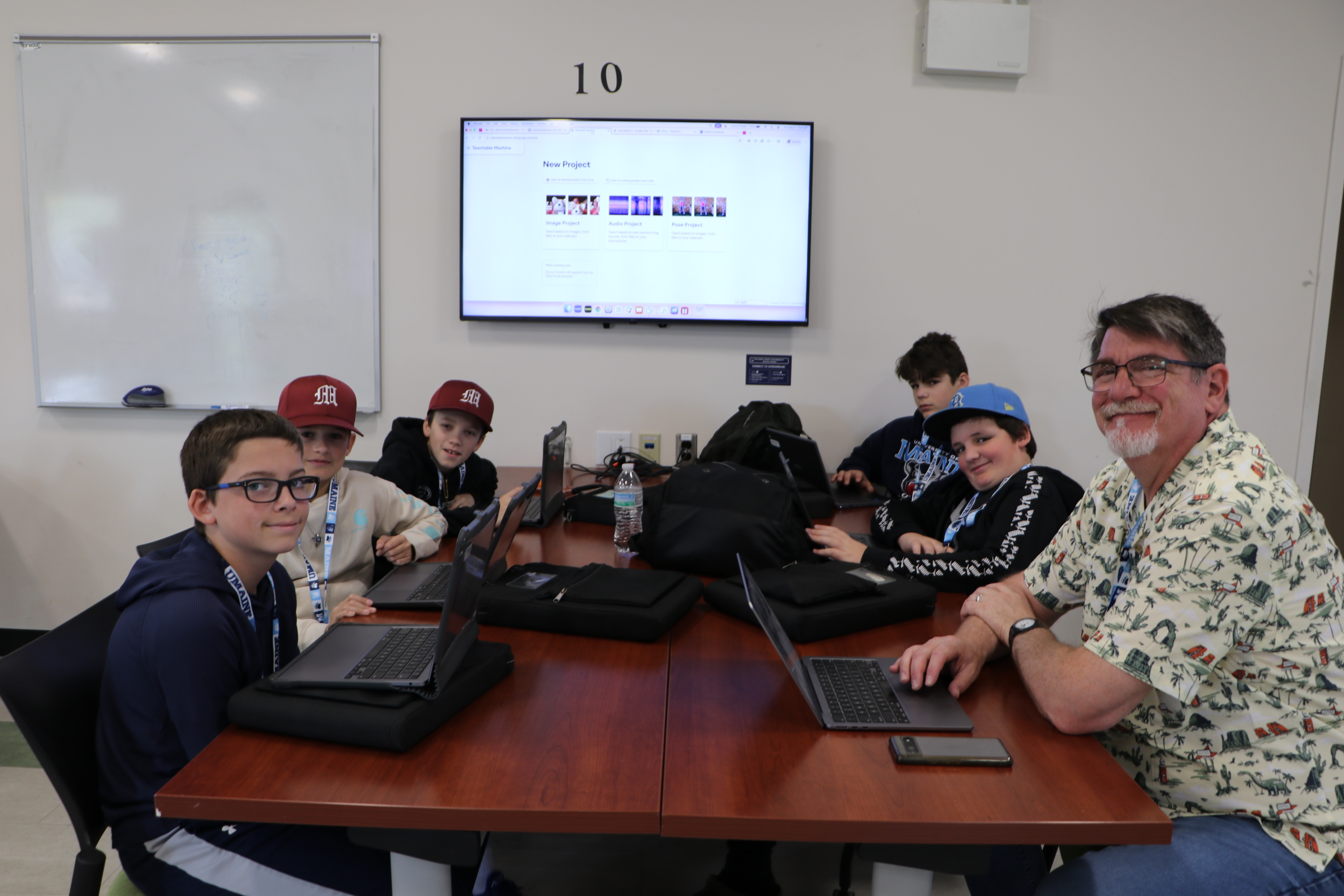
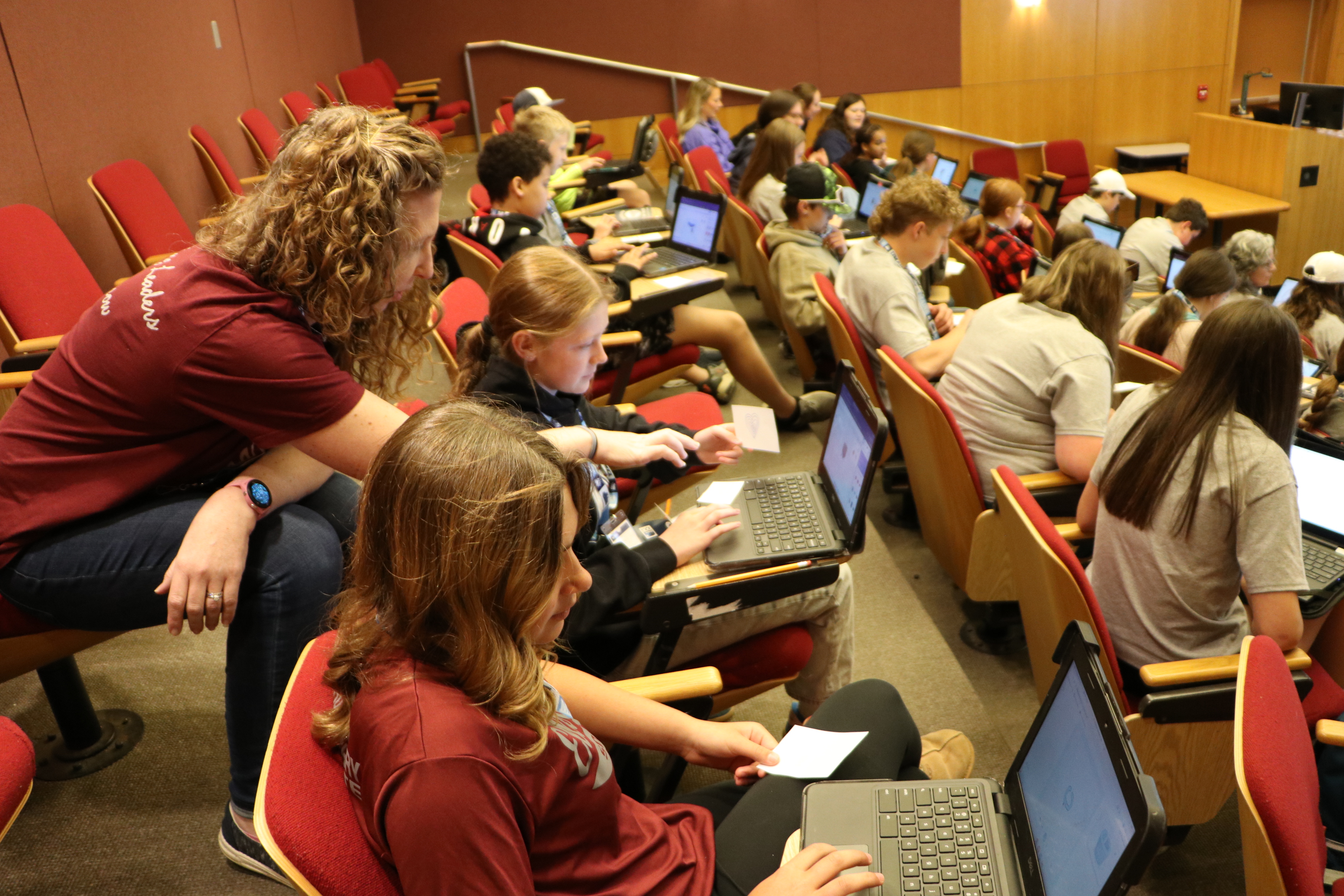
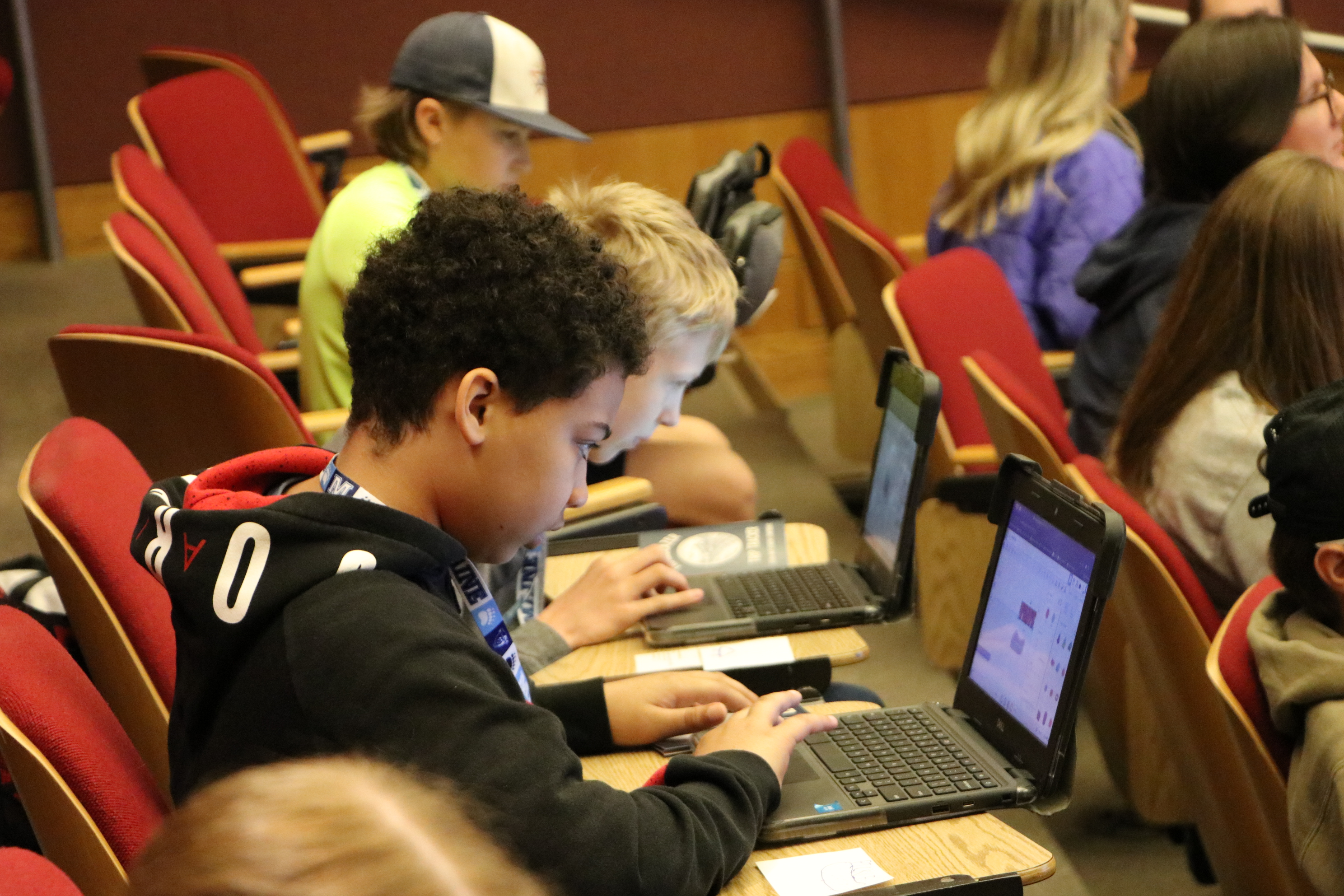
Nearly 1,000 students and educators from across Maine recently gathered at the University of Maine campus in Orono for the 2026 Maine Learning Through Technology Initiative (MLTI) Student Conference, an annual event hosted by the Maine Department of Education (DOE) Learning Through Technology Team.
Held on May 21, 2026, this year’s conference welcomed students in grades 5-10 from MLTI school administrative units (SAUs) across the state for a full day of hands-on learning, creativity, collaboration, and exploration through technology and computer science.
Centered around the theme “Full STEAM Ahead,” the conference invited participants to engage in activities and sessions connected to science, technology, engineering, the arts, and mathematics (STEAM). Sessions focused on empowering young people to become creators, innovators, and problem-solvers through technology-rich learning experiences.
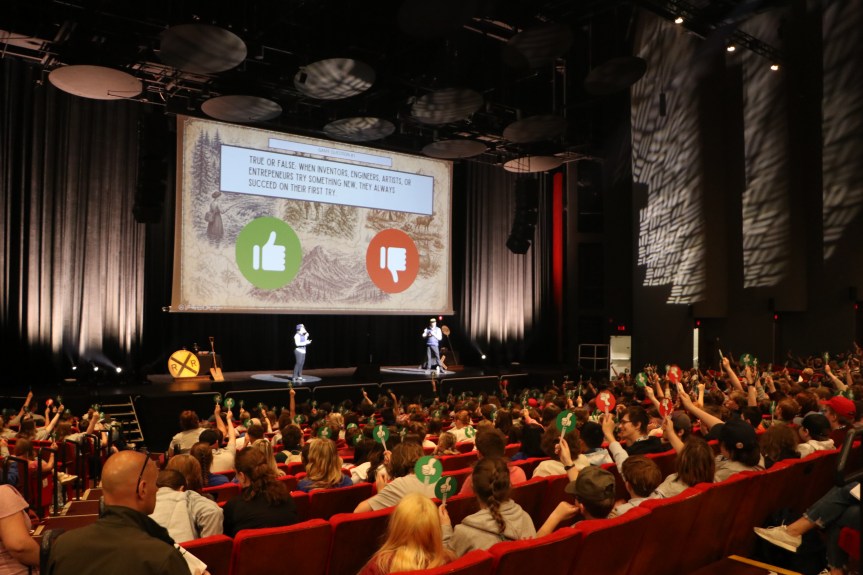
The conference opened with an introductory session that connected Maine’s long history of innovation and problem-solving to the opportunities available to students today. Participants learned about Maine inventors, entrepreneurs, and leaders whose creativity and determination helped shape industries and communities throughout the state.
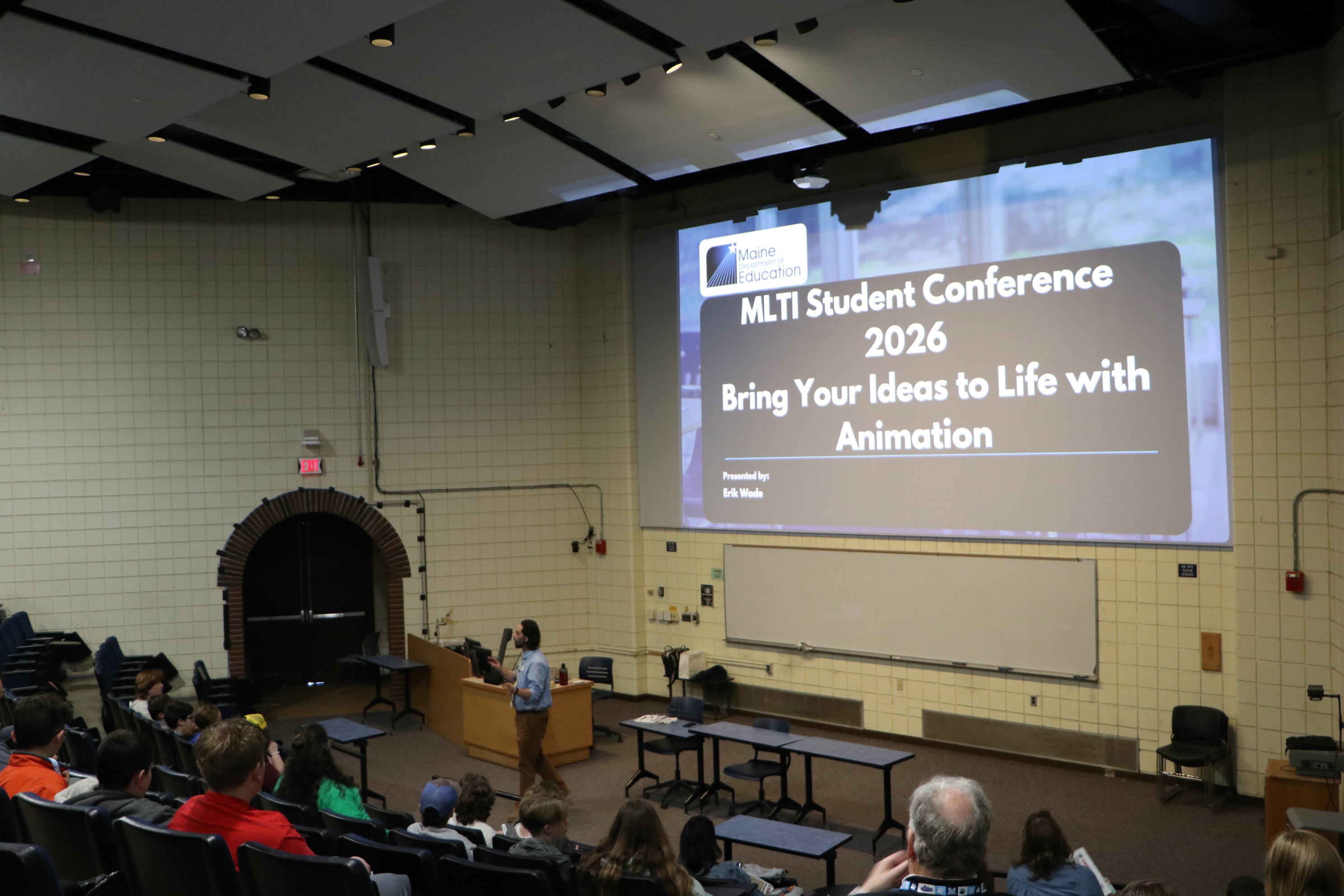
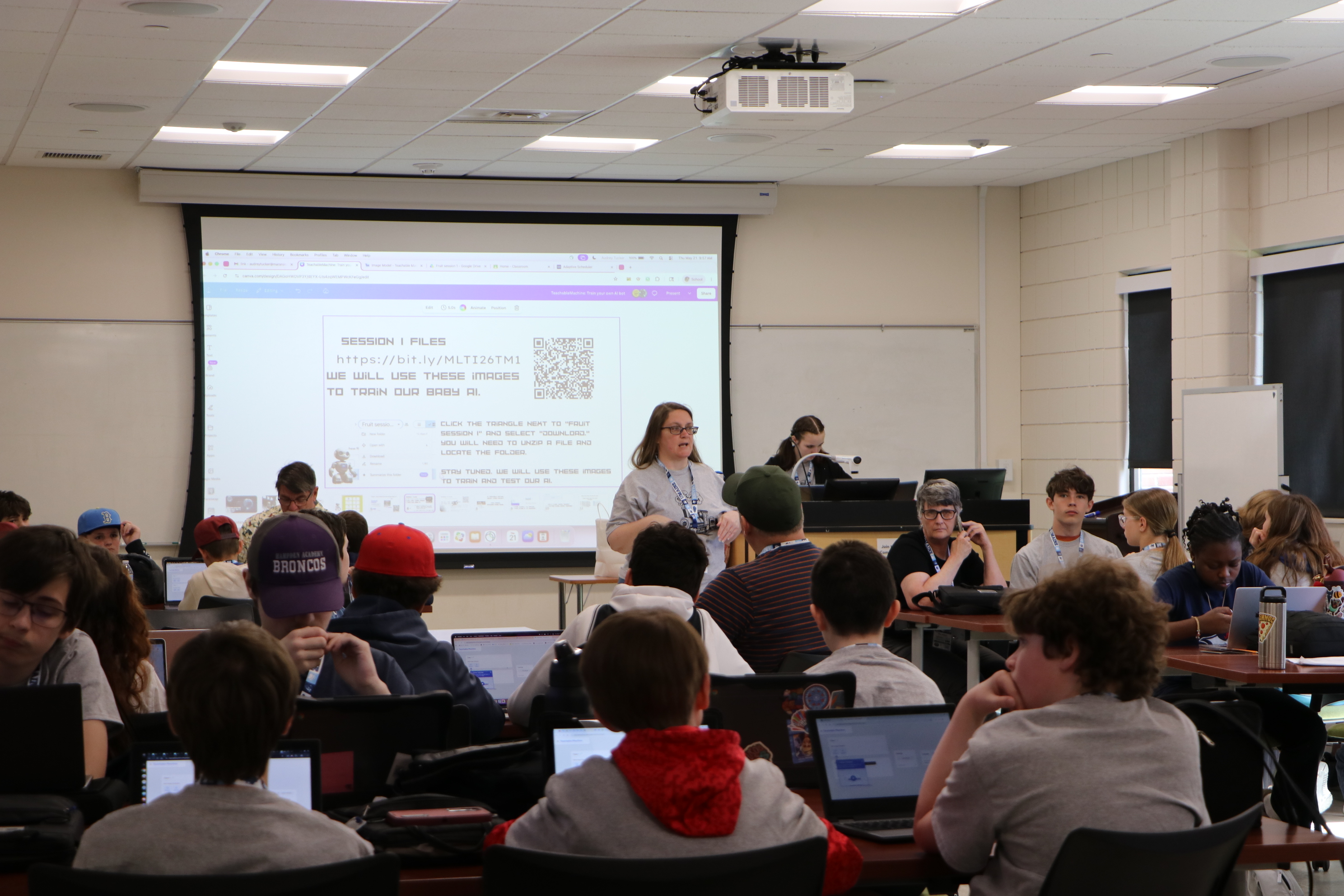
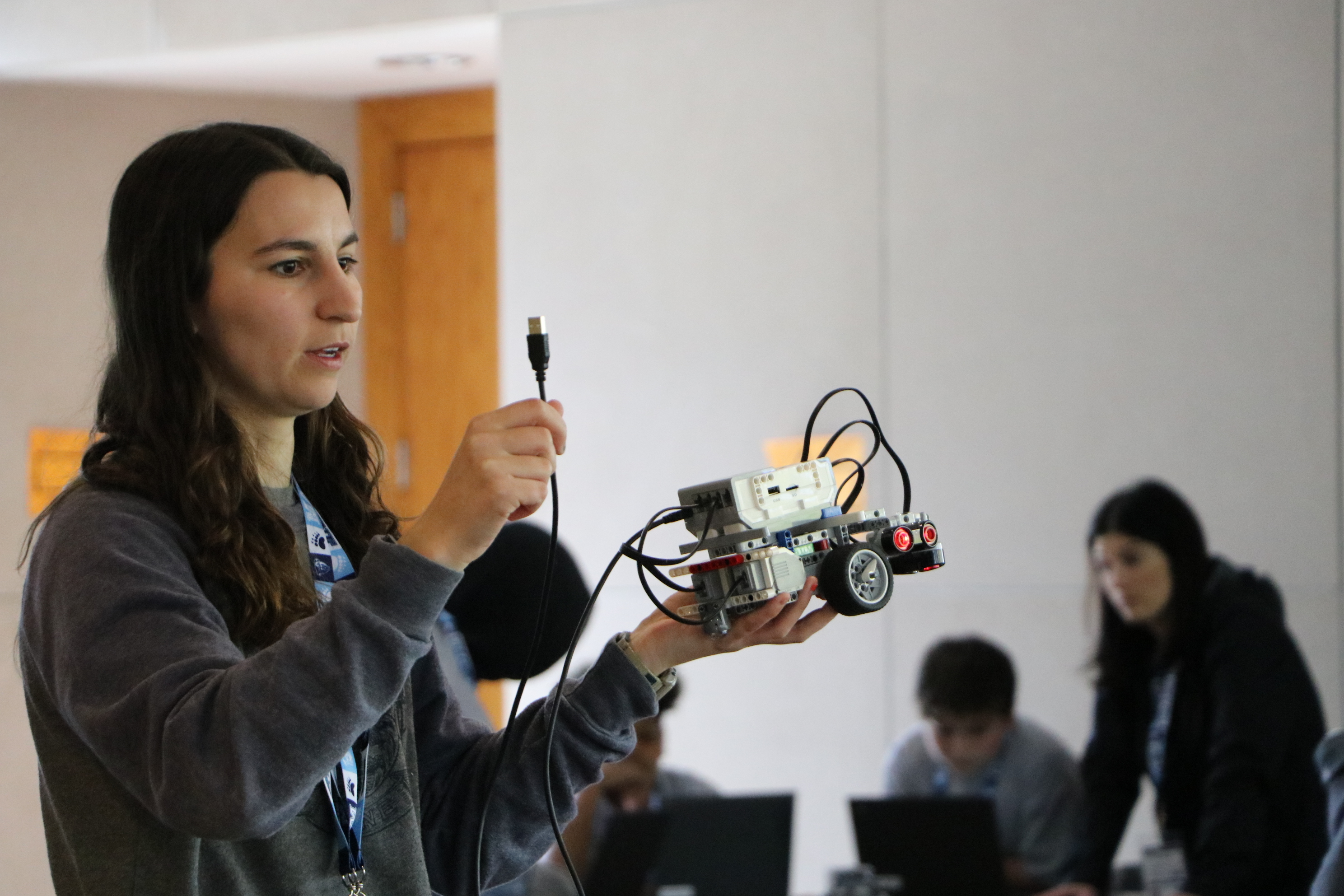
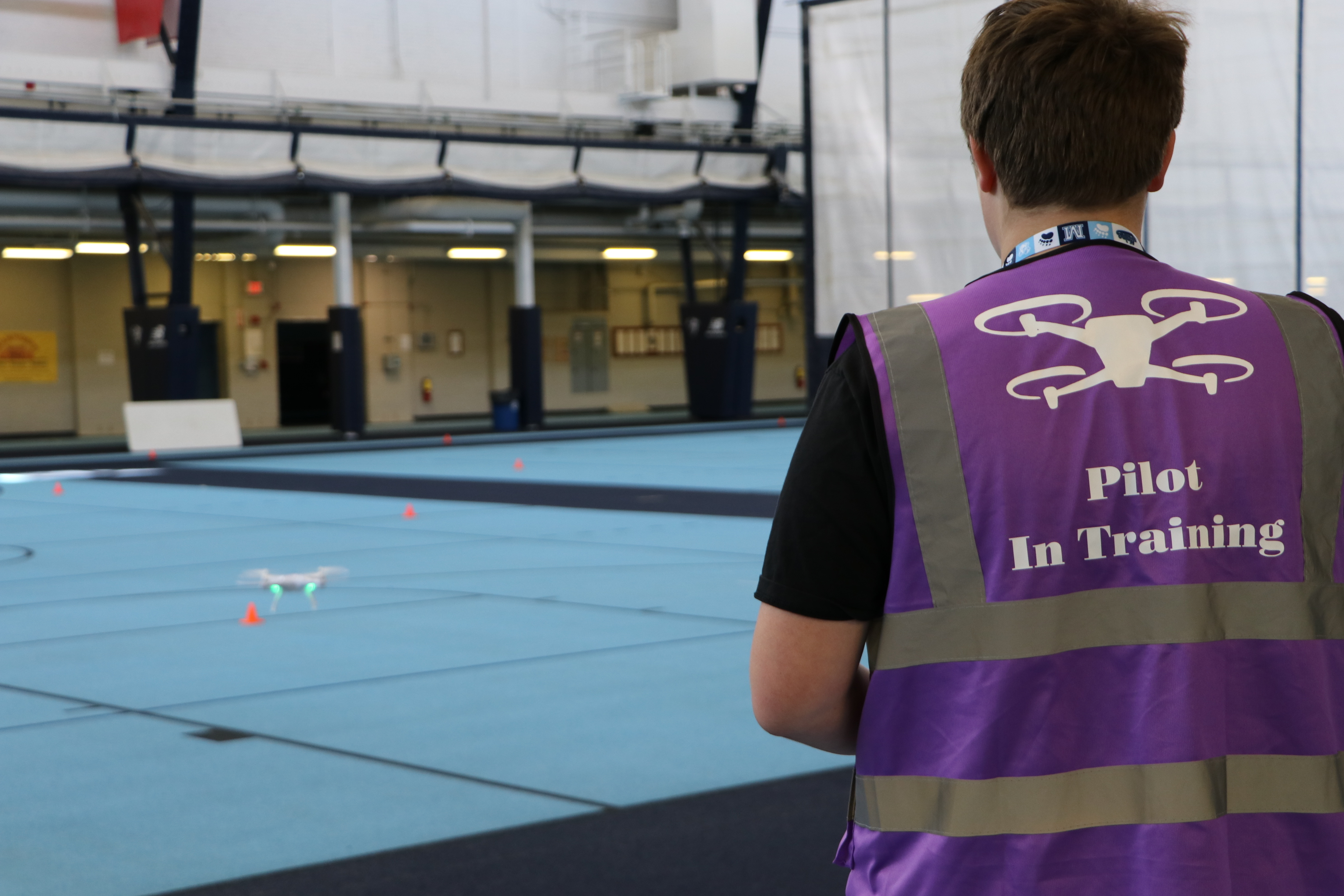
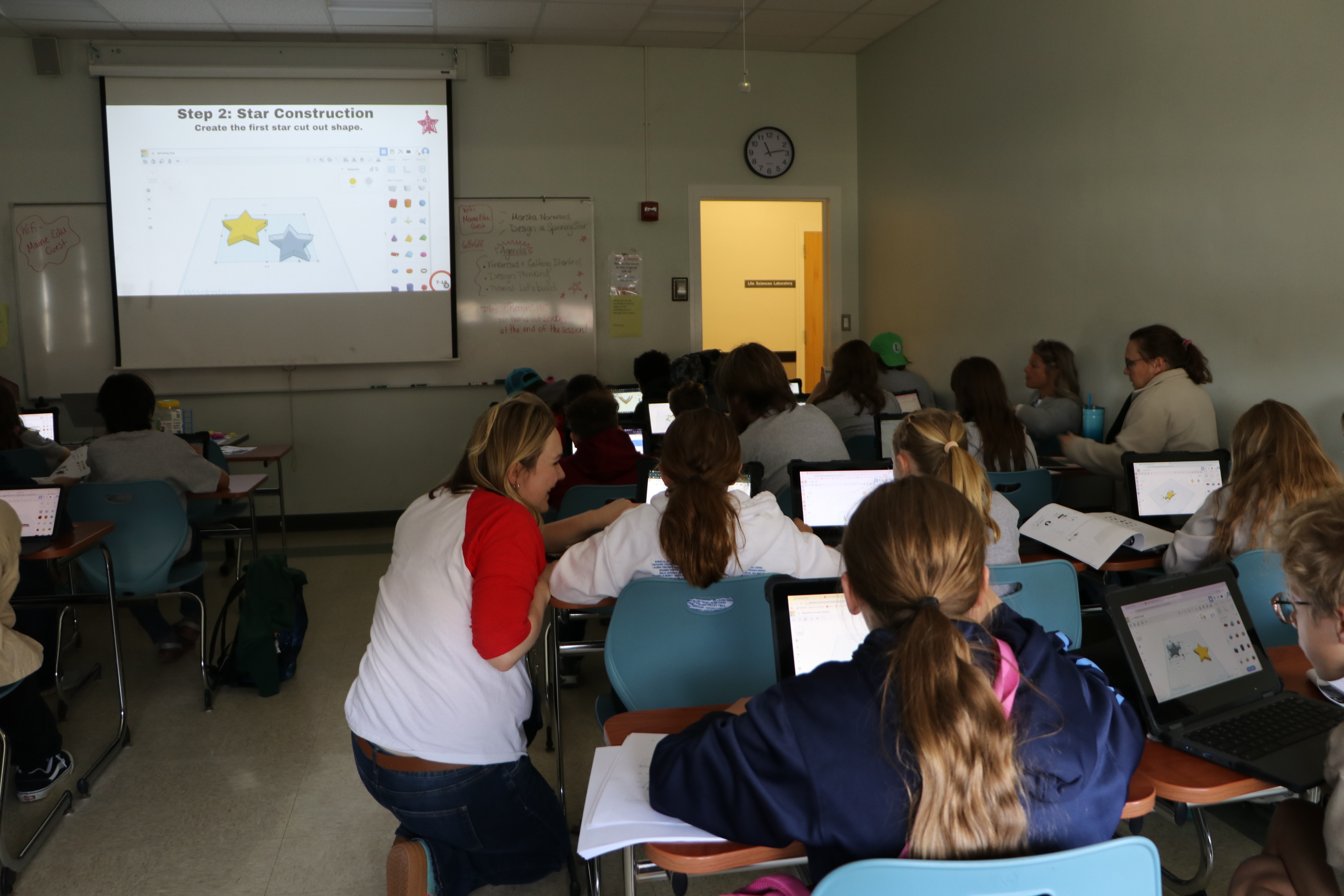
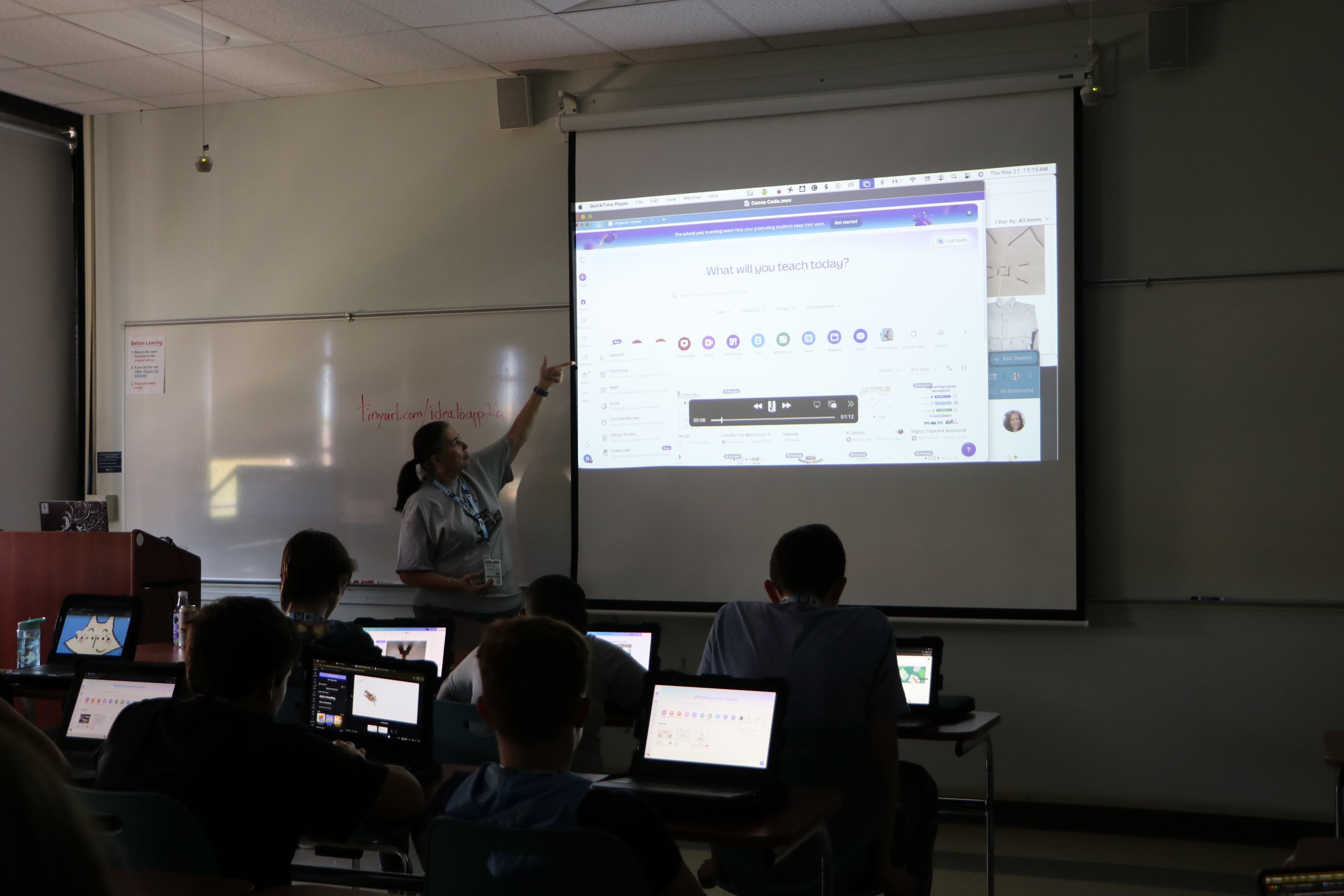
Throughout the day, attendees participated in interactive workshops and presentations covering a wide range of topics, including coding, robotics, artificial intelligence, 3D design, animation, podcasting, cybersecurity, game design, drones, and virtual reality. Sessions encouraged participants to actively explore, create, collaborate, and think critically while using technology in meaningful ways.
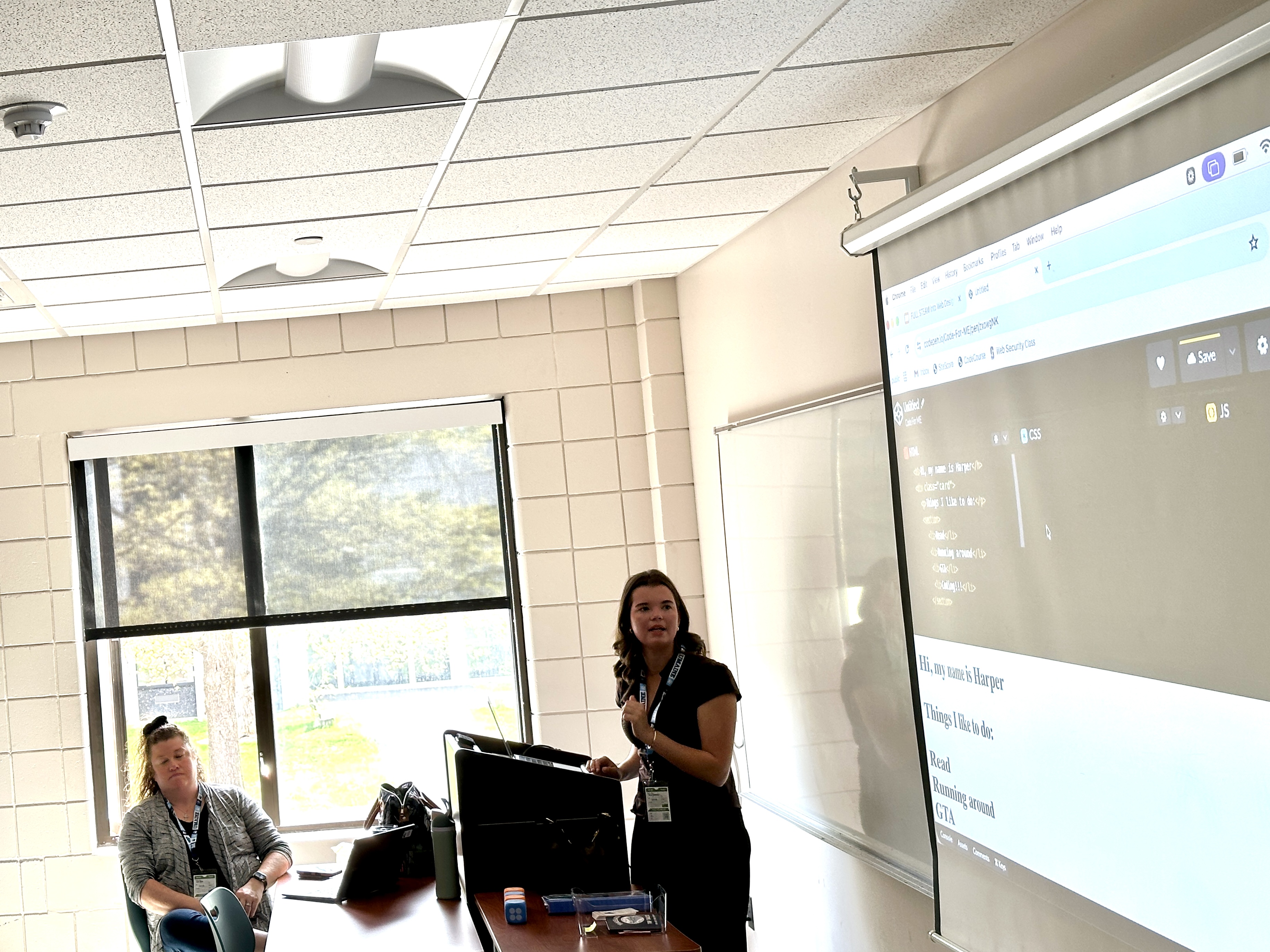
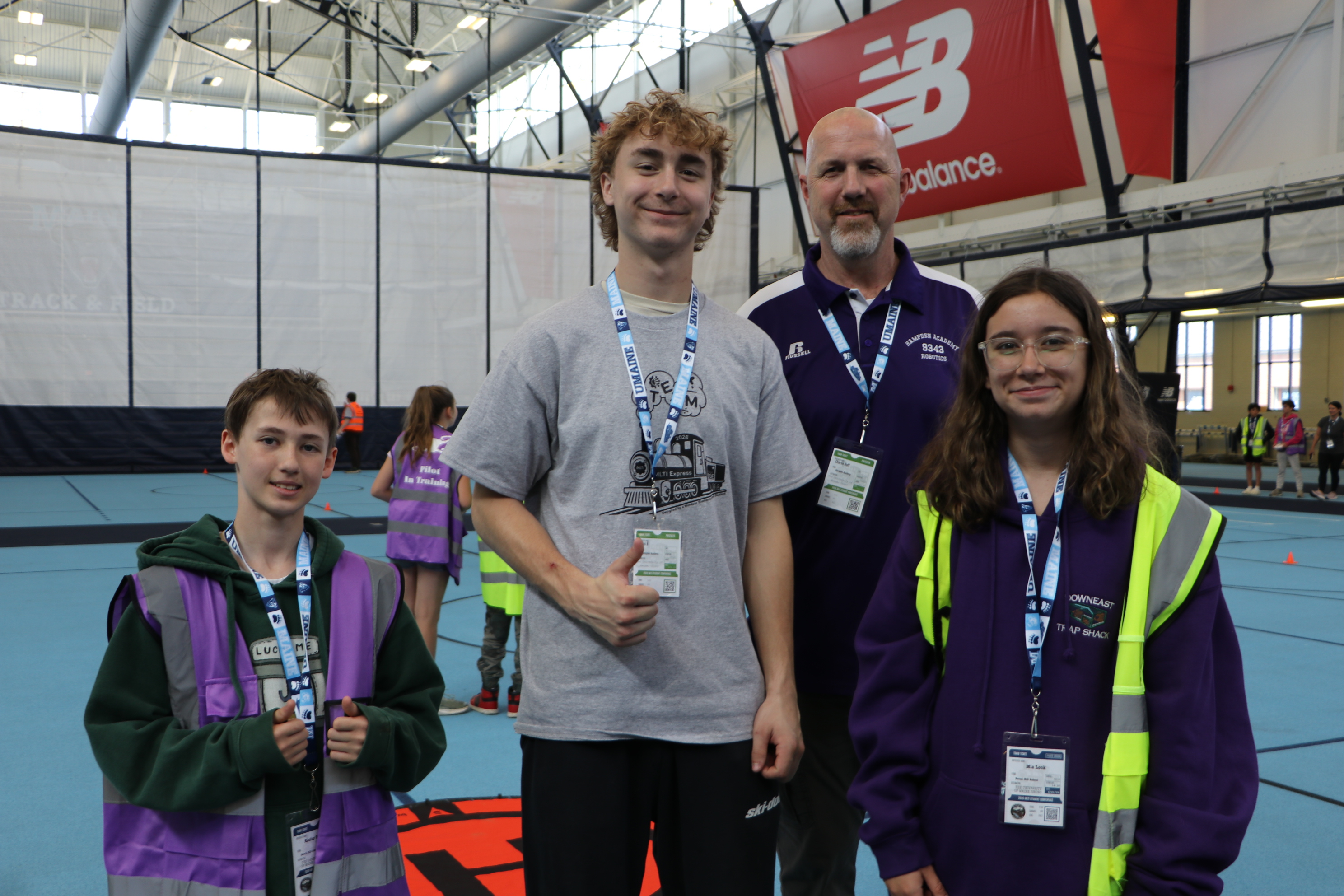
A hallmark of the conference was its emphasis on student leadership. More than 50 students joined Maine educators in leading conference sessions and sharing their expertise with peers. Morse High School sophomore Harper Steenstra, who presented a coding-focused session connected to her own “Code for ME” summer camp, was among the student presenters. Other schools, including Hampden Academy and Saco Middle School, sent teams of students to the conference who guided participants through hands-on drone activities and flight experiences.
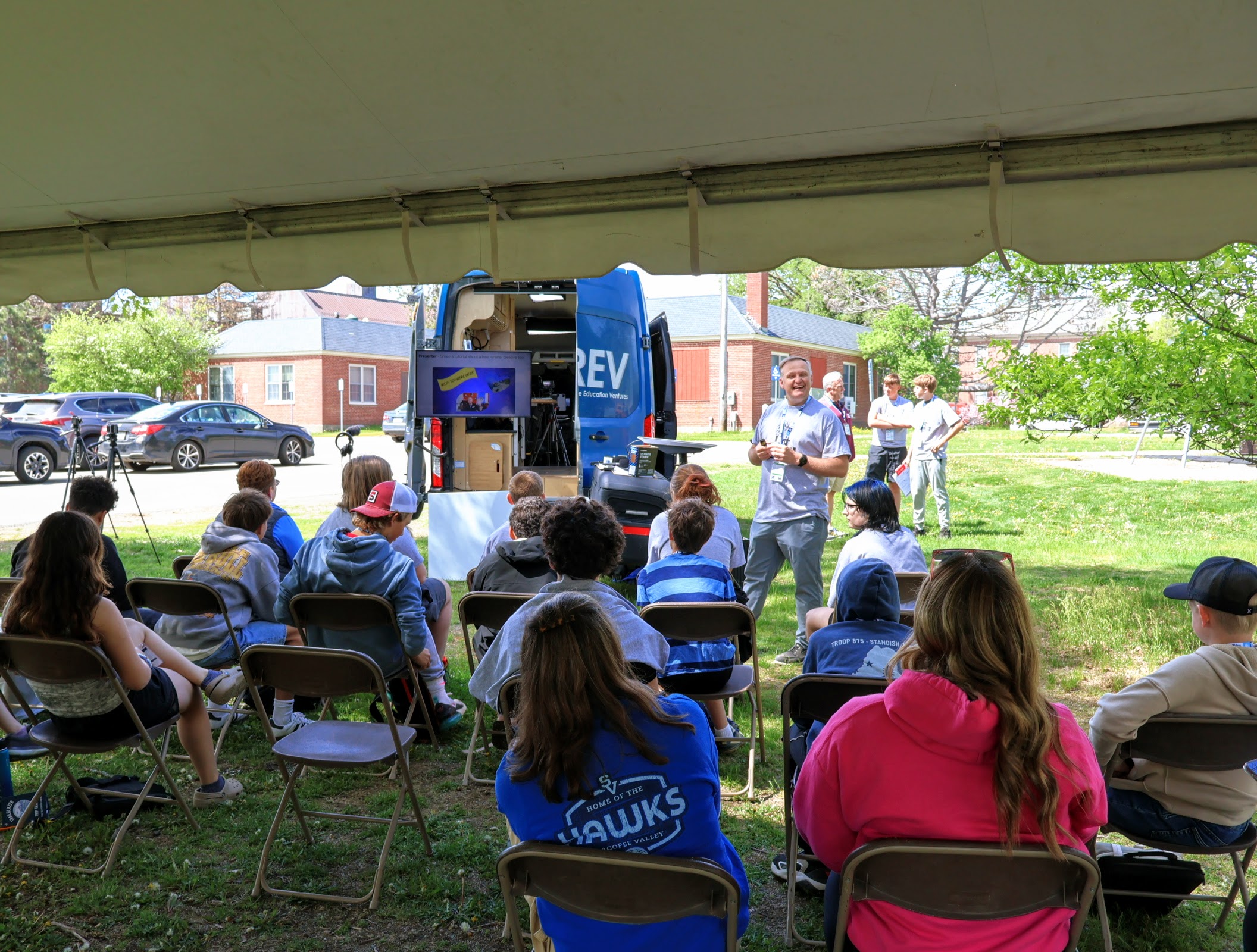
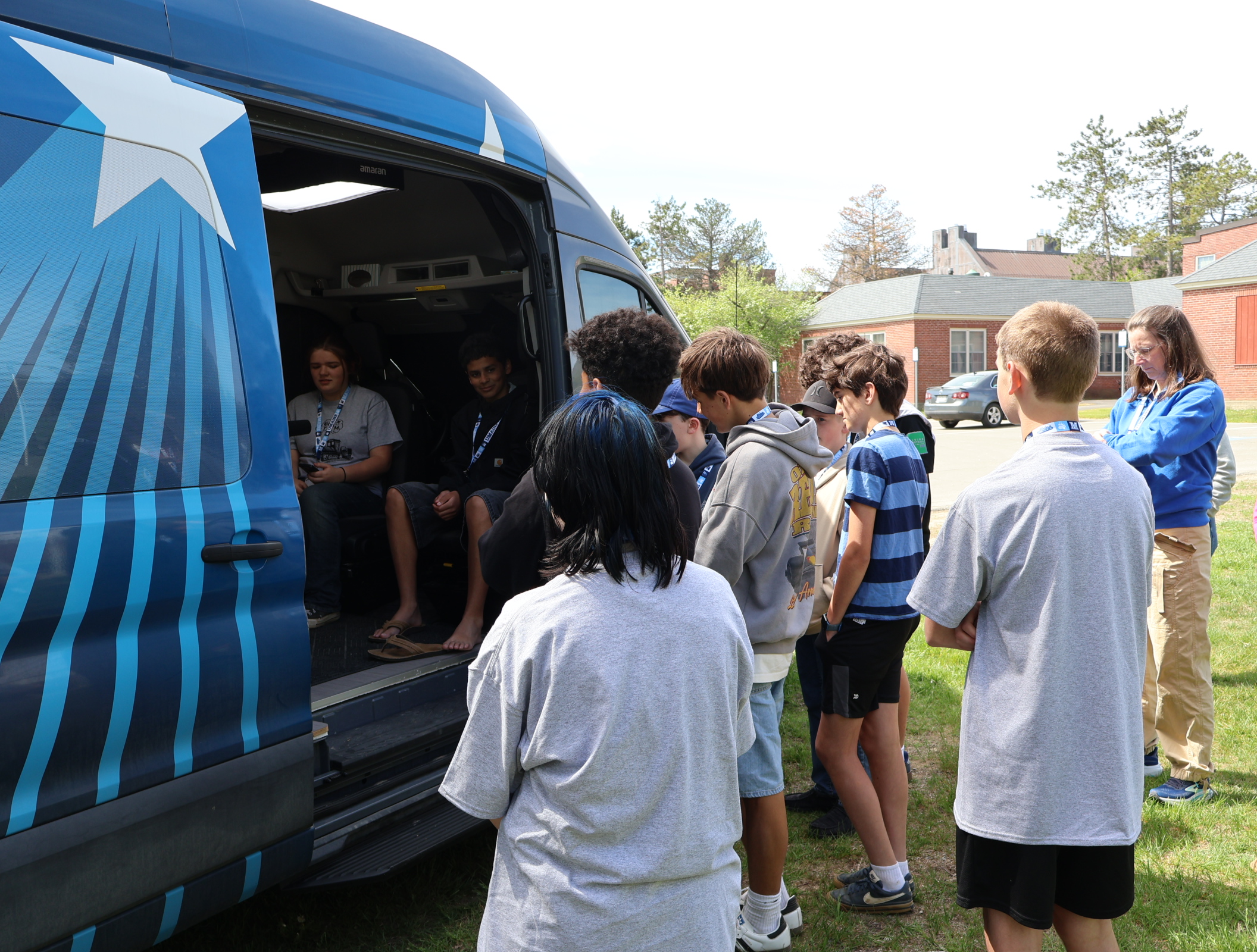
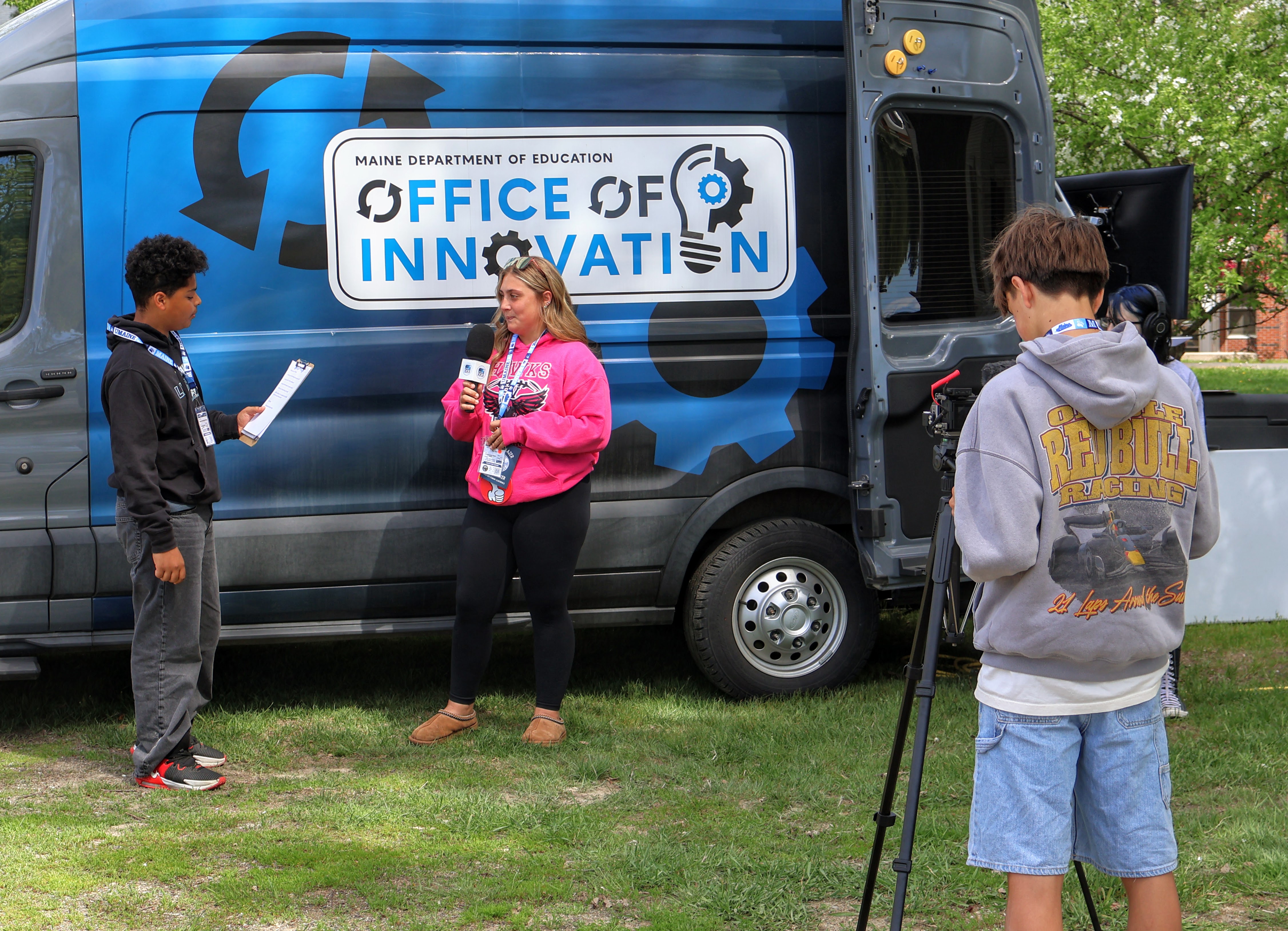
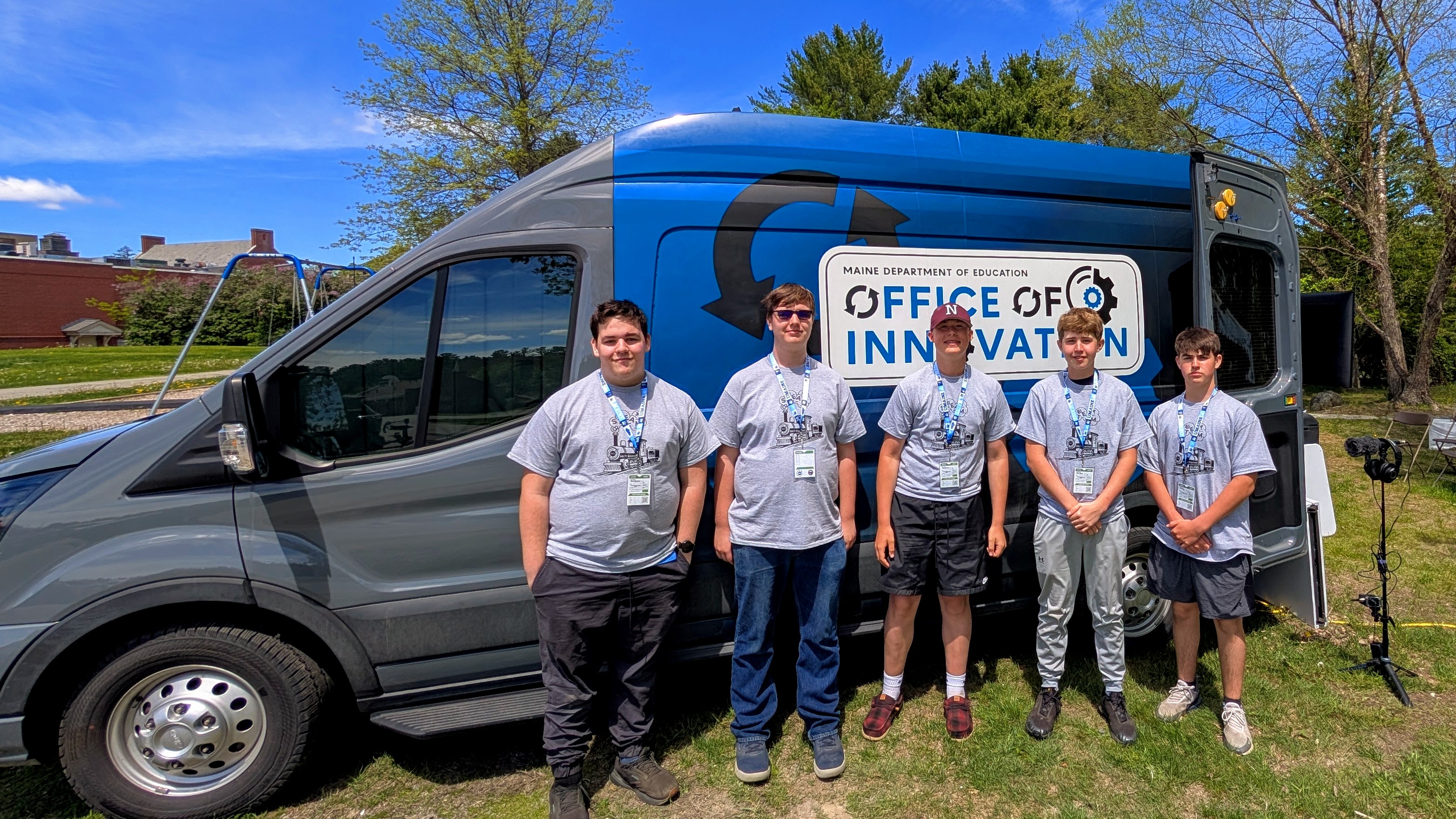
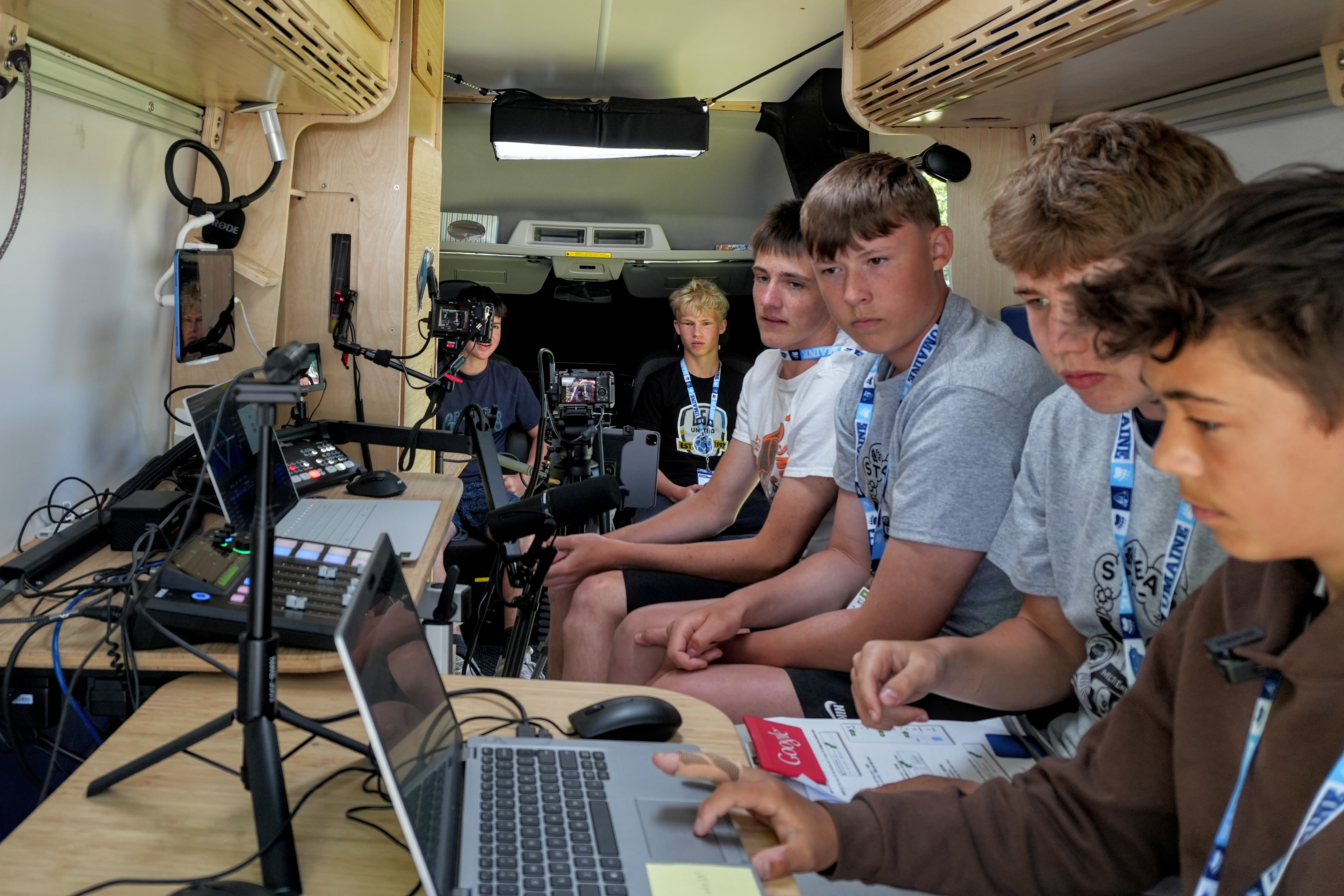
Another highlight was the Student Leadership Ambassadors of Maine (SLAM) Show, hosted by SLAM students alongside RSU 19 Technology Integrator Kern Kelley, who used the Maine DOE Mobile Learning Van as a mobile studio to film this month’s SLAM episode during the conference. The student-created show highlights technology tools and student voice in action.
See the episode filmed at the conference here:
Additional session topics at the conference included:
Build and Train a Baby AI Bot
Canva Quest: Create Your Own Adventure
Mission Robotics: Build, Code, and Complete the Challenge
Mic Drop! Turning Your Ideas Into Your Podcast
Game On: Level Up Your AI Skills
Virtual Robotics with VEXcode VR
Design for Real Life: 3D Solutions for Everyday Problems
Bring Your Ideas to Life with Animation
From Player to Creator: Escape Room Designers Wanted
Higher Vision – Sparking Creativity and Careers Through Drones
NO CAP, JUST CODE: Bringing AI Creativity to Your School
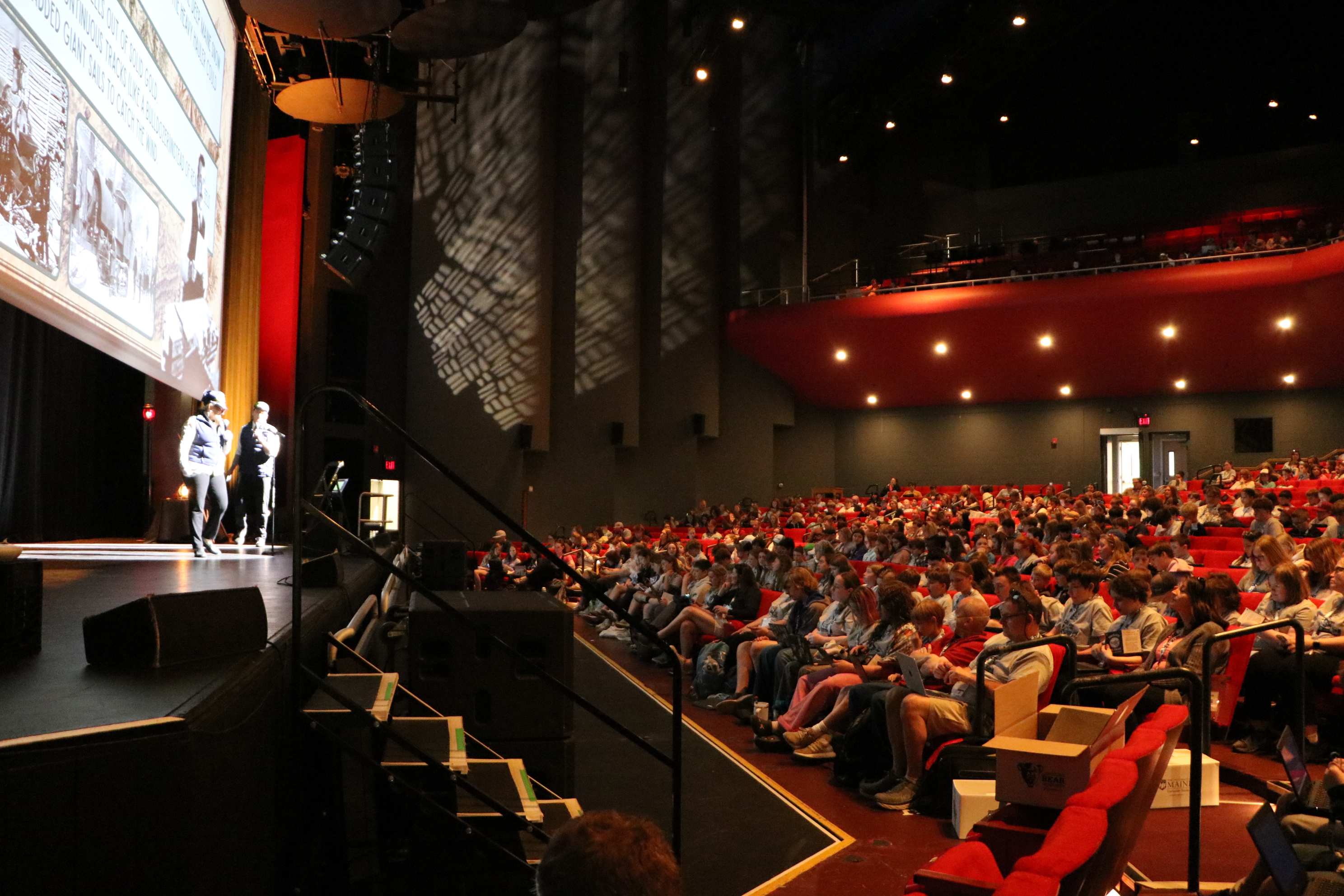
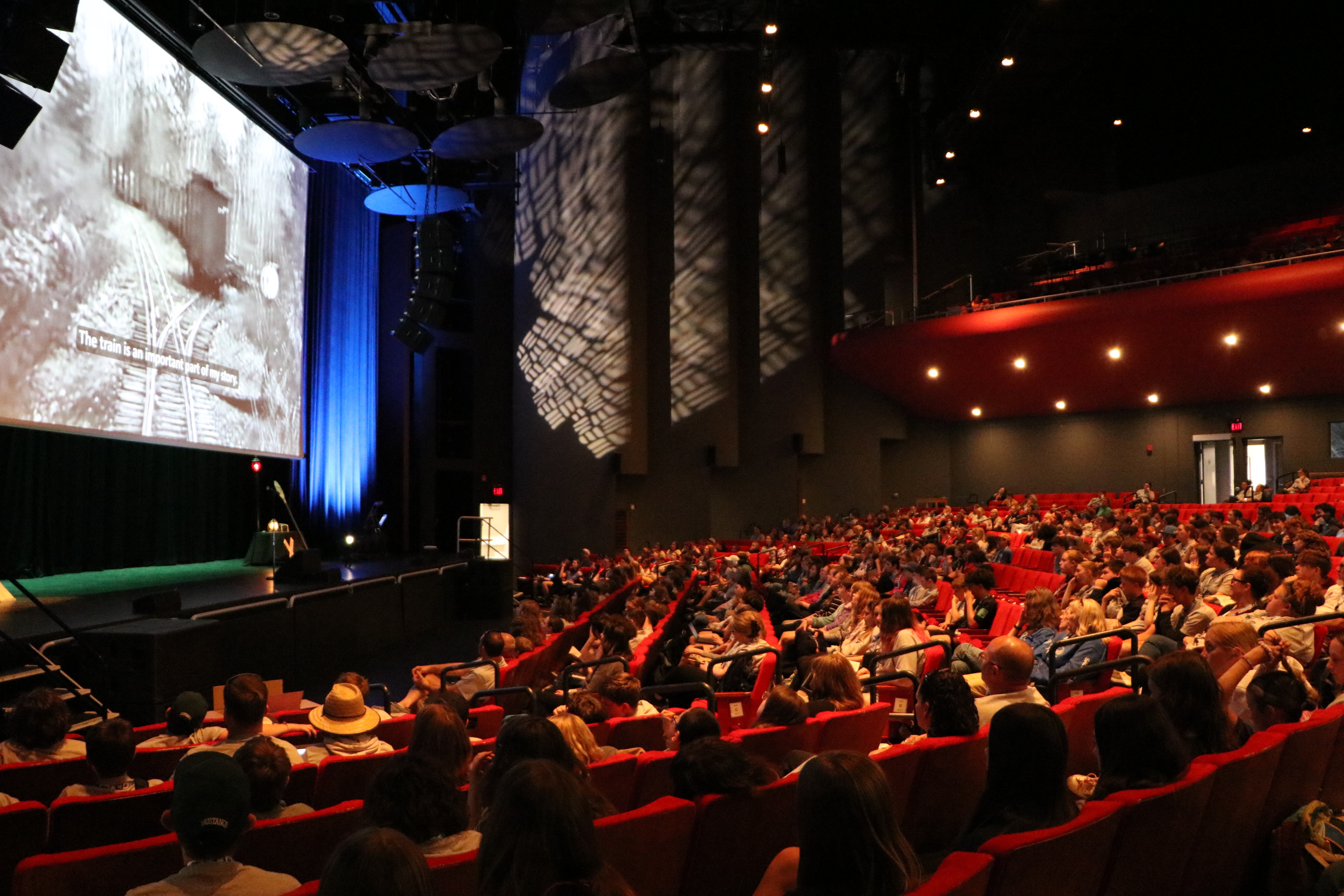
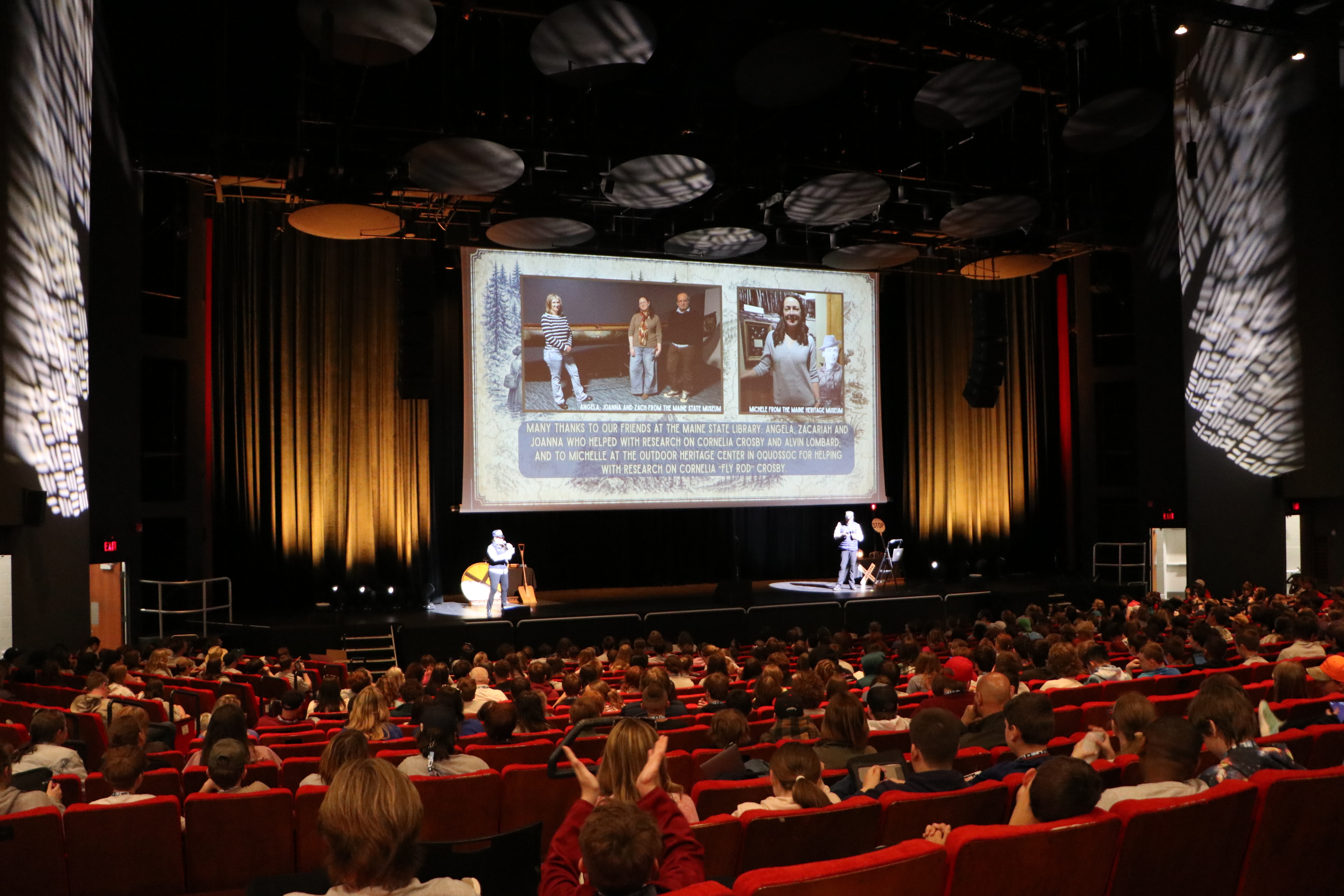
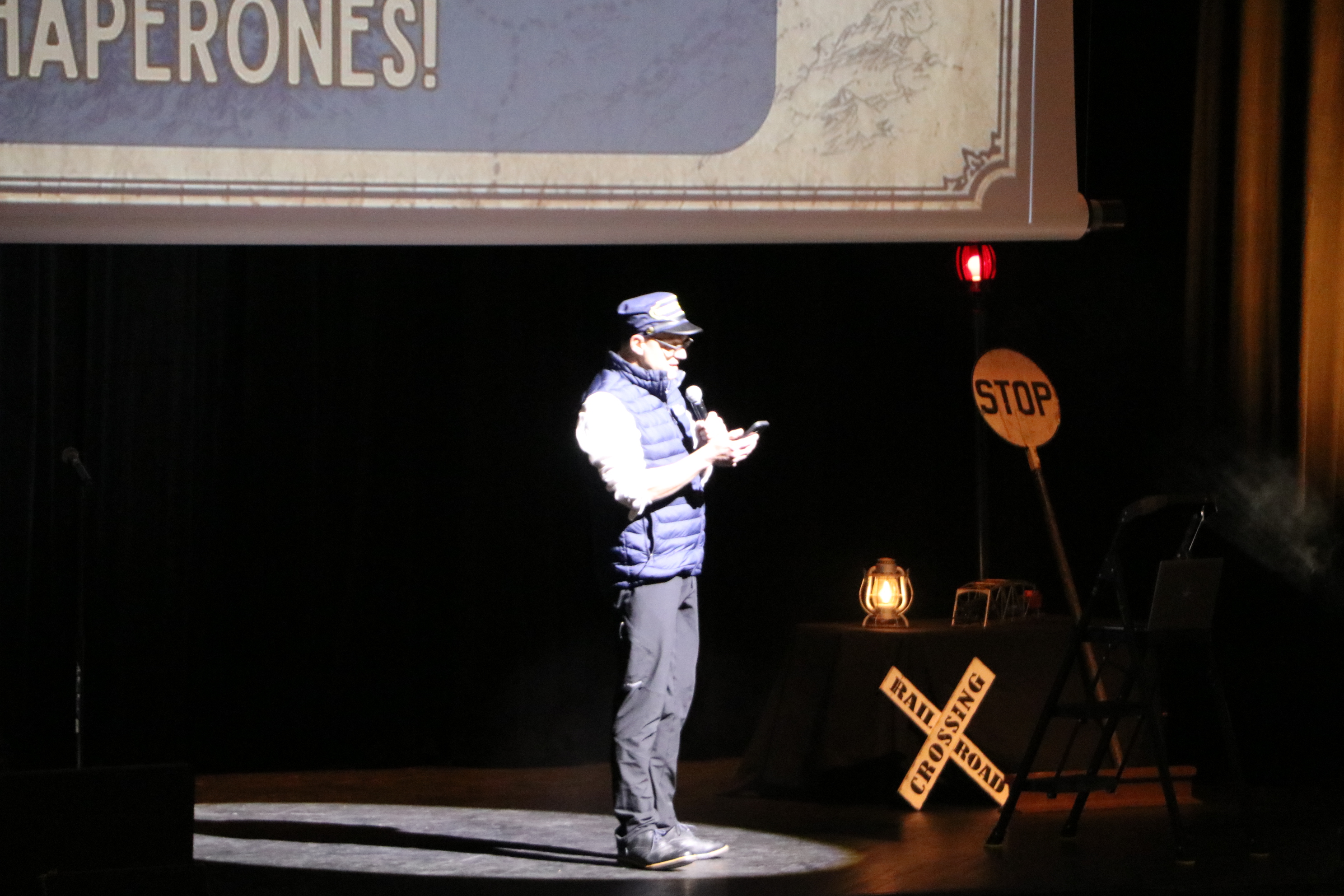
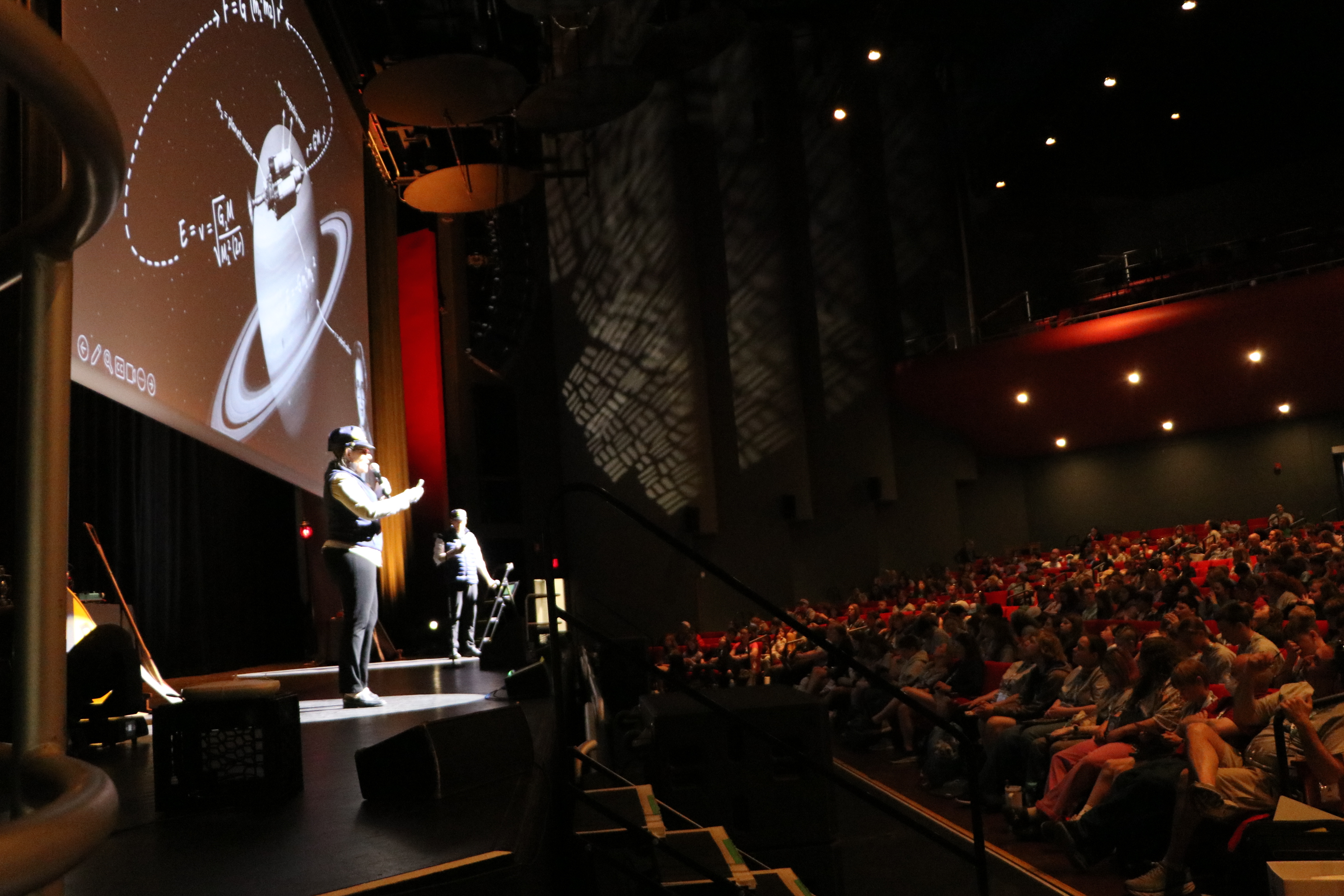
The conference concluded with a Global Session led by Maine DOE Learning Through Technology staff and MLTI Ambassadors at the Collins Center for the Arts. The interactive presentation brought together the conference’s “Full STEAM Ahead” theme by exploring the innovative thinking, creativity, and perseverance demonstrated by notable Mainers throughout history.
Students explored the stories of innovators such as Samuel Veazie, who expanding Maine’s railroads and transportation systems; Alvin Lombard, inventor of the Lombard steam log hauler and pioneer of tracked vehicle technology; Cornelia “Fly Rod” Crosby, who helped establish Maine as a premier outdoor recreation destination; and Ashley Bryan, the nationally celebrated author, illustrator, and storyteller whose work inspired generations of readers and artists.
The session encouraged students to see themselves as part of Maine’s continuing tradition of innovation and leadership while introducing them to tools and technologies that can help shape the future.
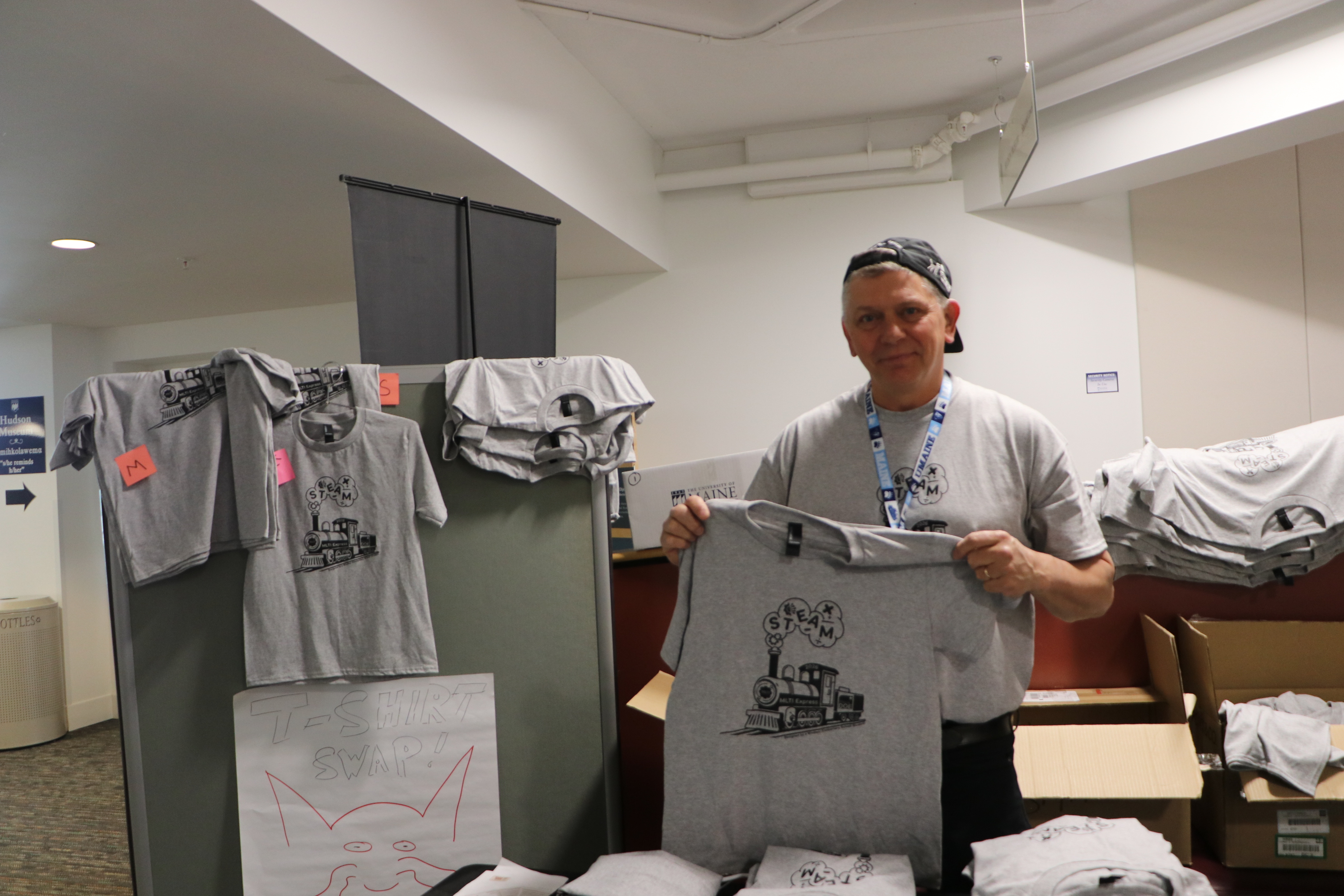
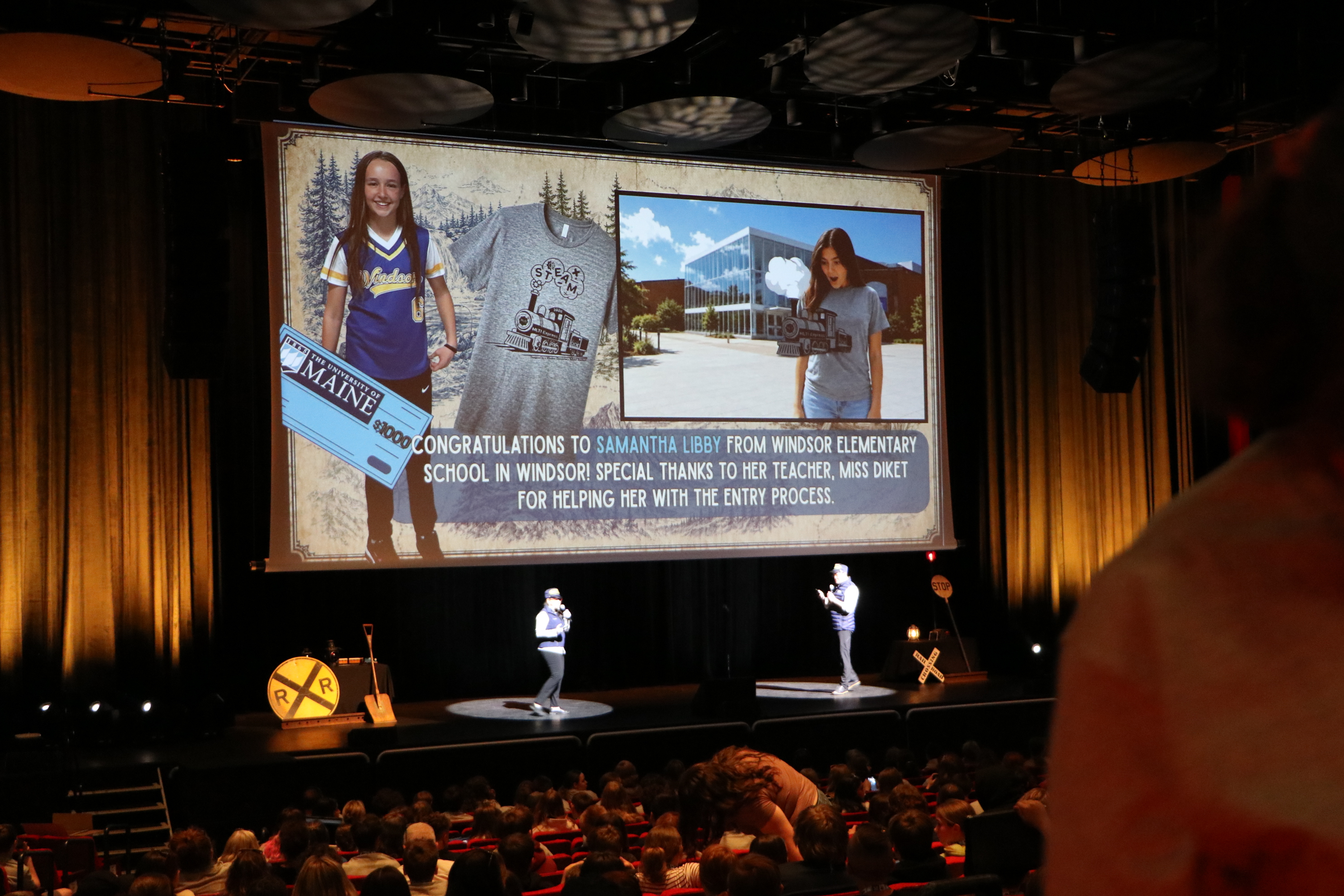
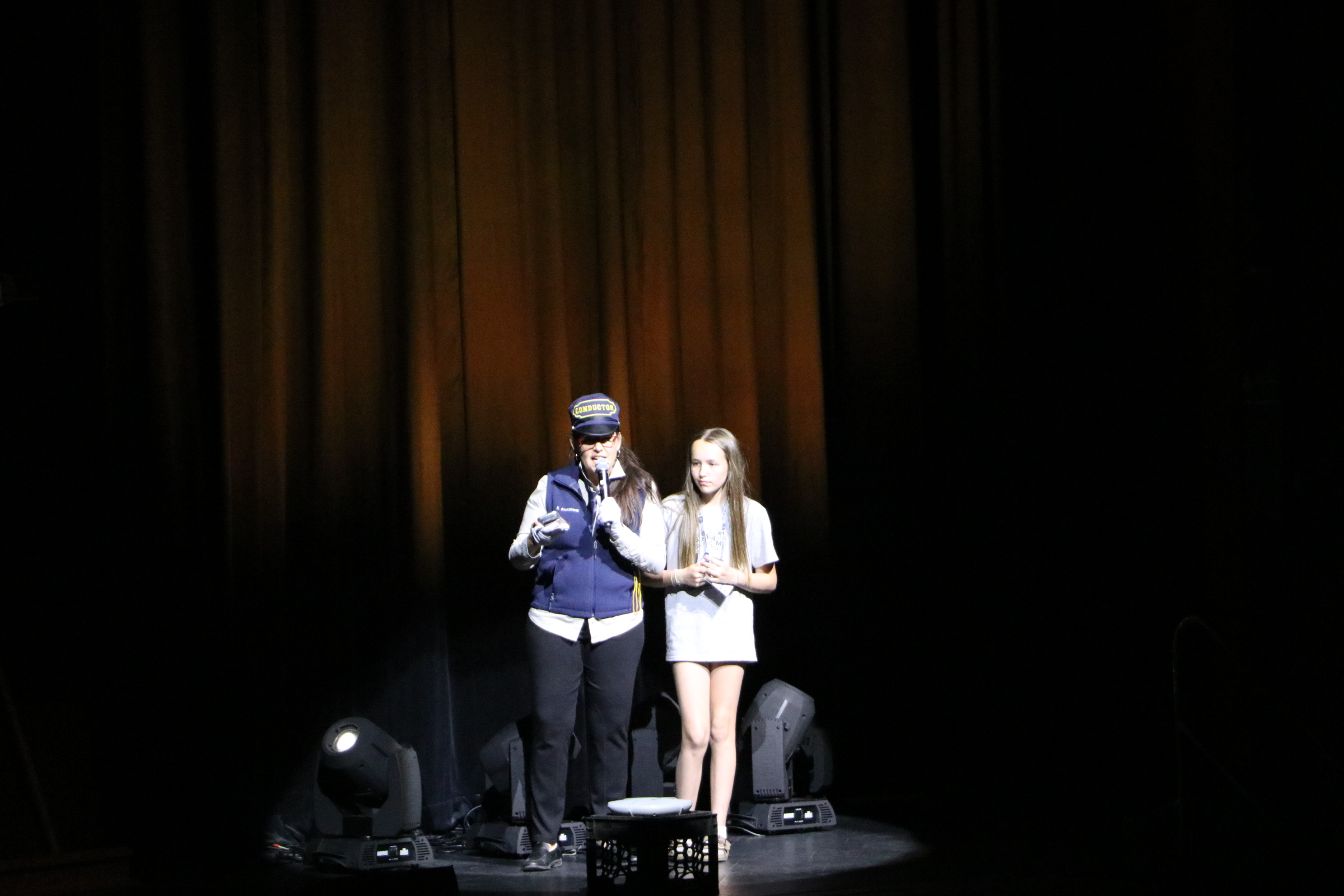
During the Global Session, the winning 2026 MLTI Student Conference T-shirt design was also recognized. The selected artwork was created by Samantha “Sam” Libby, a sixth-grade student from Windsor Elementary School.
The Maine DOE would like to extend special thanks to all presenters, educators, students, adult chaperones, bus drivers, and volunteers whose support and participation helped make the 2026 MLTI Student Conference a success.
The Maine Department of Education (DOE) is offering a free professional learning opportunity for educators interested in becoming trained facilitators of professional learning communities (PLCs) focused on emergent literacy for children aged 3 to 6.
The Professional Learning Community: Emergent Literacy from the Institute of Education Sciences supports preschool and kindergarten educators in implementing evidence-based language and literacy practices. Designed to foster collaboration, the four included modules engage participants in discussion, hands-on learning, and reflective practice with support from peers and trained facilitators.
The modules in this PLC are Print Knowledge, Phonological Awareness, Vocabulary, and Oral Language. Each module consists of three sessions (12 sessions total), with flexible scheduling options. Facilitators will receive a complete set of implementation materials, including participant guides, facilitator guides, PowerPoint presentations, and supporting videos. Facilitator training will familiarize participants with the design of the modules and effective strategies for facilitating adult learning.
Once trained, facilitators will be expected to facilitate at least one PLC module with a cohort of at least six Maine educators. They will be compensated $500 for each module they facilitate and complete by November 27, 2026. If facilitators wish to facilitate more than one module for compensation, they must seek prior approval.
The ideal facilitator is an educator with a strong understanding of emergent literacy, effective communication skills, and the ability to relate well to adult learners. Prior experience facilitating professional learning or leading groups of educators will be useful to the facilitator’s success.
To apply, please complete this applicationby July 17, 2026. Applications will be reviewed by a selection team, and applicants will be notified of their selection status by July 24, 2026.
For additional information, please contact Renee Reilly, Maine DOE PDG Manager, at Renee.A.Reilly@maine.gov.
This professional learning opportunity is sponsored by Maine’s Preschool Development Grant (PDG) Birth through Five (B-5) initiative, a collaboration between the Maine DOE and the Maine Department of Health and Human Services (DHHS).
Funding provided through the U.S. Department of Education (ED) supports implementation of this project. The project award totals $30,000, all of which is federally funded and directly attributed to project implementation. The contents of this announcement are those of the author(s) and do not necessarily represent the official views of, nor an endorsement by, ED or the U.S. government.
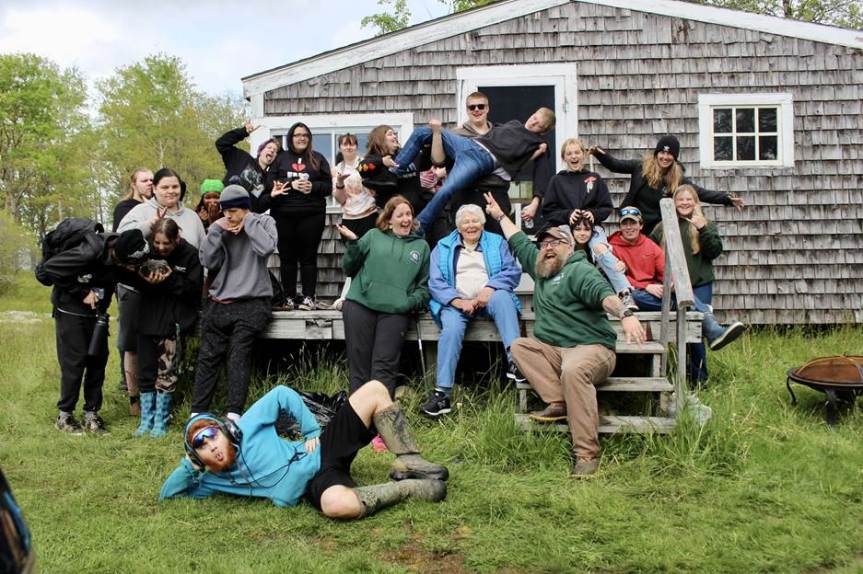
Members of the REACH School gather around founder the late Dot McMahan.
The Rural Educational Alternative Community Middle/High (REACH) School in Bucksport is a private, nonprofit alternative middle and high school program designed to meet students where they are academically, socially, and emotionally. Serving students from RSU 25—which includes Bucksport, Orland, Prospect, and Verona Island—as well as surrounding communities, the REACH School provides an alternative learning environment centered on engagement, relationships, and individualized support for students who have struggled to find success in traditional school settings.
Within a small, community-based environment, students at the REACH School reconnect with learning through hands-on instruction, consistent relationships, and real-world application. The REACH School emphasizes student responsibility for academic progress, personal growth, and goal setting, while fostering collaboration among students, families, staff, and the broader community.
Leadership and Student Connection
The REACH School director and teacher Seth Laplant joined the program in 2020 after nearly two decades working in education.
“Students can’t really learn until they feel comfortable and curious,” Laplant said.
In his dual role at the program, Laplant said he has noticed that many students arrive having experienced long-term academic and personal challenges that affected their confidence in school.
“What many of them share is that they’ve stopped believing they can be successful in school,” Laplant said.
Teacher Holly Cough began working at the school as a volunteer before transitioning into a full-time teaching role. She now works alongside Laplant, supporting students through academic instruction and social-emotional learning.
Cough said the focus of their work is on rebuilding confidence by creating an environment where students feel safe enough to take risks.
“When students stop being afraid to fail, they start taking chances again,” Cough said.
Program Background and Approach
The REACH School was founded in 1987 by a group of educators to provide both adult and alternative education. Later, the program narrowed its focus solely to alternative education. Over time, the school developed a model centered on individualized instruction, student responsibility, and community connection.
Many students who attend the program have experienced anxiety, interrupted educational pathways, or difficulty engaging in larger school environments.
“There’s really no typical alternative education student,” Laplant said. “What we see is a wide range of needs but a shared experience of being disconnected from school.”
Instruction, Learning Structure, and Applied Learning
The REACH School provides flexible instruction for students in grades 7-12, with learners often working across multiple academic levels within the same classroom. Core academic areas include English, mathematics, science, and social studies, with an emphasis on individualized pacing, credit attainment, and applied learning aligned with graduation requirements.
Rather than progressing through content in a single sequence, students work across different skill levels based on their needs and progress.
“We’re looking at how students are engaging in the learning, not just whether they complete something,” Laplant said. “It shifts the focus toward growth and participation.”
That approach shapes daily instruction. Teachers use a blend of direct instruction, small-group collaboration opportunities, discussion-based learning, and independent work, allowing students multiple ways to access content and demonstrate understanding. Mathematics instruction ranges from “Math for Life,” which emphasizes financial literacy and real-world application, to algebra, geometry, and advanced independent study. English instruction spans foundational literacy development through college and career writing preparation.
Project-based learning is also embedded throughout instruction and used to connect academic content to real-world applications. Through Project REACH, students take on large-scale, student-led initiatives that require planning, collaboration, budgeting, and execution.
“These projects give students ownership over something real,” Cough said. “They’re not just completing assignments. They’re building something together.”
Recent examples include a student-run haunted house, developed after “Fright at the Fort” at Fort Knox was discontinued, where students organized, designed, and operated a community event. Smaller classroom projects also extend learning opportunities, including a “Little Free Art Library,” designed, built, and painted by students for community art exchange.
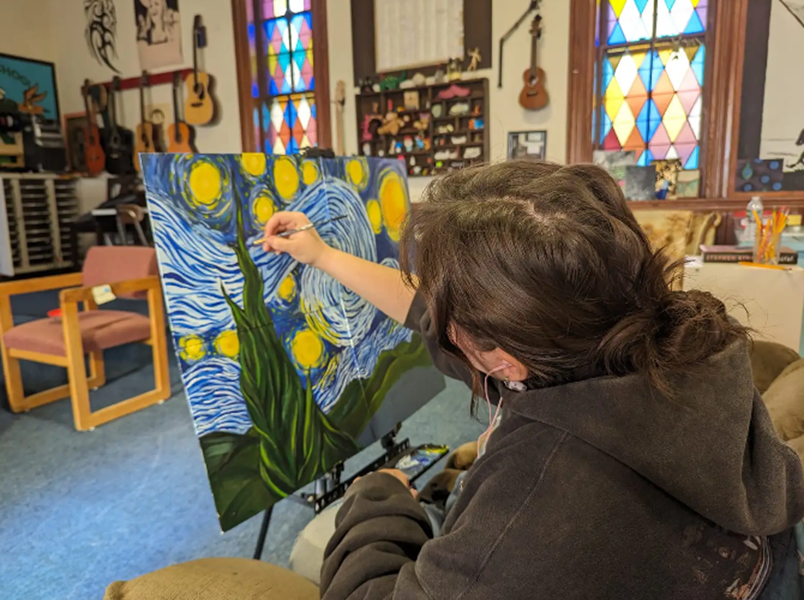
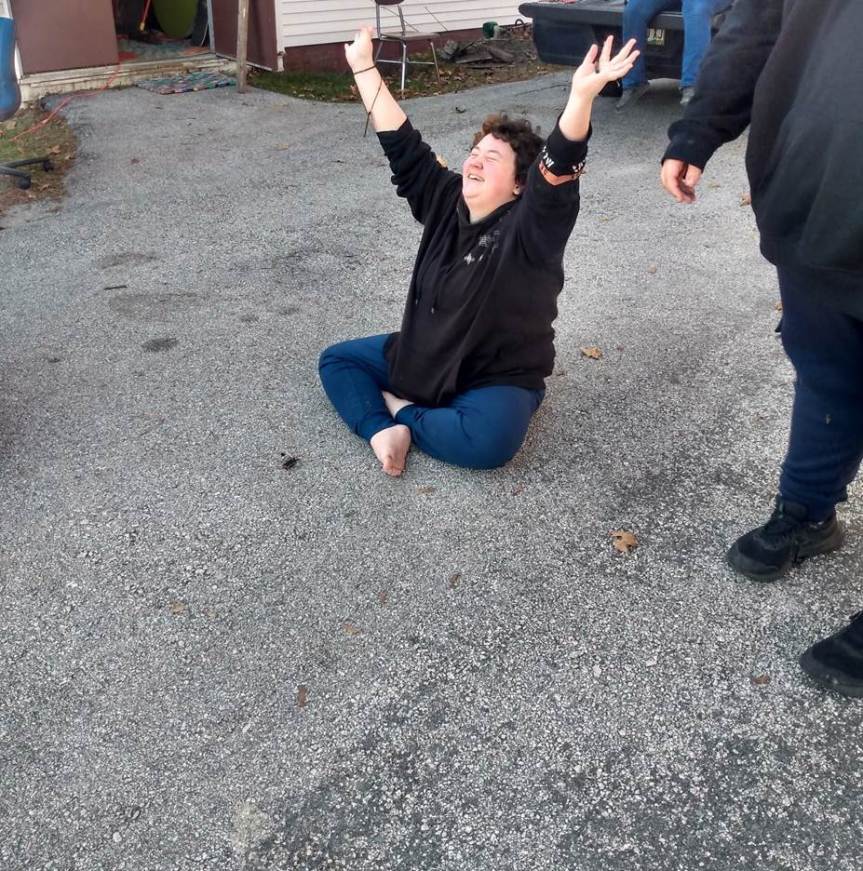
A REACH School student paints her version of The Starry Night.A REACH School student celebrates after learning how to start a primitive fire in ecology and igniting a spark for the first time.
Across classes, students regularly engage in group discussion, brainstorming, and collaborative problem-solving before transitioning into independent work.
“We hold students to high expectations,” Laplant said. “But we also meet them where they are.”
Life Skills, Responsibility, and Career Readiness
The REACH School integrates life skills instruction through “Adulting 101,” which includes budgeting, transportation, laundry, and independent living skills.
Students also participate in structured career exploration to support postsecondary planning and workplace readiness.
A defining feature of the program is shared responsibility for maintaining the school environment. With no custodial staff, students rotate duties such as cleaning, organizing, and maintaining shared spaces. This structure is intended to build accountability, independence, and real-world responsibility.
Student Support and Mentorship
The REACH School provides academic and social-emotional supports through school staff and community partnerships, reflecting broader statewide efforts to strengthen coordinated student support systems in alternative education settings.
The program partners with organizations such as Healthy Acadia and RSU 25 to provide access to recovery coaching, counseling supports, and social work services. These partnerships supplement available supports, particularly as demand for mental health and behavioral services continues to increase.
“It has helped us identify needs earlier and respond more quickly,” Cough said.
Within the school, additional support is provided through regular check-ins between staff and students focused on academic progress, well-being, and personal goals. Staff said these conversations are valuable for maintaining connection and early awareness of student needs, although capacity for formalized support remains limited.
As student needs continue to grow across alternative education programs statewide, educators say schools are increasingly relying on coordinated systems that combine school-based staff with regional providers to expand access without additional dedicated resources.
REACH School students enjoy the sun on a trip to Castine.
Due to the school’s small size, peer mentorship also plays a visible role in daily life. Students who have been in the program for a longer amount of time often support newer students as they adjust to academic expectations, routines, and the school environment.
A REACH School student volunteers at the library as part of the program’s weekly community service opportunities.
“We see students supporting each other in meaningful ways,” Laplant said.
School Culture and Daily Structure
Community-building is embedded in daily routines at the REACH School.
Each morning begins with a schoolwide meeting where students and staff participate in a “Question of the Day,” share updates, and engage in discussion. Topics often include personal experiences, school events, and broader social-emotional themes.
“As teachers, we participate in those conversations, too,” Cough said. “It helps build trust and openness across the school.”
Students who arrive late receive a shortened version of the meeting to remain connected to daily dialogue.
The school maintains traditions and student-led activities throughout the year, supporting connection, belonging, and engagement.
Post-Graduation Pathways
Graduates of the REACH School pursue a wide range of pathways, including college, technical training, employment, travel, volunteer service, and creative careers. Many remain connected to the program after graduation through volunteering or continued involvement with school activities.
Teachers and families often report increased confidence and independence among students who have completed the program.
“We hear from families and former teachers that students are completely different when they leave here than when they arrived,” Cough said.
As alternative education continues to evolve across Maine, the REACH School highlights how engagement-based instruction, real-world learning, shared responsibility, and strong relationships can help students reconnect with education and move toward meaningful future pathways.
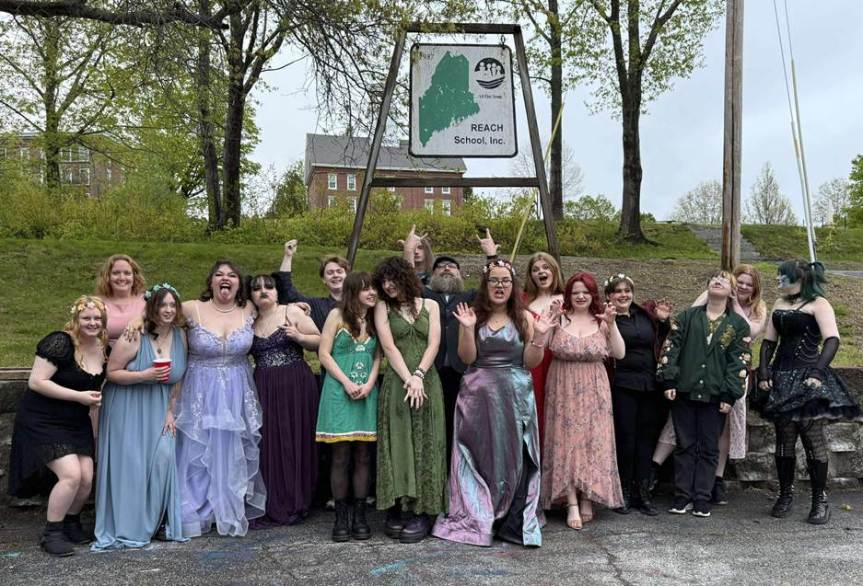
REACH Students at the first REACH Prom.
This story was written in collaboration with Rural Educational Alternative Community Middle/High (REACH) School as part of an ongoing series to highlight alternative education programs across Maine. For more information about alternative education, please visit the Maine DOE Alternative Education webpage. To submit a good news story to the Maine DOE, please fill out the good news submission form.
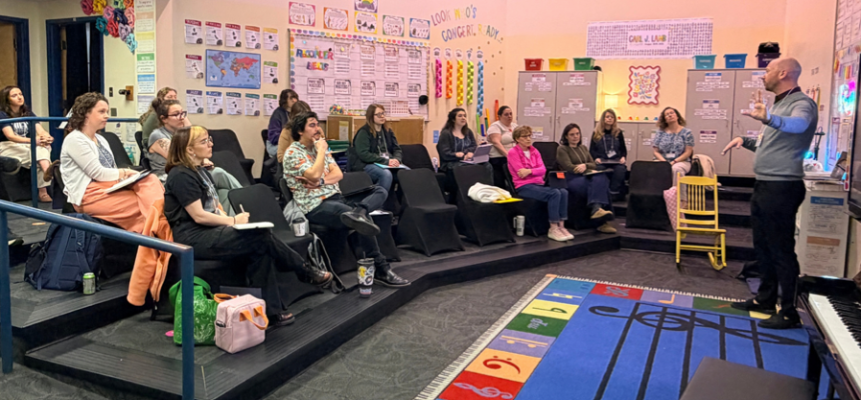
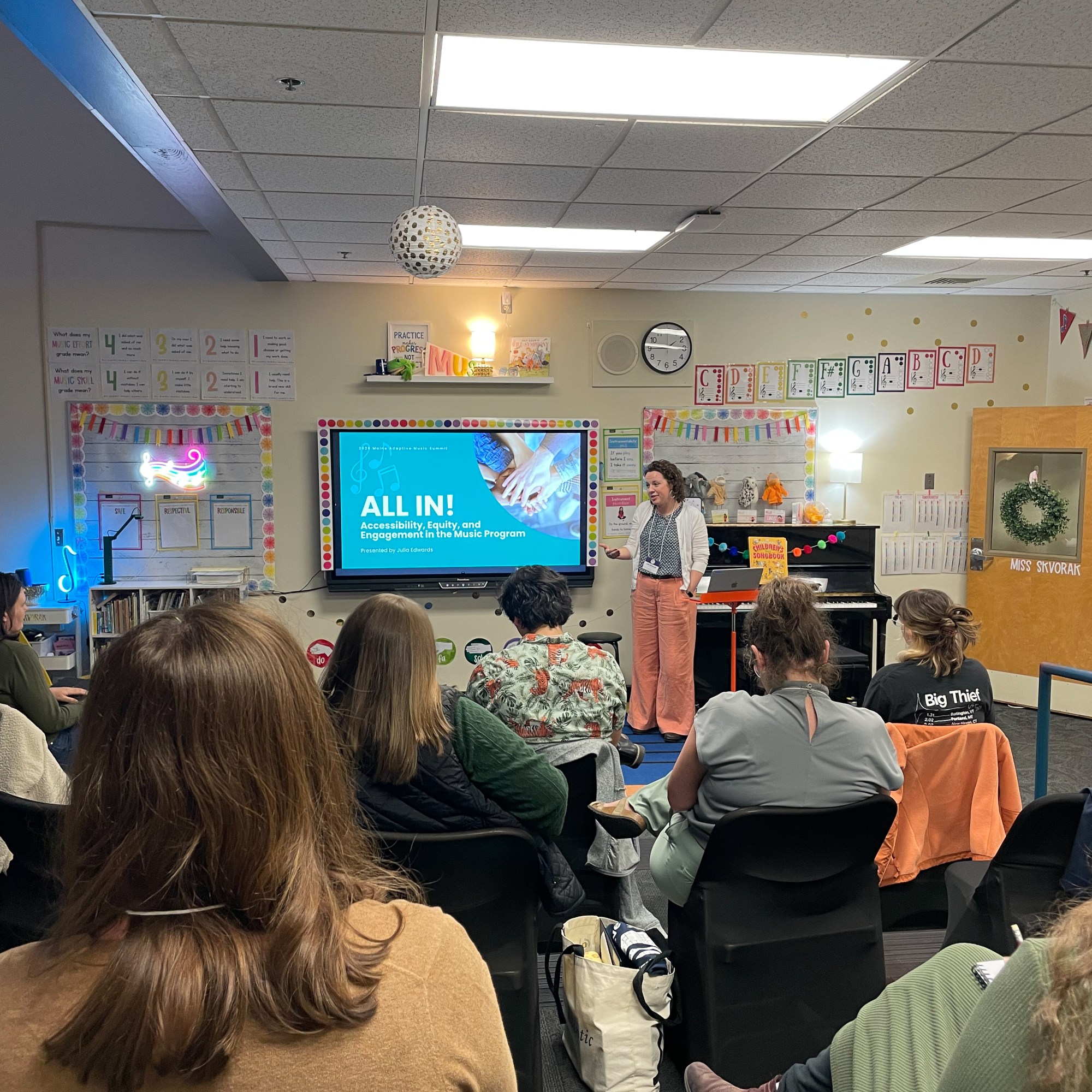
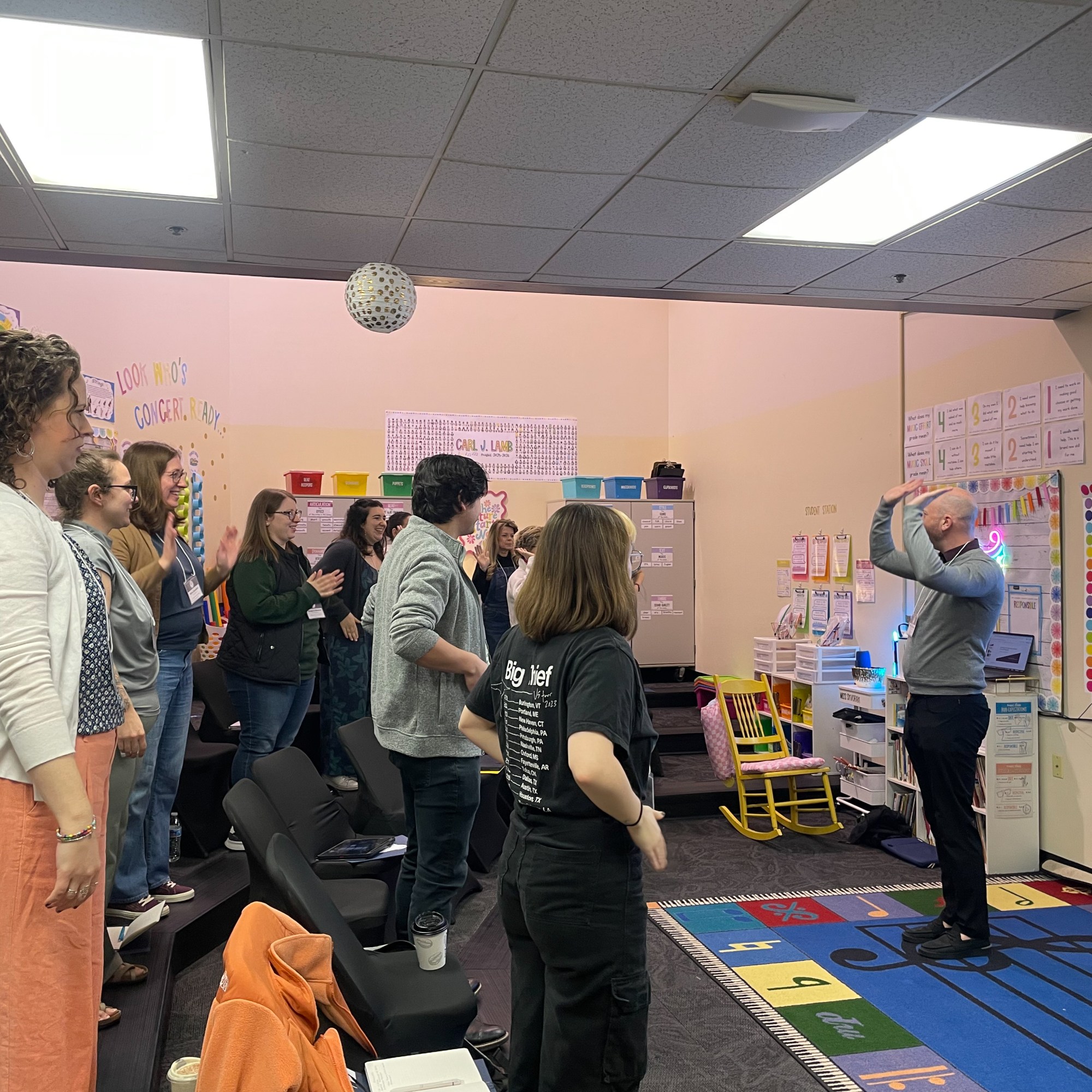
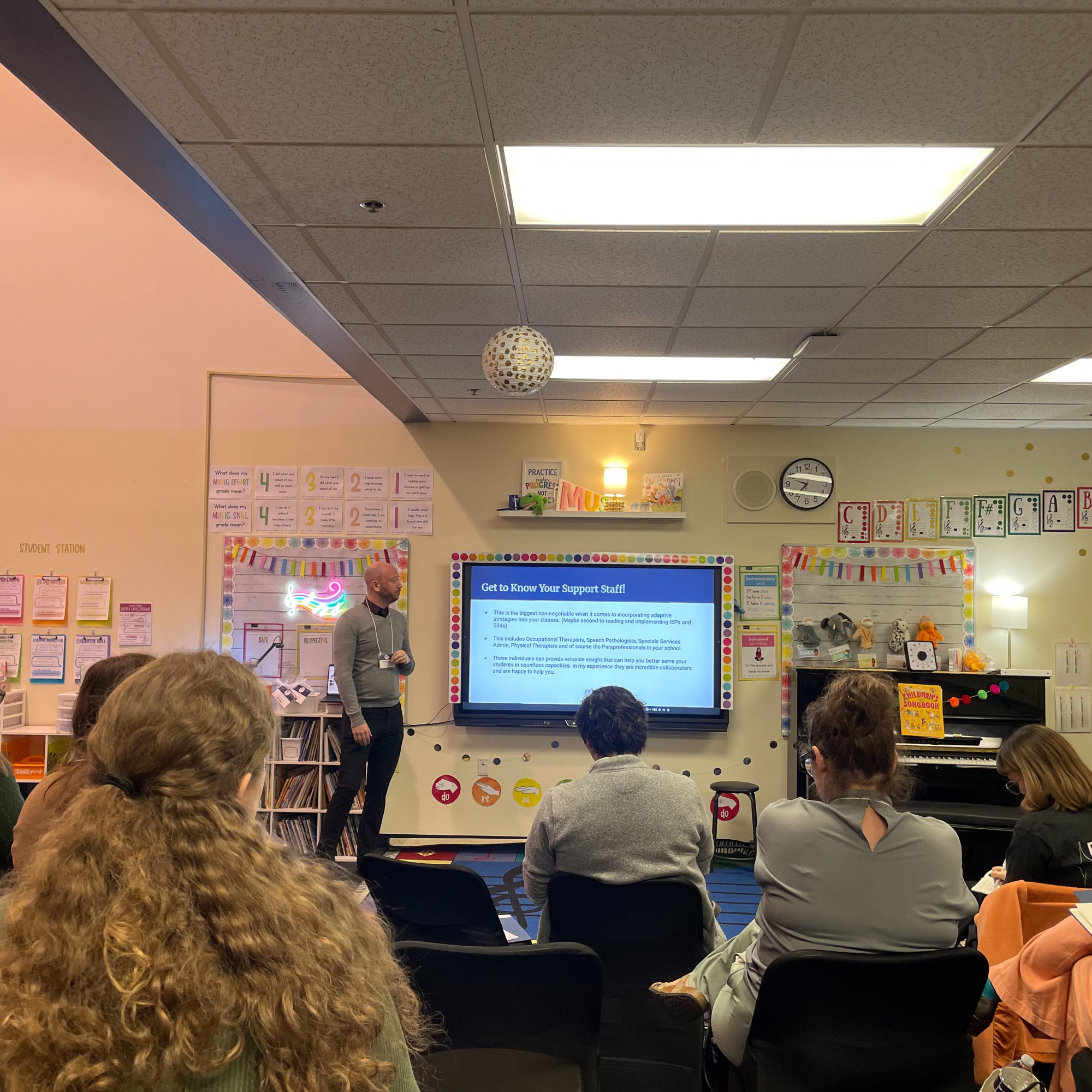
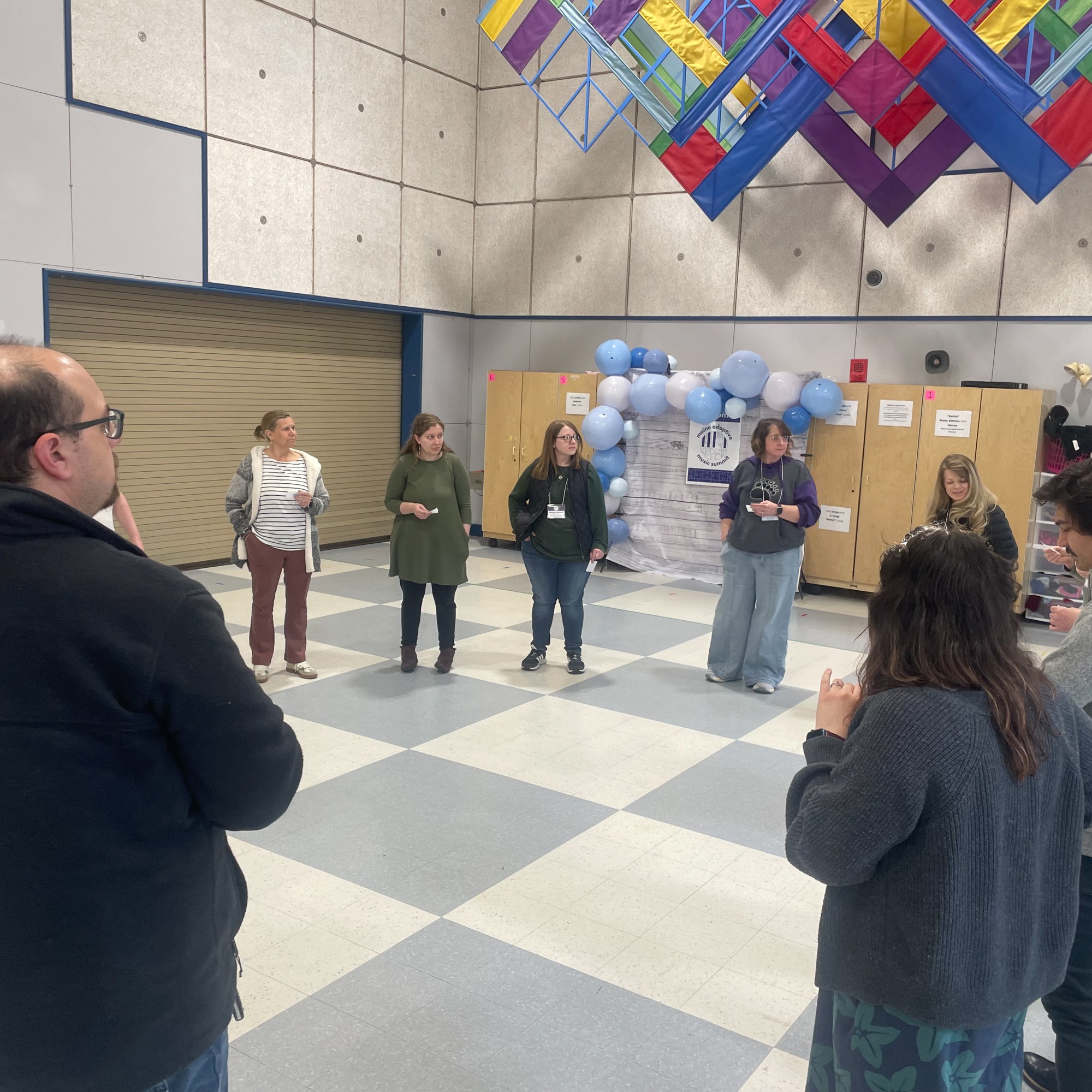
Carl J. Lamb Elementary School in Springvale opened its doors on Saturday, April 11, 2026, to host the second annual Maine Adaptive Music Summit. Organized by Carl J. Lamb music teacher Hattie Skvorak, the summit brought together music educators, special education teachers, and educational technicians for a full day of professional development focused on adaptive music education.
Adaptive music is about finding creative ways to make music class work for every student, whether that means modifying instruments, adjusting teaching approaches, or finding new strategies to support students with disabilities or learning differences.
The summit was born out of a gap Skvorak identified in available professional development.
“We were hearing feedback from ed techs that they wanted professional development on how to support their students in the special areas, with music being one of them,” Skvorak explained.
Skvorak said hosting the summit at Carl J. Lamb was an excellent opportunity.
“It was so wonderful to have other people in our space and see all the great things that our special educators and teams are doing,” Skvorak expressed. “It was so nice to hear them speak so highly of our school and all the work that we’re doing and the collaborative efforts being made between specialist teachers and special education teachers.”
A standout moment from this year’s summit was a presentation from Julia Edwards, the 2026 Maine Teacher of the Year, who spoke about making concert settings accessible for students, performers, and audiences alike.
“One of the things that is particularly meaningful about this event is the focus on collaboration,” Edwards said. “The focus spreads beyond the music classroom and celebrates the role music can play in other therapies and classrooms.”
Other sessions at the summit included “Opening the Doors to a Unified Choral Rehearsal” with choral music teacher Michael Gallagan, “Assisting Students During Specials” with special education teacher Ashley Walker, and “Music and Communication in Speech Therapy” with speech language pathologist Fran Bodkin, among others.
This year’s lineup also intentionally expanded beyond general music to include sessions relevant to secondary ensemble teachers, ensuring that band, choral, and orchestra educators all left with practical takeaways.
“Hattie Skvorak has done a remarkable job seeing a need and using her organizational magic to highlight innovative practices and celebrate the diversity in how our students learn,” Edwards added.
Carl J. Lamb ed tech Janelle Brooks attended the summit for the first time this year and described the day as eye-opening. She said her favorite moment came during Gallagan’s session, when the whole room was brought together to sing and keep rhythm.
“Listening to everybody come together with their voices making music was definitely my favorite part,” Brooks acknowledged.
Brooks said she also found it valuable to see how other districts approach adaptive music.
“It was really good to hear them talk about how their district does things,” Brooks added.
With presenters traveling from as far as New Hampshire, and additional participants joining via Zoom, Skvorak said she hopes to eventually include all of New England in the summit and is already thinking about what next year could look like.
“It seems like it’s starting to catch on beyond Maine,” Skvorak said.
This story was submitted by the Sanford School Department. To submit a good news story to the Maine DOE, please fill out the good news submission form.
The Maine Department of Education (DOE), in partnership with the Maine Department of Health and Human Services (DHHS), is pleased to announce the return of the SUN Bucks and SUN Meals programs in the summer of 2026. These programs, funded by the U.S. Department of Agriculture (USDA), help to ensure that Maine children continue to have access to healthy, nutritious food during the summer months when school meals and snacks are not available. | More
This morning, the Maine Department of Education (DOE) filed an emergency rule to protect the health, safety, and educational rights of students with disabilities and the dedicated professionals who serve them. This change allows private schools serving as educational placements for students in special education to be parties in mediations, due process hearings, and expedited due process hearings. The emergency rule takes effect immediately upon its filing on June 12, 2026. | More
On Thursday, May 21, 2026, the Maine Department of Education (DOE) Office of Special Services and Inclusive Education hosted its third annual “I Belong” Youth Summit at Central Maine Community College in Auburn. Every spring, this event provides an opportunity for students with disabilities from across Maine to explore post-secondary pathways as they approach “transition” age—the time for planning for adult life after high school. | More
The Maine Department of Education (DOE) Office of Teaching and Learning is pleased to announce the award of a one-time, competitive Later Secondary School Start Time Planning Grant to Augusta Schools, in the amount of $75,000. | More
The Maine Department of Education (DOE) is pleased to join the Maine Curriculum Leaders Association (MCLA) in recognizing two outstanding educational leaders whose dedication to teaching, learning, and student success has made a lasting impact in their schools and communities. | More
When students in Rachel Norgang’s second- and third-grade classes at Monroe Elementary School learn about economics, they don’t just read about businesses in a textbook. They visit gravel pits, tour working farms, explore event venues, and meet artists whose work is displayed around the world. | More
From April 6-16, 2026, Athens Community School held its annual “One School, One Book” project, designed to use literature to connect classrooms, families, and communities and bring attention to important issues. | More
For some students, success in school begins when learning becomes more flexible, personalized, and connected to real life. At the Alternative Learning Program (ALP) located within Mt. Blue High School, alternative education teachers are working to create that environment through relationship-based instruction, project-based learning, and opportunities that extend beyond the traditional classroom. | More
As more Maine elementary schools expand their preschool offerings and implement whole-student approaches across the pre-K through grade 3 span, elementary administrators have expressed a need for professional learning tailored to early learning leadership. In response, the Maine DOE created the Leading Early Learning Fellowship, a dynamic professional learning series designed to meet these needs and support leadership development. Since its launch in 2021, the Fellowship has served five cohorts of elementary school leaders. The next Leading Early Learning Fellowship cohort will launch during the 2026-2027 school year. Applications will be accepted through July 10, 2026. | More
Registration is now open for ElevatED 2026, a dynamic summer professional learning experience designed to inspire, connect, and support Maine’s education workforce through meaningful collaboration and practical learning opportunities. | More
The Maine Department of Education (DOE) is sharing a summer professional learning opportunity for educators interested in strengthening Holocaust and human rights education in the classroom. | More


 Maine DOE Newsroom