Maine DOE Update – August 12, 2022

From the Maine Department of Education


Reporting Items

| Visit the DC&R Reporting Calendar |


News & Updates

Maine DOE Hosts First ‘Teachers of Adult Multilingual Summer Institute’ Drawing in Rural Districts Eager to Support New Learners

As the housing crisis felt across Maine has driven some of Maine’s newest multilingual residents out of urban areas and into rural parts of our State, the Maine Department of Education (DOE) and Maine’s adult education multilingual learning programs are right there to provide the support they need. |  More

Gifted and Talented Program Update Form is Now Live

The 2023 Gifted and Talented (GT) program update form is now live on the Multitiered Systems of Development – Gifted and Talented (MTSS-GT) website. Rather than a full application, we will be collecting district GT program information through a short survey. This survey allows the Maine Department of Education (DOE) an opportunity to take a “pulse check” of GT programming happening around the state. The survey is titled, “Gifted and Talented District Update Survey 2023” and is located under the MTSS banner. |  More

Nominations and Applications are Now Open for the Presidential Awards for Excellence in Mathematics and Science Teaching (PAEMST)

The National Science Foundation (NSF) is currently accepting nominations and applications for the Presidential Awards for Excellence in Mathematics and Science Teaching (PAEMST). PAEMST is the highest recognition that a Kindergarten through 12th grade science, technology, engineering, mathematics, and/or computer science educator may receive for outstanding teaching in the United States. Since 1983, more than 5,100 teachers have been recognized for their contributions to mathematics and science education. Up to 108 awardees may be recognized each year. Maine is proud to have honored over 80 exceptional educators for their contributions! |  More


Maine Schools Sharing Success Stories

| Submit your Maine School Success Story |


Professional Development & Training Opportunities

| Visit the Professional Development Calendar |


Latest DOE Career/Project Opportunities: View current Maine Department of Education employment opportunities here


The Power of Puppets: Sharing Summer Success in the 21stCCLC Program

Lights, Camera, Action! Campers at Dirigo Elementary School, a 21st Century Community Learning Centers CCLC program site, have been perfecting their puppeteer skills through music. James Hamalainen, music teacher at Dirigo Middle School, worked with each group to create their own music, write lyrics and produce the final show.  Improvising, writing songs, practicing lines, character development and dancing are some of the areas students explored while building their self esteem in a fun, supportive environment.

Puppets are a powerful educational tool that can help students overcome anxiety, and foster self confidence. When combined with music it can help improve language skills, as well as social and emotional development. Research shows that the isolation over the last few years has caused a significant number of elementary students to fall far behind in language, communication and social development. Learning experiences like this can begin to address these concerns to help students progress academically.

RSU 56, in partnership with Oxford County Mental Health Services (OCMHS), is a 21st Century Community Learning Center (21stCCLC) program based at Dirigo Elementary School in Peru, Maine.

Funded through the U.S. Department of Education’s Nita M. Lowey 21st Century Community Learning Centers (CCLC) program, Maine currently has 35 CCLC grants and 61 CCLC sites across Maine that provide academic enrichment opportunities during non-school hours for children, particularly for students who face economic and/or academic challenges. With strong community partnerships at the core of every one of its programs, Maine’s 21st Century Learning Centers help students meet academic goals and offer a broad array of enrichment activities, in addition to other educational and engagement opportunities for communities and families. Learn more about Maine’s CCLC grant opportunities at https://www.maine.gov/doe/learning/esea or reach out to Travis Doughty at travis.w.doughty@maine.gov.

Maine DOE Hosts First ‘Teachers of Adult Multilingual Summer Institute’ Drawing in Rural Districts Eager to Support New Learners

As the housing crisis felt across Maine has driven some of Maine’s newest multilingual residents out of urban areas and into rural parts of our State, the Maine Department of Education (DOE) and Maine’s adult education multilingual learning programs are right there to provide the support they need. 

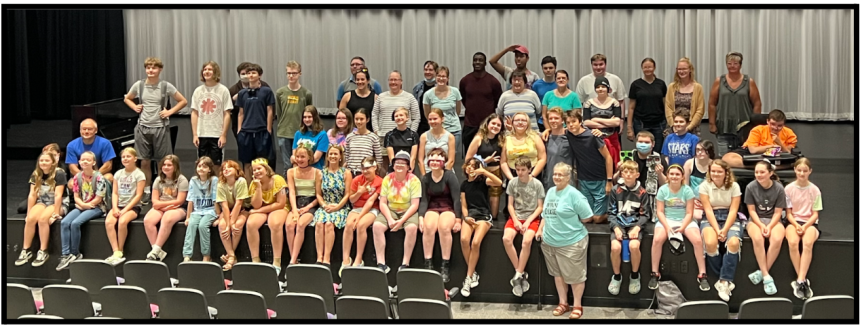
The first-ever, “Teachers of Adult Multilingual Summer Institute” was held in Sugarloaf and virtually recently. Hosted by Maine DOE’s Adult Education Team and endearingly referred to as, “Camp Sugarloaf,” the gathering featured nationally renowned educator and speaker Jayme Adelson-Goldstein who led a workshop, which took place over the course of the three-day institute, on implementing high-leverage practices and differentiation in virtual and  in-person multilingual classrooms with interactive activities that enabled participants to get to know each other and dig into valuable content and best practices for educating adult learners who are multilingual. 

In addition to Adelson-Goldstein’s full group sessions, the institute also offered various breakout sessions led by educators working in some of Maine’s more urban adult education programs.  

While Rochelle Yanike Hale from Portland Adult Education led a session on “How to Increase Student Writing in a Remote Class,” Virginie Akimana from Portland Adult Education hosted a session on, “Considerations for Working with Adult Multilingual Learners,” and Tekia Cox from Augusta Adult & Community Education hosted participants for a Roundtable Discussion on Orientation for Multilingual Learners. Also offering sessions were Kelli Park from University of Southern Maine (USM)/Merrymeeting Adult Education, Elizabeth Cuccinello DiLalla from RSU 13 Adult & Community Education, Moira Taylor from Portland Adult Education, Lisa Parisio from Immigrant Legal Advocacy Project, Amy Hatch from Lewiston Adult Education, and Anya Enright from EnGen. 

Members of Maine DOE’s Adult Education Team also hosted various other sessions on everything from CASAS (assessments) to community resources, and the Teaching the Skills That Matter (TSTM) Toolkit. In addition, the institute also provided participants with ample opportunities for networking, relaxing, and communicating and collaborating with each other across the three-day event.    

Meet the Adult Education Team: 

Back row: Kelley Heath- Adult Ed Data/High School Education Coordinator, Amy Hatch-Adult Ed MaineStars Data Entry, Christy Le-Adult Ed Micro-credential Assistant, Tammy Ranger- Director, Workforce Development & Innovative Pathways 

Front row: Megan Dichter- Adult Ed Workforce Development/ESL Coordinator, Amy Poland- Adult Ed Prof Dev/ME College Transition Coordinator, Monique Roy-Director Adult Education 

While this is the first official Summer Institute hosted for Maine’s adult educators, the Maine DOE’s Adult Education Team hopes to plan a summer institute annually each year going forward. 

Gifted and Talented Program Update Form is Now Live

The 2023 Gifted and Talented (GT) program update form is now live on the Multitiered Systems of Development – Gifted and Talented (MTSS-GT) website. Rather than a full application, we will be collecting district GT program information through a short survey.  This survey allows the Maine Department of Education (DOE) an opportunity to take a “pulse check” of GT programming happening around the state.  The survey is titled, “Gifted and Talented District Update Survey 2023” and is located under the MTSS banner.

All Maine districts are asked to complete the survey regardless of whether they have current GT programming, waiver status, etc. The purpose of the survey is to collect current programming information of Gifted and Talented services and is not a full program application.  The survey is currently live, and will be open through September 30th, 2022.

Got Questions?

If you have any questions about this year’s process, consider joining a MTSS-GT office hour!  The MTSS-GT office hour happens every Tuesday from 12:00 PM – 1:00 PM throughout the summer.  September office hours will be Tuesday’s from 3:30-4:30 PM each week.  You can obtain the link for the office hours is here.

A Year of Success and Innovation: Rethinking Responsive Education Ventures at MSAD 17

The first round of RREV (Rethinking Responsive Education Ventures) Awardees were announced in August of 2021. RREV is an initiative of the Maine Department of Education, funded by the Education Stabilization Funds through the US Department of Education’s Rethink K-12 Education Models, that bolsters Maine educators’ innovative efforts to support their students with agile, effective, and resilient learning experiences that improve learning outcomes for all students. Now, after a year of experience and development, the Department of Education would like to thank the awardees for their dedication to innovative education and highlight their achievements that have resulted from the RREV contracts over the past year. Continue reading to learn more about the ways in which Agnes Gray has used their RREV funding this past year.

After noticing students’ need for extra academic and social health assistance over the past few years, Agnes Gray Elementary School in MSAD 17 knew they needed to offer students improved help on their paths to success. For them, the solution was clear: taking the kids outside. When they began their RREV journey in August of 2021, educators at Agnes Gray aspired to hire an Outdoor Learning Coordinator to work regularly with students and teachers to provide meaningful outdoor learning experiences and to build a fully furnished yurt to provide shelter for outdoor learning in inclement weather. Now, a year later, they have fostered a culture of encouragement and are proud to say that every single classroom has gotten outside and used the outside environment for learning regularly.

Outdoor Learning Coordinator Sarah Timm says this past year, she has had to rely on her teamwork skills to build an outdoor curriculum for students. A lot of the outcome, she says, relies on teachers comfort level with the outdoors. While some teachers were eager to get outside, others were more hesitant, and that’s okay, Timm says. She believes that in order for this pilot to work, educators have to be allowed to grow at their own pace and they need to know that “any teacher can go outside at any time.” What’s important is not how much time they are spending outside, but rather how they are using their time outside: the outdoor learning is successful because of the engaging activities that incorporate the environment surrounding students, not just their location outside the school building.

By working with teachers at their comfort level, Timm has been able to create outdoor units for every grade, allowing all students to experience outdoor learning. A point she emphasizes is that outdoor learning isn’t just for science. First graders took their social studies units outside and fifth graders took their reading outside. Students from all grades experienced movement breaks as well, which are short trips outside designed to get students moving while they learn. One group of first graders even collected acorns on a movement break, which a retired teacher then turned into flour which she then used to bake muffins for them. Another group pretended to be the earth and the sun and explain why seasons happen and why days are shorter in the winter.

It’s not just movement breaks that allowed kids to get a break from the classroom, though. Many classes taught entire units outside. These units are specially designed to create authentic learning by using the outdoor environment to make the learning more relevant. The kindergarteners spent time identifying birds and building shelters in the woods. Second graders were able to learn most of their life science units outside, along with some social studies, even constructing their own Native American Museum after researching and recreating existing artifacts. Other students and parents then had the chance to visit the second graders’ museum, which was constructed in the school’s post and beam cabin. In third grade, students took on an engineering unit. They spent time outside during the winter learning how to build bridges with snow and learning about force through pulling each other on sleds. They also got to incorporate some meteorology into their studies, learning which kinds of snow stick best to make bridges. In fourth grade, students took on service-learning projects, investigating the old stonewalls surrounding their campus and mapping out new trails through the woods. For students in fifth and sixth grade, most of their science courses were completed outside, learning about and visualizing the water cycle. They also covered history lessons outside, creating, growing, and defending their own ancient civilizations in the woods.

Timm believes, “taking kids outside isn’t just cute and it doesn’t just feel right – it is right.” Since starting this outdoor program, she says, they have seen an impact on students’ engagement and interest. They are more focused, and they are eager to learn because their learning is authentic, curated, and engaging. “This is what we did when we were in school,” Agnes Gray Principal, Catherine Bickford, says, choosing to view this introduction to the outdoors as a return to teaching methods that have been abandoned in recent years. Bickford believes they are simply learning and reinventing from past mistakes, not creating entirely new ideas, and thinks that is key to sharing this innovation with other schools.

Over the course of the next year, Timm is excited to develop new outdoor units for Agnes Gray educators to incorporate into curriculum and bring their students outside for even more authentic learning. Timm and Bickford also hope to “take the show on the road” by expanding the programming to other elementary schools in the district. They are looking to create a menu of units to take to educators so that they are aware of the many options available to them for taking students outside, no matter their comfort level. They also hope to show educators in their district, and across the state, that it does not take much to bring learning outside, especially if they collaborate in the ways that Timm and Bickford aspire to.

Martin Mackey, the former RREV Project Director who tragically passed away in April of this year, embodied the RREV spirit: to think and act boldly to meet the needs of students. His passion was to “change lives.” As such, he challenged each and every RREV participant to do just that as they designed pilot ideas that would ultimately have a lasting systemic impact on students.  After 18 months of leading RREV, Martin’s passion had been passed on to almost 200 educators who had participated in innovation professional development. From those educators, 27 Pilot ideas were brought to fruition and have received over $5.7 million in RREV awards. Through their pilot ideas, these educators have pledged to commit themselves to innovation.

The Maine DOE encourages all schools and districts across the State of Maine to learn more about these innovative educators and their RREV pilots through the RREV website and the online RREV collaborative platform known as EnGiNE. It is through EnGiNE that we all hope to continue the Martin Momentum to change students’ lives through innovative and responsive educational programs.

Nominations and Applications are Now Open for the Presidential Awards for Excellence in Mathematics and Science Teaching (PAEMST) 

The National Science Foundation (NSF) is currently accepting nominations and applications for the Presidential Awards for Excellence in Mathematics and Science Teaching (PAEMST). PAEMST is the highest recognition that a Kindergarten through 12th grade science, technology, engineering, mathematics, and/or computer science educator may receive for outstanding teaching in the United States. Since 1983, more than 5,100 teachers have been recognized for their contributions to mathematics and science education. Up to 108 awardees may be recognized each year.  Maine is proud to have honored over 80 exceptional educators for their contributions! 

Marshalyn Baker, Secondary Mathematics Awardee (1994) shared the value of accepting the nomination and the impact on her life, “Receiving this award took me on a professional and personal journey of a lifetime. I took on leadership roles with ATOMIM and NCTM Affiliate Services and the Board of Directors, met and worked with NASA scientists, and leveraged classroom resources and knowledge to better teach my students. I traveled extensively to speak at conferences and share and collaborate with a fabulous professional community. I felt valued and honored to be a mathematics educator from a rural state.” 

This current cycle will recognize educators teaching grades 7-12.  Anyone—principals, teachers, parents, students, colleagues, Higher Education partners, association members, or members of the general public—may nominate a teacher by completing the nomination form. To submit a nomination, you’ll need the teacher’s name, email address, and school contact information. Teachers may also initiate the application process themselves at www.paemst.org. 

2022-2023 One-Page Outreach Flyer

2022-2023 One-Page Outreach Flyer (Spanish)

Eligibility 

Applicants must: 

  • Teach science, technology, engineering, or mathematics as part of their contracted teaching responsibilities at the 7-12 grade level in a public (including charter) or private school; 
  • Hold at least a bachelor’s degree from an accredited institution; 
  • Be a full-time employee of their school or school district as determined by state and district policies, with responsibilities for teaching students no less than 50% of the school’s allotted instructional time; 
  • Have at least five years of full-time employment as a K-12 teacher prior to the 2022-2023 academic school year, with science, technology, engineering, or mathematics teaching duties during each of the past five years; 
  • Teach in one of the 50 states, the Department of Defense Education Activity schools, or the U.S. Jurisdictions of the District of Columbia, the Commonwealth of Puerto Rico, or as a group American Samoa, Guam, the Commonwealth of the Northern Mariana Islands, and the U.S. Virgin Islands; 
  • Be a U.S. citizen or permanent resident; and 
  • Not have received the PAEMST award at the national level in any prior competition or category. 

Why apply/nominate? 

Please consider nominating outstanding STEM teachers today! By nominating a teacher, you play an important role in elevating Maine’s education workforce.    

Recipients of this prestigious Presidential award receive the following: 

  • A certificate signed by the President of the United States. 
  • A paid trip to Washington, D.C., to attend a series of recognition events and professional development opportunities. 
  • A $10,000 award from the National Science Foundation. An
  • opportunity to build lasting partnerships with colleagues across the nation. 

Important Dates 

For secondary 7-12, the nomination deadline is January 9, 2023, and the application deadline is February 6, 2023.  Secondary 7-12 educators will be eligible to apply during the current cycle.  Nominations are encouraged early so that educators have ample time to submit applications!  

Questions? Contact: 

Emily Doughty, PAEMST Coordinator, Emily.doughty@maine.gov  

To learn more about the ways in which Maine is striving to attract, support, and sustain a strong educator workforce please visit the Teach Maine plan’s webpage: https://www.maine.gov/doe/exploreeducation/teachmaine.   


Maine DOE Update – August 5, 2022

From the Maine Department of Education


Reporting Items

WEBINAR: Graduation Reporting

The Maine Department of Education Data Team is holding a Graduation Reporting webinar Tuesday August 9th at 10am. We will be discussing the graduation certification report and related procedures for validating and clearing up any issues on the report. This certification is due by August 30th, so attendance is strongly encouraged for those charged with validating this report. |  More

| Visit the DC&R Reporting Calendar |


News & Updates

Priority Notice: 2nd Round of Grant Funds Available to Support the Expansion of Public Pre-K

As part of the Maine Jobs and Recovery Plan, Governor Mills allocated $10 million of the federal American Rescue Plan Act (ARPA) funds appropriated for Maine for public pre-k infrastructure to increase the number of 4-year-olds enrolled in public pre-k across the state. For the 2022-23 school year, 12 SAUs were awarded funding to expand or start new pre-k programs.|  More

National Board Scholarship Application Window Now Open

Are you a Maine public school teacher who is interested in becoming National Board Certified? Are you a school administrative unit that is eager to offer this exceptional professional learning opportunity to your teachers?  State law, 20-A MRSA Section 13013-A subsection 5 & 6; as amended by PL 2012 c. 702, established the National Board Certification Scholarship Fund to encourage teachers to apply to, and enroll in, the certification program offered by the National Board for Professional Teaching Standards, or its successor organization. |  More

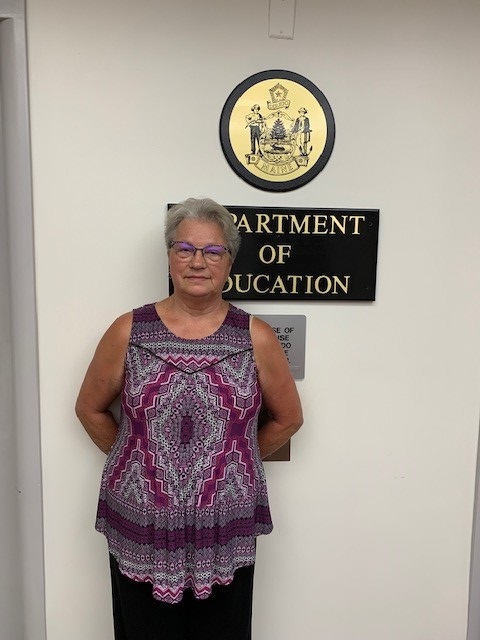
Get to Know the Maine DOE: Meet Gina Post

Maine DOE Team member Gina Post is being highlighted as part of our Get to Know the Maine DOE Team campaign. Learn a little more about Gina.. |  More


Maine Schools Sharing Success Stories

| Submit your Maine School Success Story |


Professional Development & Training Opportunities

WEBINAR: WIDA Screener Online

The WIDA Screener Online is Maine’s statewide English language proficiency screening assessment for students in Grades 1-12. As part of the Maine Department of Education’s (DOE) multilingual learner identification policy, all students with a primary/home language other than (or in addition to) English must be screened to determine whether they quality for English for Speakers of Other Languages (ESOL) services. |  More

WEBINAR: Screening for Early Literacy Milestones, Dyslexia, and other Reading Disabilities

Dr. Nadine Gaab will host a webinar, “Screening for Early Literacy Milestones, Dyslexia, and other Reading Disabilities: The WHY, WHEN, WHO, HOW and WHERE on September 28, 2022 from 3:30-4:30 pm |  More

WEBINAR: Outcome-Oriented Planning for Transition-age Youth

Transition planning is critical to ensuring that students’ educational experiences result in success after graduation. But transition planning can also be a daunting task for educators and other practitioners. What are the right pathways to get our students where they need to be? Where do we begin? This session will discuss how we can use person-centered and backwards planning to anchor transition to the outcomes students want for themselves. |  More

IN-PERSON TRAINING: Amplifying Students’ Voices in the Transition Process: Outcome-Oriented Planning using Person-Centered Approaches

We can promote success for our students by partnering with them to understand their visions for the future and amplify their voices in the transition planning process. But how can we provide a structure for students to articulate their visions? How can we make time for students to engage in the experiences they need to achieve their future goals among other instructional priorities? |  More

Free Viewing of ‘Truth Tellers’ Documentary on Racial Equity, Climate Justice, and Indigenous Rights; Follow-up Conference Scheduled for 11/5

All Maine educators and pre-service teachers are invited to view, “Truth Tellers” a film chronicling the lives of courageous Americans fighting for racial equity, climate justice, and indigenous rights through the eyes of Robert Shetterly, a long-time activist, and Maine artist. Truth Tellers is both a story of Shetterly’s art and activism and a history lesson in what it means to be a citizen of a democracy. The film will be available for viewing on August 16th and 17th from the comfort of your own home. |  More

WEBINAR: The Role of School Mental Health Professionals in Supporting School Safety Efforts

The U.S. Department of Education, Office of Elementary and Secondary Education, Office of Safe and Supportive Schools and its Readiness and Emergency Management for Schools (REMS) Technical Assistance (TA) Center will host a Webinar on Tuesday, August 16, 2022, from 12:00 p.m. to 1:00 p.m. ET. This Webinar will highlight the role of mental health professionals in supporting school safety efforts at the local level. |  More

| Visit the Professional Development Calendar |


Latest DOE Career/Project Opportunities: View current Maine Department of Education employment opportunities here


Priority Notice: 2nd Round of Grant Funds Available to Support the Expansion of Public Pre-K

As part of the Maine Jobs and Recovery Plan, Governor Mills allocated $10 million of the federal American Rescue Plan Act (ARPA) funds appropriated for Maine for public pre-k infrastructure to increase the number of 4-year-olds enrolled in public pre-k across the state. For the 2022-23 school year, 12 SAUs were awarded funding to expand or start new pre-k programs.

The Maine DOE is excited to announce another round of public pre-k expansion funding for school year 2023-24.

Currently, public pre-k in Maine is not universally available for all 4-year-olds. While the cognitive and social-emotional benefits of high-quality pre-k are well documented, there are a variety of factors that contribute to the ability of School Administrative Units (SAUs) to offer public pre-k and the extent to which they can enroll all eligible 4-year-olds from interested families. This funding will help expand pre-k opportunities across Maine.

Maine SAUs interested in starting or expanding public pre-k are encouraged to apply for funding through the Pre-K Expansion Request for Applications (RFA). SAUs will be able to use the funding, in combination with Essential Programs and Services allocations, to start new pre-k programs and/or expand existing programs from part-day/part-week to full-day/full-week programs. Funding may also support public pre-k programming through partnerships between SAUs and community providers.

A timeline for the RFA process is provided below.

  • August 5, 2022–RFA released
  • August 23, 2023–Informational session for interested parties, 10:00 a.m.-12:00 p.m.
  • September 22, 2022-RFA question submittal deadline
  • September 30, 2022—RFA answers to questions posted publicly
  • October 13, 2022—RFA submission deadline

An informational meeting has been scheduled for Tuesday, August 23 from 10 am-12 pm. Those wishing to learn more about the Pre-K Expansion RFA and ask questions may attend through this link. This meeting will be recorded and made available on our Early Childhood Professional Learning and Resources page.

For the 12 SAUs previously awarded grants in the first round, there will be a separate opportunity to apply for additional funding to support current projects later in fall of 2022 or winter of 2023.

All questions about the Pre-K Expansion RFA should be submitted to the Pre-K Expansion Grant Coordinator identified on the Grant RFPs and RFAs webpage.

Additional questions regarding this announcement should be directed to Pre-K RFA Coordinator jane.kirsling@maine.gov.

IN-PERSON TRAINING: Amplifying Students’ Voices in the Transition Process: Outcome-Oriented Planning using Person-Centered Approaches

We can promote success for our students by partnering with them to understand their visions for the future and amplify their voices in the transition planning process. But how can we provide a structure for students to articulate their visions? How can we make time for students to engage in the experiences they need to achieve their future goals among other instructional priorities?

This training will provide strategies for assessing and promoting career pathways through education, work experiences, and other predictors of post-school success. You will engage in community resource mapping with other training participants using case studies to identify and plot resources within your communities. The session will culminate in each participant’s creation of an individualized action plan to bring back to your school, agency, or community with support from the trainers and other participants.

Date and Time: Thursday, September 22, 2022, 10:00am-2:00pm ET

Location: University of Maine at Augusta campus

Presenters: Josh Taylor (UMaine), Janet May (UMaine- Center for Community Inclusion and Disability Studies), and Gina Oswald (UMaine-Farmington)
Cost: $75.00

Register today! Once you register, you will receive an automated email confirming your registration, with directions to the training site.

Questions: Contact Lara Enein by email at lara.enein@umb.edu

Free Viewing of ‘Truth Tellers’ Documentary on Racial Equity, Climate Justice, and Indigenous Rights; Follow-up Conference Scheduled for 11/5

All Maine educators and pre-service teachers are invited to view, “Truth Tellers” a film chronicling the lives of courageous Americans fighting for racial equity, climate justice, and indigenous rights through the eyes of Robert Shetterly, a long-time activist, and Maine artist. Truth Tellers is both a story of Shetterly’s art and activism and a history lesson in what it means to be a citizen of a democracy. The film will be available for viewing on August 16th and 17th from the comfort of your own home.

There will be a follow-up conference on Saturday, November 5th, focusing on how all disciplines can bring this important work to students. Attendance at the November 5th workshop is encouraged but not required.

This FREE opportunity is sponsored by Maine County and State Teachers of the Year Association, Maine Math and Science Alliance, Maine Arts Education Partners in Leadership, and Maine Art Education Association.

For access to this documentary, please register here. The link to view the film will be sent on Monday, August 15th.