Maine Youth Action Network Offering Free Trainings Focused on Youth Engagement, Social Emotional Learning, and more!

For the 2019-2020 academic year, Maine Youth Action Network (MYAN) is hosting 26 free Continuing Education Trainings that are focused on Youth Engagement, Social Emotional Learning, and more. Each of these trainings are free to attend, offer CEUS, and provide lunch.

Transforming Knowledge into Action

Participate in a learning cohort with other emerging leaders in the youth engagement field. This three-part series provides participants with train-the-trainer content on youth mentoring best practices, engagement & retention strategies, and youth facilitation strategies. You’ll leave with training materials, strengthened skills, and deeper connections to other youth workers in your community.

This series follows a cohort model. Over the course of the three trainings, you’ll have the opportunity to connect with a consistent community of professionals in your field to share strategies and challenges, build connections, and develop new skills to take back to your work.

For those unable to commit to a cohort, each training will be offered individually in the Augusta area:

Emerging Best Practices of Youth Prevention

Join the MYAN team for a three-part series focused on leveraging prevention best practices to effectively engage youth within our communities. Learn the neuroscience behind why scare tactics miss the mark in adolescent brains, strategies for directly involving youth in prevention-focused research, and how to grow and sustain lasting, supportive relationships with any young person.

This series follows a cohort model. Over the course of the three trainings, you’ll have the opportunity to connect with a consistent community of professionals in your field to share strategies and challenges, build connections, and develop new skills to take back to your work.

For those unable to commit to a cohort, each training will be offered individually in the Augusta area:

Two-Day Intensive Workshops

Join us for four certificate based training programs designed to offer in-depth and youth-focused learning opportunities for Maine adults. Learn advanced facilitation skills, how to help adolescents through mental health challenges, incorporate restorative based practices into everyday work with youth, and learn how to navigate differences in culture and identity along with their impact on youth engagement.

Youth Mental Health First Aid
Bangor Feb 25-26 – Bangor Registration
Youth Mental Health First Aid is designed to teach parents, family members, caregivers, teachers, school staff, peers, neighbors, health and human services workers, and other caring citizens how to help an adolescent (age 12-18) who is experiencing a mental health or addictions challenge or is in crisis. Topics covered include anxiety, depression, substance use, disorders in which psychosis may occur, disruptive behavior disorders (including AD/HD), and eating disorders.

Advanced Youth Facilitation Skills
Portland Jan 28-29 – Portland Registration 
Bangor Feb 11-12 – Bangor Registration

Fill your toolbox with activities, skills and facilitation strategies intended to grow your practice working with youth groups. Learn the skills to help groups solve complex problems, leverage diverse points of view, practice social-emotional skills and build engaging sessions for your team.

Practicing with a Restorative Lens
Bangor Mar 3-4 –  Portland Registration
Portland Mar 24-25 – Bangor Registration

Are you incorporating social emotional learning into your teaching practice? Working with colleagues to build a trauma- or healing-informed approach? Join fellow educators and youth facilitators in layering a restorative lens onto youth engagement practices. Workshop participants will explore restorative frameworks, build foundational skills, and strategize opportunities to promote restorative approaches in relationships and communities.

For further information visit the MYAN Continuing Education web pages or contact MYAN.
Get to know the DOE Team: Meet Roy Fowler

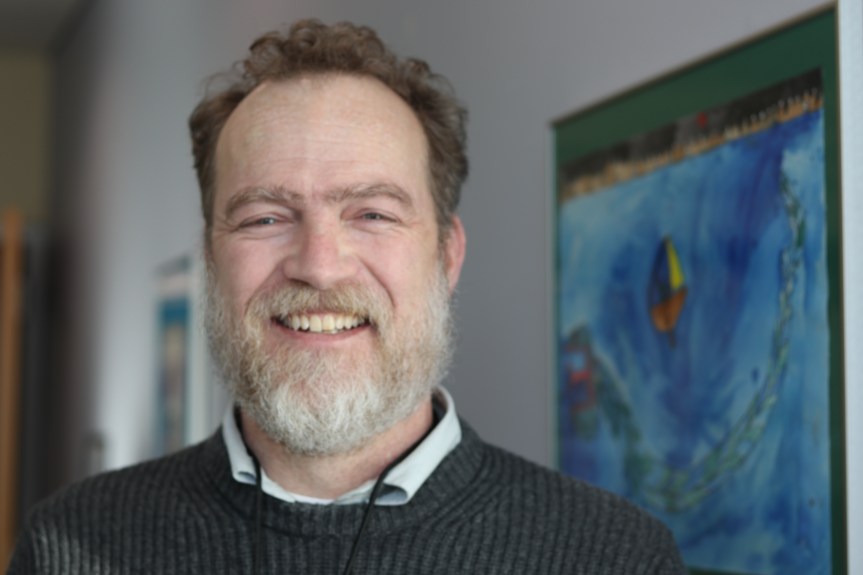
Maine DOE team member Roy Fowler is being highlighted this week as the part of a Get to know the DOE Team campaign. Learn a little more about Roy in the brief question and answer below.

What are your roles with DOE?

I’m the Special Services team member that serves as the State Director of Child Development Services (special education and related services for infants, toddlers, and preschool-age children).

What do you like best about your job?

It’s an incredibly challenging job, but the CDS State Office team is amazing. It feels good to see the positive impact that our work over the past few years has had on the young children and families that we serve and on the almost 400 CDS staff out at the CDS regional sites.

How or why did you decide on this career?

Early intervention/early childhood special education weren’t on my radar when I decided to pursue a career in education. However, birth through age 5 is the period where we can have the greatest impact on development and potentially change the life trajectory of these children and their families.

What do you like to do outside of work for fun?

I’ve got an 1850 farmhouse, so there’s perpetual remodeling and repairs. I also have a big garden, chickens, occasionally bees, make maple syrup, and forage wild mushrooms.

Maine DOE Update – January 17, 2020

From the Maine Department of Education


Reporting Items

| Visit the DC&R Reporting Calendar |


News & Updates

Commissioner Makin Begins 2020 with a Visit to Dover-Foxcroft and Dexter

On January 3rd Maine Department of Education’s Commissioner Pender Makin visited the Tri-County Technical Center (TCTC) in Dexter for a tour of the facility and to have a round-table discussion with students, educators, and legislators about successes and concerns from the Dover-Foxcroft/Dexter region. | More

Maine Department of Education Releases Updated Dyslexia Webpage

The Office of Special Services has updated their Special Initiatives page to further develop dyslexia awareness and to serve as a dyslexia toolkit for educators and families. | More

2019 Report on Census of Community-Based Environmental Learning in Maine Released

Maine Mathematics and Science Alliance and Maine Environmental Education Association announced the release of the Census of Community-Based Environmental Learning (CBEL) in Maine 2019 report on Monday, January 13, 2020 at a press conference at the Maine State House. | More

Get to know the DOE Team: Meet Jason Anderson

Maine DOE team member Jason Anderson is being highlighted this week as the part of a Get to know the DOE Team campaign.| More


Maine Schools Sharing Success Stories

| Submit your Maine School Success Story |


Professional Development & Training Opportunities

| Visit the Professional Development Calendar |


Latest DOE Career/Project Opportunities

Maine Researchers, Teacher Begin Scientific Cruise

Submitted by Barbara Powers, Superintendent of Long Island School.

A unique educational opportunity launches on January 24, when a Maine teacher sets sail for the Southern Ocean as part of a Bigelow Laboratory for Ocean Sciences team. This partnership with the Maine Mathematics and Science Alliance’s “WeatherBlur” education project will bring the experience of an ocean research cruise to students in Maine and beyond.

“Research cruises are tremendously exciting, and sharing that excitement is a great way to interest students in science,” said Senior Research Scientist Barney Balch. “The ocean is endlessly fascinating, and learning about its vital role is essential to understanding life on Earth.”

Marci Train, a teacher at the two-room Long Island School in Casco Bay, will join Balch and several other Bigelow Laboratory scientists in order to engage students throughout the National Science Foundation-funded cruise. The research team aims to investigate how algae in the Southern Ocean may be affecting the future of sea life as far away as the Northern Hemisphere.

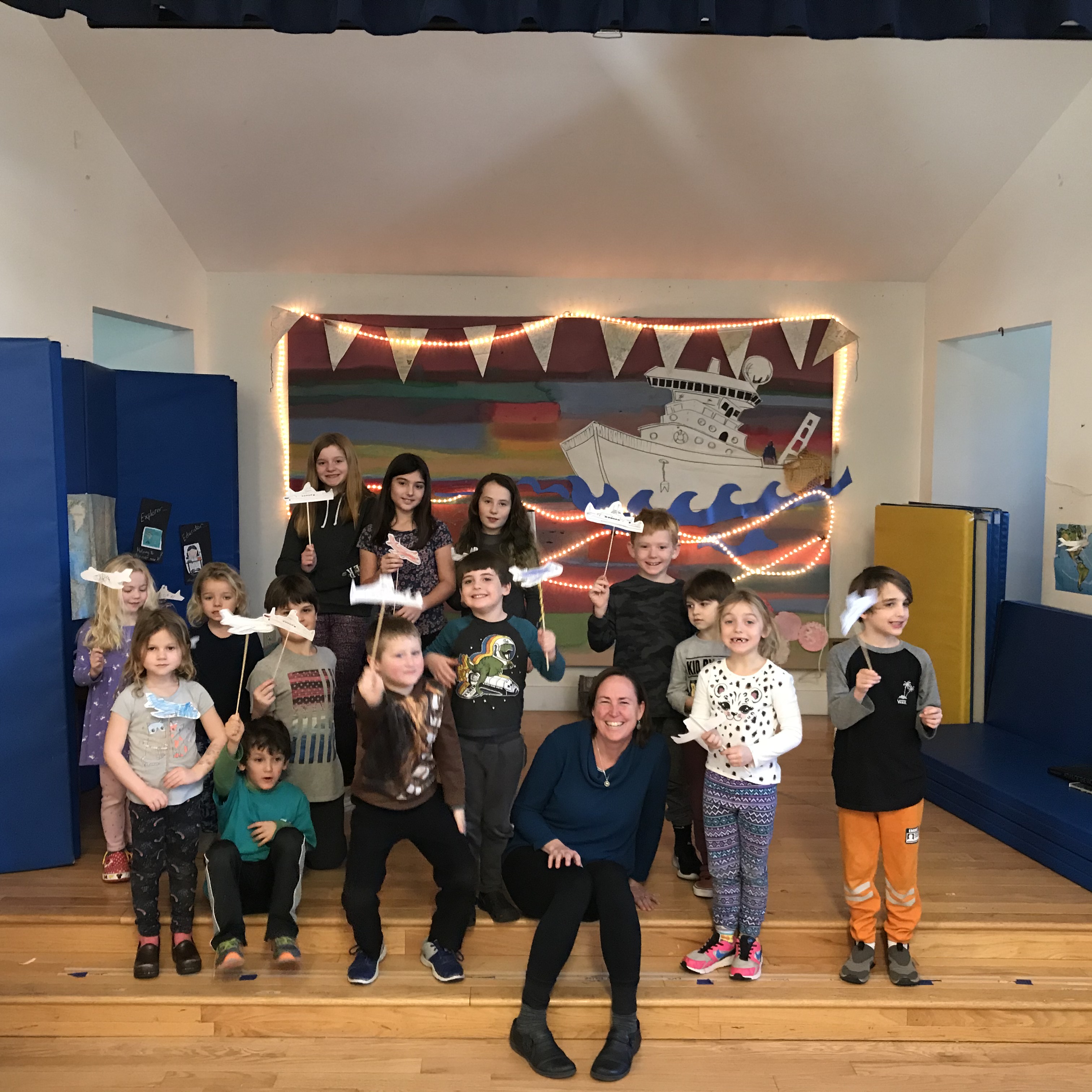
Marci Train with students

Throughout the cruise, Train will connect frequently with students in Maine and beyond. She will conduct video tours of the ship to show what a day at sea looks like, post learning materials on the WeatherBlur website, and share photos on social media. She will also assist with scientific operations and help conduct experiments.

“I can’t wait to have a first-hand experience with a scientific research project, and I think it is important for teachers to show their students that you are never too old to learn new information,” Train said. “It is important to get out of your comfort zone and share your own learning experiences with your students.”

Coccolithophores are a common type of algae that help form the base of ocean food webs, and they play a significant role in global chemical and carbon cycles. Balch recently found that they are remarkably scarce in the fertile waters near the equator, and his team aims to learn why during this cruise.

The Southern Ocean and equator are connected by an important ocean layer called “Sub-Antarctic mode water,” which forms at the surface of the Southern Ocean, sinks, and flows to the equator over a 40-year journey. Balch suspects that booming coccolithophore populations in the Southern Ocean are depleting its supply of essential nutrients before Sub-Antarctic mode water flows north, making the water layer sub-optimal for coccolithophore growth by the time it reaches the equator.

While at sea, the team will use satellite imagery to locate eddies rich in coccolithophores, whose chalk shells are so reflective that they can be seen from space. By measuring water properties in these eddies and collecting water to conduct onboard experiments, the researchers hope to uncover how coccolithophores in the Southern Ocean are altering this important source of nutrients before its long journey towards the equator.

“Sub-Antarctic mode water travels far north from where it forms, and it exerts a staggering level of control on much of the global ocean,” Balch said. “If coccolithophores are changing its essential properties, then they could be influencing which species grow in food webs as far away as the equator or even in the Northern Hemisphere.”

The team will use a creative approach to calculate how fast this water layer changes. The ship will follow Sub-Antarctic mode water for more than 1,000 miles on its journey to the Indian Ocean. As they measure the water’s basic properties, they will also collect samples at depth to measure freons, manufactured refrigerants that can be found throughout the environment.

Freons have constantly changed since their invention in the 1950s – a fact that today allows scientists to detect when water was last at the surface and exposed to freons in the atmosphere. Back on shore, a team from the University of Miami will determine which types of freons are present in different parcels of Sub-Antarctic mode water along the ship’s transect.

“Freons are a great timekeeper for the age of water,” Balch said. “We’ll use their time signatures to figure out how long it took a sample of Sub-Antarctic mode water to arrive where we found it, and to understand how quickly the water is changing as it’s moving north.”

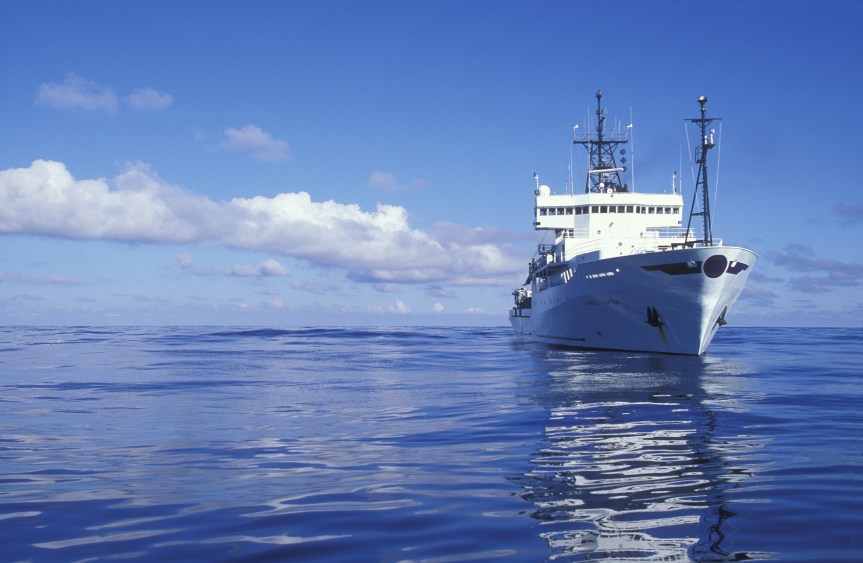
The researchers will investigate these questions over 38 days aboard the RV Thomas Thompson. The team will depart from South Africa and return to the island of Mauritius in early March. The Bigelow Laboratory InstagramFacebook, and Twitter accounts will post updates during the cruise, as will the Maine Mathematics and Science Alliance’s Twitter and Facebook accounts.

This cruise is the latest research topic to be explored by WeatherBlur, an online citizen science community funded by National Academy of Sciences, Engineering, and Medicine. The project brings together students, teachers, community members, and scientists, who collaborate to ask questions, design scientific investigations, and bring back data and findings to discuss with each other.

Currently, WeatherBlur engages six Maine schools, as well as two schools from Mississippi and one school from Alabama. Train’s outreach from the cruise will be followed by more than 1,300 students and 26 teachers.

“I think this will be a wonderful opportunity for students to see all the different career options onboard a research vessel, including positions in research and on the crew,” Train said. “It’s important that students are exposed to STEM in action, and I can’t wait for them to be immersed in this experience and see how big scientific questions get answered.”

Saco Middle School Students Partner with their Community to Conserve Local Land

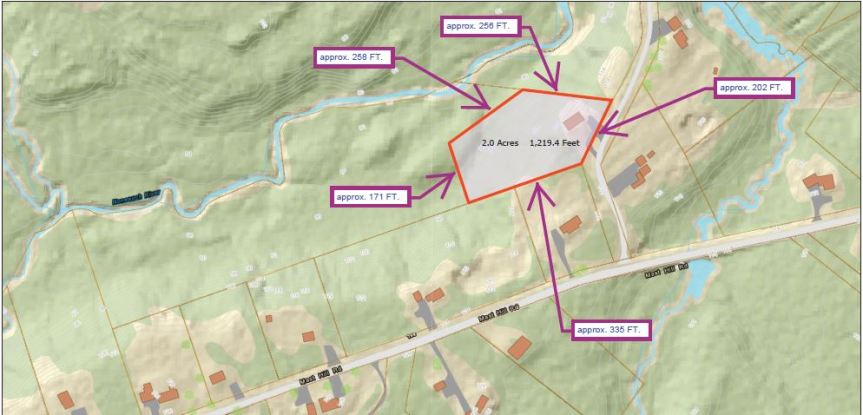
Students at Saco Middle School have teamed up with the Saco Valley Land Trust to conserve an eight-acre piece of land in Saco that runs along the Nonesuch River in what the students are calling the “Conserving Our Community” project.

The project started the first few weeks of school this year as part of a ‘community block’ at Saco Middle School where students are challenged to work on projects that will improve their local community. Community block projects range from creating and pitching a dog park to the city, aiming to increase protected bike lanes, doing compost for the school, or in this case, conserving a local piece of land.

The project started with just seven students who were interested in embarking on an endeavor that somehow protected the land around them. The group, along with their teacher Andrew Fersch, contacted the Saco Valley Land Trust who was eager to collaborate and had their eye on this specific property. Since then the project has evolved and grown as the original group of students have convinced the rest of the 7th grade class to get involved. More recently they have been joined by some of the 8th grade students, growing their group to over 100 students at this point. They are now conducting full school assemblies at every school in the Saco School Department with hopes of getting everyone on board.

Gianna, a student working on the Conserving Our Community Project explains more about it in a written post on the Saco Valley Land Trust Website:

As a team we believe that learning about our community and world is important knowledge to have. It is important to know what is happening in the natural world around us, because it affects us. Every impact to Saco’s ecosystem is an impact on us as well.

One of the perks of owning this land is that it will help make a longer wildlife corridor and trail where (hopefully, eventually) we can connect from Saco all the way to Gorham, though there are still some gaps where roads flow through. If we conserved this land it would make it possible for all the majestic animals of Maine to travel through the woods with no fear of getting hit by a car (and for humans to enjoy open spaces too!).

The students make frequent trips to study the land, capturing their adventures in trail documentaries and they have even written a book, The Secret Wisdom of Saco (PDF), a collection of place-based stories. The project also provides them with a community service learning project where they can advocacy for something they feel passionate about and deeply connected to.

“Children learn what is possible through example. If the community shows them that conservation matters, and that working hard pays off, they’ll carry that message their whole life,” said Andrew Fersch, project adviser and Saco Middle School Teacher.

For more information about Conserving Our Community, including how to donate or get involved, please visit the Saco Valley Land Trust Website.

This story was written by Maine DOE Staff Rachel Paling in collaboration with Saco Middle School as part of the Maine Schools Sharing Success Campaign. If you have an idea or a story for the campaign, email Rachel at rachel.paling@maine.gov.

MEDIA RELEASE: 2019 Report on Census of Community-Based Environmental Learning in Maine Released

Augusta – Maine Mathematics and Science Alliance and Maine Environmental Education Association announced the release of the Census of Community-Based Environmental Learning (CBEL) in Maine 2019 report on Monday, January 13, 2020 at a press conference at the Maine State House.

This exciting, first-of-its-kind report documents the creative and innovative programming that is occurring across our state, both in-school and out-of-school, to connect youth to their environment and communities.

Pender

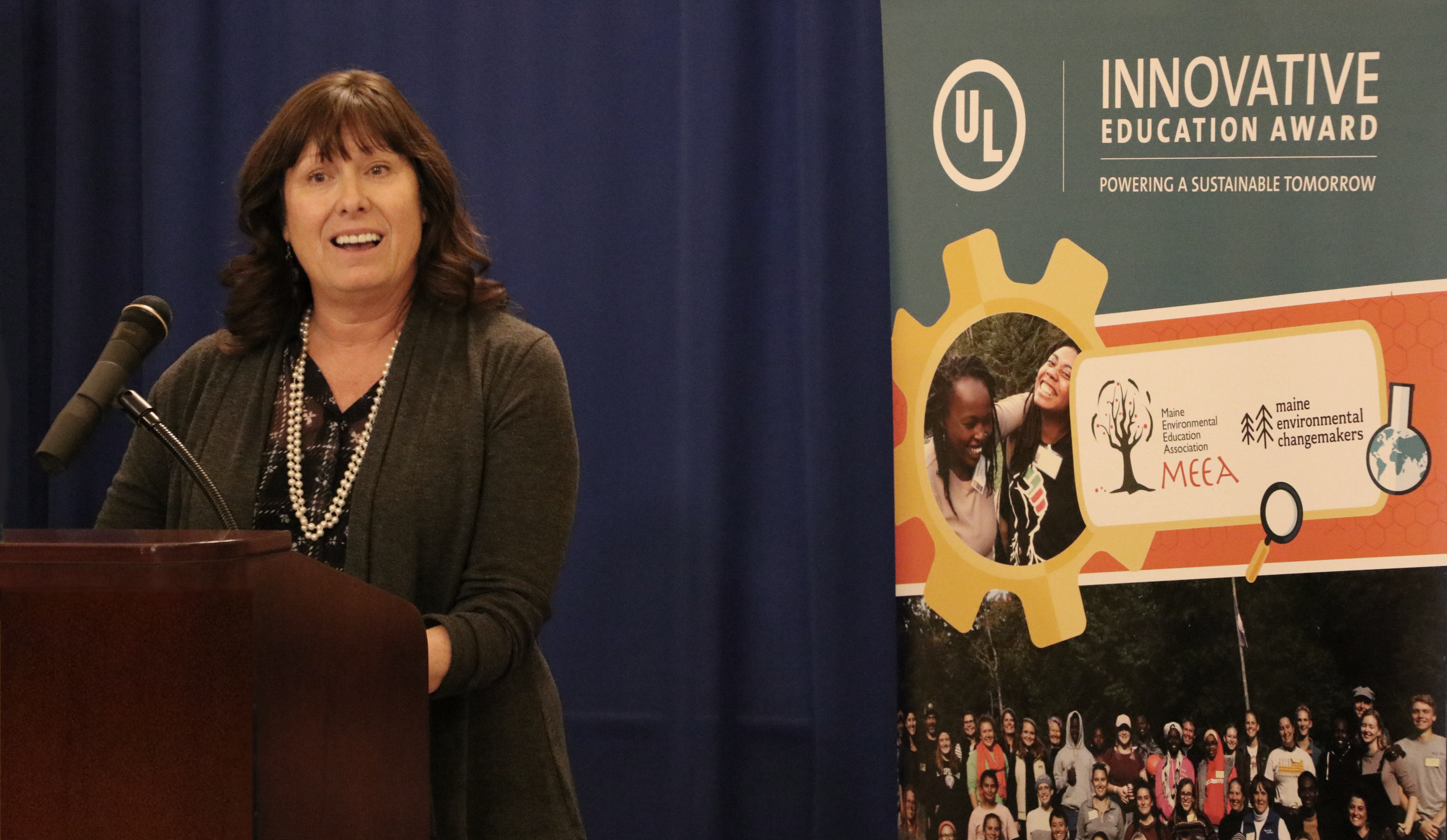
The event featured remarks from Maine DOE Commissioner Pender Makin, Executive Director of Maine Mathematics and Science Alliance Ruth Kermish-Allen, and Executive Director of Maine Environmental Education Association Olivia Griset.

The report also sheds light on how this programming can be supported and sustained across the State of Maine, providing a pathway for advancement for the whole field. Full of stellar examples and stories, like a middle school study of invasive green crabs, a school composting program, collaborations with local land trusts, and more, this report tells the stories of educators designing innovative solutions and overcoming challenges to generate empowering learning experiences for our young people.

You can find the Report and the Case files on the Maine Environmental Education Association Website.

For more information contact the Maine Environmental Education Association.

MSAD 15 Mechanic John Rundin Takes 1st Place at Maine Mechanics Competition and 9th Place in National Challenge

Each year the National Association for Pupil Transportation (NAPT) holds America’s Best Training & Skills Challenge. For 15 years America’s Best program has offered a training and skills challenge for the technicians and inspectors in the school bus industry. In addition to hands-on training relevant to their specific area of expertise, participants have an opportunity to connect with all of the industry suppliers involved in America’s Best. In between all of the training activities, participants demonstrated their technical skills and knowledge as they rotated through written exams administered by ASE and various hands-on stations.

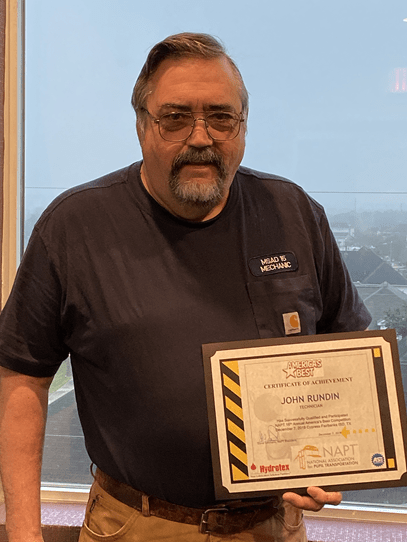
This year John Rundin, Mechanic from MSAD No. 15, who took first place at this year’s State of Maine Mechanics competition at Sugarloaf, competed in this national event representing Maine. John took 9th place overall during this event representing not only Maine but fellow mechanics well.

The Maine Association for Pupil Transportation and the Maine Department of Education extend their congratulations to John and the entire MSAD No. 15 transportation team. Well done John!

Maine Department of Education Releases Updated Dyslexia Webpage  

The Office of Special Services has updated their Special Initiatives page to further develop dyslexia awareness and to serve as a dyslexia toolkit for educators and families.  The Special Initiatives webpage  will be continuously updated as new resources become available.  If you have questions or recommendations for the webpage, please contact Tracy Whitlock, Ph.D. at tracy.w.whitlock@maine.gov.

Deer Isle-Stonington High School to Celebrate Arts Week

Submitted by REACH Performing Arts Center.

The fourth annual Deer Isle – Stonington High School Arts Week will run January 27-31, culminating in a public dinner and performance on Friday Jan, 31 at 5:15 PM.

In previous years grades 9-12 were split into four teams, each writing and creating a devised theater piece answering an essential question, this year’s Arts Week will have students in grades 8-12 identifying the projects most intriguing to them. They will then be assigned to one group based on their interest, working within that discipline for the entire week.

This year, Arts Week is celebrating the bicentennial of Maine with projects that will focus on the history and culture of our state. Funding for the week is made possible by the REACH Performing Arts Center, and additionally, is funded in part by a grant from the Maine Arts Commission, an independent state agency supported by the National Endowment for the Arts.

Projects include 3D Printing with James Rutter and Screen Printing with Hope Rovelto of Portland’s Little Chair Printing, who have both worked for Haystack Mountain School of Crafts. Mural Making with DISHS Art Teacher Cynthia Pease. A culinary project hosted by Healthy Island Project’s Edible Island exploring native Maine food pathways with Chef Cheryl Wixson. A music through technology workshop run by Mark Churchill. The traditional theater Arts Week theater project with veteran director Jesse Gorden and Opera House Arts’ Joshua McCarey. A filmmaking experience with Current Harbor’s Jamie Watkins, and a week building in the shop with DISHS teacher Steve Zembrusky.

The public event on Friday Jan 31st will begin at 5:15 at the Elementary School Cafeteria with a meal created, prepared, and served by the culinary group led by Chef Wixson. At 6:00, all will move to the REACH Performing Arts Center for presentations by each of the disciplines.

There are no tickets required for any events, though donations will be accepted by the REACH Performing Arts Center to offset the costs of Arts Week.

We hope to see you there!

The Washington County Consortium Educator Profile: Dale Bailey

Submitted by Sarah Woog, Executive Director at Washington County Consortium.

Washington County Consortium (WCC) Educator Profile: Meet Dale Bailey, Speech-Language Pathologist at AOS 90

I first heard about Dale Bailey’s work from Mandy Belanger, Principal at Woodland Elementary School. Mandy praised his passion for supporting educators and students and his expertise in the areas of speech and language. She thought he’d be a great presenter for Harvest of Ideas, too.

I reached out to Dale to ask him to consider presenting at Harvest of Ideas and, in his response to the request for proposals (RFP), he described a professional background that speaks to Dale’s depth of experience and tremendous expertise. I was excited to be able to offer Dale’s session about dyslexia screening in Maine to Washington County educators:

Over a more than 20 year time span, Dale has worked as a speech-language pathologist, LD evaluator (079), district data consultant and early literacy coordinator.  He has a special interest in the connection between oral and written language assessment and development. Dale has extensive experience designing and delivering PD in the areas of assistive technology, assessment, language and early literacy.  Dale has held positions as adjunct faculty (UMFK & UWSP) and as the Statewide Early Literacy Coordinator for the state of Wisconsin. He currently provides services to students in AOS90 while continuing to provide professional development & support to educators in both Maine and Wisconsin.

The feedback from Dale’s session at Harvest of Ideas confirmed that he has a lot to offer. Many shared it was the best part of their day, and that it gave them ideas and practices to try immediately in their classroom. He was also lauded as an incredibly informed and skilled presenter. 

I reached out to Dale to interview him for a profile because I wanted to hear more about his journey, his core beliefs around language and learning, and his hopes for schools and students in Washington County. He welcomed me in his office at Woodland Elementary School so we could sit down for a conversation. I am grateful for his time, candor and insights, and am excited to share them here.

Dale had a stutter growing up, and described himself as an “under the radar kid.” His academic success earned him admission to Colby College, where he studied economics. While at Colby, and during summer internships, he realized he’d “have to learn to be a successful communicator in order to succeed in the world.” During the summer after his junior year, he participated in a residential speech therapy program for adults, which helped him achieve his goals around speech fluency, and sparked a deeper interest in the area of speech and language.

Dale did enter the business field, but his interest and personal connection to speech and language nagged at him. After oscillating for some time between working in business and working on his Master’s Degree in Communication Disorders, Dale obtained a Master’s from the University of Maine at Orono in 1997, and went right to work in the field in 1998. After building his career and expertise in Maine and then Wisconsin, Dale decided to come back to Maine in 2018 and found a fit working with all schools and grade levels in AOS 90.

At AOS 90, Dale sees unique assets and challenges. He appreciates how, in a small district, he is able to work with both students and educators and sees professional development as an integral part of his work. His understandings are constantly informed by both students and educators, and he is able to support educators’ growth while informed directly by students’ experiences. 

As for challenges, Dale shared that “sustained, purposeful, targeted effort is required to move the needle,” and lamented the challenges that limited resources in most districts pose to engaging in sustained efforts. He elaborated: “Teachers work their tails off, they work so hard and oftentimes, if not all the time, do good work with limited information…and/or with limited materials. It’s quite remarkable to see really great results from teachers who have these limits. If we give teachers great materials and great information about what they are trying to teach or how they are trying to teach it, gosh, we could do a lot.”

There are many people with whom Dale has worked who give him great hope when imagining the possible. He spoke of Mandy Belanger, Principal at Woodland Elementary School. “Mandy- she’s hungry; she wants to figure it out. She wants to understand reading as a door to learning and development; she wants to figure out how to move the needle on reading development, to open up doors for kids in learning, thinking, and developing as individuals.” 

Dale’s work and story inspire my imagination, too. Consider Dale’s early challenges with speech and recall the Harvest of Ideas feedback around Dale’s gift for speech. Dale wasn’t born with his speech skills; he was motivated to gain these skills and was able to access the resources to achieve them. He then worked throughout his career to understand speech and language and use his evolving understandings to impact student learning. Dale’s gift that I’d like to celebrate is the gift he gives us through his work, to his colleagues, and his students, and all those impacted by his work throughout his career. Thank you, Dale, and thank you, too, to the passionate educators he celebrates as well. 

Please, take a moment to reflect on the gifts educators all over Washington County give each other, their communities and their students. And take another moment to celebrate the gifts you give and receive, as well.