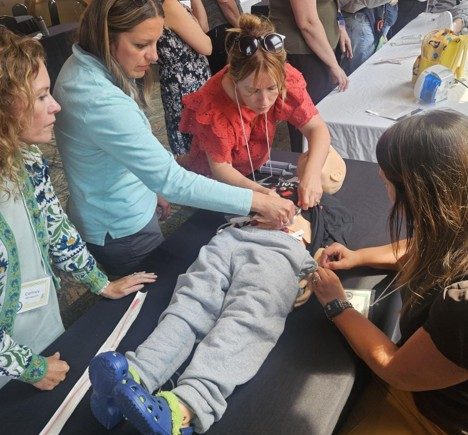
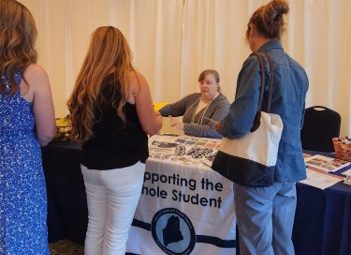
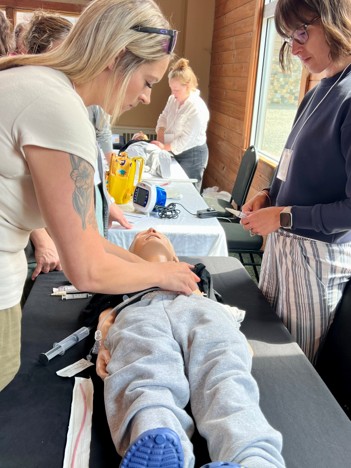
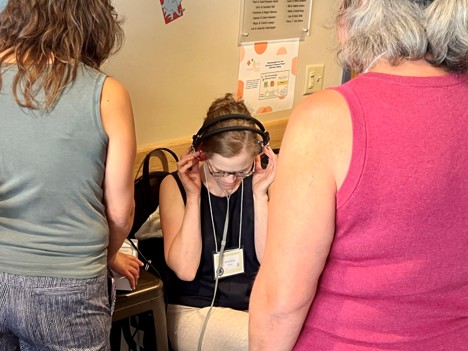
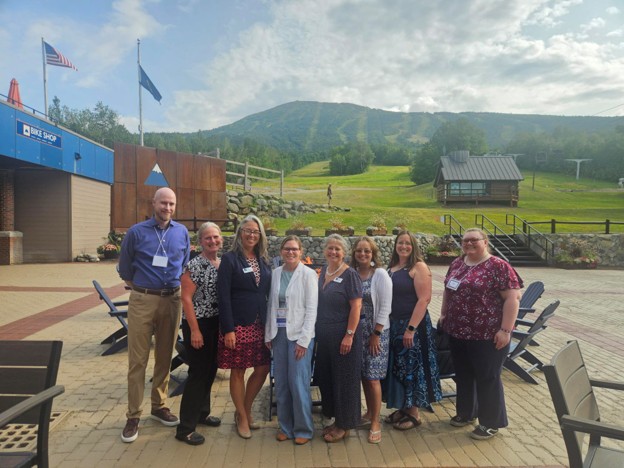
Save the Date: 2026 Maine DOE Annual Summit and Every Teacher a Leader Conference Combine for an “ElevatED” Experience

The Maine Department of Education (DOE) is excited to be partnering with Educate Maine and the Teach Maine Center this summer to bring together two impactful statewide events into one powerful “ElevatED” professional learning experience!

The 2026 Maine DOE Annual Summit and the second annual Every Teacher a Leader Conference will be held consecutively at Thomas College in Waterville, allowing for three days of collaboration, inspiration, and high-quality professional learning for Maine’s education workforce.

Event Dates and Location

  • Maine DOE Annual Summit: July 29, 2026
  • Every Teacher a Leader Conference: July 30-31, 2026
  • Thomas College, Waterville, ME (180 West River Road, Waterville, ME 04901)

Day 1, the Maine DOE Annual Summit, is tailored to meet the needs of Maine’s education workforce, including school staff, educators, school safety professionals, and building and instructional leaders, offering opportunities to connect, exchange ideas, and access the tools, resources, and professional learning needed for the upcoming school year. Days 2 and 3, the Every Teacher a Leader Conference, feature teacher-led sessions, spotlighting outstanding educators from across Maine, designed specifically for classroom teachers.

We look forward to welcoming educators, school leaders, and partners from across the state for this exciting collaboration. Registration opens in April; stay tuned for more details!

MEDIA RELEASE: Maine DOE Recognizes State-Level Nominees for National 2026 RISE Award

Educational technician Elizabeth Loiko and custodian Larry Plourde are Maine’s 2026 RISE Award recipients.

AUGUSTA and CARIBOU, Maine—The Maine Department of Education (DOE) is proud to honor the two outstanding school employees who were nominated for the 2026 National RISE (Recognizing Inspiring School Employees) Award: Elizabeth Loiko, an educational technician at Sylvio Gilbert Elementary School in Augusta, and Larry Plourde, a long-time custodian at Caribou High School.

The RISE Award was created by Congress in 2019 and is overseen by the U.S. Department of Education. This prestigious national award honors the often-unsung heroes in the education workforce who provide exemplary service behind the scenes, helping to foster safe, supportive, and effective pre-K through grade 12 schools. This includes school employees who provide a range of services, including, but not limited to, administrative services, transportation services, food and nutrition services, custodial and maintenance services, health and student services, and technical services.

Annually, the Maine DOE, in coordination with the Office of Governor Janet T. Mills, selects two state-level honorees from a pool of dozens of nominations in Maine for the RISE Award.

“As the daughter of a longtime teacher, I understand the lasting impact that school employees have on their students, schools, and communities,” said Governor Mills. “Congratulations to Larry and Liz for receiving this well-deserved honor. Thank you for everything you do for Maine children and families each day.”

“The Maine Department of Education is privileged to honor and recognize two of the thousands of individuals across our state whose unwavering dedication to their schools ensures that children have access to safe and successful learning environments,” said Maine DOE Commissioner Pender Makin. “Without their commitment spanning the health, safety, nutritional, and academic needs of students, our schools and communities would falter. Thank you for everything that you do for the students, school staff, and families of Maine.”

Elizabeth (Liz) Loiko

Liz Loiko is originally from Gorham. She moved to Augusta in 2013 and began working at Hall-Dale Elementary School in Hallowell, where she says she gained a strong foundation in elementary education, including special education. In the fall of 2017, Loiko joined Sylvio Gilbert Elementary School as an educational technician based in kindergarten.

Those who nominated Liz said she continuously goes above and beyond to get to know her students, ensuring that their academic, behavioral, and emotional needs are met to help them succeed in the classroom and want to come to school. Nominators shared that Liz serves as a role model for other school staff through her care and creativity and demonstrates how essential educational technicians are to the success of Maine’s schools.

At the RISE Award announcement at Sylvio Gilbert Elementary School on Thursday, February 26, 2026, staff surprised Liz with a slideshow of pictures from her time at the school, as well as pre-recorded video messages from students and colleagues. Some students also shared their messages of thanks with Liz in front of the all-school assembly.

“Receiving this award is deeply meaningful to me, as it reflects appreciation for the vital work educational technicians do every day,” Loiko said. “I am truly grateful for the ongoing support of my colleagues and team, whose collaboration and encouragement make this work possible. Being recognized affirms the importance of the role ed techs play in supporting students in both general and special education settings and reinforces my commitment to serving students with care, dedication, and professionalism.”


Larry Plourde

Larry Plourde has worked in RSU 39 (Caribou and Stockholm) since 1998. Throughout his 27-year career, he has served as a custodian and bus driver—first, at the former Teague Park Elementary School and then at Caribou High School for the past 18 years.

Those who nominated Larry said he is a “jack of all trades” who makes Caribou High School feel like a true community and serves not only as a caretaker of the building but as a caretaker of people. Nominators shared that through small and thoughtful gestures, such as helping a teacher carry supplies, fixing broken items at the school before anyone else notices, or helping students pay for lunch, Larry has created a joyful and positive environment and is admired by staff and students alike.

At the RISE Award announcement at Caribou High School on Wednesday, February 25, 2026, students surprised Larry with a large glass jar overflowing with carved wooden hearts to represent that he is the “heart” of their school. On each of the hearts, students offered handwritten notes of appreciation and love for Larry.

“With more than 25 years of dedicated service, Larry consistently goes above and beyond to ensure our building is safe, welcoming, and ready for learning each day,” Caribou High School Principal Jamie Selfridge said. “His hard work and pride in his job make him a true RISE leader in every sense.”

Mountain Valley Teacher Brings Global Health Learning to Life for Fifth Graders

When Amanda Bryant, a fifth-grade teacher at Mountain Valley Community School in RSU 10, applied for the 2025 Global Health Teacher Fellowship Program, she hoped to find new ways to spark curiosity and bring real-world learning into her classroom. What she gained—and what she gave her students—was far more powerful, though.

Bryant was selected as one of just 12 educators nationwide to participate in the prestigious fellowship, which engages teachers in designing innovative learning experiences that explore interconnected global health inequities through journalism and reporting. Over 28 hours of professional development, Bryant collaborated with educators and journalists from across the United States and around the world to build lessons that connect students to underreported global health issues in meaningful ways.

“This was truly an eye-opening experience,” Bryant said. “I learned so much about my own teaching practice but also about the similarities and differences among educators working in very different settings. It helped broaden my perspective and strengthened my commitment to bringing real-world issues into my classroom.”

For her project, Bryant introduced her fifth graders to the work of Bangladeshi scientist Dr. Firdausi Qadri, whose groundbreaking research on cholera, an infection caused by ingesting food or water contaminated with bacteria, focuses on preventing the disease through vaccines and access to clean water. In Bryant’s class, many students were surprised to learn that cholera is still a major global health threat and that clean-looking water is not always safe.

The unit began with students examining images of water and discussing what “clean” truly means. From there, Bryant guided them through an in-depth exploration of Pulitzer Center reporting by journalist Martin Enserink, carefully breaking down the science, social impact, and global inequities tied to cholera. Together, the class analyzed misinformation, studied the science behind disease transmission, and examined how access to clean water and vaccines varies around the world.

The learning culminated in student-created call-to-action projects, in which students selected a focus area: promoting clean water access, encouraging vaccination, or educating others about cholera. Their work included posters, digital presentations, and even original podcasts created using Canva.


“Some of the most creative projects I had were podcasts that students created on Canva,” Bryant said. “This was a really ambitious project for fifth graders who have just started using Canva this year in my classroom. I was very proud of them and their dedication to this project.”

Through the project, students were also able to recognize how much impact one scientist can have—and how vital support and funding are to that work. Students also developed a deeper understanding of global health inequities and the importance of critical thinking.

“One of the biggest takeaways was that just because something looks safe doesn’t mean it is,” Bryant explained.

Bryant said the fellowship reshaped her approach to teaching and assessment. Through collaboration with fellow educators, she gained new strategies for measuring student learning beyond traditional tests. She is already applying those lessons in her current American Revolution unit, offering students multiple ways to demonstrate understanding through projects and creative work.

Murph the service pug

Outside the classroom, Bryant balances her teaching with work as an EMT and the joyful challenge of training Murph, her six-month-old, two-pound service dog. Yet. she says her motivation always circles back to her students.


Growing up with dyslexia, Bryant struggled academically and often felt disconnected from school.

“I want to be the teacher for my students that I didn’t always have,” Bryant said. “I want them to know that their challenges don’t define their potential.”

That philosophy drives everything she does—from global health projects to service dog training.

“It’s all about the spark,” Bryant said. “Seeing students realize that history is happening now, or watching Murph master a new skill—it’s about connection, curiosity, and growth. I want my students to see that they don’t have to stay in one lane. They can be historians, scientists, advocates, and dog lovers all at once.”

Soon, Bryant’s work—along with projects from the other fellowship participants—will be featured on the Pulitzer Center website, extending the impact of her classroom far beyond western Maine.

For her students, though, the greatest lesson may be the simplest: Learning can change the way you see the world—and your place in it.

This story idea was written in collaboration with Mountain Valley Community School. To submit a good news story to the Maine DOE, please fill out the good news submission form.

Registration Still Open for Final “EngageMEnt” Statewide Professional Learning Day on March 20

Maine educators, this is your final opportunity to participate in this year’s statewide professional learning series hosted by the Maine Department of Education (DOE)!

The Maine DOE Office of Teaching and Learning and Office of Innovation invite teachers, ed techs, administrators, and pre-service teachers to join the final professional learning day of the 2025-2026 school year on Friday, March 20, 2026.

In partnership with the University of Maine System, this free, high-quality professional learning experience is made possible through a collaboration with the University of Maine at Orono (UMaine), the University of Maine at Farmington (UMF), and the University of Southern Maine (USM). The Maine DOE is grateful to these institutions for helping make accessible, regionally grounded professional learning available to educators across Maine.

Participants may attend in person at UMaine or USM or virtually via livestream from anywhere in Maine.

All participants are eligible for contact hours, and recordings will be available for asynchronous viewing following the event.

Please register today! Registration can be accessed on the Maine DOE website or in the event brochure, which includes the session descriptions.


Planning to attend in person? Each workshop session offers an interactive experience with limited seating (50 participants per session). Registration is required, so early sign-up is encouraged.

Prefer to participate remotely? Virtual attendance offers unlimited access statewide.

Come as you are. Learn in ways that work for you. Connect with educators across Maine in a welcoming professional learning community grounded in equity, innovation, and real-world learning.

With questions or for more information, please contact Beth Lambert, Maine DOE Chief Teaching and Learning Officer, at beth.lambert@maine.gov.

 A partnership note: March 20 workshops at UMF are held in partnership with the Western Maine Education Collaborative (WMEC) “Rendezvous.” Only members of WMEC may attend these sessions in person.

From Investment to Impact: Celebrating Extended Learning Opportunities Success in Maine

Pictured: Students in Washington County learn how to grow crops.

Since 2022, Maine has invested a historic $7.1 million to expand Extended Learning Opportunities (ELO) programming throughout the state. ELOs provide schools with opportunities to create meaningful connections with employers statewide. In turn, they help young people better understand career opportunities and acquire valuable foundational career skills, including initiative, adaptability, problem-solving, teamwork, and communication.

Through ELOs, Maine students are learning by doing. They are earning credentials, such as certified nursing assistant; installing boilers alongside skilled tradespeople; training to become future educators; participating in law-related ELOs; and engaging in countless other hands-on, career-connected experiences.

In 2024, the Maine State Legislature codified ELOs in statute as an approved education pathway. This statute, intentionally written with flexibility, empowers schools and communities to design ELO programs that meet local workforce needs, while honoring student interests and goals.

ELOs by the Number

There have been two rounds of Maine DOE ELO grants. The first round, $5.6 million of the Maine Jobs and Recovery Plan (MJRP), was awarded in 2022 to 26 schools and community-based organizations throughout the state, covering 13 counties. In 2025, the state invested a second round of $1.5 million to support ELO 2.0, which funded 12 ELO programs. These awardees included expansions of existing ELO programming and the launch of new programs.

Between the fall of 2022 and fall of 2025, the Maine DOE grant-funded ELO programs have seen:

  • 3,000+ core and elective credits earned.
  • 6,000+ student participants.
  • 3,000+ new school-employer partnerships.
  • 8,000+ community and business engagements.

These numbers represent more than participation; they reflect aspiration, engagement, and strengthened collaboration among educators and employers, as ELOs continue to become part of the fabric of Maine’s education landscape. (Please note that this data does not include the outcomes of other ELO programs in Maine, such as those that are supported locally or funded through other agencies.

Some examples of these recent investments include ELOs at:

  • Mountain Valley High School, focused on building local aspirations and local talent.
  • Brewer High School and Marshwood High School, embedding ELOs schoolwide.
  • A partnership between the Rural Aspirations Project and Healthy Acadia, expanding ELO access to all high school students in Washington County.


Together, these programs demonstrate that ELOs are not isolated efforts; they are becoming part of the fabric of Maine’s education landscape.

The ELO program at the Maine DOE also works closely with the Maine Career Exploration Program, housed within the Maine Department of Economic and Community Development. This program provides 75 hours of paid career exploration for youth ages 16-24, supporting job shadows, internships, mentorships, apprenticeships, digital learning, independent study, community service, and work-based learning experiences, including ELOs.

Regional Collaborations

Throughout Maine, the Community Coordinators Collaborative (C3) serves as an active educator-led network dedicated to building strong business partnerships that expand students’ access to meaningful career exploration experiences, including job shadows, career talks, workplace tours, and internships. By connecting students directly with employers, C3 helps Maine youth navigate future career pathways and strengthens efforts to retain talent and grow Maine’s workforce. Likewise, there are several regional collaborations, both newly formed and long established, such as the York County, Washington County, and Midcoast Collaboratives, all working to deepen partnerships and expand opportunities within their communities.

Current and Future ELO Opportunities

  • Career Exploration Survey: On February 6, 2026, a short survey was shared through the Maine DOE newsroom. This survey was designed to identify which school administrative units (SAUs) and Career and Technical Education (CTE) schools are currently engaged in career exploration activities—and to gather insights into what is working, what is needed, and where additional support could make the biggest impact. Responses will help inform statewide efforts related to resources, professional development, and technical assistance for pre-K–12 students and school staff.

  • Monthly, no-cost, virtual, synchronous professional development hosted by the Maine DOE ELO team: Professionals in the field will share their best practices and resources, and agency partners will present on their programs and how students and school ELO programs may access them. The Maine DOE ELO team will also host office hours for ELO grantees. Please see the Maine DOE ELO webpage for upcoming opportunities.

  • ELO celebration at the Hall of Flags: Join the Maine DOE ELO team and students/staff from ELO programs statewide on April 30, 2026, from 1-4 p.m. at the Hall of Flags in Augusta.This afternoon will be spent celebrating and raising awareness about ELOs in Maine by highlighting the impactful work of communities, students, staff, and partners. Students will display their ELO work through a student showcase of statewide ELO profiles.

  • Supporting younger learners in career exploration: The Maine DOE ELO team will be launching a community of practice (COP) for educators who provide career exploration experiences for younger learners (preK-8). This COP builds on the successful summer pilot, Maine Out of School Time program. (MOST) which supported career exploration for students in grades 4–6. To learn more about MOST, please watch this short video and stay tuned for updates on how to join the community of practice. This expansion reflects the understanding that career exploration does not begin in high school; it begins with early exposure, curiosity, and possibilities!

For further information about ELOs and Maine’s efforts to expand career exploration for Maine students, please visit the Maine DOE ELO webpage or contact Maine DOE Extended Learning Coordinator Lana Sawyer at Lana.Sawyer@maine.gov.

For further information about the Maine Career Exploration Program, please visit the Maine Career Exploration Program website or contact Karen Morin, Workforce Planning Coordinator, at Karen.Morin@maine.gov.

Maine Solutionaries Literacy Project Kicks Off with Engaged Educators

On February 3, 2026, the Institute for Humane Education, in partnership with the Maine Department of Education (DOE) Office of Teaching and Learning, launched the Maine Solutionaries Literacy Engagement Project. This initiative centers on Solutionary learning, an approach that engages students in identifying real-world problems, researching root causes, considering multiple perspectives, and designing ethical, sustainable solutions, while strengthening literacy skills across disciplines.

The in-person kick-off event opened with a reflective prompt, inviting participants to name a skill, habit, or disposition they hope their students develop before leaving their classroom. This question grounded the work ahead and set a shared goal for the next two months to better equip educators to cultivate those outcomes.

This first session featured literacy-focused activities that modeled authentic reading, thinking, and collaboration. Participants rotated through stations to read and analyze texts through a Solutionary lens. A role-based reading and perspective-taking exercise then invited educators to explore the impacts of pollution from the viewpoints of both people and animals. Finally, small-group discussions supported collaborative meaning-making, as participants shared passages and built understanding through structured conversation.


Together, these experiences highlighted core literacy practices, including reading across text sets, explicit vocabulary development, active listening, annotation, and collaborative discussion. The energy in the room was palpable: Although many participants had just met, a strong sense of community quickly formed around a shared commitment to engaging students in meaningful, real-world learning.

As a follow-up to the in-person kickoff, educators from across the state gathered virtually on February 9, 2026, with noted educator and author Cris Tovani. Tovani guided participants in exploring the critical role of background knowledge in building comprehension and deepening literacy skills. Educators reflected on their experiences creating text sets and discussed the power of pairing non-fiction and fiction texts to spark engagement and understanding. This session also focused on curating accessible resources that promote universal access and support ongoing inquiry.

The Maine DOE’s Solutionary-integrated literacy work is set to continue, with additional virtual sessions scheduled later this month and into the spring. 

For further information, please contact Kathy Bertini, Maine DOE Interdisciplinary Instruction Coordinator, at kathy.bertini@maine.gov.

Title 4A funds received from the U.S. Department of Education (ED) support the implementation of this project. The project has an award totaling $50,000, of which $50,000 is federally funded and directly attributed to project implementation. The contents are those of the author(s) and do not necessarily represent the official views of, nor an endorsement by, ED or the U.S. government.

Registration Now Open for the 23rd Annual Maine Learning Technology Initiative (MLTI) Student Conference in May

Registration is now open for the Maine Department of Education’s (DOE) 23rd annual Maine Learning Technology Initiative (MLTI) Student Conference. The deadline to register is March 27, 2026.

The conference will be held on May 21, 2026, at the University of Maine campus in Orono. This statewide event is open to all MLTI school administrative units (SAUs) and is expected to welcome more than 1,000 students in grades 5-10 for a full day of hands-on learning, creativity, and exploration.

How to Register for the Conference

  • Step 1: Request your registration packet. Complete this brief form to receive your comprehensive registration packet via email.
  • Step 2: Submit your registration materials. Fill out the packet and use the included link to upload the required documents. Registration must be completed by March 27, 2026, to ensure correct conference T-shirt sizes for your group.
  • Step 3: Sign up for sessions. Once your registration is reviewed, you will receive a link to select sessions. Sessions fill up quickly and are first-come, first-served, so early sign-up is encouraged!

About the Conference

This year’s theme, “Full STEAM Ahead,” invites students to explore the world of STEAM (science, technology, engineering, arts, and mathematics) through engaging, hands-on sessions. Past topics have included:

  • Multimedia creation
  • AR/VR
  • 3D design
  • Robotics
  • Machine learning
  • Game design

Students will receive a conference T-shirt designed by a fellow student. The T-shirt design contest is currently open through March 20, 2026. Additionally, the call for session proposals for both students and educators is open through March 20, 2026.

The event will conclude with a large-scale, interactive “Global session,” bringing hundreds of students together for a collective experience.

Global Session from last year

With questions about the MLTI Student Conference, MLTI Maine Winter Classic, or other MLTI events, please contact Maine DOE MLTI Project Manager Bethany Billinger at bethany.billinger@maine.gov.

MLTI is part of the Maine DOE Office of Teaching and Learning.

Unlocking Numeracy Series Launches with a Successful Kickoff

The Maine Department of Education (DOE) Office of Teaching and Learning is pleased to celebrate the successful launch of Unlocking Numeracy, a new, five-part virtual professional learning series designed to strengthen numeracy instruction across classrooms and communities statewide.

The opening session, “Foundations of Numeracy,” a virtual workshop held on February  3, 2026, marked a strong collaboration between the Maine DOE Interdisciplinary Instruction Team and nationally recognized math educator Dan Finkel, founder of Math for Love. Approximately 40 educators participated in the kickoff, joining as numeracy teams and “partner pairs” to engage in a shared exploration of what numeracy truly means and how it comes to life in classrooms.

The workshop opened the series with a foundational conversation about numeracy, led by Finkel. He focused on designing learning experiences that transform people’s relationships with mathematics by fostering curiosity, confidence, and joy. Throughout the session, participants reflected on the hallmarks of a numerically literate student and envisioned what classrooms that genuinely teach numeracy look and feel like.

Educators engaged in hands-on activities that modeled how intentional experiences can deepen mathematical thinking. Participants explored tasks such as, “Don’t Break the Bank,” “Broken Calculator,” and “Close Calls and Bullseyes”–each designed to promote reasoning, sense-making, and rich student discourse. Teachers left the session with ready-to-use materials to begin building a numeracy toolkit, while administrators gained strategies to support and sustain a culture of numeracy within their schools.

A key theme throughout the session was mindset. Finkel emphasized that numeracy is not about perfection but about growth.

“The goal is not to instantly do everything perfectly,” Finkel shared. He said instead, numeracy opens pathways to deeper mathematical thinking, agency, and enjoyment for all learners.

Finkel also outlined essential elements of classrooms that unlock numeracy: spaces where curiosity and wondering are valued, where students care about one another’s understanding, where meaningful practice leads to visible growth and confidence, and where learners experience ownership of their work. In these environments, student thinking is diverse, choice is encouraged, and learning feels authentic.

Immediate feedback highlighted the impact of the session. One educator shared: “I really enjoyed last night’s session. Thank you very much! I went home and, over dinner, shared your activities with my 7th grader, who loves math. He said, ‘Your students will love these!’ I appreciate you teaching me new things and also reminding me of some I haven’t done in a while.”

The Unlocking Numeracy series will continue on March 5, 2026, with the next session, “Classroom Openers for Numeracy.” The Maine DOE looks forward to building on this strong start as educators across the state continue to deepen their practice and strengthen numeracy learning for all students. For more information about the Unlocking Numeracy series, click here.

Title IIA funds received from the U.S. Department of Education (ED) support the implementation of this project. The project has an award totaling $19,500.00 of which 100% is federally funded and directly attributed to project implementation. The contents are those of the author(s) and do not necessarily represent the official views of, nor an endorsement by, ED or the U.S. government.
Maine DOE Update – February 13, 2026

From the Maine Department of Education


News & Updates

Maine Celebrates Career and Technical Education (CTE) Month in February

The Hall of Flags at the Maine State Capitol was buzzing with energy the week of February 9, 2026, as representatives from Career and Technical Education (CTE) schools, Maine Community College System (MCCS), Maine Administrators of Career and Technical Education (MACTE), SkillsUSA Maine, Maine’s FFA program, and other partners/supporters came together to celebrate Career and Technical Education (CTE) Month. |  More

Later Secondary School Start Time Planning Grant; Informational Session on March 4

Pursuant to S.P. 182, L.D. 396, Resolve 2025, Chapter 110, the Maine Department of Education (DOE) is now accepting applications for a competitive, one-time funding opportunity for Maine school administrative units (SAUs) that are interested in collaborating to change school start times so that secondary schools begin at 8:30 a.m. or later. |  More

Maine Students Invited to Participate in Youth Agriculture Policy Day on March 25 in Augusta

The Maine Department of Agriculture, Conservation and Forestry (DACF), in partnership with the Maine Department of Education (DOE), Maine FFA, 4-H Cooperative Extension, and youth leaders from across the state, invites individual students to apply to participate in Youth Agriculture Policy Day at the State Capitol in Augusta. |  More

Nominations Open for 2026 Governor’s Awards for Service and Volunteerism

The Maine Department of Education (DOE) is joining Volunteer Maine in encouraging schools across the state to submit nominations for the 2026 Governor’s Awards for Service and Volunteerism, which recognize outstanding individuals, teams, and organizations that are making a meaningful impact through volunteer service. Nominations are open now through March 9, 2026. |  More

Maine Students Invited to Participate in National Civics Bee® Competition; Submission Deadline Extended

Due to the widespread impact of winter storms—including school closures, postal service delays, and power and internet outages—the National Civics Bee is implementing a one-time, nationwide extension of the 2026 essay submission deadline to Tuesday, February 17, 2026. |  More


Maine Schools Sharing Success Stories

Lewiston High School Theater Students Inspire Connors Elementary School with Original Performance

In December, students in Lewiston High School’s Advanced Theater class brought creativity, collaboration, and joy to Connors Elementary School through a special performance of an original play, inspired by The Tortoise and the Hare. |  More

Building Belonging and Improving Attendance at Eliot Elementary School

At Eliot Elementary School (EES), a dedicated team of educators is working intentionally to build trust and strong relationships with students from the moment they arrive, helping children to feel known, valued, and supported and want to come to school. This pre-K–grade 3 school serves approximately 275 students and is committed to fostering a safe, inclusive environment. With dedicated educators, supportive families, and strong community connections, EES is a place where students and staff grow together each day. |  More

Q&A with Julia Edwards, Maine’s 2026 Teacher of the Year

Get to know 2026 Maine Teacher of the Year Julia Edwards, a choral music teacher at RSU 16’s Bruce Whittier Middle School and Poland Regional High School. Julia shares more about herself in this Q&A, as she begins her year of service. |  More

Kathy McNamara of Montello Elementary School in Lewiston Named 2026 Maine School Counselor of the Year

The Maine Department of Education (DOE) joins the Maine School Counselor Association (MESCA) in congratulating Kathy McNamara, school counselor at Montello Elementary School in Lewiston, for being named 2026 Maine School Counselor of the Year. |  More

Submit good news to the Maine Department of Education here.


Professional Learning/Training Opportunities

From Ideas to Impact: Early Learning Solutions Lab Community of Practice and Mini-Grant Opportunities

The Early Learning Team within the Maine Department of Education (DOE) Office of Teaching and Learning, in partnership with the Maine Department of Health and Human Services (DHHS) Office of Child and Family Services, is offering a joint professional learning opportunity, designed to strengthen community-centered mixed-delivery systems. |  More

Collaborative Learning Series – ‘Unlocking Multilingual Learners’ Potential: Strategies for Making Content Accessible’

Are you looking to deepen your understanding of evidence-based instructional practices for multilingual learners? Would dedicated time to collaborate with colleagues, reflect on practice, and translate research into actionable strategies for your classroom, school, or school administrative unit (SAU) be valuable? |  More

Reminder: Register for the Second Annual Maine Inclusive Education Conference on April 8

Registration is now open for the second annual Maine Inclusive Education Conference, scheduled for Wednesday, April 8, 2026, at the Augusta Civic Center. |  More

View the Maine Department of Education’s Events Calendar here.


Career/Project Opportunities:

Find education-related jobs in Maine.

Maine Celebrates Career and Technical Education (CTE) Month in February

The Hall of Flags at the Maine State Capitol was buzzing with energy the week of February 9, 2026, as representatives from Career and Technical Education (CTE) schools, Maine Community College System (MCCS), Maine Administrators of Career and Technical Education (MACTE), SkillsUSA Maine, Maine’s FFA program, and other partners/supporters came together to celebrate Career and Technical Education (CTE) Month.

The multi-day event showcased the innovation, impact, and opportunity that CTE provides students across Maine. Open to legislators, industry partners, and the public, the Hall of Flags gatherings highlighted the work of Maine’s 27 CTE schools and MCCS through hands-on demonstrations, student presentations, and conversations about workforce development and postsecondary pathways. Students had a chance to speak directly with legislators, partners, and members of the public about their experiences and the many opportunities available through CTE.

Currently, there are 11,370 enrollments in Maine CTE programs—the highest number to date. Maine’s CTE schools provide students with access to more than 90 unique programs that prepare them for a wide range of postsecondary pathways, including employment, apprenticeships, and higher education. Dwight Littlefield, Maine DOE Director of Career and Technical Education, welcomed the Hall of Flags crowds each day, emphasizing the growing impact of CTE statewide.

“This year is the fifth consecutive year of increased enrollment in CTE across Maine,”Littlefield said.

Student Voices Highlight the Power of CTE


A central focus of the celebration was student voice, with learners from across the state sharing their personal stories and experiences.

“Having the opportunity to take a CTE class all four years of high school has opened my eyes to a whole new world,” Caribou Technology Center student Brady Barnes said. “They motivate me to come to school. I’ve always felt like I was seen, and now I have a clear career path and plan on becoming an electrician.”

“When I was asked how Caribou Tech has helped me develop life skills and how the Tech Center will benefit me in the future, one thought came to mind almost instantly: leadership,” fellow Caribou Technology Center student Leo Stacy said. “It has provided not only myself but also all of my classmates a safe space to start the transition to adulthood. [We are] learning to lead in a positive way.”

“Career and Technical Education isn’t a backup plan; it’s a smart plan,” Jackson Lavertu, a student at Westbrook Regional Vocational Center, said. “[Westbrook Regional Vocational Center] has given me skills, confidence, direction, and opportunities I never imagined I’d have in high school.”

Maine FFA State Reporter and Southern Maine Community College student Jillian McLaughlin highlighted the academic and leadership benefits of CTE.

“CTE programs are not an alternative to academic rigor; they are an expansion of it,” McLaughlin said. “CTE and agricultural education specifically builds confidence, responsibility, and leadership. Through programs such as FFA, DECA [Distributive Education Clubs of America], and Skills USA, students learn how to problem solve, speak comfortably and confidently in front of others, and become active leaders in their communities.”

Educators Emphasize Workforce Impact and Community Strength


CTE leaders spoke about the broader impact of these programs on Maine’s workforce and economy.

“Students graduate academically prepared, workforce ready, and equipped with employability skills, such as problem solving, teamwork, and leadership…This is transformational,” Kevin Lavoie, Director of St. John Valley Technology Center, said. “It doesn’t happen by chance. It has been driven by the intentional leadership and collaboration exemplified by the work of MACTE, the Maine DOE, and all other supporters. MACTE’s strategic vision focuses on priorities that directly benefit our students.”

“CTE connects classroom learning to real careers, builds essential skills, and opens doors to family-sustaining wages right here in Maine,” Sanford Regional Technical Center Director Matt Petermann said. “Many of these CTE schools are the lifeblood of their regions and communities. These students are necessary to help rebuild skilled labor in Maine and keep our programs and communities strong.”

Schools and partners from across Maine were represented at the Hall of Flags event:

On February 10, 2026, schools and partners from northern Maine showcased their programs, including:

  • Caribou Technology Center – Caribou
  • St. John Valley Technology Center – Frenchville
  • Presque Isle Regional Career and Technical Center – Presque Isle
  • MSAD 24 – Van Buren
  • Region 3, Northern Penobscot Technical Center – Lincoln
  • St. Croix Regional Technical Center – Calais
  • Washington County Community College – Calais
  • Northern Maine Community College – Presque Isle
  • Maine FFA


With a snow day impacting the originally scheduled February 11, 2026, agenda, February 12, 2026, hosted Maine’s southern, central, and coastal schools, including:

  • Bath Regional Career and Technical Center – Bath
  • Biddeford Regional Center of Technology – Biddeford
  • Lake Region Vocational Center – Naples
  • Portland Arts and Technology High School – Portland
  • Sanford Regional Technical Center – Sanford
  • Westbrook Regional Vocational Center – Westbrook
  • Region 8, Mid-Coast School of Technology – Rockland
  • Region 10 Technical High School – Brunswick
  • Region 11, Oxford Hills Technical High School – Norway
  • Lewiston Regional Technical Center – Lewiston
  • Central Maine Community College – Auburn
  • Southern Maine Community College – Brunswick and South Portland
  • York County Community College – Wells
  • Maine FFA
  • SkillsUSA


Governor Janet Mills stopped by the Hall of Flags on day one to welcome CTE directors, instructors, students, staff, and partners to the Maine State Capitol and learn more about their hands-on, innovative work.


Career and Technical Education Month continues to highlight how CTE is expanding opportunities for Maine students, strengthening local communities, and building a skilled workforce for the future. Find a full listing of Maine’s CTE sites/centers here. To learn more about Career and Technical Education in Maine, visit the Maine DOE website.