Lewiston Public Schools Expands Access to Music for All Students Through Title IV, Part A Funding

Lewiston Public Schools (LPS) is striking a new chord in terms of student engagement and equity. Through a strategic Title IV, Part A investment, the district has transformed its instrumental music program, ensuring that every student—regardless of financial circumstances—has access to the joy and opportunity of music education.

Title IV, Part A of the federal Elementary and Secondary Education Act (ESEA) provides funding through the Student Support and Academic Enrichment Program to help schools boost student success by expanding access to quality educational tools, enriching learning experiences, and supportive conditions—especially for vulnerable learners.

LPS has long recognized the power of music to inspire, connect, and engage students. Music education offers more than just technical skill; it provides a creative outlet for self-expression, supports emotional well-being, and fosters a sense of community through collaboration and shared performance. These benefits have made music a key part of Lewiston’s broader effort to foster student engagement and belonging across all grade levels.

For many years, however, access to instruments stood in the way. Even as interest in band and orchestra grew among students, limited resources for purchasing, repairing, and maintaining instruments meant that many students simply couldn’t participate. The COVID-19 pandemic further strained participation, creating inequities that risked shrinking music programs across the district.

To meet this challenge, LPS launched a districtwide initiative, supported with federal Title IV, Part A funding administered through the Maine Department of Education (DOE), to expand and enhance instrumental music opportunities. The $131,000 investment provided new instruments and supplies, effectively eliminating waitlists and making it possible for every interested student to participate. The result has been a dramatic and joyful increase in participation.

Zach Lampron, LPS elementary band program director, shared the impact: “I always knew that Lewiston students were hungry for music, and at the same time, I understood that access to instruments has become increasingly challenging each passing year. After just one year with the new instruments, our middle school band has grown from fewer than 20 players to just over 50 players! Our elementary band has just over 150 students involved, using every last instrument I’m able to loan out. The elementary strings program has about 300 students signed up this fall! It’s absolutely amazing to see so many of our students, who once thought this activity out of reach, making music this year.”
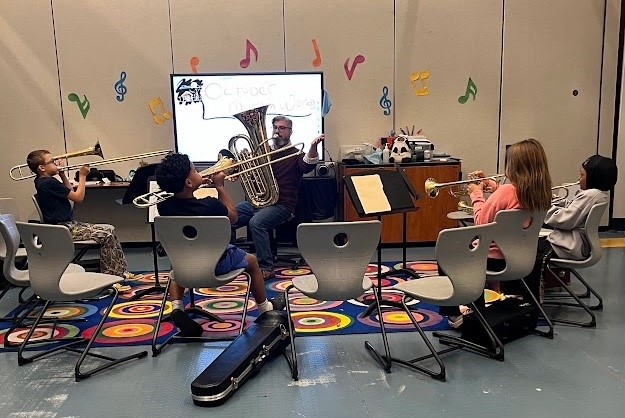
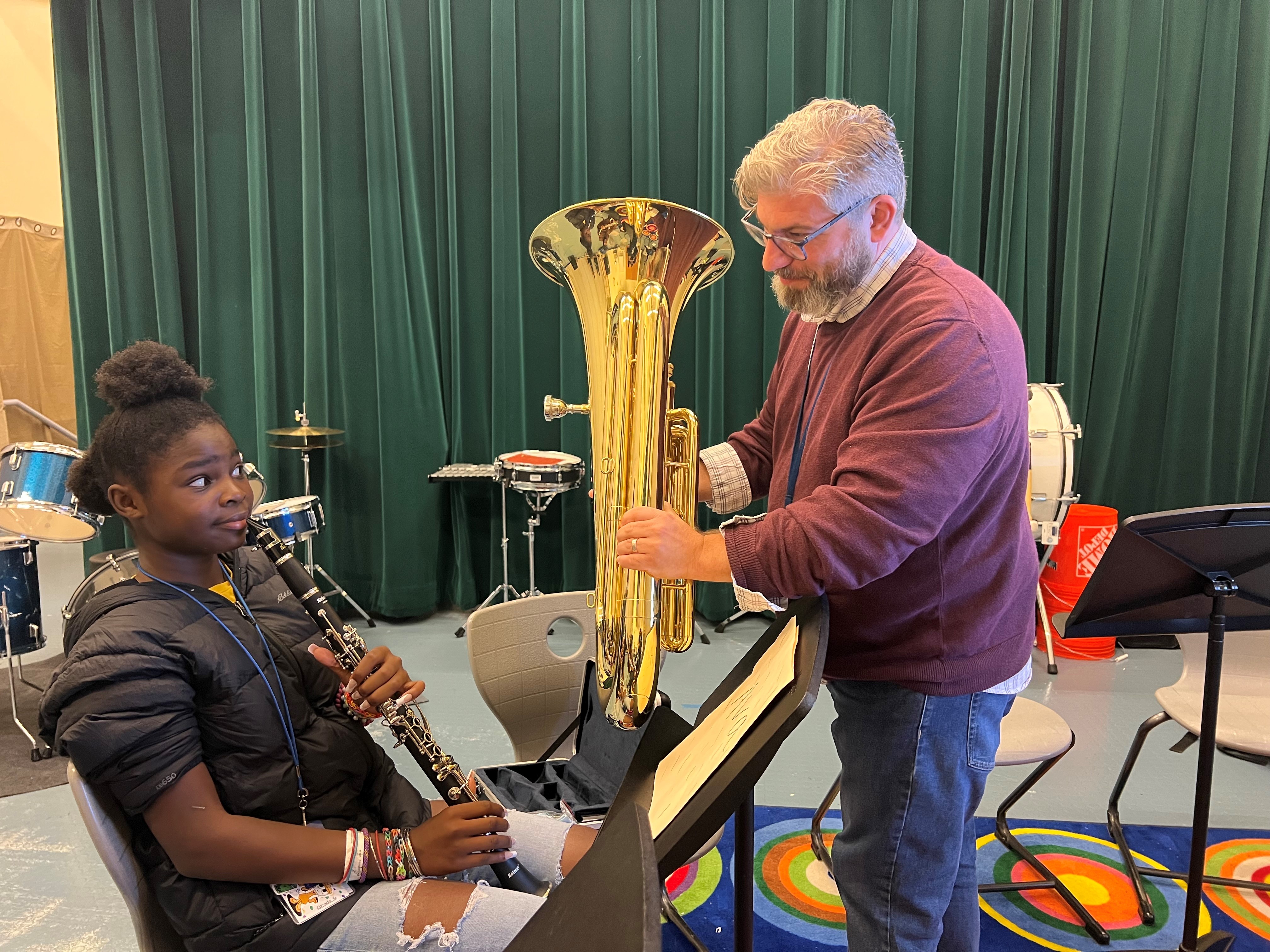
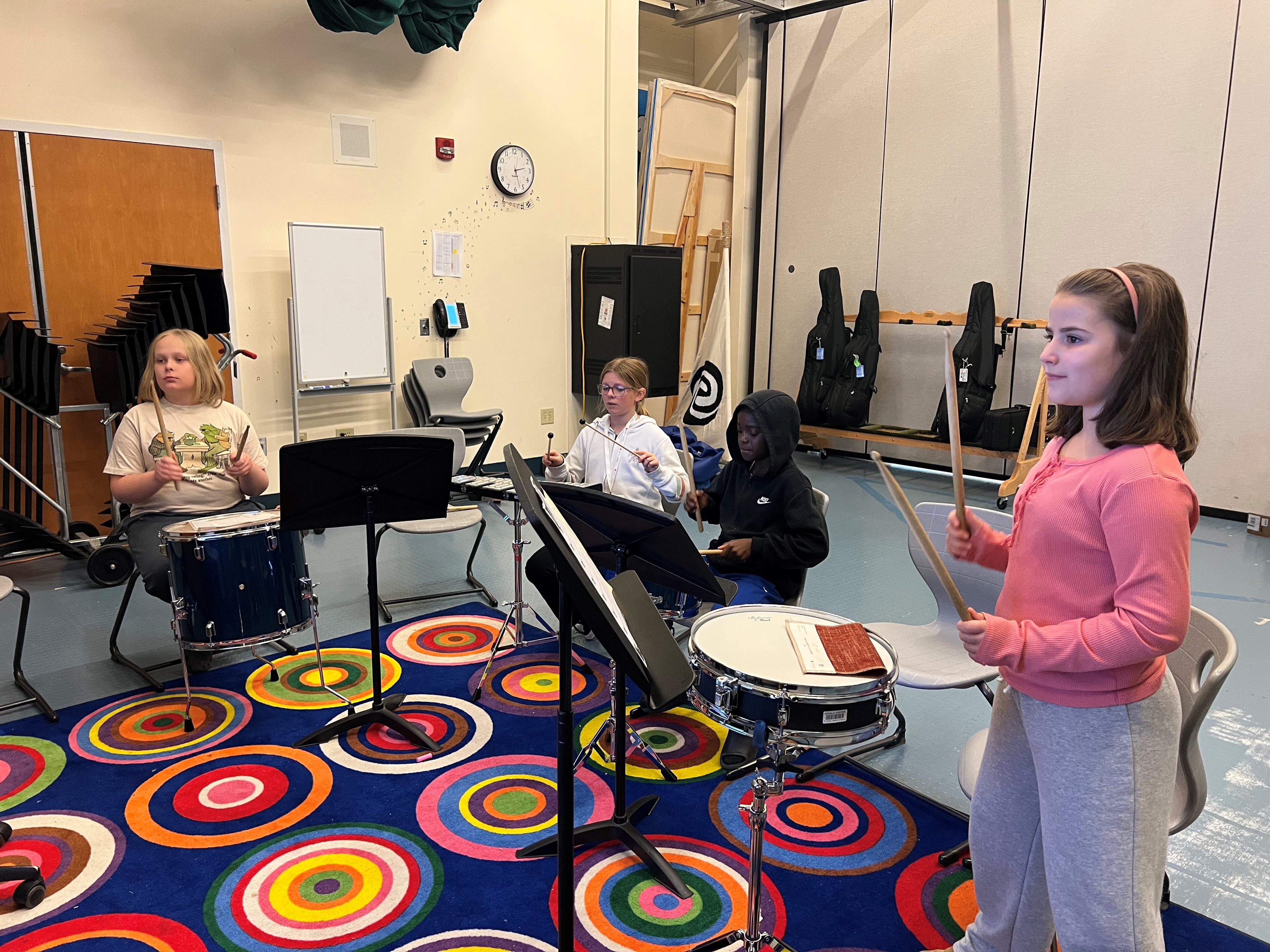
The numbers tell a powerful story. Band participation has more than doubled—rising from 65 students to 135, while string participation has increased from 90 to 161 students. Parent and family engagement has also grown significantly, with record attendance at concerts and performances, creating a stronger sense of community pride.

Through this initiative, LPS has removed longstanding barriers to participation and opened new pathways for students to discover their talents and build confidence. By investing in equitable access to music, the district is investing in the whole child—supporting creativity, connection, and lifelong learning.

Every student deserves the chance to make music—and in Lewiston, that dream is now a reality.

This story was submitted by Lewiston Public Schools. To submit a good news story to the Maine DOE, please fill out the good news submission form.

Ocean Avenue’s LearningWorks AfterSchool Students Celebrate a Year of Growth – In and Out of the Garden

At Ocean Avenue Elementary School in Portland, the final days of the 2024-2025 school year didn’t just mark the start of summer; they marked the culmination of something far more meaningful. On May 28, 2025, students, families, and staff gathered for a joyful celebration that bloomed with laughter, learning, and the unmistakable smell of fresh basil.

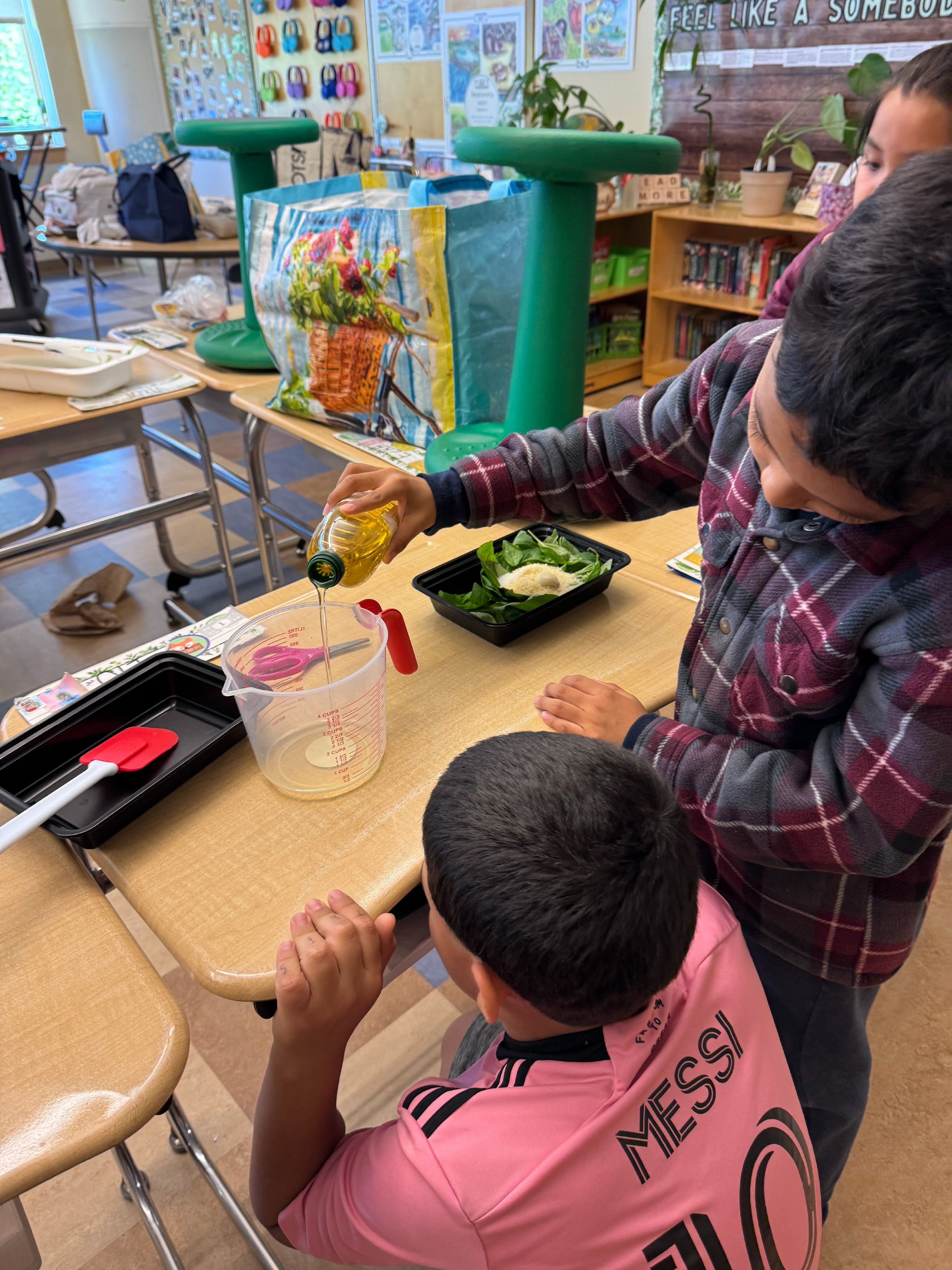
Throughout the year, the LearningWorks AfterSchool program at Ocean Avenue was a place for students to grow—in every sense of the word. One of the most popular features of the program this spring was the health and wellness cooking club, where students rolled up their sleeves and discovered just how empowering (and tasty) healthy eating can be. Whether whipping up simple seasonal dishes or learning how to navigate a kitchen with confidence, they found pride in preparing food they could enjoy and share.

The lessons didn’t end at the table! Earlier this spring, families joined students for a creative project that planted the seeds for something special—literally. Caregivers and kids sat side by side, painting flowerpots in bright colors and bold designs, knowing that they would soon be home to basil plants that they would nurture together.

Two months later, those same pots were filled with life. At the program’s year-end gathering, students tucked basil seedlings into the soil with careful hands and eager hearts. With a quick crash course in how to tend to their new leafy friends, they headed home with plants, pride, and a few new favorite recipes.

“We’ve seen incredible growth this year,” Site Coordinator Stephanie Bethel said. “Not just in what students can do but in how they see themselves. From painting pots to planting basil, everything we’ve done has helped students—and families—to feel more connected, more confident, and more capable.”

As part of the 21st Century Community Learning Centers initiative, LearningWorks AfterSchool continues to foster safe, inspiring spaces that stretch beyond academics. At Ocean Avenue, those spaces came alive this year with the smell of pesto, the sound of laughter, and the roots of something that will keep growing long after summer begins.

This story was submitted by the LearningWorks Afterschool Program. To submit a good news story to the Maine DOE, please fill out the good news submission form.

Maine DOE Seeking Public Comment for a Tydings Amendment Waiver of FY24 ESEA Funds and FY25 Carryover of Excess Title I, Part A Funds

Pursuant to the authority granted under Section 8401(b) of the Elementary and Secondary Education Act (ESEA), the Maine Department of Education (DOE) intends to apply for a Tydings Amendment waiver and a Title I Carryover of Excess waiver from the U.S. Department of Education (USED). As required, the Maine DOE is seeking public comment from February 24 to March 14, 2025, on the request to waive the period of availability for ESEA funds and Title I, Part A carryover limitations. This public comment period has been extended for longer than 15 days, acknowledging the return from February break.

Maine will be seeking:

  • A Tydings Amendment waiver from Section 421(b) of the General Provisions Act to the USED. The Tydings Amendment waiver seeks an extension to the availability of Federal Fiscal Year 2023/State Fiscal Year 2024 ESEA funds. Programs affected by this waiver include:
    • Title I, Part A of the ESEA (Improving Basic Programs Operated by Local Education Agencies [LEAs]), including the portions of the state education agency’s (SEA) Title I, Part A award used to carry out Section 1003 school improvement, Section 1003A direct student services, if applicable, and Title I, Part D, Subpart 2.
    • Title I, Part B of the ESEA (State Assessment Formula Grants).
    • Title I, Part C of the ESEA (Education of Migratory Children).
    • Title I, Part D, Subpart 1 of the ESEA (Prevention and Intervention Programs for Children and Youth Who Are Neglected, Delinquent, or At-Risk).
    • Title II, Part A of the ESEA (Supporting Effective Instruction).
    • Title III, Part A of the ESEA (English Language Acquisition, Language Enhancement, and Academic Achievement).
    • Title IV, Part A of the ESEA (Student Support and Academic Enrichment Grants).
    • Title IV, Part B of the ESEA (21st Century Community Learning Centers).
    • Title V, Part B, Subpart 2 of the ESEA (Rural and Low-Income School Program).
    • McKinney-Vento Education for Homeless Children and Youth Program.
  • A carryover limitation waiver from Section 1127(a) of the Elementary and Secondary Education Act of 1965, as amended for Federal Fiscal Year 2024/State Fiscal Year 2025 Title I, Part A funds. The carryover limitation waiver seeks to waive the requirement that limits the Maine DOE’s ability to grant to its LEAs a waiver of the 15-percent Title I, Part A carryover limitation of more than once every three years.

The Maine DOE must solicit and respond to public comments on its waiver request, as well as provide evidence of the available comment period. As the Maine DOE moves forward to provide as much flexibility as possible, and continued support for expending ESEA federal funds, comments may be submitted to Shelly Chasse-Johndro at shelly.chassejohndro@maine.gov.

Maine DOE Seeking Participants for the Title I Committee of Practitioners

Title I of the Every Student Succeeds Act (ESSA) requires each state educational agency that receives Title I funds to create a State Committee of Practitioners to advise the State in its responsibilities under the Title I program. The purpose of this committee is to review any state rules and regulations relating to Title I and provide recommendations concerning processes and procedures related its implementation.

Committee members we are still looking to recruit:

  • Career and technical educators
  • School board members
  • Parents

The committee’s meetings will be conducted on an ‘as needed’ basis via Zoom (most likely three times per year). The term of membership commences July 1, 2024, and expires June 30, 2026. For those looking for more information on the Title I Committee of Practitioners, please see the FAQ.

Those interested in serving on Maine DOE’s Title I Committee of Practitioners Committee should fill out this form by Friday, June 7th, 2024. Questions can be sent to Rita Pello, at rita.pello@maine.gov.

FY25 Preliminary Allocations for all ESEA Title Programs

The Maine Department of Education (DOE) ESEA team is pleased to provide FY25 Preliminary Allocations for all Elementary and Secondary Education Act (ESEA) title programs. Preliminary allocations for each title are located on the ESEA Federal Programs webpage at the following location:  Fiscal Allocations | Department of Education (maine.gov)

Title I, Part A

Maine’s Title I, Part A funding received a 2.5% decrease in FY25 for Preliminary Allocation Estimates from the US Department of Education (USDOE). This estimate represents an overall reduction of $1,497,180 in Title I, Part A funding for the State of Maine in FY25.  Maine received $62,310,372 in Title I, Part A funds in FY24 and that amount is expected to decrease to $60,813,192 in FY25. Maine’s national poverty census data decreased and did not increase as much as other states, resulting in a lower national poverty share which usually generates a decrease in Maine’s overall Title I, Part A allocation. Please also recognize that the private school amounts are from FY24 and do not include the new data that will be used for FY25.

Title II, Part A

Maine’s preliminary FY25 allocation for the Title II, Part A program is $10,786,692, which represents level funding for the program to the previous fiscal year. Maine has traditionally accounted for student moves between the SAU they reside in and the SAU they attend as part of the Title IIA allocation process. Maine received a finding and subsequent technical assistance from the USDOE in its most recent federal review and may no longer implement this practice and must rely solely on census data when allocating Title IIA funds. This will result in some SAUs receiving more funding than they have in the past, and some receiving less. SAUs impacted by this recent change have received outreach from Title II Coordinator, Ryan Reed.

Title III, Part A

Maine’s preliminary FY25 allocation for the Title III, Part A program is $1,004,205.00 which represents a slight increase in funding for the program to the previous fiscal year. FY25 Title III, Part A allocations have been generated for all SAUs with at least one multilingual (ML) student for the purpose of allowing SAUs the option to form a consortium to reach the statutory required minimum award amount of $10,000.  SAUs that wish to form a consortium for the purpose of a Title III, Part A allocation only, will need to submit a letter of intent (available April 30) to the Maine DOE by June 30, 2024.  When final allocations are received, an SAU that is not part of a consortium or by itself generates less than an award of $10,000 will be removed and will not receive a Title III, Part A allocation.  As a result, the dollar per student ratio will increase as will allocations. An informational webinar regarding Title III consortia will be scheduled for the week of May 13 – registration details to follow.  Questions related to the forming of consortiums should be directed to Title III Coordinator, Daniel Weeks.

Title IV, Part A

Maine’s preliminary FY25 allocation for the Title IV, Part A program is $6,659,535.00, which represents level funding for the program to the previous fiscal year.

Title V, Part B

There have been no significant changes to the Title V, Part B program for the upcoming fiscal year.

Questions regarding allocations should be directed to the applicable Title Coordinator or by reaching out to Janette Kirk, Chief of Federal Programs at janette.kirk@maine.gov.

The Maine DOE Seeking Participants for Title I Committee of Practitioners

Title I of the Every Student Succeeds Act (ESSA) requires each state educational agency that receives Title I funds to create a State Committee of Practitioners (CoP) to advise the State in carrying out its responsibilities under the Title I program. The purpose of this committee is to review any state rules and regulations relating to Title I and provide recommendations concerning processes and procedures related to its implementation.

Committee members must be representatives from the following categories:

  • District and school administrators, including administrators of programs in Title I
  • Principals and other school leaders
  • Teachers in public and charter schools
  • Career and technical educators
  • Representatives of charter schools
  • School board members
  • Non-public school representatives
  • Specialized instructional support personnel (including school social workers, psychologists, nurses, speech-language pathologists, counselors, or other special education service providers
  • Paraprofessionals (Ed-Techs)
  • Parents

Meetings of the committee will be conducted on an ‘as needed’ basis via Zoom (most likely 3 times per year), with the term of membership commencing July 1, 2024, and expiring June 30, 2026. For those looking for more information on the Title I Committee of Practitioners, please see the FAQ.

Those interested in serving on Maine DOE’s Title I Committee of Practitioners Committee should fill out this form by Friday, June 7th, 2024. Questions related to the CoP can be sent to Rita Pello, at rita.pello@maine.gov.

Approval of Tydings Amendment Waiver of FY22 ESEA funds and FY23 Carryover of Excess Title I, Part A Funds

The Maine Department of Education (DOE) is pleased to announce that we have been granted a Tydings Amendment Waiver of FY22 ESEA funds and FY23 Carryover of Excess Title I, Part A Funds. Pursuant to the authority granted under section 8401(b) of the Elementary and Secondary Education Act (ESEA), the Maine Department of Education (DOE) received approval for these waivers from the U.S. Department of Education (USDOE).  As a reminder, state FY21 ESEA funds, subject to last year’s Tydings Waiver, are expiring and should be obligated by September 30, 2023.

The requirements from which Maine will be waived include:

  • A Tydings amendment waiver from Section 421(b) of the General Provisions Act to the U.S. Department of Education (USDOE). The Tydings amendment waiver extends the availability of Federal Fiscal Year 2021/State Fiscal Year 2022 Elementary and Secondary Education funds. Programs affected by this waiver:
    • Title I, Part A of the ESEA (Improving Basic Programs Operated by LEAs), including the portions of the SEA’s Title I, Part A, award used to carry out section 1003 school improvement, section 1003A direct student services, if applicable, and Title I, Part D, Subpart 2
    • Title I, Part B of the ESEA (State Assessment Formula Grants)
    • Title I, Part C of the ESEA (Education of Migratory Children)
    • Title I, Part D, Subpart 1 of the ESEA (Prevention and Intervention Programs for Children and Youth Who Are Neglected, Delinquent, or At Risk)
    • Title II, Part A of the ESEA (Supporting Effective Instruction)
    • Title III, Part A of the ESEA (English Language Acquisition, Language Enhancement, and Academic Achievement)
    • Title IV, Part A of the ESEA (Student Support and Academic Enrichment Grants)
    • Title IV, Part B of the ESEA (21st Century Community Learning Centers)
    • Title V, Part B, Subpart 2 of the ESEA (Rural and Low-Income School Program)
  • A carryover limitation waiver from Section 1127(a) of the Elementary & Secondary Education Act of 1965, as amended for Federal Fiscal Year 2022/State Fiscal Year 2023 Title I, Part A funds s (i.e., the Title I, Part A funds that will become carryover funds on October 1, 2023). The carryover limitation waiver waives the requirement that limits the Maine DOE’s ability to grant to its local educational agencies (LEAs) a waiver of the 15 percent Title I, Part A carryover limitation of more than once every three years.

We are pleased to share this news and deeply appreciate the work you and your staff are doing to help support students and schools in Maine. If you have any questions about this waiver, please contact your ESEA Regional Program Manager:  ESEA Federal Programs | Department of Education (maine.gov)


Final SAU ESEA Allocations Released and Now Available

The Maine Department of Education’s (DOE) ESEA Federal Programs team is pleased to share that all ESEA Federal Program final allocations are now available. Final allocations can be viewed on the ESEA allocations webpage and have been uploaded into the Grant Award Notification (GAN) within the School Administrative Unit (SAU) ESEA Consolidated Application. Applications can be accessed through the Grants4ME platform.  SAUs can complete and submit their ESEA consolidated application to assign Title I, II, III, IV-A and V funding, if applicable, to SAU and school projects.

It should be noted that due to a letter received from the US Department of Education (USDOE) on February 24, 2023, indicating the USDOE’s intent to place DOE’s Title I, Part A grant on high-risk status and withhold 25 percent of DOE’s fiscal 2022 (school year 2022-23) administrative funds, the withheld funds per federal statute, were redistributed to SAU Title I allocations, providing an additional $117,422 to Maine schools. The Maine DOE has communicated our objections to the USDOE’s actions. In the meantime, the inclusion of the $117,422 in addition to funds received in Maine’s preliminary Title I award, for federal fiscal year 2023 (school year 2023-2024) has resulted in either slight increases or lesser loss to final SAU Title I allocations as compared to preliminary Title I allocations. This is primarily due to adjustments in the hold harmless provision of funding directly related to the concentration stream resulting in additional loss of funds for some SAUs being subsequently minimized by the addition of the reallocation of withheld state administrative funds.

In the preliminary FY24 Title I equitable services allocations, the figures were abnormally low. After a deeper review, a formula error was found and subsequently amended. Please note the substantial increases for final FY24 Title I equitable services allocations.

Interested in understanding how Title I allocations are derived? A Title I allocation webinar is available for viewing.

Questions related to Title I allocations should be directed to Jessica Caron, Title I Specialist. Specific SAU-related ESEA allocation questions can be directed to the ESEA Regional Program Managers.

Seeking Public Comments for a Tydings Amendment Waiver of FY22 ESEA funds and FY23 Carryover of Excess Title I, Part A Funds

Pursuant to the authority granted under section 8401(b) of the Elementary and Secondary Education Act (ESEA), the Maine Department of Education (DOE) intends to submit an application for waivers to the U.S. Department of Education (USDOE).  As required, the Maine DOE is seeking 15 days of public comment from June 7, 2023 – June 21, 2023, on the request to waive the period of availability for Elementary & Secondary Education Act funds and Title I, Part A carryover limitations. 

Requirements from which Maine will be seeking a waiver include: 

A Tydings amendment waiver from Section 421(b) of the General Provisions Act to the U.S. Department of Education (USDOE). The Tydings amendment waiver seeks an extension to the availability of Federal Fiscal Year 2021/State Fiscal Year 2022 Elementary and Secondary Education funds.  Programs affected by this waiver: 

  • Title I, Part A of the ESEA (Improving Basic Programs Operated by LEAs), including the portions of the SEA’s Title I, Part A award used to carry out section 1003 school improvement, section 1003A direct student services, if applicable, and Title I, Part D, Subpart 2 
  • Title I, Part B of the ESEA (State Assessment Formula Grants) 
  • Title I, Part C of the ESEA (Education of Migratory Children) 
  • Title I, Part D, Subpart 1 of the ESEA (Prevention and Intervention Programs for Children and Youth Who Are Neglected, Delinquent, or At Risk) 
  • Title II, Part A of the ESEA (Supporting Effective Instruction) 
  • Title III, Part A of the ESEA (English Language Acquisition, Language Enhancement, and Academic Achievement) 
  • Title IV, Part A of the ESEA (Student Support and Academic Enrichment Grants) 
  • Title IV, Part B of the ESEA (21st Century Community Learning Centers) 
  • Title V, Part B, Subpart 2 of the ESEA (Rural and Low-Income School Program) 
  • McKinney-Vento Education for Homeless Children and Youth Program 

A carryover limitation waiver from Section 1127(a) of the Elementary & Secondary Education Act of 1965, as amended for Federal Fiscal Year 2022/State Fiscal Year 2023 Title I, Part A funds. The carryover limitation waiver seeks to waive the requirement that limits the Maine DOE’s ability to grant to its local educational agencies (LEAs) a waiver of the 15 percent Title I, Part A carryover limitation of more than once every three years. 

The Maine DOE must solicit and respond to public comment on its waiver request as well as provide evidence of the available comment period.  As the Maine DOE moves forward to provide as much flexibility as possible and continued support for expending ESEA federal funds, comments can be submitted to:  Cheryl.Lang@maine.gov. 

Additional Support for 2023 Summer Learning and Enrichment Programming

The Maine Department of Education (DOE) is excited to announce that $2 million dollars of the American Rescue Plan (ARP) funding will support additional summer learning and enrichment programming for PreK – grade 12 students this summer. This follows the recent award of $2.1 million to 63 school administrative units (SAUs) to support summer enrichment programming through the Title I Summer Reallocation Grant.

The ARP Elementary and Secondary School Emergency Relief (ESSER) funding can provide broad support for summer learning and enrichment programs. SAUs should consider a variety of options for summer learning and enrichment programming such as an SAU run program and/or partnerships with non-profit or community organizations to address students’ academic, social, emotional, and mental health needs through a combination of activities. SAUs should maximize enrollment in summer learning and enrichment programs, with a particular focus on underserved students and students most impacted by the COVID-19 pandemic while addressing the needs of students of all ages. Evidence-based summer learning and enrichment programs are further described in Volume 2 of the U.S. Department of Education’s COVID-19 Handbook available at: https://www2.ed.gov/documents/coronavirus/reopening-2.pdf.

The application for the ARP ESSER summer learning and enrichment programming competitive grant is now OPEN within the GRANTS4ME platform.

The ARP Summer Learning and Enrichment Application will utilize the Title I Summer Reallocation Grant template. Please navigate to the Grants4ME platform 2023 dropdown menu – titled “Title I Summer Reallocation Grant”.

  • As with any application on Grants4ME, be sure to click “Draft Started” to begin completing the application.
  • Within the needs, goals, and outcome section of the application, please describe how the summer learning and enrichment programming will prevent, prepare for and/or respond to COVID-19. 
  • In addition, please ensure that the SAUs business manager and superintendent have enough time to review and approve the application in order to meet the deadline.

The application deadline is May 19, 2023, at 5 PM EST. If you have any questions about the ARP ESSER Summer Learning and Enrichment Programming grant opportunity, please reach out to mary.herman@maine.gov or renee.a.reilly@maine.gov. 

View the list of SAUs already awarded funded here.