Monmouth Memorial’s Makerspace Reaching Even More Students

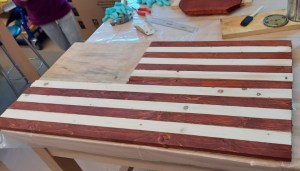
A finished student independent project from wood and stain

Monmouth Memorial School has some innovative ideas on how to involve more of its students with their makerspace. Not only is this makerspace available to whole classes and individuals throughout the day, but students in grades 6-8 also take a unified arts class where they are exposed to many different components of the makerspace, including 3D printing, motors and electronics, woodworking, sewing, all the way to virtual and augmented reality. By the time the students finish middle school, they will have developed makerspace skills, learned about the design process, and completed an independent project. These projects can be hands-on, virtual, or anything in between with some projects including a YouTube instructional video on quilt sewing, marble runs, an American Flag made out of wood and stain, safety guides on tools in the makerspace, and a three-foot-tall basketball hoop.

Monmouth Memorial's studio space
Monmouth Memorial’s studio space

The makerspace projects are spearheaded by Elizabeth Bellegarde, the district librarian, and Seth Mitchell, who is the school’s technology integrator and the 2022 Kennebec County Teacher of the Tear. Bellegarde feels the system is a great fit for their school, saying “I feel as though the set-up we have is ideal for our school’s structure, allowing the maximum amount of student access.” That structure allows for many different projects happening all at once, with one space designed as a work area that involves everything from power tools and snap circuits as well as materials for the Lego Robotics and VEX Robotics teams, which competed in the 2022 Vex Robotics World Championship.

In the makerspace unified arts class, 6th-8th grade students will be working on a wide array of projects simultaneously, with Bellegarde moving between groups to provide support when needed. Students enthusiastically switch between low-tech and high-tech skills to complete their projects, but the energy and excitement from the students is constantly pulpable.

“It takes time to build that culture,” Mitchell says, “having administration who see the value in this program makes it even more successful.”
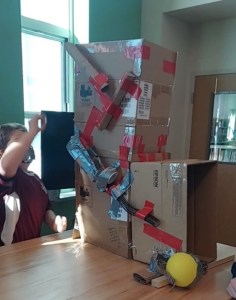
A student’s marble run project

Attached to the main makerspace area is Monmouth’s studio space. This area contains a wide array of materials including a sound board, iPad teleprompter, green screen walls, and resources for video editing. “Students and teachers have this wonderful resource available [that can] extend learning in a way that wasn’t previously possible,” Bellegarde says. “By using the makerspace this way, classes become more fun with memorable experiences that will increase retention.” For many students in the makerspace unified arts class, having flexibility between both learning spaces gives them even more options to create unique projects.

Bellegarde wants to continue making these learning resources available for as many students as possible. “We are still working on making more students aware of this opportunity, the makerspace unified arts class is a huge part of that,” she says, “but the students who do take advantage of the makerspace find it to be a rewarding experience.” Not only can students participate in the unified arts class, classroom teachers can use the space for whole-class learning experiences as well as individual students working independently during study halls and available times throughout the day. Bellegarde sees these learning experiences leading to the development of lifelong design, critical thinking, decision-making, and independent skills. “For me, this is the best part of the makerspace.”

This story was written and coordinated by MLTI Ambassador Joshua Schmidt as part of the Maine Schools Sharing the Success Campaign. To learn more, or to submit a story or an idea for a story, email rachel.paling@maine.gov.
Hartford/Sumner 6th Graders Star in Second Debut of MLTI 2.0 SLAM Showcase 

The Maine Department of Education’s MLTI Team, including MLTI Ambassadors, Nokomis SLAM students, and MLTI SLAM Coordinator, Kern Kelley spent the day presenting at the SLAM Showcase for sixth grade students and teachers from Hartford/Sumner Elementary School on November 22nd. This was the second of six SLAM (Student Leadership Ambassadors of Maine) Showcases happening at schools across Maine this year. (Read about the first SLAM Showcase here) 

The SLAM show empowers MLTI students to use their devices and technology tools by providing a platform where students can give back and share their innovative work in their schools. The live SLAM in-person showcases have been designed to directly align with MLTI’s vision that all Maine students engage in authentic, relevant, technology-rich, learning experiences that prepare them for a fulfilling future. 

Hartford/Sumner 2nd grade teacher Kelley Houghton attended a SLAM summer professional learning and applied to host a SLAM Showcase. As the selected candidate, Houghton invited MLTI to bring the SLAM Showcase to 6th grade students and teachers at her school. 

The students spent the day learning about robotic coding with MLTI Ambassador, Martha Thibodeau, learning about Canva, free design software, with Nokomis High School SLAM student, Mia Coots, learning how to use TinkerCAD, a free web app for 3D modeling, electronics, and coding, with Nokomis High School SLAM student John Davis, and learning about how to create Virtual Reality with MLTI Ambassador, Tracy Williams. 

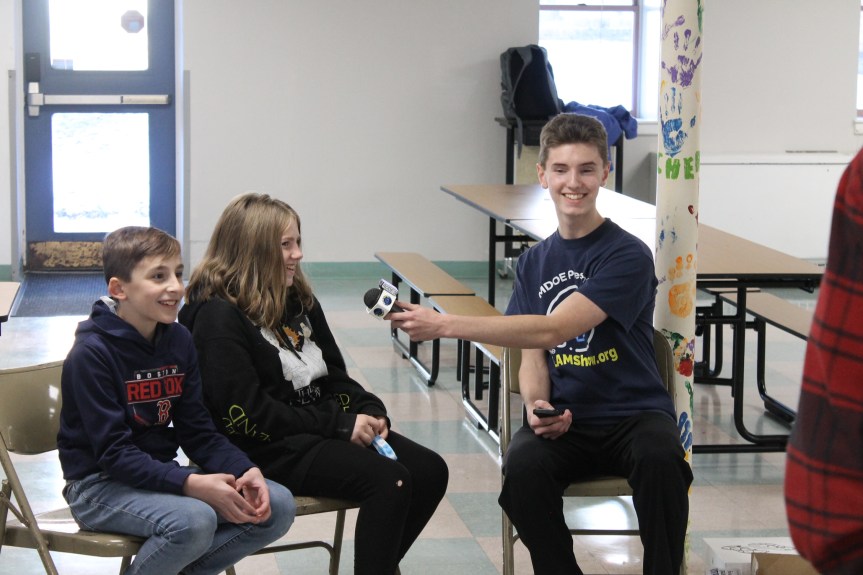
The SLAM showcase provides the opportunity for students and teachers to learn new techniques and programs. Fifth grade teacher, Kate McCarthy, excitedly sat alongside students learning about Canva during one of the sessions. “I am very excited to use this in my classroom,” McCarthy later told SLAM student, Abby Caron, during a follow-up interview. 

Hartford-Sumner SLAM Showcase
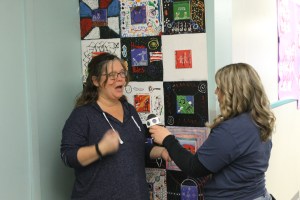
Fifth grade teacher, Kate McCarthy being interviewed by SLAM student, Abby Caron

Following each session, students were invited to participate in the SLAM Exam where they are asked to answer a related question and invited to upload the work they created in the session. At the end of the SLAM Showcase, examples of student work are highlighted as part of the SLAM Show for all participants to view. Prizes were randomly selected from correctly answered SLAM Exams. 

Kelley tells us that the SLAM Exam is a low barrier way for the SLAM program to collect and showcase student work, promote student participation, and entice students to participate in future events. “Even if they don’t get a prize during this show, there is always the opportunity to share work during any of our SLAM shows, so we always hope they will share again and possibly win a prize during a future event.” In addition to the Live SLAM Showcases happening monthly this school year, SLAM also hosts weekly virtual SLAM shows where students across the state can participate. 

The day ended with a group activity that allowed students to, not only share their work, but also share what they learned and highlight their take-aways from a day of hands-on learning. Students also got the opportunity to take a group picture with a drone that was provided to the school, in addition to virtual reality (VR) headsets for each student that can be paired with any mobile device to show their parents and guardians the work they created that day in the Showcase.  

Check out a video of the SLAM Showcase here

To learn more about the MLTI 2.0 SLAM program visit: http://MLTI.me. View the latest SLAM episode on the MLTI 2.0 Youtube Channel. To sign your school or classroom up to take part in SLAM, fill out this form. 

Follow the Maine Department of Education on Facebook and Twitter to see a posting of the latest virtual SLAM show each week. Subscribe to the Maine DOE Newsroom to see a recap of the in-person SLAM shows each month. 

New STEAM Lab at Glenburn School Making a Big Impact

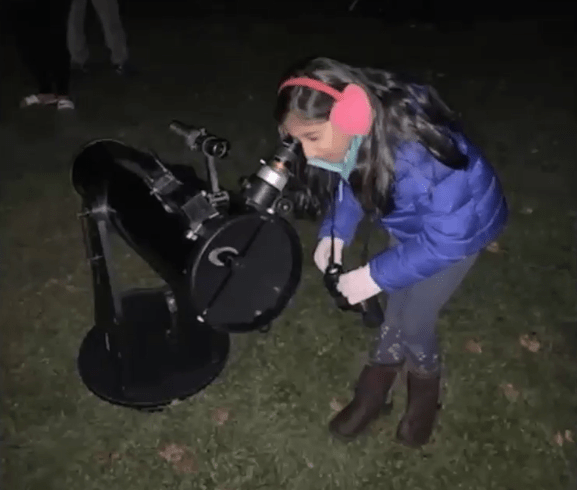
(Pictured: A Glenburn student looks through the telescope at the Star Party.)

Establishing a culture of creation, innovation and hands-on learning is becoming a focal point at Glenburn School. The driving forces toward that goal are a couple of long-time educators – Technology Integrator, David Davis, and Technology Director, Ken Worster. Last year the administration implemented a plan to repurpose a science lab to house materials for a new STEAM (Science, Technology, Engineering, Arts, Math) Lab. Worster advocated for functional space for technology creation since the one-to-one devices had made the traditional computer lab unnecessary. Davis credits his administrative team at Glenburn for its support of this initiative and feels “fortunate that [his] administration had the vision of technology integration” in order to bring this plan to life.

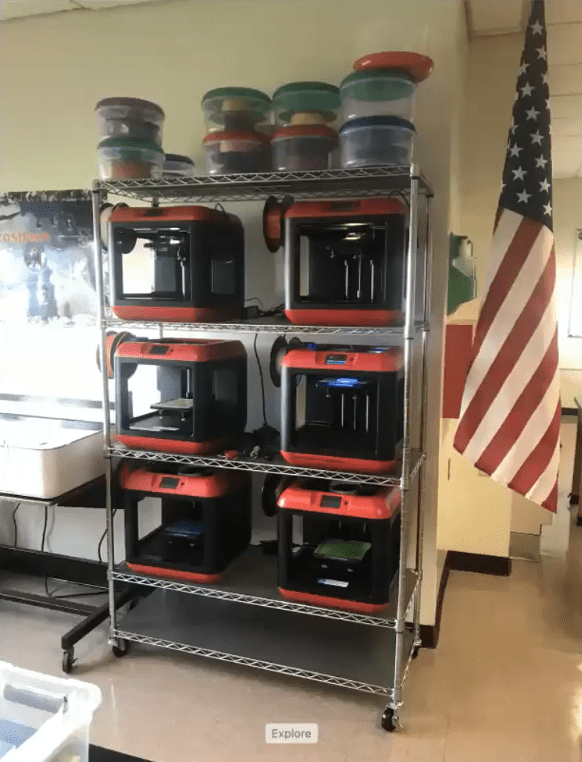
The STEAM Lab consists of several technology tools including a laser cutter, green screen, a fleet of iPads, a recordable microscope, over a dozen 3-D printers, codable robots, and more. Davis and Worster’s hope is to establish the lab as an integral part of the curriculum for educators. Worster mentioned that the immediate goal is to have teachers “looking at their content and bringing it to David in a way where they can have that conversation about how they can integrate our technology.”

Even in the Lab’s infancy, Davis is already seeing its impact in the classrooms, most notably in the sixth and seventh grade English Language Arts classes. In those classes, students have been able to dive deeper into their reading by designing and printing 3-D objects or characters from their books, by recreating scenes with green-screen video, and by etching “plaques” with the laser cutter that outline the author’s biography.

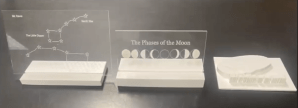
Additionally, Davis and Worster envision enhanced student engagement through the STEAM Lab by incorporating it into science classes across the school. Davis integrated an astronomy theme and tiered the work for the various grade levels. Students in kindergarten through second grade used the online platform Wixie to design constellations that were then etched with the laser cutter, students in third through fifth grade also used the laser cutter to design the phases of the moon, and finally, sixth through eighth grade students created a 3-D model of a footprint that incorporating each student’s constructed quote acting as if they were to be the first ones stepping onto Mars.

Glenburn Engraving
(Left to Right) Constellations designed in grades K-2, moon phases etched in grades 3-5, 3-D printed footprint in grades 6-8.

Davis and Worster concluded the unit by coordinating with the Challenger Learning Center and the Versant Power Astronomy Center at the University of Maine to host a “star party” outside at the school. The night was a huge success with over 200 family members attending. It allowed students the chance to stargaze with a telescope which Worster noted was the first time for most of them.

Even with the initial success of the STEAM Lab, Davis and Worster know that it will take time for the innovative culture to spread throughout the school. While they admit the program is not without its wrinkles, they are hopeful that a steadfast dedication to technology integration will create breakthroughs for their staff. Davis knows that it pays off to start small and have it build from there, “If I could just get [the teachers] there once or twice, it will take on a life of its own.”

Glenburn Printers
Sets of 3-D printers at Glenburn School

This story was written and coordinated by MLTI Ambassador Rob Dominick as part of the Maine Schools Sharing the Success Campaign. To learn more, or to submit a story or an idea for a story, email rachel.paling@maine.gov.


What Are the MLTI Ambassadors Cooking Up?  Daily Asynchronous Professional Learning Offerings Starting 11/28  

Student Engagement, Blended Learning, Project Based Learning, Supporting All Learners and Computer Science & Computational Thinking Pedagogies are the main topics for a four-week professional learning series being offer by the MLTI Ambassadors starting on November 28. These daily offerings will go live on the MLTI Youtube channel and are open to all interested educators and will include useful resources and contact hours.  These are also available as a professional learning calendar with links to the video and slides going live every day! 

Mixing in Mare Student Engagement - Joshua Schmidt, MLTI Ambassador

Student Engagement
Lead by Joshua Schmidt on Mondays 

The student engagement series will extend last year’s videos from Erik Wade to four additional topics to help teachers create more authentic engagement in their classrooms. We will cover the similarities and differences in game-based learning and gamification, creating breakouts and escape rooms, leveraging group work to increase classroom discussions, and strategies to make those discussions more authentic and valuable. We will also discuss tools to help with each of these strategies and speak to other MLTI Ambassadors to hear examples of what has worked in their schools.   

To find the previous professional development sessions in this series, and receive contact hours for them, please visit our YouTube playlist. 

  • Topic 1: Comparing Game-Based Learning and Gamification 
  • Topic 2: Creating Escape Rooms and Breakouts to Increase Student Engagement and Critical Thinking 
  • Topic 3: Leveraging Group Work and Technological Resources to Increase Classroom Engagement and Discussions 
  • Topic 4: Making Classroom Discussions Authentic and Using Tools to Support Authentic Discussions  

Computer Science Integration Pedagogies - Yuhong Sun, MLTI Ambassadora

Computer Science & Computer Technology Integration Pedagogies
Lead by Yuhong Sun by Tuesdays 

Over the past decade, there has been increasing research on computer science pedagogies. The data shows that certain teaching methods are more effective than others in computer science education. The series of Computer Science & Computer Technology Integration Pedagogies will explore the popular pedagogies for Computer Science and Computer Technology Integration, such as computational thinking, contextualized learning, collaborative learning and learning away from the computer. The series will use examples from Computer Science teachers, math and science teachers and discuss how the teaching methods are effectively used in the classrooms to support the learning process, to develop students’ critical thinking and problem-solving skills and prepare them for the 21st century job market. 

  • Topic 1: Computational Thinking Skills Development 
  • Topic 2: Engaging Students Through Contextualized Learning 
  • Topic 3: Building Critical Thinking and Problem-solving Skills Through Collaborative Learning 
  • Topic 4: Cultivating Computer Science Skills by Teaching Away from the Computer 

Shake Up Learning With Blended Learning - Martha Thibodeau, MLTI Ambassador

Blended Learning
Lead by Martha Thibodeau on Wednesdays 

The Blended Learning Series will explore an introduction of this pedagogical strategy and tools to enhance student learning. Included in this series will be an overview of blended learning models, techniques to support student choice and pacing, and developing teacher workflows. If you like the idea of blended learning, but are overwhelmed by the details, this is the series for you. Join the MLTI Ambassadors as we discuss ways to maximize student learning and efficiently manage your role in the blended learning environment. 

  • Topic 1: Introduction to Blended Learning Models.  
  • Topic 2: Student Experience in Blended Learning   
  • Topic 3: Teacher Workflow within Blended Learning 
  • Topic 4: Tools to Enhance Blended Learning
     

Recipes for Project Based Learning - Tracy Williamson, MLTI Ambassador

Recipes for Project Based Learning
Lead by Tracy Williamson on Thursdays 

The Project Based Learning series will offer creative ideas to help students learn to think critically, collaborate and communicate on real-world projects. We’ll share tips, digital tools and resources to help you implement engaging team-based activities aligned with content area standards like creating a student news team, a student podcast series and STEAM projects that support the Sustainable Development Goals. We’ll also share digital tools and techniques for curating resources and data for long-term projects and creating effective and aesthetic presentations to share work with the community. 

  • Topic 1: Student News Team Projects 
  • Topic 2: Student Podcast Series 
  • Topic 3: STEAM Projects around the Sustainable Development Goals 
  • Topic 4: Presenting Projects: Taking PBL to the Community  

Serving ip Support for ALL - Nicole Karod, MLTI Ambassador

Support for ALL
Lead by Nicole Karod on Fridays 

This professional development series will share tools and methods for supporting all learners.  As we all know our classroom are filled with a variety of needs, both academically and behavioral.  In this series you’ll discover ways to meet students’ needs through differentiation, be a trauma informed educator, create and design with all students in mind, as well as fill your toolbox with tools for modification and accommodations.  I will also be joined by other MLTI Ambassadors to discuss how these strategies can look different in different classrooms. Join me on Friday each week to develop your toolbox toward supporting all students in the classroom. 

  • Topic 1: Differentiation in the classroom 
  • Topic 2: Trauma informed classroom 
  • Topic 3: UDL (Universal Design for Learning) 
  • Topic 4: Tools for modification and accommodations 

Corinth’s Central Middle School Hosts First MLTI SLAM Showcase 

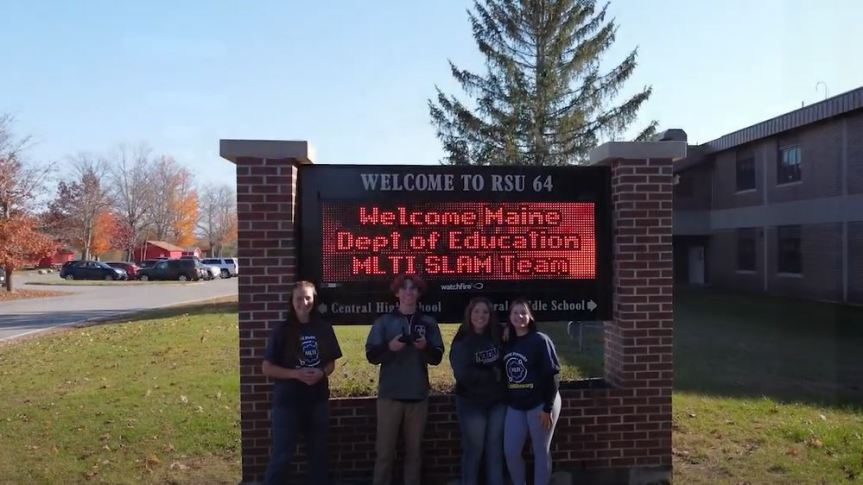
Pictured: MLTI 2.0 SLAM [Student Leadership Ambassadors of Maine] posing in front of Central Middle School in Corinth with a welcome sign organized by the school.)

The Maine Department of Education’s Maine Learning Technology Initiative (MLTI) kicked off the first of six live, in-person, all-day SLAM (Student Leadership Ambassadors of Maine) showcases at Central Middle School in Corinth on October 21st. MLTI will be hosting six all-day SLAM Showcases at six different participating MLTI schools throughout the school year! One of MLTI’s goals is to provide equitable access to technology to prepare students to be critical thinkers and better global citizens. The Student Leadership Ambassadors of Maine (SLAM) directly supports this work by facilitating students’ new skill acquisition and problem solving, as well as their demonstration of technology integration through the creation of a student led community. SLAM empowers MLTI students to use their provided devices and technology tools by providing a platform where students can give back and share their innovative work with technology in their schools. The live SLAM in-person showcases have been designed to directly align with MLTI’s vision that all Maine students engage in authentic, relevant, technology-rich, learning experiences that prepare them for a fulfilling future.

To prepare for the all-day SLAM events, MLTI hosted three professional developments events led by master-educator, Kern Kelley. During these summer events educators learned how to develop classroom environments that use teamwork, technology design, prototyping, and production. Each attendee received a $2,000 kit with power tools, 3D printers, robotics, and virtual workspaces to bring back to their district and support technology integration, as well as the opportunity to apply to host one of these all-day SLAM events at their school during the 2022-2023 school year.

Central Middle School’s 8th grade math teacher, Michael Roman, attended the SLAM summer professional learning and applied to host a SLAM Showcase at his school and was the lucky successful applicant who was picked to host the first show.

Kern Kelley
Kern Kelley, master-educator

Kelley began the day demonstrating to the 8th graders some of the innovative solutions that have been created using technology including the use of prosthetics that respond to muscle movement. Like with most of his presentations, Kelley included information on the cost and how to access the technology pieces that are used to put together advanced prosthetics, among other technology solutions. Kelley subscribes to the mindset that technology tools are available and at your fingertips, you just may not know they are there and how to access them.

Before sending students off to concurrent sessions for the morning, Kelley encouraged the students to think of their own ways to innovate and create using technology in ways that may not even be thought of yet.

The sessions were taught by Nokomis student SLAM club members (SLAMmers) and MLTI Ambassadors on topics such as bot coding, virtual reality, multimedia, and animation creation.

SLAMmers Katelyn, Mia, and Abby were also at the showcase taking photos and capturing video. Each aspiring to pursue photography, journalism, and videography, many of the pictures and images in this article and the video below were taken by them.

The day ended with a live stream of the SLAM Show broadcast from Central Middle School. Students had the opportunity to highlight some of their favorite parts of the day with viewers. They took a group picture with a drone, which was an exciting part of the day for everyone.

Mia and other SLAMmers also produced a video which is a re-cap from the showcase with student interviews. Check it out here:

To learn more about the MLTI 2.0 SLAM program visit: http://MLTI.me. View the latest SLAM episode on the MLTI 2.0 Youtube Channel. To sign your school or classroom up to take part in this awesome opportunity, fill out this form. Follow the Maine Department of Education on Facebook and Twitter to see a posting of the latest virtual SLAM show each week. Subscribe to the Maine DOE Newsroom to see a recap of the in-person SLAM shows each month.

Using Book Creator & Educational Technology Tools to Engage Students in Reading

The Gorham Middle School (GMS) library website is a rich resource for students to discover and access reading materials from their home or classroom using their MLTI iPads. Librarian Suzanne Liacos-Dix has created an extensive collection of Book Talk videos, a Google Classroom stream, and a selection of Google Forms to engage students in sharing their literary passions with others. This year, in collaboration with 7th grade teacher, Sherry Coyne and the GMS technology integrator, Terri Dawson, the library website has a new feature to help engage students in Silent Sustained Reading (SSR).

The GMS library website features a link to join a Google Classroom where Mrs. Dix streams library announcements like new book arrivals, book fair information, and author visit events. She has also created a Google Form where students can request a featured “Favorites Shelf” to display their top picks as well as a form to request new books to be added to the library. The forms are student-friendly and provide students an opportunity to have a voice in the library collection. The Google Classroom stream allows students across grade levels to have conversations that they might not otherwise from expressing excitement about a new book release or sharing thoughts on upcoming events with others. The stream is also an opportunity for Mrs. Dix to help students learn how to communicate effectively with others and become good digital citizens. Mrs. Dix says there is a long waiting list for the Favorites Shelf that just started this September. It has been extraordinarily popular with the students!

Like many middle schools, Gorham Middle School has a Silent Sustained Reading period during the day to allow students to dive into a book of their choice for a set amount of time. Sometimes getting students to actively engage in SSR can be a challenge. Sherry Coyne, a 7th grade teacher on the Little River team reached out to Mrs. Dix about an idea she had heard about that might help support students who have a difficult time with the SSR period. Mrs. Dix talked to the technology integrator and a new, creative solution was born: Meet a Book Mondays. Using Book Creator, an app for web browsers and tablets that “enables students to create and read multimodal digital books,” ¹ along with audio recording and image editing tools on the MLTI teacher MacBooks, Mrs. Dix and Mrs. Dawson created a comic book style book that is full of book previews, character descriptions, book release announcements, audio recordings of chapters and more. The book has a vibrant and fun design to grab student interest.  The Meet a Book Mondays book is projected for the class all together during SSR. Students fill out a feedback form on their iPads and draw whatever comes to mind as they listen. The following day, students have the option to read the books that they learned about. Students can come back to Meet a Book Mondays any time as it is readily accessible via their iPads. Mrs. Coyne has seen a positive result since introducing the project to her students, they are more engaged and she feels like the SSR time is becoming more valuable to students. They are already exploring a new Google Maps project based on the response from students on a particular book that they learned about through Meet a Book Mondays. They plan to virtually follow and map out a character’s journey around the world. After hearing about the success on the Little River team, other teachers are beginning to use the Meet a Book Mondays book with their classes for SSR as well!

Mrs. Dix’s library website and the Meet a Book Mondays Book Creator Project are great examples of blending educational technology tools into every day learning to provide accessibility and actively engage students in a creative way. Using their MLTI devices to create and access content, both teachers and students are connecting and discovering new resources to support reading. You can see the Gorham Middle School Library website and the ongoing Meet a Book Mondays project here: https://sites.google.com/view/gorhammiddle/home

¹University of Massachusetts Amherst. (n.d.). Learner-Centered Tools, Book Creator. Online Tools for Teaching and Learning. Retrieved October 18, 2022 from https://blogs.umass.edu/onlinetools/learner-centered-tools/book-creator/.

Learning Through Technology Team Announces Expanding Access to Computer Science in Maine Classrooms at the 35TH Annual ACTEM Fall Conference!

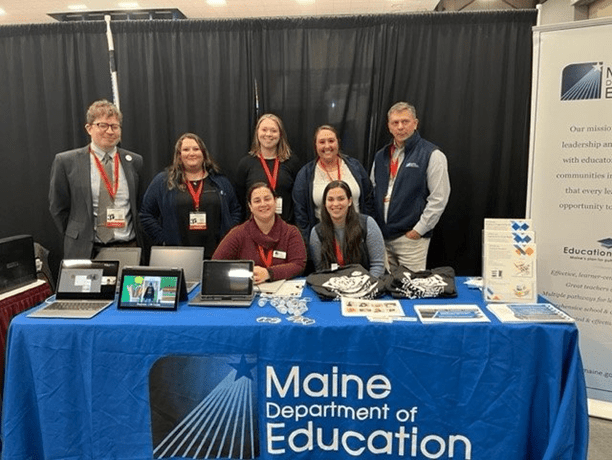
(Pictured: Maine DOE’s MLTI 2.0 Team.)

On Thursday October 13th at the 35th annual Fall ACTEM (Association of Computer Technology Educators of Maine) Conference, the Maine Department of Education’s Learning Through Technology Team – along with Commissioner Pender Makin and Governor Janet T. Mills – announced a statewide plan for expanding access to computer science in Maine classrooms. This initiative is funded through the Governor’s Emergency Education Relief Fund and is a part of the Governor’s plan to expand access and support Computer Science in Maine.

The #MaineTeachesCS initiative centers around the provision and use of mobile computer science labs along with ongoing professional learning opportunities for each school as well as a computer science integration cohort for a full calendar year (Dec. 2022 – Dec. 2023). Schools will be provided with a mobile lab that focuses on one of three computer science topic areas: Robotics and Programing, Coding and Circuitry, and Augmented and Virtual Reality. Each mobile lab will have equipment and supplies that teachers can use to integrate the topic area into their classrooms.

In addition to these mobile labs, the Maine Department of Education will also assemble cohorts of educators who will engage in comprehensive Computer Science Integration (CSI) professional learning. CSI cohorts will engage in hands on opportunities to explore best practices for computer science integration and will serve as the computer science integration “champions” for their schools, helping other educators to integrate computer science into their classrooms.

This initiative centers around the principles of Maine’s 7 Keys to Computer Science Education Success. These mobile labs, paired with targeted professional learning, and an ongoing CSI cohort, will help our schools to continue the important work of integrating computer science into their classrooms, to ensure that all Maine students have access to high quality computer science learning opportunities.

For more information on this initiative Contact the Computer Science Specialist, Emma-Marie Banks, emma-marie.banks@maine.gov

This announcement was targeted to those at the ACTEM Conference because many of the nearly four hundred and fifty people in attendance are the involved with computer science in Maine’s schools.  The two-day conference includes over a hundred sessions that focus on technology integration in the classroom, use of digital tools and other topics that cater to PreK-12 educators as well as school technology staff. This event traces its roots back to the Maine Department of Education’s “Maine Computes” conferences in the mid-1980s up through the MAINEducation Technology Conferences and is one of the state’s largest, ongoing educational conferences. While illnesses, substitute teacher shortages and even a severe storm might have limited attendance, those present fully embraced this year’s theme of “Connect and Reconnect.”

In addition to the computer science announcement the Learning Through Technology Team was present at the ACTEM Fall Conference in the exhibitor hall and presenting sessions throughout both days of the conference. The Learning Through Technology Team and the MLTI Ambassadors presented a number of sessions for educators such as “Learn about the MLTI SLAM Program from the students”, “Digital Tools and Math”, “Left to Their Own Devices”, “Getting Started with Blended Learning”, and a session to “Meet the MLTI Ambassadors” featuring the MLTI Ambassador team led by MLTI Digital Learning Specialists.

MLTI 2.0 Ambassadors

“Meet the MLTI Ambassadors” provided educators with the opportunity to meet the ambassadors and hear firsthand about MLTI’s continued focus on professional learning. The MLTI Ambassadors shared professional learning focus topics such as Digital Citizenship, Technology Integrations, and Digital Instructional Design. The MLTI Ambassadors also shared information on asynchronous learning opportunities, book studies, PLC’s. and Podcasts coming up in the 2022-2023 school year! For more information on MLTI Professional Learning contact the MLTI Digital Learning Specialist, Jonathan Graham,Jonathan.Graham@Maine.Gov

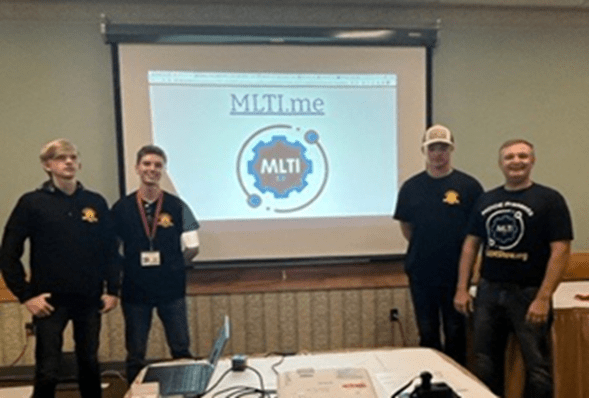
MLTI’s Student Leadership Ambassadors of Maine or SLAM were also present at the ACTEM conference with a teacher and student led session. Kern Kelley from RSU 19 presented along with his SLAM students to highlight and share the work of the SLAM program directly from the student leaders themselves. The session provided the SLAM students an opportunity to share the work they have created and highlight their weekly live SLAM show! The session also covered equipment, content, and how schools can involve their students to start their own SLAM clubs! For more information on SLAM contact the MLTI Student Leadership Development Coordinator, Kern Kelley,Kern.Kelley@Maine.Gov.

Student Leadership Ambassadors of Maine
Student Leadership Ambassadors of Maine (SLAM)

For more information on the MLTI program contact the MLTI Project Manager, Brandi Cota, brandi.m.cota@maine.gov.

The conference also included the return of their ACHIEVE Award and John Lunt Award after not being awarded in-person since 2019. ACTEM’s ACHIEVE Award was given to teacher Cathy Morse from the Lubec Consolidated School, who was introduced by Maine DOE Digital Learning Specialist Jon Graham.  This Award is ACTEM’s version of ISTE’s “Making IT Happen” Award, which “honors outstanding educators and leaders who demonstrate extraordinary commitment, leadership, courage and persistence in improving digital learning opportunities for students.”  In addition to winning $1000 for her school to spend on educational technology, Cathy won a $2000 cash award.

ACHIEVE Award being given to teacher Cathy Morse from the Lubec Consolidated School

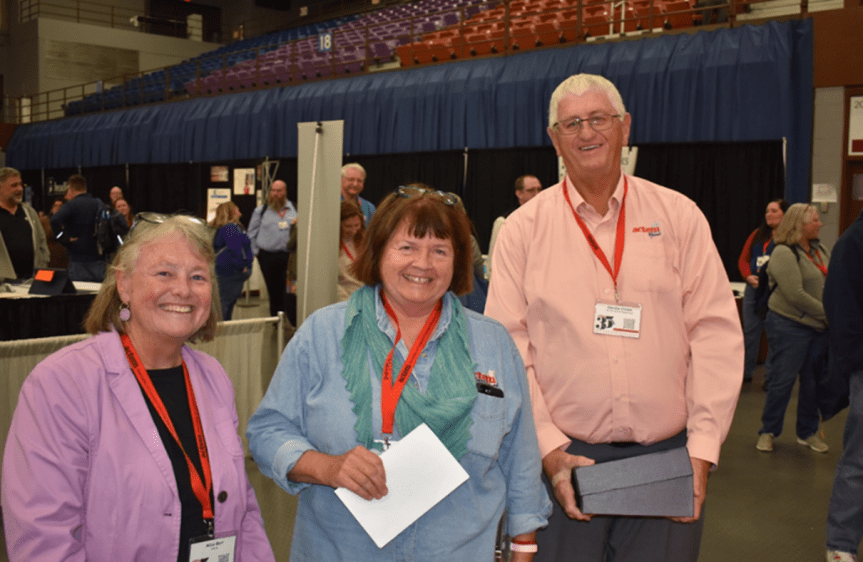
The John Lunt Friend of Technology Award, which had not been given out since 2019, is ACTEM’s Lifetime Achievement Award.  This year, it was given to three retired educators who have had a significant impact not only on ACTEM, but educational technology in Maine as well as nationally.  Cheryl Oakes, who worked at Wells High School, was introduced by Alice Barr and Michael Richards.  Then, Alice was surprised as the next winner by ACTEM President Mike Arsenault and colleague at Yarmouth Schools Cathy Wolinsky.  Dennis Crowe, Technology Director in Gorham and Bonny Eagle and past ACTEM president, was introduced by ACTEM Executive Director Gary Lanoie

ACTEM will be hosting their Spring Leadership Conference, will be held at Holiday Inn by the Bay in Portland on May 1st, 2023.  For more information about their events or membership, please see their website at ACTEM.org.

Tune in to the MLTI 2.0 Student Leadership Ambassadors of Maine (SLAM) Show

The Student Leadership Ambassadors of Maine (SLAM) show is a free, interactive, leadership opportunity where students connect with a community of ‘SLAMmers’ across the state. During these events, held both virtually and in-person this year, students learn presentation and technology skills using online tools to make creative products.

A part of the redesigned, Maine Learning Technology Initiative (MLTI 2.0), SLAM launched in the fall of the 2021/2022 school year to provide student leadership opportunities and allow students from across Maine to meet up virtually once a week to share skills, knowledge, and curiosity with each other.

This year, in addition to the weekly live online events, the Maine DOE’s MLTI team, led by Kern Kelley and the Student Leadership Ambassadors of Maine (SLAM), will host in-person monthly SLAM Shows at schools across Maine.

What is SLAM?

View the latest SLAM episode on the MLTI 2.0 Youtube Channel. To learn more about the MLTI 2.0 SLAM program visit: http://MLTI.me. To sign your school or classroom up to take part in this awesome opportunity, fill out this form.

Following the Maine Department of Education on Facebook and Twitter to see a posting of the latest virtual SLAM show each week. Subscribe to the Maine DOE Newsroom to see a re-cap of the in-person SLAM shows each month.

Sparking Creativity: International Dot Day and Augmented Reality

When Terri Dawson, Technology Integrator at Gorham Middle School, heard Peter H. Reynolds read from his children’s book, The Dot, at an International Society for Technology in Education conference, she knew she had to bring the book back to her school. Reynolds’ book tells the story of a young student, Vashti, who feels like she can’t draw. Her teacher encourages her to simply “make a mark and see where it goes,” and by doing so, sparks Vashti’s creativity, inspiring the little girl and her classmates to have creative confidence.

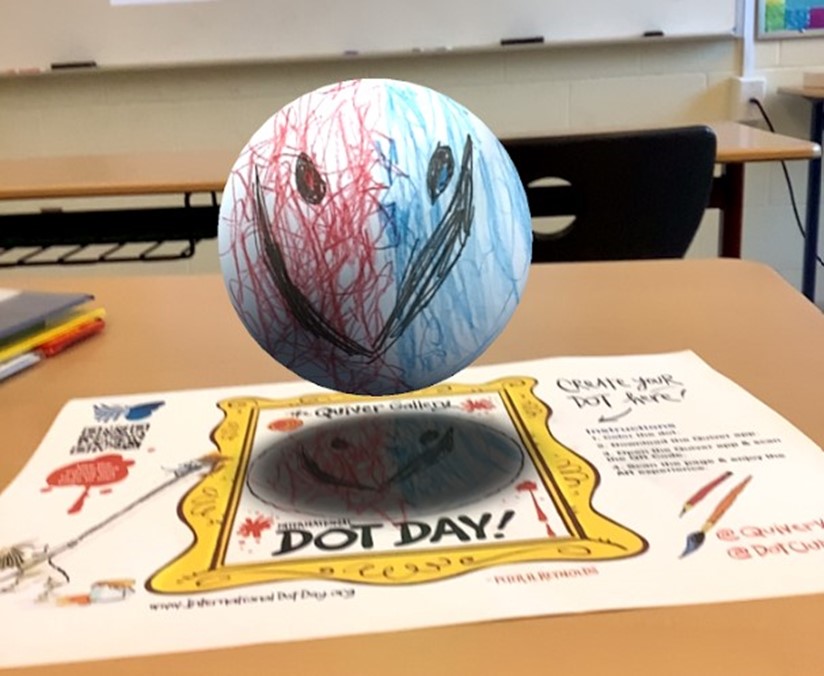
So, when Dawson discovered a collaboration between QuiverVision, an augmented reality (AR) coloring app for iPads, and International Dot Day, she knew she had found an innovative way to connect sixth, seventh, and eighth-grade students to this beloved children’s book via technology. The students began by listening to Peter H. Reynolds read from his book on YouTube. That’s when they began their own creative process.

Dawson provided students with a paper template from QuiverVision that included space for the students to design their own dots and a QR code, that, when scanned by their iPads, displayed their dots in augmented reality. This allowed them to experience their drawings in a totally different way. Dawson noted that “when the students saw their dots come to life, their engagement and motivation to do another dot was amazing…it gave them another level of learning. They started to think about what else they could create.”

Dawson’s students were so engaged and inspired, they asked for the opportunity to take their iPads home and continue with their own designs using AR.

“Augmented reality and virtual reality seem to be a natural progression in education,” said Dawson, “there are so many different things that allow students to view their world differently. That’s what I want to expose them to. I want them to have these skills so that when they go out into the workforce they say, ‘I remember using AR! Did you know you could do this with a QR code?’”

600+ Devices Deployed to Mt. Ararat Middle School Students: a look at how one school implements the 1:1 device portion of MLTI 2.0

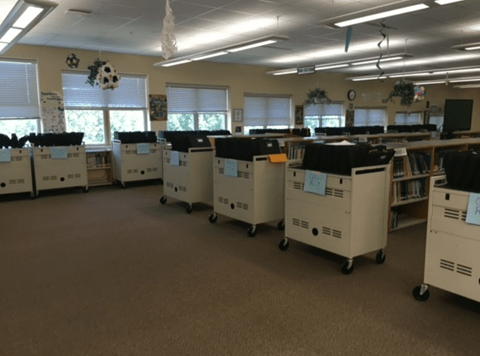
Thanks to the Maine Learning Technology Initiative (MLTI), every September, with the excitement of a new school year just beginning, the Learning Commons Team at Mt. Ararat Middle School (MAMS) prepares, organizes, and deploy 600+ laptops for student to use as critical tools for their learning throughout the school year. It is a group effort by Karen Silverman, Candy Wright, and Kat Campbell to get every kid their laptop. MAMS asks for all hands on deck, so they also are lucky to have the help of the IT team, Ryan Palmer, Corrie Calderwood, and Kate Greely.

The groundwork for laptop deployment starts in the summer. Each machine is cleaned, charged, and fitted with a student name sticker. These stickers are placed not only on the machine but also on the charger and case so that if anything is lost throughout the school year it can be returned.

There were many brand-new devices this year and Karen shared student reactions.

“Students were excited when I…showed them that all our laptops flip into tablet mode. They loved that! And then I would do my best Vanna White and tell them ‘but wait there’s more!’  MAMS students all have touchscreen laptops this year.”

MAMS was able to choose a Chromebook model from CTL for their students, one of the six choices available through the new and reimagined MLTI 2.0. Karen, who served on the 2020 MLTI Advisory Board, is now able to work with a program that is not just devices, but also offers the opportunity for teachers to develop their craft around technology. The program’s long-term goal is to provide the equitable integration of technology for engaging and effective educational experiences.

Students at MAMS are excited for the opportunities and most students have begun using their devices, and many students will be taking them home this week if their parents opted them in. Throughout the year, the Learning Commons Team will support students in troubleshooting problems, or if a student has lost their laptop, they will help locate it. This will keep the team busy until June when the same type of organization goes into collecting the devices and preparing them for the following year, until then the devices will help students at Mt. Ararat Middle School be engaged in learning.