Media Release: Maine DOE Podcast Highlights Strategies to Support Staff and Student Wellbeing

Educators Discuss the Strategies They Learned Through a Neuroscience-Based Approach Through the DOE’s Partnership with The Regulated Classroom

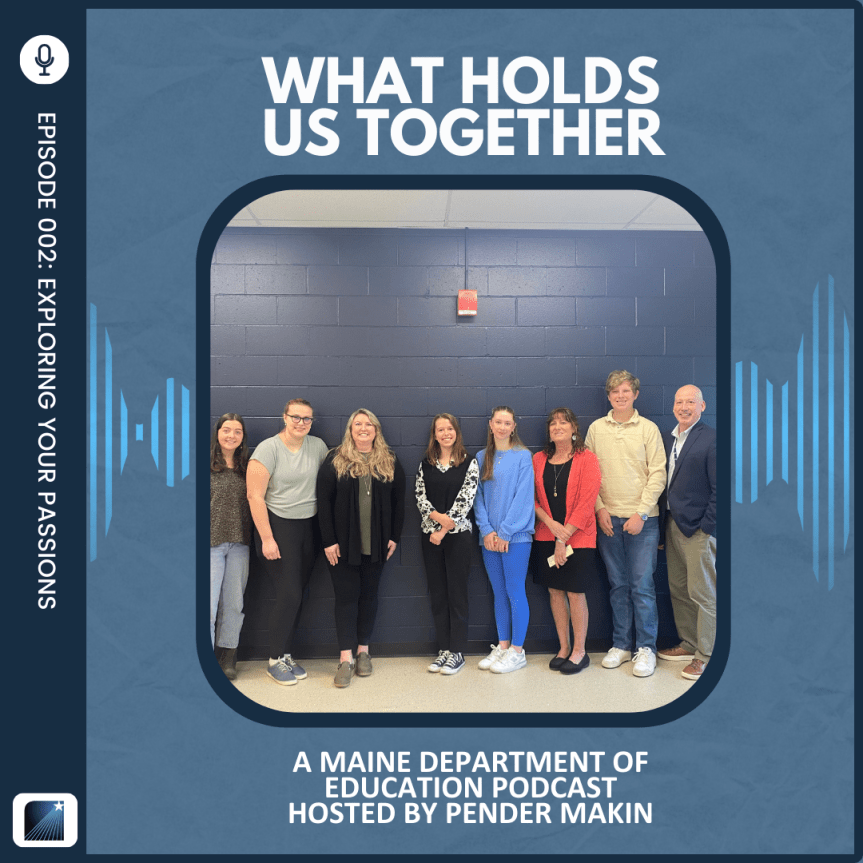
On the latest episode of her What Holds Us Together podcast, Maine Education Commissioner Pender Makin talked with three educators about the strategies they learned through the Maine DOE’s partnership with The Regulated Classroom to improve staff and student wellbeing, increase student engagement, and help with regulation.

Special education teacher Jenn Whitney, second grade teacher Cecilia Dube, and first grade teacher Sierra Blake were among the 600 Maine teachers trained as trainers in the Regulated Classroom approach, and they shared how they are using the research-based tools and techniques in their classrooms and training other educators on wellbeing and regulation strategies.

“We continue to hear that student behavior, mental health, and dysregulation create some of the biggest barriers to success in the classroom. The Maine DOE offers several programs for student and staff wellbeing, and I loved talking to three educators who were part of a cohort for one of those programs called The Regulated Classroom. This program leverages what we know about neuroscience and the parasympathetic nervous system, offering practical strategies to help students engage in the learning process,” said Makin during her introduction to the podcast episode.

On the podcast, the educators discussed the techniques and strategies they are using and the results they are already seeing for themselves, other staff, and students. The educators report increased wellbeing, attendance, and engagement at their schools.

The COVID-19 pandemic took a tremendous toll on educator and student wellbeing, with educators reporting increased numbers of dysregulated students, stress, and classroom disruptions. Many educators feel overwhelmed by these pandemic-induced behavioral issues. The Regulated Classroom utilizes a neuroscience-based approach to help educators create calm, engaged, and supportive learning environments by cultivating conditions for felt safety. Felt safety references a regulated state in the body’s stress response system.

The program helps educators recognize and manage their own stress levels. It also helps educators manage increased levels of stress in students, which can be displayed as aggression, poor impulse control, limited attention span, and lack of motivation. Educators received access to a collection of practices and sensory tools to embed into daily routines and activities to promote a more regulated and stable environment for learning. This program supports student achievement and increased job satisfaction for educators.

Listen on AppleSpotify, or other major podcast platforms.

Media Release: New Initiative Provides Welcoming Libraries to 26 Maine Schools, 900 Books to Bangor Schools

Books Highlight Themes of Diversity and Highlight Immigrant and New American Families

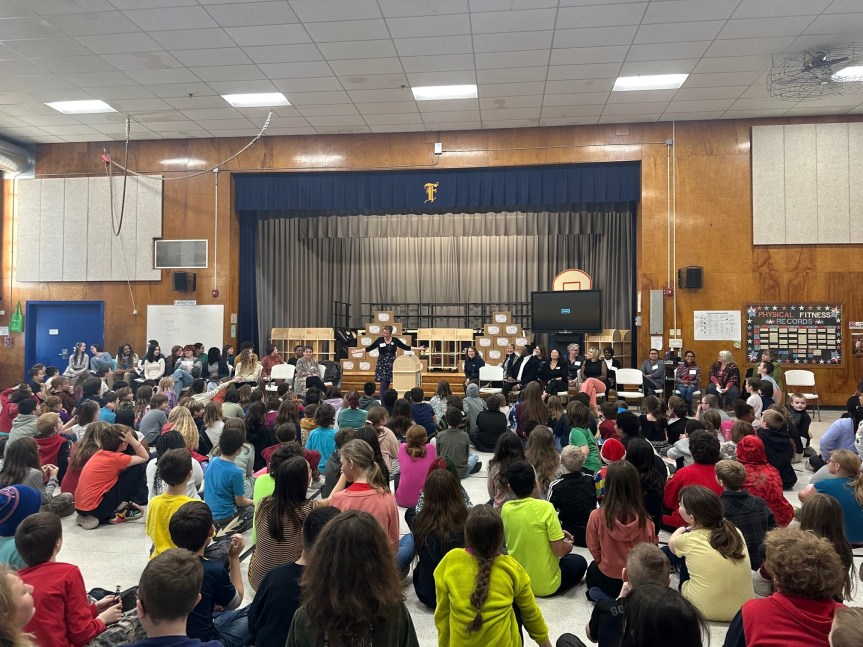
In front of hundreds of fourth and fifth grade students at Bangor’s Fairmont School, the Maine Department of Education (DOE), I’m Your Neighbor Books, the Maine Community Foundation, the Stephen and Tabitha King Foundation, and school officials announced the delivery of 900 books featuring immigrant and new American families for all Bangor schools. The books contained in these Welcoming Libraries are shelved on Maine-made book carts and promote themes of diversity, immigration, and creating welcoming environments for all.

The Maine DOE and I’m Your Neighbor Books also announced a new PINE Project, which will provide no-cost Welcoming Libraries to an additional 16 schools across Maine. Each library contains 60 books allowing immigrant and New American students to see themselves and their families reflected in what they are reading and providing all students with picture books featuring stories of immigrant families and the diversity of America.

The announcement event featured a student-led reading of I’m An American, written by Darshana Khiani and illustrated by Laura Freeman. The book is included in the libraries and highlights the diverse cultures that make up the United States and the ways we define what it means to be American.

“We’re excited to partner with I’m Your Neighbor Books to bring these libraries to schools across Maine and support teachers in bringing this content to life in their classrooms. As Maine welcomes more immigrant and New American families, it’s incredibly important that students see themselves and their families represented in the books in their school libraries. These books also encourage all students to create a welcoming environment and appreciate the incredible diversity in our communities and nation,” said Maine Education Commissioner Pender Makin.  

“In recognition of Bangor becoming an official refugee resettlement city, two Maine foundations stepped forward to fund immigration-themed book collections for Bangor Schools. With a $25,000 grant award from the Stephen and Tabitha King Foundation and a $10,000 Community Building grant award from the Maine Community Foundation, I’m Your Neighbor Books is placing 90 books and a book cart engraved with the invitation, ‘Read to Welcome. Read to Belong.’ in each Bangor School,” said I’m Your Neighbor Books Executive Director Kirsten Cappy.

Educators from across the state applied to receive these Welcoming Libraries and to participate in a series of 2024 workshops hosted by I’m Your Neighbor Books. The workshops will use the cart’s picture books to further teacher training on social emotional learning and the themes embedded in the books. Stories featuring the emotional resiliency of Immigrant and New Generation families will form the basis for exploring the resiliency of all Maine students.

The picture books on the carts include a set of discussion questions created by I’m Your Neighbor Books. The inclusion of those questions in this and other Welcoming Library projects led the American Association of School Librarians (AASL) to officially commend the Welcoming Library for “building a stronger culture of welcoming and belonging” in US schools.

The collaborative work of the educators selected from 16 Maine schools and the workshop leaders will culminate in a series of professional development videos that I’m Your Neighbor Books and the Maine Department of Education will use with educators in Maine and share across the nation.

The 16 Maine schools selected for the PINE Project include Fourteenth St. School in Bangor, Biddeford Intermediate School, Kate Furbish Elementary School in Brunswick, Central Community Elementary School in Corinth, Mast Landing School in Freeport, George B Weatherbee School in Hampden, Jonesport Elementary School, Thomas J McMahon Elementary School in Lewiston, Sebasticook Elementary School in Newport, Oxford Elementary School, Pembroke Elementary School, East End Community School in Portland, Gerald E. Talbot Community School in Portland, C.K. Burns School in Saco, Mt. View Elementary School in Thorndike, and Canal Elementary School in Westbrook.

The book carts were designed by Lewiston’s Edgewise Design and manufactured in Lisbon Falls by Orion Woodshop. Engraving on the cart invites students to “Read to Welcome” and “Read to Belong” and welcomes students with the phrase “I’m Your Neighbor” in ten languages.

ESSERF (CRRSA and Emergency) funds received from the US Department of Education (USDOE) supported the implementation of this project. The project has an award from the Maine DOE totaling $119,041.16.

Media Release: Maine DOE and Live and Work in Maine Launch Nationwide “Live and Teach in Maine” Campaign

Multifaceted Campaign Utilizes the Voices of Maine Teachers and Includes Targeted Advertising and Events to Recruit and Support a Vibrant Educator Workforce in Maine

The Maine Department of Education (DOE) and Live and Work in Maine have partnered to launch a nationwide Live and Teach in Maine campaign to attract educators to the state and strengthen the education profession. The multifaceted campaign includes a highly targeted advertising effort, new videos highlighting teachers who have chosen to make Maine their career destination, and events in-state to welcome, connect, and celebrate educators.

The Live and Teach in Maine campaign connects the high quality of life experienced through living in Maine with the advantages of teaching in Maine and highlights the voices of real teachers talking about why they love teaching in Maine public schools. The partnership between Live and Work in Maine and Maine DOE has two goals:

  1. To attract new educators to Maine’s public education system, and
  2. To elevate and celebrate the many outstanding teachers in our classrooms right now.

“We want the world to know that Maine is an amazing place to live and an extraordinary place to teach, and this partnership provides Maine educators with a megaphone to reach people with that message. We’re a state that deeply values and respects the creativity, autonomy, and professional judgment of our educators, we encourage innovation, and Maine educators get to be part of friendly, close-knit communities. If you’ve ever thought of teaching and living in Maine, Department of Education staff are a phone call away from helping you start your journey and our communities would love to have you,” said Maine Education Commissioner Pender Makin.  

“Maine’s public education system is among the best in the nation, and our quality of life is among the best in the world. We’re going to leverage those competitive advantages to attract new educators to Maine, retain the talented ones we already have, and help change the conversation about public education to be one of positivity and optimism,” said Live and Work in Maine Executive Director Nate Wildes.

Maine, like most of the nation, continues to experience an educator shortage that has been exacerbated by the pandemic. This partnership builds on the Maine DOE’s wide-ranging efforts to recruit, retain, and support a vibrant educator workforce and leverages Live and Work in Maine’s knowledge and expertise as the state’s premier organization devoted to attracting and retaining Maine’s workforce.

The campaign includes a new Live and Teach in Maine webpage, targeted social media and streaming ads, mobile billboards, subway ads, and events. All Maine school administrative units (SAUs) also have free access to the Live and Work in Maine job board so applicants can access job opportunities in Maine schools. The campaign is being funded through federal emergency relief funds to build and sustain Maine’s educator workforce following the pandemic.

###

About Live and Work in Maine
Live and Work in Maine’s mission is to market Maine as a career destination. Through our marketing efforts, we show the world that when it comes to quality of life and career opportunities, you can have the best of both by choosing to live and work in Maine.

LiveandWorkinMaine.com is a robust resource for potential and current Mainers, which enables searching for employers and jobs based on lifestyle and/or geographic region within Maine. The site also includes “success story” testimonials from professionals who have relocated to Maine, details on internships and first career options for college students and new graduates, and information on the lifestyle offered by each of Maine’s eight geographic regions.

About the Department of Education
The Maine Department of Education (DOE) promotes the best learning opportunities for all Maine students by focusing on a whole student approach; encouraging innovation; respecting educators; providing information, guidance, professional learning, and support to schools and educators; providing adequate and equitable school funding and resources; and inspiring trust in our schools.

DOE Podcast Features Yarmouth High School Students Engaged in Hands-On, Real-World Extended Learning Opportunities

Commissioner Makin Talks with Sarah Hinson About Her Veterinary ELO and Liam Hannah About His Summer ELO Building a Robot that Serves Drinks. The Maine DOE Has Invested $5.6 Million to Expand ELOs Across Maine

On the latest episode of her What Holds Us Together podcast, Maine Department of Education (DOE) Commissioner Pender Makin spoke with two Yarmouth High School students about their experiences pursuing what they are passionate about through their school’s Extended Learning Opportunities (ELO) program. Yarmouth senior Sarah Hinson gets school credit and paid work experience through her ELO at Portland Veterinary Hospital and junior Liam Hannah engaged in a summer ELO to program and build a drink serving robot which also earned him school credit.

Listen here.

Extended Learning Opportunities offer students creative and flexible opportunities to explore what they are passionate about and develop skills and knowledge that will set them up for success in school and life, all while gaining school credit and the option of paid work experience. The Maine DOE has awarded $5.6 million in Maine Jobs & Recovery Plan (MJRP) funding to 26 school administrative units and community-based organizations to create or expand ELOs across the state.

“We’re going to be discussing an exciting, innovative approach to interdisciplinary, hands-on, real-world learning called Extended Learning Opportunities,” said Makin in the podcast’s opening. “I met Sarah, Liam, and several of their classmates when I visited their school to hear more about these ELOs. What I heard was so impressive and inspirational that I wanted to have them on this podcast to share what they’ve been doing with everyone.”

Dozens of students participate in ELOs at Yarmouth High School. On her recent visit, Makin talked with students who were studying cognitive neuroscience and the science of wellbeing, civics, interning for non-profits, working on policy issues, building skills to have constructive conversations and debates about issues, promoting work opportunities for New Mainers, and so much more through their ELOs. Students meet with the school’s coordinator Brittany Brockelbank to design their ELO and meet regularly to discuss their progress and showcase what they’ve learned. Makin invited two students on the podcast to share more about their experiences.

“I’m doing a work study. I’m now on my fifth semester and I get credit for what I learn in the ER. It’s a very unique opportunity to learn about what I’m passionate about and what I’ll do after high school while getting school credit,” said Sarah Hinson describing her ELO on the podcast.

“It’s an incredibly flexible program. There are endless opportunities for what you can do and it’s very individualized with the learning that you do,” said Liam Hannah about what he liked about his ELO. He said he got his idea for his drink serving robot after seeing a similar one at a sushi restaurant. He had taken coding and machining classes at school and also had a student mentor to provide support for his ELO. Hannah also utilized ChatGPT to help him troubleshoot when we ran into coding or other obstacles.

Both students highlighted connections between what they’ve learned through their ELOs and how they’ve applied it to their other classes and in life. They also discussed how ELOs offer opportunities to engage students who may not find that same kind of engagement in traditional class settings.

“I remember sophomore year we were doing something in my biology class with sodium chloride bonding and I work with sodium chloride all the time. I use it every shift and I know a lot about it…so my job in certain situations has connected back to school but in many ways it’s very different. School does provide me with the knowledge that I need to get into the field—I can’t go into the field if I’m not good at math,” said Hinson. “In my job I’m learning something that I really am going to apply in my work on a farm with over 50 animals. It gives students that don’t fit the square box of what school and a student should look like [the opportunity to learn something we like].”

“This ELO, it really helped me develop a schedule and think really far out with my plans which I was never really great at and definitely helped me develop that,” said Hannah on how his ELO helped him build stronger time management skills.

The students were enthusiastic in what they would tell other students or school leaders about ELOs.

“It’s super fun—it’s the most fun I’ve ever had in a learning environment. I think every school should have the option for an ELO,” said Hannah.

“Do it! Find what works for you. There are so many ELOs available—group, individual, summer, learning ones, and working ones,” said Hinson.

Makin closed the podcast by highlighting the Maine DOE’s efforts to expand ELOs across the state.

“Our Department of Education is promoting ELOs across the state and anything that is hands-on, interdisciplinary, and applied learning. We’re really hopeful that Maine is going to lead the way nationally,” said Makin.

The Maine DOE website features highlights and stories from ELO programs across Maine.

What Holds Us Together is a monthly podcast hosted by Commissioner Makin that highlights the great things happening in public schools across Maine and how public education connects us through conversations with educators, school staff, and students. The podcast launched last month with a conversation between Makin, 2023 Maine Teacher of the Year Matt Bernstein, and the newly named 2024 Maine Teacher of the Year Joshua Chard.

What Holds Us Together can be listened to and subscribed to on all major podcast platforms, including Apple and Spotify. New episodes are released on the third Thursday of every month.

Media Release: Maine DOE Launches New Podcast Highlighting Voices From Maine Schools

Commissioner Pender Makin Hosts What Holds Us Together, First Episode Features Maine Teachers of the Year Matt Bernstein and Joshua Chard

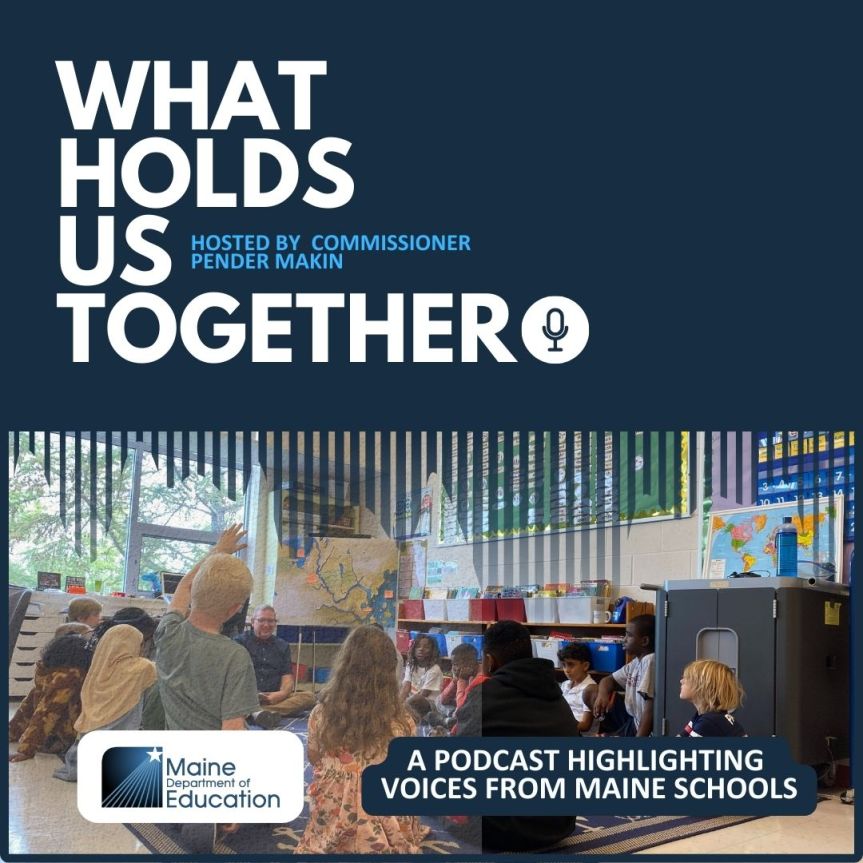
The Maine Department of Education (DOE) launched a new podcast today hosted by Commissioner Pender Makin featuring conversations with educators, school staff, and students. The monthly podcast, What Holds Us Together, highlights the great things happening in public schools across Maine and how public education connects us.

The podcast launched with a conversation between Makin, 2023 Maine Teacher of the Year Matt Bernstein, and the newly named 2024 Maine Teacher of the Year Joshua Chard. The three discuss what they love about teaching and schools in Maine, the importance of public education, student voice, elevating the education profession, their message to aspiring teachers, and so much more.

“Public education is the most precious common good that we share. Every month, I’ll highlight the inspiring and amazing things happening in Maine schools through conversations with educators, school staff, and students across our state,” said Maine Education Commissioner Pender Makin in the podcast’s trailer.

What Holds Us Together can be listened to and subscribed to on all major podcast platforms, including Apple and Spotify. New episodes to be released on the third Thursday of every month.

Media Release: East End Community School Teacher Joshua Chard Named 2024 Maine Teacher of the Year

Chard Teaches 3rd Grade at East End Community School in Portland and is the 2023 Cumberland County Teacher of the Year

The Maine Department of Education (DOE) and Educate Maine named East End Community School third-grade teacher Joshua Chard as Maine’s 2024 Teacher of the Year. The announcement was made during a surprise ceremony with students and educators at Chard’s school in Portland.

“Joshua Chard embodies the qualities that make Maine teachers amazing, and we’re thrilled to honor him as Maine’s 2024 Teacher of the Year. Today we celebrate Joshua’s passion for teaching, his love for his students and public education, and his ability to make each and every person feel welcome and like they belong,” said Maine Education Commissioner Pender Makin. “Colleagues, parents, and community members describe Joshua as kind, loving, passionate, generous, and someone who finds joy in the uniqueness of each human.”

Chard’s Teacher of the Year journey began in May, when he was named the 2023 Cumberland County Teacher of the Year. Along with 15 other County Teachers of the Year, Chard was selected from a pool of hundreds of teachers who were nominated. In August, he was named one of four state finalists before being selected as the 2024 Maine Teacher of the Year.

Chard is a second and third-grade looping teacher at East End Community School and the drama director at Deering High School in Portland. His approach to designing and implementing curriculum for young learners always starts through a culturally responsive lens. Joyful relationships are at the heart of everything Chard does in his classroom and he is inspired every day by the honor of lifting up and celebrating his diverse learners. During his 31-year career, he has been an educational technician, has taught fourth and fifth grade, and has been an instructional coach with a focus on mathematics. Chard is proud to teach in two of the most culturally diverse schools north of Boston, having passionately dedicated his entire career to working in high-need, urban schools, and he is excited to have a platform to share the amazing work that is happening there. Outside of school, Chard can be found participating in local theater as an actor and director and exploring Maine’s beaches and lighthouses with his husband and their grandsons.

Full Teacher of the Year Announcement Ceremony

“This recognition is about my amazing students as much as it is about me. How lucky am I to get to be inspired by these hilarious, insightful, motivated, and empathetic humans every day? They make me want to be the best teacher I can be because they deserve it, and they demand it of me. I am feeling so blessed and so seen today,” said 2024 Maine Teacher of the Year Joshua Chard.

The Teacher of the Year Program is a year-long process that involves educator portfolio and resume submissions, interviews, oral presentations, and classroom visits made by a selection panel comprised of State Board of Education members, school administrators, Maine Department of Education staff, legacy Teachers of the Year, and other Maine business partners. Chard was nominated for the honor by his principal and assistant principal.

“Educate Maine proudly administers the Maine Teacher of the Year Program, reinforcing our commitment to developing and supporting educators and uplifting the teaching profession in our state.  Joshua Chard is a thoughtful and passionate educator who has dedicated his thirty-one-year career to supporting the students and colleagues in his school community.  He is representative of the excellence that exists across our educator workforce, and we look forward to working with Joshua throughout this year as he serves as an ambassador for the teaching profession in Maine,” said Educate Maine Executive Director Jason Judd.

As the 2024 Maine Teacher of the Year, Chard will spend his year of service advocating for students and teachers and speaking to the importance of education in preparing Maine students for the future.  He will also represent Maine in the National Teacher of the Year program.

“Joshua Chard is a phenomenal, passionate, and dedicated teacher who inspires those around him – both students and colleagues. He masterfully blends high expectations for students with the creation of warm and joyous classroom environments so that all students are supported to learn, grow, and thrive. I am beyond excited that more folks will have the opportunity to hear from Joshua moving forward and I am tremendously grateful to him for representing Maine as the 2024 Maine Teacher of the Year,” said 2023 Maine Teacher of the Year Matt Bernstein.

“East End Community School is proud of Joshua Chard. He is an example of the excellent teaching and learning that happens every day at EECS, in the Portland Public Schools, and across Maine,” said East End Community School Principal Boyd Marley, one of the people who nominated Chard.

“Joshua Chard’s selection as the 2024 Maine Teacher of the Year is a testament not only to him as a remarkable educator but also is continued evidence of the high caliber of the educators we are fortunate to have at the Portland Public Schools. We are incredibly proud of Joshua and very grateful for his dedication to student success, which he demonstrates daily in his teaching,” said Portland Public Schools Superintendent Ryan Scallon.

The Maine Teacher of the Year program is administered by Educate Maine, a business-led advocacy organization, in partnership with the Maine Department of Education, the Maine State Board of Education, and the Maine County and State Teachers and County of the Year Association (MCSTOYA). Funding for the program is generously provided by Bangor Savings Bank, Dead River, Geiger, Hannaford, Maine Lottery, Pratt and Whitney, the Silvernail Family, and Unum.

Read about a day with Mr. Chard and his class here.

For more information about the Maine Teacher of the Year program, visit http://www.mainetoy.org.

###

Maine DOE Announces No Cost Program to Support Educator Wellbeing and Create Calm and Supporting Learning Environments

600 Educators Can Attend Train-the-Trainer Events Across Maine to Bring Tools and Strategies Back to Their School Communities

The Maine Department of Education (DOE) has partnered with The Regulated Classroom on a program to support educator wellbeing and student engagement at no cost to Maine educators. Six hundred educators can sign up to be trained as trainers in the framework at events across the state and will be able to bring new tools and resources back to their schools.

The COVID-19 pandemic took a tremendous toll on educator and student wellbeing, with educators reporting increased numbers of dysregulated students, stress, and classroom disruptions. Many educators feel overwhelmed by these pandemic-induced behavioral issues. The Regulated Classroom utilizes a neuroscience-based approach to help educators create calm, engaged, and supportive learning environments by cultivating conditions for felt safety. Felt safety references a regulated state in the body’s stress response system.

The program helps educators recognize and manage their own stress levels. It also helps educators manage increased levels of stress in students, which can be displayed as aggression, poor impulse control, limited attention span, and lack of motivation. Educators will have access to a collection of practices and sensory tools to embed into daily routines and activities to promote a more regulated and stable environment for learning. This program supports student achievement and increased job satisfaction for educators.

“The Maine Department of Education is committed to supporting educator and student wellbeing and we’re thrilled to partner with The Regulated Classroom to offer this program at no cost to Maine educators. The Regulated Classroom provides tools and strategies based on brain science that any educator in Maine can infuse into their teaching and daily routines to support themselves and their students in creating calm, safe, joyful, and engaging learning environments,” said Maine Education Commissioner Pender Makin.

“When our nervous system is in a regulated state, the rational part of our brain is online, enabling us to teach and to learn. But when we are in a dysregulated state, the rational thinking part of our brain goes offline and we can’t gather our thoughts and act as we would choose. Environments that feel supportive and safe foster engagement and creative thinking,” said The Regulated Classroom founder Emily Read Daniels, M.Ed., MBA, NCC, SEP™.

Daniels, a New Hampshire school counselor, created The Regulated Classroom in 2020. Since then, it has been implemented in schools and organizations throughout New Hampshire, across the nation, and around the globe.

Ten in-person train-the-trainer certificate events will be held in various regions of the state.

Educators can register for an event at http://www.regulatedclassroom.com/Maine. Maine educators can complete their registration at no cost to them with the code MAINEFREE.

The Maine DOE utilized federal emergency relief funding to offer this program to Maine educators.

Media Release: Maine DOE and Educate Maine Partner to Develop the Teach Maine Center to Support and Grow Maine’s Educator Workforce

The Teach Maine Center will engage, empower, and unite educators across the state to incubate and develop strategies, supports, and professional learning connected to the Teach Maine plan.

The Maine Department of Education (DOE) and Educate Maine have partnered to develop the Teach Maine Center to support and advance a vibrant educator workforce in Maine that enables all students to thrive.

The Teach Maine Center will engage, empower, and unite educators across the state to incubate and develop strategies, supports, and professional learning connected to the Teach Maine plan. Developed in partnership with educators and stakeholders and released last year, Teach Maine focuses on four key themes to develop, support, and sustain Maine’s educator workforce: incentivize recruitment and retention efforts; expand and diversify educator workforce efforts; support educator development, growth, and leadership; and elevate educators and the education profession.

“Maine is a place that values and respects our educators and we are turbocharging that with the Teach Maine Center. The vision is to create a hub by teachers and for teachers that allows them to collaborate, innovate, and lead our profession and public education forward in Maine,” said Maine Education Commissioner Pender Makin.

“We are excited to announce this groundbreaking partnership with the Maine Department of Education to create the Teach Maine Center.  This partnership represents our shared commitment to strengthen, grow and diversify Maine’s educator workforce.  We look forward to this important work and the positive impact it will have on students, teachers, the teaching profession, and the future of education in Maine,” said Educate Maine Executive Director Jason Judd. 

Maine, like most states, continues to experience an educator shortage that was exacerbated by COVID-19. At the same time, educators and schools are faced with increased student and community needs. Increasing collaboration among educators and with businesses and communities will increase educator wellbeing and support them in their teaching.

The initial incubation phase of the Teach Maine Center will focus on increasing stakeholder engagement and collaboration across the business and education sectors; expanding data collection and reporting related to Maine’s educator workforce; advancing and successfully implementing short and long-term teacher recruitment/retention strategies identified in Teach Maine; strengthening professional support for educators through Teach Maine Center programming; and achieving long-term sustainability for the Teach Maine Center, which will be administered by Educate Maine.

Through December 2024, partners will identify and meet with stakeholders around teacher workforce issues, conduct 16 in-person and virtual county-level forums with educators to get input on teacher recruitment and retention, complete a landscape analysis of the educator workforce, solicit statewide educator input on ongoing professional development needs, and launch a marketing campaign focused on encouraging people to join Maine’s educator workforce. In collaboration with key education organizations and the Maine DOE, Educate Maine will assemble an advisory committee to provide input throughout the initial phases of the Center.

The Maine DOE used federal emergency funds to invest in the first phase of the Teach Maine Center.

Read more about the Maine DOE’s efforts to build a vibrant educator workforce.

Media Release: Maine DOE Experiences a 40 Percent Increase in Educator Certification Applications

Maine DOE’s Certification Team Processed 40 Percent More Initial and Renewal Certification Applications Over the Summer Compared to Last Year

The Maine Department of Education experienced a 40 percent increase this summer in the number of initial and renewal educator certification applications processed compared to last year. The Maine DOE’s certification team processed more than 11,000 certification applications between June and August.

“While educator shortages persist across our state, this increase is encouraging and the Maine DOE is committed to doing everything we can to build and support the education workforce in our state. This is the most important work of our society and we want people to know that Maine is a state that respects, supports, and empowers our educators. If you want to become an educator in Maine, we want to make sure you have a pathway into the profession and that you are supported in the classroom,” said Maine Education Commissioner Pender Makin.

Maine DOE Educator Recruitment and Retention Efforts and Initiatives:

  • Developing, supporting, and sustaining a robust educator workforce is one of the Maine DOE’s six strategic priorities.
  • Research demonstrates that feeling supported and respected is key to educator recruitment and retention. Maine stands out as a state that respects educators as professionals and the Maine DOE empowers teachers to take risks and be innovative.
  • One of the Mills administration’s first actions was to raise minimum teacher salaries to $40,000.
  • Last year, The Maine DOE released Teach Maine, a comprehensive roadmap to develop, support, and sustain a robust educator workforce in the state. Teach Maine is organized around four key themes: incentivize recruitment and retention efforts; expand and diversify educator workforce efforts; support educator development, growth, and leadership; and elevate educators and the education profession. The report is the result of contributions by education stakeholders throughout Maine, who provided feedback via multiple channels, including regional Think Tanks, focus groups, surveys, organizational meetings, and informal conversations. Additionally, the Department of Education convened an Educator Talent Committee, a core group of internal and external stakeholders, to share their experiences, look at research and trends, and to make recommendations on how to address Maine’s educator shortage.
  • Last month, the Mills administration announced a new initiative to help Maine schools recruit, train, and retain educators through pre-apprenticeship and apprenticeship programs. Under the initiative, schools and other education and community-related organizations can apply for competitive funding, with awards of up to $250,000 to begin local educator pre-apprenticeship and apprenticeship programs to help address Maine’s educator workforce shortage. Read more.
  • The Maine DOE partners with Live + Work in Maine to encourage people to come live and teach in Maine. Through the partnership, all school administrative units (SAUs) have free access to Live + Work’s highly trafficked job board to recruit educators. The partnership has expanded to include a national advertising effort to Live and Teach in Maine and educator-specific content on Live + Work’s website.
  • The Maine DOE invested in the BARR (Building Assets, Reducing Risk Model) for Maine schools. Research has shown that the BARR model results in increased job satisfaction for teachers and higher levels of collaboration. 71 new Maine schools are implementing the BARR model this school year.
  • The Maine DOE’s Educator Summit brought together 600 educators this summer for 4 days of professional learning opportunities with more than 100 workshops. The DOE’s certification and educator excellence teams were on site to support educators and prospective educators, including a job fair on the final day.
  • The Maine DOE also encourages educator leadership by creating opportunities for peer-to-peer professional learning and by establishing statewide teacher cohorts around such areas of interest/expertise as: digital learning/Computer Science, interdisciplinary and project-based learning, innovation and design thinking, BARR schools, literacy, special education, and more. The Maine DOE offers robust professional learning opportunities throughout the year.
  • Maine DOE staff visited 7 summer camps in 2022 and 10 summer camps this summer to speak with counselors about how the skills they develop as camp counselors can lead to opportunities and pathways into the teaching profession.
  • Maine DOE staff serve on the advisory board for the University of Maine System Teacher Residency. The University of Maine System Collaborative received funding through a Congressional Directed Spending earmark supported by Senators King and Collins. The Maine Teacher Residency Program offers paid internships for new teachers and supports student teaching candidates, emergency, and conditionally certified teachers and connects them with teacher education programs to strengthen their preparation and retention.
  • The Maine DOE is working with the Region 1 Comprehensive Center to build state and local staff capacity to collect, analyze, and use educator supply-and-demand data in order to better inform educator recruitment and support efforts. A pilot program will get underway beginning in December.
  • Prospective educators can reach out to the Maine DOE’s educator excellence and certification teams to receive personal support from DOE staff to create their roadmap to becoming a certified teacher in Maine.
  • Through Maine Jobs and Recovery Plan (MJRP) funds, the DOE supported UNE’s Future Teachers of Maine Summer Institute allowing dozens of high school students who have shown an interest in the teaching profession an opportunity to live on campus for a week. Students learn from and with students currently in UNE’s educator preparation program during the weeklong deep dive into the teaching profession and the steps it takes to get into the classroom.
  • Through an AmeriCorps Planning Grant, two York County high schools worked with the Maine DOE to place AmeriCorps members with teachers of first-year students. Those members will not only support students as they navigate high school but will also learn from master teachers and support Maine’s pipeline into the teaching profession.
  • The CDS/AmeriCorps First 4 Partnership is currently looking to recruit, train and empower 17 AmeriCorps members to serve and support children with disabilities with building social emotional skills and school readiness children enrolled in CDS preschools across the state.  The investment in members will not only serve to ensure positive preschool experiences and improve child outcomes for those children, this opportunity will also provide important, dynamic training, 1:1 mentoring and experience for each volunteer to utilize toward certification in the educational field. CDS is committed to building a robust early education workforce. As part of this initiative CDS will support teacher or educational technician licensure for future employment in Maine schools.
  • Maine DOE’s Special Educator Engagement Development & Supports (SEEDS) program provides training and professional learning opportunities to Ed Techs in special education classrooms to support their professional growth and opportunities to achieve their special education teacher certification.
  • The Maine DOE supported passage of LD 753, which Governor Mills signed into law. The bill will allow retired teachers and educational technicians to renew their certification and help fill educator shortages by re-entering the classroom.
  • The Maine DOE worked with US Department of Education to name teacher shortage areas for Maine for SY 23-24. Eligible teachers in those certification areas qualify for enhanced federal student loan forgiveness.
  • The Maine DOE was awarded a $9 million 5-year grant from the US DOE to recruit, respecialize and retain school social workers, school counselors, and school psychologists to work within schools.
  • The Maine DOE is working with CTE schools to expand their education preparation programs beyond Early Childhood Education.
  • The Maine DOE continues to support the EMCC Learning Facilitators program, which offers an alternative, skills-based pathway toward Education Technician III certification. Program participants enroll in a “boot camp” to complete initial coursework and then the rest of their experience is directly in schools under the guidance of EMCC staff and local school mentors.  The Maine DOE supported passage of LD 1366, which opens the door to other institutions of higher education replicating the success of EMCC’s program.

###

Media Release: Maine Department of Education Announces $1.8 Million Climate Education Professional Development Grant Opportunity for Maine Schools

Grants Will Allow Maine Schools to Partner with Climate and Environmental Community Organizations to Strengthen Climate Education Across the State

The Maine Department of Education (DOE) announced a new climate education professional development grant opportunity today to support the growth of climate education throughout the state, especially in underserved communities. This $1.8 million grant initiative was designed out of LD 1902, which was passed by the legislature in 2022 to establish a pilot program to encourage climate education in Maine public schools.

The pilot grant opportunity allows schools to partner with non-profit community-based organizations that play an integral role in Maine communities. This allows schools to get expert knowledge from organizations that have created, sustained, and grown an incredible framework of outdoor and environmental education opportunities and programs that are tailored to their local region’s assets and needs. These partnerships will support teachers and schools to bring climate education to more of Maine’s students.

“These grants can provide Maine educators and schools with the tools, resources, and partnerships they need to provide students with engaging, hands on climate and environmental education. From the mountains to the coast, Maine has enormous natural resources for students to explore and learn from so they can be effective environmental stewards and leaders,” said Maine Education Commissioner Pender Makin.

Priority will be given to communities historically underserved by climate education, socioeconomically disadvantaged communities, and interdisciplinary, place-based, and project-based learning focused activities. The RFA can be found here, and applications are due on November 3, 2023. A second climate education RFA will be announced early in 2024.

Maine continues to be a leader in outdoor learning and climate education. The Maine DOE’s Rethinking Responsive Education Ventures (RREV) initiative, funded through a $16.9 million federal grant, has supported the expansion of outdoor education “classrooms”, programs, professional learning, partnerships, and spaces across the state. Schools across Maine utilized federal relief funding to expand outdoor learning spaces and programs. Governor Mills’ Maine Outdoor Learning Initiative, which just concluded its second year, has provided thousands of Maine middle and high school students with coastal and inland forestry learning and career exploration opportunities during the summer. The Maine DOE recently hired a Climate Education Specialist to support and expand this work with educators, schools, and community partners across the state. You can learn more about the Maine DOE’s climate and outdoor education work here.

###