Celebrating Summer Food Service Programs Providing Free, Healthy Meals for Students Across Maine

(Pictured: part of the lunch spread provided at an MSAD 33 Summer Food Service Program (SFSP) meal site this summer.)

Portland’s Munjoy South playground filled with people as meals were distributed to students through the USDA Summer Food Service Program (SFSP) recently. The Munjoy South playground site, which is one of 12 summer meal sites throughout the city and over 400 across the state, is operated through Portland Public Schools. The site serves 20 to 30 students a day on average and on this particular day, was serving sandwiches, chicken drumsticks, cornbread, fruits, vegetables, milk, and more.

The SFSP is a federally funded and state-administered program that provides free, healthy meals and snacks to children, youth, and adolescents in low-income communities. Local sponsors, like Portland Public Schools, operate the meal program throughout Maine.

At the Munjoy South summer meal site were volunteers from the Maine Celtics and the Locker Project. The Maine Celtics volunteers help run summer day camps Mon-Fri for students and also enjoy playing quick games of soccer and basketball with anyone who wants to join in. Also present was The Locker Project, which helps fight food insecurity in Cumberland County by providing students and families with surplus local produce and other foods, in addition, the Book Fairy Pantry Project was there with a free book stand with ample children’s books for the taking.

On this day, also visiting the meal site were representatives from Maine Equal Justice, Good Shepherd Food Bank, the Islamic Food and Nutrition Council, AmeriCorps VISTA, Preble Street, Full Plates Full Potential, and the offices of Governor Mills, Senator Collins, Senator King, and Representative Pingree. These organizations were brought together by Anna Korsen, Full Plates Full Potential, Policy and Program Coordinator to showcase all that Portland Public Schools (PPS) has done to provide food for local youth and to witness the success and joy of so many community partners coming together to benefit the community.

Maine has good reason to celebrate all that has been accomplished this summer and recently in the way of providing nutritious food to youth both during the summer and the school year.

Maine is one of the first states to provide meals at no charge to public school students during the school year. Starting with the pandemic-related waiver that allotted funds for schools across the United States to provide free meals for students in the 2021/2022 school year, this past year a new Maine-specific law went into effect that provides funds to Maine schools through its annual budget, specifically to provide school meals to all students, regardless of their family’s income. Maine is one of less than 10 states to continue with free meals for all students beyond the pandemic.

Maine is incredibly proud of its many partnerships between both federal and state-level partners, Maine school nutrition programs, and countless community partners across our state who have worked tirelessly to feed Maine’s youth through school-administered programming all year long.

We want to celebrate school nutrition champions like Dawn Hilton the Director of Food Services for PPS and Jim Hanna, Executive Director, Cumberland County Food Security Council for their ongoing work to organize local partners within their community at sites like the Munjoy South playground. In addition to Hilton, there are 106 other districts across Maine with countless school nutrition champions that partner with organizations within their communities to offer summer meal sites at 400 sites throughout Maine.

Special thanks to Kittery School Department, MSAD 33/27, RSU 54, and Belfast Soup Kitchen for providing pictures from some of their summer meal sites this summer:

For Portland’s efforts, Hilton would like to thank her Summer Meal Team for their continued help in fighting food insecurity along with the Maine Celtics, Cumberland County Food Security Council, Full Plates Full Potential, and the Locker Project for their endless support in their work during the summer. It is because of community partnerships like these, that exist in every corner of Maine, Maine DOE can leverage federal programs like Maine’s Summer Food Service Program to direct funding to communities across our state to help fight food insecurity throughout the summer.

To learn more about the Summer Food Service Program (SFSP) in Maine and how to get involved, visit the Maine Department of Education’s website.

Info Sessions: Conceptual Classrooms & Educational Programs for Teachers (ConCEPT)

On August 31st and September 7th, the Interdisciplinary Instruction Team is offering informational webinars on “Conceptual Classrooms & Educational Programs for Teachers” (ConCEPT), an innovative approach aimed at enhancing your teaching practices and student engagement through concept-based inquiry strategies. This program offers a comprehensive learning experience grounded in evidence-based research that will equip you with valuable tools and knowledge to transform your classroom approach. 

What does ConCEPT offer? 

  • Connection to Research: Discover evidence-based strategies and practices that support effective concept-based inquiry in the classroom. 
  • Mapping and Planning: Learn how to design curriculum and instruction using concept-based frameworks, empowering your students’ learning journey. 
  • Collaboration: Engage in collaborative activities and discussions with fellow educators, fostering a community of shared ideas and experiences. 
  • Customization: Tailor your learning experience to suit your team’s unique pathway, ensuring maximum impact on your teaching practices. 

Why should you participate in ConCEPT? 

  • Enhanced Curriculum Design: Develop concept-based inquiry curriculum and instruction design skills that align with the latest educational standards. 
  • Strengthened Pedagogical and Content Knowledge: Deepen your understanding of pedagogy and content across various subject areas. 
  • Active Learning Strategies: Discover dynamic and engaging active learning strategies to invigorate your classroom environment. 
  • Take Away Ideas and Materials: Gain valuable resources, ideas, and materials to enrich your teaching practices. 
  • Integrated SEL Strategies: Learn how to integrate Social-Emotional Learning (SEL) effective strategies to create a nurturing and inclusive classroom atmosphere. 
  • Learning from National Experts: Benefit from the expertise of renowned national educators who will guide and inspire you throughout the program. 

 Who is ConCEPT designed for? 

ConCEPT is open to teams of 3-6 members from K-12 schools. Participants may include Classroom Teachers, Instructional Coaches, Curriculum Coordinators, and other Administrators (Superintendent/Principal). Teams must include at least one Classroom Teacher and at least one Administrator (e.g., Coach, Coordinator, building/district Supervisor, etc.). The rest of the team may be made up of any combination of participants. 

Program Details: 

  • Cost: Participation in ConCEPT is entirely free! 
  • Contact Hours: You can earn up to 24 contact hours during the program. 
  • Reimbursement: Districts/schools are eligible for reimbursement of costs associated with planning, such as substitutes or after-contract hours, up to $5000. 

To learn more and register for the informational webinar, please visit the ConCEPT web page. 

For further information, please contact Kathy Bertini, the Interdisciplinary Instruction Team Coordinator, at (207) 816-0294 or kathy.bertini@maine.gov. 

Join us in this exciting educational journey that will empower you to create enriching concept-based learning experiences for your students. We look forward to seeing you continue to thrive as educators and positively impact your classrooms and school communities.

The ConCEPT program is supported as part of the Maine Online Open-Source Education (MOOSE) project. MOOSE is funded entirely (100%) through Federal money under the Coronavirus Response and Relief Supplemental Appropriations Act (CRRSA) and American Rescue Plan (ARP), totaling $4,598,000 for the current 2023-2024 funding cycle. 


Pre-K for ME, K for ME and 1st Grade for ME Professional Learning Communities Offered  

The Maine Department of Education (DOE), along with public school teachers from across the state, are teaming up to offer monthly professional learning communities (PLCs) for educators implementing Pre-K for ME,  K for ME, and 1st Grade for ME in their classrooms.  

These PLCs are provided to promote understanding of program design and to support successful program implementation.  Program components will be explored in greater depth and teachers will be encouraged to share examples of practice/student work.  Lead teachers and ed techs using the programs are strongly encouraged to attend, whether you are new to using the programs or have been using them for a while.  

This year’s PLC opportunities will be held virtually from 3:30-4:30 pm on the first Tuesday of the month:   

  • October 3 
  • November 7  
  • December 5  
  • January 2  
  • February 6 
  • March 5    
  • April 2   

Although it is highly encouraged, teachers and ed techs do not have to commit to attending every session. Details about how to access the sessions will be provided after registration is completed. Registrations for the PLCs should be received by September 29, 2023.  

Register here. 

For additional information contact Nicole.Madore@maine.gov, Danielle.M.Saucier@maine.gov, or Marcy.R.Whitcomb@maine.gov.  


What Holds Us Together. Maine Education Commissioner Pender Makin’s Back-to-School Message

It’s time to celebrate the start of a bright new school year! Maine students, teachers, and school staff members are transitioning into familiar rhythms and routines, reconnecting with classmates and colleagues, and forging new micro-communities on the bus, in the classroom, in the cafeteria, and on the playground. Maine’s public schools are outstanding and unique in many ways. For example, we are the only state offering access to Computer Science labs in all schools and for all grade levels, and Maine was one of the first two states in the nation to make the school lunch program free for all students. Highly skilled and exceptionally caring educators are ready to engage, challenge, and support their students, and courageous school and district leaders are encouraging innovative, student-centered practices.  

Maine students have daily opportunities to gain knowledge, practice new skills, and develop competencies as self-directed learners. This year, they will discover new interests and hone new strengths as they learn how to thrive as unique individuals within a diverse community of other unique individuals. Our schools provide critical contexts for students to strive boldly, to fail safely, to learn, persevere, and recommit—and to glean early sparks of wisdom from those experiences to light their paths through adulthood. 

Reflecting our collective investments and commitments, Maine’s local schools provide shape, cohesion, and definition for our communities. Our schools also stand out, especially in times of stark social and political division, as places where people come together to do the most important work of any free society.   

It’s easy to take public education for granted as it’s woven so tightly into the fabric of our lives. So, during this back-to-school season of fresh starts and unlimited hope, it’s important to pause and recognize what a precious and profound common good we share.  

Maine Education Commissioner Pender Makin

South Portland ELO Coordinator Making Career Exploration Opportunities More Accessible for Students  

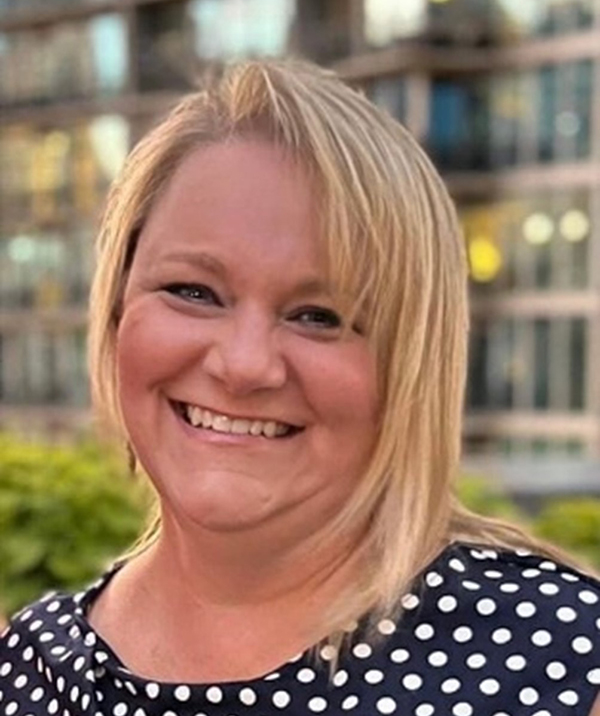
As South Portland High School’s Extended Learning Coordinator, Sheree Inman hopes to open career exploration opportunities to as many students as possible. When South Portland received the Extended Learning Opportunities (ELO) grant, Inman was tasked with uniting the school’s existing internship and co-op programs and expanding these offerings to more students. Inman has been immensely successful in implementing the school’s ELO Program with many students participating in internships, job shadows, and other career-related opportunities.  


Through the program, South Portland students have been able to pursue ELOs in a wide variety of career fields including banking, real estate, media, firefighting, veterinary care, and more. One of Inman’s students was interested in finance and accounting and went on to intern for Saco Biddeford Savings Bank for her ELO. Through this internship, she gained hands-on experience in bank telling, accounting, and marketing and was able to spend time in their corporate office. This is just one of the program’s many success stories in which students have been able to gain professional experience and a head start on their career path.  


Another career exploration opportunity available to students through the program is the annual career fair. “This is where students can talk to employers about occupations and opportunities beyond high school,” said Inman. Several local businesses at the career fair also offer job shadows and internships for students.  


“The best part of my job is when I can make a connection with a student into a field that they really want to learn more about,” said Inman. Seeing students get excited about these opportunities gives her a great sense of pride in her work.  

“Without this type of programming in schools, students don’t always get to see what actually happens in various career fields,” said Inman. In the future, she hopes to continue to provide individual ELO opportunities while expanding offerings for group ELO experiences. She is also working with special education teachers to help bring ELO opportunities to their students.  


Inman and the South Portland ELO Program are very thankful to their community business partners and to South Portland’s Economic Development Director William Mann.  

Extended Learning Opportunities (ELOs) are hands-on, credit-bearing courses outside of the traditional classroom with an emphasis on community-based career exploration. These opportunities are personalized for students and help them explore options for their professional lives. They help students engage in learning through instruction, assignments, and experiential learning. The Maine Department of Education (DOE), along with state-wide partner Jobs for Maine Graduates (JMG), have made a concerted effort to provide working models, support, and funding opportunities for Maine schools to set up ELO programs within their school communities. To learn more about Maine’s initiatives with extended learning opportunities, visit: https://www.maine.gov/doe/index.php/learning/elo or reach out to Maine DOE ELO Coordinator Rick Wilson at rick.wilson@maine.gov. 

Focus on Challenging Behaviors in the Classroom – A Community of Practice (CoP) Opportunity

The Maine Department of Education’s Early Learning Team is pleased to announce a new Community of Practice (CoP) focusing on supporting challenging behaviors in the classroom.  We are excited to bring together pre-k-2nd grade educators across our state in a virtual platform to build a community of support, resources, and learning.

This no-cost professional learning experience will focus on current developmentally appropriate practices and share resources to build social and emotional foundations. Sessions will run for one hour, take place virtually via Zoom, and will consist of group discussion of a previewed resource and time for large or small group problems of practice discussions.

The Community of Practice will be held from 3:30 – 4:30 PM. on the following dates:

  • September 26th
  • October 24th
  • November 28th
  • January 23rd
  • February 27th
  • March 26th
  • May 23rd

Register here.

For more information, please contact Marcy Whitcomb, Public Pre-K Consultant: marcy.r.whitcomb@maine.gov

Webinar: Alternate Economic Status Form – September 5, 2023 

Join the Maine DOE Data, Child Nutrition, ESEA, and School Finance Teams for a webinar about the various tracks for reporting economic status for EPS Funding, and specifically how to utilize the Alternate Economic Status form.  

This webinar will be recorded and posted to the DOE Data YouTube channel. It may take a few days for the recording to be posted however, it will be available as soon as possible. Additional information about this webinar can be found on the Webinars page of the Helpdesk Website.  

If this webinar is canceled, there will be a notice posted on the Helpdesk Website at the top of the page.  

Alternate Economic Status Form Webinar: 

September 5th at 10:00 am – Join the Live event here 

For questions about data reporting webinars please contact Alexandra.Cookson@maine.gov  

School Mental Health Distinguished Educator Opportunity 

The Office of School and Student Supports (O3S) at the Maine DOE is seeking a mental health professional for SY 2023-24. This opportunity is open to contracted school counselors, school social workers, or school mental health clinicians.

The Maine DOE is seeking a Distinguished Educator to be part of its Climate, Culture, and Resilience Team within the O3S to assist with the provision of technical assistance and professional learning for Maine’s school-based mental health providers. Under the Distinguished Educator program, the Maine DOE contracts with a public school system or community agency to borrow an educator for a designated period, in this case, the 2023-24 school year.  Following service in the program, the Distinguished Educator returns to their sending school system/community agency.

Maine educators who meet the qualifications described below are strongly encouraged to consider applying for this opportunity. Distinguished educators share their expertise with the Maine DOE and other Maine educators while also growing as professionals through a range of new and exciting experiences. The application period for this position will remain open until September 8, 2023.

Interested applicants should submit a letter of interest and resume here. Candidates selected for interviews will be notified by September 13, 2023. 

Here is an FAQ About the School Mental Health Distinguished Educator Position (PDF). Further questions may be directed to julie.a.smyth@maine.gov.

ARP funds received from the USDOE support the implementation of this project. The project has an award totaling $125,000.00 of which 100% is federally funded and directly attributed to project implementation. The contents are those of the author(s) and do not necessarily represent the official views of, nor an endorsement, by the USDOE or the U.S. Government.

Maine Department of Education Distinguished Educator Mental Health Specialist

POSITION DESCRIPTION

The Mental Health Specialist within the Climate, Culture, and Resilience Team engages in professional work related to planning and providing technical assistance and professional learning for Maine mental health providers in our schools.  The position is responsible for ensuring the Department meets the statutory directive to provide model policies, and for assisting with certification and endorsement requirements of school counselors as well as duties for both school counselors and school social workers under the Ch 117 rule. The position provides non-regulatory guidance on, and interpretation of, state laws and rules on these issues. The position is providing technical assistance to practitioners and is charged, along with other stakeholders, in developing policies and strategies to address drop-out rates, juvenile justice, restraint and seclusion, and suicide prevention.

REPRESENTATIVE TASKS of this position include but are not limited to the following:

  • Coordinates the acquisition, review, and dissemination of up-to-date information on laws, resources, research, and best practices of school-based mental health professional practice.  This includes analyzing relevant resources from related domains in order to ensure optimal understanding and implementation of federal and state requirements related to these topics.
  • Evaluates incoming requests for information, individual assistance, and technical assistance from families, schools, school districts, and community stakeholders pertaining to mental health, trauma -informed practices and school counseling in order to assess statewide needs in these areas and develop strategies to address them.
  • Develops and coordinates training and the dissemination of materials and information in order to help schools, students, and parents establish local policies and practices that are mental-health responsive and student-first oriented.
  • Examines statewide data collection, analysis, and reporting in order to identify trends, problems, and impact of various initiatives and assure compliance with state and federal law.
  • Consults and develops collaborative initiatives with other offices within DOE, other state agencies, and non-profit leaders of organizations serving students in order to ensure that services to students and families are provided in the most comprehensive, efficient and effective manner possible.
  • Represents the department on task forces and study committees related to issues of school-based mental health, trauma-informed practices and school counseling in order to ensure the most effective implementation and development of policies and practices related to these focus areas.
  • Advises the Deputy Commissioner and Commissioner on issues pertaining to the position’s areas of focus in order to ensure that the department is able to provide consistent public leadership in these areas.
  • Confers with team and department staff in order to exchange information, identify problems, and formulate possible solutions.
  • Supports team’s long-range planning activities and facilitates attainment of goals and objectives consistent with the department’s strategic plan, in order to ensure that customer service needs are met; that department directives and state and federal laws and rules are implemented; and that education and related services delivery are integrated for maximum efficiency.

KNOWLEDGE, SKILLS, AND ABILITIES REQUIRED to successfully perform the work assigned:

  • Knowledge of state and federal laws, rules and regulations governing school counseling and school social work
  • Knowledge and skills in trauma sensitive practices and mental health
  • Knowledge of a wide range of public and private resources and efforts relating to these responsibilities, including public and private social services agencies, in-school resources, non-profit organizations, community partners, etc.
  • Knowledge of standards of practices in school counseling and social work
  • Ability to communicate effectively orally and in writing
  • Ability to establish and maintain effective working relationships with staff in DOE, other state agencies and schools
  • Ability to identify solutions to individual cases using a variety of tools and resources
  • Ability to establish and maintain working relationships with staff at DOE and other stakeholder groups
  • Ability to formulate and draft policies, rules and legislation relating to these issues
  • Ability to plan and conduct technical assistance that is responsive to the needs of schools, students and parents
  • Ability to produce reports to the Legislature and others, as may be required by law

MINIMUM QUALIFICATIONS:  

At least 3 years employed as a school counselor, school social worker, school-based mental health clinician or commensurate position.

Meroby Elementary School Improves Student Attendance with Family Engagement Opportunities

As student absenteeism became a persistent issue at Meroby Elementary School, three school leaders worked together in a successful effort that decreased the school’s chronically absent rate by more than 40% over the course of a school year.

Jodi Ellis, Hillary Cayer, and Nicole Pinkham – who serve as the school’s principal, social worker, and school nurse respectively – knew they needed to address student absenteeism during the 2022-2023 school year, as the previous year’s chronically absent rate was over 70%. In October, the team of three took the lead in creating a strategic plan to improve attendance.

The first significant change that took place was shifting the responsibility of absenteeism to Ellis, Cayer, and Pinkham who were ready, and had the capacity to take it on. Previously, absenteeism was the responsibility of the school’s leadership team Pinto Collaborative which had too much on their plates and the shift provided a better balance for everyone.

“I then started asking teachers to make phone calls to families when a student had been absent for three days, and to report back to Hillary, Nicole, and I about the outcomes of that conversation.  When the student was absent for 5 days, Hillary, Nicole, and I would make the phone call and start conversations about what we could do to help the family with getting the student to school.  At 7 days absent, we would request an in-person meeting to talk about solutions.  We would then continue to monitor student attendance and continue to have follow-up conversations with families,” explained Ellis.

While Ellis, Cayer, and Pinkham worked directly with teachers and families to monitor and address individual cases of absenteeism, the Pinto Collaborative created numerous family engagement nights. These events included an ice cream social, a fall festival, and STEAM night.

“Not only do we invite families to these events,” says Ellis, “but we also invite local businesses [and] organizations to set up booths that families can visit to see what resources are available in the community.” These family engagement opportunities aim to make families feel more supported and welcomed by the school and school community, thus encouraging student attendance.

Here are a few photos from some of Meroby’s family fun nights:

Through attention to individual absences and increased opportunities for family engagement, the chronically absent rate at Meroby Elementary decreased to below 30% this past school year – a success made possible by the leadership and hard work of Ellis, Cayer, and Pinkham and the involvement and support of school and community members.

Looking toward the upcoming school year, the team hopes to keep the momentum going. “Our goal is to decrease our chronically absent rate by an additional 10% this year,” says Ellis. To do so, they plan on continuing their work from last year while providing even more family engagement opportunities and levels of support for students and families.

Ellis would like to thank the following community partners for their support in increasing student attendance at Meroby: Team Long Run/Friends of the River Valley, Mexico Public Library, Rumford Public Library, The Fitch Company, Mexico Fire Department, Mexico and Rumford Police Department, Rumford Hospital, Oxford Federal Credit Union, and Hope Association.

Powerful Practices Professional Learning Community (PLC) Sessions: Reflection

Want to develop a reflective practice and need some support? Although many educators know reflection is important, it can be challenging to carve out the time to do it.  This workshop series provides teachers with the resources and time to start (or restart) reflecting on their practice.   

During these sessions, teachers will select a problem of practice to focus on and have time to reflect, collaborate with other teachers, and make an action plan.  As a result, educators will have the necessary time and tools to develop their reflective practice. 

Intended Audience: PK-12 Teachers 

To accommodate a variety of schedules, we are offering two sessions.  Please register for one session. 

Session 1 

September 19, 26, October 3, 10 

3:00 – 3:45 PM

Register here 

Session 2 

September 21, 28, October 5, 12 

3:45 – 4:30 PM 

Register here 

For more information on these workshops, please contact Jaime Beal, Interdisciplinary Instruction Specialist at jaime.beal@maine.gov 

The Maine DOE encourages all schools and districts across the State of Maine to learn more about interdisciplinary instruction on our website or by contacting the Interdisciplinary Instruction Team Coordinator at Kathy.bertini@maine.gov