United States Senate Youth Program Seeking Nominations from High School Principals

The United States Senate Youth Program (USSYP) is pleased to announce that the state departments of education nationwide have begun their annual selection processes. Two Maine students will be selected to attend the Washington Week program March 4-11, 2023 and each will receive a $10,000 undergraduate college scholarship. Each high school principal can nominate one student from their high school to be considered.

Students in Maine must submit their application and signed nomination via email to Beth Lambert, beth.lambert@maine.gov, no later than 11:59pm on October 14, 2022. All forms, requirements, and additional information can be found at on Maine’s U.S. Senate Youth Program website. More about the national program can be found on the National USSYP website.

The USSYP was created by Senate Resolution 324 in 1962 as stated in supporting Senate testimony from that year, “to increase young Americans’ understanding of the interrelationship of the three branches of government, the caliber and responsibilities of federally elected and appointed officials, and the vital importance of democratic decision making not only for America but for people around the world.”

Each year, this extremely competitive merit-based program brings 104 of America’s brightest high school juniors and seniors from every state, the District of Columbia, and the Department of Defense Education Activity, to Washington, D.C. for an intensive week-long study of the federal government and its leaders. The state departments of education throughout the country select the students through a rigorous nomination and selection process. Each of the 104 student delegates will also receive a $10,000 undergraduate college scholarship, with encouragement to continue coursework in history, government and public affairs. The Hearst Foundations have fully funded and administered the program since inception; as stipulated in S. Res. 324, no government funds are utilized.

Presentation (In-person and Virtual): U.S. Secret Service Research and Recommendations on the Prevention of Targeted School Violence

Maine’s education workforce is invited to join the U.S. Secret Service and Maine Department of Education’s Maine School Safety Center for a free presentation by the U.S. Secret Service National Threat Assessment Center (NTAC) addressing strategies to prevent targeted school violence.

Date: October 5, 2022
Time: 9:00am – 12:00pm
Location: UMA–Jewett Hall in Augusta or Virtual
Intended Audience: Education Administrators, Teachers, School Psychologists/School Counselors, Law Enforcement, Crisis Intervention Units, Counselors & Mental Health Specialists, Social Workers, Anyone who may potentially be involved in risk detection/management position

This presentation will focus on past events of school violence, averted attacks of targeted school violence, and discuss how schools and communities can utilize a multidisciplinary approach to school safety with specific focus on identifying, assessing, and intervening with students who exhibit concerning behavior as early as possible. This is NOT active shooter response training.

Register here – This event is offered both in person and virtually.  In-person attendance is limited, so please register asap to ensure your attendance.

Please reach out to Karen Barnes at karen.a.barnes@maine.gov with any questions.

MLTI 2.0 Expands Professional Learning Support by Adding Five New MLTI Ambassadors

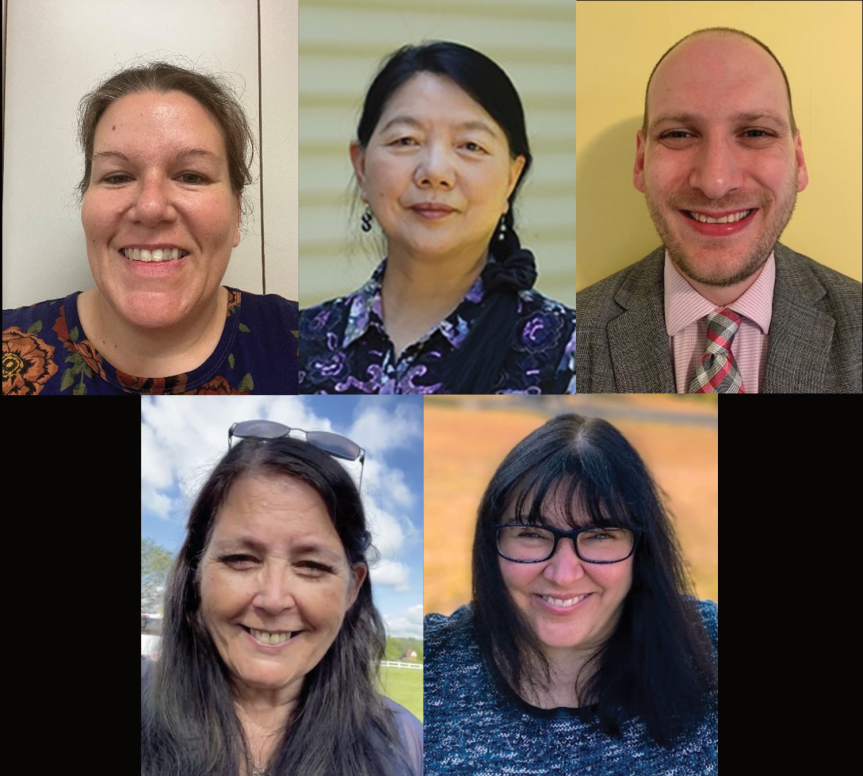
The Maine Department of Education’s (DOE) Maine Learning Technology Initiative (MLTI) 2.0 is excited to share that the Ambassador program is expanding with an additional five distinguished educators joining the team.

MLTI Ambassadors are distinguished educators, on loan from their school for two years, to bring their expertise and experience as a resource and partner with MLTI.

The Ambassador program is a signature program of MLTI 2.0.The full team of ten Ambassadors will deliver professional learning experiences and provide instructional coaching to MLTI-participating schools. The new “Junior Ambassadors” will be working with the established “Senior Ambassadors” to build upon existing relationships across the schools in the MLTI Ambassador Regions in addition the existing connections that they bring to the team.

Nicole KarodNicole Karod

Nicole Karod comes to the MLTI Team from Mt. Ararat Middle School, where she served as a science teacher and last year was the 6-8 remote science teacher.  She has eighteen years of experience as a classroom teacher at the elementary and middle levels including several years teaching in North Carolina.  A graduate of Maine School of Science and Mathematics, Nicole spent her formative years working in numerous roles at the school and worked her way up to directing summer camps for MSSM.  Nicole’s passion for leadership have led into curriculum development, spearheading student leadership opportunities and she currently serves as her district’s teacher past association president.  Nicole holds a Masters in Elementary Education from Gardner Webb University and a Certificate of Advanced Graduate Study in Literacy from the University of New England.  She lives in Damariscotta.

Joshua SchmidtJoshua Schmidt

Joshua Schmidt comes to the MLTI Team from China Middle School, where he served as a mathematics teacher. He has twelve years of experience at the middle level with half of those in Maine and half in his home state of South Dakota.  While working in South Dakota, Joshua worked closely with TIE (Technology and Innovative in Education), where he developed his passion for educational technology.  His experiences with customized learning and data-informed practices led him to China Middle School, where he led work around the mathematics department’s redesign.  That work resulted in shared math choice boards and assessments for all students in grades 5-8 while allowing students to progress through content at their own level and speed. Concurrently, Joshua took on other leadership roles within the school as well as innovative teaching in his classroom through game-based, project-based, real-world, and cross-curricular projects.  Joshua was also part of the Introduction to Experiential Teaching through Technology cohort in 2019 run by current MLTI SLAM Coordinator Kern Kelley. He is currently working on a Master of Education in Instructional Technology with a Certificate in Computational Thinking at the University of Maine.  He lives in Farmingdale with his wife, Krista, and their energetic two-year-old, Corrin.

Yuhong SunYuhong Sun

Yuhong Sun comes to the MLTI Team from Noble High School, where she served as a technology integrator, computer science, and Chinese language teacher. She has twenty years of experience teaching computer and technology-specific classes at the middle and high school levels. As the landscape of technology has changed, Yuhong has learned and expanded her course content to include programming languages, website design, web animation, game design, and Cisco networking. In addition to teaching these subjects, Yuhong has often served as a webmaster and filled technical support roles as well. She also has led many after-school organizations such as the robotics at the middle and high school levels, a web design club, and most recently organizes students to participate in the Samsung Solve for Tomorrow (SST) contest. In 2018, her team was recognized as the Maine state winner team and a top ten national finalist team for a project removing manganese from local drinking water. This project also earned her an Excite Award from Lemelson-MIT InvenTeam Program at MIT in 2018. In 2019, her SST team was once again selected as the Maine state winner team for a project fighting against suicide. Yuhong has been the director of the Noble Exchange Program for over ten years, bringing the students to Noble High School from other countries such as China and Italy. This exchange program has helped increase understanding of cultural diversity, foster friendship and promote mutual respect among people of diverse backgrounds and races. Yuhong loves cooking. During the pandemic, she fully engaged her students with fun extracurricular activities such as Chinese cooking. Yuhong received her M. Ed in Instructional Technology from the University of Maine and previously holds a Master’s Degree in English Literature and Law Degree from Southwest University in Chongqing, China. She holds teacher certification in K-12 Computer, Chinese, and English Language Arts and she is also a National Board Certified Technology Educator. She lives in South Berwick.

Martha ThibodeauMartha Thibodeau

Martha Thibodeau comes to the MLTI Team from the Mt. Blue Regional School District, where she served as a technology training coordinator. She has forty years of experience teaching from early elementary to adult education, working primarily in school districts in Central and Western Maine with seventeen years teaching at Lawrence Junior High School.  In recent years at Mt. Blue, she has focused on technology integration and planning professional development throughout the school year as well as the district’s summer institute.  She has been involved in previous programs such eMINTS and MARTLs in Maine that have given her experience around regional training and statewide collaboration. Martha also holds Curriculum Coordinator certification in addition to multiple teacher certifications as well as certificates from Google, Apple and eMINTS. She holds a Master’s Degree from Thomas College in Computer Technology in Education and an Education Specialist Degree in Educational Technology from Walden University. She lives in Madison.

Tracy WilliamsonTracy Williamson

Tracy Williamson comes to the MLTI Team from Gorham Middle School, where she served as a music teacher.  She has twenty years of experience at the middle level and has taught general music classes, chorus and steel band throughout her career. Tracy was nominated as a semi-finalist for the 2021 GRAMMY Music Educator Award. She is an Apple Certified Teacher and has been a regular presenter at the ACTEM, MMEA and the MLTI Student Conferences, where she advocates for ways to braid music and technology together.  She has long sought to integrate technology such as Soundtrap, WeVideo, EdPuzzle, Google Apps and more into her music classes to promote both efficiency and innovation. Tracy has worked with her students on Project S.U.S.T.A.I.N. (Students Using Soundtrap to Accomplish International Necessity) to compose original music for a worldwide collaborative album supporting the United Nations Sustainable Development Goals. She has created an innovative digital badging program to help students learn to read music. Serving as the middle level repertoire and resources chair for the Maine ACDA (American Choral Directors Association), Tracy has overseen the Maine Youth Honor Choir All-State Festival since 2019. She has also hosted the New England Steel Band Festival several times in Gorham. Tracy received a Master of Music degree from The Boston Conservatory in 2000 focusing on Music Education and Flute Performance and she is currently working on a degree in Media Arts & Graphic Design from Southern New Hampshire University. She lives in Bridgton with her husband, Ben, who is a middle school ELA and Social Studies teacher in Windham.

The Maine DOE MLTI team works hand-in-hand with the MLTI Ambassadors to support the MLTI professional learning plan in addition to the many other components MLTI 2.0. For more information about MLTI 2.0 and its evolution visit the Maine DOE Website or contact Beth Lambert, Director of Innovative Teaching and Learning.

WEBINAR: Getting Started with Interdisciplinary Instruction

The Maine Department of Education (DOE) invites educators to participate in a webinar focusing on how to get started with interdisciplinary instruction.  The goal of this session is to give educators a sense of the planning process.  Although not required, educators are encouraged to come with an idea in mind.

This 60-minute workshop-style webinar will

  • Give a brief overview of what interdisciplinary instruction is and how it supports students and educators
  • Cover how to write a driving question, create a project or product, and align learning activities to MELDS/MLR standards
  • Give practical tips to get started with interdisciplinary instruction in your classroom

Additional virtual PLCs will begin in October and November for those educators who wish to continue their work.  Attendance at this workshop will not be required for the PLCs.

When: Tuesday, September 13, 2022. 3-4

Where: Register HERE to receive the Zoom link

The workshop will be facilitated by Jaime Beal, Interdisciplinary Instruction Specialist. If you have any questions, contact Jaime at jaime.beal@maine.gov.

WEBINAR: The Role of School Nutrition Directors in School Safety Efforts

The U.S. Department of Education, Office of Elementary and Secondary Education, Office of Safe and Supportive Schools and its Readiness and Emergency Management for Schools (REMS) Technical Assistance (TA) Center will host a Webinar on Tuesday, September 13, 2022, from 12:00 p.m. to 1:00 p.m. ET. This Webinar will highlight the role of school nutrition directors in school safety, security, emergency management, and preparedness activities, including emergency operations plan (EOP) development.

The objectives of this 60-minute Webinar are to

  • Demonstrate the importance of a collaborative planning team, as outlined in Step 1 of the six-step planning process detailed in the Guide for Developing High-Quality School Emergency Operations Plans.
  • Discuss the role that school nutrition directors play in implementing the National Preparedness System mission areas before, during, and after an emergency.
  • Reinforce how school nutrition directors can enhance EOP development and serve as key stewards in the efforts around food contamination outbreaks, continuity of operations, recovery, and more.
  • Share relevant resources to be used by school nutrition directors and core planning teams.

Register on the REMS TA Center Website to participate in the Webinar!

Presenters:

  • U.S. Department of Agriculture, Food and Nutrition Service
    • Charlsia Fortner, Chief, Food Safety Branch
    • Brian McCall, Director, Office of Emergency Management
  • REMS TA Center
    • Alison Curtis, Director of Information and Product Management

Web Chat

Immediately following the Webinar, you are invited to participate in a Twitter Chat where presenters will continue to answer your questions. No Twitter account is necessary to view questions, only to pose questions and engage in tweets. Follow @remstacenter and tune in at 1:00 p.m. ET on September 13.

Questions

Contact the REMS TA Center Help Desk at 1-855-781-REMS [7367] or info@remstacenter.org from 9:00 a.m. to 5:00 p.m. ET, Monday through Friday. Can’t make the live event? This Webinar will be archived on the REMS TA Center’s Website within 7 business days.

‘A Tapestry of Small Moments:’ A Story of Success at the Blueberry Harvest School

In the low bush wild blueberry fields of Washington County, there is important work to be done in the month of August. Families come from throughout the state, the country, and the continent to harvest the blueberries that make their way to grocery store shelves and kitchen refrigerators throughout the country. Once the harvest is done, they pack up and move once again, across school administrative unit (SAU), and sometimes country lines. The Maine Migrant Education Program (MEP) partners with the nonprofit organization Mano en Mano to provide migratory children and youth, and their families, with educational and support services. At Mano en Mano, the local MEP Regional Coordinators enroll migratory children and youth, conduct needs assessments, and create a service plan for each student, and, throughout the month of August, they operate the Blueberry Harvest School.

The Blueberry Harvest School (BHS) is a summer school for migrant children ages 3-13 designed to provide students with the opportunity to attend school while they are in Maine and may be missing school days and credits in their home states. It began operating over 30 years ago, when there was a large influx of migrant workers in Maine’s blueberry harvest in the 1970s. Migrant families travel to Maine from Mi’kmaq First Nation communities in Nova Scotia and New Brunswick; from “Eastern Stream” states such as Florida and Mississippi; and from within Maine, including Passamaquoddy communities in eastern Washington County and a Latino community in western Washington County. Some families complete the blueberry harvest in less than two weeks, while other families may stay for five weeks or longer. The goal of the BHS is to respond to the unique needs of each student through culturally responsive, project-based learning while preventing summer learning loss and compensating for school disruptions among students, helping to ensure that all students experiencing a migratory lifestyle reach challenging academic standards and graduate with a high school diploma (or complete the HiSET) that prepares them for responsible citizenship, further learning, and productive employment.

In each classroom, students make progress toward academic success. Students take field trips weekly, experiencing educational opportunities throughout Maine. The oldest age group, 11- to 13-year-olds, recently had the opportunity to visit the University of Maine Orono’s Virtual Reality Center. During their visit, they were able to create and explore their own virtual reality rooms. Meanwhile, the 7- and 8-year-olds took a trip to the College of the Atlantic Museum to see dioramas. When they returned to the BHS, they created their own dioramas about animals they researched.

Stefan Fink, a Lead Teacher at the BHS says their favorite memory comes from a time when they and another teacher found monarch caterpillars outside their cabin. They brought them to school for the students to measure, take notes, and name them, providing the students with the opportunity to watch the life cycle of the butterfly. On the last day of school, the butterflies were ready to take flight, and the students sent them off together.

While the activities students complete in their time at the BHS is important, the staff will tell you that what really makes the BHS special is the culture and philosophy behind the learning, which allow many students to feel safe and comfortable in school for the first time. “Migrant education is disruptive, so we have to disrupt the cycle of learning loss,” Fink says. The BHS does this in several ways. For example, there are two teachers assigned to each classroom. School director Laura Thomas says that by having more than one teacher, it is easier to foster relationships between student and teacher, something many rural schools lack the capacity for.

The school takes a trauma informed response to teaching, helping to increase comfort levels and show students that migrating to Maine and attending school can be a safe space to learn. Part of how they do this, and part of why the staff love to work at the BHS, is through mirroring their student body in their staff. The teachers and students come from similar backgrounds and speak the same languages, making the students feel comfortable. Some of the teachers even went through the BHS themselves as children. This allows the teachers to meet and understand student needs at a greater level.

Mirroring the students in the staff is just one way that the BHS prioritizes cultural and language inclusion. There are 10 languages spoken at the BHS, and when you walk into the building, you can tell. Signs and books in the halls and in every classroom are in multiple different languages, helping students to feel comfortable. Through language access, the BHS is working to preserve and teach languages such as Spanish, English, Mik’maq, Haitian Creole, Korean, Passamaquoddy, Portuguese, French, Yoruba, and Nahuatl. Cornelia Francis, a TA at the BHS and a previous attendee herself, has been with the program for over 30 years. She says that sometimes, there are language and communication difficulties, but it is so important to give students an opportunity and a space to speak the languages that make them feel comfortable because it doesn’t just benefit the kids, but it helps keep the culture and languages alive as well.

Another important aspect of the BHS philosophy is the student-led social emotional learning component. This year, they hired an SEL coordinator, Meg Charest, who says that at the BHS, kids are the experts on their experiences. Charest says that in her role, she provides students with choices in how they want their problems to be solved because kids learn when they’re in charge. This “sit back and listen” approach helps kids feel seen, heard, and comfortable. While Charest integrates this strategy in her SEL work, teachers throughout the BHS implement this student-first idea as well. Francis says, “you need to learn the child before you teach them,” something that most teachers at the BHS agree with and do, building relationships prior to and while educating students, in line with the BHS philosophy.

All these facets of the BHS educational philosophy build upon one another to create an environment that both staff and students can be proud of. “This is what equity work looks like,” Fink says. Students routinely have exposure to cultural experiences and communities that allow them to feel protected and safe, which is evident. Fink loves when students share their first laugh at the BHS, ask for help, or share their hard work with parents. Each moment of pride and happiness in the walls of BHS, Fink says, helps to make a “tapestry of little moments” that show how effective the BHS is.

While the building may not be large, the impact of the BHS is. The staff build trust and connections with students, letting them feel comfortable in a place where historically, underrepresented migratory students haven’t been allowed to be happy or safe. They support language access and facilitate a culture of constant learning, helping to disrupt the cycle of learning loss. The work of the BHS, while it starts in migrant labor, goes far beyond it, supporting culturally sustainable traditions, allowing students and their families to feel protected and safe.

Computer Science Professional Development Grant Application

Are you interested in computer science professional development opportunities for your school? Maine’s 130th legislature, through a bill sponsored by Senator Pouliot, created a pilot grant program to provide funding for high-quality, teacher-developed or teacher-led professional development for PK-12 computer science pedagogy and content. 

Priority will be given to applicants that: 

  • do not currently offer computer science learning opportunities; 
  • serve socioeconomically disadvantaged school districts; 
  • prioritize student populations traditionally underrepresented in computer science; 
  • demonstrate a commitment to pursuing high-quality educator professional development that emphasizes integration of computer science into other course work and curricula or establishes or expands access to courses that offer college credit and other certificates of value, or both; and 
  • collaborate or partner with other entities, including but not limited to other local education agencies, the business community, nonprofit organizations and private entities. 

The application window opens Thursday September 1, 2022. Applications will be reviewed in the order in which they are received.  

There is no limit to the grant amount awarded per applicant; however, funds will be dispersed equitably across all applications based on county and throughout PK-12. 

Have questions? Want to learn more? Interested in applying? Check out our website to learn more and submit an application. 

Need assistance applying? Contact the Computer Science Specialist, Emma-Marie Banks, emma-marie.banks@maine.gov 

Entry Level Job Safety Skills for People with Intellectual or Developmental Disabilities (I/DD)

The Institute on Disability at the University of New Hampshire is offering free training this fall (2022) focusing on Entry Level Job Safety Skills for people with intellectual or developmental disabilities (I/DD). The training offered through Zoom is interactive, accessible, and collaborative. It is tailored to support all stakeholders who assist students in the transition to employment, including high school students with I/DD, as well as employers, Vocational Rehabilitation Counselors, Special Education Teachers, and Educational Technicians.

Get more information and register here.

Download the PDF Flyer.

For More Information Contact Caitlyn Fulton Caitlyn.Fulton@unh.edu

World of Early Learning Newsletter Launches

The Early Learning team at the Maine Department of Education (DOE) in collaboration with colleagues from across offices are excited to release the first World of Early Learning Newsletter. 

This publication will provide content related to an early learning topic as well as updates from the DOE, links to additional resources, and upcoming professional learning opportunities. Volume one, issue one focuses on starting the year off strong and setting up for success. Readers will also find links to our recent presentation at the Educator Summit and to a brochure highlighting resources on the importance of relationship building. 

Each issue will include a link to provide us with feedback. Tell us what you need for information or resources, share an idea or a great story about your class and experience! 

Those interested can expect this delivery once every two months. Volume one, issue one is now available here. Volume one issue two will be released on or around October 17, 2022. 

The World of Early Learning Newsletter can be accessed by subscribing through the DOE Newsroom here. Each issue, along with other important updates, will be sent directly to your email. You can unsubscribe or update your preferences at any time. If you already subscribe to DOE news and updates, then be sure to select the World of Early Learning Newsletter by entering your information on the link above and following prompts to update your preferences. 

Additionally, each newsletter will be linked on our DOE Early Learning website here. For more information about the newsletter, contact Nicole Madore at nicole.madore@maine.gov.

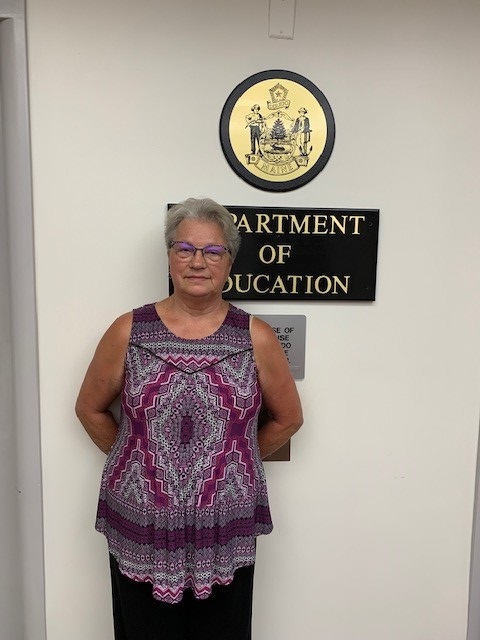
Get to Know the Maine DOE Team: Meet Georgette Valliere

Maine DOE team member Georgette Valliere is being highlighted this week as part of the Get to Know the Maine DOE Team Campaign. Learn a little more about Georgette in the question and answer below.

What are your roles with DOE?

I have been working with DOE since April 1985 and have seen many Commissioners during my time here (Commissioner Makin is #15) and they are all completely different.  My primary role with DOE is being the Assistant to the Commissioner & Deputy – scheduling meetings, handling correspondence, and arranging for all meetings and travel (including flights & hotel arrangements).

I also assist with other members of DOE that need help with travel arrangements, such as lodging or airline tickets, in addition to ordering books, office supplies, subscriptions, etc., I also assist around the office with troubleshooting video conferencing technology needs, and serve as a backup for building control issues, telephone orders/issues, when necessary.

I have also been helping to coordinate (along with DOE Leadership) the Annual Commissioner’s Conference for Superintendents, which entails handling a lot of logistics and attention to detail.

I have played in many roles and have had numerous responsibilities over the years, including homeschooling, Certificates of Employment for Superintendents, and currently I am assisting with processing DOE Diplomas. There are many things to list that sometimes pop up at a moment’s notice, so I have to shift gears!

What do you like best about your job?

The thing I like best about my job is the wonderful administration (people), and meeting people, the versatility of work, and keeping busy.  DOE is a very caring department and since the COVID pandemic which has caused many to work remotely, I have not been able to meet as many employees.

How or why did you decide on this career?

I decided on this career many years ago after working in private business including working in the restaurant and hospitality industry, woodworking mill, furniture store, pest control business, shoe shop, property management, and motorcycle repair shop (which allowed my husband and I to meet a lot of different people across the US & Canada as they were travelling to Laconia, who had stopped with motorcycle problems). My experience with handling all the paperwork/accounting for the rental property and motorcycle business, along with working here full time and housekeeping made me finally make the decision to work in State Government for the health benefits & the retirement – so here I am!

What do you like to do outside of work for fun?

I do rubber stamping (make my own greeting cards), and I like to make different styles than the regular open/close ones. I have also done basket weaving. In the summer I go to hotrod/car shows with my husband, he has a bright red 32 Ford coupe.  I have a grown son who has his own home, and my husband and I have a cat, his name is Tommy Two Socks.