Get to Know the Maine DOE Team: Meet Robert Palmer

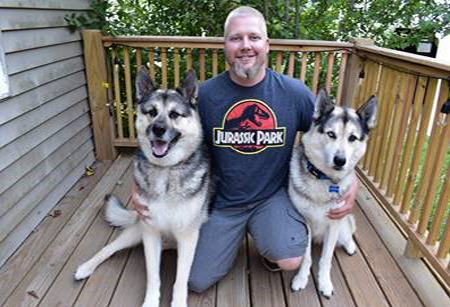
Maine DOE team member Robert Palmer is being highlighted this week as part of the Get to Know the Maine DOE Team Campaign. Learn a little more about Robert in the question and answer below.

What are your roles with DOE?

I am Management Analyst II for the EANS (Emergency Assistance to Non-Public Schools) team. I make up the fiscal and procurement section of the EANS Team.

What do you like best about your job?

I enjoy assisting the Non Public Schools to better enable the children to learn more effectively in safe/secure environment.

How or why did you decide on this career?

I decided to work with the EANS team because I enjoy challenging myself. Working with Non-Public Schools and the ever changing funding sources provides a challenge that is always evolving. Being able to adapt and overcome each challenge while helping the schools is very rewarding.

What do you like to do outside of work for fun?

I enjoy spending as much time outside as possible. Most of the time is spent hiking, hunting and fishing. If I am not outside, I can be found renovating my rental properties. I enjoy learning how to do things for myself and as any home owner knows, something always needs to be done.

Maine School Nurse Summer Institute Brings Together 150 School Nurses from Across Maine

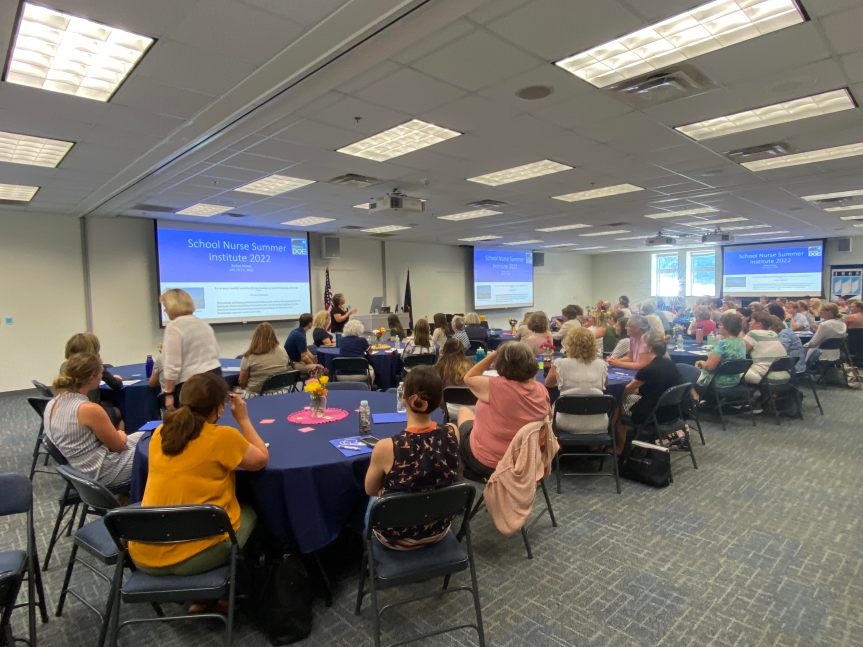
Nearly 150 school nurses from across Maine gathered this week in Belfast for the Maine School Nurse Summer Institute. This was the first in person Summer Institute in four years and allowed school nurses to come together to build community and connection, participate in professional learning opportunities, identify strategies to care for themselves in the same way they care for so many others, and share challenges and opportunities for themselves and the school nursing field following several years on the frontlines of combating COVID and keeping their schools safe.  

Nurses at the Summer Institute were guided by Florence Nightingale’s words to “let us never consider ourselves finished nurses; we must be learning all of our lives.” 

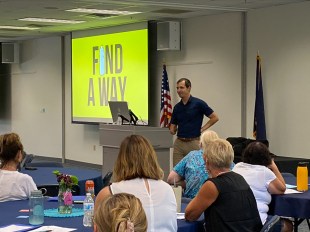
Maine Education Commissioner delivered a keynote address during the Summer Institute and told the school nurses in attendance: “You take care of everyone else…please take care of yourselves.” 

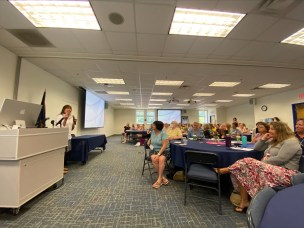
Commissioner Makin Speaking“I am in awe of the work you have done. You are singlehandedly running an ER in your schools and facing a revolving door of kids who need you and search your face for assurance that everything will be alright,” said Makin. “The work you do in general is so huge, and during COVID-19 it was over the top. It is so appreciated.” 

Makin honored the work done by school nurses during the pandemic and talked about the toll it takes on people to be in that constant state of being on alert and dealing with trauma. She urged the nurses to pay close attention to their wellbeing.  

Maine Department of Health and Human Services Chief Child Health Officer Amy Belisle also spoke, detailing the many heroic efforts of school nurses during the pandemic to keep students safe and schools safe and open.  

Nearly 9 million items of PPE were delivered to schools between July of 2020 and December of 2021, with school nurses at the center of managing those incoming deliveries, teaching staff and students on using PPE, developing usage policies, and troubleshooting. There were 242,000 COVID-19 antigen tests provided to schools since 2020, 1 million at home test kids provided to schools for student, staff, and family use, and school nurses helped facilitate more than 150,000 polled tests during the pandemic. And school nurses managed implementing the frequent updates and shifts of the COVID-19 Standard Operating Procedure (SOP) for schools. 

School nurses also participated in the school health advisory group, that started out meeting weekly in the summer of 2020 to meet with state health and education leaders on COVID-19 mitigation strategies, and nurses who were part of the state’s School Public Health Response Team responded to 3,700 calls and 12,000 emails related to COVID-19, handled 34,000 cases, and ran 540 vaccine clinics.  

Nurses had an opportunity to process and discuss the stress and strain caused by the pandemic, strategies to address their wellbeing, and how to move forward in this new phase of the pandemic. The Summer Institute featured a wide variety of workshops and professional learning opportunities around adjusting to the wake of the pandemic, social emotional learning, interprofessional collaboration & nursing, the school nurse role in a crisis, and children’s health related topics including handling common school injuries, managing diabetes, seizures, and oral health.  

Brad Hurtig SpeakingBrad Hurtig delivered a keynote address, sharing with the audience his personal story of courage and resilience after losing both hands as a teenager after an accident involving a 500 ton power press.  

“We all face challenges,” said Hurtig. “How you handle adversity will define your life and being able to handle it will set you apart.” 

Hurtig shared feeling like everything had been taken away from him in those first few months after his accident and how he was laying on the couch thinking “why me?”. But step by step he found a way forward, often through the help of his football coach. He was able to return to the football field and went on to be first team all-state his senior year. And his prosthetics enabled him to do things with hands once again.  

“When you want something, lean in and relentlessly go after it. Find a way,” Hurtig said, sharing the message he delivers at schools across the country. “If you are willing to have the right mindset, to adapt, to have perseverance, then you will find a way.” 

Hurtig connected his experience to what school nurses have faced over the past few years and their power to help students find a way.  

“You’ve had a rough few years and you know all about how to adapt and do things differently,” said Hurtig. “There is no better reward than helping another human being. I know your moments with students can be brief but find ways to show that they matter and that their life counts. It goes a long way for a struggling child.” 

Register Today for the 2022 Maine ELO Conference August 15-17

The Maine Department of Education (DOE) and Jobs for Maine Grads (JMG) are partnering to offer a 3-day, 2-night Extended Learning Opportunity (ELO) conference hosted at University of Maine Orono on August 15th through the 17th. All Maine educators focused on expanding access to ELO programming are encouraged to register.

This conference is designed to equip educators with the skills and facilitated planning time to build or expand quality ELO programming for Maine high school students. ELOs are hands on credit bearing courses outside of the traditional classroom with an emphasis on community-based care.

All conference events, meals, and housing will take place at the University of Maine at Orono.

At the end of the conference, you will:

  • Understand the history and context of ELOs in Maine
  • Be ready to build (or build upon) your ELO programs
  • Understand the various levels of support and training available to you
  • Understand the components of a high-quality ELO program
  • Have connected with a strong network of professionals in the field
  • Be energized by the transformational nature of this work

For more information, please reach out to Rick.Wilson@maine.gov or elo@jmg.org. You can also visit https://jmg.org/models-strategic-initiatives/elos.

Register here

Program and agenda information can be found here

A Year of Success and Innovation: Rethinking Responsive Education Ventures at School Union 76

The first round of RREV (Rethinking Responsive Education Ventures) Awardees were announced in August of 2021. RREV is an initiative of the Maine Department of Education, funded by the Education Stabilization Funds through the US Department of Education’s Rethink K-12 Education Models, that bolsters Maine educators’ innovative efforts to support their students with agile, effective, and resilient learning experiences that improve learning outcomes for all students. Now, after a year of experience and development, the Department of Education would like to thank the awardees for their dedication to innovative education and highlight their achievements that have resulted from the RREV contracts over the past year. Continue reading to learn more about the ways in which School Union 76 has used their RREV funding this past year.

Last August, School Union 76 was approved for their RREV pilot project titled “Classrooms in the Community,” which was intended to create outdoor learning spaces for students across the district. These outdoor spaces were meant to be inclusive and were designed for all students to be able to engage, connect, and explore. The district took on big goals, hoping to significantly boost student learning proficiencies across all subgroups of students, create a global, integrated base of knowledge for staff, students, and parents, expand aspirations and awareness of continuous learning opportunities for students and communities, and better prepare students for a world rapidly changing through technology and innovation by teaching and nurturing the practices of self-educating, research & exploration, and teamwork. A year later, significant progress has been made towards these goals thanks to the construction of an ADA accessible boardwalk that is part of a nature trail, and partnerships with community organizations, sharing their progress all along on Facebook.

The ADA accessible boardwalk has been a focal point for both the schools and the surrounding community. Students now interact with it regularly, and, in October, after the construction completed, Island Heritage Trust collaborated with the district on a jack-o’-lantern carving event. Jack-o’-lanterns lined the boardwalk and were illuminated for two nights where the trail was open to the public. Mickie Flores, Deer Isle-Stonington (DIS) Elementary Science Teacher, described how students “oohed” and “awed” as they walked down the boardwalk. Community members, she said, showed up too, to enjoy the pumpkins and fall air.

The boardwalk and the outside facilities are not just used for events, however. One kindergarten class took a walk on the nature trail every day this past school year. They loved their routine so much, they wanted to do everything they could to maintain the boardwalk and trail. As part of the district’s turn to hands-on learning, the teachers encouraged their students to collect pennies and took them on a field trip to the bank to deposit them. When all the collected pennies were counted, the students had collected over $230 to put towards boardwalk maintenance, and community members in the bank at the time donated even more money to help the kindergartners maintain their beloved nature trail.

While the kindergarteners use the trail to take in the nature around them, Flores emphasizes that “going outside is not just to learn science.” She believes you can learn anything outdoors, and the curriculum in SU 76 reflects this. 5th grade students spent time outside writing haikus this year, and 2nd graders painted rocks with positive messages. The time outside was good for their creativity and mindfulness, not just factual, science-based education.

Next year, Flores will find herself in a new position with a new title as the Classroom and Community Coordinator. “I believe the past titles of RREV Coordinator and Place Based Education Coordinator are much too enigmatic,” she said. To her, a label that clearly communicates her role within the district is more important, as the clarity helps to create and strengthen those community connections that are integral to the project. In her new role, Flores looks forward to establishing herself as a resource for all four schools and continuing to collaborate with Island Heritage Trust, Haystack Mountain School of Crafts, Maine Mathematics and Science Alliance, and the Chase Emerson Public Library.

In terms of the continuation of their project, the district hopes to expand the opportunities available to students this coming school year. The construction of an outdoor classroom is underway and is set to be opened near the high school. Flores hopes that this outdoor space, while it will be used by all students, will increase high school engagement and excitement because of its proximity to their school building. The district is also hoping to have opportunities to connect the schools through field trips and increased interaction with community partners to achieve their long-term goal of having all students experience multiple learning opportunities that are active, hands-on, creative, and student-centered.

Ultimately, before the June 30, 2023 funding deadline, Flores hopes to increase participation at Deer Isle-Stonington Elementary School and the Sedgwick Schools and begin involvement with the Brooklin school as well as the Deer Isle-Stonington High School. She also intends to produce a calendar documenting the activities at the various schools throughout the year to share the activities with the community and increase this involvement.

Martin Mackey, the former RREV Project Director who tragically passed away in April of this year, embodied the RREV spirit: to think and act boldly to meet the needs of students. His passion was to “change lives.” As such, he challenged each and every RREV participant to do just that as they designed pilot ideas that would ultimately have a lasting systemic impact on students.  After 18 months of leading RREV, Martin’s passion had been passed on to almost 200 educators who had participated in innovation professional development. From those educators, 27 Pilot ideas were brought to fruition and have received over $5.7 million in RREV awards. Through their pilot ideas, these educators have pledged to commit themselves to innovation.

The Maine DOE encourages all schools and districts across the State of Maine to learn more about these innovative educators and their RREV pilots through the RREV website and the online RREV collaborative platform known as EnGiNE. It is through EnGiNE that we all hope to continue the Martin Momentum to change students’ lives through innovative and responsive educational programs.

A Year of Success and Innovation: Rethinking Responsive Education Ventures at MSAD 60

The first round of RREV (Rethinking Responsive Education Ventures) Awardees were announced in August of 2021. RREV is an initiative of the Maine Department of Education, funded by the Education Stabilization Funds through the US Department of Education’s Rethink K-12 Education Models, that bolsters Maine educators’ innovative efforts to support their students with agile, effective, and resilient learning experiences that improve learning outcomes for all students. Now, after a year of experience and development, the Department of Education would like to thank the awardees for their dedication to innovative education and highlight their achievements that have resulted from the RREV contracts over the past year. Continue reading to learn more about the ways in which MSAD 60 has used their RREV funding this past year.

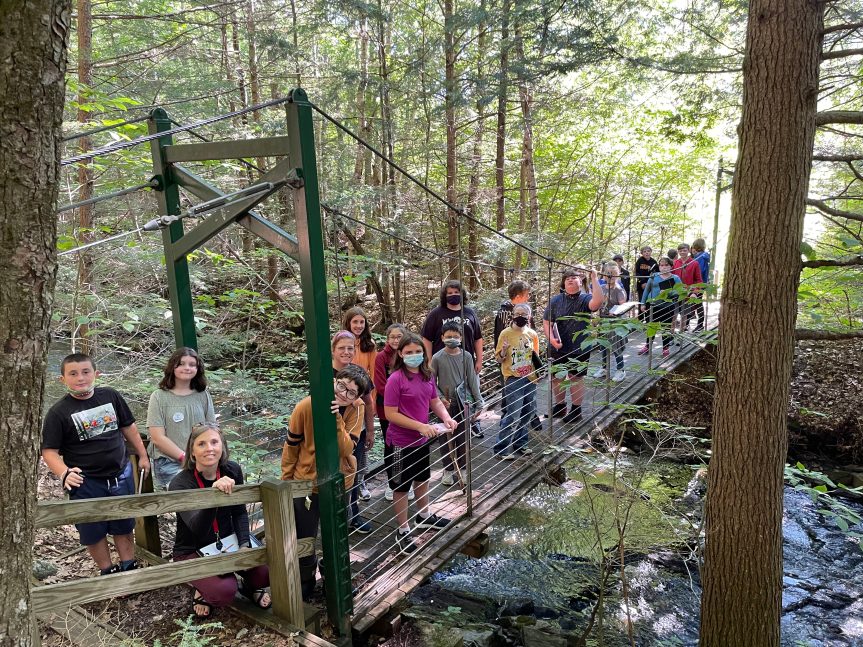
After being forced online at the start of the pandemic, MSAD 60 has chosen to embrace remote learning as a pathway for some students rather than await its end. Last year, they created Noble Virtual Middle School (NVMS) as an option for students looking to continue remote education as the district moved back to in person learning. Since receiving their RREV funding in August 2021, they have been able to transform the learning experience for students in NVMS through their pilot project “Be Well Connected,” which is helping to create mentally and physically healthier students with stronger connections and relationships with their peers. The program focuses on building social emotional learning and a whole person wellness outlook through field trips, enrichment, and teambuilding.

Over the last year, educators have seen amazing progress and growth in their students. Brigette Dumont, NVMS Director, says this year has been “phenomenal.” One student who historically has been academically capable, but quiet, has come out of his shell. In NVMS, he laughs and makes comments in class, feeling connected to his classmates, whereas before, he always kept to himself. This student is just one example, but the growth can be seen in every student. “Students came together as a community. The intentional investment of time paired with risk taking really helped break down walls and helped them all have a voice,” Dumont says.

A big part of this growth came from the enrichment activities the students had, which greatly increased student engagement and involvement. For one hour each Friday, students would meet in enrichment clusters that were geared toward their interests. The theater enrichment cluster worked on creating a play, while the computer science cluster spent time coding. One student-favorite group was a student created and led Dungeons and Dragons cluster. These students spent their time creating characters and playing through campaigns led by a student Dungeon Master using tools from the D&D Beyond website. As a final project, students created their own campaign including maps, characters, a plot, and more, which they then presented to the class and posted to D&D Beyond for others to use. They enjoyed the freedom they had to explore their creativity and were able to have fun while learning. While many people may just think they were just kids having fun playing a game, the enrichment cluster was much more than that. The communication skills these students developed, Dumont says, were beyond the skills that are typically developed in the classroom, and they gained more self-confidence because they were so engaged in their collaborative work.

In the coming year, the school plans to build on this work. They have hired a wellness counselor who will start at the beginning of the new school year in September to provide much needed mental health support to help students manage trauma and anxiety. Dumont says they are “looking forward to having someone help in acute moments with students.” The district looks forward to providing students with strategies to manage mental wellness and developing a more solid approach to bring mental health resources to their students.

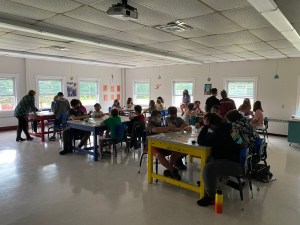
students at desksThe school also hopes to offer the students of NVMS two in-person days a week. This will allow the school to increase field trips and enrichment opportunities as well as encourage growth throughout the community. By building stronger connections with community partners and local businesses, the district plans to provide students with more real-world applications for their learning and better utilize nearby resources.

Martin Mackey, the former RREV Project Director who tragically passed away in April of this year, embodied the RREV spirit: to think and act boldly to meet the needs of students. His passion was to “change lives.” As such, he challenged each and every RREV participant to do just that as they designed pilot ideas that would ultimately have a lasting systemic impact on students.  After 18 months of leading RREV, Martin’s passion had been passed on to almost 200 educators who had participated in innovation professional development. From those educators, 27 Pilot ideas were brought to fruition and have received over $5.7 million in RREV awards. Through their pilot ideas, these educators have pledged to commit themselves to innovation.

The Maine DOE encourages all schools and districts across the State of Maine to learn more about these innovative educators and their RREV pilots through the RREV website and the online RREV collaborative platform known as EnGiNE. It is through EnGiNE that we all hope to continue the Martin Momentum to change students’ lives through innovative and responsive educational programs.
WEBINAR: Registering and Enrolling Refugee and Immigrant Students in Secondary Schools

The U.S. Department of Education’s Office of English Language Acquisition (OELA) is hosting to a webinar where panelists will discuss best practices and resources for facilitating refugee and immigrant students’ transition into U.S. schools, including scheduling considerations, academic evaluations, and options for registering newcomer students who arrive without academic credentials or who do not meet state academic requirements.

The panelists will also discuss models of academic background review and assessment that can be used during newcomer immigrant registration and enrollment to set students on a success trajectory and pathway to graduation.

Aug 12, 2022 02:00 PM in Eastern Time (US and Canada)

More Information and Register Here

Students Learn About Camping and the Outdoors at LearningWorks’ 21st Century Program in Saco

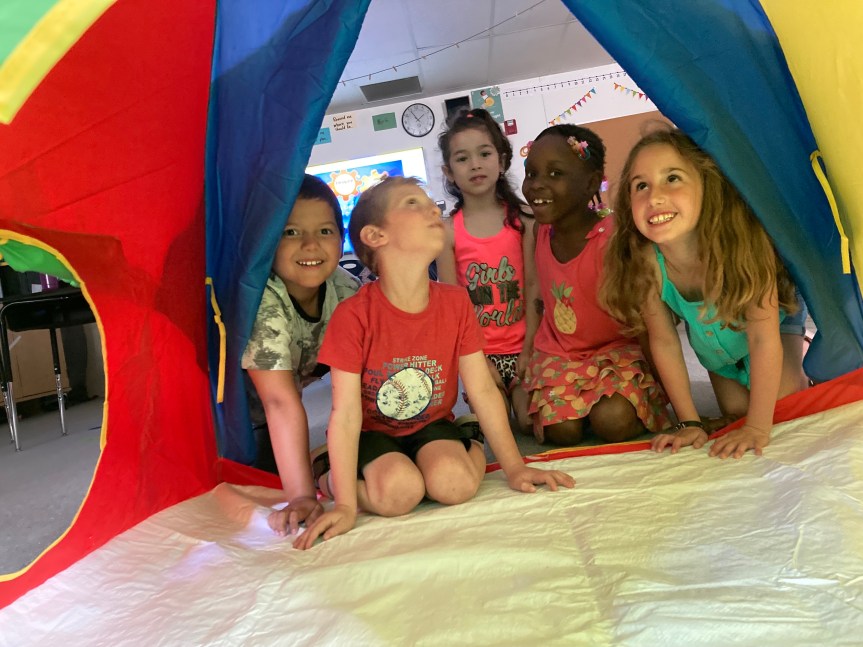
This summer, LearningWorks’ 21st Century Learning Center in Saco is hosting students entering grades K-2 for a summer program focused on camping and the outdoors.

Students practice math, literacy, and STEAM (science, technology, engineering, arts and mathematics) skills while learning practical skills for spending time outside. Students learned to pitch tents, made a solar oven for cooking without fire, and collected leaves and sticks for art projects.

Each student is keeping a nature journal to document their observations and findings. In the next few weeks, students will learn to identify leaf shapes, recognize animal tracks, and use a compass. The program is also planning on visiting a fire station to learn about outdoor fire safety and taking a nature walk to apply some of the skills they have learned in a real-world situation.

“Students have loved spending time outdoors and have been able to put into practice what they are learning when going outside with their families this summer,” said Colby Senior, Saco and Biddeford Site Director for LearningWorks Afterschool and 21st Century Community Learning Centers.

Funded through the U.S. Department of Education’s Nita M. Lowey 21st Century Community Learning Centers (CCLC) program, Maine currently has 35 CCLC grants and 61 CCLC sites across Maine that provide academic enrichment opportunities during non-school hours for children, particularly for students who face economic and/or academic challenges. With strong community partnerships at the core of every one of its programs, Maine’s 21st Century Learning Centers help students meet academic goals and offer a broad array of enrichment activities, in addition to other educational and engagement opportunities for communities and families. Learn more about Maine’s CCLC grant opportunities at https://www.maine.gov/doe/learning/esea or reach out to Travis Doughty at travis.w.doughty@maine.gov.


2022 Foreign Language Association of Maine Summer Institute

The Foreign Language Association of Maine in collaboration with The University of Maine Department of Modern Languages and Classics invites you to the 2022 FLAME Summer Institute.

Date: August 22, 2022
Place: University of Maine, Orono. Bennett Hall Bldg.
Time: 8:30 a.m. to 4:00 p.m.
Cost: Registration is $50 with FLAME membership 2022-2023. $60 without FLAME membership. Registration for new teachers and student teachers (0-1 year of experience)$30 with FLAME membership 2022-2023, $40 without membership (learn more about becoming a FLAME member here).

Keynote Speaker: Gisela Hoecherl-Alden, Assistant Dean & Director of Language Instruction Professor of the Practice in German at Boston University.

Gisela Hoecherl-Alden is currently Professor of German and Assistant Dean and Director of Language Instruction at Boston University, where she works closely with the faculty in over 20 language programs. She recently received ACTFL’s Nelson Brooks Award for Excellence in the Teaching of Culture and has also served on the boards of the Northeast Conference, American Association of Teachers of German, and FLAME.

Keynote Address: Starting Strong: Where Do We Go From Here?

As we reimagine our language classes, we let our experiences teaching during the pandemic and our students’ aspirations and fears guide us. While we ensure that our students engage with products, practices and perspectives from target language communities, we also help them move from basic concepts to big questions, so they learn to think critically about how social structures impact daily lives. The talk explores how and why our language classes are important sites for connecting with social justice issues and highlights approaches to making them relevant for a changed reality.

Session Highlights:

  • 5 Tricks to start the year strong! Ready to go activities for the first week of school
  • How to Integrate Cooking into Language Learning?
  • How to Love Teaching and Prevent Burnout
  • Card talk in Bulgarian
  • Creating Comprehensible Input Activities with Authentic Resources
  • Responsibility of the Cultural & Language Broker
  • How to create a lesson from an authentic game

For a full list of sessions and descriptions click here.

Register here for the Summer Institute!
(Paypal link).
Deadline to register is August 15, 2022

A Year of Success and Innovation: Rethinking Responsive Education Ventures at MSAD 28

The first round of RREV (Rethinking Responsive Education Ventures) Awardees were announced in August of 2021. RREV is an initiative of the Maine Department of Education, funded by the Education Stabilization Funds through the US Department of Education’s Rethink K-12 Education Models, that bolsters Maine educators’ innovative efforts to support their students with agile, effective, and resilient learning experiences that improve learning outcomes for all students. Now, after a year of experience and development, the Department of Education would like to thank the awardees for their dedication to innovative education and highlight their achievements that have resulted from the RREV contracts over the past year. Continue reading to learn more about the ways in which MSAD 28 has used their RREV funding this past year.

When MSAD 28 (Camden-Rockport Schools) first received funding in August 2021, they wanted to create outdoor learning spaces and offer programming for students and teachers that would enhance their educational experience, an idea that was informed by research regarding the positive impacts of outdoor learning. However, like most organizations (and people), MSAD 28 encountered some issues as they navigated their way through the pandemic. The implementation of their RREV project over the past year has been impacted by labor shortages and supply chain issues, and the creation of outdoor structures for classes was put on hold. However, even with delays in their plans, the district still found enormous success. Despite not having outdoor structures as soon as they planned, educators were still able to teach outside, and the district found great success in their community collaboration model.

In the fall, they introduced their first Pre-K program grounded in nature-based learning experiences for young children. While the district had been hoping to create a Pre-K program since 2017, the RREV funding provided the opportunity to implement it. Last school year, MSAD 28’s first Pre-K class started school in an entirely outdoor-based program. “They are learning the letters and they are doing it all outside, despite the weather,” Assistant Superintendent Debra McIntyre said. According to her, the impacts that the outdoor education has had on students is profound. The growth they have seen in them, she said, is “unbelievable.”

It’s not just Pre-K classes that are taking their learning outside, though. Every single teacher and student had at least one class outside at some point in the year, even without outdoor structures to teach and learn in. The effects of the outdoor learning, McIntyre says, are evident throughout the student body, as being outdoors has helped lessen many behavioral concerns.

McIntyre believes none of it would be possible without their collaborative model, though. “Collaboration is essential,” she said, “It has been the underpinning to support the work.” The district has collaborated with regional organizations including Hurricane Island, to provide ongoing professional development and coaching to prepare them to teach outside. Teachers use these community collaborators as experts, co-planning and co-facilitating student learning activities. McIntyre believes this “residency” model provides the expertise, support, and confidence the staff needs to make outdoor learning a common part of curriculum.

Moving forward, the district is excited to construct the outdoor spaces and classrooms before the June 30, 2023 funding deadline and continue providing opportunities for their students to learn through play, exploration and have opportunities to utilize a variety of tools and materials to enhance and extend their learning. They also look forward to continuing with the partnerships, collaborations, and connections they have created throughout this year to provide their students the most beneficial and experiential education possible.

Martin Mackey, the former RREV Project Director who tragically passed away in April of this year, embodied the RREV spirit: to think and act boldly to meet the needs of students. His passion was to “change lives.” As such, he challenged each and every RREV participant to do just that as they designed pilot ideas that would ultimately have a lasting systemic impact on students.  After 18 months of leading RREV, Martin’s passion had been passed on to almost 200 educators who had participated in innovation professional development. From those educators, 27 Pilot ideas were brought to fruition and have received over $5.7 million in RREV awards. Through their pilot ideas, these educators have pledged to commit themselves to innovation.

The Maine DOE encourages all schools and districts across the State of Maine to learn more about these innovative educators and their RREV pilots through the RREV website and the online RREV collaborative platform known as EnGiNE. It is through EnGiNE that we all hope to continue the Martin Momentum to change students’ lives through innovative and responsive educational programs.
Get to Know the Maine DOE Team: Meet Titus O’Rourke

Maine DOE Team member Titus O’Rourke is being highlighted as part of the Get to Know the Maine DOE Team Campaign. Learn a little more about Titus in the question and answer below.

What are your roles with DOE?

I am the Extended Eligibility and Transition Specialist with the Office of Special Services. I am in the process of creating, developing, and promoting effective transition initiatives that are student-centered and student-driven.

What do you like best about your job? 

First and foremost, I love my team members! They are the most kind yet passionate advocates who carve out pathways to securing IDEA requirements while being responsive to evolving learning research and exemplary educational practices. Yep, my team members are very kind and super intelligent. I am genuinely humbled to have been selected to work with this team of visionaries. And the cross-agency collaborative nature of my position not only improves outcomes for our Maine scholars with diverse needs but also allows me to meet highly-motivated, passionate LEA and SEA leads and leaders. 

How or why did you decide on this career?

As a former special education teacher, I found that the value of quality of transition planning as it ties to post-secondary success directly correlates to our graduation and dropout rates. Moreover, when our scholars successfully engage in quality and comprehensive transition support, it helps them realize their potential in life after high school. And who would not want a job that helps our kiddos realize their dreams?

What do you like to do outside of work for fun?

  • Checking out what my community events have to offer,
  • Pull out the board games…and WIN!
  • Work in my garden, battling the weeds. Unfortunately, the weeds always win.
  • Go on a nature hike, and FISH! I love fishing!
  • Read a book or go to the library – for something other than reading.