Pre-K for ME and K for ME Program Overviews and Summer Training Opportunities

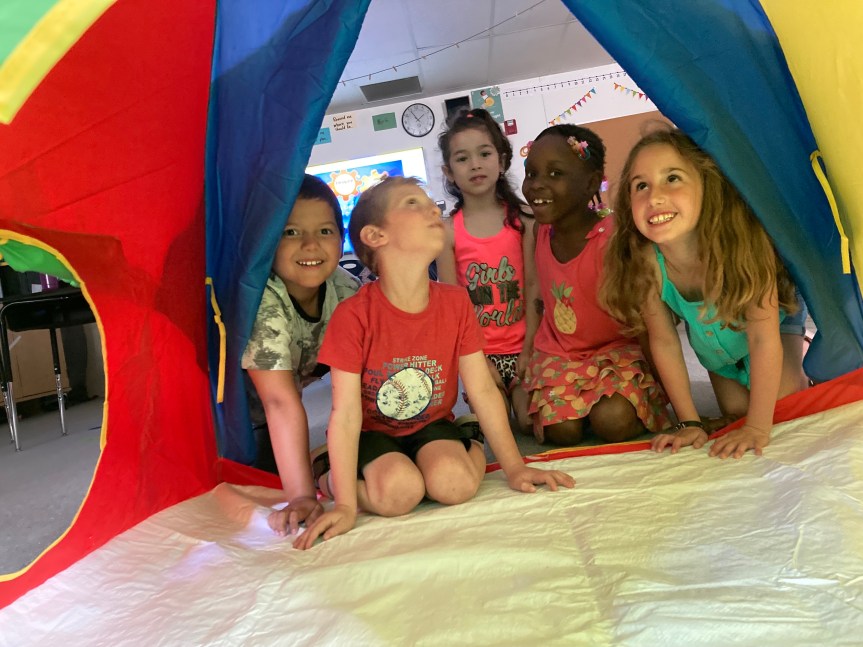
Since 2018, the Maine Department of Education (DOE) has adapted and piloted open-source Pre-k and Kindergarten instructional programs based on the Boston Public School’s evidence-based Focus on K1 and Focus on K2 curriculaPre-K for ME was launched in 2019.  K for ME was launched in 2021.  These programs focus on the whole child, are interdisciplinary, and are developmentally appropriate.  They are also aligned to Maine’s learning standards.  While Maine schools are responsible for the purchase of the materials that support use of the programs, the programs can be accessed at no cost via the Maine DOE’s website.

Informational overviews of each of program will be provided in the coming weeks.  The overview sessions will be recorded and posted for anyone unable to attend the live sessions. The overview sessions will share the basic program structure and review the materials needed to implement the program.  If unfamiliar with the programs, attending the overview (or watching the recording) is highly recommended.

Overview Session Registration Links:

Educators/schools/programs interested in utilizing Pre-K for ME and/or K for ME in the coming year may take advantage of 2-day initial trainings scheduled for this August.  These trainings are provided at no cost to promote understanding of program design and to support successful program implementation.  School administrators are strongly encouraged to attend the trainings with their Pre-K and/or Kindergarten teachers.  Special educators and education technicians who work with pre-k and kindergarten teachers are also encouraged to attend.

This year’s training opportunities will be held in person in Augusta (location to be determined) from 8:30 a.m. to 3:30 p.m. on August 1 and 2 for both Pre-K for ME and K for ME.  Registration for these trainings should be completed by principals/educators with one registration on behalf of their school/program.  Details about how to prepare for the trainings and the training locations will be provided via email after registrations are received. Registrations for the 2-day training should be received by June 30, 2022.

Summer Training Registration Links:

For additional information about Pre-K for ME, contact Nicole.Madore@maine.gov, and for K for ME, contact Leeann.Larsen@maine.gov.

From Hannaford to NASA, 2nd Annual Virtual Career Fair Draws in Students from Across Maine to Explore Diverse Career Options

The 2nd annual Virtual Career Fair took place on March 22nd drawing close to 10,000 students from schools across Maine for live sessions including 130 presentations focused on diverse career options.

Hosted by Maine’s Community Coordinators Collaborative (C3), a Maine organization of educators working to support students with career exploration, the event was a collaborative effort between the Maine Department of Education (DOE) and ACTEM (Association of Computer Technology Educators of Maine).

This is the second time that C3 has hosted a successful state-wide virtual career fair that is accessible to schools and students throughout the state.

“The virtual career fair has allowed us to expand access and to expose students to the many diverse professions in Maine,” said Sheree Inman, co-chair of the ME Virtual Career Fair.

This year’s event spanned the course of a week and featured keynote messages from Commissioner of Education Pender Makin, Mark McInerney of the Center for Workforce Research and Information, Cary Olson Cartwright, Unum’s Assistant Vice President of Corporate Social Responsibility, and David Herring, Executive Director of the Wolfe’s Neck Center for Agriculture & the Environment, in addition a vast array of businesses and organizations from different industries gave students the opportunity to choose to attend the sessions that interested them.

Participant feedback following the event showed that more than 80% of participants rated the quality of the career sessions a 4 or a 5 on a 5-point scale, and 76% of participants rated their overall experience as very good or excellent.

“Our students thoroughly enjoyed the career fair,” said a Middle School Educator from East Grant School. “They learned many new things. They were very engaged and very pleasantly surprised by how much they enjoyed themselves. We let the students choose up to 4 sessions each day and structured our assignments around their sessions. It was busy but productive and valuable.”

Some of the student participants also had the opportunity to comment on specific sessions they attended. Here is what they had to say:

“This was so interesting! I loved hearing about her [Jessica Meir, NASA] journey that got her to achieve her goal of going to space.”

“I really liked learning about Hannaford and how to get a job there.”

“Going into the medicine field has always been my dream and the presenter gave helpful tips and information about the journey out of high school to be in the medicine field.”

“I absolutely love animals and I’ve always wanted to be a vet, the presenter taught me so much in just 30 minutes.”

“They were very enthusiastic about their career [in small business/fashion] and gave us very interesting things to learn about. The overall presentation was so, so good and aesthetically pleasing! Love it!”

An enormous thank you to the Maine Virtual Career Fair Planning Committee: Sheree Inman, South Portland High School (co-chair); Justine Carlisle, Yarmouth Schools (co-chair); Dede Bennell, Freeport High School; Rick Wilson, Maine Department of Education; and Diana Doiron, Maine Department of Education.

Financial assistance and support for this successful event was made available to schools through the generous support of the Maine DOE, UNUM, Bath Iron Works and many other local businesses. For a list of businesses and logos visit https://www.mevirtualcareerfair.org/.

Learn more about C3:

The Community Coordinators Collaborative (C3) was created in 2018 and is composed of education professionals working to support students with career exploration, extended learning opportunities (ELOs), internships, and job shadows. The group was developed to share resources and provide a platform for industry associations and business organizations to discuss potential workplace opportunities for students. See a listing of C3 Members.


NEW Online Course: Assessing Your School Site

The following opportunity is being provided by the REMS TA Center, a partner of the U.S. Department of Education, Office of Safe and Supportive Schools.

Is your school or school district looking to examine the safety, security, accessibility, and emergency preparedness of its building and grounds? Do your ongoing assessments include a site assessment? To support K-12 school safety teams in conducting site assessments, the U.S. Department of Education, Office of Safe and Supportive Schools and its REMS TA Center are pleased to provide a NEW online course: Assessing Your School Site.

This 30- to 45-minute free online course aims to help K-12 school (public and nonpublic) personnel, school district administrators and staff, state/regional education agency personnel, and their partners develop a greater understanding of site assessments and how to examine the safety, security, emergency management, and preparedness of K-12 buildings and grounds. This online course uses an engaging visual format and interactive features, such as learning activities and quizzes, to help you learn about

  • Site assessments, including their purpose and their role in the planning process, how frequently they should be conducted, by whom they should be conducted, and the process for conducting them.
  • Building design principles that guide site assessments, such as Crime Prevention Through Environmental Design and Universal Design.
  • Data from site assessments and how they can be used to inform your school emergency operations plan and safety, security, emergency management, and preparedness programs.
  • Tools that are available to support you with this important work.

Get more information and take the course here.

If you have any questions or need additional assistance, please contact the REMS TA CENTER at 1-855-781-REMS [7367] or via email at info@remstacenter.org or contact the Maine School Safety Center.

Webinar: The Role of School Facility Managers in School Safety Efforts

The U.S. Department of Education, Office of Elementary and Secondary Education, Office of Safe and Supportive Schools and its Readiness and Emergency Management for Schools (REMS) Technical Assistance (TA) Center will host a Webinar on Tuesday, April 26, 2022, from 12:00 p.m. to 1:00 p.m. ET. This Webinar will explore the role of school facility managers in supporting school safety efforts, including school emergency operations plan (EOP) development.

Date: 4/26/2022
Time: 12:00 p.m. ET

Find objectives for the 60-minute Webinar below

  • Highlight the importance of establishing a collaborative EOP planning team, as outlined in Step 1 of the six-step planning process detailed in the Guide for Developing High-Quality School Emergency Operations Plans;
  • Discuss the role that school facility managers at the school level play in implementing the National Preparedness System mission areas before, during, and after a potential emergency; and
  • Reinforce how school facility managers can enhance EOP development and serve as key stewards in the efforts around site assessments, physical and structural recovery, and planning for technological hazards involving chemicals and hazardous materials.

Presenters:

California Department of Education, School Facilities and Transportation Division 

  • Juan Mirales, Director

Oregon Department of Education, Office of Finance and Information Technology

  • Michael Elliott, School Facilities Program Manager

REMS TA Center

  • Alison Curtis, Director of Information & Product Management

Questions About the Event?

Contact the REMS TA Center Help Desk at 1-855-781-REMS [7367] or info@remstacenter.org from 9:00 a.m. to 5:00 p.m. ET, Monday through Friday.

Panelist Opportunities for Maine Science Educators

The Maine Department of Education (DOE) is currently recruiting educators to participate in an upcoming standard setting for the state’s science assessment, Maine (MEA) Science.

Maine educators and the DOE play a crucial role in the development of this assessment for students. No prior experience with standard setting or standard setting methodology is required, however panelists should be a science expert that teaches the students who participate in the Maine Science assessment and have a thorough understanding of the assessed Maine Learning Results (MLRs) Next Generation Science Standards (NGSS). Participants must be able to differentiate between student performances at different levels of achievement. Standard setting panels consist of ten (10) educators per grade band (grade 5, 8, and 3rd year of high school).  Panelists will have the opportunity to discuss and determine application thresholds for Maine.

The Assessment Team is currently recruiting educators with a general science background, however preference will be given to high school teachers with the following areas of science expertise to ensure broad representation of all science domains:

  • Chemistry
  • Physics
  • Life Science
  • Earth & Space

The standard setting is scheduled to take place from July 26th – 28th 2022 in Augusta. Travel, accommodations, and expenses will be covered with a daily stipend provided to selected panelists.

Please consider applying or sharing the upcoming opportunities with colleagues. The expertise and contributions of Maine educators are a critical element of the continued development cycle for these assessments.


Interested? Complete the panelist registration survey or use the QR code provided below.

Want more information? Please reach out to Janette Kirk, Director of Federal Programs, at Janette.Kirk@maine.gov.

Notifying the DOE on Changes to School Configurations

The Maine Department of Education (DOE) is asking that School Administrative Units (SAUs) who anticipate changes to school configurations for school year 2022-2023 to notify the DOE by May 1, 2022, or within 3 days of a School Board’s final approval of the change.  The Superintendent of the SAU can email MEDMS.Helpdesk@maine.gov to notify the Maine Department of Education of the circumstances that may warrant a new school ID.

Reasons to notify the DOE include, but are not limited to:

  • Lack of need school closure
  • Change in grade configuration
  • Split of school
  • Merging of schools
  • New Schools

When emailing, please include the school(s) that displaced students will attend in the next school year, if applicable.  The Data Reporting Coordinator and the Education Data Manager will analyze the data and documentation, and coordinate with the Superintendent of the SAU on next steps and if new school ID(s) will need to be created.

If you have any questions, please feel free to contact the Helpdesk at MEDMS.Helpdesk@Maine.gov or 207-624-6896.

Experiential Maine! – Summer Coastal Ecology Collaborative  

The Maine Department of Education (DOE) will soon be releasing a Request for Applications (RFA) from community organizations that provide (or plan to provide) high quality, coastal ecology education and experiences for students in grades 6-12 as part of Experiential Maine! – a statewide initiative to increase access to hands on, outdoor education for all students in Maine.

This exciting initiative will help increase student access to experiential learning along the Maine coast during Summer 2022.  Fund awards must be used to expand student capacity in existing program opportunities or to design and implement an entirely new program during summer 2022. These will be two separate applications (one to expand existing programs, one to design and implement a program that did not previously exist). The Maine DOE will prioritize applications that prioritize access for students from low-income families and students with infrequent access to the coast based on geographic location.  

Here is a link to the Intent to Apply form which must be completed by April 21, 2022 at 5:00pm in order for your organization to be eligible for funding. 

For questions, please contact Page Nichols, Maine DOE Innovation Officer at page.nichols@maine.gov 

Messalonskee High School Principal Paula Callan Named 2023 Maine’s NASSP Principal of the Year

The Maine Principals’ Association (MPA) announced recently that Paula Callan, Principal at Messalonskee High School in Oakland, was named Maine’s NASSP (National Association of Secondary School Principals) Principal of the Year for 2023.  Ms. Callan was named at a recent all-school assembly at Messalonski High School, and she will be honored by the MPA at their annual awards banquet on April 28, 2022.

According to a release from MPA, Ms. Callan received the award for her continued commitment, collaboration, and student centered focus and her dedication to creating a welcoming environment at for all students.  According to one Messalonskee student, “Ms. Callan always does the best for students and sees the best in everyone.”

In announcing Ms. Callan’s selection as 2023 Maine’s NASSP Principal of the Year, MPA Executive Director of the Professional Division, Dr. Holly Blair noted, “Principal Callan is an exceptional administrator at the local, state, and national levels.  She clearly advocates for all educators and is completely committed to providing the best educational experience for all.  When I think of someone who holds the title of ‘Principal of the Year’, I cannot think of a better person to represent the State of Maine.”

In addition to being named “Maine’s NASSP Principal of the Year,” in 2015, she was also named, “Maine’s NASSP Assistant Principal of the Year.”  Paula Callan has served on the MPA Board of Directors since 2017 and has been the President of the Association for the past two years.

Ms. Callan received her Bachelor of Science Degree from the University of Maine, Farmington, in 1984 and then graduated in 1993 with a Masters of Education from the University of Maine, Orono.

Ms. Callan started her educational career as a special education teacher at the Farrington and Lincoln Elementary Schools in Augusta after which she was a special education teacher at Cony High School until 1994.   From there she moved into administration when she became the Assistant Headmaster of Lincoln Academy where she stayed for two years.  In 1996, Ms. Callan returned to Cony High School as the Assistant Principal.  After 4 years in this role, she became the Assistant Principal of Morse High School in Bath.  In 2002, Ms. Callan became the Assistant Principal of Messalonskee High School in Oakland until she moved into the role as principal in 2016 where she has remained ever since.

She is a member of the National Association of Secondary School Principals (NASSP) and the Maine Principals’ Association (MPA).

The Maine Principals’ Association is a professional association representing Maine’s K-12 principals, assistant principals, and career and technology center directors.  The Association dates to 1921 and focuses its work on promoting the principalship, supporting principals as educational leaders, and promoting and administering interscholastic activities in grades 9-12.


Developing Emergency Operations Plans (EOPs) K-12

Don’t miss your chance to register for next week’s emergency operations plan (EOP) development training brought to you by the Maine School Safety Center and the Readiness and Emergency Management for Schools (REMS) Technical Assistance (TA) Center.

Download the detailed flyer here (PDF)

When: Tuesday, April 12, 2022 Time: 10:30 a.m. to 1:00 p.m. ET
Cost: NO CHARGE
Register here (Registration for this event closes on Friday, April 8, 2022, at 5:00 p.m.)

With this training, an expert team will provide an overview of the recommended six-step planning process to create a high-quality school EOP, which includes the following:

Step 1: Forming a Collaborative Planning Team
Step 2: Understanding the Situation
Step 3: Determining Goals and Objectives
Step 4: Plan Development
Step 5: Plan Preparation, Review, and Approval
Step 6: Plan Implementation and Maintenance

A Robot for All Seasons (and Classrooms)

April 2nd – 10th is National Robotics Week, a time to focus attention on this exciting, interdisciplinary component of computer science. In Maine public schools, robotics comes to life in a variety of ways. From our high school students participating in robotic competitions, down to the youngest elementary student programming robots to follow a sequence, robotics is a grassroots effort that can be found in many schools, some of whom will be spotlighted throughout this week. National Robotics Week, dating back to 2009, has a simple mission – “to inspire students in robotics and STEM-related fields and to share the excitement of robotics with audiences of all ages.”

An Ozobot being used at Nesrene Griffin’s Pokemon-themed station during a Family Coding Night at Connors Elementary School in Lewiston.

There are as many types of robots as there are holidays on the calendar and creative teachers have found a variety of ways to incorporate them into their classrooms. Among the most popular robots in middle and elementary schools are the Edison, Botley, and Wonder Workshop’s trio of Dot, Dash, and Cue. These robots each have their own unique appeal and functionality. When selecting which robot(s) to introduce to the classroom, an educator considers both its purpose and its potential. Introducing middle level students to robotics can seem daunting, especially if the educator is new to robotics themselves.

Many Maine educators have found creative ways to roll out a robot to students that gives everyone an opportunity to learn. Often it is part of a special event, perhaps even during National Robotics Week!  A simple task can allow for collaboration and creative thinking as students troubleshoot through challenges with the robot. For the educator, it allows them to observe this process and the inevitable student engagement that follows. Consider these two examples from two Maine schools.

At Lincolnville Elementary School, teacher, Val Bemis, had her students design track layouts for Ozobots. Since it was October, students used Halloween themes to their track designs such as a haunted house or a trick-or-treating route. Students used “a lot of problem solving, persistence and patience in getting the robots to their final destinations,” Bemis said. “The students enjoyed it and had some celebrations when things went as planned or close to it!”  Once students successfully coded their robots to their goal they were rewarded with a “sweet reward.” This project was an extension of the 10 levels of online coding challenges in ShapeTracer 2 from Ozoblockly.com.

Several of the student-designed Santa sleighs.

Another example of a thematic rollout comes from Hodgdon Middle School in southern Aroostook County. In the days leading up to the December break, students engaged in an engineering design challenge under the direction of science teacher, Sara McQuarrie. The students were tasked with creating a sleigh for Santa Claus that was pulled around by a Sphero robot (under a plastic cup). Sara provided each team with “Engineering Elves” and supplies. The constructed sleighs had to meet different criteria such as have enough room for Santa’s toys. Students learned how to calculate speed so they could predict who’s sleigh would be the fastest. They then tested out their predictions in several heats. Students enjoyed brainstorming why one sleigh was faster than another and critiquing their own designs. Finally, they ran their sleighs through a maze, which allowed them to test their coding skills with the Sphero. The activity was one of several choices that students had in the days prior to the winter break.

To learn more about opportunities for Robotics in Maine schools, check out Robotics Institute of Maine (RIM). For information about computer science in Maine schools, please check out the Maine Department of Education’s Computer Science page. If you have a robotics success story at your school, email jonathan.m.graham@maine.gov.