Spring Training Begins TODAY 3/7 with an All-Star Lineup of Professional Learning Offerings

Active learning, student engagement, technology integration, digital instructional design, digital citizenship, and online safety are the main topics for an ongoing professional learning series offered by the MLTI Ambassadors starting on March 7. These daily offerings are offered live and open to all interested educators. The sessions will also be available in asynchronous versions on our website.

To attend one of the live sessions via zoom, be sure to register through this March Calendar or through the Maine DOE PD Calendar.  Please note that the times of these offerings vary from day to day.  Asynchronous versions of these sessions will be available through MLTI Professional Learning as well as the MLTI Youtube channel.

MondayMonday – Technology Integration with Rob Dominick 

The first series of workshops will focus on effectively integrating technology into the classroom. We will look at surveyed data on technology integration and learn about the common flaws and beliefs with the integration. Then, we will explore a variety of strategies for integrating technology so we can find commonalities and synthesize them towards your own needs. Finally, there will be a chance to evaluate sample lessons and create your own to implement.

The second series will dig into digital portfolios for students. We will cover exactly what they are, their intended purpose and the process of preparing and designing them.

Available every Monday in March! Check here for times and dates.

TuesdayTuesday Tech – Student Engagement with Erik Wade

Every week, we will discuss a broad technology integration idea that could be used to increase student engagement. These workshops will look at the big idea, break it down into easy-to-understand pieces, look at examples, and talk about potential starting points for integration into the classroom.

Available every Tuesday in March! Check here for times and dates.

WednesdayWednesdays with Werner – Digital Citizenship & Online Safety with Jonathan R. Werner

This six-part series on Digital Citizenship and Online Safety will draw on the incredible resources Common Sense Education (CSE) has curated to provide educators with a framework for and tools to teach students about Digital Citizenship.  CSE divides these resources into six areas. After an introductory session about CSE and the role of educators in teaching Digital Citizenship, the next five sessions will follow CSE’s framework:

  • Media Balance and Well-Being (Week 2)
  • Privacy and Security (Week 3)
  • Digital Footprints and Identity (Week 4)
  • Relationships and Communication (Week 5)
  • Cyberbullying, Digital Drama, and Hate Speech (Week 6)

Please note, educators can choose any or all of these sessions and do not need to be able to attend all six.  After April Break, we will tackle the sixth CSE focus area, News and Media Literacy, in a multi-week series focusing on issues such as Finding Credible News, the Four Factors of Fair Use, and Creator’s Rights and Responsibilities.

Available every Wednesday in March! Check here for times and dates.

ThursdayThursday – Digital Instructional Design with Kate Meyer

This series of workshops will explore the creation and implementation of high-quality, engaging, interactive digital learning experiences for your students. Each week we will explore a new digital strategy that you can implement into any unit of study. The workshops in this series will have time built in to try out the strategies we’re exploring, so come ready to dig in!

Available every Thursday in March! Check here for times and dates.

FridayFriday – Active Learning with Holly Graffam

The first series of workshops will focus on integrating Problem-Based Learning in the classroom. It will include an overview of Problem-Based Learning as well as delve into applications across a variety of content areas from literacy to science. Included will be how technology can support this integration.

Computer Science across the curriculum will be the subject of the second series of workshops. Sessions will discuss the critical need for computer science in our classrooms and examine engaging, creative ways to integrate computer science into your existing curriculums.

Available every Friday in March! Check here for times and dates.


Maine is Ready for International SEL Day 2022 

On Friday, March 11, 2022, educators, community partners, and families across the globe will take time to build a greater awareness for the importance of supporting children’s wellbeing and mental health through social emotional learning. Our Maine Department of Education SEL Specialist and the entire team at the Office of School and Student Supports invite all of Maine to our official webpage for International SEL Day 2022. 

We have generated a number of resources and events for you to participate in on Friday, March 11, 2022 – the 3rd Annual International SEL Day.  This is a day that is sponsored by the national non-profits SEL4US and the Urban Assembly and is fully supported by CASEL – the Collaborative for Academic and Social Emotional Learning.  Whether you are a staff member, a parent, a superintendent, a board member, or a community member, there is literally something for everyone to access and to learn: 

  1. Access the free national events that SEL4US has garnered. A few of these events occur prior to March 11th, so you may want to register now.   
  2. The O3S is sponsoring an entire day of learning, connection, and ideas. We have learning for nurses, SROs, bus drivers, administrators….all school personnel!  Some of our sessions will be live, but many are asynchronous so that you can participate when and wherever it works for you.  
  3. And last, but definitely not least, is for our classroom teachers and interested parents. We realized early in our planning that we could not pull teachers away from students to access conversations on SEL, so our SEL Specialist has collated both free and archived resources for teachers to use in their daily lesson plans – from suggested read alouds to integrated activities during content area time.   

We hope we have provided you time to explore these offerings in anticipation of Friday, March 11th, and that our entire state will be immersed in all-things SEL. You deserve it! Our students deserve it! #SELDay2022 

For more information visit: https://www.maine.gov/doe/schools/safeschools/selday.

Get to Know the Maine DOE Team: Meet Jessica Caron

Maine DOE team member Jessica Caron is being highlighted this week as part of the Get to Know the Maine DOE Campaign. Learn a little more about Jessica in the question and answer below.

What are your roles with DOE?

At the Maine DOE, I am an ESEA Regional Program Manager and Title I Specialist.  In my role, I oversee the ESEA Title Programming for the Aroostook and Kennebec regions (I, myself am a former student of “the county”, growing up in Fort Kent). Now, I help local school districts plan how to use their Title funding in a way that meets regulations AND helps their students.

What do you like best about your job?

I absolutely love working directly with folks in the field. Federal regulations can be complicated and I enjoy answering questions and providing 1-on-1 support to help them navigate these tricky waters! In addition, I appreciate any chance to create opportunities for people in the field to connect as well as creating user-friendly resources that practitioners can use to implement best practices with their Title I funds. Guiding support sessions and collaborating with practitioners directly overseeing Title I implementation efforts through Office Hours and Maine Title IA Educators’ Network meetings is another favorite part of my job. My ultimate goal is to help improve systems to be more efficient, supportive, and meaningful for continuous school improvement at the state and local level.

How or why did you decide on this career?

I fell in love with education as a career during my college classes and always felt drawn to the intersection between practitioners working directly with students and policies guiding these interactions. My background as a special educator helped me learn how to best support struggling workers and that vision helps guide the work I do at the policy level when thinking through how to help design and create the best supports possible!

What do you like to do outside of work for fun?

When outside of work, you can find me camping, cross country skiing, and reading/writing. Being outside always brings me such peace, as does getting lost in books and my journal. The photo of me included above is from a bench I love to write on in Portland!

Forest Hills School 5th & 6th Graders Learn about Career Aspirations Through Maine College Circle

Rick an Martin

Rick Wilson and Martin Mackey from the Maine Department of Education Office of Innovation were in Jackman, Maine recently collaborating with Maine College Circle Executive Director Bob Stuart as he presented to 5th and 6th graders at Forest Hills School in SAD 12.

His message revolved around career aspirations and the Maine College Circle’s ongoing process to inform and inspire early aspirations, to empower the youth of rural Maine, to build a brighter future for themselves, and for their communities.

Since 1992, Maine College Circle has been talking with rural Maine elementary school students about their opportunities to build a brighter future. They help them understand the value of continued education beyond high school and help them explore their educational opportunities. To learn more about Maine College Circle and Bob’s great work, visit https://www.mainecollegecircle.org/.

What I Did with my Summer: Bonny Eagle Educator Explores Women’s History Through Martha Washington’s Story

“Any time I find a class or webinar about the history of American women, I try to take it,” said Bonny Eagle Social Studies Teacher Dawna Cyr. 

As part of completing her master’s degree, Cyr examined what is taught in history classes about American women, outlining an American women’s history class that she hoped to teach one day. Since then, Cyr was given the opportunity to teach the course, HerStory, which she continues to teach to this day.

It was this passion for teaching women’s history, along with some former experience studying the life of George Washington at his home Mount Vernon, Virginia that drove Cyr to decide to study his wife, Martha Washington and the women of the 18th century through the George Washington Teacher Institute’s 5-day digital professional development programs this past summer.

Designed to support K12 educators who teach about the life, leadership, and legacies of George Washington and the 18th-century world in which he lived, the George Washington Teacher Institute’s online courses offer many options and flexibility for educators to choose 18th-century subjects that are most relevant to their classroom. As described on the George Washington Teacher Institute website:

Martha Washington’s story, although unparalleled in many ways, provides a well-documented access point to a better understanding of the experiences available to women throughout the colonies and the newly formed nation in the 18th century.

Cyr recalls the many lecture options offered in the program she took, everything from Colonial Women and Martha Washington herself, to Gender and Racial Construct in Colonial America, Enslaved Women, and Native American Women, to Women’s Education and Leadership in Revolutionary America, along with Music of the time period.

“I have so many things that I have brought back to my class,” said Cyr reflecting on the outcomes of her experience.  “I have added information that I learned into my lectures and presentations, and I tell my students stories from the program and share information that I learned.”

As a result of this program, Cyr has added even more books about women to her extensive collection. “I have read about Martha Washington, Eliza Lucas Pinckney, Oney Judge, enslaved women, and women of the American Revolution,” she said. As a social studies teacher, Cyr is constantly looking for materials/information that she can share with her students or incorporate into her lectures, which has been a huge benefit to embarking on this program.

To learn more about George Washington Teacher Institute, visit their website. To learn more about social studies professional development opportunities and more, join Maine DOE’s Social Studies Listserv here. For more information and questions about social studies resources for Maine educators, contact joe.schmidt@maine.gov.

Webinar: Food Insecurity, School Climate, and Planning Consideration

Date: March 15, 2022
Time: 10-11am
Facilitator: Rebekah Sousa

Webinar Details:

Rebekah Sousa, an AmeriCorps VISTA working at the Maine Department of Education to end student hunger in Maine as part of “Ending Hunger 2030”, will discuss food insecurity in Maine, how it impacts school climate, and strategies to combat student hunger in planned and unplanned school closings. She hopes this information will feed into the larger goals of EH2030: Changing the Narrative of Food Insecurity, Closing the Equity Gap, and Increase Collaboration Across Sectors & Experiences.

Outcomes:

  • You will be able to define food insecurity
  • You will identify symptoms of malnutrition and food insecurity in the student body
  • You will have models for strengthening food security within communities
  • You will be equipped with resources to combat poverty- the leading cause of food insecurity
  • You will understand how community partnerships contribute to effective planning for emergency & contingency operations

Audience: School staff, administration, and school stakeholders

Register here

For more information, contact Maine Department of Education EOP/COOP/Site Assessment Officer Melissa Condon at melissa.a.condon@maine.gov.

Maine Education Matters Podcast on COVID Fatigue

The Maine Department of Education teamed up with Maine Education Matters podcast and a few other rock stars in Maine’s education system recently for a podcast to talk about COVID-19 fatigue in Maine schools.

Matt & Courtney host a panel of education rock stars to discuss the elephant that’s in the education room: COVID fatigue. We talk with Kelsey Stoyanova (2022 Maine Teacher of the Year), Chris Howell (2022 Maine Superintendent of the Year), Carrie Woodcock (Executive Director of the Maine Parent Federation), and Bear Shea (MDOE Mental Health Specialist and Licensed Clinical Social Worker) about how COVID is impacting the social, mental, emotional, and physical lives of everyone in education, from administrators to teachers to parents…everyone…and the different ways in which COVID is fatiguing everyone. It’s an empathy-fueled conversation, and one that needs to be had across the state and beyond.

For more information on Maine Education Matters podcast visit their website.

Student Spotlight: South Portland Second Grader Finds Purpose Through Helping the Homeless

This isn’t just a story about a little girl who made a donation to the local homeless shelter, it’s a story about a little girl who didn’t like school and by finding her passion for helping people in her community, she also found a love of learning that supports her long-term goals for making a big difference in the world.

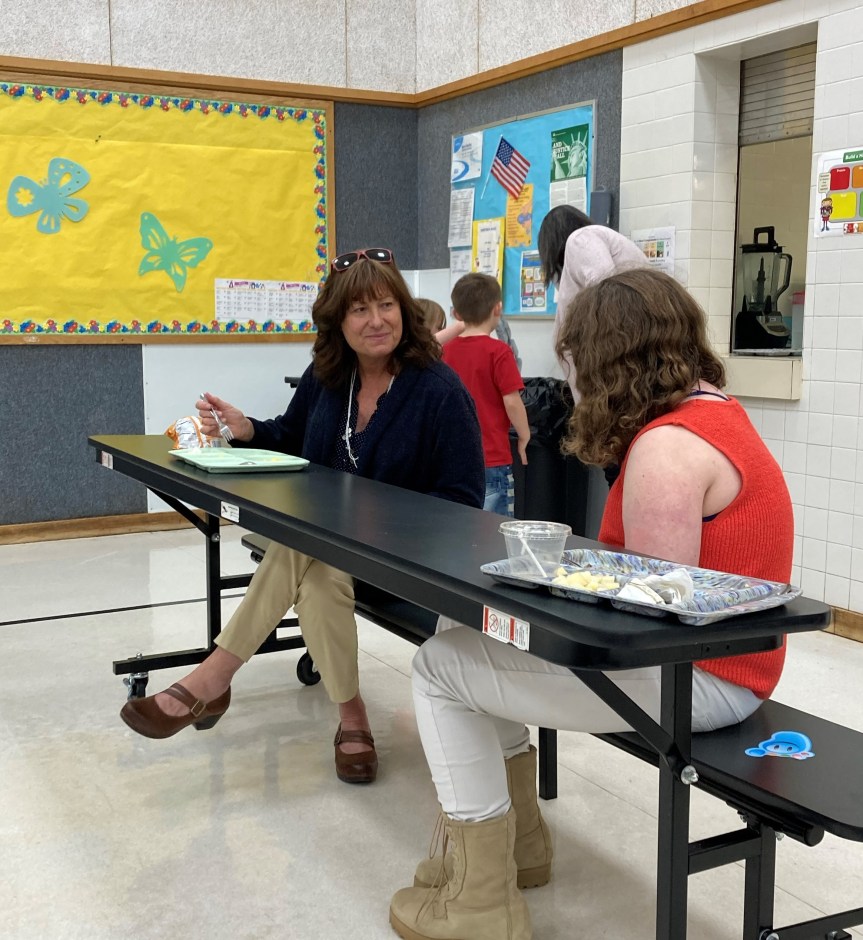
Meet Nicolette, a second grade student at James Otis Kaler Elementary School in South Portland. Nicolette has a tremendous passion for helping people who are homeless. She dreams of one day opening a restaurant and farmers market with a community garden where everything will only cost one cent. Her dream of making fresh, delicious food affordable and accessible to people who may find themselves without a home or income has been in the making since Nicolette was 5 years old.

While she continues to make plans for the restaurant, Nicolette has found a way to not only keep busy doing what she can now to make an impact, but she has also garnered the support of her classmates and her school community in making a difference in the lives of those less fortunate.

“My classroom with Mrs. Dudley as our teacher, we decided to work on keeping people living outside warm. We were thinking scarves,” explained Nicolette in a video interview with her Principal, Bonnie Hicks. Nicolette and her classmates have been working on crocheting scarves with the help of the school’s art program and a few teachers that have donated their time. The scarves will be donated to help keep kids warm during Maine’s cold months.

In addition, the students also took up a change collection raising $235.04, and used the money to put together bags with essential items that they could donate to the Preble Street homeless shelter.

“What we did was we had some bags at school. We went to the store one day after school and bought wipes, hand sanitizer, food, water bottles, and we bought chocolate because WHO DOESN’T LIKE CHOCOLATE?!” said Nicolet excitedly. The students also included clothing like socks, underwear, t-shirts, gloves, hats, and masks in the bags.

As they donated the bags, the students were delighted to hear that this kind of donation really helps the shelter with their outreach efforts as they walk the city looking for people who may need help. They later learned that the efforts of Nicolette and her classmates helped nine individuals.

Nicolette’s dreams and goals haven’t always aligned with her education journey. “I’m not afraid to tell you that Nicolette was not a lover of school,” said Kaler Elementary School Principal Bonnie Kicks. “But because of this passion and ability to use her heart and her head and her math and writing skills…”

“I got a lot stronger and decided I would go to school to finish doing more and more of these projects,” Nicolette chimed in quickly with a smile.

Principal Hicks said that they keep touch with the Preble Street Homeless Shelter and that Nicolette plans to one day do an internship and possibly earn college credit while doing so. Happy that Nicolette is already doing valuable work for them, the Preble Street Shelter is looking forward to working with her in the near future.

2022 Maine Agriculture In the Classroom Summer Teachers Institute

Maine Agriculture in the Classroom (MAITC) is hosting a summer institute for teachers. All participants will leave with armloads of materials, megabytes of technology, and new partnerships and ideas for integrating agriculture into your classrooms.

August 2-4, 2022
University of Maine, Orono
Download registration form

At this educator workshop, participants will receive 22 contact hours or 2.2 CEU’s from the University of Maine for recertification credit.

This year, the group will visit the Rogers Farm Forage and Crop Research Facility in Old Town, which is a learning space for researchers, commercial farmers, UMaine students, and home gardeners. Now, through a partnership with the Old Town Elementary School garden team, the farm also serves as a learning space for local elementary school students. Participants will learn more about how the University of Maine Cooperative Extension and the Old Town Elementary School garden team collaborate on initiatives, including their 4th grade potato project and food security efforts.

Those participating will receive 22 contact hours or 2.2 CEU’s from the University of Maine for re-certification credit. The cost of this training will be $150 per participant before July 15th ($400+ value), and $200 after this date (space permitting), which includes lodging (single occupancy), travel, and meals for up to 35 educators for the 3 days.

Scholarships are also available for Maine teachers. Apply by email to maitc@maine.gov. For more information, visit the MAITC website or reach out to them at 207.287.5522 or maitca@maine.gov.

Paid Professional Learning Opportunity Provided by Maine DOE

The Maine Department of Education (DOE) is accepting applications from individuals interested in learning more about the competitive grant process. Selected applicants will be trained to serve as peer reviewers who assist the DOE in reviewing, assessing, and scoring competitive grant proposals for the 21st Century Community Learning Centers (21st CCLC) Program. The 21st CCLC program is a federally funded education program that helps schools and communities develop before-school, after-school, and summer educational programs that support students and their families.

This year’s Request for Proposals (RFP) for the 21st CCLC program was released to the public on January 5, 2022 and is available online at https://www.maine.gov/dafs/bbm/procurementservices/vendors/rfps. The DOE anticipates receiving proposals from local education agencies, community-based organizations, and other eligible entities seeking awards under this RFP.

Qualifications:
Peer Review applicants will be selected based on their experience in providing effective academic support, enrichment, youth development, and related support services for children and youth. The most qualified candidates will be individuals who have experience in the administration of high-quality youth development programs within schools and communities. Examples of the experienced individuals sought include, but are not limited to:

  • 21st CCLC program directors and site coordinators
  • Teachers and principals
  • College and university staff
  • Youth development workers
  • Community resource providers

Required Tasks:
Selected applicants must be able to participate in an online training and review grant proposals through a web-based system. Applicants will work individually to read each assigned proposal and create detailed, objective, constructive, and well-written comments on approximately 10 proposals based on the criteria established in the RFP.  These comments will be submitted to the DOE prior to participating in the scheduled consensus scoring sessions. It is anticipated that peer reviewers will have a three week window in which to complete their individual review of assigned proposals. Following the individual review of proposals, each successful applicant will be required to participate in a series of two online/virtual consensus scoring sessions hosted by the DOE. It is during these consensus scoring sessions that the peer review team will score each application.

Selected applicants must complete the following tasks during the following date(s):

Task Date(s) Time(s)
Participate in an online training webinar March 31, 2022 1:00 PM – 2:30 PM
Review grant applications through a web-based system and provide individual, written comments on each application (which must be submitted to the DOE) April 18, 2022 – May 6, 2022 Any Time
Participate in online/virtual consensus scoring sessions with other members of the peer review team (applicants MUST be available on all four scoring days, but will only be selected to participate for two days) May 10, 2022 – May 11, 2022; or
May 12, 2022 – May 13, 2022
9:00 AM – 4:00 PM

Compensation for Services:
Selected reviewers who complete the required tasks will be provided an honorarium of $85 per assigned application.

Previous participants have also found that serving as a member of the peer review team is an excellent opportunity for professional development and growth. It is likely that, if selected, applicants will be exposed to new program models, strategies, and practices. These new concepts may provide ideas and support for ongoing work as well as future grant writing efforts. Most importantly, the time given to this effort will help ensure the funding of quality education programs for the children and families of Maine.

How to Apply:
Interested parties should contact Travis Doughty at travis.w.doughty@maine.gov to obtain a copy of the 2022 peer reviewer application and then return the completed application along with a current resume or CV.

Pursuant to Title IV, Part B of the Elementary and Secondary Education Act, as amended by the Every Student Succeeds Act of 2015, peer reviewers may not include any applicant, or representative of an applicant, who has or will submit a proposal in response to the current grant competition.

Deadline:
The Maine Department of Education will continue accepting peer reviewer applications through March 17, 2022, or until the needed positions are filled. Interested parties are encouraged to apply as soon as possible.

Contact:
For more information, contact State Coordinator Travis Doughty at travis.w.doughty@maine.gov or 624-6709.