On Thursday, May 27, from 3:30-4:30, members of the Maine Department of Education’s (DOE’s) Early Learning Team will host an open office hour to discuss ideas for supporting young learners over the summer. Those wishing to join should pre-register.
DOE recently released Maine Summer Learning Guidance to assist and inspire prek-12 schools. The document includes Early Learning Team summer learning guidance to support schools and communities in thinking about how to help young learners stay engaged over the summer and transition into school. Additional resources can be found on the Maine DOE’s Summer Engagement Opportunities website. For more information, contact Nicole.Madore@maine.gov.
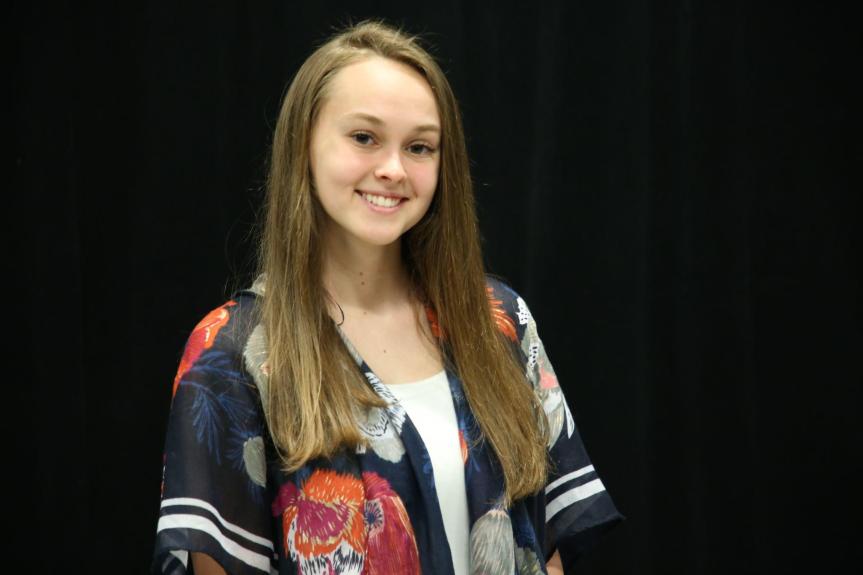
Mid-Coast School of Technology is pleased to recognize Emily Miller as Mid-Coast School of Technology’s 2021 MACTE Student of the Year.
Emily has been a standout student since her very first visit to the school. Her teacher, Brandon Soards said:
She showed off illustrations that looked like that of high-end professional, almost to an extent that I didn’t believe. In her three years in Design/Technology, she has continued to excel, soaking up every opportunity to learn new skills and transforming herself from an outstanding illustrator into an outstanding graphic designer.
Lately, she has put her focus on learning all the production capabilities we have on hand. She has used those talents to support the school, creating shop and student of the month shirts for her peers. I have had to become cautious about what projects to bring up because she will always be the first to volunteer if it’s something the school needs. This is particularly important as she has some other important projects: a stellar Maine State T-Shirt design for SkillsUSA and a very personal entry in the Arrive Alive Competition in which she is sharing her own experience of the hit and run and her long road to recovery.
Emily Miller has become a Design/Tech paragon, setting an example of conduct, professionalism, and practice. She is the ideal candidate for MACTE Student of the Year.
Next year, Emily will return to Mid-Coast as a post-graduate student and start building a freelance design business.
Wyatt is a two year member of Maine Region 10 Technical High School, participating in both our Building Trades program and our Pre-Apprenticeship program. A member of the National Technical Honor Society, he has won multiple Student of the Quarter Awards in both programs, and has been an exemplary student throughout his career at Region 10, accumulating a 4.0 GPA in both programs.
Wyatt Shepard
Wyatt secured an apprenticeship position at James & Whitney Construction in his senior year. He has worked there for over seven months, and has been offered a full time position upon graduation. He has worked as a Carpenter’s Helper, gaining experience in all aspects of commercial and residential building. Upon graduation, he will also be trained in the sales and marketing departments of his company.
Wyatt is an incredible young man with outdoor interests. He is home-schooled, and heavily involved in the Cornerstone Baptist Church, as well as its many community service activities. He is a fantastic representative of our community and our school, and well deserving of this award.
Foster Career and Technical Education Center is pleased to announce Haley Walsh a senior at Mt. Blue High school as the CTE Student of the Year. Haley is a member of the CNA & Biotechnology program at Foster Tech and her parents are Erik and Lisa Walsh (corrected).
Haley is a testament that hard work can lead to academic success. She is a member of our Bridge Program and has earned 37 college credits while in high school. Haley is one of the sweetest, kindest students I have had the privilege to work with.
Haley Walsh
Along with her work at Foster Tech, Haley has also been involved in Football Cheerleading (11-12) Senior Captain, Competition Cheerleading (9-12) Senior Captain, Tennis (9-12) Junior Captain & Senior Captain, Soccer (9-10), National Honor Society (11-12), National Technical Honor Society (11-12), Biotechnology Student Ambassador (12), KVAC All Academic Team (12), and KVAC First All-Conference Team (11).
Her parents describe her as:
“She has always been a great kid and works hard on everything she attempts. She loves to learn things, currently she is pursuing a career as a dental hygienist for which I am so proud of her but I also know that if she wanted to be a dentist in the future she could absolutely do it!”
Haley plans to attend the University of Maine in Augusta, Bangor campus, to study Dental Hygiene. Upon graduation she wants to stay in Maine and work as a dental hygienist.
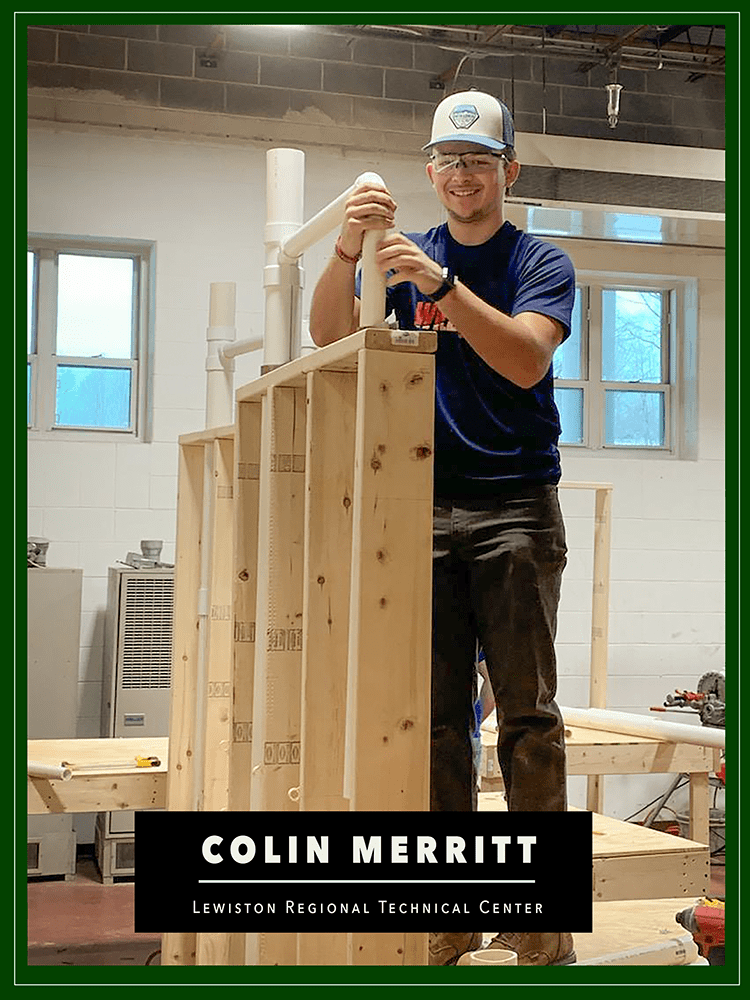
Lewiston Regional Technical Center (LRTC) is proud to honor Colin Merritt as its Student of the Year. Colin personifies the very best of CTE and has distinguished himself amongst his most talented and committed peers.
His Plumbing/Heating Instructor said:
“He wants to work. He wants to do well. He works great as a leader or support in any group project. He always does the best he can and always strives to improve himself. He is a model of the kind of worker every company wishes they could hire. I’m very proud to have had him as a student.”
Colin is a SkillsUSA local medalist in Plumbing (slated for State competition in 2020) and earned a place on the Plumbing/Heating class honor role for two years.
Colin Merritt
Colin is a member of the NTHS and has earned his OSHA10 card, Genie lift and Werner Ladder Certifications. During the COVID shutdown he volunteered to deliver meals to disabled veterans and senior citizens. Colin plays on the Varsity Hockey, Baseball and Golf teams for Edward Little.
After graduation Colin will sit for his Plumbing JIT license and attend MEMA for oil, gas and refrigeration licenses while he works.
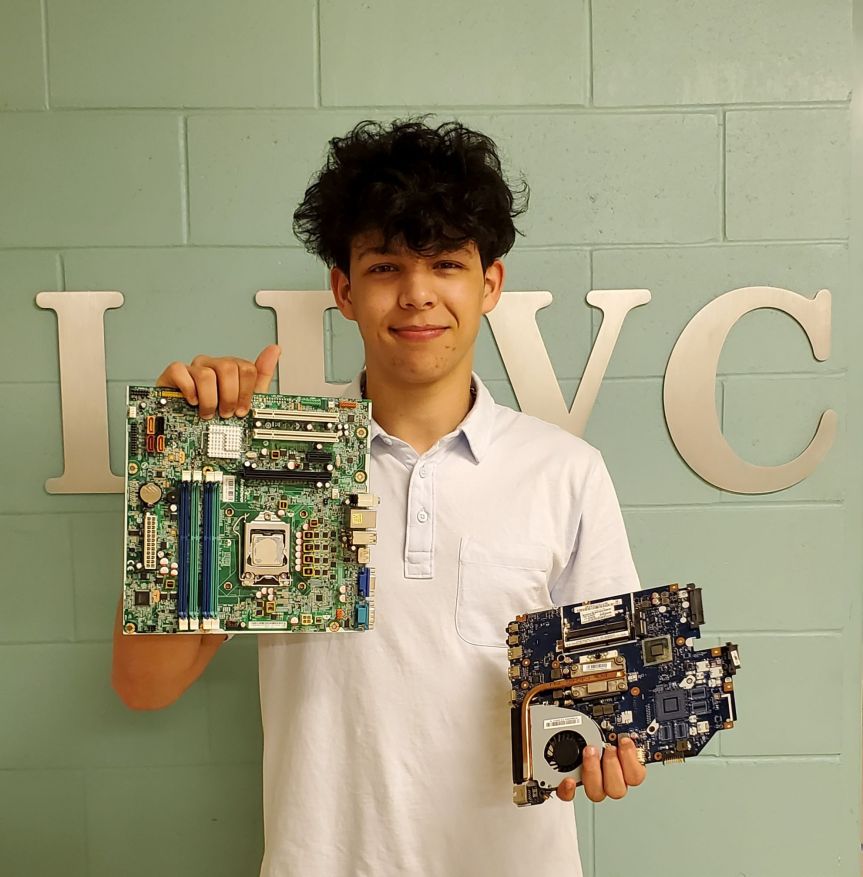
The Lake Region Vocational Center’s Student of the Year is Omar Elalam. Omar is a senior in the Advanced Computer Technologies II program.
Omar is a respectful and conscientious student who is fully dedicated to his course of study. He consistently produces work of the highest quality, and is a leader in the classroom, frequently assisting other students with understanding course content. Omar is an officer in our school’s chapter of SkillsUSA, and is a leader on the soccer team at Lake Region High School, where he attends his academic classes. He has been a member of the math team there as well.
Omar recently achieved almost a perfect score on the ASVAB test, and has been accepted to SMCC where he will pursue a degree in Computer Science and will continue playing soccer. Omar will graduate with twelve college credits earned through his Vocational Center program. His career goal is to work in the computer technologies industry. He is the son of Abdenbi Elalam of Bridgton. Congratulations, Omar!
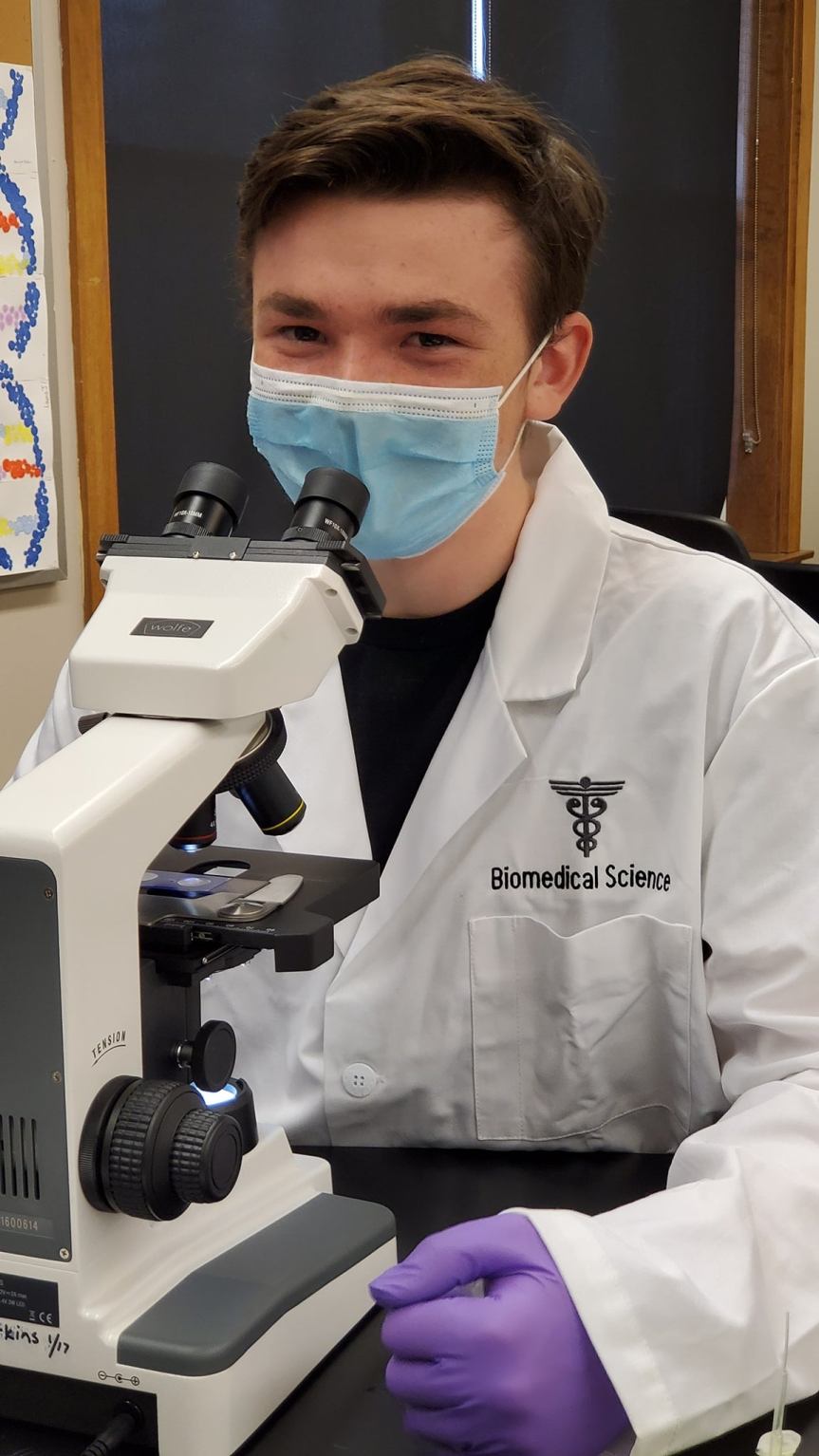
Bryce has attended Hancock County Technical Center’s Biomedical Science program for two years. Bryce’s greatest strength is in his character. Bryce is polite and respectful to adults and fellow students. He works very well in groups, and is always a strong member of a team. Bryce often will work with students who are struggling with a concept; he is patient and genuine.
Bryce takes every opportunity available to challenge himself. In 2020, he competed at the Maine State Science Fair with a project in which he examined overcrowding in stocked ponds. His goal was to develop a test to help determine if stocked fishing ponds are overcrowded. For his project this year, Bryce proposed that we would be able to feed more people by growing microgreens, rather than growing mature plants. He grew kale microgreens and compared the nutrient content that is produced per acre per year. He found that kale microgreens produce five times more nutrients than mature plants and won third place in the Plant Sciences category at the Maine State Science Fair. He also was awarded the RICOH Sustainable Development Award, recognizing his “outstanding efforts in addressing issues of environmental responsibility and sustainable development”.
Bryce is part of the Bridge program, earning 13 credits of college courses a year. Bryce was selected as a SkillsUSA State Officer, and has served on the State Officer team for the past year, helping to plan the State Conference. Along with two other classmates, Bryce entered into the National Exploravision competition, which asks students to examine the history and current status of a technology and hypothesize about the future of that technology. Bryce’s team examined the human embalming process, and they designed a synthetic microorganism using synthetic biology principles that could reduce toxic embalming chemicals into harmless products. In all of these events, Bryce is a fantastic team member, attentive mentor, and strong leader. Bryce is also a member of the Ellsworth HS track team.
As a hardworking, talented student with a lot of interests, Bryce is well-rounded and very well prepared for college. Bryce meets every new topic with enthusiasm and every challenge with determination. He does excellent work and is engaged. Bryce has been certified in OSHA, Bloodborne Pathogen Safety, CPR, First Aid, and Chemical and Laboratory Safety. Bryce will be attending the University of Maine Presque Isle to major in Wildlife Ecology.
Foster Career and Technical Education Center is pleased to announce Haley Walsh a senior at Mt. Blue High school as the CTE Student of the Year. Haley is a member of the CNA & Biotechnology program at Foster Tech and her parents are Erik and Lisa Walsh.
Haley is a testament that hard work can lead to academic success. She is a member of our Bridge Program and has earned 37 college credits while in high school. Haley is one of the sweetest, kindest students I have had the privilege to work with.
Haley Walsh
Along with her work at Foster Tech, Haley has also been involved in Football Cheerleading (11-12) Senior Captain, Competition Cheerleading (9-12) Senior Captain, Tennis (9-12) Junior Captain & Senior Captain, Soccer (9-10), National Honor Society (11-12), National Technical Honor Society (11-12), Biotechnology Student Ambassador (12), KVAC All Academic Team (12), and KVAC First All-Conference Team (11).
Her parents describe her as:
“She has always been a great kid and works hard on everything she attempts. She loves to learn things, currently she is pursuing a career as a dental hygienist for which I am so proud of her but I also know that if she wanted to be a dentist in the future she could absolutely do it!”
Haley plans to attend the University of Maine in Augusta, Bangor campus, to study Dental Hygiene. Upon graduation she wants to stay in Maine and work as a dental hygienist.
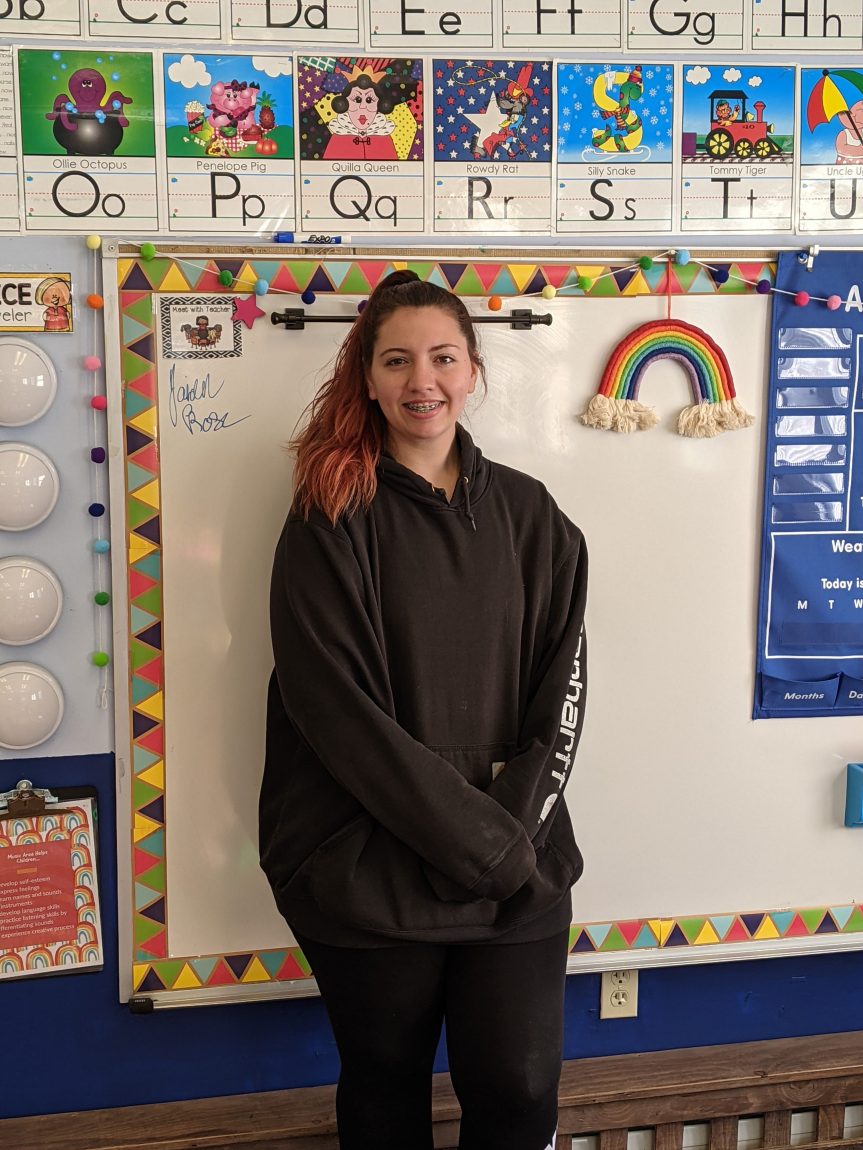
St. Croix Regional Technical Center (SCRTC) is pleased to honor Elaine Perkins of Calais High School at the CTE Student of the year. Elaine is enrolled in the Early Childhood Education and she is the daughter of Rebecca Perkins and John Knowles.
Elaine has attended SCRTC for all four years of her high school career in the Exploratory and Early Childhood Education Programs. She has demonstrated tremendous effort and growth throughout the years and has brought a great energy to her school. Elaine has that combination of a positive attitude and the belief that she can always improve that is so essential to the learning process.
Elaine’s dedication to her CTE program has led to additional coursework. She is taking two Maine Roads to Quality courses towards a Child Development Assistant credential and is also taking Observation and Assessment through WCCC. Elaine plays multiple sports through her sending school including volleyball and basketball. She volunteers with several organizations such as the Healthy Acadia Food Truck and the Power of Love Thrift Store. Throughout all of this she manages to hold down a part-time job. Elaine is active with JMG, is a member of the National Technical Honor Society, and won a SkillsUSA silver medal for prepared speech.
She has earned certifications in CPR/First Aid, Mandated Reporter, Bloodborne Pathogens, Maine Roads to Quality. Upon graduation she plans to attend WCCC for an Associate’s degree in Early Childhood Education, then open her own childcare.
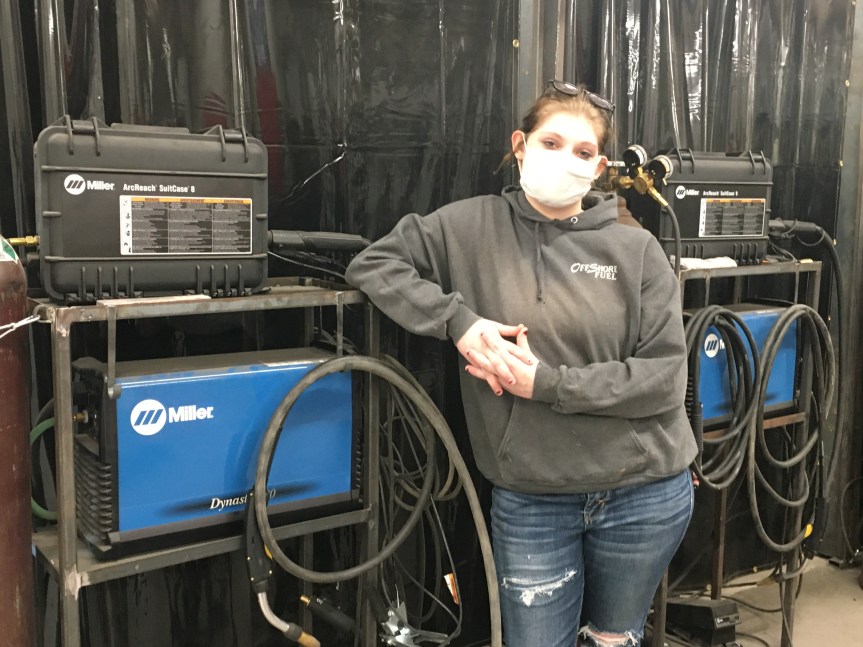
Coastal Washington County Institute of Technology is pleased to announce that Dymond Dake, a junior at Narraguagus High School in Harrington as the CTE Student of the Year. She is a first year welding student at CWCIT. Her mother is Melissa Ross.
Dymond came to welding as an uninterested student with a chip on her shoulder. However, she was always willing to help and was generally appreciative of having some reprieve from the typical classroom. As time progressed, Dymond quickly picked up skills of the trade. As her skills grew, she changed from generally uninterested to totally committed. Dymond has surpassed the skills of the second year students. She began to stay at the shop to assist with projects, and gain experience. Dymond now routinely stays beyond the requirements of her day, and has given time during vacations and weekends to work on projects. She is not only the most improved student this year, but also the front runner in the program. She is a role model for work ethic, punctuality, and behavior. She has gained the confidence and determination to become the person she wants to be. Such a change is not only deserving of student of the year, but likely a student of any teacher’s career.
Dymond plans to do a summer internship with the Narrow Gauge Railroad in Portland. In the fall she will continue with welding at CWCIT. Post secondary, she plans to pursue a career in business.