Bring Constitutional Learning to Life: Register Your Third Graders for the Virtual Mock Trial on Constitution Day!

On Constitution Day this year, Wednesday, September 17, 2025, Maine third-grade teachers are invited to have their classes take part in a unique national virtual learning experience: the Third Grade Virtual Mock Trial, hosted by Olathe Public Schools in partnership with the Kansas 10th Judicial District Court.

What Is Involved

  • Event Date and Time: September 17, 2025, beginning at 11:30 a.m. EST (10:30 a.m. CT)
  • Format: A live, interactive mock trial designed especially for third graders—offering a fun, civic-themed activity to celebrate Constitution Day and Freedom Week. It’s completely free and accessible to educators across Maine and beyond.

This engaging mock trial supports the Maine third-grade social studies standard—that societies are shaped by the identities, beliefs, and practices of individuals and groups, and that choices have consequences, and individuals have rights and responsibilities. Students will connect with civic concepts such as:

  • Understanding why we have laws and rules
  • Learning about the roles of court officials
  • Exploring how giving back through civic duties, like jury service, strengthens the community
  • Experiencing the workings of the judicial branch and Constitution firsthand

Ready-Made Classroom Tools

To ensure a seamless and enriching experience, participating teachers can access:

  • Instructional materials that support classroom learning before, during, and after the event.
  • Lessons exploring rule-making, the various roles in a courtroom, and even a virtual courtroom tour!

How to Sign Up

  1. Visit the registration page to sign up; once confirmed, you will receive the Zoom event link via email.
  2. Review the instructional materials in advance to fully engage students in this civic learning experience.
  3. Contact the Johnson County Kansas Courts via their email at Johnson-ConstitutionDay@kscourts.gov with any technical or procedural questions.

Launched more than a decade ago by Judge Robert J. Wonnell at Forest View Elementary in Olathe, the Third Grade Virtual Mock Trial has grown from a local classroom activity to a nationwide celebration of civic learning.

In 2024, the mock trial engaged more than 13,000 students across 542 classrooms in Kansas alone, featuring notable appearances by Kansas Supreme Court Chief Justice Marla Luckert, Governor Laura Kelly, and U.S. Senator Jerry Moran via livestream—and even attracted attention from the National Constitution Center in Philadelphia.

For further information, please visit the Olathe Public Schools website or contact the Johnson County Kansas Courts at Johnson-ConstitutionDay@kscourts.gov.

Mainely Play LAB Kicks Off in Brewer This Fall: Two Days of Play-Powered Learning for Early Educators

The Maine Department of Education (DOE) Early Learning Team is excited to offer a new professional learning opportunity for early childhood educators called the Mainely Play LAB. This dynamic, hands-on event will be held at Jeff’s Catering and Event Center in Brewer on October 27 and 28. It is designed for administrators, teachers, instructional coaches, and support staff working in pre-K through grade 2 in Maine. The deadline to apply is Friday, October 6, 2025.

The Mainely Play LAB offers participants the opportunity to:

  • Explore developmentally appropriate, play-based strategies that spark curiosity and deepen learning.
  • Align classroom practices with Maine’s standards, curriculum frameworks, and assessment goals.
  • Build joyful, engaging learning environments that balance creativity, play, and academic rigor.

Over two in-person days, participants will engage in practical learning, collaborative problem-solving, and leave with actionable tools to strengthen their classrooms and programs.

Schools must apply in teams of three to eight members spanning pre-K through grade 2. Each team must include:

  • At least one administrator (e.g., principal, assistant principal, curriculum leader, etc.)
  • At least two classroom teachers (from the same grade or across different grade levels)

Schools are encouraged to include additional educators such as allied arts teachers, instructional coaches, school counselors, special educators, English Speakers of Other Languages (ESOL) teachers, and educational technicians.

Participatingschools will be eligible for a financial incentive to support, including:

  • Travel costs (including mileage and lodging for individuals traveling 75 or more miles one way)
  • Substitute coverage
  • Implementation of new strategies and materials

The incentive will range from $5,000 for teams of three to five members to $7,000 for teams of six to eight members. Please note: To receive this incentive, the team administrator must attend both days.

Apply here now! The application closes after Friday, October 6. Each team should designate a team lead to serve as the primary contact. The Maine DOE anticipates accepting between 20 and 30 teams with complete applications on a first-come, first-served basis, depending on team size.

If your school currently uses the For ME instructional programs in one or more grades, please reach out before applying. For further information or questions, please contact the following Maine DOE staff members:

Educators Invited to ‘Counted Out’ Film Screenings and Guided Dinner Discussions Across Maine

This October, the Maine Department of Education (DOE), in partnership with the Association of Teachers of Mathematics in Maine (ATOMIM) and the Maine Mathematics and Science Alliance (MMSA), invites educators and school leaders to a series of free, in-person events across the state to watch the film “Counted Out” and participate in a dine-and-discuss event with fellow educators.

These engaging evenings include a screening of the award-winning documentary “Counted Out,” a casual meal, and guided small-group discussions. Together, participants will reflect on how math instruction can either empower or exclude—and how we can make math education more inclusive, relevant, and equitable for all Maine learners.

About the Film

“Counted Out” explores the biggest crises of our time—political polarization, racial and economic inequity, public health, and climate change—through an unexpected lens: math. The film challenges educators to consider how math can be both a gatekeeper and a gateway, and how rethinking its role in society can lead to transformational change in education and beyond.

Event Details

  • Dates/Locations:
    • October 7: Deer Isle, Freeport, North Berwick
    • October 8: Gardiner
    • October 9: Brewer, Caribou, South Paris, Thorndike
  • Time: 5 to 8 p.m.
  • Audience: Maine educators and school leaders
  • Contact Hours: 3 hours awarded
  • Cost: FREE (includes dinner)
  • Registration Deadline: September 30, 2025

An RSVP is required! Space is limited at each site, so please register using the links below.

Tuesday, October 7, 2025

  • Deer Isle/Hancock and Washington Counties
    REACH Performing Arts Center, Deer Isle-Stonington Elementary School
    249 North Deer Isle Road, Deer Isle, ME 04627
    • Contact: Justine Appel at justineappel@atomim.org
    • RSVP here.
  • Freeport/Cumberland County
    Freeport Performing Arts Center
    30 Holbrook Street, Freeport, ME 04032
    • Contact: Beth Hayden at bethayden@atomim.org
    • RSVP here.
  • North Berwick/York County
    Noble High School
    100 Noble Way, North Berwick, ME 03906
    • Contact: Amanda McIntire at amanda.mcintire@atomim.org
    • RSVP here.

Wednesday, October 8, 2025

  • Gardiner/Kennebec County
    Gardiner Area High School
    40 West Hill Road, Gardiner, ME 04345
    • Contact: Stephanie Houdlette at shoudlette@msad11.org
    • RSVP here.

Thursday, October 9, 2025

  • Caribou/Aroostook County
    Caribou Performing Arts Center, Caribou High School
    308 Sweden Street, Caribou, ME 04736
    • Contact: Perrin Chick at pchick@mmsa.org
    • RSVP here.
  • Brewer/Penobscot and Piscataquis Counties
    Brewer Performing Arts Center
    92 Pendleton Street, Brewer, ME 04412
  • Thorndike/Waldo, Knox, Lincoln, and Sagadahoc Counties
    Mount View Complex
    577 Mount View Road, Thorndike, ME 04986
    • Contact: Glen Widmer at glenwidmer@atomim.org
    • RSVP here.
  • South Paris/Oxford, Androscoggin, Franklin, and Somerset Counties
    Oxford Hills Comprehensive High School Auditorium
    256 Main Street, South Paris, ME 04281
    • Contact: Courtney Pierce at courtney.pierce@atomim.org
    • RSVP here.

Why Attend?

  • Explore how math connects to social justice, civic engagement, and real-world problem solving.
  • Discuss how to reduce math anxiety and promote mathematical confidence.
  • Connect with other educators and leaders across regions.
  • Walk away with actionable ideas for reimagining math instruction.

Registration is open now through September 30! Each event is limited in size, and seats are filling fast. Secure your spot today and join this statewide conversation about math, equity, and educational transformation.

Stay connected with the Maine Department of Education! Sign up to receive our weekly Maine DOE Update—featuring all the latest announcements and newsroom articles—as well as several content-focused newsletters tailored to your interests. Already subscribed? No problem! The system will recognize your information and let you update your subscription preferences: Subscribe here.

2025-2026 Information for the National Board Certification Scholarship Fund and Salary Supplement

The Maine Department of Education (DOE) would like to remind you of two National Board Certification programs, governed by statute:

  • For teachers who have not yet achieved National Board Certification, a Scholarship Fund exists to help defray certification cost.
  • For teachers who have already achieved National Board Certification, there is a Salary Supplement Program available.

In both cases, applications are to be submitted to the Maine DOE by a teacher’s school administrative unit (SAU). Please see the information below for an overview of these two valuable programs, as well as streamlined application procedures. Applications for both programs will open on August 14, 2025, but you may consider gathering the required information from eligible educators in your SAU/school now.

This is a wonderful way to support and reward teachers, and we would encourage you to take advantage of this opportunity. Please contact Christina O’Neal, Maine DOE Educator Excellence Coordinator, with questions at christina.l.oneal@maine.gov.

National Board for Professional Teaching Standards (NBPTS) Certification

Scholarship Funds for Teachers:
The National Board Certification Scholarship Fund was established by State law to encourage teachers to apply to and enroll in the certification program offered by the National Board for Professional Teaching Standards or its successor organization.  

An SAU, or a publicly supported secondary school, may request scholarship funds on behalf of its teachers who meet the eligibility requirements. For further details, including eligibility requirements, please visit the Maine DOE’s National Board for Professional Teaching Standards webpage.

Scholarship Funds Application Procedure:
By October 15 of each year, per statute, the Superintendent of Schools of an SAU, or the administrator of a publicly supported secondary school, Education Service Center (under Chapter 123), or CTE Region, may request scholarship funds on behalf of a teacher who has met all of the eligibility requirements.

Please complete the following form, once it opens on August 142025-2026 National Board Scholarship Form. Information required includes teacher name, NEO staff ID, teacher email, school name, position title, number of years teaching in Maine, components submitted to NBPTS, scholarship funds requested, and all other funds received.

Important Dates:

  • August 14-October 15: Scholarship application window
  • November 15: Scholarship applicant notification
  • December 15: Scholarship funds sent to SAUs, publicly supported secondary schools, or CTE regions

Salary Supplements for NBTS-Certified Teachers: 
Per statute, any public school teacher, or teacher in a publicly supported secondary school, who has attained certification from NBPTS no later than July 1 of the fiscal year, and who meets eligibility requirements, shall receive the annual supplement for the school year.

The amount of the salary supplement for each fiscal year is appropriated by the Maine Legislature. As outlined in statute, free and reduced poverty levels are determined by the annual free and reduced lunch data collection. The Fiscal Year 2025 ED 534 report will be used to determine the 2025-2026 school year salary supplement award amounts.

For further details, including eligibility requirements, please visit the Maine DOE’s National Board for Professional Teaching Standards webpage.

Salary Supplements Application Procedure:
By October 15 of each year, the Superintendent of Schools of an SAU, or the administrator of a publicly supported secondary school, Education Service Center (under Chapter 123), or CTE Region, must file with the Commissioner a certified list of National Board-certified teachers employed by the SAU, publicly supported secondary school, or CTE Region who are eligible to receive the salary supplement.

Please complete the following form, once it opens on August 142025-2026 National Board Salary Supplement Form. Information required includes teacher name, NEO staff ID, school name, ED 534 (free and reduced %), position title, and a copy of the NBPTS certificate.

Important Dates:

  • August 14-October 15: Scholarship application window
  • By February 15: Salary supplement funds sent to SAUs, publicly supported secondary schools, or CTE Regions

Please contact Christina O’Neal, Maine DOE Educator Excellence Coordinator, with questions at christina.l.oneal@maine.gov.

Maine DOE and Secretary of State Launch ‘Civics on the Road’ Traveling Educational Initiative

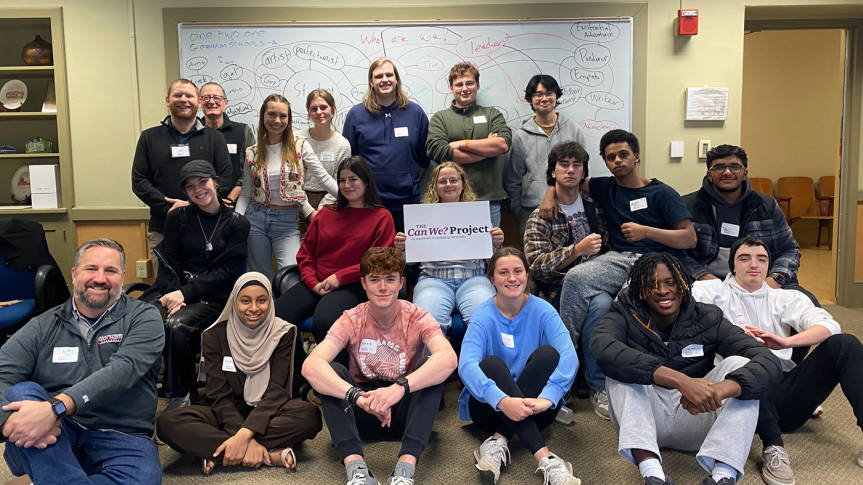
The Maine Department of Education (DOE) Office of Teaching and Learning, in partnership with the Maine Department of the Secretary of State and the Maine Semiquincentennial Commission, is excited to announce the launch of “Civics on the Road,” a traveling educational initiative designed to engage students in hands-on civic learning.

Kicking off on Constitution Day, September 17, 2025, at Main Street Middle School in Madison, Civics on the Road will bring an immersive mobile learning experience to one school per month across the state throughout the 2025-2026 school year.

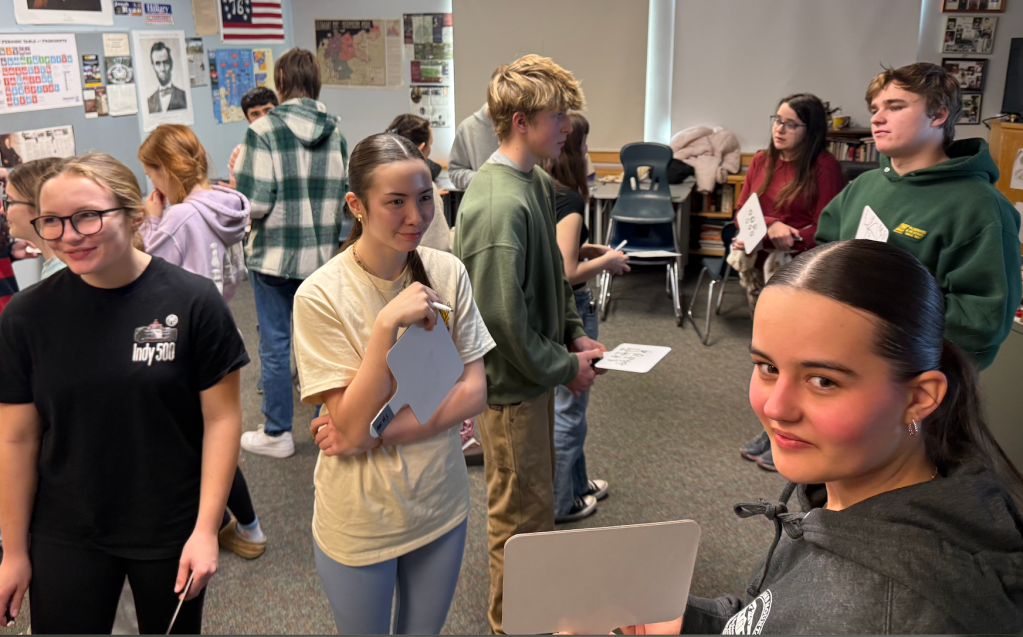
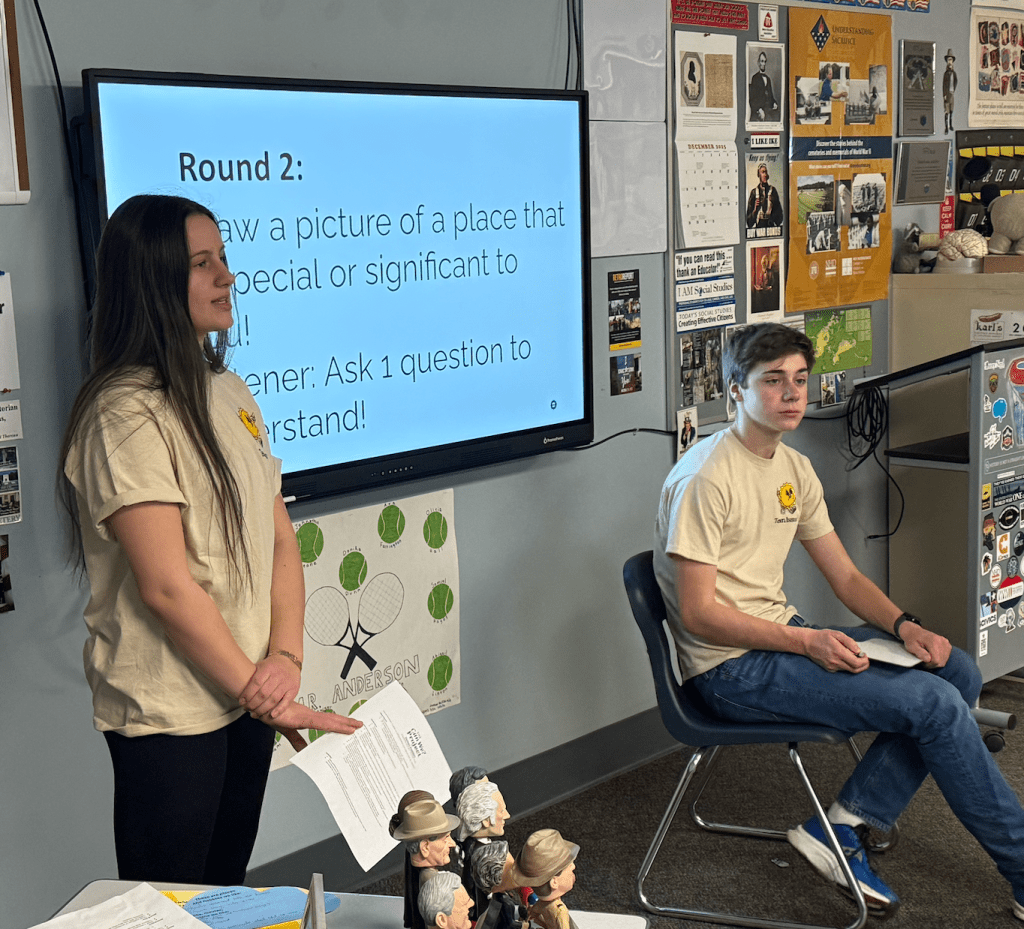
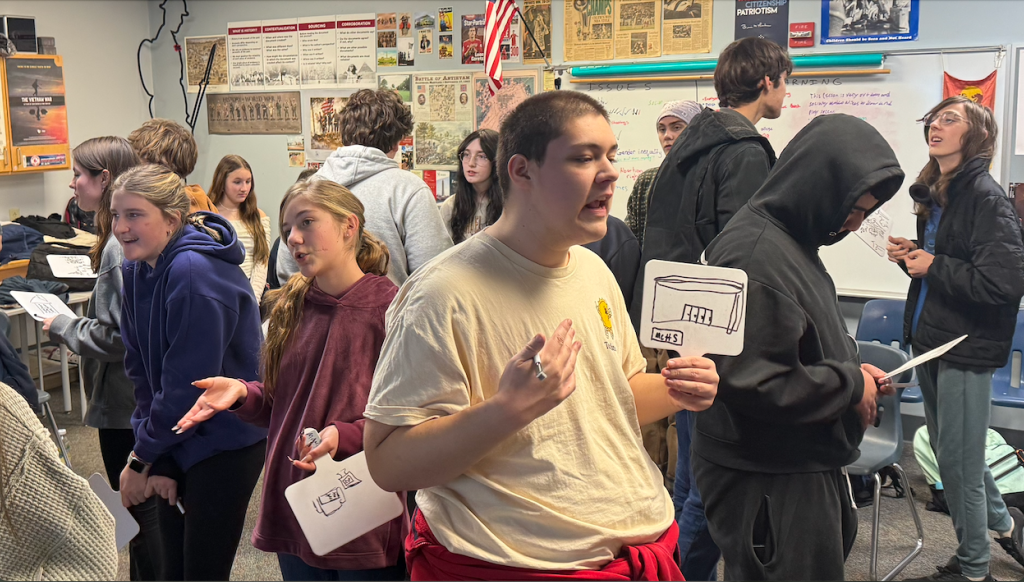
This program provides students with an opportunity to participate in the debates, decisions, and responsibilities that shape our democracy. Learners rotate through interactive, interdisciplinary stations, ranging from mock debates and government games to primary source analysis, media literacy, and voting simulations.

Through these experiences, students explore civic identity, practice historical decision-making, and recognize the power of participation, leaving the experience with a deeper understanding of democratic values and their own civic potential.

What Schools Can Expect

  • Interactive Stations: Activities such as Game Show Government, Meet the Declaration, and Debate and Advocacy bring civic themes to life.

  • Culminating Town Hall: Students take on roles as speakers, journalists, or campaign designers in a full-group deliberation and vote.

  • Flexible Scheduling: The core experience can be adjusted to fit the length of time available and can be tailored for elementary, middle, and high school learners.

  • Professional Learning: Schools receive pre-visit background material to prepare students, plus the option for after-school professional development to help educators extend civic learning throughout the year.

Students will leave with tangible takeaways, such as artifacts of their participation, that reinforce the experience.

The Maine DOE, the Maine Semiquincentennial Commission, and the Maine Department of the Secretary of State encourage schools, community partners, and local leaders to join in this statewide effort to mark 250 years since the founding of the United States through civic education.

“This is more than a history lesson; it’s an invitation for students to see themselves as civic actors,” Geoff Wingard, Maine DOE Interdisciplinary Instruction Specialist, said. “Through playful simulation and serious engagement, we are building agency, understanding, and a lifelong connection to democracy”.

Schools that are interested in hosting Civics on the Road can fill out this form or contact Geoffrey Wingard at Geoffrey.Wingard@maine.gov for more information. 

Stepping Forward: How the Transition of CDS Services to School Districts is Changing Families’ Lives

RSU 35 students (photo credit: RSU 35)

Ask South Berwick parent Mary Hayes about this past year, and she would tell you that it has been “life-changing”—particularly for her adopted four-year-old, Matthew. Hayes took Matthew in through foster care when he was two years old and says he experienced some trauma early in life. When Matthew started attending daycare last year, he struggled behaviorally and did not do as well as her older son.

“My biggest concern was that he was becoming the ‘bad’ kid,” Hayes said. “[Matthew] was the only one getting kicked out of class. … I was like, ‘Oh no; great start to life.’”

Matthew was placed on a waiting list with Child Development Services (CDS) to receive one-on-one support, and Hayes admits that the wait her family experienced was frustrating. She said it was unclear how long it would be until Matthew got the services, which were essential before starting kindergarten. Hayes had to cut back on hours at her job to dedicate more time to caring for Matthew, taking a toll on her family financially and mentally. 

The “life-changing” moment that Hayes described came with a call one day from Scott Reuning, Director of Special Services at RSU 35. The school district had implemented universal pre-K for 50 years and made the decision to opt into Cohort 1 of the transition of Early Childhood Special Education services for children ages three through five from CDS to school administrative units (SAUs). As a result of this participation, Matthew could enroll in RSU 35.

“I’m not exaggerating when I say it was like a miracle,” Hayes said. “I cried. It was amazing.”

“I wasn’t aware of the pay-off I was going to get until it came,” Reuning said of the CDS transition.

Reuning explained that RSU 35 joined Cohort 1 just three weeks before the start of the 2024-2025 school year. While that tight turnaround was initially somewhat daunting, he said the district was able to get itself in place to begin welcoming children by the time school started. Reuning credited school leadership for being “all in” as a reason for that success.

Throughout the past year, RSU 35 has even been able to accept some children from neighboring districts, as well. Reuning said the feedback from parents about the services that their kids are receiving has been positive.

“Parents are extremely happy,” Reuning said.

RSU 35 students (photo credit: RSU 35)

The long-term benefits of providing these services to children at an early age was another reason that RSU 35 made the choice to join Cohort 1. RSU 35 IEP Coordinator Andrea Biniszkiewicz said that she has seen amazing progress in students so far and believes that will translate to when they are school-aged.

“As they get older, I think we’re going to see students have more skills because in the past, they weren’t always getting the services that they needed,” Biniszkiewicz said. 

RSU 35 teacher Laurie DuBois said she is grateful for the obvious benefits of the CDS transition in the moment, too—like having an opportunity to connect more closely with families.

“Enrichment, inclusivity, relationship, familiarity, consistency, community, and comfort are among many words that I describe as positive impacts,” DuBois said, later adding, “I am incredibly proud that RSU 35 became a Cohort 1 district to meet the critical needs for families within our community.”

Going into this coming school year, Matthew will be in the pre-K class at RSU 35. Hayes said that she is no longer worried about how he might do—and neither are his teachers.

“He feels good about himself. He thinks he’s smart; he wants to go to school. That’s a different kid,” Hayes said.

Hayes said ultimately, she is grateful for the immense support she has received from RSU 35 and hopes that her parent friends in other districts can receive similar help.

“Having all of these professionals who I felt like were on my team was a total game-changer,” Hayes said. “I felt like we were all a team looking out for Matty.”

RSU 35 and the Maine DOE Office of Special Services and Inclusive Education contributed to this article, written as part of a series highlighting the ongoing efforts of CDS and public schools in providing comprehensive educational services to Maine’s children with special needs. To submit a good news story to the Maine DOE, please fill out the good news submission form.

St. George Opens Nation’s First Pre-K–8 Career and Technical Education/Makerspace Building

In 2020, a small but determined team of educators at St. George Municipal School Unit embarked on a bold innovation journey—one that culminated in a major milestone over the summer. Guided by district leadership and a committee of teachers, families, school board members, and business owners, the team grounded its vision of a new, innovative facility in the community’s past, present, and future.

St. George Municipal School Unit was one of the first recipients of the Maine Department of Education’s (DOE) Rethinking Responsive Education Ventures (RREV) grant, a $16.9 million federal grant awarded to Maine in 2020. The state was one of only 11 to receive the funding, with more than $10 million eventually distributed to 42 school districts. St. George received $350,000 to kick-start its building design process, curriculum development, and capital campaign.

St. George Municipal School Unit’s ambitious goal was to use the RREV grant to help create the nation’s first pre-K—8 Career and Technical Education (CTE)/Makerspace building. This innovative space—the GRACE Innovation Center—would honor the rich heritage of the St. George community, while preparing students for the challenges of today and tomorrow. A key inspiration for the project was the Lillius Gilchrest Grace Institute, a nonprofit founded in 1936 by the Grace family in memory of Lillius Grace, a St. George native.  The Grace Institute offered classes to St. George students in home economics and manual arts for more than 70 years, laying the groundwork for the modern CTE/Makerspace vision.

“Many have been with us since we began this journey more than three years ago,” Mike Felton, former St. George Municipal School Unit superintendent and new GRACE Innovation Center executive director, said of the team members who helped to guide this project. “[They had] a vision for re-engaging students in learning and reimagining public education by returning to our roots—hands-on, minds-on learning connected to career and community.”

On August 14, this dream became a reality with the grand opening of the GRACE Innovation Center in St. George. The celebration drew in hundreds of community members and special guests, including U.S. Representative Chellie Pingree, St. George school board members, St. George students, and Steel-Pro CEO and president Steve Ladd. Maine DOE Office of Innovation staff who partnered with St. George Municipal School Unit and supported this project were honored to also attend and celebrate the hard work of so many passionate educators and community members.


“Congratulations to the entire St. George team for your vision, dedication, and relentless pursuit of innovation in utilizing this RREV grant to create meaningful opportunities for your students,” Maine Education Commissioner Pender Makin said. “Your work is a shining example of all that is possible when community, history, and forward-thinking education collide.” “This building, this project, this school, this community—it’s about building and creating our future together. Our imaginations will not be limited by what others say is possible. When someone says, ‘Isn’t that a big vision for a small community?’—we know the answer,”  Felton said during the event. “We can give our kids a better today and tomorrow. We can lead the nation in returning to hands-on, minds-on learning and valuing the trades. We can do all that as a small fishing community on a peninsula in Maine. We can do this because we’re a small fishing community on a peninsula in Maine that never forgot our roots and created a new building with an old soul.”

While many additional fundraising efforts helped St. George Municipal School Unit to reach its $4.5 million goal, the RREV grant played a crucial role. It funded educator stipends for work to develop a pre-K—8 CTE curriculum and helped to support architectural designs, site planning efforts, and construction. At the August 14 event, the RREV Mobile Learning Van was present to showcase all of the innovative pilots that RREV supported.

“I’m pretty sure this is the best million dollars that Washington has ever spent,” U.S. Representative Chellie Pingree remarked during the event. “You are truly creating a role model for communities all over the country.”

This story was written in collaboration with St. George Municipal School Unit. To submit a good news story to the Maine DOE, please fill out the good news submission form.

Maine DOE to Host ‘For ME’ (Pre-K through Grade 2) Professional Learning Communities During 2025-2026 School Year

The Maine Department of Education (DOE), in collaboration with teacher leaders from across the state, is once again offering professional learning communities (PLCs) for educators and caregivers implementing the For ME programs, which include Pre-K for ME, K for ME, 1st Grade for ME, and 2nd Grade for ME.

These monthly virtual PLCs are designed to deepen understanding of program design and implementation. Participants will explore units and components in greater depth through real-world examples, shared practices, open discussion, and student work. Whether you are new to a program or have been using it for several years, these PLCs offer valuable support for teachers, ed techs, instructional coaches, and other staff.

Pre-K for ME PLCs
Sessions will be held virtually from 3:30-4:30 p.m. on the first Monday of each month:

  • October 6, 2025
  • November 3, 2025
  • December 1, 2025
  • January 5, 2026
  • February 2, 2026
  • March 2, 2026
  • April 6, 2026

K for ME, 1st Grade for ME, and 2nd Grade for ME PLCs
Sessions will be held virtually from 3:30-4:30 p.m. on the second Tuesday of the month:

  • October 14, 2025
  • December 9, 2025
  • February 10, 2026
  • April 14, 2026

Registration

While regular attendance is encouraged, participants do not need to commit to every session. Access details will be provided upon completion of registration. 

Please register by Friday, September 26, 2025. You may do so using the following links:

Questions?

Stepping Forward: The Importance of Partnerships in RSU 13’s Transition of Early Childhood Special Education Services

Pre-K students at RSU 13’s Thomaston Grammar School (photo credit: RSU 13)

When John McDonald took on his role as superintendent of RSU 13 more than a decade ago, a goal of his was to establish a pre-K program to serve young children in the community. A grant of about a million dollars and a partnership with Penquis kickstarted that work, but the process was not seamless. McDonald noted that over the years, classroom numbers fluctuated, and budget woes resulted in some cutting back of services. There was, however, a very positive outcome of this effort.

“Ultimately, I ended up with a school board who really understood the benefit of having universal pre-K,” McDonald said.

That mindset presented an ample opportunity for RSU 13 when McDonald learned of the planned transition in Maine of Early Childhood Special Education services for children ages three through five from Child Development Services (CDS) to school administrative units (SAUs) by July 1, 2028. He said he “jumped” at the chance to become a part of Cohort 1 in the 2024-2025 school year, recognizing that this effort would ultimately help his overall student population and special education referrals.

“I just felt like it was a good fit for us and fit right in with our philosophy and our goals,” McDonald said.

A supportive school board invested money in RSU 13’s local budget to support the CDS transition. Now, McDonald is proud to say that RSU 13 offers universal pre-K, with a pre-K classroom available to every school in the district. He said he recognizes that this progress would not have been possible without the strong partnerships that RSU 13 had already established with CDS, Penquis, and the local YMCA.

“On our own, we all have limited resources, and—let’s face it—budgets are tight,” McDonald said. “But we want to provide the best possible educational community that we can for these kids. These partnerships are really all-important, in terms of being able to share resources, share information, share expertise.”

Pre-K students at RSU 13’s South School (photo credit: RSU 13)

“We all went into this with our eyes open, recognizing what the needs are,” Gail Page, Site Director of CDS Midcoast, said. “We knew what we needed to do in order to meet the needs of children. We were all very clear about what our mission was.”

Page said that prior to this transition, there was not enough programming available to meet the needs of local children. Over the past year, however, Page said huge steps of progress have occurred. For example, local children who were receiving tele-speech services are now receiving in-person speech services. Page works closely with Janet Corcoran, RSU 13 Special Education Director, and they do their best to address the needs of every child.

“Our work has really proved that this can be done, and it can be done well,” Page said.

“We’re trying to build something new, and whenever you’re trying to build something new, there are always going to be hitches and things that didn’t go the way you planned—but I think it has gone really well,” Corcoran said.

Corcoran noted that in her close work with Page, she is able to provide honest feedback—and the two work together to determine the questions that they want to ask leaders at the state level, as they continue to improve operations. Despite any hurdles, Corcoran said the universal pre-K model is essential, as it allows students who are receiving Early Childhood Special Education services to interact with and learn from their general education peers.

Corcoran said ultimately, the goal is to graduate students out of special education services, leading to better educational outcomes overall.

“Early intervention is the key,” Corcoran said. “The earlier you can get to students and provide those services, the less likely they’re going to need them long term.”

Pre-K students at RSU 13’s Ash Point Community School (photo credit: RSU 13)

Corcoran also highlighted that what public school offers—social workers, school psychologists, speech and occupational therapists, etc. on-site—is hard to meet elsewhere. Perhaps one of the best outcomes of the transition in RSU 13 thus far has been the reaction from local families.

“I get feedback all the time from families about how appreciative they are that we offer classes and services for these really little kids,” McDonald said. “There are lots of working families where both [parents] work. Child care is very expensive, if it’s even available in this area. They are just so, so appreciative of this.”

RSU 13, CDS Midcoast, and the Maine DOE Office of Special Services and Inclusive Education contributed to this article, written as part of a series highlighting the ongoing efforts of CDS and public schools in providing comprehensive educational services to Maine’s children with special needs. To submit a good news story to the Maine DOE, please fill out the good news submission form.

2025-2026 Maine DOE Back-to-School Backpack Resource Available Online

The Maine Department of Education (DOE) would like to wish all students, educators, administrators, and school staff a wonderful back-to-school season! As the 2025-2026 school year begins, please consider perusing the virtual Maine DOE Back-to-School Backpack, which contains information and resources that may be useful to school and district leaders.

The Back-to-School Backpack covers everything from School & Student Supports (e.g., attendance resources, suicide prevention guidance, special education information) to Health & Safety (e.g., immunization requirements, Maine School Safety Center resources) to School Nutrition (e.g., guidance on administrative reviews and student eligibility) to School Administration and Operations (e.g., McKinney-Vento resources, enrollment information) to Teaching & Learning Supports (e.g., 2025-2026 assessment calendar, details about Extended Learning Opportunities, literacy resources) to Strengthening the Educator Workforce (e.g., certification resources, school job postings).

Good luck in the 2025-2026 school year! Thank you for all that you do for Maine students, schools, and communities.