The following is a training opportunity offered by Count ME In.
Developing a positive school climate and culture leads to an increase in student attendance, engagement and achievement.
Participants will:
learn strategies to build positive climate, improve school culture and decrease chronic absenteeism
examine how to build healthy relationships within the school community (staff with student, staff with staff, and staff with families)
learn how to differentiate between accidental and intentional culture
access a framework (including a staff survey) to support participants’ in assessing their own school climate and culture
leave the workshop with tools to help create a more successful school where all students can be successful learners.
We strongly recommend that school teams of 3 to 5 staff attend this session. Everyone is welcome to attend.
Presenters: Ansley Newton and Susan Lieberman
Ansley Newton’s experience includes work as a preschool project director; elementary school teacher; elementary, middle and high school counselor; high school substance abuse counselor, and school consultant with the ME DOE. She is a certified trainer of restorative practices through the International Institute of Restorative Practices, helping schools implement Restorative Practices. Susan Lieberman, M.Ed. is Director of Count ME In. She has over thirty years of experience in education and mental health as a licensed social worker and certified teacher. She has taught in the classroom, worked as a community case manager for children and their families, and managed community and state-run programs.
Brewer, Jeff’s Catering – Thursday, November 7
Registration: 8:30 am
Training: 9:00-3:00
Augusta, Bangor Savings Bank – Friday, November 15
Registration: 8:30 am
Training: 9:00 – 3:00
Saco, People’s Choice Credit Union – Tuesday, December 3
The cost is $125 for each member of the school team and $155 for an individual registration. This covers training, materials, coffee, snacks, and lunch.
Cancellation Policy: Refunds minus $15 administrative fee will be offered up to 2 weeks before the session. Substitutes for registered participants are welcome – please let us know who to expect.
The Maine Department of Education would like to thank each and every one of the hundreds of students in grades 4-13 who applied to be on Maine Department of Education’s Student Cabinet. There has been an amazing outpouring of interest, and we are honored that so many students want to be engaged in education policy and reform at the state level.
A team of educators, State Board members and DOE staff has begun reviewing the applications, and we are very impressed with the thoughtful and heartfelt responses of our students, and it is evident that students have great interest and great ideas when it comes to education!
We plan to begin offering cabinet positions as soon as next week. In addition, we hope to notify all of the applicants about their status, and about future opportunities for engagement. The outpouring of energy and interest has been recognized, and the Department is working to ensure multiple opportunities for Maine students and their voices and ideas to be heard and acted upon!
Once all positions on the Student Cabinet have been accepted, the Department will make a formal announcement.
We are so grateful for the overwhelming interest in this effort and for your patience as we continue our work toward forming this important group.
The 32-year tradition lives on as once again this year educators from around the State attended the much anticipated ACTEM (Association of Computer Technology Educators of Maine) conference earlier this month. The two-day, action-packed conference is planned, coordinated, and administered solely by Maine educators, and features Maine educators and students as presenters. The conference represents and celebrates the robust technology innovation and integration happening in Maine schools, in addition to serving as a place for schools to share strategies and tools including computer science education, coding, 3D printing and design thinking, and to learn about various technology-based curriculum and classroom management tools that are being used in Maine schools, nationally, and globally. The well-planned conference featured close to 150 sessions, the vast majority of which were delivered by Maine educators.
Presenter/Educator Toni Barboza with a 3D Printed model car
Conference participants
Presenter/Educator Laurie Delaney
This year’s keynote speaker was Michael Cohen. Also known as The Tech Rabbi, Cohen is a “designer, educator and creativity instigator” who serves as the director of innovation for Yeshiva University of Los Angeles Boys School (YULA). In addition to serving as keynote, Cohen also led a session about exploring apps on the iPad.
On the first day of the conference, which hosted close to 400 people, among the events was a session led by Middle School Students from Sacopee Valley who did a student panel about “Kids Teaching Kids Tech Day”. Session participants had the chance to hear from teachers, Kelly Goodfield, Library Media Specialist and Luanne Mudgett, 7th Grade Math Teacher both from Sacopee Valley Middle School along with a group of 6 of their students who talked about their first annual Kids Teaching Kids Day which featured students presenting to their peers and their teachers about technology related topics they are both knowledgeable and passionate about, including photography, robotics, and coding to name a few examples. Educators in attendance were clearly impressed at the idea, some eager to try something similar at their school. At the end of the session, Maine DOE representatives had the honor of witnessing a group of students from the University of Maine at Farmington (UMF) approach the student panelists to ask them to do the same presentation in one of their education classes. Beaming with pride, the students were happy to accept the offer and engage future educators in this successful practice of student-led teaching.
Kelly Goodfield, Luanne Mudgett, and 6 student panelists/presenters from Sacopee Valley Middle School
Day one of the conference ended with an awards presentation that honored educators for their commitment to quality technology integration in Maine schools. This year’s ACTEM ACHIEVE (ACTEM Commends Highly Innovative Educators that Value Excellence) Award was awarded to Sarah Irish a Technology Integrator at Lewiston Middle School and this year’s John Lunt Friend of Technology award, established as a way to recognize individuals that have made a significant contribution to education and technology in Maine, was awarded to Jim Moulton, a well-known Professional Development Consultant working in many Maine schools over the years.
Sarah Irish
Jim Moulton
Day two saw upwards of 700 people attending sessions throughout the day, highlights, among many, included a “Tech Tales in PreK and K” presentation by Juana Rodriguez-Vazquez, Migrant Education Regional Coordinator at Mano en Mano/Hand in Hand and Bonnie Blagojevic Education Consultant at Morningtown Consulting who shared stories of young children using technology in a variety of early learning and community settings as digital storytellers, scientists, engineers and artists. In addition, First Grade Teacher and Co-Technology Liaison Nicole Lesperance and Kindergarten Teacher and Co-Technology Liaison Stacey Augustine, both from from W.G. Mallett School in RSU 9 held an interactive “Tech for All” workshop showcasing ready-to-use materials for the classroom including instructional video tutorials, templates, interactive sorts, worksheets, and other activities using Pages.
Nicole Lesperance and Stacey Augustine
Maine DOE’s informational booth
Maine DOE staff Jonathan Graham and State Rep. Bruce White
Presenter Juana Rodriguez-Vazquez
Maine DOE Staff Amanda Nguyen with Teachers from East Grand
Stephanie Cheney and another conference organizer
Along with the robust variety of break-out sessions were several display booths featuring local, national, and internationally known companies that offer technology products and tools available to schools. Representatives from the Maine DOE were also on-hand both days of the conference to offer the latest information about the Maine Learning Through Technology Initiative (MLTI) and the recently developed Maine’s Computer Science Plan that was drafted by local educators.
As the conference ended, educators left on their way back home with new technology tips, tricks, resources, and ideas to share with students and colleagues in all corners of Maine. Conference planning co-chair and retired teacher Cheryl Oakes, along with planning co-chair Stephanie Cheney from Lincoln Academy and ACTEM Executive Director and retired educator Gary Lanoie took a satisfied sigh of relief as another 9 months of planning for the 32nd annual conference went off without a hitch providing Maine Educators with a place to connect with other educators, to deliver, and to collect quality, meaningful and useful technology tools that impact classroom instruction all over Maine.
Cheryl Oakes, Gary Lanoie, and Stephanie Cheney
“I think its been another successful year,” said Gary in the days following the event. As the host of the largest education technology in the state, he is honored to be part of ACTEM, an organization that is able to host this annual professional development opportunity for Maine educators.
For more information about ACTEM, its conference, awards process, committee members, and membership visit their website at http://www.actem.org.
This article was written by Maine DOE staff member Rachel Paling as part of the Maine Schools Sharing Success campaign. If you would like more information about the campaign, contact Rachel at rachel.paling@maine.gov.
On June 23, 2019 the revised Maine Learning Results for Social Studies went into effect. The first set of professional development workshops to support implementation of the standards have been set.
Maine Learning Results for Social Studies – Overview
This full day workshop will be led by Joe Schmidt (DOE Social Studies Specialist) who will provide an overview of the revision process for the Maine Learning Results for Social Studies as well as share resources that support their implementation. Focus topics will include:
Changes to the overall framework for both elementary and secondary schools.
The embedding of the skills and processes of social studies throughout the document.
A greater emphasis on teaching about Maine Native Americans.
A greater emphasis on teaching about personal finance.
Districts are encouraged to send representative teams of social studies teachers as time will be provided for participants to explore the standards and resources in order to plan for classroom and district implementation.
During the first six weeks at Camden Rockport Elementary School, staff and students practice the School Community Building Model and work to build routines. This includes setting norms, understanding class rules and behaviors, and learning how to get along so the basics are in place to support the hard work and learning for the year.
On October 10, CRES students celebrated the culmination of those six weeks by participating in the team and community building Dory Day event which included a school wide BBQ.
Dory Day was created three years ago by Eric Martin, the Physical Education and Health teacher, to build community and develop team-building skills in the elementary school students.
“It takes a team to pull it together and I am grateful for the support of teachers, the kitchen staff, and the Community Committee to coordinate scheduling. The kids were motivated by the day and learned that it is OK to make mistakes and how to work from those mistakes together,” said Martin, in a news release.
The day featured a rotating schedule that started with an assembly followed by three activity stations. Each activity was designed to challenge groups to cooperate and work together to accomplish a task. Homeroom teachers were part of a team while specials teachers and support staff facilitated the station activity.
Kindergarten, First and Second grades started Dory Day with a morning assembly in the gym where they sang the school song, explored the meaning of teamwork, viewed a CRES video on grit which explained the value of practice and resilience, and reviewed the activity stations. The assembly ended with a cheer created from the school mission: Be Kind. Work Hard. Keep Learning. Students then participated in three team building exercises including Musical chairs, Cross the River, Walking Planks, and Team Ball Roll. Afterwards, they joined the school wide BBQ for a hard-earned meal.
Multi-age, Third and Fourth grades started their team building activities after lunch with an assembly that included the same topics as the younger grades as well as a discussion of the benefits of teamwork. They then participated in three activities.
After each activity, students reflected on the activity to enhance student understanding of team building. For example: What was challenging? What made the activity a team-building activity? Did anybody have to use grit? Why are there rules?
Grades three and four were asked additional questions to help identify how they cooperated, how they helped the group be successful, why it is important to listen, and how to work with someone who does things differently than you.
Dory Day reinforces the district and school mission of: Be Kind. Work Hard. Keep Learning.
CRES students continually work on these concepts and are looking forward to working together for the rest of the school year.
Submitted by Scott Harrison, Executive Director of Central Aroostook Council on Education (CACE), University of Maine at Presque Isle.
Presque Isle High School was the place to be on September 20, as teachers and leaders from surrounding schools came together in full force for a day-long conference called CACE Day. CACE (Central Aroostook Council on Education) is an educational collaborative that sponsors the annual event. The conference featured both local and nationally known speakers from education and related fields.
Matt McHatten, Executive Vice President and Chief Operating Officer at MMG Insurance and Chair of Aroostook Partnership helped welcome teachers and leaders and shared Aroostook Partnership’s interest in working together to connect students with ‘great local career opportunities.’ Commissioner Makin inspired a standing-room only crowd with her opening remarks, while Dr. Marc Brackett, founding director of the Yale Center for Emotional Intelligence and author of newly released, Permission to Feel, delivered a stimulating keynote address. Alex Kajitani, California Teacher of the Year and author of award-winning, Owning It, also inspired the group with his strategies for ‘acing and embracing’ teaching. More than 25 sessions followed that included professional learning opportunities for every grade level and content area. Local celebrity, Dixie Shaw, made a special appearance to thank attendees for their contributions to the local food bank. The fundraiser is the first of an annual CACE Day initiative called “Educators Care About The County.” Each year, CACE will select a community organization or group to donate funds raised during the conference.
For more information on CACE and this year’s CACE Day event check out their website here: cacepartnership.org.
Information for the article was provided by Patrick Volker, Music Teacher at Scarborough High School and the National Association for Music Education (NAfME).
During the 2018–19 school year, 10 Maine Students, along with other accomplished music students across the United States and overseas in military base schools, will join the “best of the best” across the nation for the National Association for Music Education (NAfME) 2019 All-National Honor Ensembles on November 7–10, 2019, at the Gaylord Palms Resort and Convention Center in Orlando, Florida. The Maine students who received this distinguished honor are as follows:
2019 All-National Honor Ensembles, Concert Band Roster
Katie Callahan, Alto Saxophone 2, Mt. Ararat High School, Topsham (Teacher: Ben Cox)
Chase Whelan, Flute 2, Brunswick High School (Teacher: Mike Scarpone)
Cora Stewart, Alto 2, Scarborough High School (Teacher: Patrick Volker)
“I didn’t anticipate that I’d make it into Nationals- but the moment that I found out I did is one of the happiest moments of my entire life. This is one of the biggest opportunities I’ve had, and it’s an insane honor to even be invited to participate in such a talented choir. The music is fantastic, the director is amazing, and I know it’s going to be worth all the work I’ve put into it,” said Cora Stewart who will be joining the Mixed Choir Ensemble representing Scarborough High School.
The All-National Honor Ensembles performers represent collaboration and creativity in its highest musical form. Students were chosen through a rigorous audition process. The concert band and symphony orchestra will each have 119 and 121 instrumentalists respectively, the jazz ensemble 20 instrumentalists, the mixed choir 240 vocalists, the guitar ensemble 41 instrumentalists, and the modern band 16 performers.
“I could not be more proud of [Cora’s] her accomplishments in music and I am very excited to hear this concert,” said Patrick Volker, Cora’s music teacher.
Selected students will be rehearsing a challenging repertoire in preparation for performing under the direction of six of the most prominent conductors in the United States: Tesfa Wondemagegnehu (Mixed Choir); Soo Han (Symphony Orchestra); Emily Threinen (Concert Band); Todd Stoll with Camille Thurman (Jazz Ensemble); Bill Swick (Guitar Ensemble); and Scott Burstein (Modern Band). All conductors have received top honors in their field and will spend several days rehearsing with students before the concert.
Names, schools and states, as well as music directors, of the All-National Honor Ensemble students are available on the NAFME Website.
Maine DOE Team member Danielle Despins is being highlighted this week as the part of a Get to know the DOE Team campaign! Learn a little more about Danielle in the brief question and answer below.
What are your roles with DOE?
My role on the Career and Technical Education team is varied but my primary responsibilities include conducting two school reviews, the Comprehensive School Review and Methods of Administration review, providing schools with professional development opportunities, and providing schools with guidance around issues of equity and civil rights.
What do you like best about your job?
I find it most rewarding to know I’m helping schools and teams of educators along their path of professional development, encouraging out of the box thinking, and helping to create mindfulness regarding various populations and their needs.
How or why did you decide on this career?
My past life was in Human Resources. I realized what I loved the most about my role at the time was helping others get to the next platform of their career journey. So, I went back to school for my Masters in Adult and Higher Education. This role marries my passion for career development and love of education.
What do you like to do outside of work for fun?
My undergraduate is in art so creating is, and always will be, a big part of who I am and how I identify with the world around me. I also spend much of my free time goofing off with friends, family and my pup Mr. Copperpot, (shout out to all you crazy Goonies lovers).
As part of the scheduled periodic review of the Maine Learning Results, the Maine Department of Education is seeking public comments regarding proposed revisions to the Career and Education Development, English Language Arts, and Mathematics Standards found in Rule Chapter 132 Learning Results: Parameters for Essential Instruction. Please note that the Department of Education is only seeking comments on the Career and Education Development, English Language Arts, and Mathematics Standards sections of Rule Chapter 132 at this time.
The standards review process for the Career and Education Development, English Language Arts, and Mathematics Standards began in 2018 with a public comment period and a public hearing on the current Career and Education Development, English Language Arts, and Mathematics Standards. After the public comment period, steering committees were convened who were charged with reviewing all submitted comments and with developing blueprints for the revision of the state standards in their assigned content area. Once the blueprints were created, writing teams, consisting of pk-12 teachers who represent Maine’s cultural and geographical diversity, assembled to draft the standards revisions. Now, as part of this review process, the Maine Department of Education has submitted the revisions as part of a proposed rule change to Chapter 132.
Find the details for proposed changes for Rule Chapter 132 on the Maine DOE Proposed Rule & Rule Changes webpage (proposed rules are listed in order by rule number).
Public Hearing Information for Rule Chapter 132:
November 13th from 1-4pm, room 103 at the Cross Building, 111 Sewell Street, Augusta.
Anyone may speak at the public hearing which will be live-streamed via Zoom. People wishing to speak will be the asked to sign in and, preferably, provide two written copies of comments, as well as an electronic copy. Anyone unable to attend the public hearing may send written comments.
Comment Period Deadline: 5 pm on November 27th, 2019 Written comments may be sent to Standards Review at sis.doe@maine.gov, or mailed to Beth Lambert, 23 SHS Station, Augusta, ME 04333.
Maine Administrators of Career and Technical Education (MACTE) held its annual conference last week at Lewiston Regional Technical Center (LRTC). The official organization for Maine’s network of 27 career and technical education (CTE) schools, MACTE plans the conference as a place for CTE educators to convene and share ideas, hear from industry professionals, and honor hard-working colleagues.
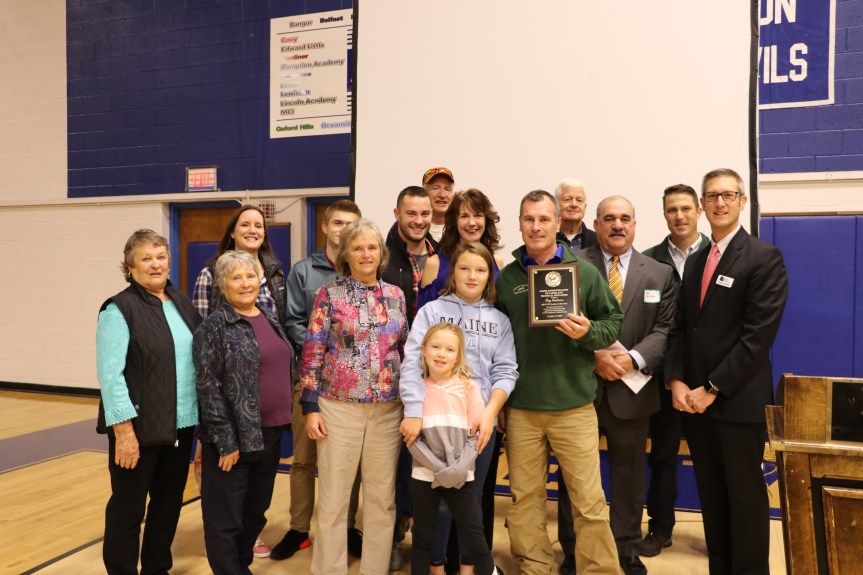
During the opening presentation of the conference, participants were welcomed by MACTE President and host Rob Callahan, who is also the Director of LRTC. Dr. Donald Cannan, Executive Director of MACTE also addressed the crowd remarking on the utmost importance of CTE educators in the training of Maine’s current and future workforce. Following the welcoming, Maine Department of Education Deputy Commissioner Dan Chuhta presented the CTE Teacher of the Year award to Greg Cushman, an electrical instructor and SkillsUSA advisor at LRTC.
An alumnus and former educator of Westbrook Regional Vocational Center, Greg has a successful 25-year career in electrical trade under his belt. He has since returned to his roots in Career and Technical Education in a different capacity, to serve as an educator to the students in his community. Known for his outstanding student outcomes and many accomplishments, both in his professional career and in education, his nominators, LRTC Director Rob Callahan along with students and colleagues from LRTC, had this to say about Greg:
“Perhaps the most compelling aspect of Greg’s nomination for this award is the quality of his character. He is a highly approachable, thoughtful and genuine person who always looks for the good in any situation. He approaches his responsibilities as an educator, electrician and community member with utmost importance. He sets an example for those around him which is based on hard work, integrity and service to others.”
After being named CTE Teacher of the year, Greg took the stage, while the excited crowd stood in applause and his family joined him to congratulate him for this well-deserved recognition. The CTE Teacher of the Year award is administered by MACTE as a way to recognize teachers who are providing outstanding career and technical education programs for youth and/or adults in their respective fields and communities.
After hearing from keynote speaker Shawn Moody, who spoke about the Blue Collar CTE scholarship opportunity, participants attended a morning filled with a variety of breakout sessions. In addition to sessions lead by Maine DOE Leaders who provided information about State level updates, data, and funding, there were also sessions led by CTE leaders and industry professionals about various topics including understanding and supporting LGBTQ+ individuals, early college opportunities through the Maine Bridge Academy program and the Community College System, as well as workforce and industry updates from Cianbro, Apple, Inc, and Maine Army National Guard to name a few.
Conference participants also had the opportunity to attend sessions led by Maine education colleagues such as Foster Tech’s Chris MeMarco and Jake Bogar who led a session about how to fit science into any CTE class, and Ruthanne Harrison, an Engineering Teacher from Bath Regional CTE, who led a session about design thinking and 3D Printing.
A delicious lunch was served at LRTC’s well-known Culinary Arts School, The Green Ladle followed by a final session that provided tech updates for CTE educators.
The annual conference came to a close with a positive response from participants, especially for the variety of breakout sessions that provided instructors with information about common best practices. MACTE Executive Director Donald Cannan says they “plan to continue this very successful practice” as they look toward planning future MACTE conferences and events.


 During the first six weeks at Camden Rockport Elementary School, staff and students practice the School Community Building Model and work to build routines. This includes setting norms, understanding class rules and behaviors, and learning how to get along so the basics are in place to support the hard work and learning for the year.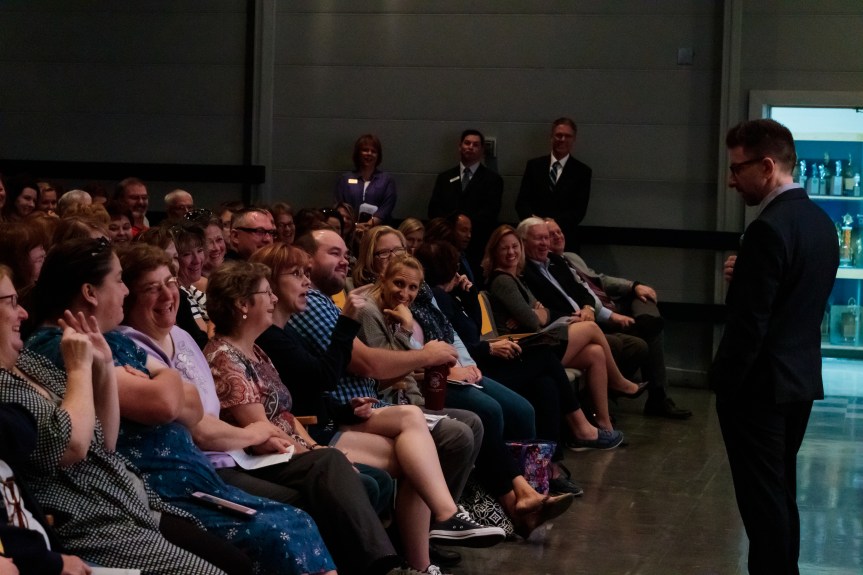


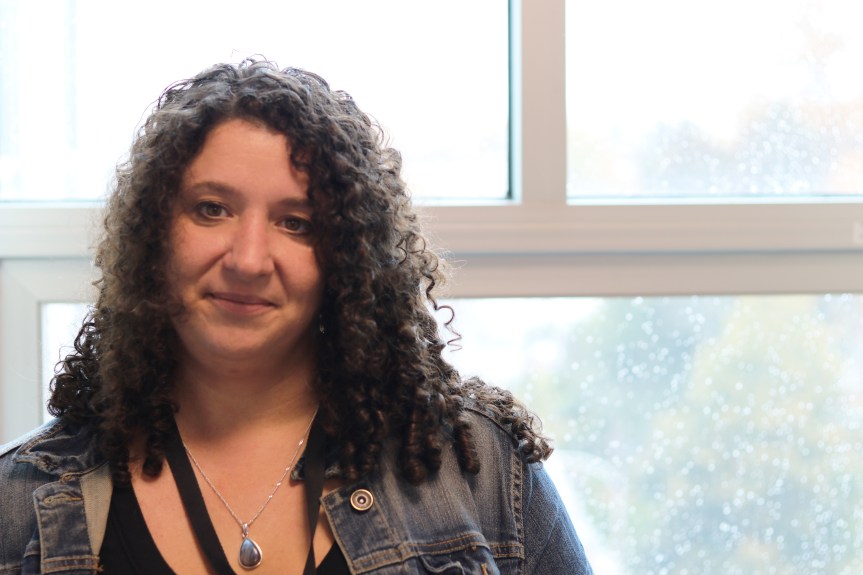

 During the opening presentation of the conference, participants were welcomed by MACTE President and host Rob Callahan, who is also the Director of LRTC. Dr. Donald Cannan, Executive Director of MACTE also addressed the crowd remarking on the utmost importance of CTE educators in the training of Maine’s current and future workforce. Following the welcoming, Maine Department of Education Deputy Commissioner Dan Chuhta presented the CTE Teacher of the Year award to Greg Cushman, an electrical instructor and SkillsUSA advisor at LRTC.