
Putting Head, Heart, and Hand together can seem overwhelming. This video is of an art teacher from Madison who has built a 7th-grade project-based unit that uses the ideas of Head, Heart, and Hand to engage students with authentic learning.
Category: News & Views
Windham High School Students Practice Skills in Civic Engagement and Dialogue with Elected Officials
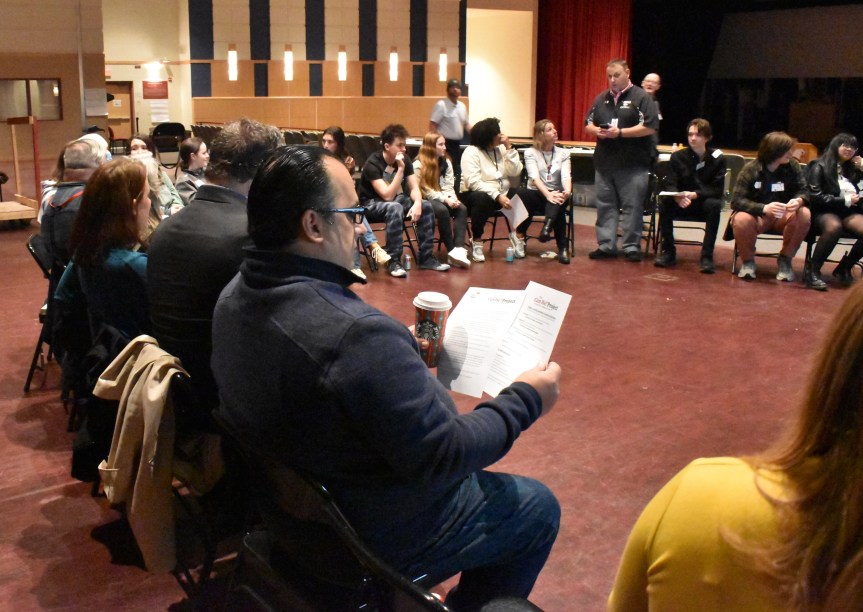
Approximately 20 Windham High School (WHS) students participated in three separate day-long retreats entitled the “Can We? Project”. Building up to the third retreat, students learned the skills of ‘listening to understand’ through a series of story exchanges. Then, using what they learned in the first retreat, students practiced their listening skills by discussing divisive topics at the second retreat where students chose political and social issues they deemed essential.
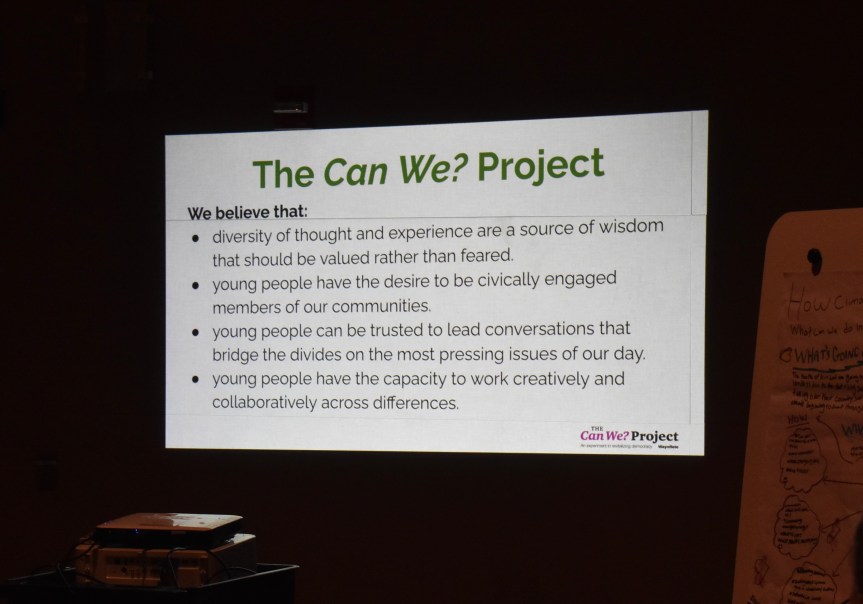
On the last day of the Can We? Project retreat, Wednesday, Dec. 7th, students practiced civic engagement skills by presenting their perspectives on their areas of concern to elected officials from the Windham Town Council and the RSU 14 School Board.
Students shared concerns from a global and local perspective ranging from various social, political, and environmental topics.
The students only had 1 ½ hours to choose from one of the issues established by the group to develop an argument. After their presentations, the elected officials were offered an opportunity to ask questions or give an opposing viewpoint to consider.
WHS English teacher, and Can We? Project liaison Chelsea Scott said four student groups and one teacher group presented to the officials in about an hour.
“The student’s level of courage was admirable,” Scott said. “They transformed feelings of anxiety into action and used the little time they had to prepare to create insightful presentations.”
School board member and chair, Kate Brix, was impressed with the students and the Can We? Project process, stating that it was a powerful example of the importance of student voice.
“Student engagement is a core belief of RSU 14’s strategic plan, and the students of this project were extremely articulate and respectful as they presented their viewpoint on a topic important to them,” she said. “The students I met clearly illustrated that they care and think deeply about issues that impact all our lives. I can’t say enough about how impressed I was with them and know that the skills they learned will be put to good use beyond their high school years.”
Town Council member and chair Mark Morrison said the project was timely and a valuable lesson in learning respectful dialogue between people with differing viewpoints.
“We saw the students apply and follow the program process with their presentations which stressed presenting respectfully, listening, and asking questions in a way that did not make the dialogue personal,” Morrison said. “I hope this program continues so the students learn the skills needed to effectively communicate so the focus is on the ideas where the pros and cons can be discussed and measured, not on the person. I hope I’m invited back to participate in another discussion.”
After the presentations, the students had an opportunity to reflect upon what they learned most.
“I realized I need to do more research about my subject,” stated senior Teddy Becker.
Junior Mareena Batsungnern said participating in the Can We? Project helped develop her skills in leadership. “It has also given me the courage and motivation to voice my beliefs to others.”
Junior Griffin Moreau said the Can We? Project taught him something that many of us try to learn in an attempt at deep listening. “The thing I think that I learned the most is, ‘be comfortable with silence’. It is something that I have struggled with all my life and have only started to realize the answer to and the Can We? project has helped with that.”
Scott stated that the Can We? Project was instrumental in empowering the students to truly listen to each other and discuss divisive topics with empathy and a desire to understand rather than to react.
“Participants have expressed that they feel supported, surprised, and inspired by this program and that they now have the tools and knowledge to participate in their own democracy,” she said.
Briefly, the Can We? Project was developed collaboratively between the Third Thought Initiatives for Civic Engagement from Waynflete School and the Maine Policy Institute. The mission is to allow high school students the opportunity to engage in thoughtful dialogue across different perspectives.
All three retreats were held at WHS and guided by John Holdridge, the Director of the Third Thought Initiatives for Civic Engagement, and Jacob Posik, the Director of Communications from the Maine Policy Institute. The twenty students were self-selected to participate and represented a true cross-section of ages, academic foci, family experiences and interests.
Students will have the opportunity to expand their experiences with other high school students across the state who also participated in the project, taking their experiences and practice of civil conversation and dialogue to the next level. In addition, WHS teachers who participated in the retreats plan to incorporate the project as an initiative for the whole school.
A thank you goes to the following elected officials who gave the gift of listening and allowing students to practice skills of civic engagement and dialogue respectfully. Thank you to Windham Town Council members Mark Morrison, Dave Nadeau, and Nick Kalogerakis. RSU 14 school board members (Kate Brix, Kate Leveille, Char Jewell, and Jessica Bridges) and former State Representative Patrick Corey.
How Does Your Garden Grow? Planting a Seed, Building a Bridge

Any inquiry starts with a question. In this case, Suzen Polk-Hoffses, a pre-kindergarten teacher at Milbridge Elementary School, wondered how she could break down the four walls of her classroom and build a bridge between her community and her students. She noticed that teaching and schooling had become so isolated between teachers and students and their community. But how could she build a bridge between the two?
The Women for Healthy Rural Living (WHRL), a local organization, had another wondering. With food being so expensive, how could families get fresh vegetables and healthy food? With community volunteers, they began a project called Incredible Edible Milbridge. They built raised bed gardens throughout the town to grow pick-your-own vegetables. When Suzen heard about the project, she had the seed of an idea.
Suzen asked WHRL for a couple of raised beds for the school. Community members came to the school to build them and talked to the students about soil and seeds. Students planted their very own pumpkins. When their seedlings were ready, they walked them to the town garden to plant. Suzen knew that her little students would want to visit their pumpkins over the summer. During those visits, their families would see all the other vegetables available for free. These visits helped create buy-in from the community about the Incredible Edible and school gardening projects.
Since then, she and her students have learned about composting. They ate a salad that they grew in their raised beds. In the fall, students gleaned the garden finding the last vegetables of the season. As little ones, their unique perspective lets them find hidden treasures. The students enjoy trying beans and lettuce fresh from the garden and taking a bag of nutritious food home to their families. Suzen says projects like these help her students feel safe and welcome at school. When their heart is safe, they are ready to learn and find their place in their community.
Going into this project, Suzen admits she didn’t know anything about gardening or nutrition. She has learned along the way through community partnerships, like the one with WHRL. They connected her to Maine Agriculture in the Classroom, who granted her money for professional development. With the support of her administration, she wrote a grant to take her students and their parents to tour local farms. Many parents were surprised to learn about the variety of farms so close by. They discovered more opportunities to get nutritious locally grown food.
How will this project grow? Next month, the Seedling Reading Story Hour begins, where community members will read gardening stories and do activities with the Kindergarten and First-Grade classes. The older students help the younger students plant and tend to their seeds. Of course, students will walk their new pumpkin seedlings to the Milbridge gardens in the spring.
For more information about the Interdisciplinary Instruction team, contact Kathy Bertini at kathy.bertini@maine.gov or see our site at https://www.maine.gov/doe/learning/II
Hartford/Sumner 6th Graders Star in Second Debut of MLTI 2.0 SLAM Showcase
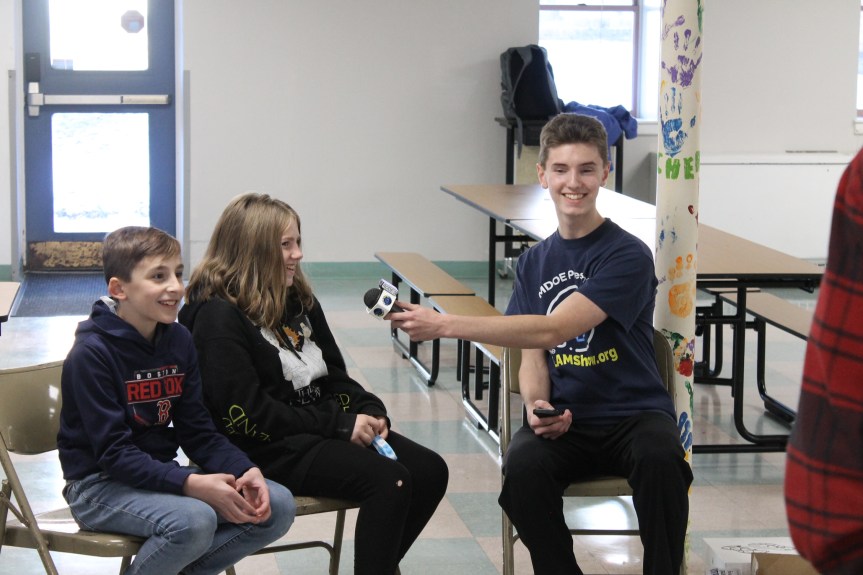
The Maine Department of Education’s MLTI Team, including MLTI Ambassadors, Nokomis SLAM students, and MLTI SLAM Coordinator, Kern Kelley spent the day presenting at the SLAM Showcase for sixth grade students and teachers from Hartford/Sumner Elementary School on November 22nd. This was the second of six SLAM (Student Leadership Ambassadors of Maine) Showcases happening at schools across Maine this year. (Read about the first SLAM Showcase here)
The SLAM show empowers MLTI students to use their devices and technology tools by providing a platform where students can give back and share their innovative work in their schools. The live SLAM in-person showcases have been designed to directly align with MLTI’s vision that all Maine students engage in authentic, relevant, technology-rich, learning experiences that prepare them for a fulfilling future.
Hartford/Sumner 2nd grade teacher Kelley Houghton attended a SLAM summer professional learning and applied to host a SLAM Showcase. As the selected candidate, Houghton invited MLTI to bring the SLAM Showcase to 6th grade students and teachers at her school.
The students spent the day learning about robotic coding with MLTI Ambassador, Martha Thibodeau, learning about Canva, free design software, with Nokomis High School SLAM student, Mia Coots, learning how to use TinkerCAD, a free web app for 3D modeling, electronics, and coding, with Nokomis High School SLAM student John Davis, and learning about how to create Virtual Reality with MLTI Ambassador, Tracy Williams.


The SLAM showcase provides the opportunity for students and teachers to learn new techniques and programs. Fifth grade teacher, Kate McCarthy, excitedly sat alongside students learning about Canva during one of the sessions. “I am very excited to use this in my classroom,” McCarthy later told SLAM student, Abby Caron, during a follow-up interview.
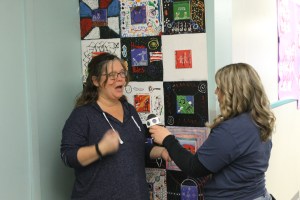
Following each session, students were invited to participate in the SLAM Exam where they are asked to answer a related question and invited to upload the work they created in the session. At the end of the SLAM Showcase, examples of student work are highlighted as part of the SLAM Show for all participants to view. Prizes were randomly selected from correctly answered SLAM Exams.
Kelley tells us that the SLAM Exam is a low barrier way for the SLAM program to collect and showcase student work, promote student participation, and entice students to participate in future events. “Even if they don’t get a prize during this show, there is always the opportunity to share work during any of our SLAM shows, so we always hope they will share again and possibly win a prize during a future event.” In addition to the Live SLAM Showcases happening monthly this school year, SLAM also hosts weekly virtual SLAM shows where students across the state can participate.


The day ended with a group activity that allowed students to, not only share their work, but also share what they learned and highlight their take-aways from a day of hands-on learning. Students also got the opportunity to take a group picture with a drone that was provided to the school, in addition to virtual reality (VR) headsets for each student that can be paired with any mobile device to show their parents and guardians the work they created that day in the Showcase.
Check out a video of the SLAM Showcase here
To learn more about the MLTI 2.0 SLAM program visit: http://MLTI.me. View the latest SLAM episode on the MLTI 2.0 Youtube Channel. To sign your school or classroom up to take part in SLAM, fill out this form.
Follow the Maine Department of Education on Facebook and Twitter to see a posting of the latest virtual SLAM show each week. Subscribe to the Maine DOE Newsroom to see a recap of the in-person SLAM shows each month.
Quarter 2 Reporting Opens Soon: Attendance, Behavior, Bullying and Truancy
The Department of Education offers quarterly windows for districts to review, for accuracy and comprehensiveness, data that has been entered and reported for Attendance, Behavior, Bullying and Truancy. The intention of quarterly reporting is to increase regular review of data in hopes that it will save time for districts at the end of the school year, as well as provide time for analysis and correction of data if necessary.
The reporting period for Quarter 2 Attendance, Behavior, Bullying and Truancy data opens on January 1st. Review, validation, and certification are required to be completed by January 15th. Superintendent certification is required for all quarterly reporting, with the exception of Attendance data, which is only validated for Quarters 1, 2, and 3 then certified for Quarter 4.
Quarter 2 (Q2) – Reports opens Jan. 1. Due Jan. 15.
Reporting range includes October, November, and December.
Reporting Resources:
- Quarterly Reporting Webinar (9/27/2022)
- Segments about individual reports:
- Guides:
For questions about quarterly reporting contact MEDMS.Helpdesk@maine.gov or call 207-624-6896
Get Daily Bites of Info on Interdisciplinary Instruction and Project-Based Learning!
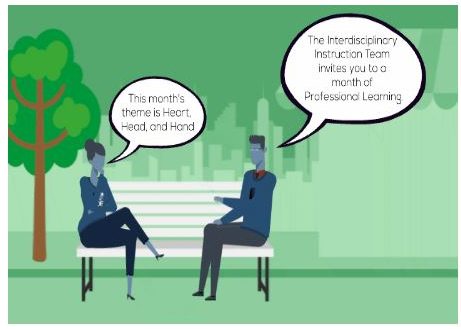
Every month the Maine Department of Education’s (DOE) Interdisciplinary Instruction Team will provide innovative daily bites of professional learning that focus on interdisciplinary instruction and project-based learning. Each day members of the Interdisciplinary Instruction team will post on the Interdisciplinary Instruction home page and on Maine DOE social media sites with explanations, ideas, and examples of interdisciplinary instruction.
You can access this wealth of information by checking in daily with the Interdisciplinary Instruction home page or by following the Maine DOE on Facebook, Twitter, and Instagram.
For more information, contact Jaime Beal at jaime.beal@maine.gov or Erik Wade at erik.wade@maine.gov
Student State Board Member Ryan Hafener Presents on the Importance of Involving Youth in Policy Making
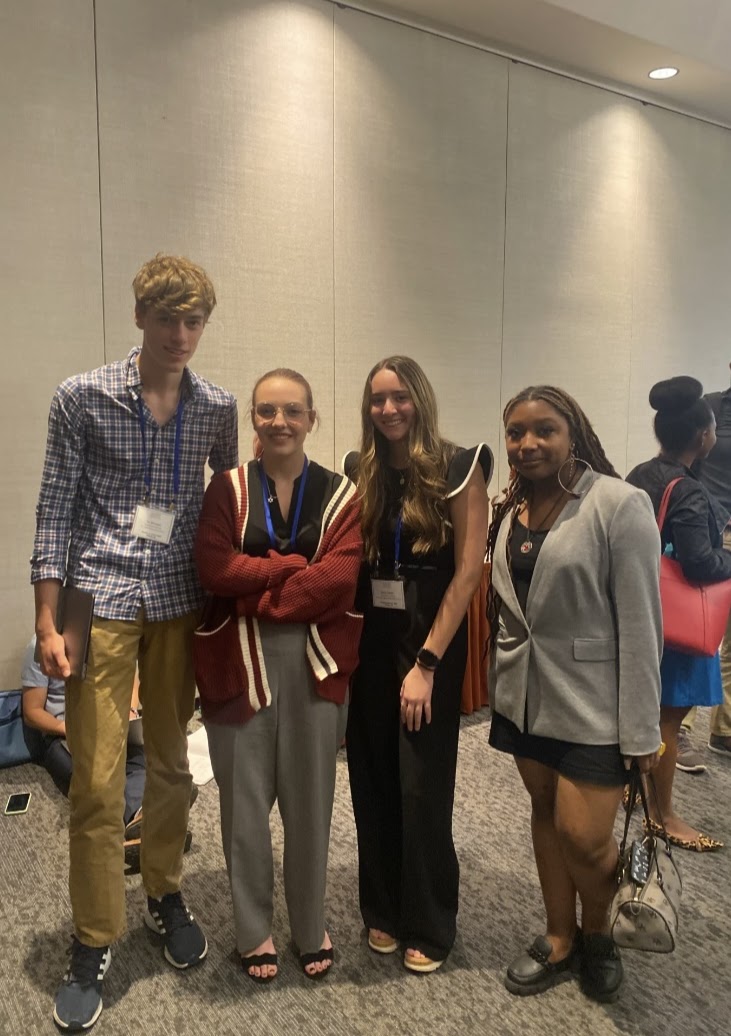
(Pictured: Maine State Board of Education Student Member Ryan Hafener with fellow students at the National Association of State Boards of Education Conference)
At the November State Board of Education Workshop, Student Member Ryan Hafener presented on the importance of youth engagement and provided recommendations to the Maine State Board of Education on how to increase engagement. In October, Hafener was featured on a webinar by the National Association of State Boards of Education (NASBE) that focused on how state officials can develop youth-adult partnerships. In the webinar, available on the NASBE website, Hafener fielded questions on what successful youth-adult partnerships look like, what barriers can get in the way of student engagement, and what can make partnerships successful.
In addition to providing an overview of his experiences on the panel, Hafener also discussed his takeaways from his attendance at the NASBE Annual Conference in Phoenix, Arizona. Hafener presented on everything from understanding and addressing chronic absenteeism to understanding school climate and creating educational pathways that are relevant to all students. However, Hafener spent most of the presentation focusing on student engagement, an issue he is passionate about.
Hafener says that when engaging students, it is crucial to recognize the expertise that students bring to the table and to help mentor and foster the growth of students. He emphasized the importance of putting aside traditional youth-adult power dynamics, which he says is vital to ensuring partnerships are effective.
In his webinar, Hafener also highlighted the barriers to student engagement, which he separated into two categories: systemic and perceptual. Systemic barriers include the need to legislate student engagement and lack of access to information around opportunities, while perceptual barriers include ego and the perception that leaders’ work engaging students is finished once students are put into positions of leadership.
Hafener wrapped up his presentation with policy suggestions on how to further student engagement in education policymaking in Maine. He proposed an increase in the number of student members, which he said will bring along a myriad of benefits including increased equity and representation. Hafener also advocated for students to play a larger role on the board, as well as for the creation of more student-led spaces for discussion.
Figures compiled by the National Association of State Boards of Education show that 33 states now engage more than 400 students in education decision-making. Hafener reported that Maine is one of the leaders across the nation in student engagement, but he also reiterated the importance of continually investing in and adding pathways to amplify the student voice.
This article was written by Maine State Board of Education in collaboration with student member, Ryan Hafener as part of the Maine Schools Sharing Success Campaign. To submit a story or an idea, email Rachel Paling at rachel.paling@maine.gov.
New Extended Learning Position at Noble High School Connects Student with Dream Job
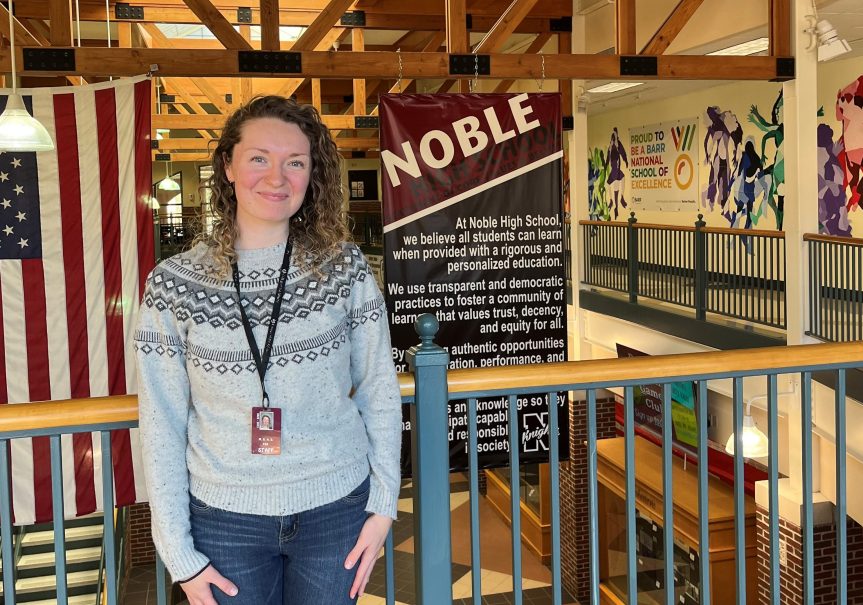
Lynn Kovitch is new to her role as Noble High School’s Extended Learning Opportunities (ELO) Coordinator. Thus far, she has spent a lot of her time building relationships with local businesses, organizations, and individuals in the community.
In addition to her research and leg work, Kovitch co-leads an ELO Class serving Noble High School’s Multiple Pathways Alternative School housed within the building where they are finding ways to engage students outside of the classroom. “I continue to meet new students, learn about their interests and place them in job shadows, paid work, and internships,” she said. As part of that process, she helps students with job applications and resumes and has conversations about post-secondary options including arranging career and college visits, as well as scheduling and bringing students to volunteer in the community.
“Now that we have a dedicated staff role to help our students find opportunities outside of the classroom, it feels like we are suddenly able to do more, and ideas we had are becoming a reality,” said a teacher from Noble High School Multiple Pathways Alternative School.
In describing a recent success, Kovitch explained that Noble High School has worked with a junior that applied and did not get into vocational school for the Automotive Program. After sharing his interest in working with his hands and learning anything about cars, Kovitch worked to find him a placement at a local garage. She went with him for an informal interview at a small garage this fall and the owner offered the student a job.
“He came up to me during the school day, looked me in the eyes, and thanked me. He gets to build a relationship with the shop owner, learn more about working in the automotive industry, and get the hands-on experience he had hoped for,” explained Kovitch. “This was one of the first of a handful of ‘work-study’ ELO’s and has motivated me greatly to continue helping students find placements- especially for those who did not get a spot in the vocational program.” Noble High School has students placed in many businesses in the area, including in childcare, welding, autobody and cosmetology.
Kovich goes on to explain that moments like these are the perfect example of why she loves her job so much. When students thank her for helping them locate opportunities outside of school that engages them in their passions and interests. “Seeing students genuinely excited to pursue their interest while building their confidence about their future and the many things they are capable of!”
Kovitch says that looking forward, Noble High School plans to grow its group ELO offerings next semester in addition to expanding its ability to transport students. She said they are also working on partnering with local organizations like Cooking Matters and Junior Achievement Maine to offer more life skills like financial literacy, cooking and budgeting in group ELO’s. This is all of course in addition to her continued efforts to match students with local businesses as she has worked so hard to do in the first half of the school year.
“We are excited to keep expanding our program as I settle into the role and get to know the community better,” she said.
Kovich extends a special thanks to some of their new community partners: Berwick Early Learning Center, Cabana Salon and Tanning, True Enterprises, Cabana’s Auto Body, Greater Works Land Trust, Riverside Farm and Another Chance Animal Shelter & Second Hand.
Extended Learning Opportunities (ELOs) are hands-on, credit-bearing courses outside of the traditional classroom with an emphasis on community-based career exploration. These opportunities are personalized for students and help them explore options for their professional lives. They help students engage in learning through instruction, assignments, and experiential learning. The Maine Department of Education (DOE), along with state-wide partner Jobs for Maine Graduates (JMG), have made a concerted effort to provide working models, support, and funding opportunities for Maine schools to set up ELO programs within their school communities. To learn more about Maine’s initiatives with extended learning opportunities, visit: https://www.maine.gov/doe/index.php/learning/elo or reach out to Maine DOE ELO Coordinator Rick Wilson at rick.wilson@maine.gov.
MaineCare Seed Adjustments to be Made; Review Q1’23 Reports by January 15, 2023
The recovery of Q1’23 MaineCare Seed will occur in the January 2023 subsidy payment. The Maine DOE is asking Districts to review their reports by January 15, 2023, to ensure accurate adjustments to subsidy. School Administrative Unit (SAU) staff must review and submit, disputes and student-by-student claims on both the public and private MaineCare reports for Q1’23 by January 15, 2023.
To access the MaineCare Seed reports, please follow the instructions below.
- Log into NEO using the link: https://neo.maine.gov/DOE/neo/Dashboard
- Click on the Student Data tab
- Click on the Student Report tab
- Select MaineCare in the Reporting Area drop-down
-

Export Button Choose the quarterly Seed report and the report type (private/public)
- Click the view report button
- Once the report appears on the screen, choose the export button.
You may export the reports to Excel but, please be aware that there may be multiple worksheet tabs within the workbook. Save the file to your computer.
To dispute a claim:
If you disagree that a particular student or time period should not be on the report, please send an email with the following information for each State Student ID to stephanie.clark@maine.gov.
- State Student ID
- The reason that you disagree
- Identify the type of report: public or private
- Quarter in which the claims are located
- Service provided dates (From and To)
- Total amount of Seed being disputed
Summer services:
Students must be enrolled for the time period they are receiving educational services. This means that students that are receiving extended school year services in district or extended school year services in an out-of-district placement must have a primary enrollment for that time period in order for the Maine DOE to have the most accurate enrollment data to determine SAU responsibility for MaineCare Seed.
If you have difficulty logging into NEO:
Anyone who currently has Special Education Director permissions to the Special Education module will automatically have permission to access MaineCare reports.
As in the past, if a new staff member needs permission to access this module, a request from the Superintendent to the Maine DOE helpdesk will be necessary. The helpdesk contact information is medms.helpdesk@maine.gov or 207-624-6896.
Please contact stephanie.clark@maine.gov for more information or technical assistance related to MaineCare Seed.
Administrative Letter: Guidance for Expulsion, Suspension, and Modified Schedules in Public Preschool Programs
Administrative Letter: #2
Policy Code: JKE, JKD
To: Public School Administrators
Date: December 14, 2022
Subject: Guidance regarding suspension, expulsion and modified schedules in public preschool programs
This guidance is offered by the Maine Department of Education to clarify suspension, expulsion, and modified schedules as they apply to students attending public preschool programs. While the provision of public preschool programs is not mandated in Maine, public preschool is strongly encouraged. When offered, public preschool is intended to serve all eligible children, to the extent possible, including learners with a variety of needs. Children who attend high quality preschool programs have an opportunity to build social emotional skills, strengthen executive functioning skills and have a stronger start to school (Zinsser, et al, 2022). To realize these benefits, children must remain in school. Once enrolled in public preschool programs, in accordance with 20-A M.R.S. §1001(8-A), children may not be unenrolled or expelled. Additionally, if a school administrative unit (SAU) is unable to serve all 4-year-olds who wish to enroll in public preschool, protocols to determine enrollment decisions which result in preschool populations with demographics that reflect the SAU’s K-12 demographics are strongly encouraged.
Suspension and Modified Schedules in General Education
Suspension of 4-year-olds attending public preschool programs is permitted only in accordance with 20-A M.R.S. § 1001(9) which specifies that a school board may not authorize a principal to issue an out-of-school suspension to a student who is enrolled in grade 5 or below except as provided under subsection 9-A (federal Gun Free Schools Act) or unless the principal determines that there is an imminent danger of serious physical injury to the student or others and less restrictive interventions would be ineffective. An out-of-school suspension for a student who is enrolled in grade 5 or below may not exceed 3 days. Additionally, SAUs cannot unilaterally determine that a child attend public preschool on a modified schedule (e.g., reduced school day, reduced school week). Parents/caregivers must understand the reason(s) for consideration of a modified schedule, and they must be involved in the decision-making process and agree to the modified schedule before it is implemented. Consider a modified schedule as an interim intervention in a multi-tiered systems of support (MTSS) plan only in situations where multiple accommodations and interventions have been implemented, but safety remains a concern.
Suspension and Expulsion for Children with Disabilities
In accordance with Federal and State law, a child may not be excluded from enrollment in a public preschool program based solely on the presence of a disability. Enrolled children who are referred to Child Development Services (CDS) based on program concerns regarding the child’s development or behavior must be considered a child with a disability and afforded the same rights as their K-12 peers, until the child’s Individualized Education Program (IEP) team makes its determinations.
The Maine Department of Education recognizes that to support challenging behaviors and maintain safe environments for all students and staff, educators need training and resources. Please refer to the list below for helpful contacts and resources.
Please contact Nicole Madore, Early Childhood Specialist at 446-3967 and nicole.madore@maine.gov, or Dr. Roberta Lucas, State Director of Child Development Services/619 Coordinator at 207-624-6621 and Roberta.Lucas@maine.gov, with questions or comments about this guidance.
Resources:
Maine DOE’s Early Learning Office Hours for Public Preschool
Maine’s Child Development Services System (Part B 619)
Maine Department of Education’s Office of School and Student Supports
Maine Early Childhood Consultation Partnership
Maine DOE’s Multi-Tiered Systems of Support
Center on the Social Emotional Foundations for Early Learning
 Maine DOE Newsroom