A Year of Success and Innovation: Rethinking Responsive Education Ventures in Brewer School Department

The first round of RREV (Rethinking Responsive Education Ventures) Awardees were announced in August of 2021. RREV is an initiative of the Maine Department of Education, funded by the Education Stabilization Funds through the US Department of Education’s Rethink K-12 Education Models, that bolsters Maine educators’ innovative efforts to support their students with agile, effective, and resilient learning experiences that improve learning outcomes for all students. Now, after a year of experience and development, the Department of Education would like to thank the awardees for their dedication to innovative education and highlight their achievements that have resulted from the RREV contracts over the past year. Continue reading to learn more about the ways in which the Brewer School Department has used their RREV funding this past year.

After a year of remote, online learning, many students and educators were eager to get back inside the classroom. This desire to have in-person learning once again was understood by most people, as online classes made learning harder for many students. However, Superintendent of Brewer School Department (BSD) Gregg Palmer believes that the rush back to the traditional classroom was also a “rush back to marginalization” for those students who felt more comfortable in online classes. “Tradition is a place of safety,” he said, however, some students feel as though the tradition of brick-and-mortar school buildings is far from safe. He, along with Renita Ward-Downer, Director of Curriculum at BSD, recognized that some students need an online alternative.

Nu posterIn August 2021, after receiving their RREV funding, BSD began to offer a remote learning pathway for students in 7th through 12th grades. At first, the intention was for the pathway to be fully online education with limited spots. The students would have access to in-person opportunities for extracurricular activities to ensure students were still able to make meaningful connections with peers and educators. However, the school quickly realized that their enrollment limit was not high enough, as greater need was shown by the number of students registering in the program. The district honored their promise of flexibility, though, and simply increased the number of students able to enroll in the program.

Ward-Downer said their goal with the program was to “truly tailor a person’s education,” and they have done just that. Once students understood that they were able to help define the shape of the program, they began to communicate with the district what they wanted and needed. In the case of many students, this meant not being 100% remote, but rather a mix of in-person and online education. The district, Palmer said, was happy to make this change, as it gives an intermediate option rather than the “all or nothing” structure of classic public school.

Many of the students who have taken advantage of this online option are students who have been chronically absent in the past. Prior to the introduction of this program, the district wasn’t appropriately addressing student needs, Palmer said. Now the district has found that kids who previously had no interest in school want to learn because their needs are being met. One student was consistently truant about a third of the school year prior to COVID, mostly due to anxiety surrounding being in class at school. Since enrolling in the online pathway that BSD has to offer, however, they have not missed a single day of school, and, at the end of the school year, was sad that it was over. The student is excited for the next school year to start for the first time.

Another group of students that found great value in the program were homeschooled students. Many families who switched to homeschooling at the start of the pandemic placed their students back into the public school system because of this program. They found that the online pathway helped relieve family stress while continuing to provide a similar flexibility to homeschooling.

Getting to this level of success wasn’t easy, though. The district had to battle the stigma that comes with online education along with misconstrued perceptions of the work they were trying to do. “The one thing we couldn’t be was afraid of upsetting people or being viewed as not supporting the idea of a full public education program,” Palmer said. If they had, he said, they would’ve opened the door to questions and doubts about what they were trying to do.

Even while they were confident in their work, others found ways to doubt the district. Parents were concerned that students would take advantage of the online program, using it to slack off. Others who provide supports to students including Special Education, were understandably concerned that identified students looking to try the new program might encounter difficulty having all their educational and social/emotional needs met. However, Brewer offered in-person support for these students and monitored how the pilot went for certain students. The results were very positive, with identified students improving their attendance, and all groups are now in support of the online pathway. Ward-Downer believes that “to grow, [we all had to] problem solve together” in order to find the best solution for the kids. Parents and educators alike found that the students in the online program are leaders, taking control of their education. This form of online education, Palmer said, takes a different kind of motivation than a typical public school education, and Ward-Downer added that they ensure their students have balance so they’re not just lying in bed all day. They both agreed that you cannot fake your way through the online pathway the way you might be able to in the back corner of a classroom. The Special Education department found that some of their students have been able to be more successful in the online pathway thanks to anxiety relief and increased flexibility. Since its introduction, the online pathway has continually gained momentum and support throughout both the student body and the community to get to where it is now.

Other districts around the state are noticing BSD’s success, too. Realizing how beneficial the online pathway has been for students in Brewer and how it has lowered truancy, other districts are looking to implement the innovation in their districts as well, and the educators in BSD say they are happy to help. Their goal for the next year, Palmer said, is to work with other districts to build a network of online programs. In true RREV spirit, the district aspires to inspire innovation and collaborate with other schools to provide as many students a chance at success as possible. Once other RREV pilots based off of Brewer’s are established, like Hampden and Bucksport, which have been recently approved, Palmer said he hopes that they will all be able to tap into each other’s different online courses and resources to offer all students a well-rounded education with multiple outcomes.

Martin Mackey, the former RREV Project Director who tragically passed away in April of this year, embodied the RREV spirit: to think and act boldly to meet the needs of students. His passion was to “change lives.” As such, he challenged each and every RREV participant to do just that as they designed pilot ideas that would ultimately have a lasting systemic impact on students.  After 18 months of leading RREV, Martin’s passion had been passed on to almost 200 educators who had participated in innovation professional development. From those educators, 27 Pilot ideas were brought to fruition and have received over $5.7 million in RREV awards. Through their pilot ideas, these educators have pledged to commit themselves to innovation.

The Maine DOE encourages all schools and districts across the State of Maine to learn more about these innovative educators and their RREV pilots through the RREV website and the online RREV collaborative platform known as EnGiNE. It is through EnGiNE that we all hope to continue the Martin Momentum to change students’ lives through innovative and responsive educational programs.

Southern Maine 21st Century Learning Center Experience the Outdoors Through Community Connections

From the trails to the sea, the youth participating in the Boys and Girls Club of Southern Maine, one of Maine’s 21st Century Learning Centers, have been busy exploring outdoor destinations in the Portland area this summer thanks to their strong community connections.

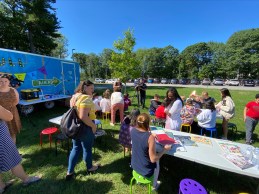
Starting with the Portland Trails, a nonprofit urban land trust that aims to transform the Greater Portland area into a healthier and better-connected community, the center has utilized this amazing community resource to get kids outdoors to go on walks and explore part of the 70+ mile trail network that Portland Trails has to offer. (pictured above)

The kids have also been out to sea this summer thanks to SailMaine, a nonprofit organization that provides affordable access to the water through community sailing and education. Thanks to this community connection, every Tuesday for the next several weeks, the Center’s middle schoolers will be learning about sailing on Casco Bay.

Portland Maine Parks, Recreation & Facilities Department has also been a generous partner this summer by letting the Boys and Girls Club of Southern Maine utilize the outdoor pool. Thanks to this community partnership, the kids have been enjoying swimming three afternoons a week!

Funded through the U.S. Department of Education’s Nita M. Lowey 21st Century Community Learning Centers (CCLC) program, Maine currently has 35 CCLC grants and 61 CCLC sites across Maine that provide academic enrichment opportunities during non-school hours for children, particularly for students who face economic and/or academic challenges. With strong community partnerships at the core of every one of its programs, Maine’s 21st Century Learning Centers help students meet academic goals and offer a broad array of enrichment activities, in addition to other educational and engagement opportunities for communities and families. Learn more about Maine’s CCLC grant opportunities at https://www.maine.gov/doe/learning/esea or reach out to Travis Doughty at travis.w.doughty@maine.gov.

Seal of Biliteracy Earned by Maine High School Seniors

The Maine Department of Education congratulates 347 Maine high school seniors who are this year’s recipients of the Maine Seal of Biliteracy!

The Seal of Biliteracy recognizes student achievement in language learning. Graduating seniors who are proficient in English and at least one additional language may earn the Seal of Biliteracy by demonstrating their skills on an approved assessment (see eligibility criteria). This award elevates the study of languages and provides students an edge for their college applications and professional careers. Students who attend a University of Maine System campus may also earn college credits.

The Seal of Biliteracy distinction for graduating seniors honors students who have studied world languages in school, students who have spoken English and another language at home and in their communities, and students who have learned English at school. Learning another language is an impressive accomplishment, and the Department commends all multilingual students for their efforts.

We would also like to recognize the incredible work of World Languages and English for Speakers of Other Languages (ESOL) teachers, who support students in their multilingual journeys. Language educators empower students with linguistic and cultural understanding that will be invaluable to them throughout their personal, academic, and professional lives. Teaching students another language goes beyond grammar and vocabulary – it is truly opening a door to another world and enabling students to explore and experience that world through the power of language!

Congratulations to the Class of 2022 Seal of Biliteracy recipients and their teachers! If your school isn’t yet participating in the Seal of Biliteracy and would like further information, please reach out to April Perkins, ESOL & Bilingual Programs Specialist, at april.perkins@maine.gov.

2022 Participating Schools include:

  • Blue Hill Harbor School
  • Brewer High School
  • Brunswick High School
  • Camden Hills Regional High School
  • Cape Elizabeth High School
  • Caribou High School
  • Casco Bay High School
  • Cony High School
  • Deering High School
  • Falmouth High School
  • Gardiner Area High School
  • Gray-New Gloucester High School
  • Greely High School
  • Hampden Academy
  • Houlton High School
  • Kennebunk High School
  • Lincoln Academy
  • Maranacook Community High School
  • Morse High School
  • Blue High School
  • Noble High School
  • North Yarmouth Academy
  • Orono High School
  • Portland High School
  • Presque Isle High School
  • Scarborough High School
  • South Portland High School
  • Westbrook High School
  • Windham High School
  • Winthrop High School
  • York High School

2022 Seal recipients’ languages include English and:

  • Arabic
  • Bengali
  • Bulgarian
  • Chinese
  • Dari
  • French
  • German
  • Hindi
  • Latin
  • Lingala
  • Portuguese
  • Russian
  • Somali
  • Spanish
  • Vietnamese

A Year of Success and Innovation: Rethinking Responsive Education Ventures at St George Schools

The first round of RREV (Rethinking Responsive Education Ventures) Awardees were announced in August of 2021. RREV is an initiative of the Maine Department of Education, funded by the Education Stabilization Funds through the US Department of Education’s Rethink K-12 Education Models, that bolsters Maine educators’ innovative efforts to support their students with agile, effective, and resilient learning experiences that improve learning outcomes for all students. Now, after a year of experience and development, the Department of Education would like to thank the awardees for their dedication to innovative education and highlight their achievements that have resulted from the RREV contracts over the past year. Continue reading to learn more about the ways in which St George Public Schools has used their RREV funding this past year.

Since being named a RREV Awardee last August, St George Public Schools have been working with Mid-Coast School of Technology to create a PreK-12 Career and Technical Education Program. The program builds upon a long tradition of place-based education that grounds student learning in the history, traditions, and natural environment of St. George and provides a model for preparing students to develop the technical, creative thinking, and social-emotional skills to thrive in an innovation economy and strengthen local and regional economies by meeting existing labor force needs and creating new businesses and industries.

The program implementation and increased Makerspace use over the past year has had an “energizing effect” on the community, Superintendent Mike Felton says. “Teachers are saying thank you and getting excited,” Makerspace Director Paul Meinersmann added. It’s not just teachers that are excited, though. Students are loving the “hands-on, minds-on” learning, too. One student that was feeling disengaged at the start of the year now aspires to be an engineer after spending time using the equipment in the Makerspace.

Part of the engagement, the educators say, comes from the independence and confidence instilled in the Makerspace. Students are asked “What do you want to learn?” rather than being told what to learn, and, once they feel comfortable completing a task on their own, they are allowed to do so. Another important aspect is that students receive credit for their work. A 5th grade student who helped design and create donor plaques for the new, soon to be constructed Makerspace was both surprised and proud to find his name engraved on the back of the plaques next to Meinersmann’s.

students on toboggan
St George Students at the US National Toboggan Championships

Another group of students who were beginning to feel disinterested had the opportunity to work in Apprenticeshop in Rockland. The Apprenticeshop has hosted a Junior Boat Building program that the school has participated in for multiple years, but this year, instead of a boat, the students built a toboggan. Once their toboggan was completed, the group of three students took their toboggan to the US National Championships to compete. The construction of the toboggan reengaged the students in their learning and captivated their minds by showing them just a few of the possibilities open to them after graduation.

The district is working up to build a PreK-8 CTE/Makerspace Building at St. George School, and Felton says this past year

has been integral to making the building successful when it opens. “We need vision and heart to fill the building,” he said, and that’s exactly what they’re building through the implementation of the program this past year.

Outside of the Makerspace access and use, fundraising efforts have also helped to spread the vision and create a network of people investing in the school. The community has collectively raised over $1,450,000, which includes the $250,000 from the RREV grant. Contributions came in every shape and size, from big and little donors alike. One family sold eggs on the side of the road to pitch in, while some individuals donors made contributions up to $250,000. In addition, 13 businesses have sponsored the project.

The school hopes to break ground on the building in the fall and to provide programming to every child. Felton sees the building, and the program as a whole, as an “equity builder,” a true community resource that’s accessible to everyone, all the time, that everyone knows they can use.  The school is looking forward to having the building completed by the end of the upcoming school year and is hoping to offer summer programming for students next year.

Although RREV funding ends June 30, 2023, the vision at St George does not end next year. In the long term, Felton says he hopes for the district to act as an example and a model for other schools and districts, not only across Maine, but across the country. The goal is to spread awareness about the power of this type of learning, which he views as increased student and family engagement, and job set up. By connecting and advocating with other states, Felton says he believes that other schools can be encouraged to connect higher career and technical education with younger grades, setting students up for success.

Martin Mackey, the former RREV Project Director who tragically passed away in April of this year, embodied the RREV spirit: to think and act boldly to meet the needs of students. His passion was to “change lives.” As such, he challenged each and every RREV participant to do just that as they designed pilot ideas that would ultimately have a lasting systemic impact on students.  After 18 months of leading RREV, Martin’s passion had been passed on to almost 200 educators who had participated in innovation professional development. From those educators, 27 Pilot ideas were brought to fruition and have received over $5.7 million in RREV awards. Through their pilot ideas, these educators have pledged to commit themselves to innovation.

The Maine DOE encourages all schools and districts across the State of Maine to learn more about these innovative educators and their RREV pilots through the RREV website and the online RREV collaborative platform known as EnGiNE. It is through EnGiNE that we all hope to continue the Martin Momentum to change students’ lives through innovative and responsive educational programs.

Get to Know the Maine DOE Team: Meet Robert Palmer

Maine DOE team member Robert Palmer is being highlighted this week as part of the Get to Know the Maine DOE Team Campaign. Learn a little more about Robert in the question and answer below.

What are your roles with DOE?

I am Management Analyst II for the EANS (Emergency Assistance to Non-Public Schools) team. I make up the fiscal and procurement section of the EANS Team.

What do you like best about your job?

I enjoy assisting the Non Public Schools to better enable the children to learn more effectively in safe/secure environment.

How or why did you decide on this career?

I decided to work with the EANS team because I enjoy challenging myself. Working with Non-Public Schools and the ever changing funding sources provides a challenge that is always evolving. Being able to adapt and overcome each challenge while helping the schools is very rewarding.

What do you like to do outside of work for fun?

I enjoy spending as much time outside as possible. Most of the time is spent hiking, hunting and fishing. If I am not outside, I can be found renovating my rental properties. I enjoy learning how to do things for myself and as any home owner knows, something always needs to be done.

Maine School Nurse Summer Institute Brings Together 150 School Nurses from Across Maine

Nearly 150 school nurses from across Maine gathered this week in Belfast for the Maine School Nurse Summer Institute. This was the first in person Summer Institute in four years and allowed school nurses to come together to build community and connection, participate in professional learning opportunities, identify strategies to care for themselves in the same way they care for so many others, and share challenges and opportunities for themselves and the school nursing field following several years on the frontlines of combating COVID and keeping their schools safe.  

Nurses at the Summer Institute were guided by Florence Nightingale’s words to “let us never consider ourselves finished nurses; we must be learning all of our lives.” 

Maine Education Commissioner delivered a keynote address during the Summer Institute and told the school nurses in attendance: “You take care of everyone else…please take care of yourselves.” 

Commissioner Makin Speaking“I am in awe of the work you have done. You are singlehandedly running an ER in your schools and facing a revolving door of kids who need you and search your face for assurance that everything will be alright,” said Makin. “The work you do in general is so huge, and during COVID-19 it was over the top. It is so appreciated.” 

Makin honored the work done by school nurses during the pandemic and talked about the toll it takes on people to be in that constant state of being on alert and dealing with trauma. She urged the nurses to pay close attention to their wellbeing.  

Maine Department of Health and Human Services Chief Child Health Officer Amy Belisle also spoke, detailing the many heroic efforts of school nurses during the pandemic to keep students safe and schools safe and open.  

Nearly 9 million items of PPE were delivered to schools between July of 2020 and December of 2021, with school nurses at the center of managing those incoming deliveries, teaching staff and students on using PPE, developing usage policies, and troubleshooting. There were 242,000 COVID-19 antigen tests provided to schools since 2020, 1 million at home test kids provided to schools for student, staff, and family use, and school nurses helped facilitate more than 150,000 polled tests during the pandemic. And school nurses managed implementing the frequent updates and shifts of the COVID-19 Standard Operating Procedure (SOP) for schools. 

School nurses also participated in the school health advisory group, that started out meeting weekly in the summer of 2020 to meet with state health and education leaders on COVID-19 mitigation strategies, and nurses who were part of the state’s School Public Health Response Team responded to 3,700 calls and 12,000 emails related to COVID-19, handled 34,000 cases, and ran 540 vaccine clinics.  

Nurses had an opportunity to process and discuss the stress and strain caused by the pandemic, strategies to address their wellbeing, and how to move forward in this new phase of the pandemic. The Summer Institute featured a wide variety of workshops and professional learning opportunities around adjusting to the wake of the pandemic, social emotional learning, interprofessional collaboration & nursing, the school nurse role in a crisis, and children’s health related topics including handling common school injuries, managing diabetes, seizures, and oral health.  

Brad Hurtig SpeakingBrad Hurtig delivered a keynote address, sharing with the audience his personal story of courage and resilience after losing both hands as a teenager after an accident involving a 500 ton power press.  

“We all face challenges,” said Hurtig. “How you handle adversity will define your life and being able to handle it will set you apart.” 

Hurtig shared feeling like everything had been taken away from him in those first few months after his accident and how he was laying on the couch thinking “why me?”. But step by step he found a way forward, often through the help of his football coach. He was able to return to the football field and went on to be first team all-state his senior year. And his prosthetics enabled him to do things with hands once again.  

“When you want something, lean in and relentlessly go after it. Find a way,” Hurtig said, sharing the message he delivers at schools across the country. “If you are willing to have the right mindset, to adapt, to have perseverance, then you will find a way.” 

Hurtig connected his experience to what school nurses have faced over the past few years and their power to help students find a way.  

“You’ve had a rough few years and you know all about how to adapt and do things differently,” said Hurtig. “There is no better reward than helping another human being. I know your moments with students can be brief but find ways to show that they matter and that their life counts. It goes a long way for a struggling child.” 

Register Today for the 2022 Maine ELO Conference August 15-17

The Maine Department of Education (DOE) and Jobs for Maine Grads (JMG) are partnering to offer a 3-day, 2-night Extended Learning Opportunity (ELO) conference hosted at University of Maine Orono on August 15th through the 17th. All Maine educators focused on expanding access to ELO programming are encouraged to register.

This conference is designed to equip educators with the skills and facilitated planning time to build or expand quality ELO programming for Maine high school students. ELOs are hands on credit bearing courses outside of the traditional classroom with an emphasis on community-based care.

All conference events, meals, and housing will take place at the University of Maine at Orono.

At the end of the conference, you will:

  • Understand the history and context of ELOs in Maine
  • Be ready to build (or build upon) your ELO programs
  • Understand the various levels of support and training available to you
  • Understand the components of a high-quality ELO program
  • Have connected with a strong network of professionals in the field
  • Be energized by the transformational nature of this work

For more information, please reach out to Rick.Wilson@maine.gov or elo@jmg.org. You can also visit https://jmg.org/models-strategic-initiatives/elos.

Register here

Program and agenda information can be found here

A Year of Success and Innovation: Rethinking Responsive Education Ventures at School Union 76

The first round of RREV (Rethinking Responsive Education Ventures) Awardees were announced in August of 2021. RREV is an initiative of the Maine Department of Education, funded by the Education Stabilization Funds through the US Department of Education’s Rethink K-12 Education Models, that bolsters Maine educators’ innovative efforts to support their students with agile, effective, and resilient learning experiences that improve learning outcomes for all students. Now, after a year of experience and development, the Department of Education would like to thank the awardees for their dedication to innovative education and highlight their achievements that have resulted from the RREV contracts over the past year. Continue reading to learn more about the ways in which School Union 76 has used their RREV funding this past year.

Last August, School Union 76 was approved for their RREV pilot project titled “Classrooms in the Community,” which was intended to create outdoor learning spaces for students across the district. These outdoor spaces were meant to be inclusive and were designed for all students to be able to engage, connect, and explore. The district took on big goals, hoping to significantly boost student learning proficiencies across all subgroups of students, create a global, integrated base of knowledge for staff, students, and parents, expand aspirations and awareness of continuous learning opportunities for students and communities, and better prepare students for a world rapidly changing through technology and innovation by teaching and nurturing the practices of self-educating, research & exploration, and teamwork. A year later, significant progress has been made towards these goals thanks to the construction of an ADA accessible boardwalk that is part of a nature trail, and partnerships with community organizations, sharing their progress all along on Facebook.

The ADA accessible boardwalk has been a focal point for both the schools and the surrounding community. Students now interact with it regularly, and, in October, after the construction completed, Island Heritage Trust collaborated with the district on a jack-o’-lantern carving event. Jack-o’-lanterns lined the boardwalk and were illuminated for two nights where the trail was open to the public. Mickie Flores, Deer Isle-Stonington (DIS) Elementary Science Teacher, described how students “oohed” and “awed” as they walked down the boardwalk. Community members, she said, showed up too, to enjoy the pumpkins and fall air.

The boardwalk and the outside facilities are not just used for events, however. One kindergarten class took a walk on the nature trail every day this past school year. They loved their routine so much, they wanted to do everything they could to maintain the boardwalk and trail. As part of the district’s turn to hands-on learning, the teachers encouraged their students to collect pennies and took them on a field trip to the bank to deposit them. When all the collected pennies were counted, the students had collected over $230 to put towards boardwalk maintenance, and community members in the bank at the time donated even more money to help the kindergartners maintain their beloved nature trail.

While the kindergarteners use the trail to take in the nature around them, Flores emphasizes that “going outside is not just to learn science.” She believes you can learn anything outdoors, and the curriculum in SU 76 reflects this. 5th grade students spent time outside writing haikus this year, and 2nd graders painted rocks with positive messages. The time outside was good for their creativity and mindfulness, not just factual, science-based education.

Next year, Flores will find herself in a new position with a new title as the Classroom and Community Coordinator. “I believe the past titles of RREV Coordinator and Place Based Education Coordinator are much too enigmatic,” she said. To her, a label that clearly communicates her role within the district is more important, as the clarity helps to create and strengthen those community connections that are integral to the project. In her new role, Flores looks forward to establishing herself as a resource for all four schools and continuing to collaborate with Island Heritage Trust, Haystack Mountain School of Crafts, Maine Mathematics and Science Alliance, and the Chase Emerson Public Library.

In terms of the continuation of their project, the district hopes to expand the opportunities available to students this coming school year. The construction of an outdoor classroom is underway and is set to be opened near the high school. Flores hopes that this outdoor space, while it will be used by all students, will increase high school engagement and excitement because of its proximity to their school building. The district is also hoping to have opportunities to connect the schools through field trips and increased interaction with community partners to achieve their long-term goal of having all students experience multiple learning opportunities that are active, hands-on, creative, and student-centered.

Ultimately, before the June 30, 2023 funding deadline, Flores hopes to increase participation at Deer Isle-Stonington Elementary School and the Sedgwick Schools and begin involvement with the Brooklin school as well as the Deer Isle-Stonington High School. She also intends to produce a calendar documenting the activities at the various schools throughout the year to share the activities with the community and increase this involvement.

Martin Mackey, the former RREV Project Director who tragically passed away in April of this year, embodied the RREV spirit: to think and act boldly to meet the needs of students. His passion was to “change lives.” As such, he challenged each and every RREV participant to do just that as they designed pilot ideas that would ultimately have a lasting systemic impact on students.  After 18 months of leading RREV, Martin’s passion had been passed on to almost 200 educators who had participated in innovation professional development. From those educators, 27 Pilot ideas were brought to fruition and have received over $5.7 million in RREV awards. Through their pilot ideas, these educators have pledged to commit themselves to innovation.

The Maine DOE encourages all schools and districts across the State of Maine to learn more about these innovative educators and their RREV pilots through the RREV website and the online RREV collaborative platform known as EnGiNE. It is through EnGiNE that we all hope to continue the Martin Momentum to change students’ lives through innovative and responsive educational programs.

A Year of Success and Innovation: Rethinking Responsive Education Ventures at MSAD 60

The first round of RREV (Rethinking Responsive Education Ventures) Awardees were announced in August of 2021. RREV is an initiative of the Maine Department of Education, funded by the Education Stabilization Funds through the US Department of Education’s Rethink K-12 Education Models, that bolsters Maine educators’ innovative efforts to support their students with agile, effective, and resilient learning experiences that improve learning outcomes for all students. Now, after a year of experience and development, the Department of Education would like to thank the awardees for their dedication to innovative education and highlight their achievements that have resulted from the RREV contracts over the past year. Continue reading to learn more about the ways in which MSAD 60 has used their RREV funding this past year.

After being forced online at the start of the pandemic, MSAD 60 has chosen to embrace remote learning as a pathway for some students rather than await its end. Last year, they created Noble Virtual Middle School (NVMS) as an option for students looking to continue remote education as the district moved back to in person learning. Since receiving their RREV funding in August 2021, they have been able to transform the learning experience for students in NVMS through their pilot project “Be Well Connected,” which is helping to create mentally and physically healthier students with stronger connections and relationships with their peers. The program focuses on building social emotional learning and a whole person wellness outlook through field trips, enrichment, and teambuilding.

Over the last year, educators have seen amazing progress and growth in their students. Brigette Dumont, NVMS Director, says this year has been “phenomenal.” One student who historically has been academically capable, but quiet, has come out of his shell. In NVMS, he laughs and makes comments in class, feeling connected to his classmates, whereas before, he always kept to himself. This student is just one example, but the growth can be seen in every student. “Students came together as a community. The intentional investment of time paired with risk taking really helped break down walls and helped them all have a voice,” Dumont says.

A big part of this growth came from the enrichment activities the students had, which greatly increased student engagement and involvement. For one hour each Friday, students would meet in enrichment clusters that were geared toward their interests. The theater enrichment cluster worked on creating a play, while the computer science cluster spent time coding. One student-favorite group was a student created and led Dungeons and Dragons cluster. These students spent their time creating characters and playing through campaigns led by a student Dungeon Master using tools from the D&D Beyond website. As a final project, students created their own campaign including maps, characters, a plot, and more, which they then presented to the class and posted to D&D Beyond for others to use. They enjoyed the freedom they had to explore their creativity and were able to have fun while learning. While many people may just think they were just kids having fun playing a game, the enrichment cluster was much more than that. The communication skills these students developed, Dumont says, were beyond the skills that are typically developed in the classroom, and they gained more self-confidence because they were so engaged in their collaborative work.

In the coming year, the school plans to build on this work. They have hired a wellness counselor who will start at the beginning of the new school year in September to provide much needed mental health support to help students manage trauma and anxiety. Dumont says they are “looking forward to having someone help in acute moments with students.” The district looks forward to providing students with strategies to manage mental wellness and developing a more solid approach to bring mental health resources to their students.

students at desksThe school also hopes to offer the students of NVMS two in-person days a week. This will allow the school to increase field trips and enrichment opportunities as well as encourage growth throughout the community. By building stronger connections with community partners and local businesses, the district plans to provide students with more real-world applications for their learning and better utilize nearby resources.

Martin Mackey, the former RREV Project Director who tragically passed away in April of this year, embodied the RREV spirit: to think and act boldly to meet the needs of students. His passion was to “change lives.” As such, he challenged each and every RREV participant to do just that as they designed pilot ideas that would ultimately have a lasting systemic impact on students.  After 18 months of leading RREV, Martin’s passion had been passed on to almost 200 educators who had participated in innovation professional development. From those educators, 27 Pilot ideas were brought to fruition and have received over $5.7 million in RREV awards. Through their pilot ideas, these educators have pledged to commit themselves to innovation.

The Maine DOE encourages all schools and districts across the State of Maine to learn more about these innovative educators and their RREV pilots through the RREV website and the online RREV collaborative platform known as EnGiNE. It is through EnGiNE that we all hope to continue the Martin Momentum to change students’ lives through innovative and responsive educational programs.

WEBINAR: Registering and Enrolling Refugee and Immigrant Students in Secondary Schools

The U.S. Department of Education’s Office of English Language Acquisition (OELA) is hosting to a webinar where panelists will discuss best practices and resources for facilitating refugee and immigrant students’ transition into U.S. schools, including scheduling considerations, academic evaluations, and options for registering newcomer students who arrive without academic credentials or who do not meet state academic requirements.

The panelists will also discuss models of academic background review and assessment that can be used during newcomer immigrant registration and enrollment to set students on a success trajectory and pathway to graduation.

Aug 12, 2022 02:00 PM in Eastern Time (US and Canada)

More Information and Register Here