Free Viewing of ‘Truth Tellers’ Documentary on Racial Equity, Climate Justice, and Indigenous Rights; Follow-up Conference Scheduled for 11/5

All Maine educators and pre-service teachers are invited to view, “Truth Tellers” a film chronicling the lives of courageous Americans fighting for racial equity, climate justice, and indigenous rights through the eyes of Robert Shetterly, a long-time activist, and Maine artist. Truth Tellers is both a story of Shetterly’s art and activism and a history lesson in what it means to be a citizen of a democracy. The film will be available for viewing on August 16th and 17th from the comfort of your own home.

There will be a follow-up conference on Saturday, November 5th, focusing on how all disciplines can bring this important work to students. Attendance at the November 5th workshop is encouraged but not required.

This FREE opportunity is sponsored by Maine County and State Teachers of the Year Association, Maine Math and Science Alliance, Maine Arts Education Partners in Leadership, and Maine Art Education Association.

For access to this documentary, please register here. The link to view the film will be sent on Monday, August 15th.

Priority Notice: 2022-2023 Assessment Calendar and Assessment Program Updates 

Thank you, Maine educators and administrators! Your hard work, diligence to scheduling, and investment in assessments supported and ensured a successful administration of state assessments during the 2021 – 2022 school year.

The Maine Department of Education (DOE) remains committed to our mission of promoting learning opportunities of the highest quality for all Maine students by providing information, guidance, and support to our schools, educators, and school administrative unit (SAU) leadership, and we’re excited to share some updates to the Maine assessment program.  This includes ensuring that Maine’s assessment system provides educators and SAU leadership with the timely data they need, while limiting the amount of instructional time impacted by necessary assessment administration.

During the height of the COVID-19 global pandemic, the Maine DOE heard from and responded to the needs expressed by SAUs and schools to focus more on supporting students. The Maine DOE formed a partnership with NWEA to expand MAP Growth to all schools and SAUs for grades 3-8 and high school as an emergency effort to provide educators, school communities, and the state with real-time information about student achievement.

The Maine Department of Education has continued to hear from educators and administrators across the state that timely and useful data to inform instruction remain vitally important. We have also heard that growth measures comparing the performance of different cohorts each spring have been unhelpful. Therefore, in the spring of 2023, the Maine DOE will begin implementing a flexible, innovative assessment that is similar to the MAP Growth assessment model for math and reading in grades 3-8 and the second year of high school. This assessment will also serve as our federally required, statewide assessment. The assessments will be adaptive each year for grades 3-8, and fixed form (not adaptive) in the second year of high school. The first administration will occur during the spring 2023 assessment administration window, with a full transition to a through-year (a required fall assessment and optional winter implementation) model in the 2023-24 school year. Growth will then be measured based on fall to spring performance within the same cohort of students. Assessment items will include well-vetted, adaptive MAP Growth items along with specific grade-level items, producing a valid RIT score that is nationally comparable and will provide a measure of consistency over time in addition to Maine-specific grade level performance levels.

This transition will allow us to maintain existing interim assessments and the required summative assessment in fewer assessment administrations in a manner that will provide a system of equitable, student-centered, and personalized measures to provide evidence, data, and instructionally relevant information and tools.

What is a flexible, through-year assessment program?  

The assessments are intended to provide information for educators throughout the year. This means assessments can be administered 2-3 times a year: fall, winter (optional), and spring. Although many of the elements below are a familiar part of the current program, items highlighted** reflect new features/functionality now available.

  • The assessments are computer adaptive, providing a personalized experience for each student.
  • The assessments provide educators information about student performance relative to end of year achievement level expectations. ** 
  • The assessments are efficient, leveraging information about how students performed in previous administrations to personalize later assessment experiences. ** 
  • The spring assessment generates a summative score that meets federal requirements. ** 
  • The assessments support within year growth and national comparisons via a norm-referenced score (i.e., RIT scores) provided after each administration.

Key benefits of this flexible, through-year state assessment model for educators and students in Maine include:  

  • A two- to three-times-per-year assessment program that allows for performance monitoring while eliminating the need for a standalone and disconnected state summative assessment each spring, supporting the continuity of the overall assessment experience. ** 
  • In addition to a state scale score, the assessment will provide RIT scores that yield national normative information.
  • A reduction of overall assessment administrations compared to prior assessment administration cycles.   There will only be two required administrations of math and reading each year. There will no longer be a separate language usage assessment.
  • A reduction in lost instructional time (each assessment is estimated to take less than 1 hour).
  • New, interactive reports and tools designed to provide timely and actionable information to support our Maine educators and students.
  • Continued cost saving for district leaders as this program will provide districts and schools with information previously provided by interim assessments, reducing the need for districts to purchase an interim assessment.

Next steps:

  • To support a smooth transition, the Maine DOE will continue to provide MAP Growth administrations for Math and Reading in the fall (required) and winter (optional) of the 2022/2023 school as we prepare for the spring 2023 administration. Maine DOE will be sponsoring professional learning opportunities designed to support educators in the administration of the assessment and their use of through-year data for instructional purposes. Further information regarding professional learning will be forthcoming.
  • It should be noted, there are no changes to the alternate assessment provided to students with the most significant cognitive disabilities. The Multi-State Alternate Assessment (MSAA) will continue to be utilized in mathematics, ELA, and science.

Assessment Calendar Now Available 

The assessment calendar for the 2022-2023 school year is now available. The schedule is located below and available on the assessment calendar webpage.

Assessment Content Area Grades Assessment Window Dates
NWEA (fall-required) Math & Reading 3 -8, 2nd year of HS October 3 – 28, 2022
ACCESS for ELLs

Alt. ACCESS for ELLs

English Language Proficiency K-12 January 9, 2023 – March 3, 2023
NWEA (Winter -optional) Math & Reading 3 -8, 2nd year of HS January 9, 2023 – February 3, 2023
MSAA Math, ELA,

Science

Grades 3 – 8, 3rd year of HS

Grades 5, 8 and 3rd year of HS

March 13, 2023- April 28, 2023
NWEA (spring- required) Math & Reading 3 – 8, 2nd year of HS May 1 -26, 2023
Maine Science Science Grades 5, 8 and 3rd year of HS May 15 – 26, 2023

Questions can be directed to Janette Kirk, Chief, Office of Federal Programs.

WEBINAR: Outcome-Oriented Planning for Transition-age Youth

Transition planning is critical to ensuring that students’ educational experiences result in success after graduation. But transition planning can also be a daunting task for educators and other practitioners. What are the right pathways to get our students where they need to be? Where do we begin? This session will discuss how we can use person-centered and backwards planning to anchor transition to the outcomes students want for themselves. You will learn practical strategies for engaging students and families through reframing the transition planning process to develop students’ career potential. In this webinar, you can connect and share ideas with other practitioners through small group discussions in breakout rooms. Presenters will also host interactive Q&A discussions.

Date and Time: Tuesday, August 30, 2022, 2-3:00pm ET Location: Online (Zoom)

Presenters: Josh Taylor (UMaine), Janet May (UMaine- Center for Community Inclusion and Disability Studies), and Gina Oswald (UMaine-Farmington)

Cost: $25.00

Register today!  Once you register, you will receive an automated email confirming your registration. We will send reminders closer to the event date with the webinar URL link.

Questions: Contact Lara Enein by email at lara.enein@umb.edu.

WEBINAR: The Role of School Mental Health Professionals in Supporting School Safety Efforts

The U.S. Department of Education, Office of Elementary and Secondary Education, Office of Safe and Supportive Schools and its Readiness and Emergency Management for Schools (REMS) Technical Assistance (TA) Center will host a Webinar on Tuesday, August 16, 2022, from 12:00 p.m. to 1:00 p.m. ET. This Webinar will highlight the role of mental health professionals in supporting school safety efforts at the local level.

The objectives of this 60-minute Webinar are to

  • Demonstrate the importance of developing a collaborative planning team to support emergency operations plan development, as outlined in Step 1 of the six-step planning process detailed in the Guide for Developing High-Quality School Emergency Operations Plans.
  • Discuss the role that school mental health professionals — including mental health coordinators, counselors, and others — play in implementing the National Preparedness System mission areas before, during, and after a potential emergency.
  • Share resources to strengthen mental health professionals’ efforts around climate assessment, behavioral threat assessment, continuity of teaching and learning, and overall plan development.

Register on the REMS TA Center Website to participate in the Webinar!

Presenters:

Mobile County Public Schools

  • Denise Riemer, LCSW, Mental Health Services Coordinator

REMS TA Center

  • Janelle Hughes, Project Director

Questions About the Event?

Contact the REMS TA Center Help Desk at 1-855-781-REMS [7367] or info@remstacenter.org from 9:00 a.m. to 5:00 p.m. ET, Monday through Friday.

Get to Know the Maine DOE: Meet Gina Post

Maine DOE Team member Gina Post is being highlighted as part of our Get to Know the Maine DOE Team campaign. Learn a little more about Gina in the question and answer below.

What are your roles?

I am Interim Executive Director with the Maine Charter School Commission (MCSC). While MCSC staff aren’t technically Maine Department of Education (DOE) employees, we do work very closely with the Maine DOE.

What do you like best about your job? 

As a former teacher, I find it interesting to work with schools that have unique missions and approaches to education.

What do you like to do outside of work for fun?

Outside of work, I like to read, do crossword puzzles, and spend time outside with my family.

WEBINAR: WIDA Screener Online

The WIDA Screener Online is Maine’s statewide English language proficiency screening assessment for students in Grades 1-12. As part of the Maine Department of Education’s (DOE) multilingual learner identification policy, all students with a primary/home language other than (or in addition to) English must be screened to determine whether they quality for English for Speakers of Other Languages (ESOL) services.

In order to support schools in administering the WIDA Screener Online to multilingual students, the Maine DOE is offering a WIDA Screener Online overview webinar on August 26th from 1-2:30pm, facilitated by Lori Hanna, WIDA Professional Learning Specialist. Register by August 12th.

Agenda:

  • Describe the purpose and uses for WIDA Screener Online
  • Discuss the connection between the English Language Proficiency levels that are targeted in specific test items and Screener Scoring Scales for speaking and writing
  • Consider the format, expectations of the WIDA Speaking Scoring Scales, and how to administer the speaking test then practice evaluating student responses
  • Explore the format, expectations of the WIDA Writing Scoring Scales, and how to administer the writing test then practice evaluating student responses
  • Examine the format of the listening and reading test
  • Discuss the components of the WIDA Accessibility and Accommodations Framework, and usage of universal tools and accommodations
  • Locate WIDA AMS functions for Screener scoring and reports
  • Explore the logistics for preparing to administer in the training course on the WIDA website

If you have any questions about this training, or about multilingual learner identification, contact April Perkins at april.perkins@maine.gov.

Old Town Elementary School ‘Learning Garden’ Becomes an Extension of the Classroom

When Old Town Elementary School started a school garden many years ago, the purpose was to beautify the school grounds and give students a chance to explore and play in a more natural setting. Since then, the garden concept has literally “grown” as the school has started to use the garden as an opportunity to integrate the space into the day-to-day curriculum. In conjunction with the Cooperative Extension Staff at the University of Maine, the school has developed a Legacy Curriculum, with each grade growing and caring for different crops.

Starting in kindergarten, students grow apples and sunflowers. They plant their apple trees in the spring and watch as they blossom and grow different apple varieties, which they can taste in the fall. They also plant their sunflowers in the spring and use them for a kindness project, where they gift the flowers to people to brighten up their days.

First graders make seed tape indoors with carrots and radishes. A month before school ends, they plant their radishes and have a harvest on the last day of school. To demonstrate that different plants take different amounts of time to develop, they plant their carrots in the last week of school and harvest them when they come back to school in the fall, when they have taste tests with different dips and cooking methods.

Second graders grow pumpkins. They weigh and measure the circumference of their pumpkins and collect seeds to cook as well as to plant. They learn how to prepare pumpkin in a healthy, easy, low-cost way that they can bring home to family. On the last day of school each year, they compare their pumpkins’ growth rates.

In third grade, students grow various microgreens indoors under a grow lamp. They can taste test the different greens and vote on their favorites. After the votes are collected, they graph and analyze the results to see which one was the most popular.

Finally, when students reach fourth grade, they grow single seed potatoes. They cut them in half – planting one half in the school garden and one half in a container they bring home to care for over the summer. Once the potatoes are ready, students harvest them and prepare multiple healthy potato recipes and vote on their favorites, which they then graph.

Old Town Elementary Schools educators say they have seen a great sense of pride and joy with their students and their role in the growing their grade levels product. Since this change in the curriculum, the students and staff see the garden as an extension of the classroom. Students take pride in planting and harvesting the bounty, even creating an opportunity on Tuesday afternoons to contribute to the school’s farm stand. The farm stand, which is open to both Old Town Elementary School families and the public, has created a great opportunity for the school to impact their citizens and provide a great resource to be proud of, a resource that would be possible without their learning garden.

National Board Scholarship Application Window Now Open 

Are you a Maine public school teacher who is interested in becoming National Board Certified? Are you a school administrative unit that is eager to offer this exceptional professional learning opportunity to your teachers?  State law, 20-A MRSA Section 13013-A subsection 5 & 6; as amended by PL 2012 c. 702, established the National Board Certification Scholarship Fund to encourage teachers to apply to, and enroll in, the certification program offered by the National Board for Professional Teaching Standards, or its successor organization. 

A school administrative unit, or a publicly supported secondary school or CTE region, may request scholarship funds on behalf of its teachers who meet the requirements. 

In school year 2022-23, Maine Department of Education (DOE) will allocate $75,000 to the scholarship fund, and shall award an amount equal to the cost of the certification program, less any other funds received by the applicant to not more than 30 teachers accepted into the program annually. Priority will be given to teachers who have already begun the process and teachers employed in high needs schools.

For more information and eligibility requirements, please visit our National Board Certification Scholarship page:  https://www.maine.gov/doe/cert/nationalstandards/scholarship 

Please Note:  The application will be open from August 8, 2022 through October 15, 2022.  If you have questions about the National Board Salary Supplement Program or the National Board Scholarship Program, please contact Emily Doughty at Emily.doughty@maine.gov 


WEBINAR: Screening for Early Literacy Milestones, Dyslexia, and other Reading Disabilities

Dr. Nadine Gaab will host a webinar, “Screening for Early Literacy Milestones, Dyslexia, and other Reading Disabilities: The WHY, WHEN, WHO, HOW and WHERE on  September 28, 2022 from 3:30-4:30 pm

Audience: General & Special Educators, Administrators, Parents, Caregivers and Community Members Interested in Early Literacy, Dyslexia & Reading Disabilities

Cost: FREE please register for ZOOM Link here

This session will address:

  • Screening for literacy milestones and reading disabilities, including developmental dyslexia in early grades (pre-K-2nd)
  • The WHY behind the screening movement with a strong focus on the neurobiology of reading development and reading disabilities.
  • The ‘Dyslexia Paradox’
  • Important constructs to screen for with a developmental lens
  • Practical steps for implementing a screening protocol in various educational or clinical settings.
  • Different screening instruments and criteria for picking the right screener
  • Educational and clinical implications of screening and early identification in young children.

About the Presenter: Dr. Nadine Gaab is an Associate Professor of Education at the Harvard Graduate School of Education. Nadine’s work focuses on developmental cognitive neuroscience, particularly in language-based learning disabilities. Her research in the GaabLab examines the development of typical and atypical language and literacy skills in the pediatric brain and pre-markers of learning disabilities and the development of screening tools for screening literacy milestones and dyslexia.

She is the 2019 recipient of the LDA Award (Learning Disabilities Association America) for her work on learning disabilities. In 2018, Nadine was presented with the Allan C. Crocker Award for her advocacy on behalf of children with dyslexia and reading disabilities and efforts around the recent passage of the Massachusetts screening legislation (under the guidance of Decoding Dyslexia MA). She has also been recognized by the International Dyslexia Association in her receipt of the Norman Geschwind Memorial lecture 2020 and the Alice H. Garside Award for outstanding leadership in advancing the science and advocacy of dyslexia. She is an international speaker, frequently presenting to teachers on the brain science of typical and atypical literacy development.

If there are additional questions please email Tracy (Tracy.W.Whitlock@maine.gov), Anne-Marie Adamson (Anne-Marie.Adamson@maine.gov_) or Dee Saucier (danielle.m.saucier@maine.gov).

ARP Funds Allow RSU 13 to Provide Summer Programming for Families

RSU 13 has been prioritizing the use of federal American Rescue Plan (ARP) funds to support summer learning for students across the district.  This FREE summer programming began districtwide for students entering first through ninth grade last year and provides 16 days of engaging learning opportunities (four weeks of four days each week) through the entire month of July.  

RSU 13 recognizes how impactful the pandemic has been not only on district staff and students, but on the families as well, and this became part of the rationale for dedicating energy and effort to running FREE summer programming that allows students additional time to learn and parents some additional time to work for the past two years.  The district hopes to continue summer programming through the life of the grant funds, which will include the next two years as well.  If the success and interest continues from there, the district hopes to develop a sustainable plan for a low cost summer programming option for families.

The overarching summer programming goal is as follows: To provide students with a safe and enriching learning environment where they can take advantage of engaging hands-on learning opportunities and real-life learning experiences in order to prevent summer slide and continue to build meaningful relationships with their peers and caring adults within their school.  Skills to be elevated include skills outlined in the guiding principles that are noted in the following “4 C’s” Communication and Collaboration; Creativity and Problem-Solving; Citizenship /Community-Building; Critical Thinking

Last year when parents were asked in a family survey at the end of programming what they would tell others about the program, they shared:

Kids are learning but this is extremely beneficial for those kids that struggle with every day text book learning. I really enjoyed the hands-on part of the program but also these kiddos got to see what we have right here in our great little community.”

“The program was wonderful and just the right amount of fun and education to avoid the summer slide.”

“My son was so enthusiastic about how wonderful his teachers were and how nice they were. It redeemed the ‘fun factor’ of school for him after a challenging year. He is excited to go to school again!” 

“It was a wonderful opportunity for children to spend time engaged in creative, non-traditional learning experiences, and adventures with fellow students. It was a great way for the kids to get to know other students in different classes, an opportunity that is rare in the day to day during regular school year.”

One staff member last year stated:

“Thank you for giving our students the Summer Program…we have built more schema than I could have imagined.  The students dug for fossils and learned about chemical reactions…They discovered that the Asian Rock Crab is along our coastline…They were actual scientists…They had the opportunity to sit in the pilot’s seat of an airplane and not only learned about how important the job of a pilot is, but the mechanics, dispatch, and the mowing crew who have to keep the grass short so that wildlife do not put the aircraft in danger….Many had NEVER been to a museum before and were vocal about that…I wanted to take the time and let you know that it was an incredible experience for all of us.”  

One major highlight of the programming are the field trips and partnerships with local businesses and organizations that students get to experience.  Summer and afterschool programming have been paving the way for increasing school and community partnerships.

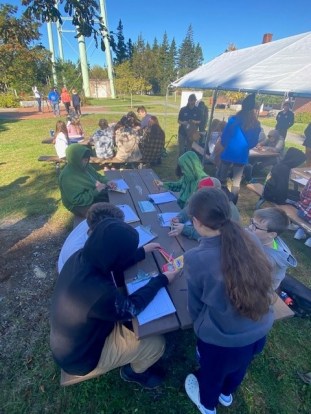
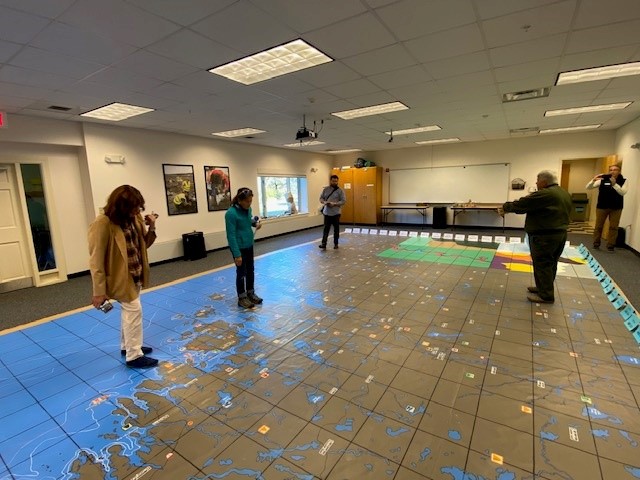
South School Summer Camp is supporting 40 students from South School Elementary, entering 1st-5th grade, Mon-Thurs 9am-3pm. Each week students experience art with local teaching artists Susan Beebe, smoothie making, nature walks, Build-it challenges, gardening, wacky slime making, sports, beach time, and weekly visits to The Coastal Children’s Museum with themes of geology, topography, marine life, and environmental awareness.

Thomaston Grammar School, Cushing Community School, and Ash Point Community School are supporting a total of 101 students with 12 attending Cushing, 48 attending Thomaston, and 41 attending Ash Point Mondays through Thursday from 8:30am to 12:30pm.  Students entering K through 5th grade in the coming year spend their summer mornings surrounded by peers, having opportunities to engage in a variety of activities. The programs are staffed fully by educational staff, both teachers and ed techs, and each day of programming the schools either have fun home-based activities,  a guest organization visit, or an engaging field trip. Partnerships include Herring Gut Coastal Science Center, Owl’s Head Transportation Museum, CMCA & Farnsworth Museum, Cardinal Cove Mini Golf, Flagship Cinema, Mad Science of Maine, and Mr. Drew and his Exotic Animals.

“We are grateful to have such a vast array of local organizations with a deep commitment to student learning and growth right here in the Mid-Coast. Our partnerships help us to enrich the student experience and provide pathways to explore various interests, while also strengthening local pride and community connection. The 101 students participating in the district programming across TGS, CCS, and APCS this year were also supplied free breakfast and lunch all days of programming through RSU13. It was a collaborative effort that came together so spectacularly, a truly special experience we hope to continue in the future,” says Laura LaPointe, District Coordinator.

The Flanagan Center Summer Experience Camp is supporting 30 students from Oceanside Middle School and Oceanside High School (incoming 6th through 9th graders), Mon-Thurs 11am-4pm.  Each week students engage with their community downtown and beyond, through engaging field trips to local organizations and businesses in areas of art, science, technology, cooking, outdoor exploration, and entrepreneurship.  Weekly excursions have included visits to The Apprenticeshop, CMCA, Mid-Coast School of Technology, Friends of Maine Coastal Islands, WRFR Radio, Owls Head Transportation Museum, Sail, Power & Steam Museum, Aldermere Farms, Merryspring Nature Center, Farnsworth Art Museum, Northern Vertical Rock Climbing and The Landing Place. 

It is no easy lift to coordinate food service, transportation, and staffing for this level of programming, but the district’s dedicated staff and the local partnering businesses and organizations continue to prioritize students.  Sarah Rogers, RSU 13 21st Century Grant Program Coordinator, and Laura LaPointe, RSU 13 Afterschool and Summer Program Coordinator, oversee both summer programming and afterschool programming across the district.  All programs are currently grant funded. For even more pictures, check out the RSU #13 Afterschool Programs Facebook Page.