Employee of the Week: Mary Adley

Mary Adley, Coordinator of State Agency Programs and Special Projects, is the Maine Department of Education’s Employee of the Week. Get to know a little more about Mary.

Q: What are your roles with DOE?

A: I am the Coordinator of State Agency Programs and Special Projects. My team provides oversight to educational programming for State Wards and State Agency Clients, which includes the General Supervision System of Monitoring for Maine’s approved Special Purpose Private Schools. My team also offers special education technical assistance, professional development, and support to Maine educators, students, and families. My team coordinates the Surrogate Parent program for State Wards. I work collaboratively with the Department of Corrections and the Department of Health and Human Services to coordinate services for Maine’s children in their departments care or custody. The coordination of special projects is new to me and my team, effective the last week in March, when Tracy Whitlock begins at DOE as the Education Specialist III, to manage the projects. We look forward to continuing the facilitation of the Math4ME and Positive Behavioral Interventions and Supports projects.

I serve as Maine’s Co-Lead on the Results-Based Accountability cohort, along with Roberta Lucas, working with the National Center for Systemic Improvement (NCSI) regarding tiered monitoring with development and movement towards implementation based on integrating Maine’s data in the current primarily compliance monitoring system.

I serve as a Co-Chair, along with John Coyne from the Department of Corrections, on the Project IMPACT Board. Project IMPACT staff coordinate the provision of special education services to students who are detained with their schools of residence and facilitate the educational transitions of youth in the juvenile justice system back to their communities. I also work collaboratively with the Bureau of Rehabilitation Services, Department of Vocational Rehabilitation, as the Governor appointed Department of Education Representative on the State Rehabilitation Council.

Q: What do you like best about your job?

A: I love that I continue to work with the incredible educators that serve Maine’s most vulnerable youth, and that I am able to be part of collaborative conversations and transformational work that improves special education and related services for Maine’s children. In addition, I like the variety of situations I encounter within my roles and responsibilities – no two days (or scenarios) are the same; so there is never a chance for boredom to set in.

Q: How or Why did you decide on this career?

A: I worked as an educator in Maine for three decades, as a special educator and an administrator in both the public and the private sector, prior to joining the Department. I was the Education Director at Spurwink’s Chelsea Day Treatment Program for two and a half years before I came to work at DOE. Having been through the audit process with glowing reviews in both of my times working at Special Purpose Private Schools (1996-2002 and 2014-2017), it seemed like a natural progression to pursue when I was informed of my predecessor’s retirement. I love that I am able to impact the education of Maine children in a larger scope than my previous positions afforded.

Q: What do you like to do outside of work for fun?

A: When I am not working, I love to spend time making memories with family members and friends – travel, spend time outside soaking up the sunshine, hike, read, and attend concerts and theater productions.

College of the Atlantic Visits Pembroke Elementary School

From Left to Right: D.Jamieson (Principal), H. Westall and L. Fuller (students), R. Griffith (ELA 7/8), B. Renaud (ELA 5/6), and Linda Fuller (Associate Director of Curriculum, College of the Atlantic).

Submitted by Debbie Jamieson, Principal of Pembroke Elementary and Darlene Bassett, Literacy Coach and Maine DOE, School Turnaround.

On February 6, 2019, Linda Fuller, Ed.D., Associate Director of Educational Studies at the College of the Atlantic, made a long awaited visit to Pembroke Elementary School in Pembroke, Maine.  Linda had contacted the school last year in response to a post on the Commissioner’s blog highlighting the student success with Richardson’s Guided Reading Model. She coordinated the visit with Chelsey Fortin-Tremble, Maine DOE Director of the ESEA Federal Programs and the School Turnaround Team, and Deborah Jamieson, Principal of the Pembroke Elementary School. Plans were made for her students – teachers in training – to visit two teachers, Rosie Griffith – Grades 7/8 ELA Teacher and Beckery Renaud – Grades 5/6 ELA Teacher and Lead Teacher for Pembroke. Both teachers have combined grade levels in their classrooms.

The visit began with a debriefing between the teachers and their visitors.  Beckery and Rosie shared the profiles of their groups (anonymously) based on assessments and teacher observations.  Then they provided a framework for the instruction the guests were about to observe.  This session was interactive, allowing the visitors to pose questions and share opinions.

Visitors then observed Beckery Renaud in the 5/6 ELA Lesson teaching using Reading Street’s readers.  As always, Beckery’s focus was comprehension.

She prompted students to make connections between themselves and the texts, reviewed the nonfiction format, and supported them while they learned strategies on how to access information using this text structure. Meanwhile, the rest of the class worked independently on their own learning for the day.

Next, the guests observed in Rosie Griffith’s room.  Rosie’s classroom was organized in the same manner.  Students were focused and engaged at their desks, working on individual learning, while Rosie introduced a new book, A Day No Pigs Would Die. Rosie scaffolded students as they made predictions after previewing the book.  She put a heavy emphasis on each student’s metacognitive process and we observed as students made links and explained their thinking.

After the observations were completed, we re-grouped for the final debriefing.

Deb Jamieson was able to join us.  We discussed many issues drawing on the insights of both teachers and administrators alike.  The student visitors were well informed and eager to learn and teach!  Everyone had a delightful day and learned a great deal from one another.

We would like to thank Linda Fuller and her team for taking the time to visit Pembroke.  Great things are happening in Maine Schools.  Many, like this implementation, require a huge commitment of time and energy to the students we serve.  Young educators need to know they have the opportunity to join a dedicated cadre of teachers and administrators in the field who are looking forward to growing with you and making Maine kids’ lives as good as they can be.  We welcome you on board.

Here are some pictures from the day:

Mount Vernon Math Night for Students and Families

Submitted by Janet Delmar, Principal of Mount Vernon & Wayne Elementary Schools in RSU #38.

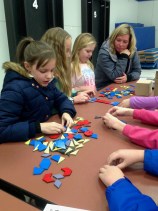
On Monday, December 10th, the families of students who work with Deb Hatt, Mt. Vernon’s K-5 Math Interventionist, were invited to Family Math Night! We had a great turnout, with over 50 people including students, siblings, parents, and grandparents. Our special guest was Christopher Danielson, author of the math picture books, Which One Doesn’t Belong and How Many? and creator of amazing math manipulatives like 21st Century Pattern Blocks and Tiling Turtles, who joined us via video chat from Minnesota!
Students interviewed Mr. Danielson about his inventions and books, and he then led the entire group in a Which One Doesn’t Belong routine. Mrs. Hatt talked to families about ways that they can incorporate conversations about math with their children into everyday life. Each family left with a set of 21st Century Pattern Blocks and a coupon for the family-friendly version of the book Which One Doesn’t Belong? that will be released next month.

Wayne was scheduled to have their Family Math Night on February 27th.

Press Release: Nominations Now Open for Maine Volunteer Roll of Honor Awards

Volunteers are the heartbeat of Maine and it is volunteer recognition season.  Nominations are currently being accepted for the Governor’s Service Awards, Maine Volunteer Roll of Honor and Young Maine Volunteer Roll of Honor.

Since 1987, the Governor’s Awards for Service and Volunteerism have celebrated and recognized the role of citizen volunteers in the success and vitality of Maine communities.  At the same time, the awards seek to inspire others to be active in civic life and follow in the footsteps of those recognized.

Teachers and coaches are encouraged to submit nominations for student groups if each member of the group meets the 50-hour minimum requirement. Please note that any hours of volunteer time completed for graduation can also be counted towards the minimum obligation for this award program.

Awardees will be honored at the statewide Roll of Honor Recognition Ceremony that will be held at the Messalonskee High School in the J. Duke Albanese Performing Arts Center on Sunday, April 14, 2019.

Nomination submissions must be sent electronically by or before the deadline date of Friday, March 15, 2019.  For information on how to submit nominations, visit the Volunteer Maine website.

This program is administered by the Maine Commission for Community Service, which strives to build capacity and sustainability in Maine’s volunteer and service communities by funding programs, developing managers of volunteers and service-learning practitioners, raising awareness of sector issues, and promoting service as a strategy. For more information about the Maine Commission for Community Service, visit their website.

Dike-Newell School’s Classroom Buddy Reading Initiative Supports Literacy and Building Community

Submitted by Jennifer McKay, Principal Dike-Newell School in RSU 1

Dike-Newell School is a Pre-Kindergarten through Second Grade elementary school of 250 students, located in Bath, Maine.  Part of RSU 1, Dike-Newell School embraces the philosophy of being a community of engaged learners where everyone matters.  The staff at the school are involved in committee work, and explore ways to enrich the student experience.  One recent initiative supports literacy as well as connecting students through building community – Classroom Buddy Reading.

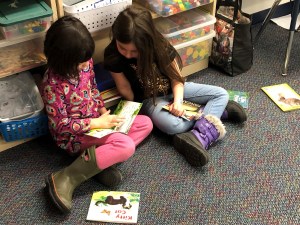
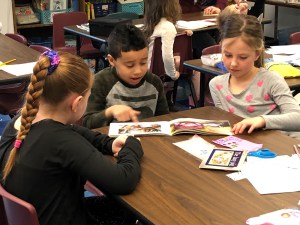
While not a novel concept, it can be challenging logistically at times to set up buddy classroom projects.  The Dike-Newell Whole-School Activities Committee put together a once-a-month, whole school system pairing up classrooms for 30-45 minutes on a Tuesday morning.  Non-classroom staff were assigned to help facilitate and work with students with support needs, and the efforts kicked off in February.

What staff and students have found is that the children really enjoyed being partnered with non-age group peers, and it has spurred a sense of community that was, at times, lacking.  Second graders really enjoy being role models and literacy leaders with younger students, and younger students really enjoy having time to connect with older peers.  For staff, as well, it has been a way to connect with previous and future students, build relationships with students not in their class, and allows everyone to have more familiar faces and names throughout the building.

Another benefit of the program is support for literacy and the love of books.  In the first buddy read session, students brought book boxes filled with favorite texts to share with their buddies.  Students were able to talk about why they enjoyed certain books or authors, and encouraged each other to try new books.  In April, for Poetry Month and part of the school’s “Poem in My Pocket” event, students will be sharing poems during their buddy reading session, and in future sessions the committee is discussing having author studies, genre studies, and other focused literacy topics for students to buddy read.

Dike-Newell School is always working to bring students together in a meaningful way, and to build our community of engaged learners.  The Buddy Reading program is one example of the work that is being done to support this vision.

Event Highlights from Downeast School and William S. Cohen School in Bangor

Kathy Harris-Smedberg, Assistant Superintendent of Schools at Bangor School Department

Downeast School, Grades PreK-3, Bangor, Maine

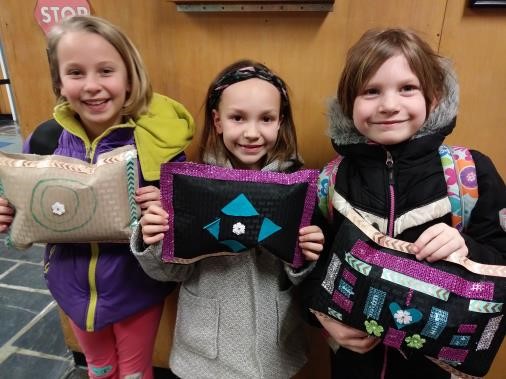
The 21st Century Program provides a variety of afterschool activities. For the second quarter, students participated in Drama Club, Chess Club, Chinese, Latin Dance Fitness, Discovery Club, basketball, math, Book Club, Space Explorers, ballet, Rhythm Club, Science Club, and numerous other opportunities. The students pictured enjoyed designing and making pillows in Design Club.


On January 7th, two Downeast students were a bit nervous about being called to the principal’s office. After more than seven months deployed overseas, their father returned home and surprised the boys. It was a wonderful reunion. Staff and students at Downeast School are grateful for the all the members of our military who serve our country.


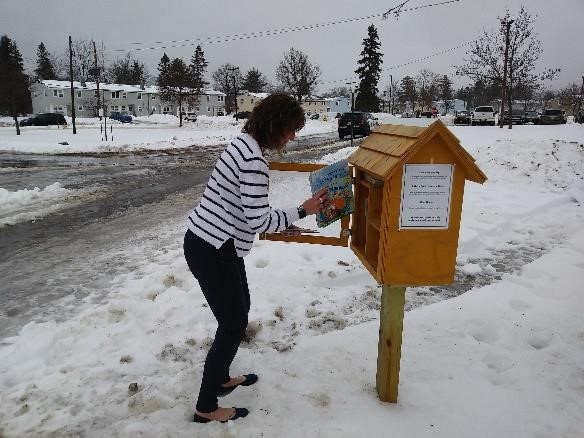
Neither snow nor rain nor heat nor the gloom of night stays this literacy coach from the swift completion of her appointed rounds. Mrs. Swett checks the little lending library and restocks books as needed.


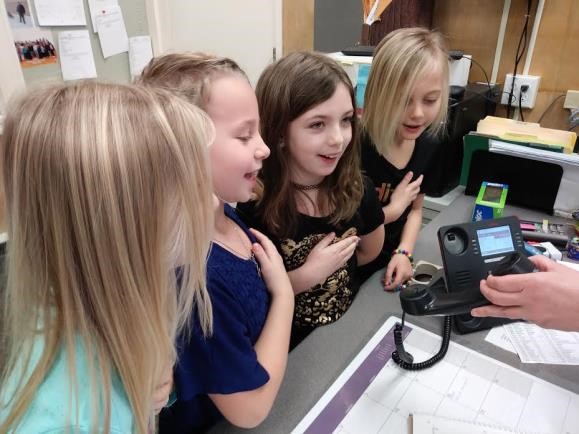
These third-grade students had the opportunity to recite the Pledge of Allegiance at the beginning of the school day using the intercom system. As usual, the students did a great job.

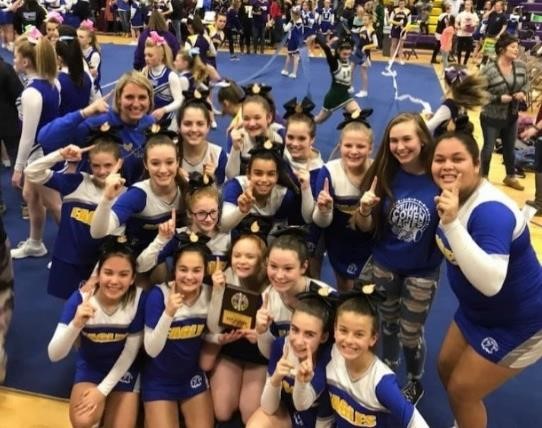
William S. Cohen School, Grades 6-8, Bangor, ME

William S. Cohen School hosted its annual geography bee on January 16. Twenty-five students participated in the event, which took place in the school’s auditorium. The crowd of parents and guests were impressed with the students’ knowledge of geography! Josh Partel, a sixth- grade student, was the winner and will compete in the state competition. The runners-up were HenryPoulin and Austin Turner.


Cohen hosted the 14th Annual Crosstown Hoops event on January 25. Students from Cohen and Doughty competed on the basketball court in the four-game event. Congratulations to the A Girls, A Boys, B Girls, and B Boys on their competitive spirit during this great event.


The Cohen Math Counts team performed very well at the local competition this month. The team was highly competitive, and four individuals qualified for the state tournament. Congratulations to Beckett Mundell-Wood for finishing second overall. Beckett, Henry Poulin, Hannah Osmer and Cricket Eastman qualified and will complete in the state competition.


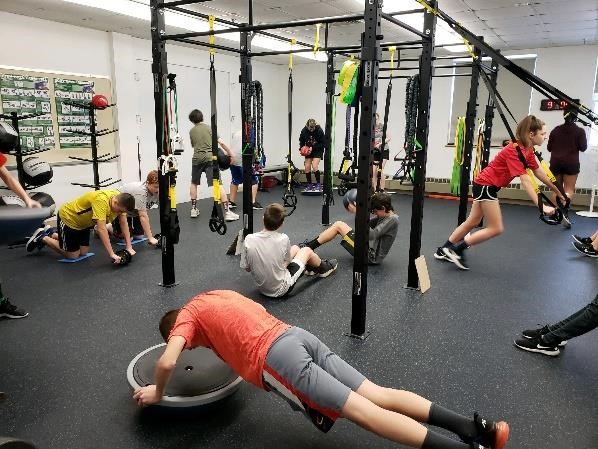
Students have been working on their individual fitness in PE classes. Students are learning about functional fitness exercises and have been accessing Cohen’s fitness room to increase their overall fitness. Coach Richards and Coach Mackenzie have been teaching students functional fitness exercises as part of this fun unit.


(On Hold) Free Training, Technical Assistance, Equipment and Materials as Part of Pilot for 3 Public Preschool Programs

The Maine Department of Education will be holding off on this opportunity while we sort out a few remaining logistics. We have taken this notice down for the time being to minimize confusion.

We hope to offer it again very soon. Thank you for your patience.

For more information, contact Nicole Madore at Nicole.madore@maine.gov

Guidance Regarding Automated Translation/Interpretation Services

As Maine districts have experienced increasing numbers of students and parents who speak languages other than English, there has also been an increase in the availability of machine or automated translation/interpretation software and apps. While these tools may seem like a convenient (and oftentimes free) way to meet a district’s civil rights obligations for communicating with parents, they have not yet reached the level of accuracy necessary to serve as a substitute for a qualified human translator/interpreter. Meaningful communication with parents, including parents whose children have an Individualized Education Plan (IEP), is not only a civil rights requirement, but it also serves to strengthen family engagement and promote positive relationships between families and schools.

A 2015 guidance document from the US Department of Justice and US Department of Education clarifies that even a bilingual person without appropriate training cannot be used by a school to translate/interpret for parents. Whether for the vital communications listed in this guidance document or for more casual interactions, best practice is always to utilize trained professionals, such as through a phone interpretation service or translation/interpretation agency.

For a list of translation/interpretation providers, please refer to the Maine Department of Education website. For parent notices required under the Every Student Succeeds Act, the Maine Department of Education has partnered with TransACT to give districts free access to notices in 17 languages.

For further information about translation/interpretation please contact April Perkins, Director of ESOL/Bilingual Programs & Title III at (207) 624-6627 or april.perkins@maine.gov. For further information about supporting students with an IEP, please contact Maine DOE’s Office of Special Services at (207) 624-6713.

The Five Town CSD and MSAD #28 Held the First Ever Remote School Day in Maine

Submitted by Debra McIntyre, Assistant Superintendent for MSAD28/FiveTown CSD

This process began last summer when we convened a group of teachers representing K-12 staff to begin working on the idea.  We researched what other school districts across the nation had implemented and tweaked some of their processes and procedures to work for our own specific learning communities.  We had to plan for many different implementation aspects including specific grade spans, students’ access to technology, and how the Remote School Day would impact staff members and families.  We also needed to determine which students did not have access to internet service in order to provide them with a hotspot device.  After full board approval, we forged ahead to discuss the possibility with the MDOE.  After contemplation and discussion, it was decided that we would be able to use a Remote School Day this winter, as we have more than the required 175 student days.

Finally, it looked like Mother Nature would assist us with a day that would have normally been a “No School Day” and we called a Remote School Day.  Our younger students had individual work that had previously been sent home and our students in grades 7-12 participated via technology through either Google Classroom or Schoology.  Staff members held office hours from 10:00 – 4:00 to assist and answer any questions that arose.  Technology support was also available.

As you can imagine with anything new, there were successes, challenges, supporters and dissenters.  There are still tweaks to be worked out and challenges to overcome, however, the attendance was excellent and the overall feedback was encouraging. Overall, the parent survey indicated 82% felt the Remote School Day was a success. Our next steps will be to review the specific feedback from parents, staff and students to refine our implementation in the hopes that we will be able to use Remote School Days as an option for making up some of our snow days in the future.

We received many pictures from families, sharing their experiences.  We believe the picture below captures the spirit of the day.

Windham Middle School Named a Common Sense School

Submitted by Christopher Howell, Assistant Superintendent in RSU 14, Windham Raymond Schools

RSU 14, Windham Raymond Schools, has been working very hard to help their students become responsible and safe in their digital lives. At the end of the 2017-2018 school year, RSU 14 committed to educating their staff with the Common Sense Digital Citizenship curriculum. Common Sense Digital Citizenship curriculum is a program that educates students, teachers, and the rest of the community in being safe and responsible while using online platforms. Common Sense uses research based digital citizenship resources, “which were created in collaboration with researchers from Project Zero, led by Howard Gardner at the Harvard Graduate School of Education.” (Common Sense)

Common Sense Education recently recognized Windham Middle School as a Common Sense School for the school’s commitment to digital citizenship.  “We applaud the faculty and staff of Windham Middle School for embracing digital citizenship as an important part of their students’ education,” said Liz Kline,  VP, Education Programs, Common Sense Education. “Windham Middle School deserves high praise for giving its students the foundational skills they need to compete and succeed in the 21st-century workplace and participate ethically in society at large.”

All RSU 14 students and staff, grades 3-8, initiated the learning process this year by completing 5 lessons per grade level.  1,509 students in RSU 14, received their first year of Digital Citizenship. Using the provided curriculum creates a platform for teachers to begin discussions on important topics such as online safety, reliable sources, online bullying, and many more. Teachers are very happy to have been given the time to learn alongside their students. Using the lessons provided by Common Sense Media, allows for some much needed discussions between all involved.