Great Salt Bay Community School Choir Honors Fellow Student with Album, “Sail On Silver Girl”

Submitted by Anne-Marie D’Amico, choir teacher at Great Salt Bay (GSB) Community School in AOS 93. The article was written as part of the Lincoln County Artsbeat of the Lincoln County News. Photo credit: Lincoln County News.

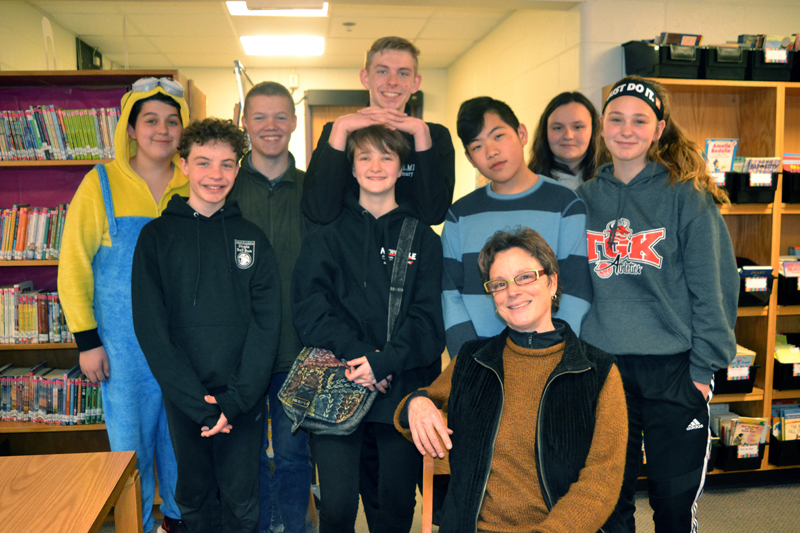
Great Salt Bay (GSB) Community School choir recently completed a project directed by teacher Anne-Marie D’Amico titled “Sail On Silver Girl,” and consists of a choral album and a documentary film about the project.

The project was named “Sail On Silver Girl” to honor the late Isabelle Manahan, D’Amico said. Manahan, who had been a member of GSB’s advanced chorus before going on to Lincoln Academy, passed away in June of last year at age 15.

“We named it after her passing to keep her memory alive,” said D’Amico. “It was another extension of our community reflection, especially because Izzy was so active in all the programs at GSB.”

The “Sail On Silver Girl” project, begun in September 2017, features “last year’s eighth graders and seventh graders and this year’s eighth graders” in the GSB advanced chorus, D’Amico said. Some of those involved are now freshmen at Lincoln Academy.

“We’ve never done anything like this before,” said D’Amico of the ambitious project that also features local musicians Sean Fleming on piano/keyboard, Dave Martin on guitar, John Cannon on bass, Michael Sevon on drums, and Curt Boot on trumpet. Cannon and Sevon both work at GSB.

John Morrison, of Auburn, was the project’s sound engineer and Jared Morneau, of Brunswick, was the video engineer.

Members of local community chorus Common Threads also took part in the project, D’Amico said.

GSB’s advanced chorus “got to do something professional,” D’Amico observed.

It was the first time that GSB choral students had been involved in a musical project of such magnitude and seriousness, from the very beginning of learning all the songs through to listening to raw recorded tracks and later to mixed tracks, which “made their faces light up,” D’Amico said.

For more information and to watch the video visit their website at sailonproject.wordpress.com.
 

Classroom Highlight: Comprehensive Computer Science at Lyman Moore Middle School

Submitted by AJ Rog and Sean Wasson, Computer Science Educators at Lyman Moore Middle School in Portland, Maine.

Lyman Moore Middle School is in the Portland Public School District. It is home to 480 students in grades 6 through 8. Over the last 20+ years Portland has become a very diverse city with an influx of refugees and asylum seekers from around the world. Thanks to this welcome change to our city, our school is currently home to students from 28 different countries with at least 15 different home languages being spoken.

Sean Wasson and I (AJ Rog) feel privileged to be the two computer science teachers at Lyman Moore. We are able to reach approximately 85% of our students. Our classes run on an alternating day schedule, allowing their semester of content to stretch across the entire year. This schedule engages our students in two semesters of computer science content throughout their 6th and 7th grade experiences. During their time in the CS program they are given access to coding, problem solving skills and design thinking. Our students leave middle school with a high level of understanding of JavaScript, HTML, CSS, and circuit boards.

When our students enter 8th grade they are given some choice in the elective classes  hey take. Sean and I offer multiple choices over the 3 trimesters ranging from movie making,  TEAM Windmill Challenge, Web Design, Puzzles and Cyber Security, Video Game Design,  nd Circuit Boards. These classes have allowed our students who want to go further in the STEAM fields an opportunity to do so.

Our ultimate goal is to have 100% of our middle school students take CS and to collaborate closely with the three city high schools in order to recommend high school CS placement and encourage students to continue their CS journey. We also see CS curriculum as a path toward equity and engagement. Because of the demographics of our school we are positioned to encourage those students who have historically been  underrepresented in Computer Science (e.g. girls and students of color) to focus on, build skills in and find inspiration in CS. In addition we provide opportunities for students to  engage in skills and knowledge that will serve them beyond the classroom. In our ever digitizing world, our students will leave middle school equipped to creatively tackle problems using the CS lens.

Washington County Educator Profile: Mathy Terril

Submitted by Sarah Woog from the The Washington County Consortium. 

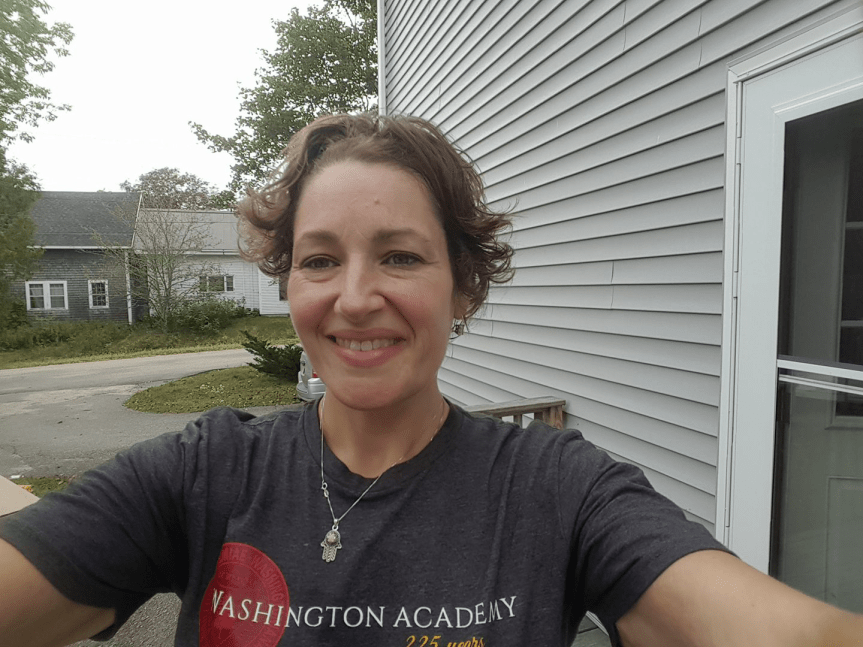
Meet Mathy Terrill, Social Studies Teacher, A.P History Teacher, History Department Head, United States Holocaust Memorial Museum Teaching Fellow, National Honor Society Advisor, Gay Straight Transgendered Alliance Advisor, Student Assistant Team Co-Advisor, Homecoming Coordinator, Varsity Cross Country Coach, Varsity Track and Field Assistant Coach, and Overall Ridiculously Busy and Dedicated Educator at Washington Academy.

Mathy and I met at her home in Machias over the weekend so I could interview her for this profile. I usually come to such interviews with questions prepared, but this time I was stumped. Mathy does EVERYTHING. How could I structure the interview to highlight her deep commitment to education in Washington County without leaving anything out? Truth is, I couldn’t. So I asked her what she is most proud of. She told me two things: her work as a United States Holocaust Memorial Museum Teaching Fellow, and the Prom Dress Boutique she puts on as advisor for the National Honor Society at Washington Academy.

Mathy has been a United States Holocaust Memorial Museum Teaching Fellow for three years. She goes to Washington, D.C. every summer for a week to connect with other Fellows and gain resources and study practices for teaching the Holocaust and Genocide Studies at Washington Academy and to support other teachers in bringing Genocide Studies lessons to their classrooms. Mathy has shared her work at Harvest of Ideas for the past three years and continues to work with teachers throughout the school year to develop age-appropriate curriculum in an effort to bring these important lessons to students beyond Washington Academy.

The Prom Dress Boutique is an annual event held on a Saturday morning in April each year at Washington Academy and has been covered by many news outlets including the Bangor Daily News, Machias Valley News Observer, and WABI News Channel 5 (here is a story from this years event). Hundreds of dresses have been collected by donation throughout the years and are made available to students to pick from, as are shoes and accessories. Mathy and the National Honor Society set up the cafeteria at Washington Academy as a boutique, complete with dressing rooms, and organize the fantastic inventory on racks by size so area students may come and experience prom shopping without the prohibitive price tag typically associated with such fun.

One of the best things about Mathy is her eagerness to share. Part of her enthusiasm for her work comes from her belief that all our kids deserve the opportunities she brings to Washington Academy. you can reach out to Mathy (m.terrill@raider4life.org) if you’d like to incorporate Genocide Studies into your classroom. Somehow she’ll find the time to help you. She always does.

Rural Schools Tackle Attendance Issues at Spring Summit in Bangor

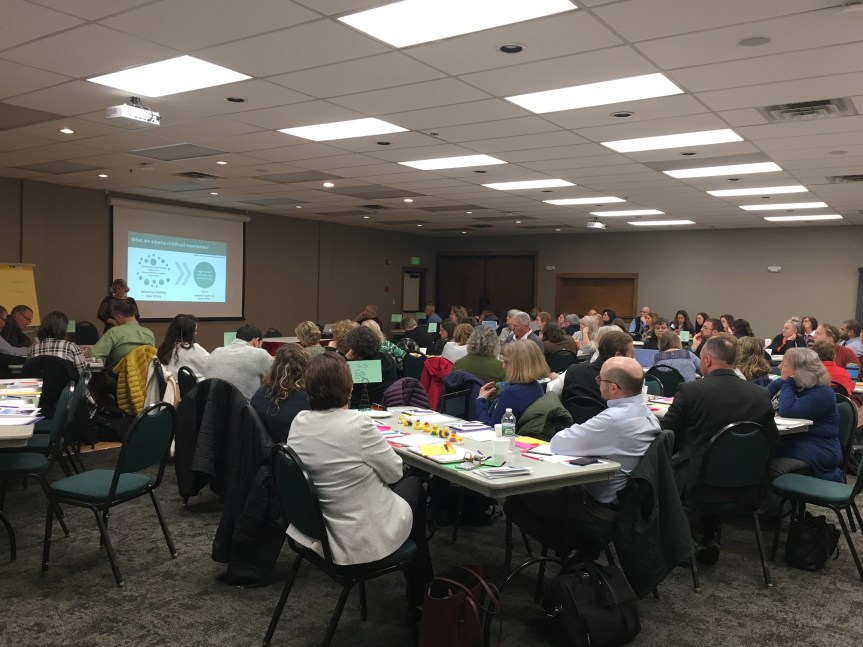
District and school administrators and educators from thirty-six districts and education entities in rural Maine convened at Jeff’s Catering in Bangor recently for the first ever Rural Maine Attendance Summit organized by RSU 74 Superintendent Mike Tracy. After looking at his own data submitted to the Maine Department of Education last spring, he found that some of the students in his district were out of school enough to be defined as chronically absent. In his efforts to be proactive about the issue, Tracy looked to available resources only to find that they were mostly geared towards urban school districts. That’s when he began working on plans for the rural attendance summit.
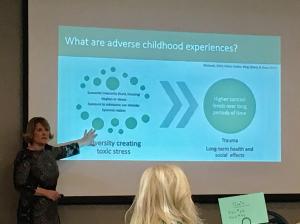
With the collective understanding that small rural school districts must approach things differently than bigger urban school districts, the summit aimed to help generate more tools, and allow for the exchanging of ideas regarding the growing issues that are keeping kids from accessing school in rural Maine.

The day long summit provided participants with the opportunity to hear from key note speakers, Emanuel Pariser from the MeANS school, and Britney Ray from Washington County’s TREE program – Transforming Rural Experiences in Education. Each speaker provided information and expertise about working with students and parents who may be experiencing Adverse Childhood Experiences (ACEs) and/or childhood trauma. In addition, district officials could share specific issues in their own communities, collaborate on solutions that were working, and pose specific questions to a panel of experts.
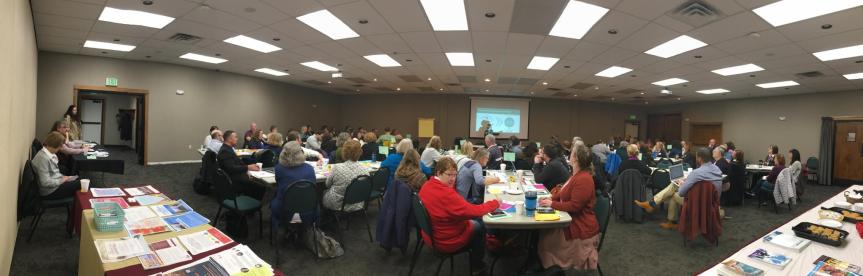
Rural Maine School Districts with less than 1,000 students and other stakeholders were invited to attend. In addition to host district RSU 74, others in attendance were Goodwill Hinckley, MSAD 54, RSU 68, Otis School Department, RSU 93, RSU 89, AOS 94, RSU 73, MSAD 41, Snow Pond, RSU 84/MSAD 14, MSAD 37, Union 69, RSU 26, RSU 19, Medway, MSAD 20, RSU 25, Cornville, RSU 10, MSSA, Sunrise Country School, RSU 67, AOS 91, MSAD 59, MSAD 46, CSD 13, Athens, MSAD 70, ME Charter School, UMF, AOS 96, MSAD 30, AOS 90, and Calais.

Panelists included Martha Kempe, Head of Schools at Wayfinder Schools; Sue Reed, Maine DOE Early Childhood Specialist; Ashley Cirone and Laura Thomas, TREE Program Coaches; Catharine Biddle, Assistant Professor of Educational Leadership at UMaine and researcher for the TREE Program; and Susan Lieberman with Count ME. They fielded audience questions about strategies that involve parent and student voice, treatment options that may not typically be found schools, and ways to make school a priority for students and their families. Members of Maine DOE’s Data team were also on hand to answer questions about reporting requirements and to learn more about the needs of rural schools when reporting attendance data to the state.

The day included workshop time for attendees to meet with other districts and share ideas that were working in their schools, and closed with an opportunity for attendees to work with the people from their own district to work on a plan moving forward.

School officials left with various action plans that included strategies involving better outreach and partnerships with parents, home visits, team approaches and/or committee groups to research and take action, attendance awards and incentives, hiring on social workers and school resource officers, early-day or before school programing that kids won’t want to miss, and working more closely with the Department of Health and Human Services (DHHS).

For more information and resources visit https://www.ruralmaineattendance.com/.

Maine School of Science and Mathematics’ Earns First Place at Maine State Math Meet

Submitted by Ryan McDonald, Summer Programs Director and Public Relations Coordinator at Maine School of Science and Mathematics

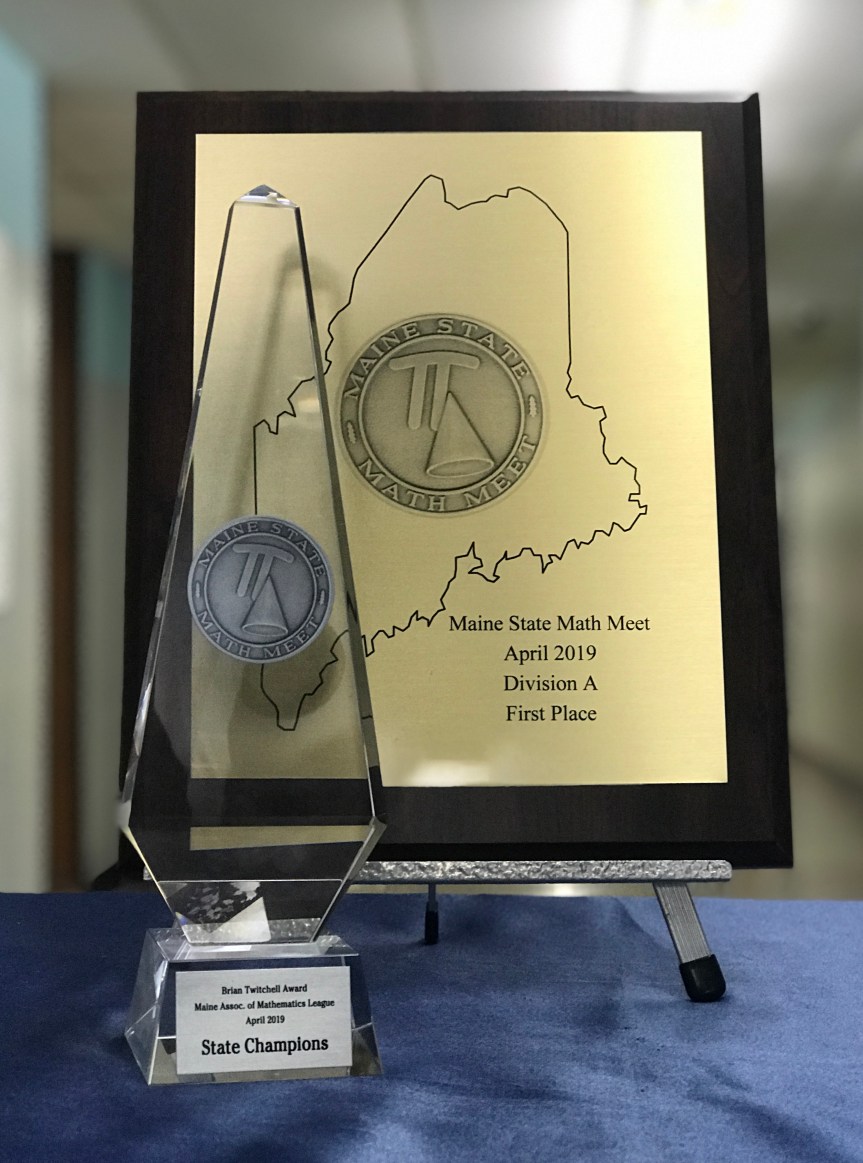
Maine School of Science and Mathematics (MSSM) once again earned first place in the 43rd Annual Maine State Math Meet for Maine Association of Math Leagues (MAML) held on Tuesday, April 2nd, 2019. MSSM scored 846 points out of a possible 920 and had nine students earning medals. MSSM junior James Hawkes was recognized as top scorer in the state during the regular season. Hawkes said this year was, “filled with difficult questions. I appreciate the time and effort put in by the math teachers, who provided us with practice and taught us what we needed to know for each meet.”

In Part One, Individual Round, all students do the same six sets of math problems and scores are tallied individually and summed for the team. Ten students compete for up to 72 points each for a maximum score of 720 with MSSM scoring 667 points. In Part Two, Relay Round, each school is split into two teams and complete problems dependent on the other half of the team to provide a partial answer. MSSM earned an 87 out of 100 possible points in the Relay Round. In Part Three, Team Round, there are two rounds with 8 questions and a possible score of 50 points per round. MSSM scored a 92 out of possible 100 points.

Ethan Winters (Gardiner) and James Hawkes (Portland) earned all possible 72 points resulting in gold medals for grades 12 and 11, respectively. Other Seniors to medal were Sandy Kweon (Republic of South Korea) in 5th place and George Johnson (Kennebunk) in 11th. Minjin Lee (Republic of South Korea), earned a Silver; Jordan Theriault (Caribou), a Bronze; Christian Chagnon (Eliot), 4th; and Oleksii Nikanov (Ukraine), tied for 5th. Madison Albert (North Yarmouth), the only sophomore on the team, earned a Silver in her grade category.

The next step for the MSSM Math Team will be by invitation to compete in the American Regions Mathematics League (ARML). ARML is a mathematics competition simultaneously held at four locations around the United States. MSSM will join students who excel in mathematics from high schools in the State of Maine from May 30th to June 2nd at Penn State while other teams compete at the University of Las Vegas, University of Iowa, and University of Georgia. ARML has been called the “World Series of Mathematics Competitions” with 15-member teams representing large geographic regions; roughly 2,000 students compete at this event nationwide.

Lisbon Community School Celebrates National Reading Month

National Reading Month drew a special visit from CMP President Doug Herling and Maine Author Patty Farrin to Lisbon Community School last month. Each year CMP donates a children’s book to local Maine schools and municipal libraries and this year, Herling selected The Teacup Cafe, written by Maine author Farrin, and illustrated by Hilary Davis.  In a special return to his hometown Herling read The Teacup Cafe, to the pre-school class on March 26.

Below are some images from the visit.

Husson OT Graduate Student Creates Sensory Path for Students at W.G. Mallett Elementary School in RSU 9

Submitted by Courtney Ross, Occupational Therapy Graduate Student at Husson University.

I recently finished my last clinical fieldwork rotation for my master’s degree, in Mt. Blue School District, RSU 9. I have always thoroughly enjoyed all of my pediatric fieldwork placements especially since my goal is to one day be a certified pediatric occupational therapist, but this one was especially rewarding for me. Prior to going into the school system, I believed that school based OT focused more on daily living skills and basic fine motor components, however I recent found that it is so much more. I was able to learn and implement reflex integration activities, visual processing, and emotional regulation activities, as well as fine motor adaptations and programs, all to increase performance and allow for a student to be successful in the classroom.

A majority of my time throughout the week was spent at W.G. Mallett Elementary School, in downtown Farmington, which educates pre-k through 2nd grade. About half-way through my time there, my clinical instructor, Christine Libby and I were approached by literacy teacher Vicki Foster, Principal Tracy Williams, and all the Kindergarten teachers about an idea for a sensory path in the hallway. Sensory paths have become very prevalent recently, however they can be extremely pricey – in some cases estimated at $2,500. A price like that can be extremely difficult for schools to afford, especially rural Maine schools. However, I knew that we could do it at a much lower cost using resources of my own and contributions from Principal Tracy Williams. Teachers from the school came up with theme they wanted; a Maine theme. We began the work from there, incorporating how the activities can target specific OT-related tasks, and still seem fun for the students.

Collectively the project took about 30 hours total designing the project on my design program, preparing the materials, and then Christine, my instructor and I installing the path in a 38 foot long hallway, down and back for a total of 76 feet of path. I was able to integrate not only my OT knowledge that I have spent the past 5 years gaining, but also my hobby of crafting and creating things which made this project so rewarding for me. I am so grateful for the support that my supervisor provided throughout this project, giving insight on how certain activities not only target gross motor or sensory input, but also reflexes, because not all students have their primitive reflexes fully integrated which can cause a decrease in school performance and so many other aspects of their education process.

The following explains what the activities in the path target and how overall it can assist a student who is experiencing a period of disregulation within 3-5 minutes:

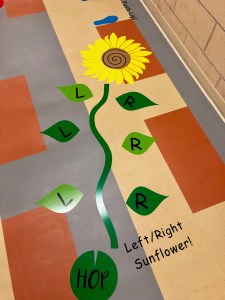
The design of this path was created to include crossing midline and preparing the visual system via the lazy eight and lobster backwards high fives. It incorporated learning the alphabet, shapes, numbers, and left to right body awareness skills. The vestibular system was engaged through hopping/spinning and the balance beam designed to encourage heel to toe walking. Coordination and motor planning were utilized as well, via the side stepping apples and hopscotch which also has been known to help dyslexia. Wall push ups throughout the path as well as the animal crawling were used for arm and shoulder strengthening, reflex integration skills, as well as deep proprioceptive input for the joints and muscles. The path ends with Yoga poses and belly breathing which are movements to help children re-organize and come back to class with a calm body.

I was able to observe and teach students how to use it during my last week in the school district, and it was amazing how well students responded and engaged to the pathway. My clinical instructor reported it is working really well at W.G. Mallett Elementary School and the students continue to use it every day between their classes or during their OT time throughout the week!

Below are more pictures of the sensory path:


Meet Emily Fitzsimmons, Culinary Arts Instructor at Coastal Washington County Institute of Technology.

Washington County Educator profile submitted by Sarah Woog from the The Washington County Consortium.

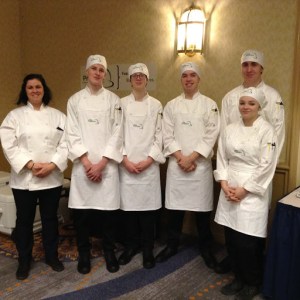
Emily is on the left, with a group of her students at a Culinary Arts competition in Portland over February break.

Emily and I had the opportunity over February break to sit down at Helen’s Restaurant in Machias to talk about her work, life, and all things in between. Thank you, Emily, for sharing a meal with me, and for all you do for Washington County students and communities.

Everyone should know Emily Fitzsimmons. Most of you probably already do. I realized this when we met for lunch at Helen’s and she personally greeted almost everyone we came across. And the restaurant was full.

Emily is currently the Culinary Instructor at the Coastal Washington County Institute of Technology, based out of Machias Memorial High School. She grew up in Jonesboro, graduated from Washington Academy, and has cooked in restaurants from Cutler to Jonesboro, beginning when she was 14 years old. She’s catered events all over the County, too, from weddings and baby showers, to professional development sessions throughout the year, and for Harvest of Ideas. Emily was also the food service director at Washington Academy, where she discovered her love for teaching her love, Culinary Arts.

Emily has a degree in Culinary Arts from Eastern Maine Community College and has commuted to Orono the past four years to become a certified culinary instructor. She recently completed her Praxis and her final class, joining the cadre of Washington County educators who have balanced work, family (Emily is married with five kids), long commutes, and longer hours of studying, to gain the knowledge and skills critical to providing opportunities for kids.

Emily talks about her program and students with infectious pride and enthusiasm: “To have a kid want to do what you’re passionate about is so refreshing … and for them to make a batch of cookies, eat, be proud their accomplishment, it’s awesome.” Emily also appreciates how Culinary Arts gives students opportunities to succeed. “It gives them a way to express themselves, to compete on a non-athletic level,” Emily noted.

Emily recently brought a group of students to a culinary competition in Portland, which I had the opportunity to check out. I admired the students’ organizational and time management skills, their precision, and their diligence. It occurred to me these are the habits of mind I had hoped to instill in my math students when I was in the classroom. I think it’s important to acknowledge and celebrate how Emily’s teaching, and vocational programming in general, can support students’ development and teach lessons that can feel so elusive in more traditional settings.

Emily and her work are wonderful examples of the impact vocational programming can have on students and their communities. Her love for her craft is infectious, and you can see her students have caught the bug. She’s also a lot of fun to be around. Just ask anyone at Helen’s.


Maine Connections Academy Students Create Student Magazine

Magazine Cover for Maine Connections AcademySubmitted by John Spritz on behalf of Maine Connections Academy (MCA). 
Students who work with Mr. Chris Hoskins (a secondary English teacher) have published the school’s first student-written/student-designed magazine. It’s online of course, it’s called The Connector, and you can see it here.

The Connector has lots of links built into it, where students can access games, puzzles, study tips, movie reviews, and much more. It’s got articles on Maine ski destinations, study prep hints, favorite pets, and a lot more. For a school where students are in all 16 counties, where they see each other only on field trips and at graduation, The Connector is a brilliant way to bring people together and allow them to contribute and engage — online. And the fact that it’s student-built is what makes it all the better.

Lewiston Adult Education Construction Students Build Their Futures Together

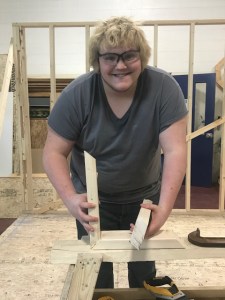
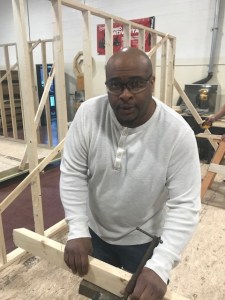
Tony Gulley – student in the program.

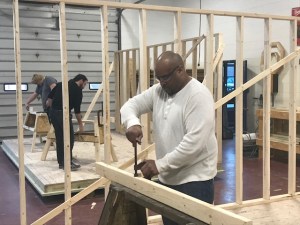
Students in Lewiston Adult Education’s Construction Training Program measured and cut wood last month as part of their hands-on work.

The wood framing marked a first project to prepare them for entry-level jobs in construction. The integrated training also includes work experience, case management, and job coaching of students.

Charles Outten, Michael Gibson, and Tony Gulley – students in Lewiston Adult Education’s Construction Training Program.

Students who complete the program will transition to on-the-job training and full-time employment. Employees of local construction companies have made presentations in class about the kind of work they do and what they are looking for in new hires.

Graduates will receive a WorkReady credential, OSHA 10 certification, a National Center for Construction Education and Research and a Renovation credential as well as a Renovation, Repair and Painting credential.

Charles Outten – student in the program.

The Construction Training Program is a partnership with the Lewiston CareerCenter, Western Maine Community Action, the John T. Gorman Foundation, Community Concepts, the city of Lewiston, Youthbuild Goodwill Northern New England Take 2 and FedCap. This year’s employer partners include Northeast Painting & Coating, Hahnel Brothers Company, Consigli Construction, H.E. Callahan, and St. Laurent and Son Excavation, Inc.