Kathy Harris-Smedberg, Assistant Superintendent of Schools at Bangor School Department
Downeast School, Grades PreK-3, Bangor, Maine
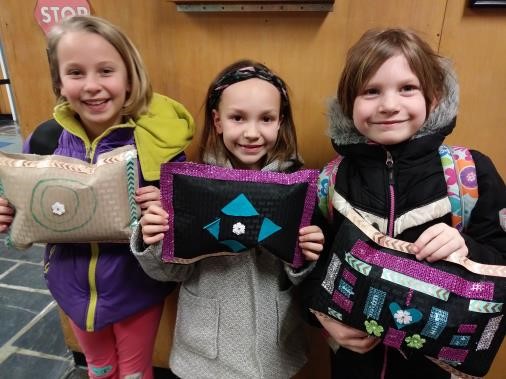

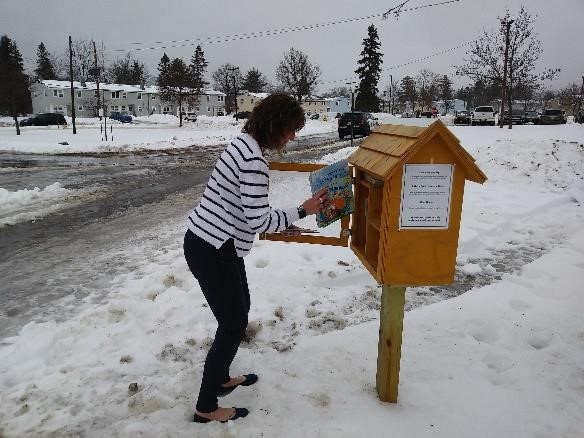
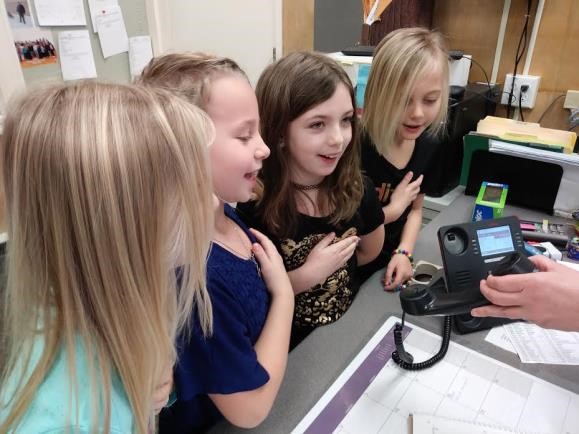
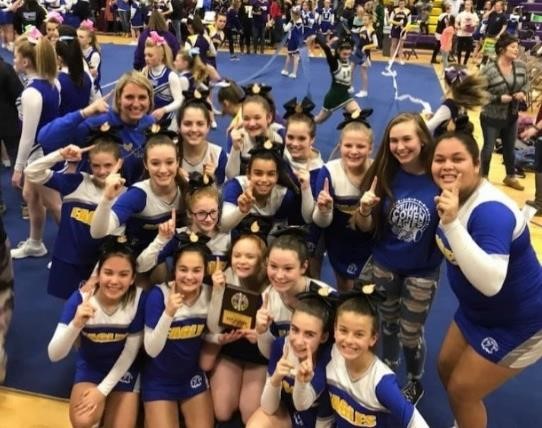
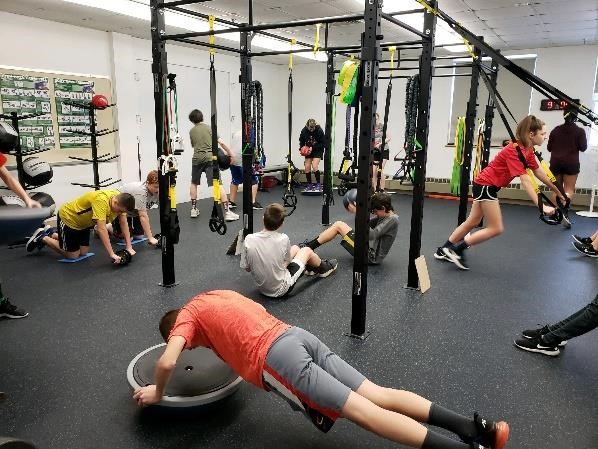
William S. Cohen School, Grades 6-8, Bangor, ME
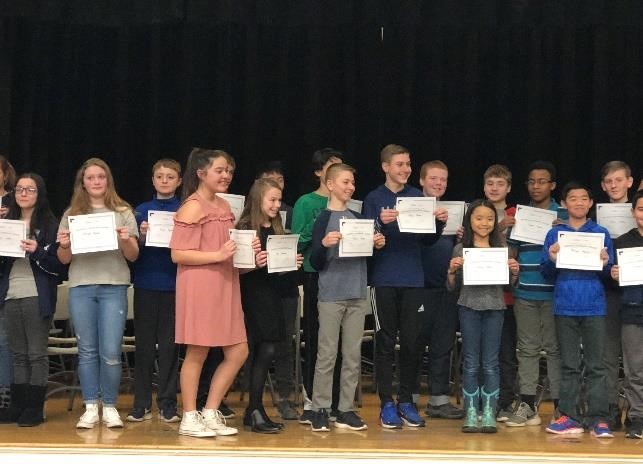


Kathy Harris-Smedberg, Assistant Superintendent of Schools at Bangor School Department
Downeast School, Grades PreK-3, Bangor, Maine
William S. Cohen School, Grades 6-8, Bangor, ME
Submitted by Debra McIntyre, Assistant Superintendent for MSAD28/FiveTown CSD
This process began last summer when we convened a group of teachers representing K-12 staff to begin working on the idea. We researched what other school districts across the nation had implemented and tweaked some of their processes and procedures to work for our own specific learning communities. We had to plan for many different implementation aspects including specific grade spans, students’ access to technology, and how the Remote School Day would impact staff members and families. We also needed to determine which students did not have access to internet service in order to provide them with a hotspot device. After full board approval, we forged ahead to discuss the possibility with the MDOE. After contemplation and discussion, it was decided that we would be able to use a Remote School Day this winter, as we have more than the required 175 student days.
Finally, it looked like Mother Nature would assist us with a day that would have normally been a “No School Day” and we called a Remote School Day. Our younger students had individual work that had previously been sent home and our students in grades 7-12 participated via technology through either Google Classroom or Schoology. Staff members held office hours from 10:00 – 4:00 to assist and answer any questions that arose. Technology support was also available.
As you can imagine with anything new, there were successes, challenges, supporters and dissenters. There are still tweaks to be worked out and challenges to overcome, however, the attendance was excellent and the overall feedback was encouraging. Overall, the parent survey indicated 82% felt the Remote School Day was a success. Our next steps will be to review the specific feedback from parents, staff and students to refine our implementation in the hopes that we will be able to use Remote School Days as an option for making up some of our snow days in the future.
We received many pictures from families, sharing their experiences. We believe the picture below captures the spirit of the day.

Submitted by Christopher Howell, Assistant Superintendent in RSU 14, Windham Raymond Schools
RSU 14, Windham Raymond Schools, has been working very hard to help their students become responsible and safe in their digital lives. At the end of the 2017-2018 school year, RSU 14 committed to educating their staff with the Common Sense Digital Citizenship curriculum. Common Sense Digital Citizenship curriculum is a program that educates students, teachers, and the rest of the community in being safe and responsible while using online platforms. Common Sense uses research based digital citizenship resources, “which were created in collaboration with researchers from Project Zero, led by Howard Gardner at the Harvard Graduate School of Education.” (Common Sense)
Common Sense Education recently recognized Windham Middle School as a Common Sense School for the school’s commitment to digital citizenship. “We applaud the faculty and staff of Windham Middle School for embracing digital citizenship as an important part of their students’ education,” said Liz Kline, VP, Education Programs, Common Sense Education. “Windham Middle School deserves high praise for giving its students the foundational skills they need to compete and succeed in the 21st-century workplace and participate ethically in society at large.”
All RSU 14 students and staff, grades 3-8, initiated the learning process this year by completing 5 lessons per grade level. 1,509 students in RSU 14, received their first year of Digital Citizenship. Using the provided curriculum creates a platform for teachers to begin discussions on important topics such as online safety, reliable sources, online bullying, and many more. Teachers are very happy to have been given the time to learn alongside their students. Using the lessons provided by Common Sense Media, allows for some much needed discussions between all involved.
 Written and Submitted by Marci Dionne and Amy Pichette, LearningWorks Afterschool Program Directors. Photos by Molly Haley Photography.
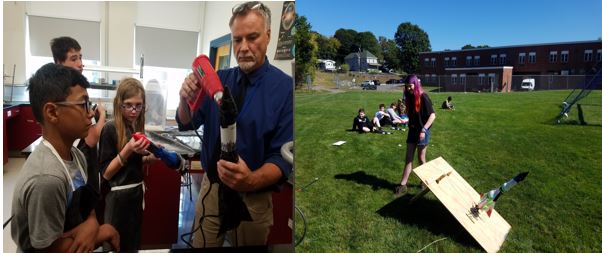
Senator Angus King visited the LearningWorks 21st Century Community Learning Center Afterschool program in Biddeford on Friday, February 8th.

Six student leaders, their grandparents and parents met with the Senator and explained what they enjoy most about the after school program. Dillyn said “The program gives us a leg up in school. We learn about engineering, science, and math.” Jayden explained the steps in the engineering design process to Senator King. Kendra said, “We get to choose which club we join, either drama, prop and set design, science experiments, mask making or coding.”
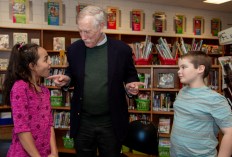
Afterschool staff touched upon some of their favorite aspects of the program: the social and emotional growth and development of the students as well as access to new experiences and opportunities they would not have without the program. These experiences build self-confidence, background knowledge, and help children aspire to learn and explore their world.
Submitted by Denise Kimball, Principal of Somerset Valley Middle School in RSU 19
Somerset Valley Middle School is located in Hartland, Maine. It is currently grades 3-8. The district is in the process of consolidating due to a new high school/middle school construction project. The new school will open in the fall of 2019. At that time, Somerset Valley Middle School will become Somerset Elementary, grades PreK-4.
Somerset Valley Middle School is focused on providing our students with a safe, happy place to learn and grow. We offer free breakfast, lunch, and a healthy snack to our students daily.
Over the past couple of years we have had some major changes in our content area instruction. RSU 19 has been providing time for the teachers to develop our curriculum and district assessments. This past year the district adopted Envisions, which is a math program for grades 3-5. All teachers have received training and they have lots of opportunities to discuss what is working in their classroom and what their challenges are. Students are learning a lot and really enjoy working with Envisions.
This year, Somerset was invited to work with Darlene Bassett, the state’s Literacy Coach. Darlene trained our Language Arts teachers in grades 3-8 in Jan Richardson’s Guided Reading Framework. This framework gives the teachers the structure needed to provide the students with a structured, focused guided reading lesson. Jenn Massow, our fourth-grade teacher, is our lead teacher in this work. Teachers from Somerset County will be invited to visit Jenn’s classroom to see the Framework in action.
Somerset is also involved in a lot of other initiatives. We have partnered with Northern Light Healthy Maine. Each week a group of students work together to find ways of getting the word out on how to live a healthy life. They sponsored a spirit week back in October and are planning one for February. These students send messages by word of mouth, posters and different activities. Once a month we have an activity called Lunch & Learn. During these lunches, students learn about healthy habits. They enjoy this time because they get to win prizes for their participation. This group also joined us for our parent conferences, passing out literature to our parents about healthy life habits.
We work hard to try and improve student academic and behavioral outcomes. We are very involved with PBIS (Positive Behavioral Interventions and Supports). Somerset has a matrix of behaviors that the students and staff developed at the beginning of the year. We celebrate the students that follow these expectations by giving out Panther Paw tickets. Students can win daily, weekly and quarterly prizes. The quarterly prizes usually involve the whole school on Panther Pride Day.
Recently, Somerset had a Giving Tree Contest. The grade level that brought in the most nonperishable items for our local food cupboard would be treated to a pancake breakfast. Grade 4 won! As a school we collected over 1200 items. The local food pantry was thrilled.
Seventh & eighth graders at Somerset Valley Middle school entered the Young Writer’s “Stranger Sagas Contest.” We had 14 winners and three Honorable Mentions out of 13,500 entries. The winners will have the opportunity to have their stories published. How exciting for our middle school writers.
Somerset is also involved in some work with bullying prevention. We partnered with Project Love and Duct Tape to learn about kindness and how it can affect our everyday lives. In February the Maine Parent Federation will be hosting a Bullying Workshop for parents.
Somerset Valley Middle School staff and students are dedicated to becoming lifelong learners. We are constantly working together to form a positive school community where everyone can learn and be successful.
Submitted by Candy Devlin, Principal of Carmel Elementary School of RSU 87
Picture the combo gymnasium/cafeteria, typical of schools built in the mid 70’s. Enter one hundred fifty-three kindergarten through grade four students. Today, students efficiently organize into pre-determined discussion groups; they wait patiently, anticipating the work that is about to begin. They know how to do this work. One Book, One School has been part of the school community in one version or another for over a decade. There is an air of expectation and enjoyment in the gymnasium: purposeful talk is about to begin.
The principal welcomes students and staff; the literacy coach begins with a review of our discussion norms and a prompt to launch the discussion. Immediately there is a buzz of conversation in the gym: purposeful talk about two texts that have been the focus of intentional read aloud, classroom discussions, vocabulary study, and writing over the past ten days. Carmel Elementary students have a lot to say about Sky Color and Art and Max, the texts chosen for One
Book, One School this year. The discussion continues for twenty minutes, with students comparing the two texts. Comments are supported by evidence from the text, elaborations are offered, disagreements are respectfully proposed. Following the discussions, students enjoy Sky Color set to a soundtrack they created during their music classes. The One Book, One School assembly concludes with feedback on how our school community met expectations. The students leave. As they exit, students admire the mural created collaboratively in their art classes, depicting a scene inspired by one of the texts.
One Book, One School is one example of how school structures, adult and student learning, and community support come together at Carmel Elementary School. Beginning on the first day of school, classroom teachers, specialists, and support staff teach procedures and routines, making expectations clear. Using exemplars and providing specific and immediate feedback is common practice. Students are taught and regularly practice classroom discourse in all content areas; therefore, they are able to use those practices in the whole school community setting. This experience and others like it are possible because teachers prepare to facilitate learning opportunities through professional development with colleagues, we enjoy the on-going support of our parents and community citizens, and we collaborate every day in service of our children. Collaboration with staff, community, and parents is the foundation of success at CES. In the words of Lucy Calkins, “no one wants to do this hard work alone.”
Submitted by Ryan Arnold, Principal of Madison Junior High School in MSAD 59.
Madison Junior High school staff, students, administration and parents work together to create a productive, positive, and rewarding atmosphere in which our students will learn and grow. We work hard to create lasting memories through quality learning experiences and special events.
We offer hands on learning experience through STEAM (Science, Technology, Engineering, Arts, Mathematics) Projects. We have a Life Skills program where students, among other things, learn to cook, and sell meals to staff. Our New Alternative Ed Program (Kennebec Valley Multiple Pathways Academy) students (grades 7-9) learn about sustainability from growing to preparing food. Some of the food that is grown helps supply our food pantry and lunch program. Our School Pantry provides food for over 40 families each month. Students, also, have opportunities to be part of many extra-curricular programs. We offer soccer, football, softball, baseball, basketball, wrestling, drama, 100 mile club, track and field, cross country, golf, chorus, band, ukulele club, math team.
Students are offered: Math, Science, Social Studies, ELA, Music, Physical Education, and Art. As 8th graders, the opportunities expand to Health, Industrial Arts and JMG (Jobs for Maine Grads). We are very strong in the integration of technology in all classes. Every classroom in our building, is fortunate to have a SMART Board and projector. All students are provided (1 to 1) with laptops. We have created an innovation lab with color printers, 3D Printers, 3D pens, sphero’s for programming and coding, and 3D goggles for virtual tours.
Our staff is organized into departments to build consistency around curriculum and content standards. Every 4 teachers form a Student Assistance Team (SAT) who meet and discuss needs of individual students. The team, using the RTI (Response To Intervention) process, develop interventions to help students progress. We have a morning homework club, After School Academic Period (ASAP), and WIN Time (What I Need), to help students keep up with their progress and pace.
Outside of academic and co-curricular activities we provide students with special events to support our classrooms. Starting with assemblies to show case student achievement, job fairs, blood drives, food drives, cake walk, science fair, history day, spelling bee, geography bee, guest speakers, visits to the State Capital, Cole Transportation Museum, Gulf of Maine Research Institute (GMRI), as well as local businesses and area landmarks.
Lastly, parents, teachers, secretaries, nurses, custodians, and other critical support staff have been diligently working to make Madison Junior High a safe, and a welcoming environment. We are all part of a unified family working hard to ensure the well-being of all children while providing them with a challenging and rewarding educational experience.
Submitted by Mark Turner, Principal of Caravel Middle School in RSU 87
In RSU 87 we work to provide the best possible educational experience to the students in our community. We support staff development in order to help our staff be as effective as possible in their position(s) and be responsive to students. We use a student-centered decision making model so that our top priority is always what is best for our students.
We have many supports built in for staff. All teachers are required to get a masters degree within seven years of employment, with all expenses covered by the district. Also, we build in five early release days annually to focus solely on professional development. This work coincides with weekly Professional Learning Community time that all teachers participate in. Our teacher evaluation model encourages growth through goal setting so that each teacher makes individual gains as they are ready for improvement. Our small district size also allows for many built in structures including literacy coaches in our elementary schools and a teaching math coach at the middle school. This allows us to offer coursework and bring in structured outside resources for staff in order to make good instruction a priority for all employees of our school district.
For students, everything starts with creating a positive culture where students can thrive. We use a middle level philosophy to educate the whole student and work to help our students become as well rounded as possible. We also offer many clubs, sports, and after school activities so that students have several opportunities to try new things and take healthy risks.
Our small size lends us opportunities to offer many support programs for students so that we can provide timely and structured interventions on a daily basis. These supports include access to outside counseling services and a connection with local agencies to support struggling families.
We are about relationships in RSU 87 and helping everyone achieve individual success. We strive to create positive relationships between staff and students, as well as amongst staff.
Also, we reach out to make those same positive connections with parents and the community to ensure that our school remains strong as the center of our community. We accomplish this work through many different avenues including online resources, open houses and other special events, as well as prioritizing the use of our facility to supporting our community.
Submitted by Kathy Harris-Smedberg, Assistant Superintendent of Schools in Bangor School Department
 Mrs. Kennedy Selected to Study World War I in Europe
Mrs. Kathryn Kennedy of James F. Doughty School (JFDS) is one of eighteen educators from across America to have been selected to participate in Memorializing the Fallen — a teacher professional development program from National History Day®. Sponsored by the U.S. World War I Centennial Commission and the Pritzker Military Museum and Library, the program takes educators on the journey of a lifetime to rediscover the history of World War I and invigorate its teaching in America’s classrooms.
Throughout the program, teachers attend virtual lectures, participate in discussions, and research a service member who never returned home. The academic portion of the program will be led by Dr. Christopher Hamner, an associate professor at George Mason University, and Dr. Kate Clarke Lemay, a historian with Smithsonian’s National Portrait Gallery.
In June 2019, the educators will venture to Europe where they will walk in the footsteps of history, making stops at Somme American Cemetery, St. Mihiel American Cemetery, Meuse-Argonne American Cemetery, Oise-Aisne American Cemetery, Suresnes American Cemetery, Aisne-Marne American Cemetery, and battle sites and monuments at Belleau Wood, Verdun, and Meuse Argonne. On the final day of the program, teachers will attend the 100th anniversary of the signing of the Treaty of Versailles at the Palace of Versailles. This highly competitive program pays for travel to these locations as well as lodging, meals, books, and more.
All of these activities support the development of the final products the teachers create: a lesson plan and a Silent Hero® profile. The teachers are developing in-depth lesson plans to focus on the legacy of the conflict. Both the lesson plan and the fallen hero profile will be released during the 2019-2020 academic year.
The goal for the Memorializing the Fallen program is to reinvigorate the teaching and learning of World War I in classrooms as we mark the 100th anniversary of the end of the war.
18 teachers were chosen from 334 applicants for this competitive program.
 JFDS Celebrates Maine BioScience Day
On Wednesday, November 7th, 2018 JFDS celebrated Maine BioScience Day 2018 by inviting five local scientists to speak with all of our grade 7 and grade 8 students during their science classes. Maine BioScience Day is a statewide event happening in middle schools in Maine and is organized by the BioScience Association of Maine. The BioScience Association makes all the initial contacts to professionals specializing in science fields that are willing to volunteer to go into local middle school classrooms to talk with students about their research, what they do from day to day and the opportunities that are available for a career in science, in Maine.
We would like to thank the following scientist that shared some activities and discussed their research with our students.

The accelerated physical and life science students at the James F. Doughty School completed their 13th year of invasive crab research at Moose Point State Park.

There were 233 crabs collected and measured. The species were recorded along with the genders. All of the crabs collected were green crabs (Carcinus maenas), which are highly aggressive invasive crabs that were introduced to Maine over 100 years ago.
Dream it. See it. Be it.
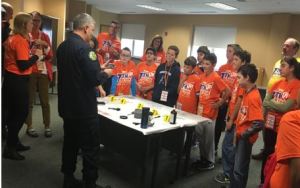 The Bangor Region Chamber of Commerce through the Community Council Building Bridges program, in partnership with the Bangor School Department and Superintendent Dr. Betsy Webb, transported 7th grade students from William S. Cohen School and James F. Doughty School on a day-long tour of Chamber member businesses. The goal of the trip was to inform and excite students about their future and the many career opportunities available in our community.
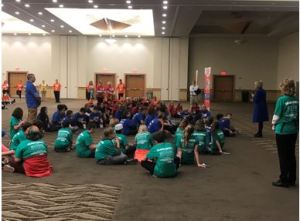 The day kicked off at the Cross Insurance Center with a keynote address from Ben Sprague, Mayor of Bangor, and remarks from James Doughty, Director of Marking from Bangor Savings Bank, the presenting sponsor of the event. The event was also made possible by the generous support of the University of Maine, Husson University, Emera, Darlings Auto, Bangor International Airport, GE, Cross Insurance Center, Cyr Bus, and nearly 100 hundred volunteers representing the business community.
The students divided into five teams to visit businesses and meet employees from Bangor Savings Bank, Bangor Police Department, Cross Insurance Agency, Eastern Maine Medical Center, Darlings, Specialty Sweets, Berry Dunn, Sutherland Weston, Eaton Peabody at the Penobscot Judicial Center, PCHC, Wayfair, Bangor International Airport, C&L Aviation Group, Hannaford, Maine Air Guard, and GE.
Submitted by Jesse Bartke, Interim Principal at Oceanside High School and written by Jenny Goode, GT Teacher and Hannah Faesey, Social Worker
At Oceanside High School in Rockland, a system has been established that supports students to build a foundation of success as they enter High School and then encourages them to challenge themselves and focus their education on individual passions. This team has been working together supporting the 9th and 10th grade students in the building for the past 3 years. Oceanside’s Freshman Academy consists of the 9th grade level core subject teachers, the social worker, the student support coordinator, administration, and guidance. Over the course of a few weeks, they discuss every single freshman student, tracking their grades, peer interactions, attendance, behavior referrals, and social-emotional strengths and challenges on a comprehensive spreadsheet. This not only allows everyone to be on the same page about kids, but it builds close relationships between teachers and all of their students. They are able to see “the whole student” through the picture painted at the Freshman Academy level. “No students fall through the cracks,” observed an Oceanside High School administrator.
The meetings are fast paced and focused. When administration and guidance attends, they are able to give updates on students, to offer support to teachers on specific kids, and to close the communication loop between classroom and main office. “Everyone at the table knows what is happening with each of their students,” said a Social Studies teacher. “We are all aware of the challenges and successes of the students, which helps us prepare for what any given kid will need that day. We can wrap supports and interventions around a kid based on the information shared.”
With this close tracking, the team is able to intervene early with their students. Rather than waiting until the end of a quarter when a student is on a failure list, the close monitoring of the Freshman Academy allows timely and direct responses to smaller changes in grades, behavior, or social-emotional health. “I have nothing bad to say about Oceanside,” said a 10th grade parent. “The staff there is always willing to be creative and communicative with my student’s needs, and [my student] is not an easy case! I don’t know another school district that would’ve responded so quickly.”
The Freshman Academy teachers have their hands full. Besides teaching curriculum content, academic readiness, and social-emotional skills, each teacher has an advisory of about 18 students, and is responsible for being the “point person” for those students’ families to contact the school. At least once a quarter, teachers reach out to families to share successes, challenges, and updates with families, as well as invite them in to meetings with their student and teachers. While all of these meetings and additional communication are certainly more work, all of those on the Freshman Academy team wouldn’t want to be anywhere else. One first year teacher shared that he “feels supported by his team and administration” in the work he’s doing. “I am learning so much from the others at the table.”
At some point, teachers can only provide so many interventions at the classroom level. Freshman Academy identifies students for that have reached the Risk Review Team level. Risk Review is comprised of administration, the student support coordinator, the social worker, guidance, case managers, and the interventionist. They meet every month to discuss freshman who’s needs surpass what support teachers can give. Additionally, they might connect to outside resources because the needs of some students are greater than the school can provide. “This structure allows me to breathe a sigh of relief. We’re not letting any student fall through the cracks, and I trust that the Risk Review Team will support students when I can’t. I’m not alone in this,” said a 9th grade English teacher.
Adults at Oceanside are not the only ones to notice a difference. One 10th grade student, reflecting on his time in the Freshman Academy, said that he felt like he mattered in 9th grade, a feeling he hadn’t felt at school in a long time. “I knew all of my teachers cared about me. And they still do! I go to [my 9th grade English teacher] to calm down and I go to my [9th grade science teacher] for advice.” A current 9th grader said, “You all seem to know what’s going on! It’s helping me show up more than I did last year.”
In the 2017-2018 school year, freshman had the lowest truancy rate of any other grades at Oceanside, with 20.7% (compared to a school rate of 29%). At Oceanside, students need 6 credits to continue onto 10th grade. 67.2% of the class of 2018, who did not have Freshman Academy, received all 6 credits, but the class of 2021 with the Freshman Academy had 90.7% of the class complete these credits. Finally, as 8th graders, 13.25% of the class of 2021 passed all core classes by standards and grades. As 9th graders, the same class had 86% pass all of their core classes.
Given this success, Oceanside has expanded their Academy structure to the 10th grade in the 2018-2019 school year. Four core teachers, the social worker, and administration follow a streamlined structure for a pilot group of 10th graders. The Sophomore Academy is focused on the team of teachers, frequent parent communication, and monitoring student progress. The Risk Review Team continues to play an important role on the Sophomore Academy too, allowing the teachers to elevate students who need additional supports beyond those feasible in the classroom. “I can’t imagine not being part of a team like this, now that I’ve been on one,” said a Sophomore Academy teacher. “I wish all school staff could feel as supported and validated as I do.”
As the Freshmen and Sophomore Academies work to support students develop the skills that are necessary for them to be successful in high school, they are encouraged to pursue a pathway starting in their sophomore year. These pathways are the STEM and Liberal Arts Academies which are academic and experiential pathways intended to increase student understanding of the possibilities of further study and careers in fields connected to those concentrations. The STEM Academy was developed in 2015 with the first class graduating with the endorsement in 2016. The success of this Academy led to the development of the Liberal Arts Academy in 2016 with subsequent endorsement being available in 2017. At present, there are over forty students pursuing one of the Academy endorsements.
A Liberal Arts Academy endorsement can be achieved through three different pathways: visual and performing arts, culture, or humanities. STEM Academy students can choose either a science or math concentration. Academy participants benefit from taking challenging courses at the Honors or Advanced Placement levels, in addition to one-on-one mentoring from a teacher mentor and the Academy advisor. Career exploration includes participating in extended learning opportunities, job shadowing, and a capstone experience consisting of an internship or research project. As part of the Academy approval process, seniors must complete a portfolio reflecting their Academy journey by January of their graduation year. Seniors also give presentations of their experiences at the annual OHS Career Day and to the district’s eighth grade class. Successful completion of the endorsement is recognized on the Oceanside High School Diploma, the student’s official transcripts, and a white cord that is worn during the graduation ceremony to denote high academic achievement in STEM or Liberal Arts.
Students express that the most valuable part of the Academy experience is the two job shadows and twenty-hour internship experiences. The business community’s partnership is invaluable in giving our students the chance to explore careers. Testimonial from Academy graduates have noted how valuable the experience was in giving them a clearer direction regarding their college major and future aspirations. One student describes the internship as an experience that “really had a big impact on me. I didn’t just walk out of that hospital with a completed STEM endorsement and some experience under my belt. I walked out of there knowing my passion was to pursue a future in the medical field.” Another student described her involvement in Academy as “a cornerstone in my high school career. This program has given me the necessary tools to explore my career interests and who I am as a person.”
As our present seniors are finishing up their Academy portfolios, they are getting the chance to reflect on the work that they have done these past 3.5 years. One student noted that with the help of the Academy program “many more opportunities in the community and state were possible because of having a whole program behind me.” Another recognized that Academy “ had provided me with ambition. I have worked to achieve its endorsement and have learned to use the striving force I possess to succeed in school and beyond.” Sometimes the Academy experience guide students to the career of their dreams as happened to one senior who job shadowed at the hospital, and from that experience did an internship in the hospital pharmacy, which led him to realize that was the career for him. Sometimes Academy experiences redirect a student from what they thought they wanted to something more suited to their strengths, as it did for a young man who was convinced he wanted to be a naval architect, but after his STEM career explorations realized he wanted to pursue a career that incorporates engineering and business skills.
The students who fulfill the STEM and Liberal Arts Academy requirements have improved important abilities in personal responsibility and interpersonal skills, have challenged themselves academically, and have had the opportunity to get real-life career experiences that are invaluable. More information is available about the Oceanside High School STEM and Liberal Arts Academies on our website: Oceanside HS Academy.

 Maine DOE Newsroom