Caribou Middle School Innovation Center Highlighted in Local News

Submitted by Timothy Doak, Superintendent of Eastern Aroostook Regional School Unit #39. Article is from The County newspaper, written by Chris Bouchard.

Caribou Middle School in RSU 39 was recently highlighted for their Innovation Center, an initiative led by Maureen Connell, Innovation Center Director. Below is a news article from The County newspaper.

CARIBOU, Maine — Caribou Middle School students are now learning about math, coding, technology, and creative design as part of the school’s new Innovation Center, located in the former shop area in the heart of the building.

In its current incarnation, the innovation center is somewhat of a prototype of what will be offered in Caribou’s new PreK-8 school, scheduled for completion in mid-2020. The building is set to have its own space dedicated to STEAM (science, technology, engineering, arts and math) activities, and RSU 39 has already hired Maureen Connell as their Innovation Center director.

At first, Connell said she wasn’t asked to start doing classes and activities with students, but soon found herself working with teachers and middle schoolers integrating technology such as 3D printing, LEGO robotics, and programmable mobile spheres into their curriculum.

She said the experience so far has been immensely positive.

“It’s been awesome to be able to learn new things myself,” she said, “and to see kids having a lot of fun with technology and apply their skills in different ways.”

The Innovation Center is not a separate class period like gym or library time, but a resource that all educators can use to augment their classes. For example, CMS fifth graders are learning about the westward expansion in this country, and at the end of the unit they will build their own wagons and create supplies that pioneers would typically bring along for the arduous journey.

Read the full story


Maine School Garden Day Brings Educators Around the State to Trenton Elementary School

(Whitney Ciancetta of Trenton Elementary School, describes their school’s greenhouse and gardens.)

The Maine School Garden Network recently convened 65 teachers from around the state at its annual “Maine School Garden Day” at Trenton Elementary School.  The purpose of the event was to provide preK-12 teachers currently or potentially involved with school gardens a day of workshops and networking.

The day included presentations, workshops, a lunch of local produce, and a tour of Trenton Elementary School’s greenhouse, gardens and outdoor education center and nature trails.  Guest presenters included Erika Verrier, Program Director of Maine School Garden Network, Willie Sayer Grenier of Maine Agriculture in the Classroom (MAITC), 2019 MAITC Teacher of the Year, Lynn Snow, Maine FFA (formerly known as “Future Farmers of America”) State President Graham Berry, and many others.  Presentations also included information on establishing school orchards by ReTreeUS, seed saving techcniques, information on bees, and on native plants, as well as other subjects.  Afternoon workshops covered an array of topics of interest to teachers with school gardens.

The day provided participating teachers with valuable information and resources related to ensuring the success of their school gardens.  Erik Verrier of Maine School Garden Network (MSGN) urged all teachers to complete the MSGN online School Garden Survey so that they could continue to network with each other and additional interested teachers, and so that MSGN would be know how to best serve their needs.

IMG_8404_Photo_2_Lynn_Snow_MAITC_Teacher_of_Year
Lynn Snow, 2019 MAITC Teacher of the Year, discusses in her keynote address the range of academics that may be achieved through school gardens.

MAITC 2019 Teacher of the Year, Lynn Snow, a 5th grade Science and English teacher at Thomaston Grammar School, described ways in which their school garden helped students acquire skills across numerous academic areas, as well as areas related to important life skills such as taking initiative and perseverance.

Graham Berry, Maine FFA State President, let teachers know that Maine FFA represented many other areas beyond farming relevant to the field of agriculture and natural resources.  He informed the group that any of them with students grades 7-12 would qualify to have an FFA chapter at their school, helping students to access numerous opportunities encompassing competitions, leadership skills, travel, scholarships, and an overall greater appreciation of agriculture and natural resources.

IMG_8420_Photo_1_Graham_Berry_ME_FFA_State_President
Graham Berry, Maine FFA State President, describes the advantages associated with FFA chapter membership for students grades 7-12.

For more information on Maine School Garden Network, please contact Erika Verrier, Program Director:  msgncoordinator@gmail.com  (207) 612-8911 or email  info@msgn.org

For more information on starting an FFA chapter for students grades 7-12, please contact:  Doug Robertson, Maine FFA State Advisor, Maine Department of Education, doug.robertson@maine.gov  (207) 624-6744

Falmouth Elementary Students Practice Math and Service Learning Through World of Change Activity

Third, fourth, and fifth graders from Falmouth Elementary school got to practice their math skills and give back to the community all at once during a worldly event that took place earlier this month outside the school.

Parent, World of Change Founder, and Chief Change Maker, Matt Hoidal brought a change truck to the Falmouth Elementary School so that students could come out and donate couch change to some local causes of their choosing. The truck, designed locally, was equipped with six slots entitled, Education, Animals and Nature, Health, Play, Housing, and Food where loose coins and dollar bills could be deposited by students and then weighed for an estimated amount. The activity provided them with a chance to give back to the community with a service learning activity, in addition to providing an opportunity to practice using monetary amounts and measurements.

“This is an incredible opportunity for our children to come together and our community to come together,” said Falmouth Elementary School Principal, Gloria Noyes.

100% of all funds collected will be disbursed according to student choice. Below is a breakdown by focus area (according to how the students decided), and the amount donated:

  • Play: $227.94 (to fund swim lessons for four kids)
  • Housing: $332.41 (to fund three-four beds for kids who are sleeping on the floor)
  • Food: $477.09 (to fund 1,908 meals for kids in need)
  • Education: $273.21 (to fund 12 backpacks filled with books for kids in need)
  • Animals & Nature: $454.79 (to fund pet therapy programs and summer camperships for kids in need)
  • Health: $492.74 (to fund groceries and fuel assistance for families of kids with cancer)

“With nearly 20,000 coins collected, this is true testament to the power of change,” said Matt Hoidal.

Below is a video of the event, done by Bull Dog Media of Maine, which features comments from Falmouth Elementary School Principal,Gloria Noyes.

Below are some images from the coin drop:

Maine School of Science and Mathematics Ranked #2 Best High School in the Nation by U.S. News and World Report

Submitted by Ryan McDonald, Summer Programs Director and Public Relations Coordinator at Maine School of Science and Mathematics.

Maine School of Science and Mathematics (MSSM) has been ranked #2 Best High School in the nation by U.S. News and World Report. MSSM received a 99.99% overall score out of a possible 100 points. Ranking factors included #1 in College Readiness Index Rank, #1 in Math and Reading Proficiency Rank, #1 in Math and Reading Performance Rank. MSSM was also ranked #1 in Maine and #2 Magnet School in the nation. This is the highest rank MSSM has received from U.S. News and World Report and has been ranked 8 times in the past 12 years. In recent years, MSSM has recorded rankings in the top 20.

Executive Director, David Pearson, said, “The MSSM family is rightly thrilled about the marvelous U.S. News and World Report educational rankings that places the school top in Maine, second in the United States, and nationally second as a magnet high school.  But as in all things, there is no singular responsibility for such impressive results. These rankings are consequent upon what is, and always will be, a team effort at the school.  As such, we are deeply grateful for the tireless efforts of our staff who teach, coach, advise, and nurture our extraordinary students; but also to the continuous support of their parents, and the many school districts throughout the State who educated them through their formative elementary and middle school years. We also owe very special gratitude to the Maine Legislature for providing the financial support for our academic and extracurricular programming. Quite simply, this is not just an MSSM success story, but one for our entire great State of Maine.”

Dean of Enrollment Management, Alan Whittemore, said, “Although we have received such prestigious recognition from the likes of U.S. News & World Report in the past, it is truly rewarding to reach #2 in the nation. We are happy for all involved here at Limestone, the students, staff, and faculty all of whom are working together to provide an education second only to one!”

MSSM’s College Counselor, Erica Jortberg, enjoys the privilege of working with some of the most motivated students in the state. She noted, “They are what makes MSSM what it is. When they choose to come to MSSM, it is because they are seeking a challenge and the opportunity to push themselves academically. It is exciting to work with them through the college process and see them off on their post-secondary endeavors.”

To produce the 2019 Best High Schools rankings, U.S. News teamed up with North Carolina-based RTI International, a global nonprofit social science research firm. RTI implemented the U.S. News comprehensive rankings methodology which reflects how well high schools serve all of their students, not just those who are planning to go to college. According to the U.S. News Best High Schools methodology, schools were rated on the following six measures and the weights used for each indicator are in parentheses. College readiness (30% of the ranking), College curriculum breadth (10%), Reading and math proficiency (20%), Reading and math performance (20%), Underserved student performance (10%), Graduation rate (10%).

The six indicators were first normalized using standardized scores and then weighted. Those weighed scores are then summed and transformed so that each eligible school receives an overall percentile score between zero and 100 at two decimal places, with the top performer scoring 100. The overall score as a percentile score indicates the percentile position a school is in out of the 17,245 ranked schools. A school with a score of 90 means that 10% of the schools are ranked higher and 90% of the schools are ranked lower. Finally, high schools are ranked against their peers in descending order of their overall scores. High schools placing in the top 75% display their individual rank on usnews.com.

Bonny Eagle Students Participate in Educator Workshop about Assessment for Learning

IMG_0119On Monday, May 6, ten students from the Bonny Eagle School District made a trip to the University of Southern Maine to participate in a session at the 4th Annual Assessment for Learning & Leading Conference.

The session, “Assessment for Learning: Student Involvement and Voice” provided participants with explanations and examples of high-impact instructional strategies, and an opportunity to talk with instructional coaches and students about their experiences related to the research-based practices.

IMG_0121
Kirsten Gould and Kate Dumont, Assessment for Learning Coaches from MSAD 6

The session, led by Kirsten Gould and Kate Dumont, Assessment for Learning Coaches from MSAD 6, focused on student perspectives related to the new practices and encouraged participants to think about how teacher clarity and formative assessment can support students’ academic and emotional growth.

During the panel portion of the session, teachers mingled with students to have conversations and ask questions about student experiences and perspectives with the practice. The students, ranging from first through twelfth grade, shared concrete examples that illustrate how their teachers clarify the learning expectations and help students build self-efficacy through tracking progress, self-assessment, and goal-setting.

IMG_0138

Maine School of Science and Mathematics Sends Two Robotics Teams to World Championship Competition in Louisville, Kentucky

Submitted by Ryan McDonald, Summer Programs Director and Public Relations Coordinator at Maine School of Science and Mathematics.

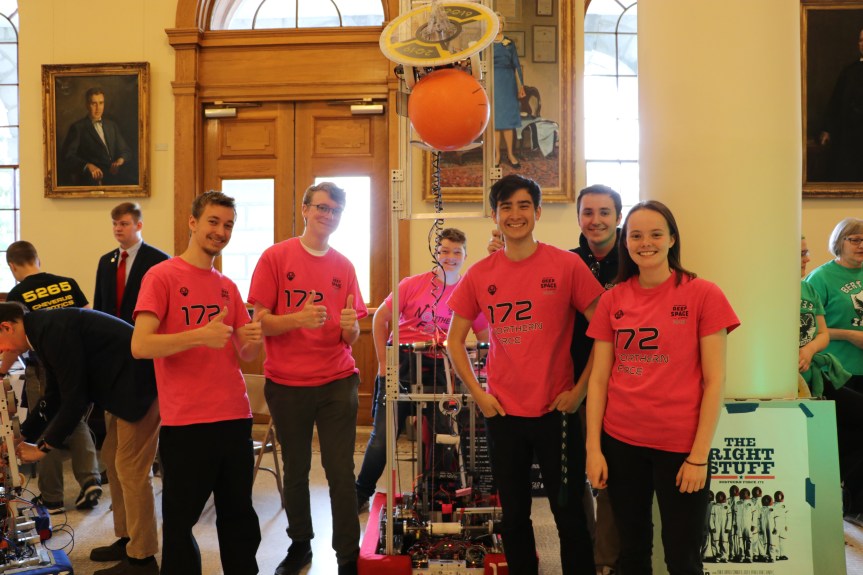
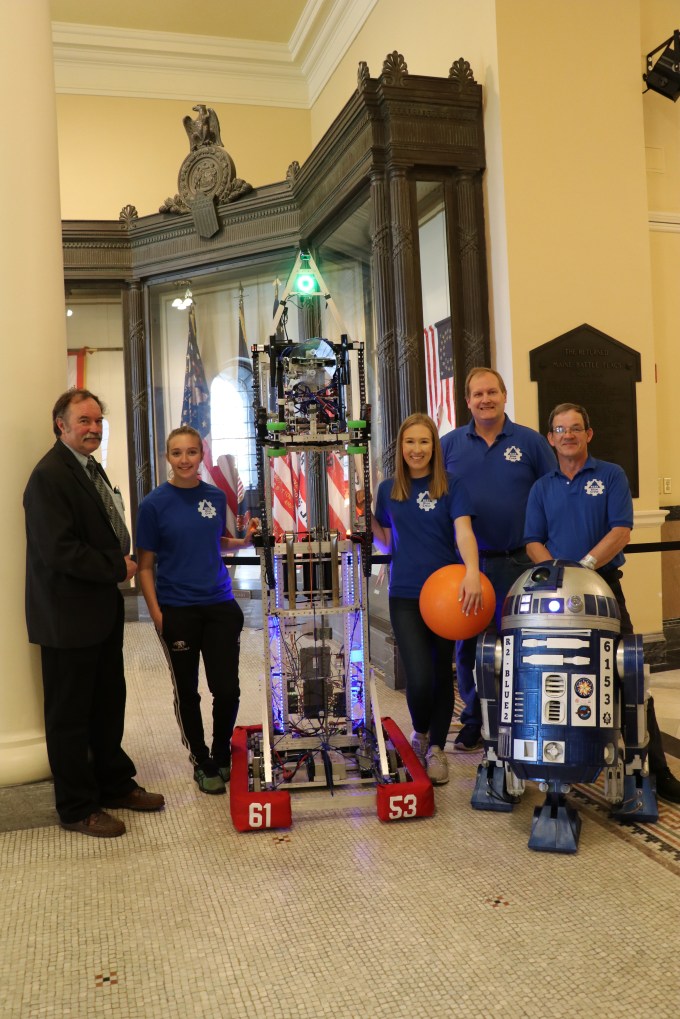
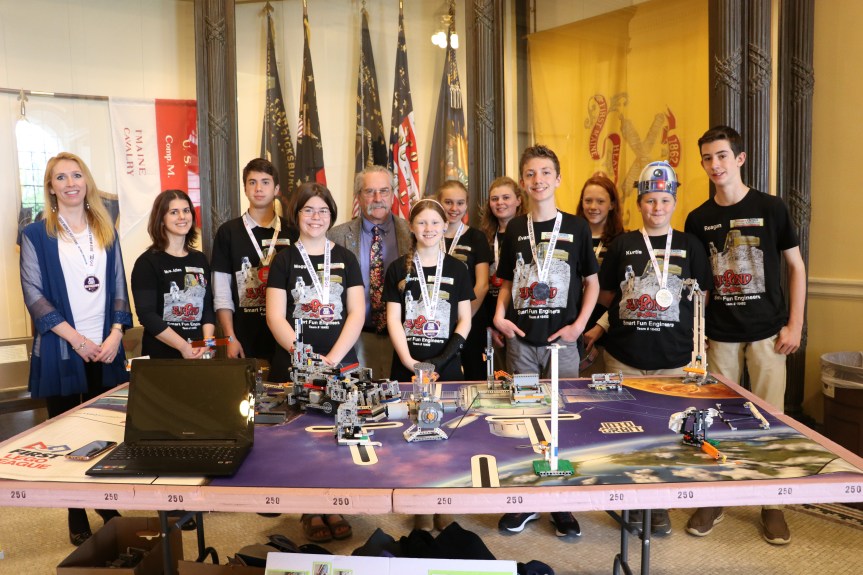
Maine School of Science and Mathematics (MSSM) is pleased to announce two teams have qualified for the VEX Robotics World Championship sponsored by the Northrop Grumman Foundation in Louisville, Ky., April 24 – April 27. The teams, 4393Z led by Ethan Kelley (a junior from Yarmouth) and 4393S led by Madison McCarthy (a sophomore from Cape Elizabeth), secured spots at the world’s largest robotics competition through their success at the VEX Robotics Maine State Championship, where they received the Robot Skills Challenge Champion award (4393Z) and the Robot Design Award (4394S).

The State Championship, held in South Portland, attracted 50 teams with students from middle and high schools competing. The VEX Robotics World Championships 2019 will be held at the Kentucky Exposition Center in Louisville, Kentucky and 584 teams from around the world will attend.

MSSM’s VEX Robotics’ School Team Number is 4393 and each team chooses a letter. Team 4393S consists of Madison McCarthy; Wesley Chalmers, a sophomore from Scarborough; and Chandler Pike, a freshman from Jay. Team 4393Z is composed of Ethan Kelley; James Lau, a junior from Buxton; Ryan Oh, a junior from the Republic of Korea; Harrison Ma, a senior from the People’s Republic of China; Alex Nikanov, a junior from Ukraine; and Federico Galbiati, a junior from Italy.

When asked about being a VEX team captain, Madison McCarty said it, “allows me to learn what it’s like to apply robotics in the real world. Building the robot is only a small part of the larger design process. I have to keep track of what all of the team members are doing in a detailed engineer notebook and I’m also responsible for making sure they stay on track with our goals and deadlines for the robot. Being a captain is not an easy job and I have learned a lot of leadership skills as well as patience and organization skills.”

Great Salt Bay Community School Choir Honors Fellow Student with Album, “Sail On Silver Girl”

Submitted by Anne-Marie D’Amico, choir teacher at Great Salt Bay (GSB) Community School in AOS 93. The article was written as part of the Lincoln County Artsbeat of the Lincoln County News. Photo credit: Lincoln County News.

Great Salt Bay (GSB) Community School choir recently completed a project directed by teacher Anne-Marie D’Amico titled “Sail On Silver Girl,” and consists of a choral album and a documentary film about the project.

The project was named “Sail On Silver Girl” to honor the late Isabelle Manahan, D’Amico said. Manahan, who had been a member of GSB’s advanced chorus before going on to Lincoln Academy, passed away in June of last year at age 15.

“We named it after her passing to keep her memory alive,” said D’Amico. “It was another extension of our community reflection, especially because Izzy was so active in all the programs at GSB.”

The “Sail On Silver Girl” project, begun in September 2017, features “last year’s eighth graders and seventh graders and this year’s eighth graders” in the GSB advanced chorus, D’Amico said. Some of those involved are now freshmen at Lincoln Academy.

“We’ve never done anything like this before,” said D’Amico of the ambitious project that also features local musicians Sean Fleming on piano/keyboard, Dave Martin on guitar, John Cannon on bass, Michael Sevon on drums, and Curt Boot on trumpet. Cannon and Sevon both work at GSB.

John Morrison, of Auburn, was the project’s sound engineer and Jared Morneau, of Brunswick, was the video engineer.

Members of local community chorus Common Threads also took part in the project, D’Amico said.

GSB’s advanced chorus “got to do something professional,” D’Amico observed.

It was the first time that GSB choral students had been involved in a musical project of such magnitude and seriousness, from the very beginning of learning all the songs through to listening to raw recorded tracks and later to mixed tracks, which “made their faces light up,” D’Amico said.

For more information and to watch the video visit their website at sailonproject.wordpress.com.


Classroom Highlight: Comprehensive Computer Science at Lyman Moore Middle School

Submitted by AJ Rog and Sean Wasson, Computer Science Educators at Lyman Moore Middle School in Portland, Maine.

Lyman Moore Middle School is in the Portland Public School District. It is home to 480 students in grades 6 through 8. Over the last 20+ years Portland has become a very diverse city with an influx of refugees and asylum seekers from around the world. Thanks to this welcome change to our city, our school is currently home to students from 28 different countries with at least 15 different home languages being spoken.

Sean Wasson and I (AJ Rog) feel privileged to be the two computer science teachers at Lyman Moore. We are able to reach approximately 85% of our students. Our classes run on an alternating day schedule, allowing their semester of content to stretch across the entire year. This schedule engages our students in two semesters of computer science content throughout their 6th and 7th grade experiences. During their time in the CS program they are given access to coding, problem solving skills and design thinking. Our students leave middle school with a high level of understanding of JavaScript, HTML, CSS, and circuit boards.

When our students enter 8th grade they are given some choice in the elective classes  hey take. Sean and I offer multiple choices over the 3 trimesters ranging from movie making,  TEAM Windmill Challenge, Web Design, Puzzles and Cyber Security, Video Game Design,  nd Circuit Boards. These classes have allowed our students who want to go further in the STEAM fields an opportunity to do so.

Our ultimate goal is to have 100% of our middle school students take CS and to collaborate closely with the three city high schools in order to recommend high school CS placement and encourage students to continue their CS journey. We also see CS curriculum as a path toward equity and engagement. Because of the demographics of our school we are positioned to encourage those students who have historically been  underrepresented in Computer Science (e.g. girls and students of color) to focus on, build skills in and find inspiration in CS. In addition we provide opportunities for students to  engage in skills and knowledge that will serve them beyond the classroom. In our ever digitizing world, our students will leave middle school equipped to creatively tackle problems using the CS lens.

Washington County Educator Profile: Mathy Terril

Submitted by Sarah Woog from the The Washington County Consortium. 

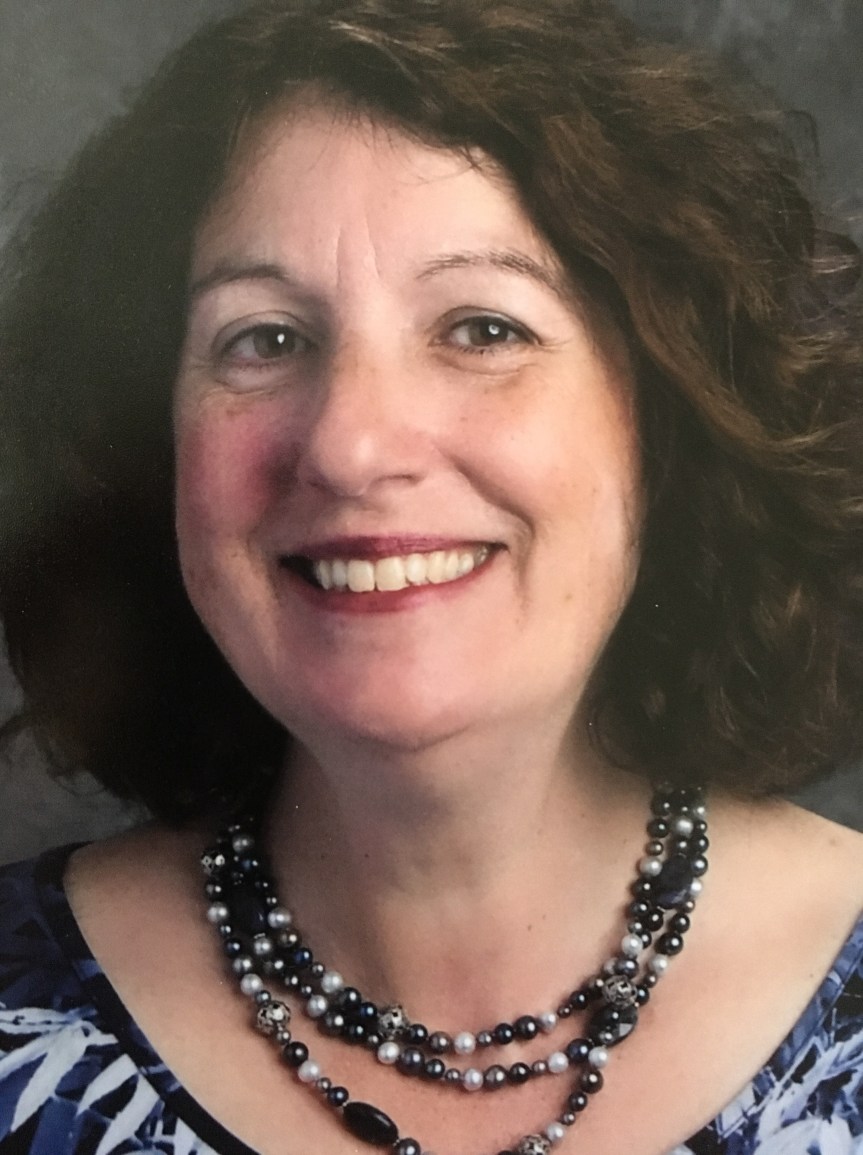
Meet Mathy Terrill, Social Studies Teacher, A.P History Teacher, History Department Head, United States Holocaust Memorial Museum Teaching Fellow, National Honor Society Advisor, Gay Straight Transgendered Alliance Advisor, Student Assistant Team Co-Advisor, Homecoming Coordinator, Varsity Cross Country Coach, Varsity Track and Field Assistant Coach, and Overall Ridiculously Busy and Dedicated Educator at Washington Academy.

Mathy and I met at her home in Machias over the weekend so I could interview her for this profile. I usually come to such interviews with questions prepared, but this time I was stumped. Mathy does EVERYTHING. How could I structure the interview to highlight her deep commitment to education in Washington County without leaving anything out? Truth is, I couldn’t. So I asked her what she is most proud of. She told me two things: her work as a United States Holocaust Memorial Museum Teaching Fellow, and the Prom Dress Boutique she puts on as advisor for the National Honor Society at Washington Academy.

Mathy has been a United States Holocaust Memorial Museum Teaching Fellow for three years. She goes to Washington, D.C. every summer for a week to connect with other Fellows and gain resources and study practices for teaching the Holocaust and Genocide Studies at Washington Academy and to support other teachers in bringing Genocide Studies lessons to their classrooms. Mathy has shared her work at Harvest of Ideas for the past three years and continues to work with teachers throughout the school year to develop age-appropriate curriculum in an effort to bring these important lessons to students beyond Washington Academy.

The Prom Dress Boutique is an annual event held on a Saturday morning in April each year at Washington Academy and has been covered by many news outlets including the Bangor Daily News, Machias Valley News Observer, and WABI News Channel 5 (here is a story from this years event). Hundreds of dresses have been collected by donation throughout the years and are made available to students to pick from, as are shoes and accessories. Mathy and the National Honor Society set up the cafeteria at Washington Academy as a boutique, complete with dressing rooms, and organize the fantastic inventory on racks by size so area students may come and experience prom shopping without the prohibitive price tag typically associated with such fun.

One of the best things about Mathy is her eagerness to share. Part of her enthusiasm for her work comes from her belief that all our kids deserve the opportunities she brings to Washington Academy. you can reach out to Mathy (m.terrill@raider4life.org) if you’d like to incorporate Genocide Studies into your classroom. Somehow she’ll find the time to help you. She always does.

Rural Schools Tackle Attendance Issues at Spring Summit in Bangor

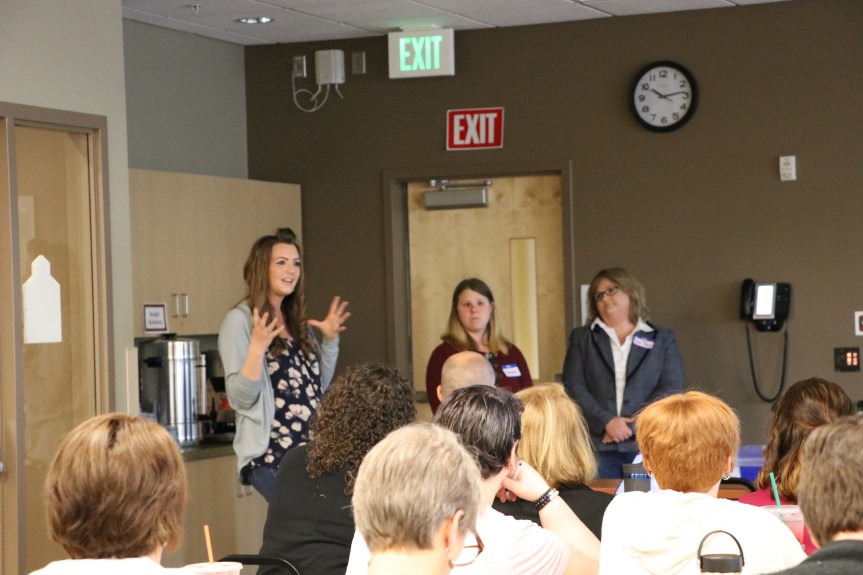
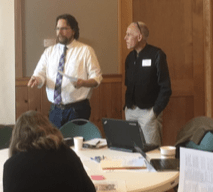
District and school administrators and educators from thirty-six districts and education entities in rural Maine convened at Jeff’s Catering in Bangor recently for the first ever Rural Maine Attendance Summit organized by RSU 74 Superintendent Mike Tracy. After looking at his own data submitted to the Maine Department of Education last spring, he found that some of the students in his district were out of school enough to be defined as chronically absent. In his efforts to be proactive about the issue, Tracy looked to available resources only to find that they were mostly geared towards urban school districts. That’s when he began working on plans for the rural attendance summit.

With the collective understanding that small rural school districts must approach things differently than bigger urban school districts, the summit aimed to help generate more tools, and allow for the exchanging of ideas regarding the growing issues that are keeping kids from accessing school in rural Maine.

The day long summit provided participants with the opportunity to hear from key note speakers, Emanuel Pariser from the MeANS school, and Britney Ray from Washington County’s TREE program – Transforming Rural Experiences in Education. Each speaker provided information and expertise about working with students and parents who may be experiencing Adverse Childhood Experiences (ACEs) and/or childhood trauma. In addition, district officials could share specific issues in their own communities, collaborate on solutions that were working, and pose specific questions to a panel of experts.

Rural Maine School Districts with less than 1,000 students and other stakeholders were invited to attend. In addition to host district RSU 74, others in attendance were Goodwill Hinckley, MSAD 54, RSU 68, Otis School Department, RSU 93, RSU 89, AOS 94, RSU 73, MSAD 41, Snow Pond, RSU 84/MSAD 14, MSAD 37, Union 69, RSU 26, RSU 19, Medway, MSAD 20, RSU 25, Cornville, RSU 10, MSSA, Sunrise Country School, RSU 67, AOS 91, MSAD 59, MSAD 46, CSD 13, Athens, MSAD 70, ME Charter School, UMF, AOS 96, MSAD 30, AOS 90, and Calais.

Panelists included Martha Kempe, Head of Schools at Wayfinder Schools; Sue Reed, Maine DOE Early Childhood Specialist; Ashley Cirone and Laura Thomas, TREE Program Coaches; Catharine Biddle, Assistant Professor of Educational Leadership at UMaine and researcher for the TREE Program; and Susan Lieberman with Count ME. They fielded audience questions about strategies that involve parent and student voice, treatment options that may not typically be found schools, and ways to make school a priority for students and their families. Members of Maine DOE’s Data team were also on hand to answer questions about reporting requirements and to learn more about the needs of rural schools when reporting attendance data to the state.

The day included workshop time for attendees to meet with other districts and share ideas that were working in their schools, and closed with an opportunity for attendees to work with the people from their own district to work on a plan moving forward.

School officials left with various action plans that included strategies involving better outreach and partnerships with parents, home visits, team approaches and/or committee groups to research and take action, attendance awards and incentives, hiring on social workers and school resource officers, early-day or before school programing that kids won’t want to miss, and working more closely with the Department of Health and Human Services (DHHS).

For more information and resources visit https://www.ruralmaineattendance.com/.