Successes Shared by Districts at Closing Event of 4-Year Preschool Expansion Grant

(Pictured: Kindergarten teacher Heidi Sturgeon, pre-k teacher Olesia Pazdro, and Curriculum Director Suzanne Day from MSAD 55- Sacopee Valley, talk to the audience about their goals for their Birth – Third Grade Action Plan.)

The Maine Department of Education hosted a closing event of the 4-year Preschool Expansion Grant (PEG) that was awarded to Maine DOE in December 2014 by the US Department of Education.  Eighteen states were awarded grants to support local school districts in the development of new preschool classrooms, and to expand access to high-quality, full-day pre-k programs for children whose families were at or below 200%  Federal Poverty Level.

Maine used the grant to launch and expand pre-k programs for 13 districts in Maine, 8 of which used the opportunity to partner with local Head Start programs. The districts included RSU 12, RSU 13, MSAD 17, RSU 23, SAD 37, SAD 44, RSU 55, RSU 74, Cornville Regional Charter School, Cherryfield, Lewiston (Longley Elementary), Millinocket, Vassalboro. The 13 districts were chosen for their percentage of students with an economic disadvantage and willingness and availability to embark on the effort.

The grant allowed these districts to add or expand their pre-k classroom spaces and resources, hire and train needed teachers in using evidence based curricula and instructional practices, align appropriate assessment of pre-k students with kindergarten assessments, develop a plan for kindergarten transition, and form a community literacy team, all as part of a long-term “Birth to Third Grade plan” that aligns with the districts’ strategic goals. The grant implementation was supported by grant coordinators at each of the participating districts, and trained coaches, all of whom were former Maine educators.

A cross-section of state employees from Maine DOE, Department of Health and Human Services (DHHS) and Child Development Services (CDS) worked collaboratively on this project,  with facilitation provided by the Education Development Center (EDC).

IMG_0229
(Left to right) Sarah Adkins, Kathryn Zwicker, Nena Cunningham, Karen Bergeron, Nicole Madore, Lee Anne Larsen, Dee Saucier, Sue Reed, Crystal Arbour, Jessica Nixon, Rich Meserve, David Jacobson.

Three years into the 4-year grant, tremendous improvements in child outcomes were celebrated, including:

  • 76%-86% of children moved out of the high-risk identification in all developmental domains
  • 76%-96% of children moved out of high-risk identification in literacy skills (predictive of kindergarten success)
  • 53% of children moved out of high-risk identification in the Peabody Picture Vocabulary Test, which assesses receptive language and is a predictor of later reading success

The end of the year event was an opportunity for each of the participating districts to present their Birth to Third plans to their peers and to reflect on their successes, lessons learned, and plans moving forward.

IMG_0196_cropped
RSU 12 Curriculum Coordinator, Deb Taylor (right) and Southern Kennebec Child Development Center Head Start Director Cristina Salois (left) shared details of their  action plan with the full audience which included a “ghost walk” to each pre-k classroom across the district’s 4 elementary schools. This was an opportunity for pre-k teachers to share and collaborate on environmental design and instructional practices and learn from one another.

The gathering included presentations by each participating district, who all began by sharing varied and often-times unique community challenges. For example, while some experienced a lack of licensed child care providers to connect with and engage families early on, another had migrant families with students in and out of school frequently. There were many other unique community characteristics shared, yet all of the districts had the common challenge of a high percentage of families facing economic disadvantage.

The common areas of focus for each Birth to Third Grade action plan included a focus on quality, shared teaching and learning practices, family engagement starting before children enter pre-k, a focus on positive transitions from pre-k to kindergarten, social emotional learning and trauma informed teaching.

The closing event was a successful day of presenting, idea sharing, and collaboration by early childhood educators from across the state who will now be able to continue their research based, and collaborative birth to third grade plans for district-wide success and beyond.


State of the School Graphic Used to Celebrate a Year of Academic Success at James Otis Kaler Elementary School

The State of the School graphic was submitted by Bonnie Hicks, Principal of James O. Kaler Elementary School.

James Otis Kaler Elementary school in South Portland is celebrating student learning with State of the School. Through this unique tool, they are able to articulate the things they are proud of with their surrounding community and beyond.

For example, math and literacy scores are on the rise this year.  Students at the school were also able to produce over 1,000 works of art. Ten international languages are taught at Kaler Elementary, and on Multicultural Night local families taught students about seven different countries. The school partners with community members to provide support for students and their families. Mentors were provided for the students via Foster Grandparent and Big Brother Big Sister programs. Food, clothing, bikes, and presents were also donated to students in need. Kaler Elementary instructs students through service-based learning projects as well. Over ten tons of organic materials were composted by the students. This year was a success for Kaler Elementary, and the community looks forward to continued success in the next academic year.

James Otis Kaler Elementary School – State of the School (PDF)

This story was written by Maine DOE Intern Simon Handleman in collaboration with James Otis Kaler Elementary School. If you have a story idea or would like to submit a written story for the Maine DOE Newsroom, email Rachel Paling at rachel.paling@maine.gov.

WCC Washington County Educator Profile: Jeanna Carver,

Submitted by Sarah Woog from the The Washington County Consortium. 

Meet Jeanna Carver, Pre-K Teacher at Jonesport Elementary School and 2019 Washington County Teacher of the Year

When the announcement was made that Jeanna Carver was Washington County’s 2019 Teacher of the Year, I knew she was the next educator to profile. I met Jeanna Carver in her classroom at Jonesport Elementary last week during her 45 minute “specials” break.

After talking with Jeanna for a few minutes, I told her she was going to be a legend. A little further into the conversation, I was thinking she may already be. Jeanna achieved future legend status in my mind when she shared she hoped to be the Pre-K teacher at Jonesport Elementary until retirement, or “as long as I can physically handle it.” Sitting on rugs and and keeping up with little ones is physically taxing! Jeanna has been at Jonesport Elementary for her entire teaching career. A teacher from a rural coastal town, educated first on an island school and then at the local college, the University of Maine at Machias, to teach in the community in which she was raised, and staying to reach generations of Pre-K students at the same school, now that’s the making of a legend.

But let’s talk about Jeanna’s current legend status. She was nominated for Teacher of the Year by a parent. The parent said of Jeanna: “Mrs. Carver is great at what she does and always made them feel comfortable. She is very nurturing and kind. She creates a safe learning environment and demonstrates extreme patience for those just starting to learn. She is also very creative with her lessons and this instills a love of learning for her students.” And that only scratched the surface.

Jeanna is not only nurturing and kind with her students, but with their families as well. Jeanna shared, “Bringing kids to school for the first time can bring back bad memories.” She is keenly aware of the many reasons families in Washington County may not engage with their children’s schools- their own negative experiences in school, feelings of shame around lack of resources, apprehension because content or routines feel inaccessible. Jeanna works to engage families and make them feel like welcome and vital partners in their children’s education. She regularly takes pictures of her students busy in school and shares them with their parents. “Parents love pictures. I send pictures home, and it gives parents an entry point.” Her attendance for open house nights is near 100%.

Jeanna wanted to make it clear to me her success doesn’t exist in a vacuum. She wanted to share credit. I feel like that’s a very educator thing to do. Fortunately, at Jonesport Elementary, there is a lot of credit to go around. Jeanna’s collaboration with the Kindergarten teacher, Allison Beal, is an important aspect of her success. They bounce ideas off each other, share strategies for engagement, and make sure there is consistency in routines from one grade level to the next. Also deserving of credit is the collaboration between TREE (Transforming Rural Experience in Education) and Jonesport Elementary. It has brought food pantry and clothing closet, offering resources for families in a way that destigmatizes accessing such resources. In partnership with TREE there are also school-wide celebrations and the implementation of trauma-informed practices. The whole staff at Jonesport Elementary deserves credit, too. Together they implement practices from Responsive Classroom (https://www.responsiveclassroom.org) and the principal, Melissa Tenney, has designated time for the entire school to hold morning meetings.

There are a lot of great things going on at Jonesport Elementary. Jeanna Carver is doing a lot of great things. I suppose we do not have to determine whether Jeanna is a current or future legend. She’s our Teacher of the Year, nominated by a parent, sitting on rugs as long as her body can handle it, raising duck eggs, caterpillars and salmon eggs with Pre-K kids, and celebrating the work of those around her. That’s legendary enough.

Portland Public Schools’ Casco Bay High School Wins ‘Schools of Opportunity’ Gold

Submitted by Tess Nacelewicz, Communications Coordinator, Portland Public Schools

The Portland Public Schools’ Casco Bay High School (CBHS) is one of only seven schools from across the country this year to receive recognition as a “School of Opportunity.” The designation honors excellent public high schools that engage in research-based practices that build on students’ strengths and create rich, challenging learning opportunities for all students.

The recognitions are given in “silver” and “gold” categories. CBHS has been awarded the top honor: a 2018-2019 Gold Recognition. CBHS held a school assembly last month to inform the school community and celebrate.

After an extensive application review and culminating site visit, a team from the Schools of Opportunity high school recognition program reported to Casco Bay officials that they were “particularly impressed with the broad and rich learning opportunities that Casco Bay offers all students, and the myriad ways you extend students’ learning options through authentic, community-focused activities, meaningful assessments of students’ understanding, and relevant, inquiry-based professional development for your staff.”

Casco Bay Principal Derek Pierce said, “I am beyond proud to work in a community of teens and adults that’s committed to finding, supporting and growing the greatness in each of us, while also harnessing our collective power and voices to narrow the gap between the world we have and the world we need.”

Portland Superintendent Xavier Botana said, “Our Portland Promise talks about the importance of reducing the opportunity gaps that some of our students experience, as a way of helping all of our students achieve their potential. Casco Bay High School was conceived on this idea. I am grateful, but not surprised, that Casco Bay has been selected as Maine’s first ever School of Opportunity. Every day, Casco Bay’s staff works to help every student to aspire to and follow the roadmap to their greatest self. Congratulations, Casco Bay High School! All of Portland’s public schools join you in celebrating this accomplishment.”

Casco Bay and the six other 2018-2019 recipients, join 45 other public high schools that are part of the Schools of Opportunity network, an initiative of the National Education Policy Center (NEPC), based at the University of Colorado Boulder.

The NEPC started the Schools of Opportunity recognition program to honor public high schools in the United States. Test scores are NOT part of the rigorous application process, which includes in-depth narratives, supporting documentation of practices, and site visits.

Instead of test scores, the designation’s criteria draw upon the principles of “Closing the Opportunity Gap,” a 2013 book jointly edited by Prudence Carter, who is the dean of the University of California, Berkeley, Graduate School of Education, along with NEPC’s director Kevin Welner. The book describes research-based policies and practices with the potential to increase students’ opportunities to learn and thrive in school.

Project manager, Dr. Adam York, reports, “These schools have each demonstrated, with ample evidence, deep care and commitment to their students through equitable learning opportunities and strong positive school cultures.”

In recognizing seven new “Schools of Opportunity,” NEPC is calling attention to the kinds of approaches that can and do increase learning opportunities.

Here’s a summary of the types of opportunities the NEPC found at Casco Bay that benefit learning for all students:

Casco Bay High School’s overall educational philosophy focuses on flexible learning time to support learning expeditions that incorporate field work, culminations, week-long intensives twice a year, outside speakers, “weekly exceeds” reading and math for students to seek structured challenge beyond the core curriculum, crew meeting, and annual transformative learning experiences (Freshmen Quest, Sophomore Solo, Junior Journey, and Senior Quest).

Students have multiple expedition opportunities and a rich interdisciplinary program of project-based learning. Each year culminates in multiple exhibitions, with students sharing their work with each other and the local community. Exhibitions include themes such as Africa Rising, Income Inequality, and the Chemistry of Climate Change that allow students freedom to pursue their interests within a broader framework of social justice.

The curriculum includes ample opportunities for struggling students to catch up or for all students to enrich their experiences. In addition to within-school and after-school supports, students can earn course credits in Frost School (December), Mud School (late March), and Summer School.

The challenging, interdisciplinary curriculum works because of the collaboration and leadership of Casco Bay’s teachers. Professional development is focused on equity and Casco Bay responds to teachers’ and students’ needs. Casco Bay’s staff and administration show an amazing dedication to self-reflection as a vehicle for self-improvement.

Although Casco Bay was already exemplary in many of the Schools of Opportunity criteria, they chose to use the application process as a chance to reflect on how they can improve, which means that we can look forward to even greater things from Casco Bay High School moving forward.

Casco Bay High School is the Portland Public Schools’ newest high school, founded in 2005. The high school is a Mentor school within the EL Education network and is recognized as a national leader in project-based and “deeper” learning. It is intentionally smaller, with less than 100 students per grade level, so staff can get to know each student deeply. The 2018-2019 enrollment is 387 students.

More details are available at the project website, including expanded profiles of each of these remarkable schools, including CBHS at: http://schoolsofopportunity.org/

For an Washington Post article on these Schools of  Opportunity, including CBHS, titled “Here are 7 ‘Schools of Opportunity’ that ‘show us a way forward,’” go to: https://www.washingtonpost.com/education/2019/05/20/here-are-schools-opportunity-that-show-us-way-forward/?utm_term=.67bb282babd1

Collaborating Across Districts to Integrate Computer Science into K-8

Submitted by Josh Young, Educational Technology Coordinator, Mount Desert Island Regional School System – AOS 91

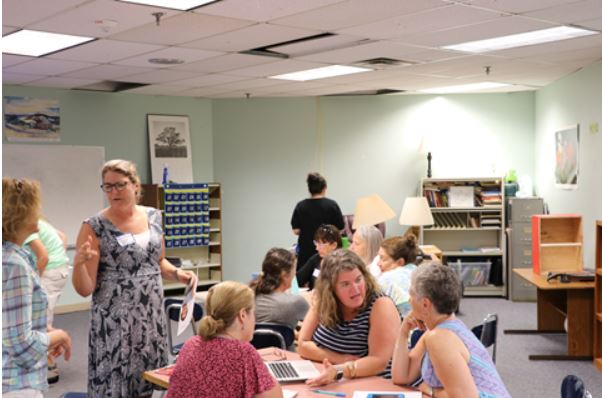
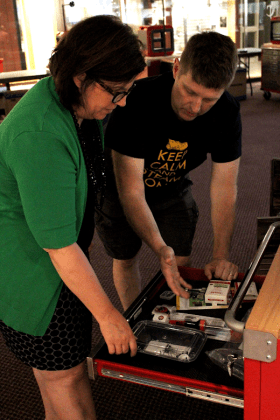
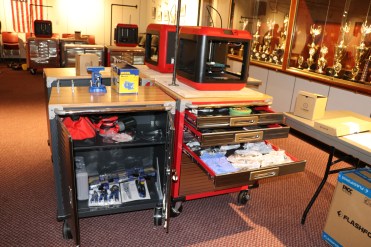
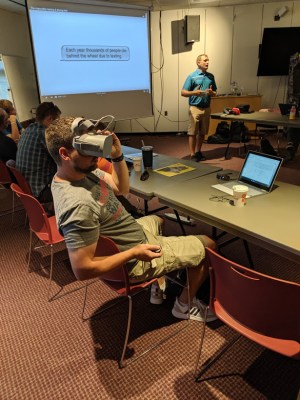
This past week the Mount Desert Island School district (AOS 91) hosted teams from Dexter (AOS 94) and Bethel (SAD44) to continue conversations about what the integration of computer science could look like in rural Maine districts.  This initiative, Integrate-2-Innovate (i2i), is facilitated by the Maine Math and Science Alliance (MMSA) and the Education Development Center (EDC) and funded by the National Science Foundation’s Computer Science for All program.

The 30 educators included Kindergarten, 4th grade teachers, middle school science and math teachers, principals, and curriculum coordinators.  They started the day exploring the practices of computer science, math, and science and commonalities between them.  To try and understand how these practices already exist in classrooms, we spent the afternoon observing seven classrooms throughout the MDI district.  MDI - Computer ScienceIn visiting our colleague’s classrooms, we wanted to understand the dynamics and context of this district/classroom; understand how math and science are generally taught in this district/classroom; envision how computer science might integrate into an activity like the one we are observing; and, of course, build the capacity, trust, and relationships between our districts as we learn together.

We observed 7th and 8th graders working on engineering a design challenge for building a bridge, a number taught in a 4th grade classroom where kids were trying to solve a problem using modelling, algorithmic and procedural thinking, and much more.

As we all gathered back together after the classroom observations, we heard from local businesses about how computer science is used in their organizations, which gave us some real-world, relatable examples of computer science to share with our students and communities.  Educate Maine and MMSA worked with the MDI school district to arrange for presentations from the MDI - Computer Science2Jackson Lab and Acadia National Park about how Computer Science fits into their work, the kinds of CS jobs available locally at all levels from right out of high school to PhDs, and what these professionals think students  need to be successful in Maine’s workforce.  These employers were very clear that learning how to work as a team to problem solve and deconstruct problems is extremely important. When current coding experts were asked what to teach kids they said, Don’t teach them to code in specific languages too early, instead support them in how to think about data – how data are structured, classified, categorized – introduce basic statistical concepts early. The coding languages we have now could be totally different than what we will have 10 years from now.

As we begin to unpack what computer science can really look like at the K-8 level and how it can fit into our existing learning standards, we are building on our shared experience and the expertise we all have as teacher leaders in rural districts.  We are excited about the recent advances the Maine Department of Education and the legislature have recently taken to advance computer science and we hope that this is just the beginning of a concerted statewide reform to provide equitable access to computer science learning opportunities to all students K-12.


Maine FFA Convention Attracts 200 Members and Guests

Pictured: Awards Banquet Head Table:  National FFA VP Ridge Hughbanks, Convention Sentinel Ava Cameron, Reporter Olivia Tardie, Treasurer Alli Kenney, Secretary Camryn Curtis, State Vice President James Hotham, State President Graham Berry.

This year’s Maine FFA (formerly known as “Future Farmers of America”) annual Convention included 200 middle and high school FFA members, assisting judges, helpers and guests from the education and private sectors.  Participating schools included:  Region 4 United Technologies Center (Bangor), Ashland Middle/High Schools, Caribou Technology Center, Central Aroostook Junior & Senior High Schools, Easton Junior/Senior High Schools, Hodgdon Middle/High School, and Presque Isle Regional Career & Technical Center.   Maine FFA chapters include nearly 500 students across the state from Sanford to Caribou, enrolled in courses related to agriculture and natural resources in such areas as agriculture, forestry, horticulture, agricultural mechanics, nursery and landscapes, integrated sciences and others.  The two-day event featured recognition for past year accomplishments, competitions, scholarships and educational tours, with over $10,000 in awards and scholarships presented.

During the Convention Awards Banquet, guest speakers included Dan Chuhta, Deputy Commissioner for the Maine Department of Education, Chandler Vaughan, National FFA Alumni Council Representative, and Ridge Hughbanks, National FFA Organization Central Region Vice President.  Speakers addressed areas related to providing FFA opportunities to as many students as possible, taking advantage of one’s education, and participating in community related endeavors, an important activity of the FFA.  Students were excited to receive awards for their work of the past year, distinguishing themselves in independent projects (“Supervised Agricultural Experiences”), as well as advancing in areas related to technical and community development achievements through “State FFA Degrees” and the “State FFA Stars” program.

Students were excited to participate in events such as Agricultural Sales, Horse Evaluation and Veterinary Science, which allowed them to showcase and further develop their leadership abilities, as well as learning more about a topic of interest.  Educational tours to areas such as UMaine’s Pulp and Paper Process Development Center further enhanced the opportunities available to students.  Leadership and sportsmanship abilities, important to FFA, were evident in bestowing awards such as the Best FFA Chapter Spirit award, this year won by Region 4 United Technologies Center students, Bangor.

The FFA is one of the largest student leadership organizations in the United States, with over 600,000 members, and the Maine FFA Convention was directed by its State FFA Officer team under the leadership of President Graham Berry and Vice President James Hotham, with support from Doug Robertson, State Advisor in the Maine Department of Education and Faith McLaughlin, Maine DOE staff support specialist, as well as volunteering students and numerous other partners working on a volunteer basis.  Events were hosted at the University of Maine, Orono’s campus, as well as at Eastern Maine Community College.

For more information on technical and science programs eligible for FFA chapter membership for grades 7-12, please contact Maine FFA State Advisor, Doug Robertson in the Maine Department of Education:  doug.robertson@maine.gov  (207) 624-6744  and refer to the Maine FFA Association website:  https://www.maine.gov/doe/learning/ffa

Maine Students Bring a Slice of the Future to our State House

Pictured: Team Northern Force from Gorham/Falmouth, with their robot Geffrey

Eight middle and high school teams from across the state assembled at the Capitol building on Wednesday morning to receive praise from their community leaders. The students were congratulated for their exceptional performances at FIRST competitions across the state and nation. FIRST (For Inspiration and Recognition of Science and Technology) is a non-profit organization that allows students to compete in science, technology, and engineering-based challenges. The high school teams at the Capitol competed in the FIRST Robotics Competitions in Maine. A few teams even represented the state at the World Championship in Detroit, Michigan earlier this spring, where there were over 3,000 teams present from countries all across the world. The World Championship can be viewed here: https://www.youtube.com/watch?v=sLmn5CbNr3Y

IMG_0881
Pictured: Team Radical Impact from Cheverus with their robot

These precocious high schoolers were asked to design robots that could compete in a game requiring multiple complicated maneuvers. Robots must be piloted blind for several minutes at the beginning of each competition. Each team chose a different way to overcome this challenge, many opting for robot-mounted cameras. Next, each team had to pickup and carefully drop large dodgeballs in holes cut into a model rocket and space station, for points. In the course of the competition robots had to move up and down over physical obstacles, and place Velcro covers over the holes.

IMG_0887
Team Blue Crew of Farmington, with robot R2D2
IMG_0892
Team Iron Tigers from Gardiner with robot Christa

Students were excited to share their experiences at the FIRST meets. Tasked with building and programming the robots, the students learned valuable skills like digital modeling, 3D printing, coding, wiring, and engineering. Because they were asked to design the robots themselves, students also worked on interpersonal, leadership, and problem solving skills. One student, a freshman at Cheverus, is already reaping the rewards of coding know-how. Members of his school’s coding club saw him working on Java Script in the library, they were so impressed he was invited to join.

IMG_0886
Student from the Maine School of Science and Mathematics with robot Dozer
IMG_0873
Team B.E.R.T. 133 of Bonny Eagle, Standish, with their robot WALL-E

However, many of the teams were comprised of more than their building team, one student explained that although there were ten students involved in the construction of the robot, their total headcount was around twenty-five students, with the rest heavily involved in fundraising, advertising, and outreach. Students involved in this process not only picked up important communication skills and experience, but learned how to market their club and raise money for competitions. Students also have the opportunity to meet and interact with peers who have similar interests from across the country, with one young engineer commenting that they had made and kept friends from Tennessee and Australia.

IMG_0877
Student from The Outliers from Portland
IMG_0885
Team from Cape Elizabeth with robot Wacky Boi

FIRST strives to promote STEAM engagement among young students as well, inspiring growth of the field for the future. They include Robotics Competitions such as the ones in which these students competed, as well as a separate LEGO League for ages 9 to 14, from which some students were also in attendance. The organization prioritizes the involvement of underrepresented, underserved, and vulnerable youths. Of all students involved in FIRST, 43% are female; 72% are from economically disadvantaged families; over half of all students are from ethnic minorities. 87% of participants in the program go on to take more advanced math and science courses; students who competed were also more than twice as likely as others to show increased interest in pursuing STEAM fields.

IMG_0883
Pictured: Team SmartFun Engineers from Farmington and their LEGO robot, Stanley
IMG_0890
Pictured: Steve Martin, Senior Member and organizer of the event, showing a map of FIRST involvement in the State of Maine

Students shared overwhelmingly positive remarks about their experiences, and showed great passion for their robots and the competitions. Many were only Freshmen, and all expressed that they intend to continue participating in competitions and to pursue STEAM fields in their future. FIRST competitions provide a great opportunity to middle and high school students who are looking to get hands-on experience with a wide array of skills before they even graduate. Interested readers can visit www.firstinspires.org to get involved and learn how to help aspiring scientists and engineers pursue their passions, by investing in our future.

This story was written by Maine DOE Interns Emmeline Willey and Simon Handleman in collaboration. If you have a story idea or would like to submit a written story for the Maine DOE Newsroom, email Rachel Paling at rachel.paling@maine.gov.

Augusta Teacher’s Commitment to Inclusion Recognized Internationally

Students in the EL (English Learner) program at Augusta’s Cony Middle and High School have a lot to look forward to: Their teacher Karina Escajeda’s visionary grant applications secured her funding with which to attend two international schools where she will gain valuable insights for her classroom and community. Karina will attend Egypt’s Dahab School of Arabic Language and will be in residence at Aristotle University in Thessaloniki, Greece. All through the month of April, praise flowed into Karina’s inbox. These prestigious grant programs pledged thousands to make possible her language and cultural studies abroad.

Following her time in Egypt, Karina plans on bringing her knowledge of the Arabic language back to Cony (her alma mater) where she will foster stronger relationships with EL students, many of whom come from refugee backgrounds. When she is not studying in Dahab, Karina plans to visit additional cultural and historical sites across the country such as Cairo, Luxor, and Aswan. Karina is rightly committed to the belief that students from Iraq and Syria add valuable elements to school culture.

For this initiative and foresight the Fund for Teachers emailed Karina on April, 4 to commend her for “bold vision” which “stands out.” This $5,000 grant was not the only source of praise and money for Karina: NEA’s Learning & Leadership Grant pledged $2,000 to Karina on April, 22. They thanked her for “hard work and commitment to the importance of high quality public education.”

In addition to her upcoming time in Egypt, Karina will study refugee integration efforts in Greece through the Fulbright Distinguished Award in Teaching. She will be part sponsored by, and lecture in, Aristotle University’s Applied Linguistics Program from January to June of next year (2020). This University’s teacher training program provides Greek teachers with the necessary skills to create inclusive communities for growing populations of refugee students. Karina has identified many similarities between the ways in which Maine and Greece welcome their refugee populations: “In both places, new residents are struggling to adapt to new homes that are almost entirely monolingual.”

The prestigious Fulbright Commission sent out a press release on April, 23 in which the U.S. Department of State (a major grant contributor) awarded Karina five months of independent study in Greece. The goal of the Fulbright Distinguished Awards in Teaching Semester Research Program is to build international relationships that work to solve global challenges. Karina will join an alumnus among whom there are over 50 Nobel Laureates, over 80 Pulitzer Prize winners, and over 30 former heads of government or state.

Suffice it to say the Augusta public school system is more than proud. We can all appreciate Karina’s “commitment to push the boundaries of [her] own learning,” as put by the Fund for Teachers. She will bring these new and enlightening experiences from Egypt and Greece back to her own community, and the students for whom she worked so hard to secure these grants. Congratulations Karina, and Cony Middle and High School.

This story was written by Maine DOE Intern Simon Handleman in collaboration with Karina Escajeda. If you have a story idea or would like to submit a written story for the Maine DOE Newsroom, email Rachel Paling at rachel.paling@maine.gov.

Maine Schools Selected for Peer to Peer Jazz Education Program

The Herbie Hancock Institute of Jazz brought its Peer-to-Peer jazz education program Maine this week as part of a weeklong tour to New England public schools. The “informances” are a combination of performance with educational information will be presented by five of the country’s most gifted high school music students along with internationally acclaimed trumpet recording artist Sean Jones, Kansas City jazz and blues vocalist and a former winner of the Institute’s International Jazz Vocals Competition Lisa Henry, and renowned jazz educator Dr. JB Dyas.

Each school visit included an assembly program featuring a musical performance for all students, followed by workshops for each school’s jazz band and choir with the visiting student performers playing alongside and sharing ideas with their New England counterparts. The program took place at Portland High School on May 23rd, Deering High School on May 24th.

Immediately following the informances jazz workshops were held for each host school’s jazz band and choir in which the visiting students played side-by-side with Maine students, providing tutelage peer to peer.

The week-long tour will conclude with two performances open to the public on May 25 at Portland’s premier jazz club, Blue (650A Congress St.), where Portland residents and visitors are invited to enjoy an evening of music with Jones and Henry alongside jazz’s future “young lions.” The septet will perform standards, jazz classics, and contemporary jazz, including compositions from Jones’ and Henry’s latest recordings. The shows begin at 6:00 pm and 8:00 pm. For further information call 207-774-4111 or visit https://portcityblue.com.

Saco Middle School Hosts “Sebago Speaks” Event to Showcase Student Work

Saco Middle School co-teachers Andrew Fersch and Kaitlyn Leeman hosted an innovative student event recently called, Sebago Speaks. The event featured a series of talks given by students and community members on various issues, each about having a positive impact on the world and their community.

The Sebago Speaks student presenters were selected by their peers and teachers among the entire 7th grade class who all completed a class assignment which challenged them to conduct interviews, research, reading, and writing to create an inspiring presentation on a topic of their choice.

The event featured topics such as, plastic use, income inequality, drug abuse, technology addiction, football, melting ice caps, obesity, animal shelters, recess, music, survival, and kindness, among others.

Check out some of the videos from the event:

Melting Ice Caps – Rory

Girls Playing Football – Madalyn

Music – Lily

Animal Shelters – Laura

Money – Troy