
For students in RSU 74’s Alternative Education program, learning this spring started in the forest and ended with maple syrup on ice cream.
A month-long maple sugaring project gave students an opportunity to experience the full process of making maple syrup while building skills in observation, data collection, problem-solving, teamwork, and perseverance.
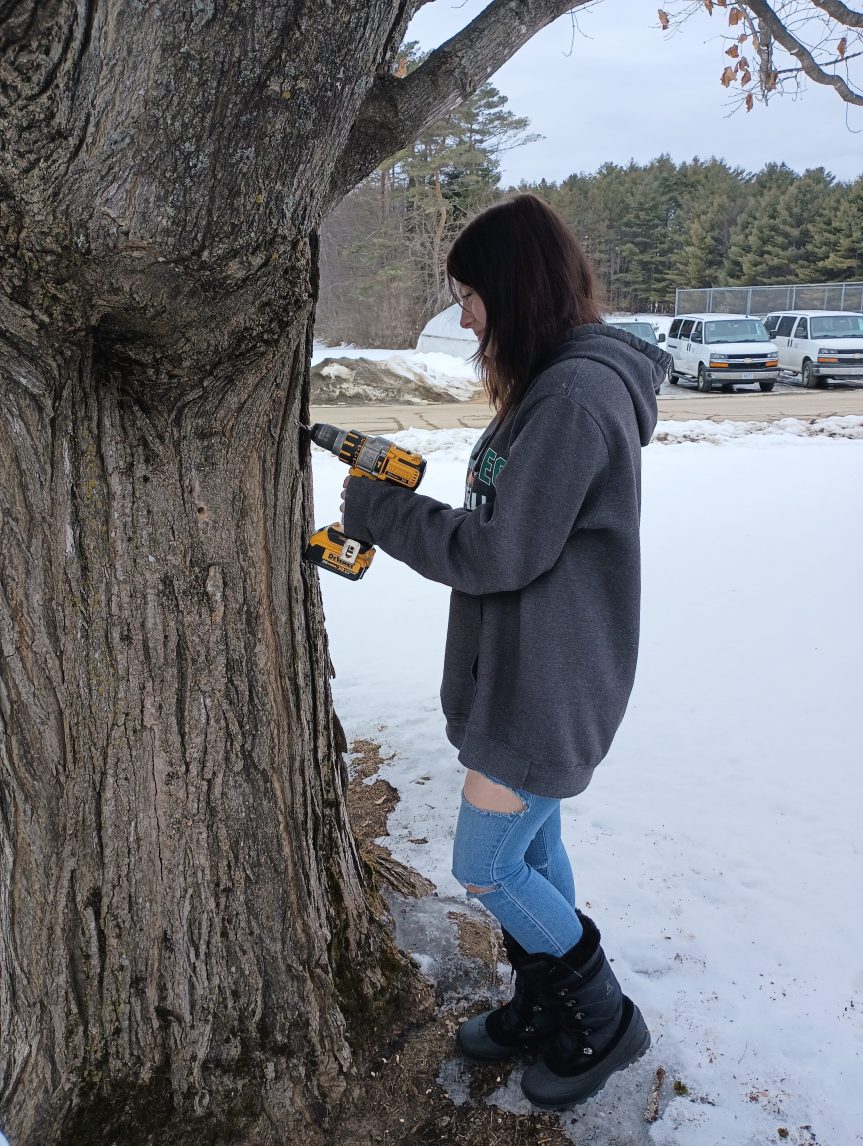
Serving students from Anson, Embden, New Portland, and Solon, RSU 74’s Alternative Education program began the project on March 6 by heading outdoors to identify maple trees using the Forest Trees of Maine book. Once they identified the right trees, students drilled the trees, installed spiles, and connected the tubing to the collection buckets.
From there, the students took responsibility for monitoring their sugarbush each day. They collected sap, recorded the quantity gathered, and documented the day’s temperature and weather conditions. They also developed a plan for storing the sap until they had collected enough to begin boiling.
Their goal was to collect 40 gallons of sap and turn it into approximately one gallon of maple syrup.
They surpassed that goal.
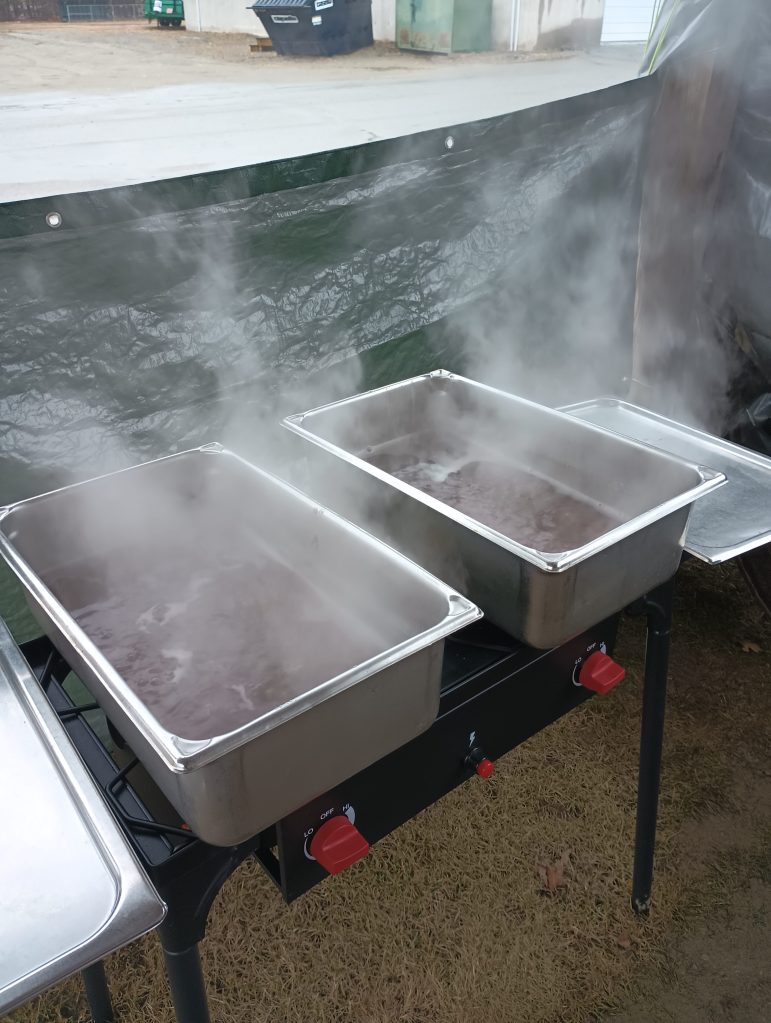
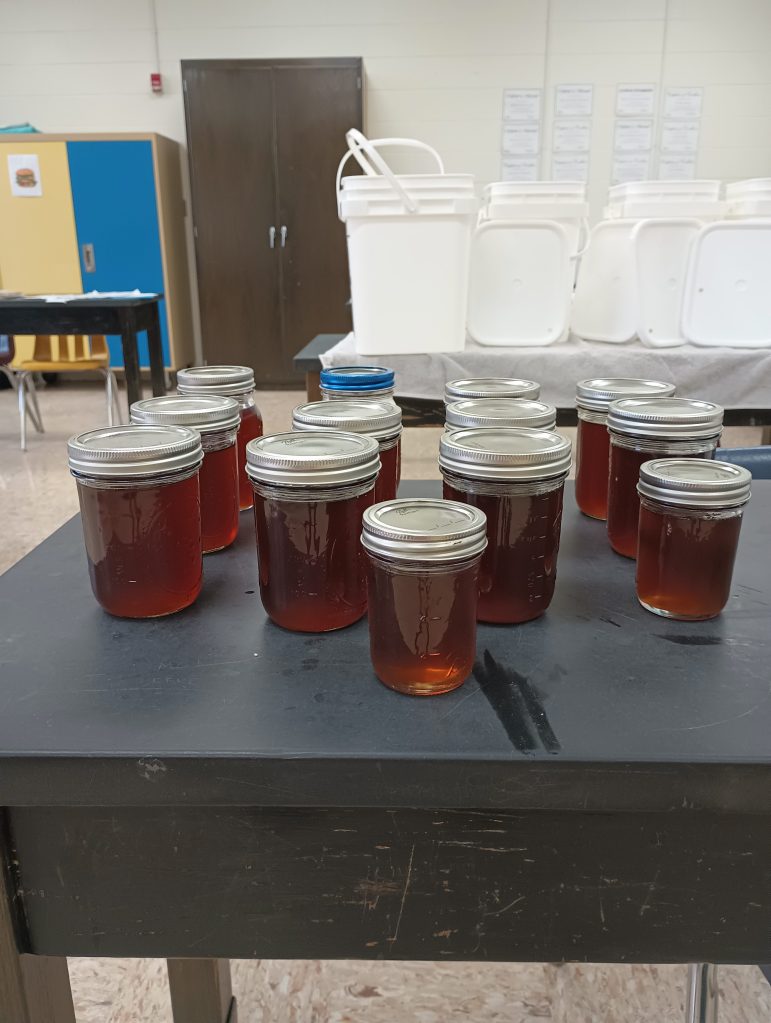
By the time they began boiling on March 30, students had collected 53 gallons and 5 ounces of sap. After several days of boiling, they finished on April 3 with approximately 1½ gallons of maple syrup.
The process wasn’t always easy.
The students faced cold, wind, rain, and snow throughout the project. At one point, strong winds blew away about half of their buckets, requiring them to work together to find a solution. During the boiling process, students used tarps to help preserve heat when temperatures dropped.
Rather than letting the challenges stop them, students adapted and kept going.
“The weather was not on our side sometimes, but we made it, and that’s what matters,” one student reflected.
The boiling process itself became another lesson in patience and perseverance. Students spent a total of 25 hours and 53 minutes working through the process, learning that making maple syrup requires much more time, labor, and fuel than they might have expected.
They learned vocabulary associated with maple sugaring, tracked data, and observed how weather conditions affected the process. They also gained a firsthand understanding of the resources required to turn a natural product into something ready for the table.
“The whole process took us 25 hours and 53 minutes,” one student reflected. “This was a fun experiment. I would like to do this again.”
Another student recalled tasting the sap for the first time: “It tasted like water with a hint of a sugary taste.”
As the syrup production progressed, students began thinking creatively about how they could use what they had made. Ideas included maple syrup on ice cream and ployes, as well as candied nuts and snack cakes. The school’s culinary class also joined in, baking a traditional Tarte su sirop d’érable—a maple syrup pie—for the Alternative Education students.
The project culminated in a celebration where students enjoyed their maple syrup on ice cream and with ployes. Each student was also able to take a container of the syrup home.
For the students, however, the biggest takeaway may not have been the syrup itself.
“It was a long process, but I enjoyed it even if it was freezing outside,” one student said. “Working outside was good.”
The project gave students an opportunity to see how persistence, teamwork and problem-solving can turn a challenging process into something tangible they could be proud of. From identifying trees and collecting data to troubleshooting equipment and enduring unpredictable spring weather, students were engaged in learning that connected the classroom to the land and to their own community.
RSU 74 also extends a special thank-you to Moscow Maple for its generous donation of buckets and lids, spiles, tubing, and a drill bit. The equipment and supplies helped make the hands-on learning experience possible.
In the end, the students didn’t just make maple syrup. They experienced patience, teamwork, and the grit it takes to make something from start to finish—and got a sweet reward for their efforts.
This story was written in collaboration with RSU 74’s Alternative Education program. To submit a good news story to the Maine DOE, please fill out the good news submission form.

