
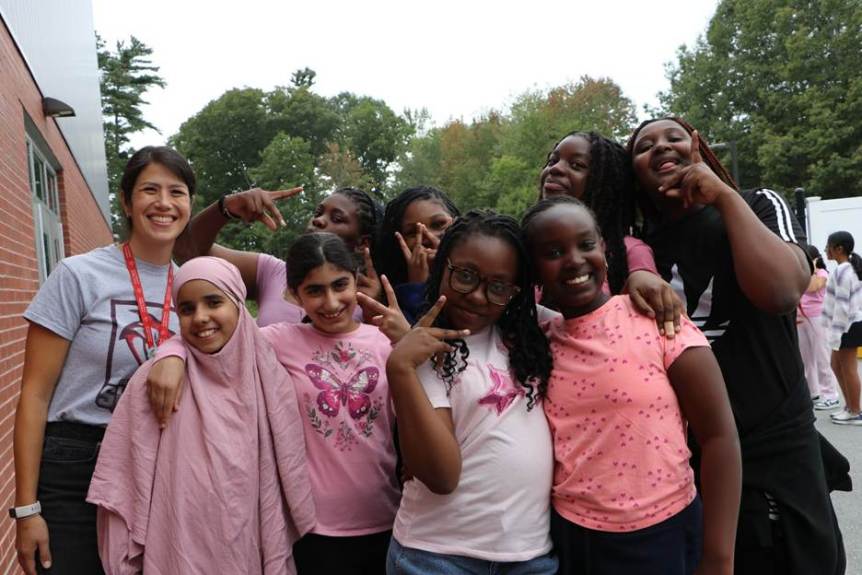
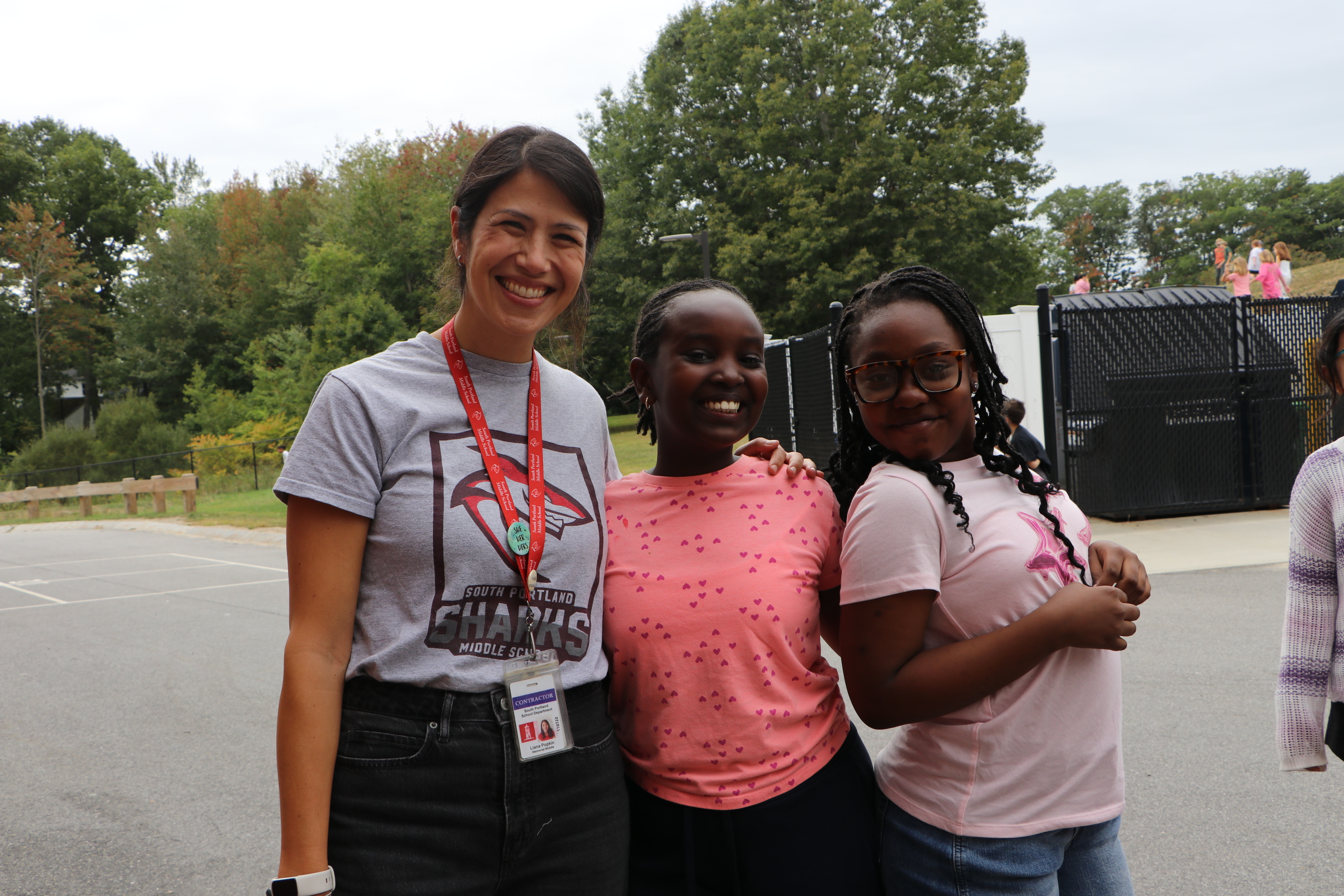
Community School Director Liana Popkin (left) poses with South Portland Middle School students.
For South Portland Middle School Principal Rebecca Stern and Community School Director Liana Popkin, the idea behind a Community School is simple: Schools want to help their students succeed, but they do not have to do it alone.
“We had the opportunity to become a Community School after COVID started,” Stern said. “We had been partnering with the Opportunity Alliance, and they had found this grant opportunity that would address a lot of the issues that our students were facing and their families were facing.”
The opportunity came at a time when South Portland Middle School was looking closely at the barriers that can affect students’ success—including attendance, family-school relationships, access to enrichment opportunities, and basic needs.
“Schools have unlimited desire to help their students succeed. They don’t have unlimited capacity to help their students succeed,” Stern said. “And so this was really the moment that we said, you know what, let’s work together to figure out how we can make sure that our kids get what they need in order to be successful.”
That partnership launched South Portland Middle School’s Community School Development Project in 2022. The school opened as a Community School in 2023 and now serves more than 800 students in grades 5–8.
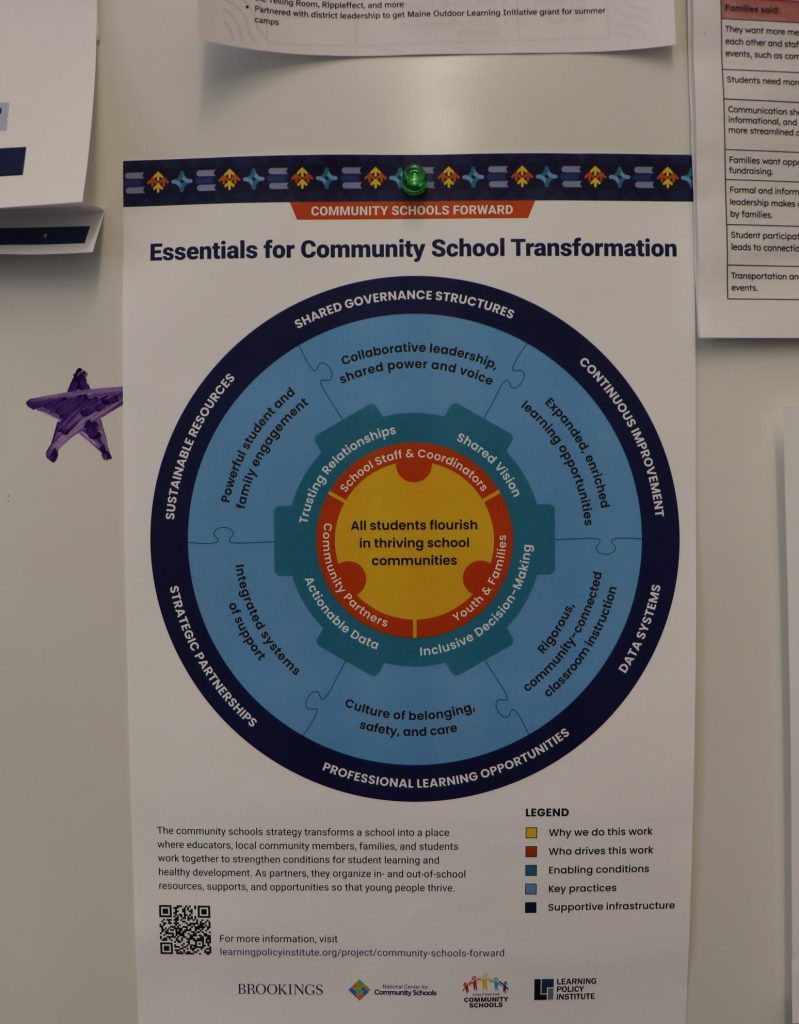
The Community School strategy is grounded in the idea that schools can serve as trusted centers of their communities by building strong partnerships with families and community organizations and connecting students and families with resources and opportunities that support the whole child and, in turn, strengthen the community as a whole.
In Maine, the Community School strategy was first recognized by Maine Legislative Action of the First Regular Session of the 127th Legislature (2015-2016) in the budget bill Public Law 2015, chapter 267. At that time, the Maine Department of Education (DOE) was authorized to fund a limited number of Community Schools established under 20-A MRSA Chapter 333. Between 2016 and 2025, six schools in Maine received funding from the Maine DOE to support their Community School strategies: Cape Cod Hill Community School in New Sharon, Deer Isle-Stonington High School, Gerald E. Talbot School in Portland, Old Town Elementary School, Shead High School in Eastport, and South Portland Middle School. In addition, several schools in Maine are implementing First 10 Schools and Community programs, which focus on early childhood family and community supports with the help of a Family Partnership Coordinator. The Maine Indian Education schools are also implementing Community School strategies through the Tribal Community in Schools program.
At South Portland Middle School, one of the first schools in Maine to implement the strategy, the Community School philosophy drives the school’s overall approach to its work.
“One of the biggest differences is that we look really holistically at what kids need to be successful and try to bring in partners to help us solve those problems,” Popkin said.
That approach can be seen throughout the school.
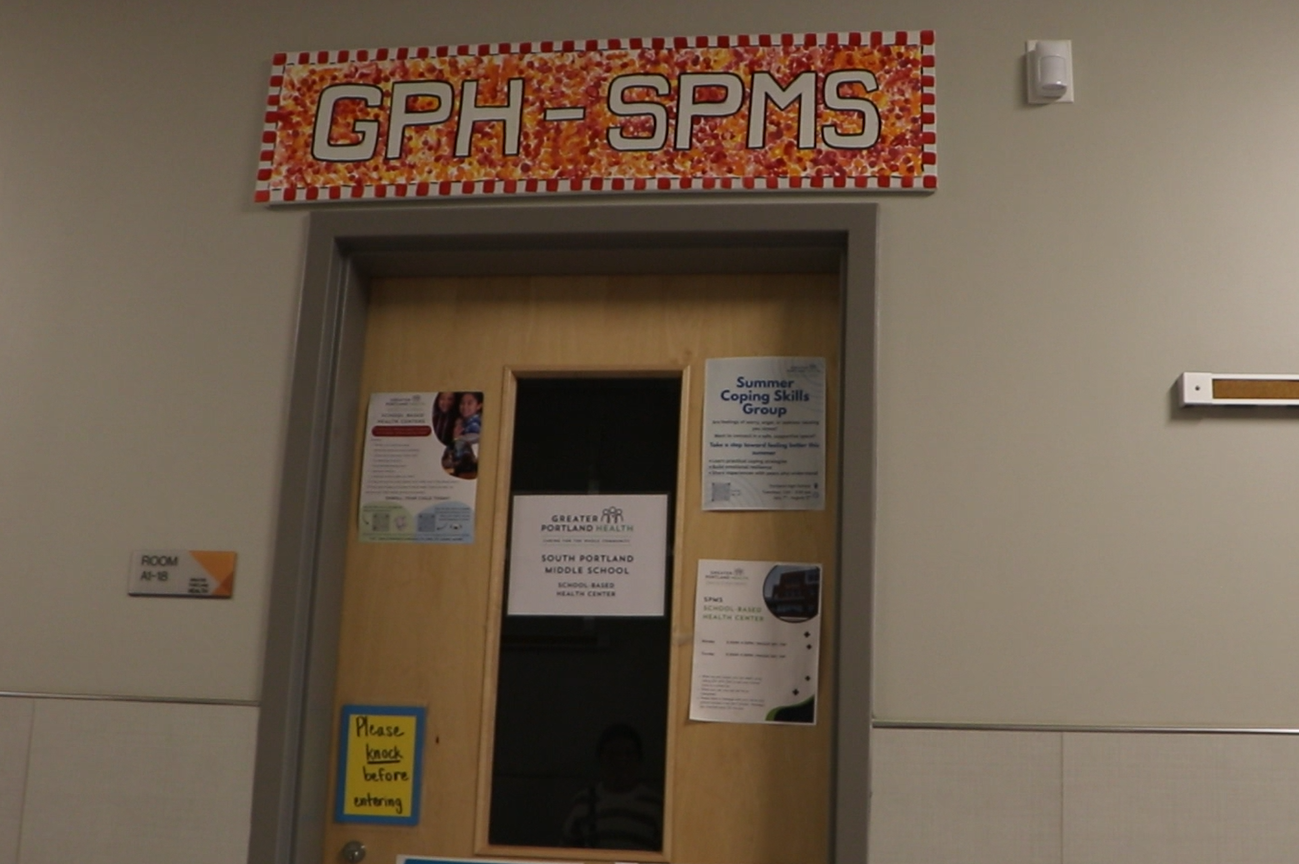
Through a partnership with Greater Portland Health, South Portland Middle School has a school-based health center where students can access primary and urgent care. The center also provides optometry, behavioral health, and dental services, helping remove barriers that can make it difficult for students to access care outside of school.
Almost half of the school’s students are enrolled with the health center, Popkin said.
The school also works with multiple community organizations to provide mental health services during the school day. Clinicians from several local agencies have offices at the school, providing students with access to therapeutic and social work support.
For families, bringing these services into the school can make a significant difference.
“Getting kids a three o’clock or four o’clock afternoon therapy appointment is impossible in our community,” Stern said. “There are a lot of kids who need to talk about some stuff that’s going on.”

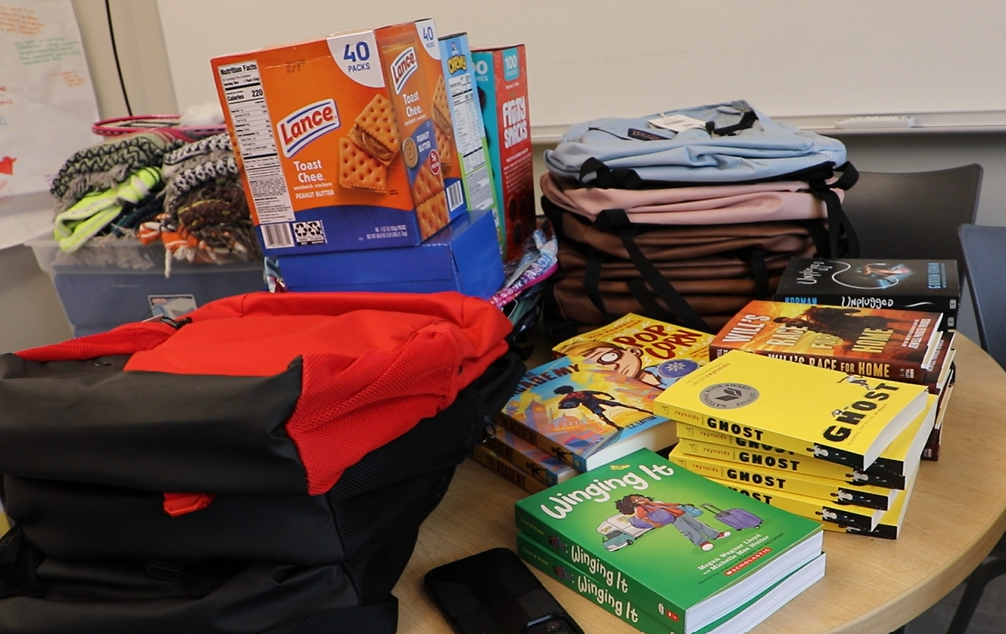
The Community School strategy has also expanded opportunities for students outside the traditional school day.
Last year, South Portland Middle School offered approximately 37 enrichment programs exclusively through community partners, in addition to school clubs and athletics and an aftercare program through the Boys & Girls Club.
Students have participated in programs ranging from surfskating, pickleball and golf to outdoor leadership, CPR and first aid, performing arts and entrepreneurship.
Through the Maine Venture Fund, for example, students participated in the Maine Startup Challenge, developing business plans and competing for an opportunity to help launch their ideas.
The school has also partnered with organizations including Portland Stage, Rippleffect, and the Telling Room.
“Kids can literally do anything they want to do after school now, and that’s all through partnerships with other community organizations,” Stern said.
A key practice of South Portland Middle School’s Community School approach has been listening to families and then using what they hear to shape the school’s work.
Through surveys, focus groups, and a needs and assets assessment, the school learned that one of the biggest barriers to family engagement was something that may seem simple: families are busy.
“They’re busy with school, with work, with other siblings,” Popkin said. “So what can we kind of take off of their plate so that they’re able to show up?”
One answer has been food.
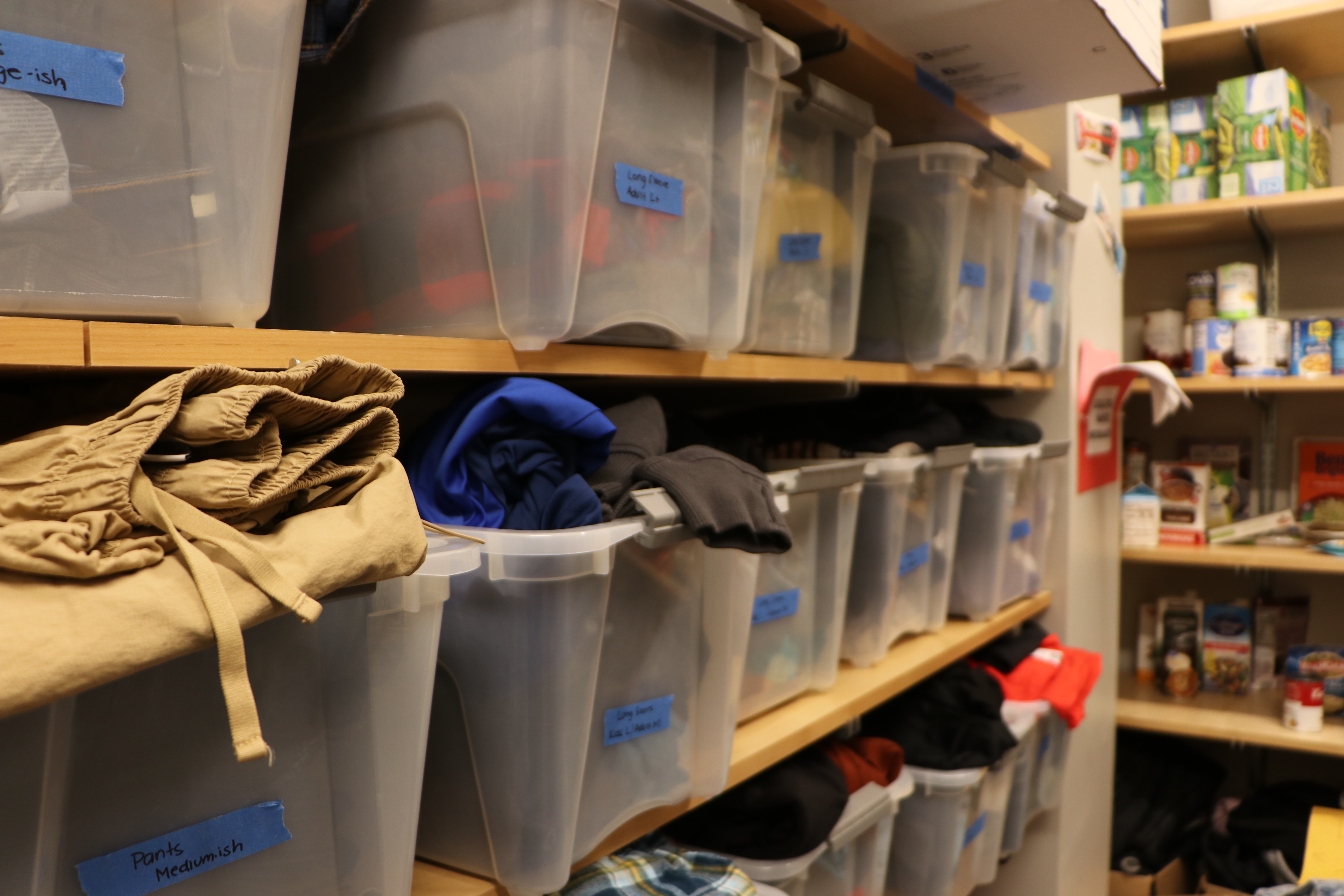
Nearly all of the school’s family events include a meal, whether teachers are serving a full dinner or pancake breakfast. The meals help remove one practical barrier to participation while also creating informal opportunities for families and educators to connect.
“Teachers feel like there’s a connection, a more organic connection, that’s made in those moments where they’re able to have maybe that uncomfortable conversation in a way they wouldn’t have been able to before because they’ve built a relationship over breaking bread,” Popkin said.
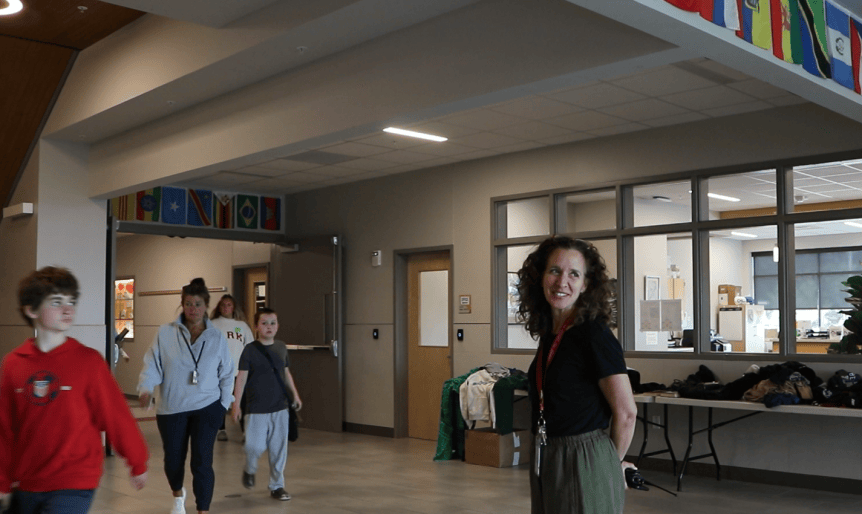
The school now hosts regular family events throughout the year. Some are academically focused, with teachers working directly with families around student learning. Others are designed simply to bring people together.
At those events, families can enjoy food, open gym, crafts, and opportunities to connect with community partners.
Last year, nearly 4,000 individuals attended the school’s family events.
Stern said one of the most meaningful changes has been seeing families come to school simply because they want to be there.
She recently heard from a staff member whose children attend the school about how different family events feel compared with other points in her children’s educational experience.
“She was talking about how different it feels to attend family events here,” Stern said, “just in terms of the families really wanting to come to school and hang out together in a social way.”
South Portland Middle School’s community partnerships are designed to increase student engagement by meeting students where they are and removing barriers to participation.
The city’s Recreation Department is one of the school’s major partners. Because the community center is several miles from the school, transportation can be a barrier for middle school students who want to participate in recreation programs.
The school has worked with the department to bring programming directly to the school and provides late buses so students can participate and get home safely.
Through its partnership with Rippleffect, students have also participated in outdoor leadership experiences that have introduced some students to hiking, camping and overnight experiences for the first time.
Popkin said those opportunities are about much more than recreation.
“They’ve made that more than just a camping trip. It’s a learning experience,” she said. “It’s about building resilience and skills and relationships with students they may not have ever met.”
Other partnerships bring community expertise directly into classrooms.
Trademark Federal Credit Union, for example, has worked with seventh-grade students on financial literacy and has also supported the school’s food pantry. The organization’s president helped the school begin an Education Foundation to continue supporting the Community School’s work.
The school’s current Community School priorities include expanding equitable access to out-of-school activities, connecting curriculum to the community, strengthening staff connections, increasing access to the school-based health center, creating more opportunities for families to connect with one another and the school, and improving communication with families.
Behind all of those programs and partnerships is a role that Stern says is essential: the Community School Director.
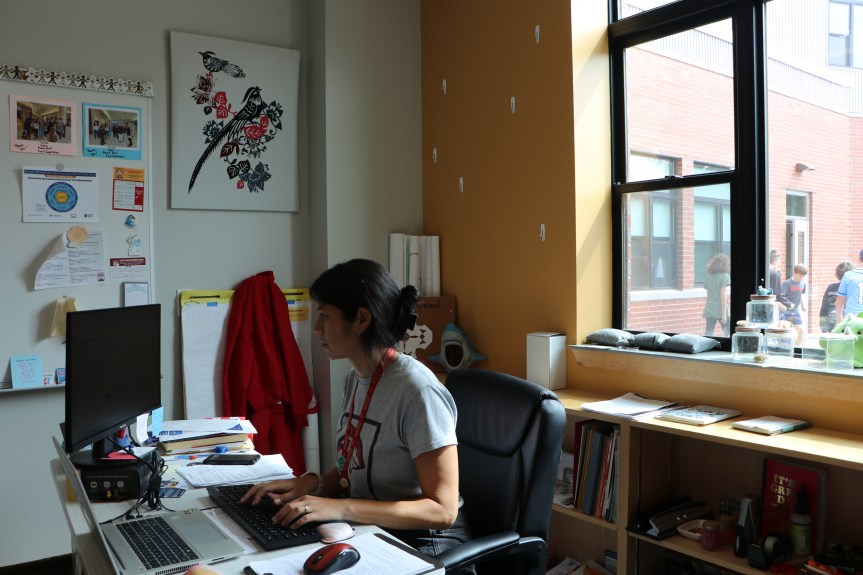
Popkin joined South Portland Middle School in November 2022 and serves as the bridge between the school, families, and community partners.
“From my perspective as the principal, Liana is the thought partner and then the thought executor of all of the things that make this a Community School,” Stern said.
That includes developing relationships, navigating partnerships, working on grants, supporting families, coordinating logistics, and helping community organizations and the school work effectively together.
Popkin describes the role as being “a bridge that no one has the capacity to be.”
“Community partners are wanting to come into the school. The school’s wanting to reach out to those folks. Same with families,” Popkin said. “It’s all a two-way street. And so we have to be able to kind of bring folks together.”
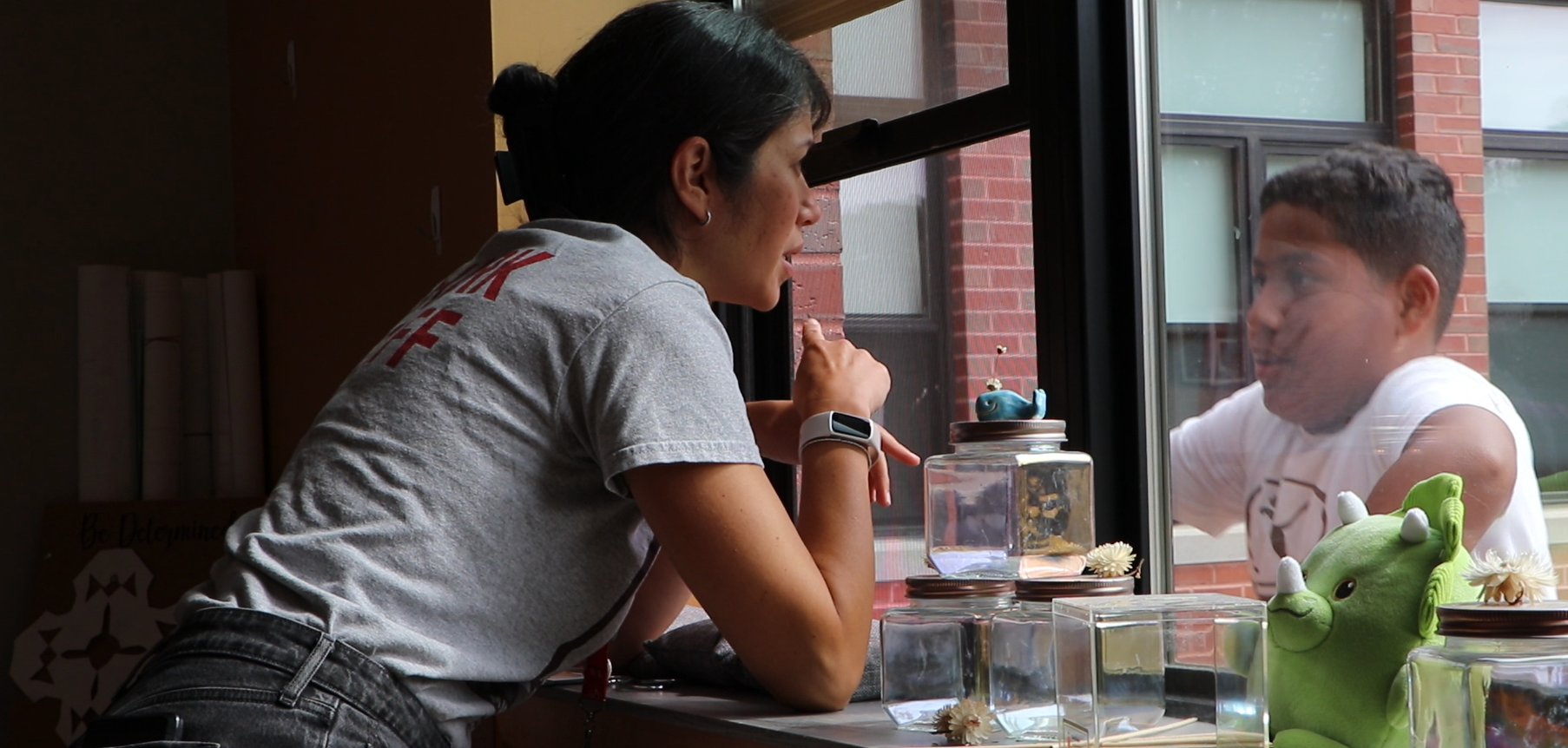
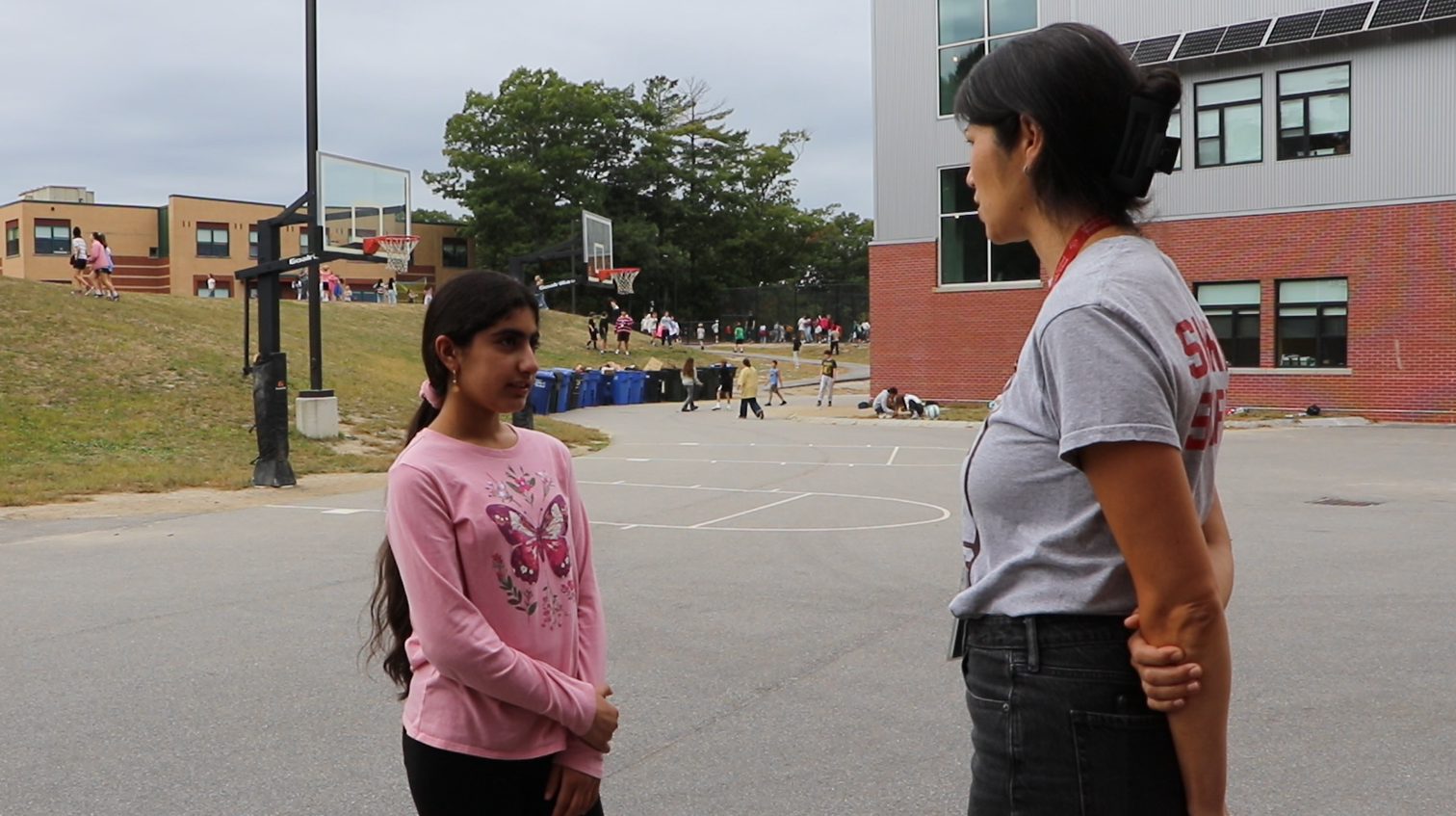
That bridge-building has helped create a culture where the school welcomes community organizations and looks for ways to work together.
Stern said partners have increasingly recognized that their relationships with the school are beneficial for everyone involved.
“We do believe that this partnership is going to be effective for both, the school and the organization, and then the kids and the families that we’re serving,” she said.
The impact of the Community School strategy can be seen in both participation and student outcomes.
One of the clearest examples is attendance. Over the past three years, South Portland Middle School has cut its chronic absenteeism rate in half.
The school has worked to understand different levels of attendance needs and develop systems for intervening earlier so students do not fall through the cracks.
That work continues. The school is now looking more closely at attendance and discipline data, including disaggregating the data to better understand which students the school may not yet be reaching.
Instead of trying to solve those challenges alone, school leaders are asking a broader question: Who else needs to be at the table?
“What community members need to be here, what families need to be here, what other organizations might need to be here, to think more broadly about those really challenging situations that we haven’t quite solved yet as a school,” Stern said.
That collaborative mindset is at the heart of the Community School strategy.
The success of South Portland Middle School’s Community School work has led to an even bigger vision for the district.
Last spring, the South Portland School Board voted for the district to become a Community School District. Over time, all of the district’s elementary schools and the high school are expected to become Community Schools.
The momentum continues statewide as well. Through a request for applications (RFA) process, the Maine DOE has awarded funding to six schools to support them in building or expanding community schools during the 2026-2027 school year, with South Portland High School and South Portland Middle School among them. The other four are Deer Isle-Stonington High School, Limestone Community School, Gerald E. Talbot Community School (Portland Public Schools), and Cape Cod Hill School (Mt. Blue Regional School District).
This year, South Portland Middle School is helping the high school begin its own needs and assets assessment and supporting the school as it looks at its work through a Community School lens.
At the middle school, the work will continue to evolve, too—including deeper analysis of attendance and discipline data and continued efforts to identify students and families who may not yet be fully connected to the school’s network of supports.
Families have also helped launch a nonprofit foundation to support the Community School’s work into the future.
For Stern and Popkin, the goal remains the same: bringing more people, resources and ideas together around students.
“I think we are always wanting more people to come in and support our students,” Popkin said. “Everyone recognizes that the more hands-on deck, the better.”
And at South Portland Middle School, that belief has helped turn the school into something more than a place where students attend classes.
It has become a place where students and families can find connection, opportunity, support and a community that is invested in their success.
To learn more about South Portland Middle School, check out this video interview with Principal Stern and Community School Director Liana Popkin.
Maine DOE Community Schools Consultant Ann Hanna (former principal of Gerald E. Talbot Community School) is working on advancing community school strategies in interested schools across Maine by providing technical assistance and support.
To learn more about community schools in Maine, please contact Ann Hanna at ann.c.hanna@maine.gov.

