Priority Notice: Mills Administration Updates COVID-19 School Health Advisory System

Androscoggin, Cumberland, Oxford, and York counties remain yellow; all others designated green

AUGUSTA — The Mills Administration today released an update to its color-coded Health Advisory System that classifies counties’ relative risk of COVID-19 transmission to assist schools as they continue with their plans to deliver instruction and support to students safely.

The Maine Department of Health and Human Services (DHHS) and Maine Center for Disease Control and Prevention (Maine CDC) continue to review evidence that indicates lower transmission of COVID-19 in schools compared to the general population. Over the last 30 days, the rate of new cases is 27 per 10,000 staff and students, compared to 113 per 10,000 people statewide. This rate of new cases in schools is 24% of the statewide rate for the general population.

DHHS and Maine CDC assessed COVID-19 data and trends for all counties and released the following designations:

  • REMAIN YELLOW: Androscoggin, Cumberland, Oxford, and York counties continue to see increases in both 14-day new case rates per 10,000 people and positivity rates, exceeding the statewide averages.
  • REMAIN GREEN, REMOVED ASTERISKS: Aroostook County’s positivity rate continues to be above the state average, but its new case rate per 10,000 people has remained steady and is now below the statewide average. Penobscot County’s positivity rate and 14-day new case rate per 10,000 people have fallen below the statewide averages.

All other counties remain in the green designation.

Under the “yellow” designation, which indicates an increased (moderate) level of community risk, schools may consider additional precautions, such as limiting numbers of people in school buildings at the same time, suspending extracurricular or co-curricular activities including competitions between schools, limiting interaction through cohorting, or other measures based on the unique needs of each school community.

These designations are made out of an abundance of caution and for the consideration of school administrative units in their decisions to deliver instruction.

It is essential that school districts across the State of Maine continue to implement plans that adhere to the six requirements for returning to in-person instruction, regardless of their county’s designation.

The Health Advisory System categorizations are defined as follows:

  • RED: Categorization as “red” suggests that the county has a high risk of COVID-19 spread and that in-person instruction is not advisable.
  • YELLOW: Categorization as “yellow” suggests that that the county has an elevated risk of COVID-19 spread and that schools may consider additional precautions and/or hybrid instructional models to reduce the number of people in schools and classrooms at any one time.
  • GREEN: Categorization as “green” suggests that the county has a relatively low risk of COVID-19 spread and that schools may consider in-person instruction, as long as they are able to implement the required health and safety measures.  Schools in a “green” county may need to use hybrid instruction models if there is insufficient capacity or other factors (facilities, staffing, geography/transportation, etc.) that may prevent full implementation of the health and safety requirements.

The county-level assessments are based on both quantitative and qualitative data, including but not limited to recent case rates, positivity rates, and syndromic data (e.g., symptoms of influenza or COVID-19). Those data are publicly posted every week on the Maine CDC website. DHHS and Maine CDC also consider qualitative factors, such as the presence of outbreaks that may potentially affect school-age children.

The Health Advisory System reflects ongoing analysis of evolving data, and serves as one piece of information that school and district leaders can use to make decisions about how to deliver education during the school year. The qualitative and quantitative considerations and data used by the CDC in determining community transmission risk levels for schools can be located here: How County Risk Levels for Maine Schools are Determined

The Health Advisory System can be found on the Maine DOE website in Part I of the Framework for Reopening Schools and Returning to In-Person Classroom Instructionhttps://www.maine.gov/doe/framework/part-I.

The next update will be provided on January 29, 2021. Updating this advisory on a two-week basis aligns with the incubation period for COVID-19 and allows for greater stability in the trend data for small counties.

###

Seeking Nominations for Alternative Educator of the Year

The Alternative Education Association (AEA) of Maine is looking for nominations for the AEA of Maine Educator of the Year award.

The purpose of this award is to recognize an Alternative Educator who has provided exceptional opportunities and advancements for Maine’s at risk students. This is a GREAT way to recognize those in Alternative Education who are doing outstanding work and brings attention to the amazing work that is being done around our State.

Click Here for the Alternative Educator of the Year Guidelines. If you have any questions, please contact Lenny Holmes at lholmes@bonnyeagle.org.

Boothbay Region High School Expands STEAM Education Thanks to Generous Donation

Boothbay Region High School will receive $84,000 in science, technology, engineering, arts and mathematics (STEAM) equipment thanks to a generous donation from Paul Coulombe through Boothbay Region Education Foundation.

“What is exciting about STEAM education that is allows multiple pathways and cross disciplinary opportunities for students to engage and enjoy learning, while building on their individual strengths and learning styles,” said Boothbay Region High School Principal Tricia Campbell.

The Boothbay Register recently did an article about the donation where additional details about the donation and STEAM program can be found.

“Thanks to the incredibly generous gift from Paul and Giselaine Coulombe our students will have access to cutting-edge equipment and tools! A STEAM educational program will help to ensure the development of competencies for today’s global workplace. We hope to build and expand programs to include community-based projects and a professional/educational collaborative in the Boothbay Region,” added Campbell.

Information for this article was provided by Boothbay Region High School as part of the Maine Schools Sharing Success Campaign. To submit a story or an idea, email it to Rachel at rachel.paling@maine.gov.

MEDIA RELEASE: WAVES Initiative Begins to Build Connections

Latest initiative of the #ConnectKidsNow! Campaign focused on building networks of safe social connection opportunities for Maine students

AUGUSTA–  Today Governor Janet Mills and her administration announced the launch of a new initiative to support the mental health and wellbeing of Maine youth. Wilderness Activities and Virtual Engagement for Students- WAVES is the latest project in the #ConnectKidsNow! campaign and will build a statewide network of online and outdoor opportunities, provided by multiple state agencies and community organizations, for Maine students to interact safely.

The new initiative, directed by the Maine Department of Education (DOE), will deliver on the vision, “Every week every Maine teen safely engages socially with a community of peers,” and is the latest effort to ensure Maine youth have the connections needed for their academic and social-emotional growth.

Using the hashtag #WAVESMaine, the campaign will engage youth through a series of social media challenges and other virtual and outdoor opportunities to connect with peers.  A website of resources and activities, as well as a WAVES Instagram account and Facebook page, will go live on February 1, 2021, providing all youth throughout Maine with diverse opportunities to safely build their social network. Resources and activities will include: access to safe online communities, regular meetings around shared interests, and a searchable and dynamic database of the State of Maine where teens can find current outdoor engagement opportunities in their region or community, such as ice fishing derbies or hiking clubs, for example.

“The Department of Education has provided additional resources and supports for school staff, students and their families since March, and has been focused on ensuring that the nutritional, educational and social-emotional needs of every student are being met,” said Education Commissioner Pender Makin. “WAVES is an innovative take on the deep connections and collaborative spirit that makes Maine both a united and diverse community. Keeping Maine students socially connected to one another, and to the resources and opportunities found in our great state, has both immediate and long-term benefits.”

In response to the inequitable access to the human and internet connectivity that some students have faced with the onset of COVID-19, and through the use of federal emergency relief funds, WAVES joins the other projects of the administration’s #ConnectKidsNow! Campaign, which has included the provision of hotspots for students to connect to online learning, the expansion of broadband, and the development of MOOSE!, a free, online and project-based learning platform.

Maine DOE’s 2020-2021 Student Cabinet, during their most recent meeting held on December 8, 2020, raised the issue of social isolation as one of their primary concerns for Maine students. These concerns, similarly raised by educators, school leaders, and community members throughout the State, have accelerated the development of the new project, for which Washington County educator Sarah Woog will serve as Project Director. During a subsequent meeting with Sarah and other DOE staff, Student Cabinet members provided additional ideas and insight for WAVES.

A priority of WAVES is to elevate, celebrate, support, and increase access to the opportunities for safe social engagement that Maine’s communities and organizations are already providing to our youth. The target audience is Maine students in middle school and high school. These students, in addition to all programs and event providers who work with and to serve this demographic, are welcome and encouraged to contact Project Director Sarah Woog (sarah.woog@maine.gov) to share current work, programming, activities and ideas aligned with the stated vision.

“I am eager to work collaboratively across State agencies and to elevate and support the individuals and organizations already delivering opportunities for safe social engagement,” said Project Director Sarah Woog. “Through these collaborative efforts, and by accessing, listening, and responding to youth voices from every corner and community of our great State, we will deliver on our promise: ‘Every week every Maine teen safely engages socially with a community of peers.’ I am honored to lead this innovative and important project.”

TODAY, ALL Maine teens are encouraged to enjoy the winter weather and enter the first WAVES challenge.

Here’s the challenge:

Using the hashtag “#WAVESMaine” post to Instagram a picture of the Maine outdoors that gives you peace and a sense of gratitude. The winner of the challenge and the first 20 Maine teens who post for the challenge will be awarded a prize, inspired by a group of Maine hikers, a onesie of their choice! The winner of the photo contest will be announced February 1, and will have the opportunity to meet virtually with Senator Angus King.

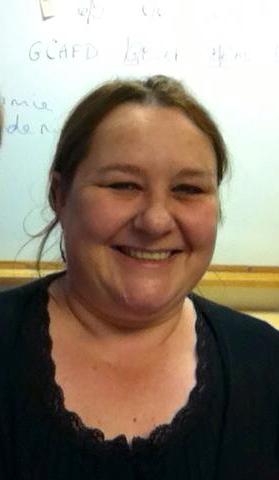
Get to Know the Maine DOE Team: Meet Janette Kirk

Maine DOE team member Janette Kirk is being highlighted as part of the Get to Know the Maine DOE Team Campaign. Learn a little more about Janette in the question and answer below.

What are your roles with DOE?

I am the Chief of Learning Systems at the Department. This role coordinates the work of Office of Learning Systems which comprises of five teams – Assessment, Career & Technical Education, Elementary and Secondary Education, and the Standards & Instructional Support team (Early Learning and Secondary teams).

What do you like best about your job?

A good number of us who choose education as a career do so to make a difference – this is the most important aspect of my work, to feel that I am one of many, contributing to make a difference in the lives of Maine students. The wonderful and knowledgeable folks I get to work with within the Office of Learning Systems and those in the Department in general is another important element. The fact that no two days look the same also keeps the role interesting.

How or why did you decide on this career?

Working at a Department of Education was not necessarily a career aspiration but at the age of 12, my 6th grade elementary school teacher, Mr. McClellan, inspired me to become a teacher. He made learning fun, incorporated music, performance and brought history and social studies to life in a practical, interactive and fun way. He made a huge difference in my life and as a result motivated me to want to do the same for others. From that point on I wanted to be a teacher. After initially teaching in an elementary school in Liverpool, UK, I moved to the U.S. and worked with marginalized populations at The Salvation Army coordinating afterschool programming across Northeast Ohio. More recently my husbands work brought us to Maine where I started working at the Department. Education and working with and supporting children and students has always been an area in which I’ve wanted to work from an early age.

What do you like to do outside of work for fun?

My 12 and 14 year old boys, Nathan and Owen and their hockey schedules take up most of my time but any free time I have I enjoy spending with them and my husband of 17 years, Jon. Outside of family time, I enjoy watching movies and more recently exercising.

New! Online Child Development Associate Training Available for Foreign Trained Professionals

Portland Adult Education and Opportunity Alliance have announced the launch of their new ELL Child Development Associate (CDA) Training. The training is a partnership between Opportunity Alliance, Portland Adult Education and the Greater Portland Workforce Initiative.

The CDA Credential is recognized nationally as the quality standard for training of professional early childhood teachers. CDA training helps teachers work effectively with infants, toddlers, preschoolers, and their families in either a center-based or family child care setting.

This six-month training program is co-taught by a Certified CDA Instructor from the CDA Development Center and supported by an instructor from Portland Adult Education. Students will receive 120 hours of CDA instruction as well as support in English language, portfolio development, test-taking skills, and digital skills.

There are two informational sessions on Zoom: January 13th at 11:30 am and January 20th at 11:30 am (click on the date for the link).

Eligibility Requirements:

  • Target Population: Foreign trained professionals who have a background and interest in working in a child care setting
  • English skills equivalent to ESOL level 5 or above
  • Work Authorization is preferred
  • Meet income or other eligibility requirements to receive possible scholarships
  • 18 years and older

More information is available in the Application form, Application Packet, and Flyer. For further questions, contact: Bridget Kahn Kahnb@portlandschools.org

Mitchell Scholarship Application Open Until April 1

Mitchell Scholarships are awarded to students planning to attend two- or four-year degree programs at colleges either in- or out-of-state. The strongest applicants demonstrate financial need, academic promise, and community impact. Please encourage any graduating college-bound students from Maine’s public high schools to apply before the April 1 deadline.

Find the application link, requirements, and a few additional college and scholarship resources on the Mitchell Institute web site: http://mitchellinstitute.org/scholarship/

In addition to the $10,000 scholarship awarded to a graduating senior from every public high school in the state, Mitchell Institute also provides numerous resources and programs for Mitchell Scholars:

  • Leadership and career development events
  • Access to a wide array of professional networks
  • Customized career advising and personal support through individual meetings with Mitchell Institute staff and community members
  • Fellowship Awards of up to $1,500 to support internships and personal/professional growth opportunities
  • Emergency financial assistance for unexpected financial challenges

Please forward this information to students, colleagues, and friends in your networks! For more information, reach out to http://mitchellinstitute.org/ 

PRIORITY NOTICE: Supporting Courageous Classroom Conversations Regarding January 6, 2021 Insurrection at the U.S. Capitol

Even as the horrific events unfolded on Wednesday, January 6th in Washington D.C., Maine Department of Education’s social studies content specialist, Joe Schmidt was connecting with teachers from across Maine as they prepared for the conversations that were sure to follow in our classrooms.  

We know that the conversations at the end of the week were the first steps in an ongoing journey of making meaning and finding solutions, for our students and our country.  

In the coming weeks, we will continue to see the implications of the historic and unprecedented events that took place, as well as the ongoing search for understanding, healing and growing. Our schools have always been places in which we encourage collaboration, dialogue and learning, and now more than ever these skills will be critically important to foster in, and model for, our children. 

Some suggested considerations are provided below to help educators as you continue to support students and one another in this tumultuous time.  

  • Create a safe space for sharing
  • Establish and ensure classroom norms are being followed 
  • Ask students what they understand or have seen (some parents may have shielded younger children, for example) 
  • Don’t assume or force awareness or a desire to discuss  
  • Consider your resources for balance, developmental appropriateness 
  • Focus on video footage and pictures, while trying to avoid commentary and opinion pieces. 
  • Have students look for contemporary and historical comparisons when possible 
  • Ask students what they see and how they feel 
  • Allow students to discuss feelings, or ask questions and carefully monitor norms 
  • Examine headlines from around the world and discuss how and why this day is represented 
  • Check in with students frequently in the coming weeks and engage supports for them as needed 
  • Check in with colleagues, administration and families as partners in the discussion 

We understand that what happened on January 6 was an intersection of multiple parts of our republic at work. With this in mind, the resources below have been sorted into different categories, depending on the type of support you are looking for and the topics you wish to address in your classroom. 

Resources for Talking About Difficult Topics:
Courageous Conversations About Contentious Topics from the Maine DOE
Specifically Focus On: 

Resources Specific to the 1/6/21 Insurrection 

Talking About Foundations of Democracy 

Teaching About the Electoral College 

Resources About Peaceful Transitions of Power 

We want to remind our educators that if you have questions, ideas, or would like further resources for your classroom, please contact Joe Schmidt at Joe.Schmidt@maine.gov 

Should you need support as you process the events and carry the weight of helping students to do the same, please contact the Frontline/Warmline for educators, staffed by retired educators who can provide an empathetic ear and emotional support. The Frontline/Warmline is available 8 am to 8 pm, 7 days a week, call 207-221-8196 or text 898-211.  

Maine DOE Update – January 8, 2021

From the Maine Department of Education


Reporting Items

Graduation Certification Report Due January 15th, 2021; Jan. 6th Webinar Available

Users looking to complete the Graduation Certification Report will need access to the Student Data module within the NEO application. If you do not have access to this module, please have your superintendent submit a NEO access request form on your behalf. | More

Dropout Reporting Certification for Federal Reporting Year 2019-2020 Due January 15th; Jan. 7th Webinar Available

On December 10, 2019 the DOE Data Governance team voted to bring Maine’s Dropout reporting into compliance with USDOEs guidance, starting with the 2019-2020 school year. As a result, our state level dropout reporting, and your review of your districts data, will include all compulsory age students that meet the dropout definition of being enrolled as of 10/01/2019 and not enrolled on 10/01/2020 and were expected to be in enrollment for the 2020-2021 school year (i.e. – did not graduate, exit to home instruction, etc.) | More

Important Reminder: Due Date Approaches for Quarter 2 (Q2) Attendance, Behavior, Bullying, and Truancy Data Review

The Department of Education offers quarterly windows for School Administrative Units (SAUs) to review, for accuracy and comprehensiveness, the data that has been entered and reported to us. It is our hope that review of this data on a more regular basis will save SAU personnel time and work at the end of the year, and that it will provide time for analysis and to make any necessary corrections. | More

| Visit the DC&R Reporting Calendar |


News & Updates

PRIORITY NOTICE: Maine DOE Announces 21st Century Community Learning Centers Grant Opportunities

The Maine Department of Education is pleased to announce the release of a request for proposals (RFP) seeking bids from interested parties to implement comprehensive 21st Century Community Learning Centers (21st CCLC) programming in 2021-2022. | More

Regional School Calendars Due June 1, 2021

This notification is a reminder that Regional School Calendars are due by June 1, 2021 for school administrative units and private schools, approved for tuition purposes, in coordination with their local secondary career and technical education (CTE) school. This requirement is part of Public Law 2011, Chapter 686 to promote collaboration among local school administrative units that may benefit from inter-administrative unit collaboration beyond CTE. | More

Maine Department of Education Convenes 2020/2021 Student Cabinet

Today the Maine Department of Education (DOE) announced that it has selected its newest members for the 2020/2021 Student Cabinet and has convened the group for its first virtual meeting to discuss education topics important to students. | More

Join the Maine Audubon Junior Duck Stamp Challenge: A Scientific and Artistic Opportunity for K-12 Students

Maine Audubon is collaborating with U.S. Fish and Wildlife Service for the 27th annual Federal Junior Duck Stamp Program, and they are looking for Maine students to submit creative, innovative, beautiful waterfowl art! | More

Want to Thank an Amazing Teacher This Year? Nominate!

Now, more than ever, we need to honor and recognize the great work of Maine teachers! Nominations are now open for the 2021 County Teachers of the Year and 2022 Teacher of the Year. Members of the public are encouraged to nominate educators who demonstrate a commitment to excellence and who inspire the achievement of all students. | More

Get to Know the Maine DOE Team: Meet Anne-Marie Adamson

Maine DOE team member Anne-Marie Adamson is being highlighted this week as part of the Get to Know the Maine DOE Team Campaign. Learn a little more about Anne-Marie | More


Maine Schools Sharing Success Stories

| Submit your Maine School Success Story |


Professional Development & Training Opportunities

Virtual Presentation 1/13 – Returning to School: Mitigation and Mental Health Strategies

On behalf of the U.S. Department of Education, Office of Elementary and Secondary Education (OESE), Office of Safe and Supportive Schools (OSSS), the National Center on Safe Supportive Learning Environments (NCSSLE) invites you to please join a presentation by the Centers for Disease Control and Prevention (CDC) on how to optimize mitigation strategies and mental health to facilitate a safe return to schools in the new year. | More

Antiracist Education for all of Maine – A Series of Free Workshops and Crucial Conversations for Maine Educators

The Maine State Teacher of the Year Association (MSTOYA) is thrilled to offer an important, timely and free professional development series: Antiracist Education for all of Maine.  This series kicks off with a keynote by Cornelius Minor, an author, teacher, instructional coach, and self-proclaimed “book tiger.”  There are also many other powerful speakers and “collegial conversations,” which are designed to be equity focused discussions with educators across Maine to help Maine educators build capacity as equity leaders in Maine schools and communities. | More

| Visit the Professional Development Calendar |


Latest DOE Career/Project Opportunities View current Maine Department of Education employment opportunities here

Antiracist Education for all of Maine – A Series of Free Workshops and Crucial Conversations for Maine Educators

This series has reached its capacity – registration is no longer open. 

The Maine State Teacher of the Year Association (MSTOYA) is thrilled to offer an important, timely and free professional development series: Antiracist Education for all of Maine This series kicks off with a keynote by Cornelius Minor, an author, teacher, instructional coach, and self-proclaimed “book tiger.”  There are also many other powerful speakers and “collegial conversations,” which are designed to be equity focused discussions with educators across Maine to help Maine educators build capacity as equity leaders in Maine schools and communities.

Speaker: No More Excuses: Why It Has to Be Us And Why It Has To Be Now

Cornelius Minor
February 9th, 7:00-8:00 pm

Collegial Conversations: Navigating The Challenges of Antiracist Work In Maine Schools

February 25th, 7:00-8:00 pm

Speaker: Voices From Our Classrooms

Holocaust and Human Rights Center of Maine
March 2nd, 7:00-8:00 pm

Collegial Conversations: Rehearsing Important Conversations About Racism Through Scenarios

March 18th, , 7:00-8:00 pm

Speaker: Literature as a Lens: Using Texts As A Tool to Broaden Perspectives

Monica Washington, Nesrene Griffin, Iris Eichenlaub
March 23rd, 7:00-8:00 pm

Speaker: Decolonizing The Curriculum

Fiona Hopper, Starr Kelly, Joe Schmidt
April 6th, 7:00-8:00 pm

Speaker: What Comes Next?

Cornelius Minor
April 14th, 7:00-8:00 pm

Collegial Conversations: Equity Leadership From The Classroom

April 15th, 7:00-8:00 pm

All events are free to Maine teachers. Contact hours will be awarded for each session upon completion of an exit ticket. Space is limited, and will be offered to educators across the state, so sign up early!

Events made possible with major funding from Unum. Additional support from Lee Auto, Educate Maine, and The Maine Teachers of the Year Association.

Register here. All sessions are full!

Do the best that you can until you know better. Then when you know better, do better. – Maya Angelou

For questions or more information, email Talya Edlund at talya.edlund@gmail.com