In celebration of Native American Heritage Month, the Maine Department of Education (DOE) invites educators and communities to engage students in learning about the enduring presence, contributions, and rich cultures of the Wabanaki Nations, who have lived in the place we now call Maine for more than 13,000 years.
The Maine DOE Wabanaki Studies Indigenous Heritage Month Guide is now available to download and share from the Maine DOE website. Developed by the Maine DOE Wabanaki Studies Specialist, in collaboration with contracted Wabanaki advisors and educators, this guide offers practical tools to support meaningful, accurate, and engaging Wabanaki Studies instruction across grade levels.
The guide includes:
Adaptable, year-round curriculum for all grade levels
Guidance and materials for teaching about Thanksgiving
Links to online learning modules
Printable bulletin board resources
Micro-courses for continued learning and contact hours
This work, informed and shaped by Wabanaki advisors and educators statewide, has been intentionally designed for use throughout the year. Effective Wabanaki Studies instruction reflects its interdisciplinary nature, connecting to existing units and helping students make deeper connections across content areas. Educators are encouraged to explore the full collection of resources and integrate Wabanaki Studies learning opportunities throughout the school year.
All resources are free to use and share across schools and educational programs. The Maine DOE welcomes examples of how Wabanaki Studies is being implemented, as this collective learning journey continues.
Educators, administrators, community partners, industry leaders, and others invested in computer science education are invited to attend the Maine Computer Science Education Summit on Friday, November 6, 2026, at the Westin Portland Harborview.
This free, statewide event will bring together people from across Maine to connect, share perspectives, and explore how Maine can continue expanding access to meaningful, high-quality computer science education for all students.
As computer science education evolves across Maine, schools are exploring new approaches to computational thinking, artificial intelligence (AI), cybersecurity, physical computing, and emerging technologies. This event brings these conversations together to explore how best to support students and communities.
Throughout the day, educators, school and district leaders, policymakers, industry representatives, higher education partners, and community stakeholders will have opportunities to learn from one another, explore Maine’s current computer science education landscape, and contribute their experiences and perspectives to conversations about where Maine goes next.
The goal is not only to share what is already happening, but to strengthen connections across organizations and communities and identify coordinated, actionable strategies that can support computer science education across the state.
The Summit is designed for anyone who has a role in creating opportunities for Maine students. By bringing these voices together, the Summit can help build a more complete picture of what computer science education looks like in Maine and what students, educators, schools, and communities need moving forward.
Event Details
Friday, November 6, 2026 9:00 a.m.–4:00 p.m. The Westin Portland Harborview, Portland Free to attend $100 stipend available for educators
Learn more and register for the Maine Computer Science Education Summit using theevent website. Registration is required.
The summit is funded by the Harold Alfond Foundation through the STEM Workforce Ready 2030 project with support from the Maine Department of Education (DOE), the University of Maine, the Maine Mathematics & Science Alliance (MMSA), Educate Maine, and the Maine Computer Science Teachers Association (CSTA).
In Maine’s supplemental budget, which Governor Janet Mills signed into law in April 2026, $5.9 million was allocated to improve school bus safety throughout the state. As part of that work, the Maine Department of Education (DOE) is now administering those funds to reimburse school administrative units (SAUs) for the retrofitting of school buses that do not have a front crossing arm.
SAUs may choose to have this work completed by a vendor or local garage, or they may use their own in-house mechanic and bill for associated labor costs. SAUs will be reimbursed up to $3,000 per school bus for eligible equipment and labor costs associated with each crossing arm installation. The Maine DOE is aware that many SAUs installed crossing arms before the start of this reimbursement program; SAUs may submit an invoice for reimbursement if the work was completed on or after July 1, 2025.
The Maine DOE understands that SAUs require time to complete these installations. As a result, this program is anticipated to run through June 30, 2027. The Maine DOE plans to survey SAUs this winter to determine whether additional time is needed for retrofitting.
With questions, please contact Cheryl Brackett, Maine DOE Transportation Coordinator, at cheryl.brackett@maine.gov or 207-446-3019.
Reading to worms from picture books, digging in the dirt and transforming pinecones into bird feeders—all those fun learning activities are part of a unique, nature-based Portland Public Schools summer program helping rising kindergartners and first-graders get ready for school.
Starting kindergarten or first grade can be a big transition, but the program—called Step-Into-Kindergarten-and-First-Grade—helps make that transition easier.
The approximately four-week summer program, held at Reiche and Talbot elementary schools, is a school-readiness program for students entering kindergarten and first grade. Through engaging, hands-on activities, students have been building foundational literacy and social skills—ensuring a confident start to their elementary school journey. The nature-based activities include read-alouds, songs, writing activities and tasks involving motor skills.
Lessons at Reiche included reading to worms and exploring the school garden to learn how plants grow.
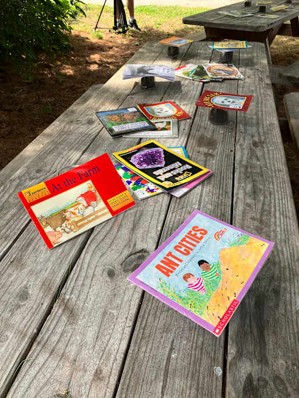
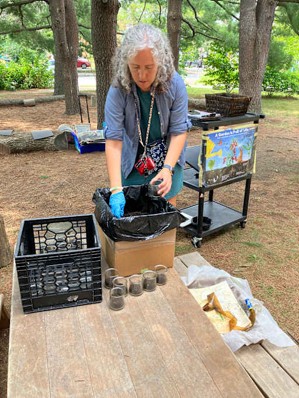
Before the students headed outside into the school garden, teacher Amy Wu was out there scooping compost filled with worms into little glass jars for each student. She made sure that each jar contained at least one worm for the students to have their own little invertebrate to read to. Wu placed the jar on picnic tables and covered each jar with a picture book. She said the covering is necessary because local robins have learned her routine throughout the summer program and help themselves to the worms.
The students squealed with excitement as they uncovered their new worm friends and showed them to their classmates before the story reading began, as shown in this video. In addition to being fun, the activity gave students a chance to learn social skills important to success in school, such as listening to their teacher, following instructions, taking turns and sharing.
After the students shared their books with the worms, it was time to move into Reiche’s garden. Wu said outdoor learning is a big part of the school curriculum at Reiche, and the program helps familiarize city kids with being outdoors in nature. The school garden is a little oasis of vegetables and flowers and also includes a peach tree heavy with fruit and a resident rabbit that likes to nibble on the bounty.
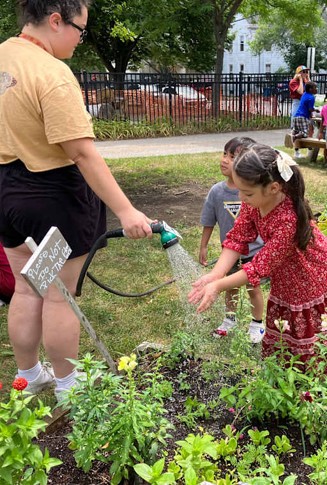
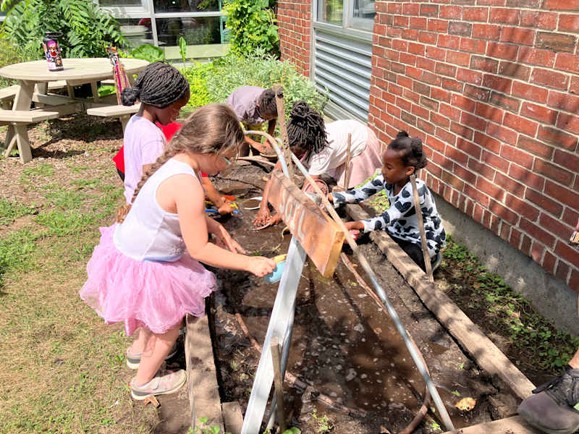
In the garden, students took turns visiting various stations to learn about the elements plants need to grow. One of the most popular was the soil station, a sandbox filled with dirt with some water added. The students enjoyed scooping up the resulting mud. After a clean-up with the aid of a garden hose, the youngsters moved to other activities, such as turning pinecones into birdfeeders by smearing them with peanut butter and bird seed— providing a healthy treat for birds when hung in a tree. The fun activities were not only learning opportunities, but helped students hone their fine and gross motor skills.
Overall, Wu said, the Step-Into-Kindergarten-and-First-Grade program “builds on [the children’s] social emotional skills and their early readiness skills and their emergent literacy skills—and hopefully these students are the leaders for other students that didn’t take part.”
The program is free to participating families. It is funded by the Foundation for Portland Public Schools and PPS.
This story was submitted by The Portland Public Schools. To submit a good news story to the Maine DOE, please fill out thegood news submission form.
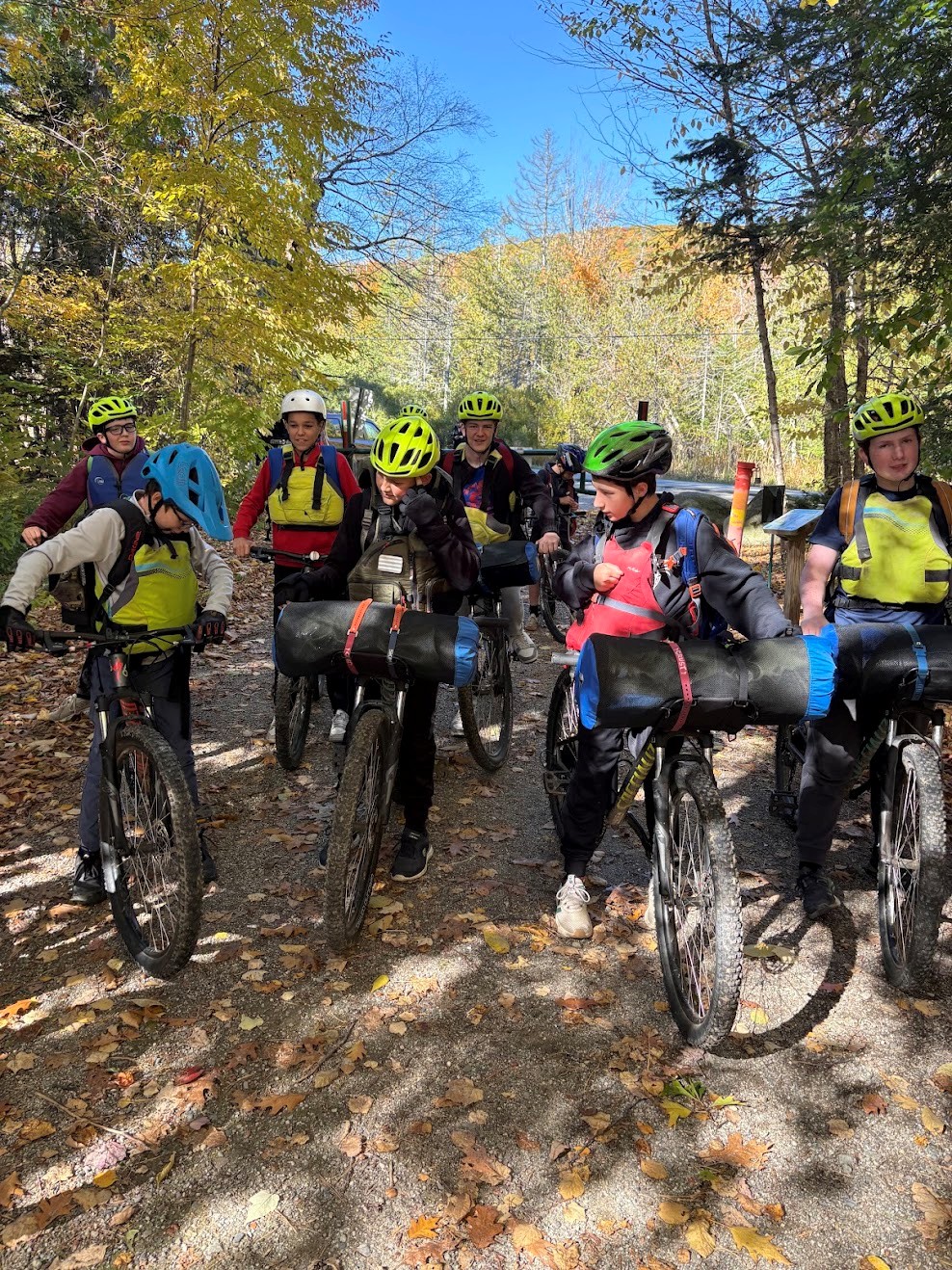
For the past seven years, Dedham School in AOS #47 has provided middle school students with an opportunity to build skills, explore the outdoors, and connect with their peers through its Mountain Biking Team.
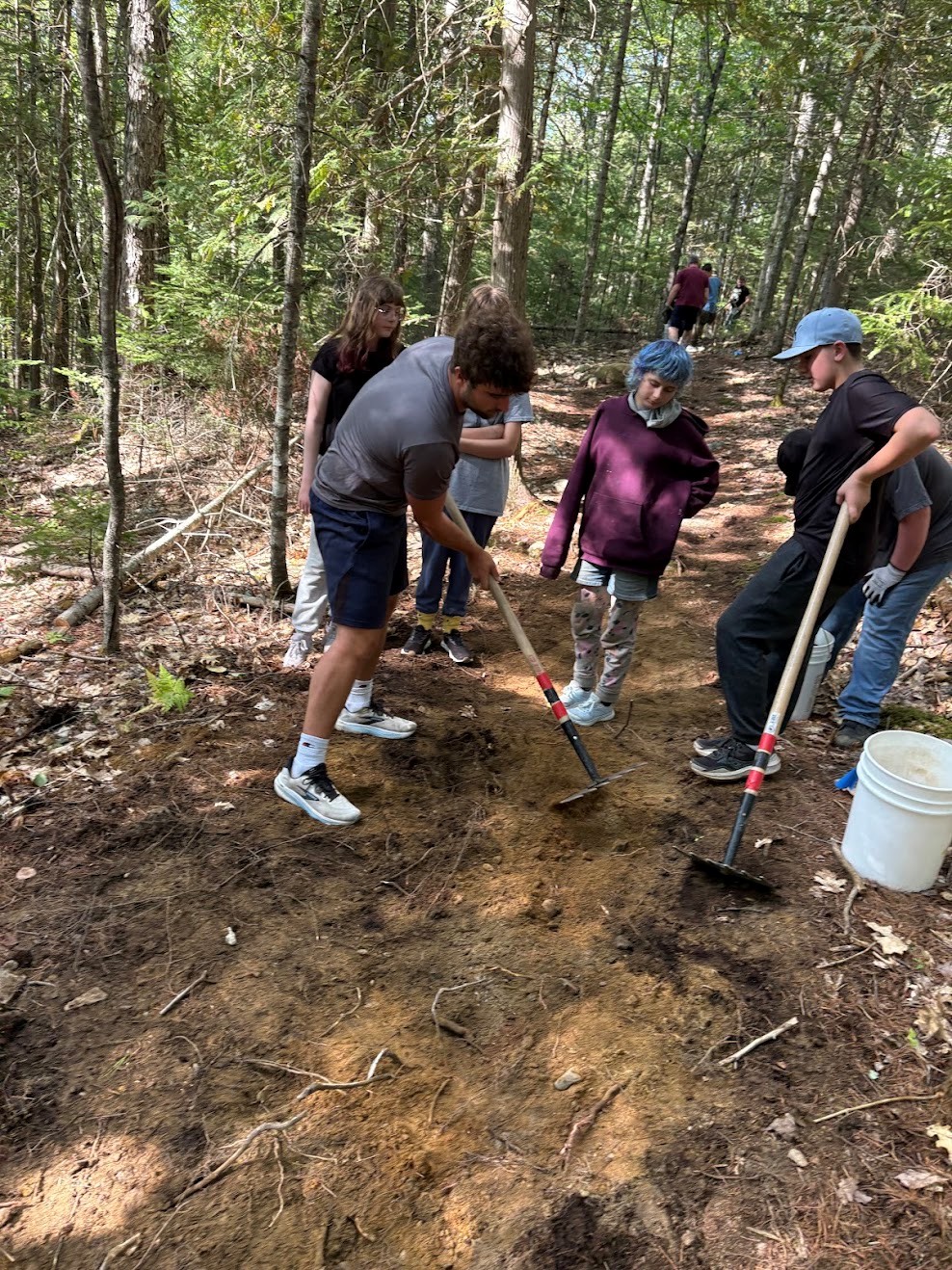
The fall extracurricular program was developed for students in grades 6 through 8 and extends learning beyond the physical education classroom. Students meet three times a week to develop biking skills, build trails, and head out on group rides, combining physical activity with teamwork, problem-solving, and outdoor adventure.
“The best part of this program is watching students grow in confidence, develop new skills, and support one another,” Dedham School Physical Education/Health Teacher Tim Pearson said. Pearson hosts the Mountain biking program each year. “Mountain biking challenges students in different ways, and it’s rewarding to see them encourage each other, work as a team, and discover what they’re capable of both on and off the bike.”
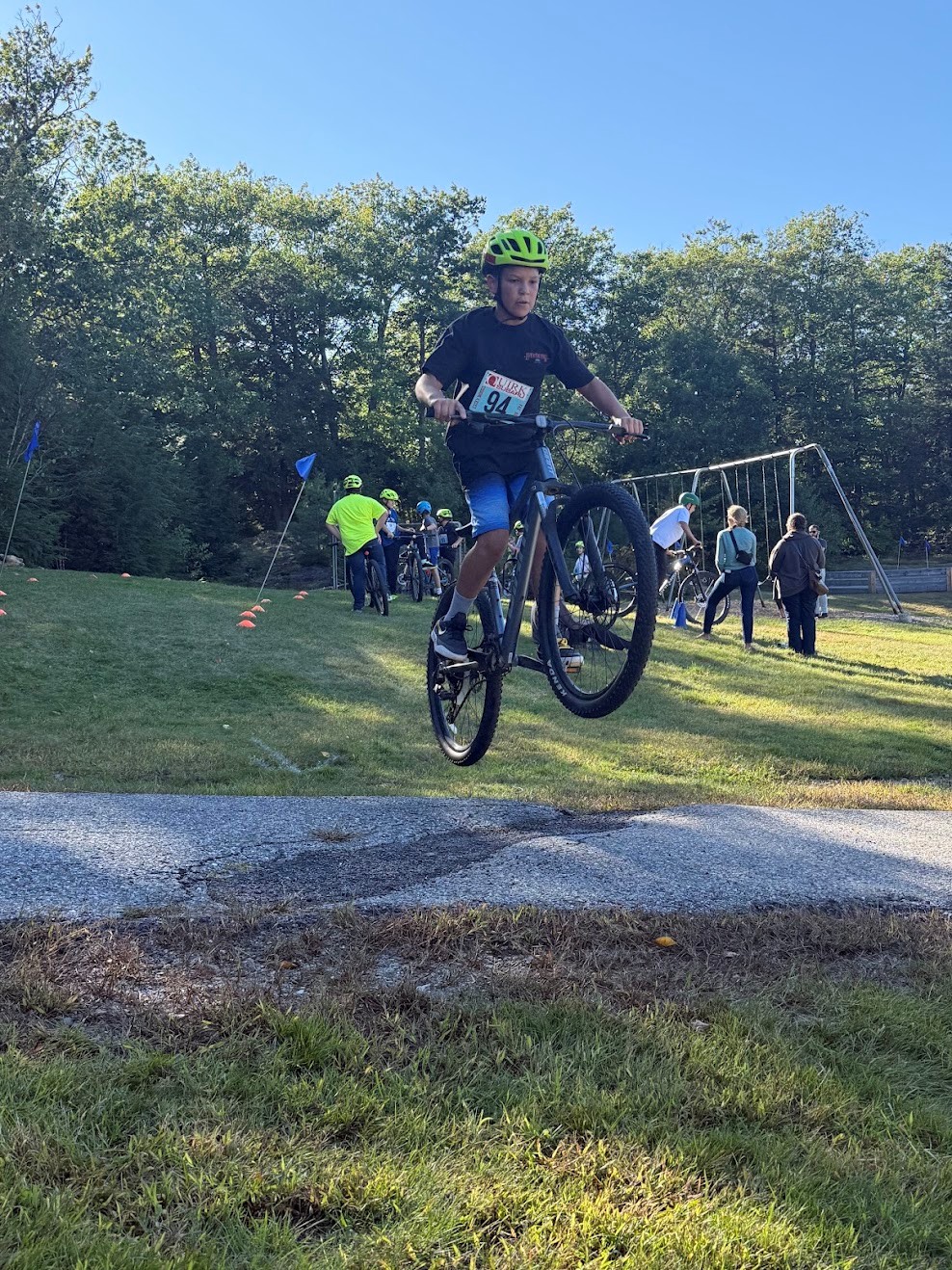
The program also brings students together with the broader school community through two invitational mountain biking competitions hosted by Dedham School each year. These events welcome interested students from area schools, giving young riders opportunities to challenge themselves, build confidence, and share their enthusiasm for the sport.
Thanks to support from Outride, the Maine Bicycle Competition, First Push Syndicate, local bike shops, and community members, students have access to the bikes, helmets, and equipment they need to participate. These partnerships help make mountain biking more accessible and create opportunities for students to discover a new passion.
Through its mountain biking program, Dedham School is helping students stay active, develop new skills, and build connections with their peers and community—all while enjoying the outdoors.
Information for this article was provided by Dedham School in AOS #47. To learn more about this program, contact Dedham School Physical Education/Health Teacher Tim Pearson at tpearson@dedhamschool.net. To submit a good news story to the Maine DOE, please fill out thegood news submission form.
The Maine Department of Education (DOE) is excited to announce Augusta School Department Spanish teacher Gretchen Livingston as the 2027 Maine Teacher of the Year. On Tuesday, October 20, 2026, Livingston celebrated this award with fellow Augusta educators and students during a surprise ceremony in the Viles Auditorium at Cony Middle and High School. | More
The Maine Department of Education (DOE), in partnership with the national organization Measurement Incorporated, has released a new Statewide Evaluation Report for the 21st Century Community Learning Centers (21st CCLC) program. | More
The Maine Department of Education (DOE) is accepting applications for its 2026–2027 Student Cabinet, a group of students who meet with DOE leaders to share perspectives on educational initiatives, opportunities, improvements, and policy. Applications are due November 15, 2026. | More
The Association of Computer Technology Educators of Maine (ACTEM) has named Keith Kelley of RSU 19 and Nicole Lesperance of RSU 9 as the recipients of the 2026 ACTEM ACHIEVE Award, recognizing their innovative approaches to using technology to support teaching and learning. | More
In 2026, Maine is celebrating a remarkable milestone: 150 years of Deaf education in the state. For a century and a half, Maine has worked to ensure that Deaf and Hard of Hearing children have access to education, language, relationships, and opportunities to thrive. While the way services are delivered has evolved significantly over the years, one thing has remained constant—the commitment to supporting Maine’s Deaf and Hard of Hearing students and their families. | More
Maine’s Positive Behavioral Interventions and Supports (Maine PBIS) program, a collaboration between the Maine Department of Education (DOE) and the University of Maine System (UMS), will host its annual conference on November 19, 2026, from 8:30 a.m. to 4 p.m. at the Augusta Civic Center. | More
The Maine Department of Education (DOE) Coordinated School Health Team is excited to announce the launch of the 2026-2027 School Health Webinar Series. This series is designed for those who work to support student health and well-being, including school health professionals, pediatricians, and school health advisors. | More
The Maine Department of Education (DOE), in partnership with the national organization Measurement Incorporated, has released a new Statewide Evaluation Report for the 21st Century Community Learning Centers (21st CCLC) program.
The 21st CCLC program is a federally funded competitive grant program that helps schools and communities develop before-school, after-school, and summer educational programs that support students and their families. By law, states must monitor program implementation and conduct periodic evaluations to assess program impact and effectiveness and to inform continuous improvement efforts.
This most recent evaluation of Maine’s 21st CCLC program was conducted to examine data and trends in statewide implementation, outcomes, and impact of the program across a three-year period (2022-23, 2023-24, and 2024-25). The resulting report outlines the various methodologies used to conduct the evaluation, key findings of the work, and recommendations for program improvement.
Some key findings from the report include:
The program continues to have broad reach, serving students and families in 13 of Maine’s 16 counties
While overall program enrollment declined by 13%, the average attendance rate for participating students increased by 13%
The rate of students demonstrating improved mathematics achievement on the state assessment increased over time (68% of participating students in 2025-2026)
In general, students with higher rates of program attendance experienced greater improvements in academic achievement, behavior, and school-day attendance
Overall, the key findings of the report support growing research on the positive outcomes associated with participation in out-of-school time programs. The full report, including detailed charts and analytical appendices, is available here.
For more information on the 21st CCLC program, including this report, please contact Travis Doughty at (207) 624-6709 or travis.w.doughty@maine.gov.
21st CCLC funds received from the U.S. Department of Education (ED) support the implementation of this project. The project has an award totaling $136,067.00 of which 100% is federally funded and directly attributed to project implementation. The contents are those of the author(s) and do not necessarily represent the official views of, nor an endorsement by, ED or the U.S. government.
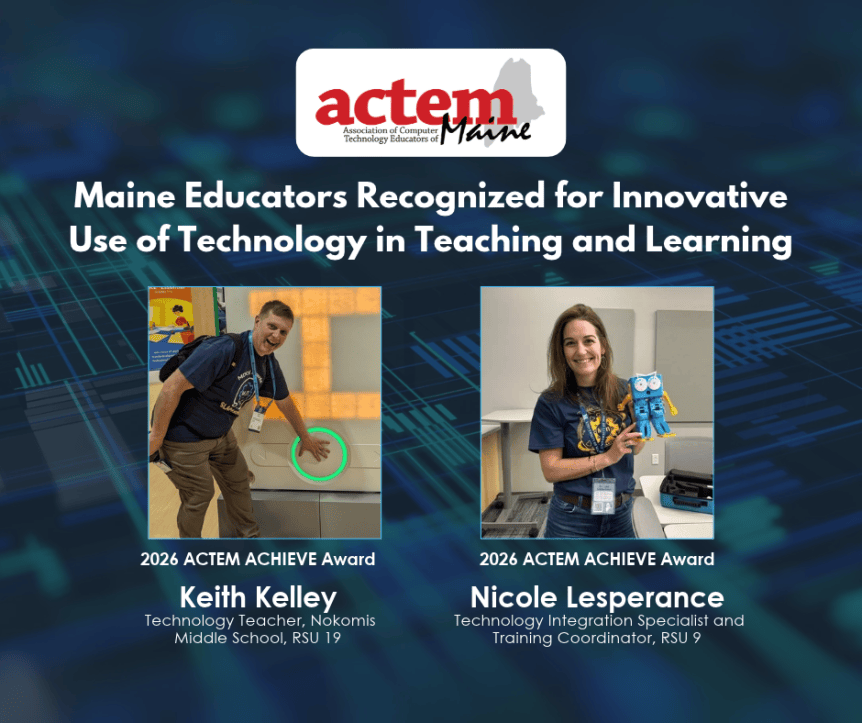
The Association of Computer Technology Educators of Maine (ACTEM) has named Keith Kelley of RSU 19 and Nicole Lesperance of RSU 9 as the recipients of the 2026 ACTEM ACHIEVE Award, recognizing their innovative approaches to using technology to support teaching and learning.
The ACHIEVE Award stands for “ACTEM Commends Highly Innovative Educators that Value Excellence.” The annual recognition celebrates Maine educators who demonstrate creativity, leadership, collaboration, and a commitment to empowering students and fellow educators through meaningful uses of technology.
Kelley and Lesperance were recognized in connection with the 2026 ACTEM Fall Conference, held Oct. 15–16 at the Augusta Civic Center. The conference brings together educators and technology leaders from across Maine to share ideas, develop skills, and explore ways to integrate technology into education.
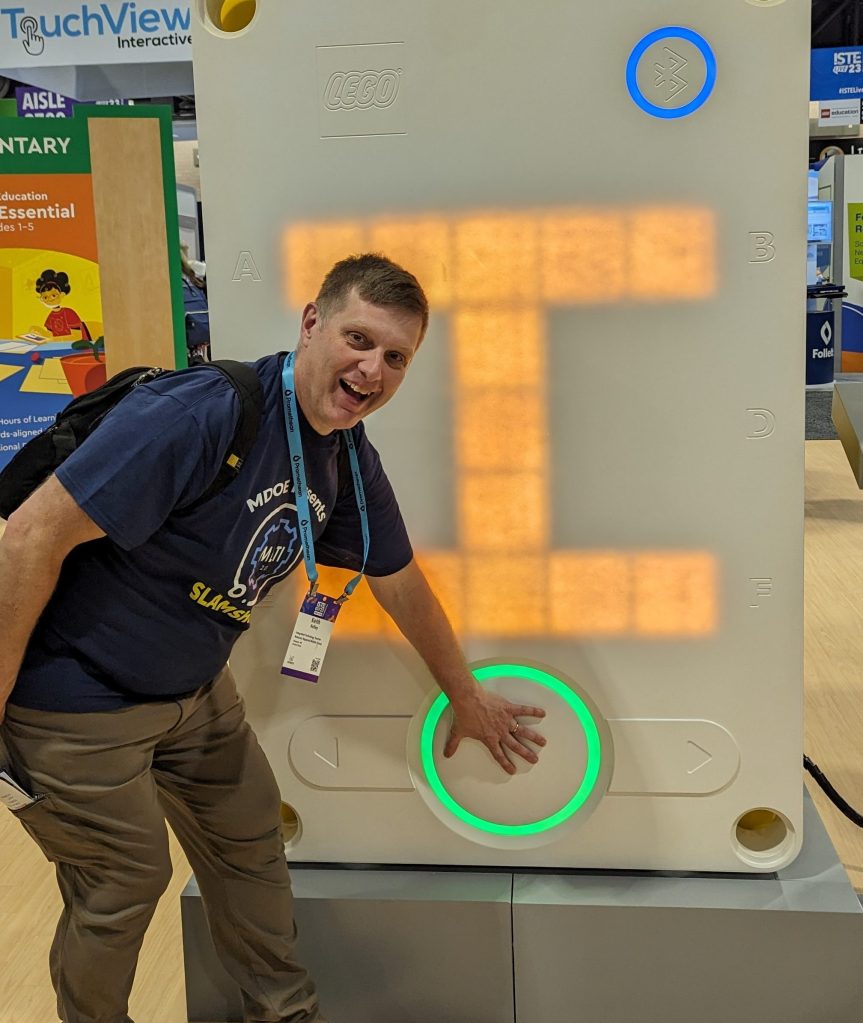
Keith Kelley: Bringing Hands-On Technology Learning to Students
Kelley, an Integrated Technology Teacher at Nokomis Middle School in Newport, works with students in grades five through eight to combine technology education with hands-on design, construction, coding, and problem-solving.
Described as a “21st-century shop class,” Kelley’s program gives students opportunities to build, code, drill, sand, create, and collaborate. Projects involving skateboards, LEGO materials, 3D printing, and robot derbies help students develop technical skills while strengthening creativity, teamwork, perseverance, and problem-solving abilities.
Through these experiences, students learn more than how to use tools and technology. They put their ideas into action, work through challenges, and collaborate to create tangible projects.
Kelley’s nominator, Kern Kelley, highlighted the active, hands-on nature of the program, writing, “Keith’s students get their hands dirty and learn while they do it.”
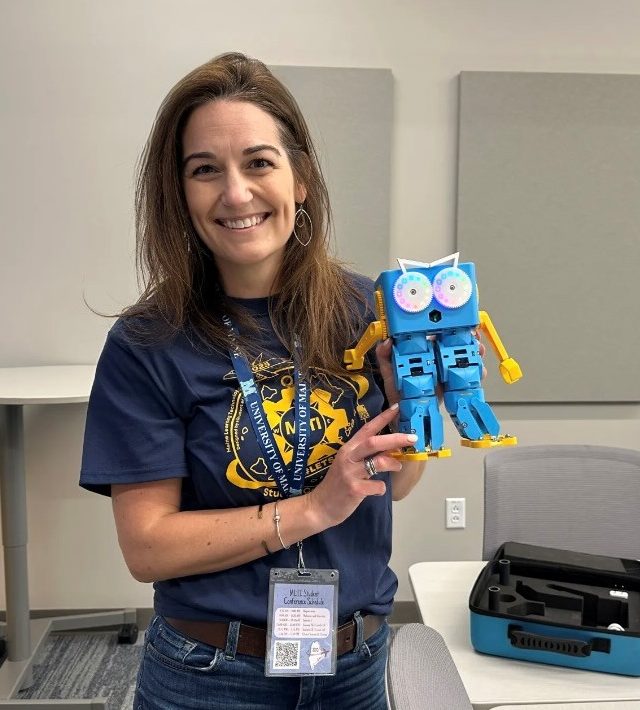
Nicole Lesperance: Supporting Educators Through Technology Integration
Lesperance serves as the Technology Integration Specialist and Training Coordinator for RSU 9, based in the Farmington area. In this role, she supports educators in using technology effectively to enhance teaching and learning.
Her work includes planning the Summer Tech Institute, which brings educators from multiple school districts together to explore practical approaches to technology integration and learn from one another. Through these professional learning opportunities, Lesperance has helped extend her impact beyond her own district, supporting a broader community of educators.
Lesperance’s nominator, Laura Columbia, recognized her growth as an educational technology leader and her dedication to helping colleagues build their skills.
“Nicole is always looking for ways to help educators use technology more effectively to support teaching and learning,” Columbia shared in her nomination. “It has been wonderful to watch her grow into a leader who is making an impact well beyond her own district.”
The ACHIEVE Award highlights the many ways Maine educators use technology to create meaningful learning experiences for students and strengthen teaching practices across schools and districts.
Through hands-on classroom projects and professional learning opportunities, Kelley and Lesperance demonstrate how purposeful technology integration can foster student creativity, encourage collaboration, and support educators in continually developing their practice.
Information for this article was provided by ACTEM. To learn more about ACTEM and the ACHIEVE Award, visitwww.actem.org.To submit a good news story to the Maine DOE, please fill out thegood news submission form.
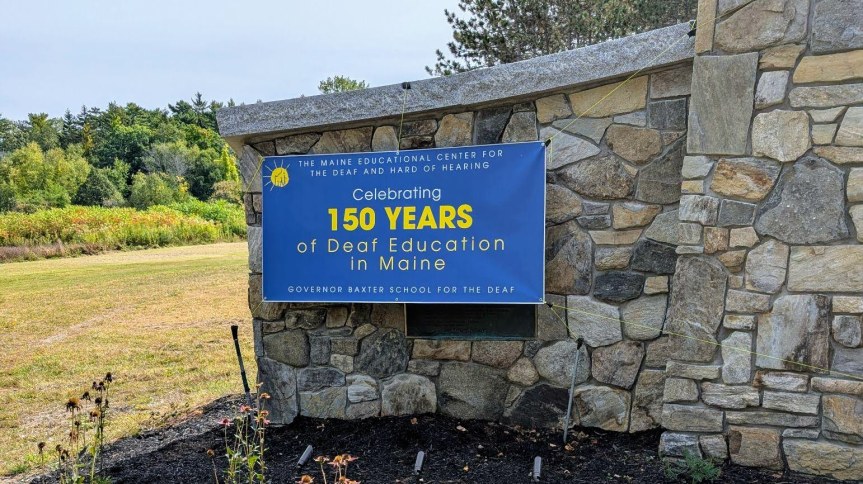
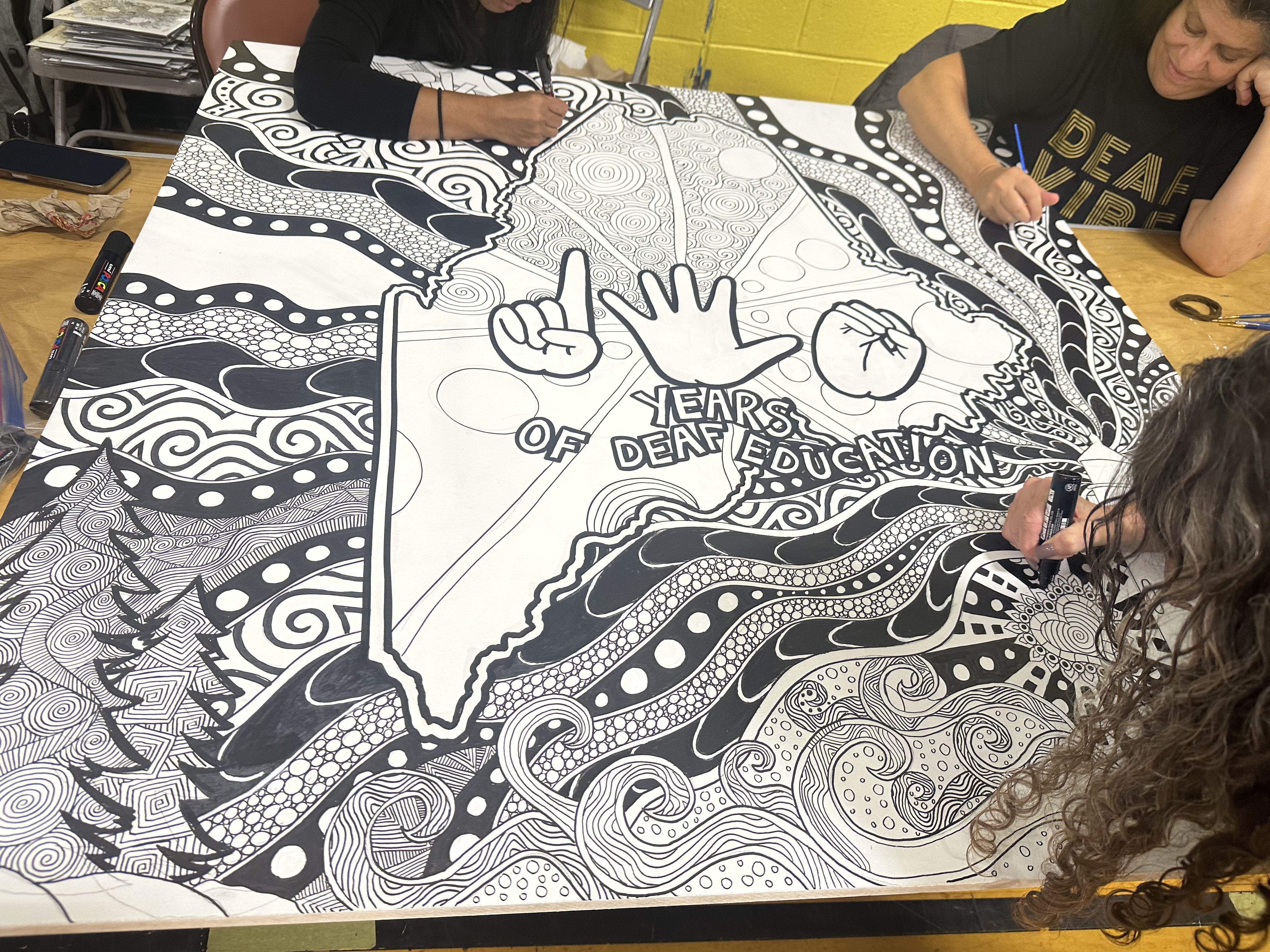
In 2026, Maine is celebrating a remarkable milestone: 150 years of Deaf education in the state.
For a century and a half, Maine has worked to ensure that Deaf and Hard of Hearing children have access to education, language, relationships, and opportunities to thrive. While the way services are delivered has evolved significantly over the years, one thing has remained constant—the commitment to supporting Maine’s Deaf and Hard of Hearing students and their families.
Today, that work extends far beyond a single school or campus. The Maine Educational Center for the Deaf and Hard of Hearing (MECDHH)/Governor Baxter School for the Deaf (GBSD) provides services to children and families throughout the state, partnering with schools and communities to ensure students receive the support they need where they live and learn.
150 Years of Growth and Change
Maine’s Deaf education story began in 1876, when the Portland School for the Deaf opened its doors. Twenty-one years later, the Maine Legislature formally established the Maine School for the Deaf as a state institution, taking responsibility for educating Deaf children from across Maine.
The school found a new home in 1957, when it moved from Portland to Mackworth Island. Governor Percival P. Baxter provided the island to the State of Maine for public purposes and contributed significant funding toward construction of a new school and causeway. In his honor, the school was formally named the Governor Baxter School for the Deaf.
The work continued to evolve with the needs of Maine’s children and families. In 2001, the organization became the Maine Educational Center for the Deaf and Hard of Hearing, reflecting an expanded statewide mission.
Today, MECDHH/GBSD provides education, early intervention, consultation, evaluation, specially designed instruction, speech and language services, social-emotional programming, family services, and other supports to Deaf and Hard of Hearing children and their schools.
On September 25, a fireworks show was organized on Mackworth Island to mark the 150th anniversary of Deaf education in Maine.
A Statewide Mission
While Mackworth Island remains an important part of the history of Deaf education in Maine, much of MECDHH/GBSD’s work today takes place in communities across the state.
The organization currently serves approximately 582 clients, students, and families from birth through age 22. Approximately 94 percent receive services in their home districts or communities, allowing students to access specialized Deaf education supports while remaining connected to their schools, families, and peers.
For the coming school year, approximately 6 percent of students will attend MECDHH/GBSD site-based programs in Lewiston, including programs at Farwell Elementary School, Lewiston Middle School, and Lewiston High School. These host-based programs provide inclusive Deaf education classrooms within general education settings through a partnership with Lewiston schools.
The statewide model reflects how Deaf education in Maine has continued to grow—from a school in Portland, to a school on an island, to a network of services supporting children and families wherever they live.
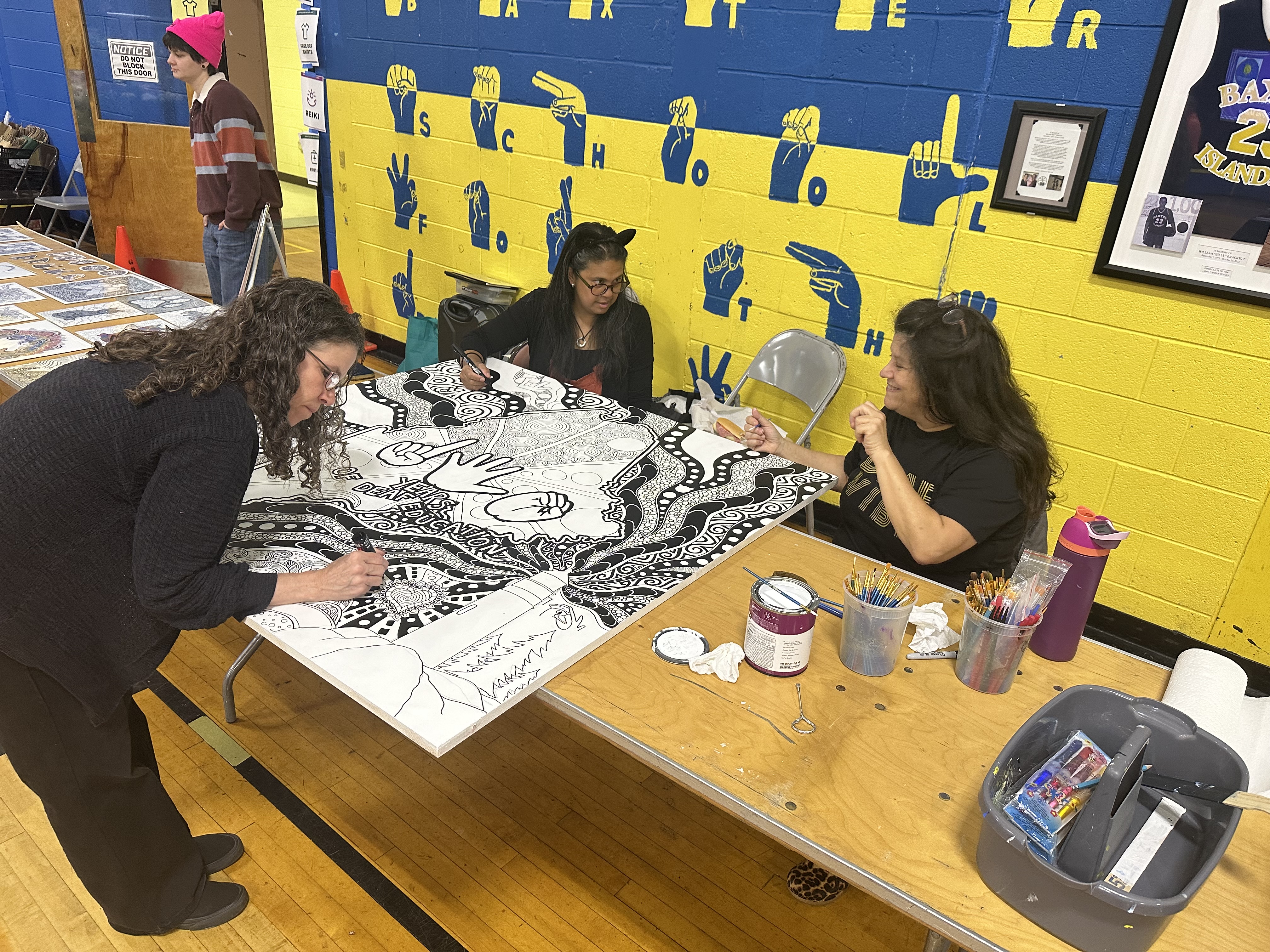
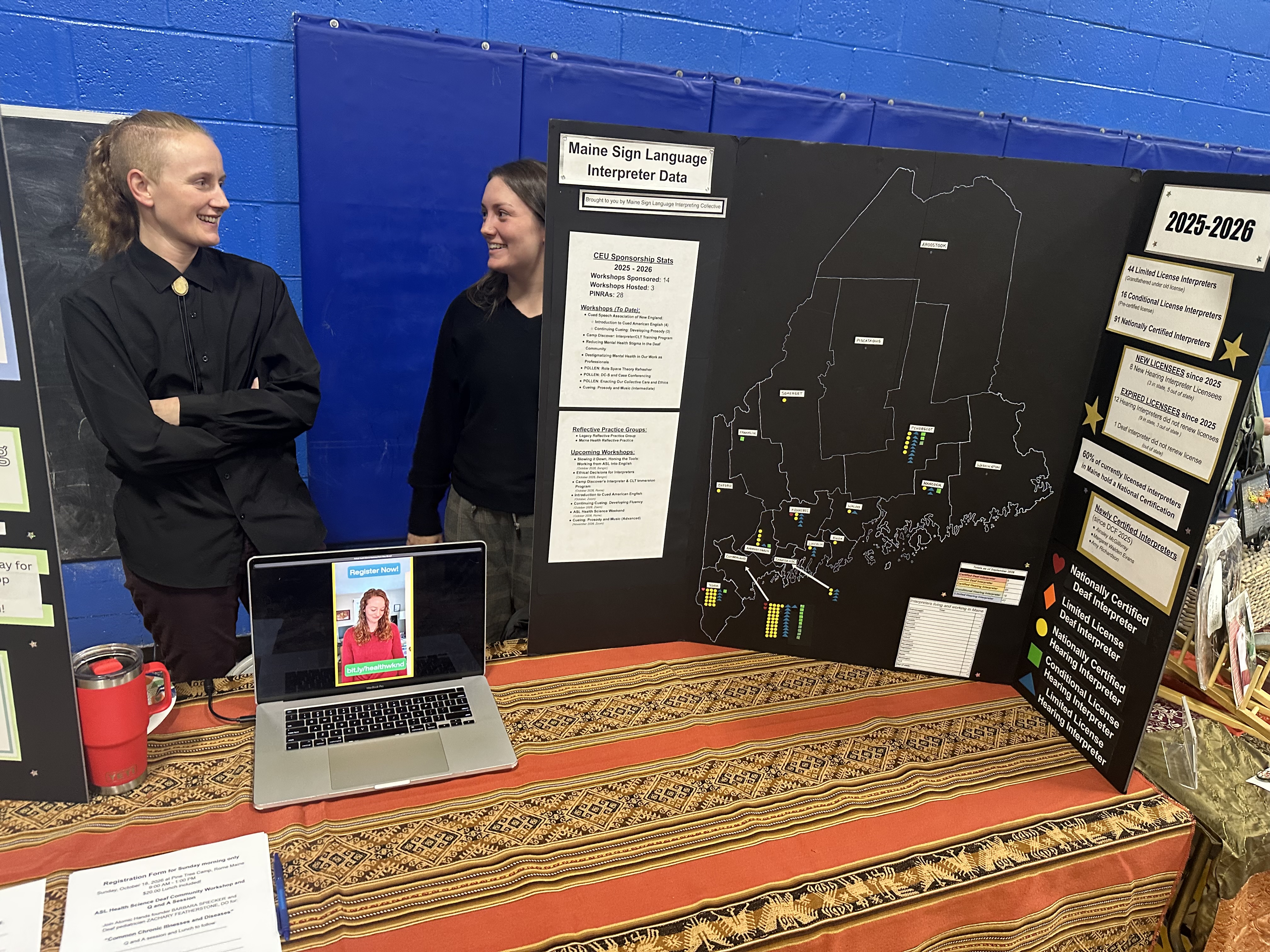
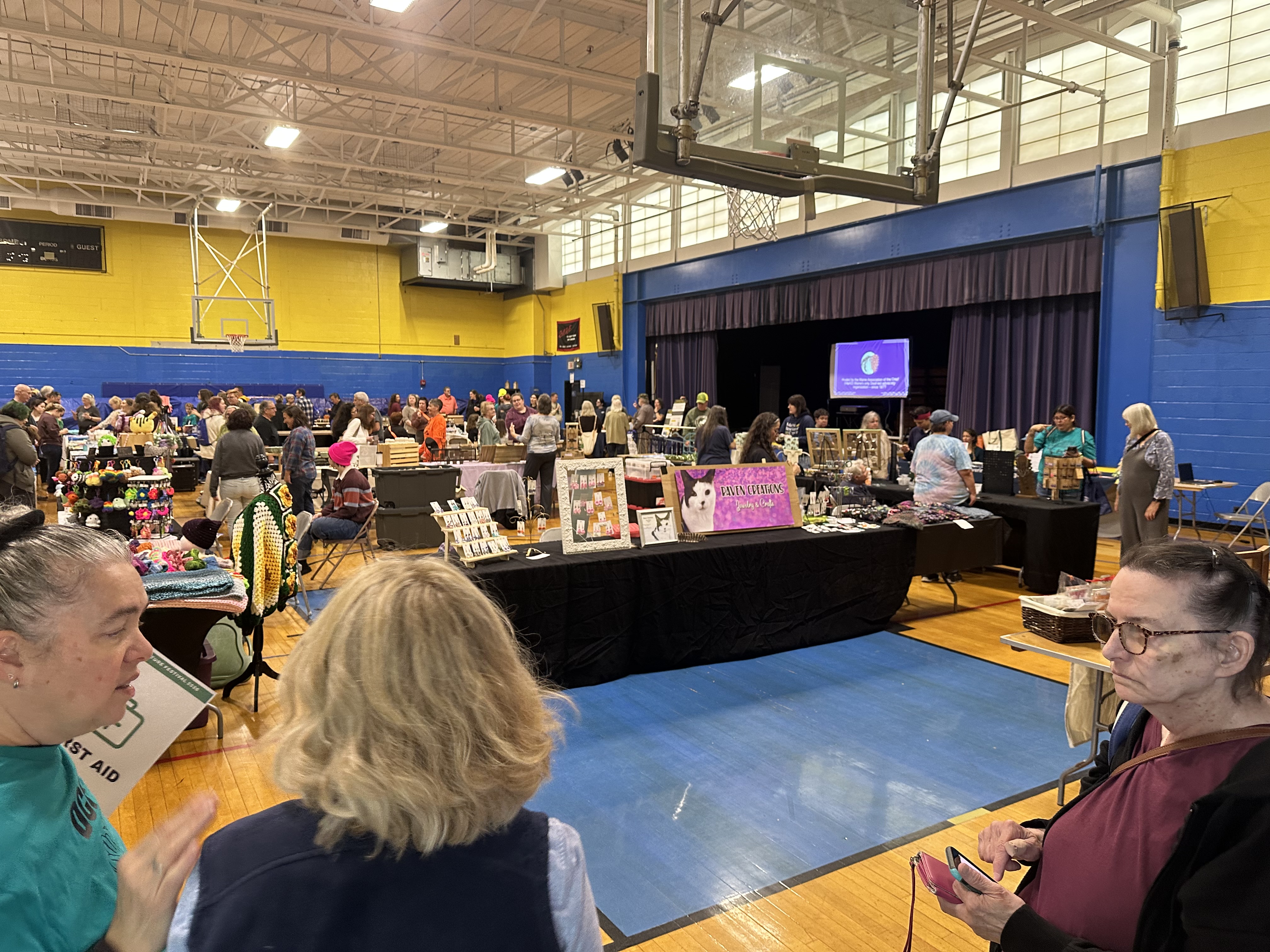
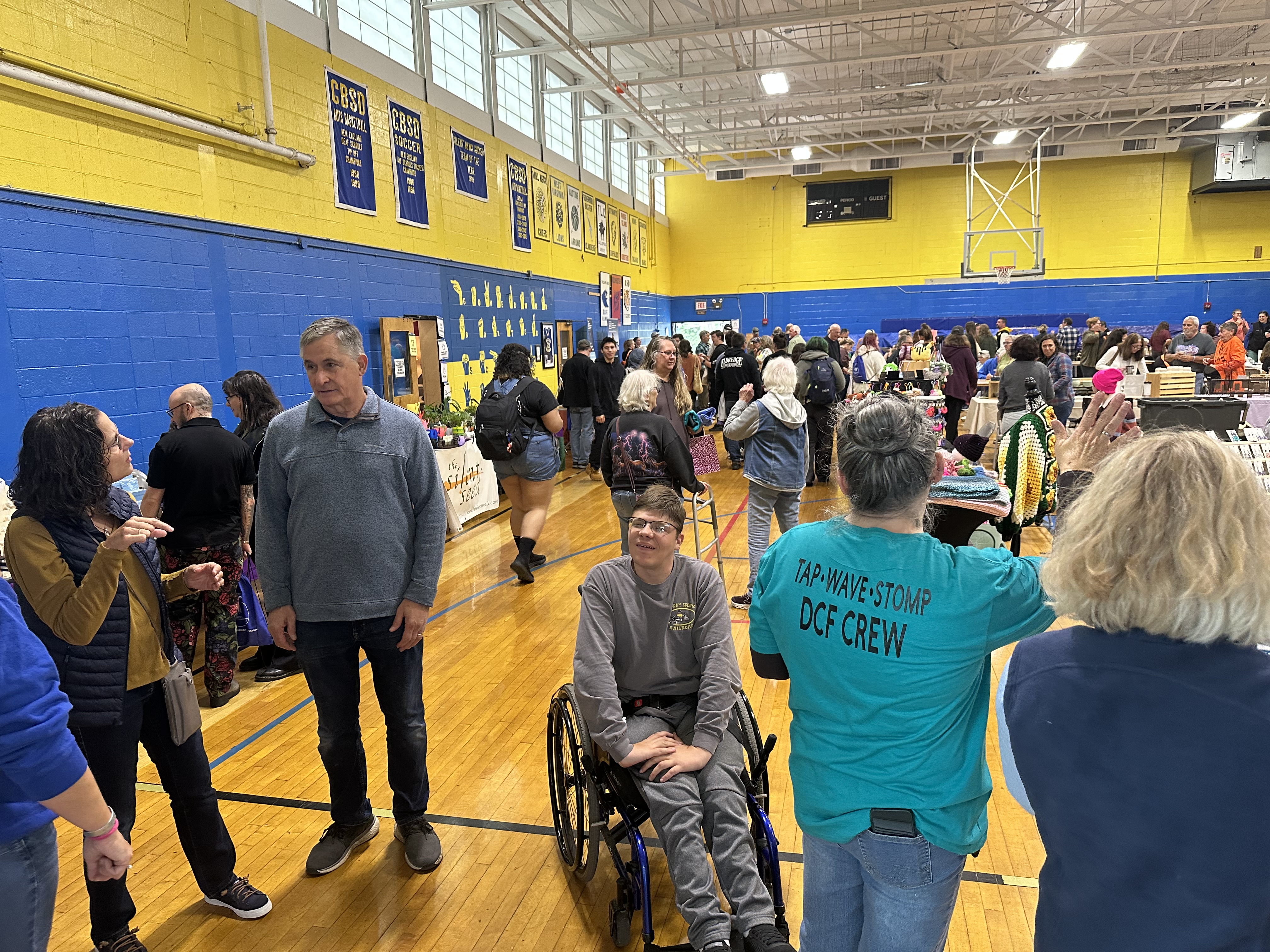
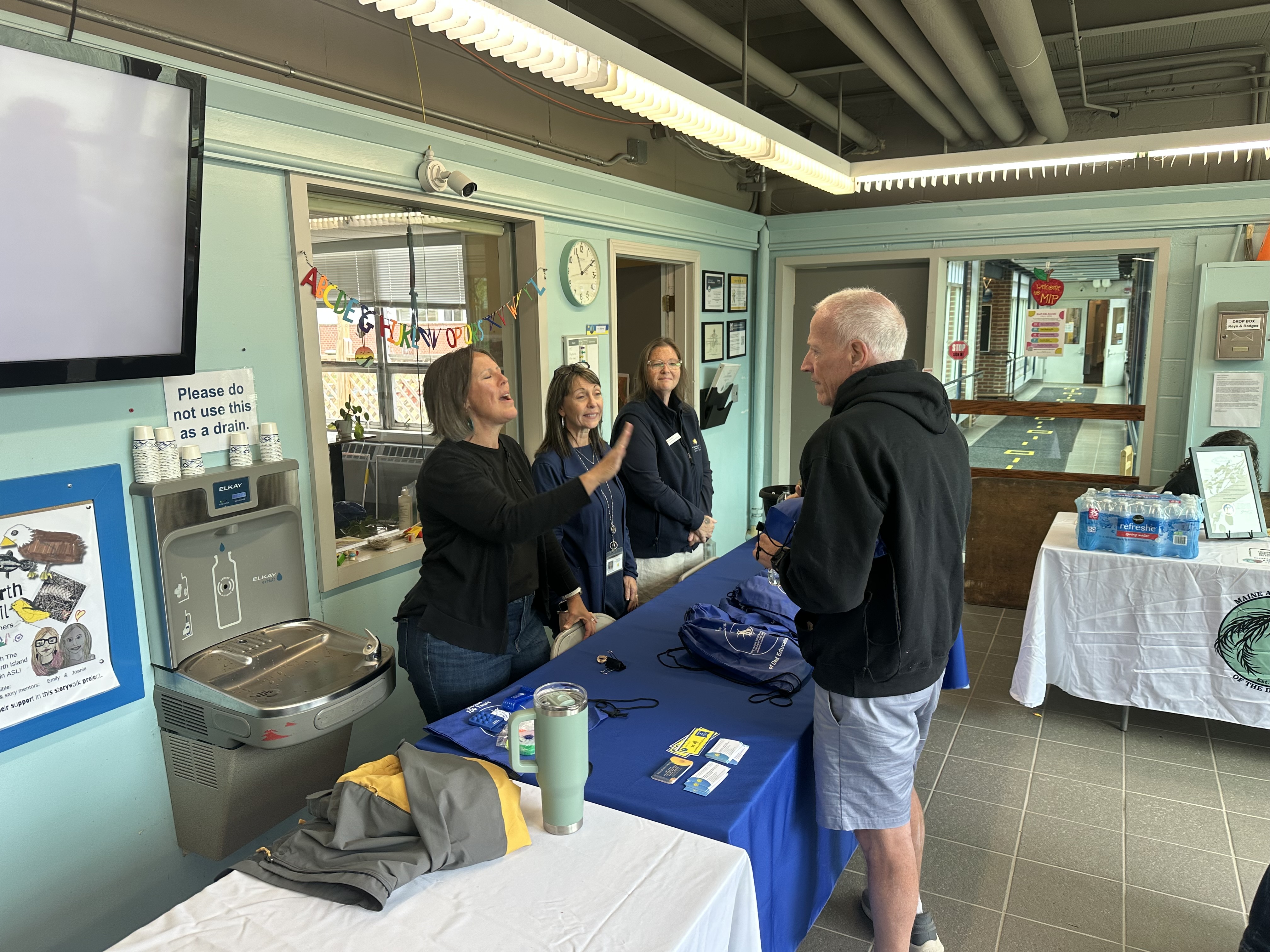
On September 26, the Maine Association of the Deaf hosted this year’s Deaf Culture Festival at the Maine Educational Center for the Deaf and Hard of Hearing/Governor Baxter School for the Deaf campus on Mackworth Island.
Mackworth Island: Honoring the Past, Building the Future
Mackworth Island continues to play an important role in Maine’s Deaf education story. Today, the island is primarily home to the Mackworth Island Preschool, an integrated preschool program serving Deaf and Hard of Hearing children alongside typically developing peers.
The island represents generations of students, educators, families, and members of the Deaf community who have contributed to the history of Deaf education in Maine.
As MECDHH/GBSD celebrates 150 years, that history serves as a foundation for the future.
The goal remains as important today as it was 150 years ago: ensuring that Deaf and Hard of Hearing children have access to language-rich learning, high-quality instruction, meaningful relationships, family partnership, and opportunities to reach their full potential.
Looking Ahead to the Next 150 Years
A 150th anniversary is an opportunity to celebrate how far Maine has come—and to look ahead to what comes next.
MECDHH/GBSD recognizes the educators, students, families, Deaf community members, advocates, school leaders, interpreters, specialists, and many others who have shaped Deaf education in Maine over the past 150 years.
Their work has helped create a statewide system that continues to adapt to the needs of Maine’s children and families.
As the organization begins its next 150 years, MECDHH/GBSD remains committed to building on that legacy and ensuring that every Deaf and Hard of Hearing child in Maine has the opportunity to learn, connect, and thrive.
After 150 years, the story of Deaf education in Maine is not only one of history—it is a story that continues to grow.
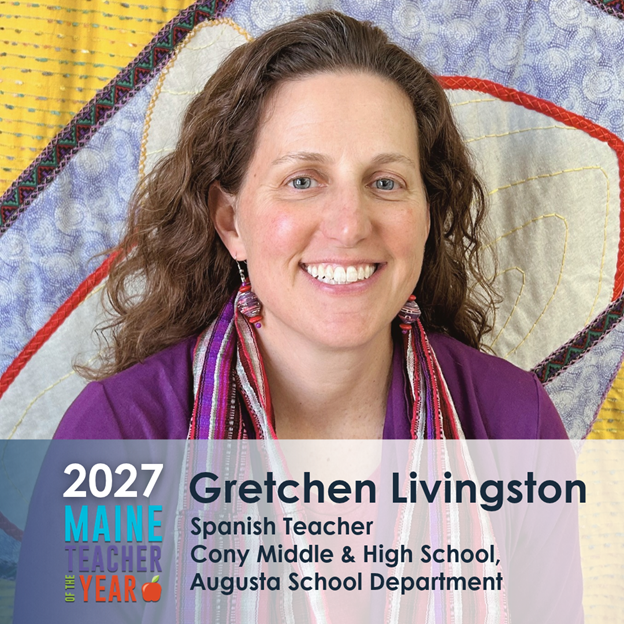
2027 Maine Teacher of the Year Gretchen Livingston is a Spanish teacher at Cony Middle and High School, Augusta School Department.
Augusta, MAINE—The Maine Department of Education (DOE) is excited to announce Augusta School Department Spanish teacher Gretchen Livingston as the 2027 Maine Teacher of the Year. On Tuesday, October 20, 2026, Livingston celebrated this award with fellow Augusta educators and students during a surprise ceremony in the Viles Auditorium at Cony Middle and High School.
“As the daughter of a longtime English teacher and as someone who raised five Maine public school students, I know firsthand the impact a teacher can have on a child’s future. Throughout her 25 years teaching middle and high school students in Maine, Gretchen Livingston has helped prepare countless students for bright futures. I congratulate Gretchen on the tremendous honor of being named Maine’s 2027 Teacher of the Year and thank her for her unwavering dedication to Maine’s students,” said Governor Mills.
Hundreds of educators across the state were nominated for the 2027 Maine Teacher of the Year process. In May, Livingston was selected as the 2026 Kennebec County Teacher of the Year, alongside 15 other County Teachers of the Year. In August, Livingston became one of four state finalists before she was ultimately named 2027 Maine Teacher of the Year.
“Language is a superpower. Language is communication. Language is identity and culture. Multilingualism is already part of our classrooms, our communities, and our state. The future I imagine for Maine is one where every student hears their language respected, every child learns the history of the first peoples of this land, multilingual students are recognized for the gifts they bring, and every graduate leaves school prepared to communicate across cultures. Language is not a barrier—it is an asset and a bridge. It builds empathy, opens doors, and helps us see how our differences make our schools, communities, and world stronger,” said Gretchen Livingston, 2027 Maine Teacher of the Year.
With 25 years of experience teaching Spanish at the middle and high school levels in Maine, Gretchen Livingston is dedicated to helping students develop language proficiency, intercultural understanding, and a deeper connection to the world around them.
She teaches Spanish Levels 1–6 for students in grades 8–12 at Cony Middle and High School in Augusta, where she has served as World Language Department chair since 2014 and coordinates the district’s Seal of Biliteracy program.
Livingston is recognized for her student-centered, culturally responsive approach to teaching, which incorporates authentic communication, project-based learning, and service-learning experiences.
Beyond the classroom, she is a leader in curriculum innovation and student engagement, having led eight service-learning trips to Guatemala in partnership with Safe Passage and Niños de Guatemala, with a ninth trip in the planning stages. She also founded the Cony Girls Lacrosse team in 2006 and continues to coach, reflecting her commitment to empowering students as confident communicators, compassionate global citizens, and engaged members of their communities.
“Gretchen Livingston is an inspiration to students,” Pender Makin, Commissioner of the Maine Department of Education, said. “We are proud to be able to elevate and share the incredible work she has done not only with language development but also with creating a community of sharing and connectedness.”
The Maine Teacher of the Year Program is a year-long process that involves educator portfolio and resume submissions, interviews, oral presentations, and classroom visits made by a selection panel comprised of Maine State Board of Education members, school administrators, Maine DOE staff, legacy Maine Teachers of the Year, and Maine business partners.
As 2026 Maine Teacher of the Year, Livingston will spend her year of service advocating for students and teachers and speaking about the importance of education in preparing Maine’s next generation of leaders for the future. She will also represent Maine in the National Teacher of the Year program.
“Gretchen isn’t just a Teacher of the Year. Her influence has been felt across her entire career,” said Mike Tracy, superintendent of the Augusta School Department. “I taught alongside her 20 years ago, and she was this good then, so the honor comes as no surprise to those of us here in Augusta. Her positive impact on students and the whole school community has been evident for decades. We couldn’t be prouder of her!”
For more information about the Maine Teacher of the Year program, visit mainetoy.org.