PRIORITY NOTICE: USDA Extends School Meal Flexibilities Through 2020/2021 School Year; Webinar Available 10/14 at 1pm 

The State of Maine has accepted 12 waiver extensions from the U.S. Department of Agriculture (USDA) allowing for continued flexibilities in the federal Summer Food Service Program/Seamless Summer Option (SFSP/SSO) programs through the 2020/2021 school year. Originally set to expire on December 31, 2020, the waiver extensions will allow schools and other local program operators to continue to leverage SFSP/SSO federal food service programs to provide no cost meals options to all children through June 30, 2021.    

The waiver extensions allow school nutrition teams across the state to continue partnering with community organizations, to prepare and package food, set up food delivery service with school transportation teams, and create community pick-up locations (among many other methods) to ensure families have safe options for receiving food during the COVID-19 pandemic. 

We are really pleased that USDA continues to extend these necessary waivers to assist school nutrition programs across Maine with the funding and options they need to feed Maine kids during the pandemic,” said Walter Beesley, Maine Department of Education (DOE) Director of Child Nutrition. “We continue to work closely with district and school leaders to ensure they have the resources and state-level support needed to continue their work.” 

The Maine DOE is hosting a Child Nutrition webinar tomorrow 10/14/2020 at 1:00pm. School and district leaders, and school nutrition staff can register to attend this webinar here. 

The first round of USDA waivers for school meal programming began in March of 2020 at the onset of the COVID-19 pandemic when schools around the country switched to emergency remote learning. The waivers have been extended numerous times throughout the summer and again this fall, with the most recent extension coming in late last week, that allows the flexibilities to continue through the end of the current school year.  

The waivers include:  

  1. COVID-19 Response #59 – Nationwide waiver to allow SFSP and SSO operations through SY 2020-21 – extension  
  2. COVID-19 Response #60 – Nationwide waiver to extend area eligibility waivers – extension #3 
  3. COVID-19 Response #61 – Nationwide waiver to allow non-congregate feeding in SFSP/SSO – extension #5 
  4. COVID-19 Response #62 – Nationwide waiver to allow parents and guardian to pick up meals for children – extension #5  
  5. COVID-19 Response #63 – Nationwide waiver to allow meal pattern flexibility in SFSP/SSO – extension #8 
  6. COVID-19 Response #64 – Nationwide waiver to allow area eligibility for closed enrolled sites in SFSP/SSO – extension #2 
  7. COVID-19 Response #65 – Nationwide waiver to waive first week site visits in SFSP – extension #2 
  8. COVID 19 Response #66 – Nationwide waiver of meal service time restrictions in SFSP/SSO – extension #2 
  9. COVID 19 Response #67 – Nationwide waiver to allow OVS flexibilities in SFSP – extension #2  
  10. COVID 19 Response #68 – Nationwide waiver of area eligibility in the CACFP at risk afterschool care component – extension  
  11. COVID 19 Response #69 – Nationwide waiver to allow reimbursement for meals served prior to notification of preapproval and provide flexibility for preapproval visits in SFSP – extension  
  12. COVID 19 Response #70 – Nationwide waiver to allow meal pattern flexibility in the Child Nutrition Programs – extension #5 

 All Maine children 18 and younger can apply to have a breakfast and lunch at no charge through the school in their community. Families interested in applying can do so by contacting their local school to complete a meal benefit applicationThe data from this form also supports other opportunities for local schools/districts such as educational grants and additional state subsidy for educational purposes.  

Maine DOE’s Child Nutrition team continues to process SFSP applications on an ongoing basis.  View an interactive map of schools providing meals through SFSP. Districts interested in applying for the SFSP can do so by contacting the Maine DOE’s Child Nutrition Team. 

Maine DOE Update – October 9, 2020

From the Maine Department of Education


Reporting Items

Important Reminder and Webinar Assistance: Due Date Approaches for Quarter 1 (Q1) Attendance, Behavior, Bullying, and Truancy Data Review

In order to assist SAUs with their legislatively mandated data reporting, the Maine Department of Education Data Team is offering a free webinar to review the requirements and new features. The webinar is strongly encouraged for those responsible for the compilation and entry of the required data. | More

| Visit the DC&R Reporting Calendar |


News & Updates

MEDIA RELEASE: Mills Administration Updates COVID-19 School Health Advisory System

The Mills Administration released its regularly scheduled update to its color-coded Health Advisory System that classifies counties’ relative risk of COVID-19 transmission by color. It is provided to assist schools as they continue with their plans to deliver instruction and support students safely this fall. | More

MEDIA RELEASE: Portland 4th Grade Teacher Named 2021 Maine Teacher of the Year

In a unique, limited audience outdoor event held at the Gerald E. Talbot Community School in Portland, the Maine Department of Education and Educate Maine named fourth grade teacher Cindy Soule Maine’s 2021 Teacher of the Year. Students and colleagues at the school were able to watch the event via a live broadcast from their classrooms. | More

Resources for Schools to Address Tobacco Use, Vaping

The MaineHealth Center for Tobacco Independence and local District Tobacco Prevention Partners have free resources to support Maine schools in addressing tobacco use and vaping. | More

Resources for Celebrating Indigenous People in Schools

In recognition of Indigenous People and the upcoming Indigenous Peoples’ Day holiday, the Maine Department of Education (DOE) is sharing resources and information that educators and schools can use to integrate Native American history and culture into classrooms and school activities to celebrate Indigenous Peoples’ Day and to teach and honor our native culture year round. | More

Maine Schools Join Others Around the Nation to Recognize 2020 National School Bus Safety Week October 19-23

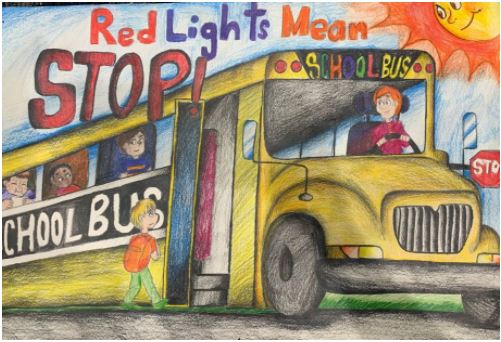
2020 National School Bus Safety Week theme: Red Lights Mean Stop! The theme is derived from the Poster Contest the year before. The 2019 winning poster, depicted above, was drawn by Bryan Torres-Tavarez, a 12th Grader at Stars Academy in Paterson, NJ. | More

MEDIA RELEASE: Maine Department of Education Opens Applications for 2020/2021 Student Cabinet

The Maine Department of Education (DOE) today announced that it is opening applications for the 2020/2021 Student Cabinet, a group of students that meet regularly with Commissioner Makin and other leaders at the Maine DOE to discuss educational opportunities, improvements, and policy. The purpose of the Student Cabinet is to provide a forum for Maine students’ voices to be heard. | More

MEDIA RELEASE: Maine FrontLine WarmLine Now Available to Support Maine School Staff

The “Maine FrontLine WarmLine” is now expanding its services to include Maine’s educators and school staff. The Maine FrontLine WarmLine is a phone support service that provides Maine’s essential health care workers, first responders, and now school staff with help in managing the stress of providing essential services during our fight against the COVID-19 pandemic. The volunteers help callers address concerns with anxiety, irritability, poor sleep, grief or worry and, if needed, connect them with additional supports.  | More

Maine Career Development Association Hosts Art & Poetry Contest for Maine Students

In celebration of National Career Development Month in November, the Maine Career Development Association is sponsoring a statewide Poetry & Art contest, that is open to students and adults state-wide. | More

Get to Know the Maine DOE Team: Meet Emily Doughty

Maine DOE Team member Emily Doughty is being highlighted this week as part of the Get to Know the Maine DOE Team. Learn a little more about Emily. | More


Maine Schools Sharing Success Stories

  • How Ashland District School has Adapted to Make Music Education a Priority
  • RSU 16 Gets Creative to Offer In-Person Adult Ed Graduation

| Submit your Maine School Success Story |


Professional Development & Training Opportunities

Register Now for the ACTEM 2020 Virtual Fall Conference!

The Association of Computer Technology Educators of Maine’s (ACTEM) annual Fall 2020 conference will be held virtual online this year and is coming up in a couple of weeks on Oct. 20-21st. | More

Attendance Matters: Transforming School Climate and Culture During COVID

This upcoming training offers wo half-day interactive sessions that are relevant for staff working remotely, in-school or hybrid plan. It is offered on Wednesdays, October 28th and November 4th from 12:00-2:45 pm OR Fridays: November 6th and November 13th, 8:15- 11:00 am. | More

FREE Resilience Strategies Training- Save the Date!

SAVE THE DATE! Monday, October 26, 8:30 AM to 12:30 PM – The National Readiness and Emergency Management for Schools (REMS) in partnership with the Maine Department of Education’s School Safety Center (MSSC) presents Resilience Strategies for Educators and Community Partners: Techniques for Self-Care and Peer Support Train-the Educator | More

| Visit the Professional Development Calendar |


Latest DOE Career/Project Opportunities

View current Maine Department of Education employment opportunities here


FREE Resilience Strategies Training- Save the Date!

SAVE THE DATE!  Monday, October 26, 8:30 AM to 12:30 PM

The National Readiness and Emergency Management for Schools (REMS) in partnership with the Maine Department of Education’s School Safety Center (MSSC) presents!  

Resilience Strategies for Educators and Community Partners: Techniques for Self-Care and Peer Support Train-the Educator

This session is designed to provide a learning opportunity for school and district caregivers to better understand, and teach others, resilience strategies following emergency events. (COVID-19 certainly qualifies!) The intended audiences for this training include but are not limited to: school counselors, school psychologists, school social workers, school and district administrators, educators and support staff, and community partners such as local mental/ behavioral health practitioners and SROs/police.

Free participation is limited to 475 attendees.

The registration link will be posted next week. For more information view this flyer (PDF)

The staff at the MSSC hope to see you there, virtually of course!

MEDIA RELEASE: Mills Administration Updates COVID-19 School Health Advisory System

York County remains yellow, Oxford County rejoins all other counties as green

AUGUSTA — The Mills Administration today released its regularly scheduled update to its color-coded Health Advisory System that classifies counties’ relative risk of COVID-19 transmission by color. It is provided to assist schools as they continue with their plans to deliver instruction and support students safely this fall.

The Maine Department of Health and Human Services (DHHS) and Maine Center for Disease Control and Prevention (Maine CDC) assessed the data and trends for each of the 16 counties. Based on this assessment, York County will remain yellow and Oxford County has moved from yellow to green. All other counties remain green.

While York County’s two-week new case rate has fallen in the last week, its positivity rate remains the highest in the state at 1.2 percent.

Meanwhile, Oxford County has had no new outbreaks in the last two weeks, and its new case rate per 10,000, as well as its positivity rate during this period, have fallen to be in line with those of other Maine counties.

Androscoggin County continues to be closely monitored by DHHS and Maine CDC, given that its new cases rate per 10,000 and positivity rate remain relatively unchanged from last week.

Under the “yellow” designation, which indicates an increased (moderate) level of community risk, schools may consider additional precautions, such as limiting numbers of people in school buildings at the same time, suspending extracurricular or co-curricular activities including competitions between schools, limiting interaction through cohorting, or other measures based on the unique needs of each school community. These designations are made out of an abundance of caution and for the consideration of school administrative units in their decisions to deliver instruction.

It is essential that school districts across the State of Maine continue to implement plans that adhere to the six requirements for returning to in-person instruction, regardless of their county’s red, yellow, or green designation:

Symptom Screening at Home Before Coming to School (for all Staff and Students) – Students (parents/caregivers) and staff members must conduct self-checks for symptoms prior to boarding buses or entering school buildings each day.  Schools should provide information to families in their primary language to support them in conducting this check.   Any person showing symptoms must report their symptoms and not be present at school.  Schools must provide clear and accessible directions to parents/caregivers and students for reporting symptoms and absences.

Physical Distancing and Facilities – Adults must maintain 6 feet of distance from others to the extent possible. Maintaining 3 feet of distance is acceptable between and among students when combined with the other measures outlined in this list of safety requirements.  6 feet of physical distancing is required for students while eating breakfast and lunch, as students will be unable to wear masks at that time.   A “medical isolation space” (separate from the nurse’s office) must be designated for students/staff who exhibit COVID-19 symptoms during the school day. Adequate ventilation is required for classrooms, with schools having flexibility in implementation such as using properly working ventilation systems or outdoor air exchange using fans in open windows or doors. Groups in any one area, room, or classroom must not exceed the Governor’s gathering size limits.

Masks/Face Coverings – Adults, including educators and staff, are required to wear a mask/face covering. Students age five and above are required to wear a mask/face covering that covers their nose and mouth.  Masks are recommended for children ages two to four, when developmentally appropriate. Masks/face coverings must be worn by all students on the bus. Face shields may be an alternative for those students with documented medical or behavioral challenges who are unable to wear masks/face coverings. (Updated 8/12/20). The same applies to staff with medical or other health reasons for being unable to wear face coverings. Face shields worn in place of a face covering must extend below the chin and back to the ears. An exception for wearing a mask or face shield applies only to an individual participating in voluntary school sports during vigorous physical exercise. (Updated 09/09/20). Nothing in this framework’s mask/face covering requirements should be interpreted as preventing a school from making accommodations on an individualized basis as required by state or federal disabilities laws.(Updated 9/15/20)

Hand Hygiene – All students and staff in a school must receive training in proper hand hygiene. All students and staff must wash hands or use sanitizing gel upon entering the school, before and after eating, before and after donning or removing a face mask, after using the restroom, before and after use of playgrounds and shared equipment, and before and after riding school transportation.

Personal Protective Equipment – Additional safety precautions are required for school nurses and/or any staff supporting students in close proximity, when distance is not possible, or when student require physical assistance. These precautions must at a minimum include eye protection (e.g., face shield or goggles) and a mask/face covering. Classrooms and/or areas that have been used by an individual diagnosed with Covid-19 must be closed off until thorough cleaning and sanitization takes place.

Return to School after Illness – Sick staff members and students must use home isolation until they meet criteria for returning to school.

The Health Advisory System categorizations are defined as follows:

  • RED: Categorization as “red” suggests that the county has a high risk of COVID-19 spread and that in-person instruction is not advisable.
  • YELLOW: Categorization as “yellow” suggests that that the county has an elevated risk of COVID-19 spread and that schools may consider additional precautions and/or hybrid instructional models as a way to reduce the number of people in schools and classrooms at any one time.
  • GREEN: Categorization as “green” suggests that the county has a relatively low risk of COVID-19 spread and that schools may consider in-person instruction, as long as they are able to implement the required health and safety measures.  Schools in a “green” county may need to use hybrid instruction models if there is insufficient capacity or other factors (facilities, staffing, geography/transportation, etc.) that may prevent full implementation of the health and safety requirements.

The county-level assessments are based on both quantitative and qualitative data, including but not limited to recent case rates, positivity rates, and syndromic data (e.g., symptoms of influenza or COVID-19). Those data are publicly posted every week on the Maine CDC website. DHHS and Maine CDC also consider qualitative factors, such as the presence of outbreaks that may potentially affect school-age children.

The Health Advisory System reflects ongoing analysis of evolving data, and serves as one piece of information that school and district leaders can use to make decisions about how to deliver education this fall. The qualitative and quantitative considerations and data used by the CDC in determining community transmission risk levels for schools can be located here: How County Risk Levels for Maine Schools are Determined

The Health Advisory System can be found on the Maine DOE website in Part I of the Framework for Reopening Schools and Returning to In-Person Classroom Instructionhttps://www.maine.gov/doe/framework/part-I.

The next update is scheduled for Friday, October 23, 2020.

###

MEDIA RELEASE: Portland 4th Grade Teacher Named 2021 Maine Teacher of the Year

Cindy Soule, a 4th grade teacher at Gerald E. Talbot Community School has been named the 2021 Teacher of the Year by the Maine Department of Education’s Teacher of the Year Program.

In a unique, limited audience outdoor event held at the Gerald E. Talbot Community School in Portland, the Maine Department of Education and Educate Maine named fourth grade teacher Cindy Soule Maine’s 2021 Teacher of the Year. Students and colleagues at the school were able to watch the event via a live broadcast from their classrooms.

Cindy’s journey began in May, when she was named the 2020 County Teacher of the Year. Cindy, along with 15 other County Teachers of the Year, was selected from a pool of more than 300 teachers who were nominated earlier this year. In August, Cindy was named one of three state finalists before being named the 2021 Teacher of the Year.

“We are proud to announce that Cindy Soule is the 2021 Maine Teacher of the Year!” Said Heather Whitaker, 2020 Maine Teacher of the Year and member of the Teacher of the Year State Review Panel, “Cindy has been a dedicated member of the Talbot School Community for 20 years. She is a life-long learner who is committed to the craft of teaching and building strong relationships with her students, colleagues, and community.  We will learn so much from her passion for teaching inquiry-based science and literacy!”

Cindy has an innate ability to create a learning community that disrupts the opportunity gap. For twenty of her twenty-one years of teaching, she has been committed to one of Maine’s most diverse schools, the Gerald E. Talbot Community School (formerly Riverton Elementary School), in Portland, Maine. Soule fosters a dynamic learning environment that inspires curiosity and citizenship in her fourth-grade students.

A lifelong resident of Maine, Cindy developed an appreciation for the natural world. This passion is evident in her teaching. She grounds learning in real world contexts and encourages students to construct scientific understanding through observation, questioning, and collaborative thinking.  Through inquiry and discourse, Soule empowers students to see themselves as meaningful contributors to their community. This work is recognized by her Presidential Award for Excellence in Mathematics and Science Teaching candidacy.

Cindy contributes to a positive culture of collective efficacy where students thrive. To enrich student learning, she partners with community organizations to include Side X Side, the Maine Audubon, and the Maine Mathematics and Science Alliance. She serves as a representative on the Portland Schools Literacy Committee, Talbot Leadership Team, Building Steering Committee, RTI Team, and Science Teams. On behalf of students, Soule is a recipient of Portland Education Foundation, TD Banknorth and DonorsChoose grants.

Cindy holds a Master of Science in Special Education from the University of Southern Maine and a Bachelor of Arts in Social Work from the University of Maine at Orono. A 2020 Funds for Teachers Fellow, she looks forward to continued professional discovery and learning.

Cindy was nominated in January by her colleague Brooke Teller, STEM Coordinator for Portland Public Schools and the 2017 Cumberland County Teacher of the Year.  Brooke shared in her nomination:

Cindy is an extraordinary teacher for many reasons.  Cindy has dedicated most of her nineteen years in education to the students of Riverton Elementary School.  At Riverton, she has been in the role of special educator, literacy coach and now pioneering science curriculum developer.  She told me that each time she is presented with a new initiative, she is ‘all in’, wanting to do whatever she can to benefit her students.  I can think of no better example of an extraordinary teacher than one that is always looking out for her students and on a continuous path for her own improvement.    In my role as Science Coach, I have been helping Riverton develop a science curriculum.  It will be the first comprehensive curriculum in the Portland Public School district.  Cindy has been a leader in this work.  This past summer she participated in a training from the Maine Mathematics and Science Alliance.    Kate Cook, who facilitated the work had this to say about Cindy:  “I had the privilege of getting to know Cindy through a professional learning pathway focused on the Next Generation Science Standards.  In working with Cindy, it became immediately clear to me that she is an incredible educator for her students and an inspirational leader amongst her colleagues.  Cindy believes, fervently, in taking her students’ thinking seriously, helping every single student in her class progress, and in advancing critical and creative thinking.  Her belief in her students is infectious amongst her colleagues.  She has a zeal for continuing to advance her own learning and a deep passion for helping her students and colleagues learn that is refreshing, hopeful, and desperately needed in the teaching profession.

The Teacher of the Year Program is a year-long process that involves educator portfolio and resume submissions, interviews, oral presentations, and classroom visits made by a selection panel comprised of State Board of Education members, school administrators, Maine Department of Education staff, former Teachers of the Year, and other Maine business partners.

As the 2021 Maine Teacher of the Year, Cindy Soule will spend her year of service advocating for students and teachers and speaking to the importance of education in preparing Maine students for the future.  She will represent Maine in the National Teacher of the Year program.

The Maine Teacher of the Year program is administered by Educate Maine, a business-led advocacy organization, in partnership with the Maine Department of Education and the Maine State Board of Education. Funding for the program is generously provided by Maine businesses.  The program’s lead sponsor is Bangor Savings Bank.  Other program sponsors include Dead River, Geiger, Hannaford, the Maine State Lottery, Unum and the Silvernail Family.

For more information about the Maine Teacher of the Year program, visit www.mainetoy.org.

Important Reminder and Webinar Assistance: Due Date Approaches for Quarter 1 (Q1) Attendance, Behavior, Bullying, and Truancy Data Review

In order to assist SAUs with their legislatively mandated data reporting, the Maine Department of Education Data Team is offering a free webinar to review the requirements and new features. The webinar is strongly encouraged for those responsible for the compilation and entry of the required data.

The Quarter 1 Reporting and Certification Webinar will be held on Wednesday, October 14th from 11:00 am to 12:00 pm.

Click here to register

The certification period for Quarter 1 (Q1), which includes attendance, behavior, bullying, and truancy opens October 1st.  Review and certification are required by October 15th.

Quarter 1 attendance will be used for the average daily attendance (ADA) reporting requirements for Title V. There will not be a separate Title V ADA collection.

Why?  Each year the US Department of Education begins the process for determining Title V eligibility for both the State and Federal grants, starting in late November.  Part of that eligibility is asking each state to provide several pieces of data on all their districts, including average daily attendance (ADA).  Without this data, no district would be eligible for the Federal (Small Rural Schools Achievement or SRSA) grant, and districts that are eligible for the State (Rural Low-Income Schools or RLIS) grant would get a reduced allocation, as 30% of the allocation formula is based on ADA from all eligible districts.

  • Attendance data certification can be found here, and guidance on reporting attendance can be found here.
  • Behavior data certification can be found here, and guidance on reporting behavior can be found here.
  • Bullying data certification can be found here and guidance on reporting bullying can be found here.
  • Truancy data certification can be found here, and guidance on reporting truancy can be found here.

If you have difficulties navigating to Synergy or NEO, please call the Helpdesk at 624-6896 or email at medms.helpdesk@maine.gov .

All due dates for reports are listed on the MDOE reporting calendar. All quarterly reports are based on the following months, not on a school’s scheduled quarters:

  • Quarter One (Q1)– As of Oct 1 (to include July, August, Sept) – due Oct 30
  • Quarter Two (Q2) – As of Jan 1 (to include Oct through Dec) – due Jan 15
  • Quarter Three (Q3) – As of April 1 (to include Jan through March) – due April 15
  • Quarter Four (Q4) – As of July 1 (to include Apr through June) – due July 15


Register Now for the ACTEM 2020 Virtual Fall Conference!

The Association of Computer Technology Educators of Maine’s (ACTEM) annual Fall 2020 conference will be held virtual online this year and is coming up in a couple of weeks on Oct. 20-21st.  ACTEM’s mission is to influence and enhance education in Maine through the use of technology. Our conference offers workshops, keynotes and exhibitors centered around this mission. The conference is a popular event for Maine educators each fall.

ACTEM is offering our conference this year for FREE to all current members.  If you are not a member of ACTEM you can join for the $20 annual individual membership fee and attend.  We know school budgets have been impacted in these difficult times, so we want to provide this valuable PD experience for a very modest cost to Maine educators.

Workshop schedule and information:

This year’s schedule has been changed to an afternoon & evening format so no subs would be necessary.  We have also shortened the online workshop sessions to 45-minutes as we all spend more time online. ACTEM has a great lineup of over 60 workshop sessions plus two outstanding keynote speakers.  Click the links below for detailed schedule and workshop session descriptions:

Tuesday, Oct. 20th Program

Wednesday, Oct 21st Program

Feature Keynote Speakers:

Anthony Johnson, Jr. — Tuesday, Oct. 20th at 6:30 PM

Currently an Apple executive and formerly a North Carolina teacher that transformed his science and social studies classrooms into “Johnsonville,” a world where each student must find a job, pay the bills, pay mortgage and taxes, and learn by doing projects.

Keynote:  My Journey from High School Dropout to Teacher of the Year
In my school years, I was a terrible student and a teacher’s nightmare who stayed in trouble. During that time, I failed 4th, 7th, 8th, and 9th grades before dropping out of high school at the age of 16.  I received my G.E.D. and moved from job to job for nearly a decade.  In 1998, I lost both my parents six months apart and spent time reflecting on my life and decided to make a change.  A year later, I enrolled at Livingstone College and graduated in 4 years with a degree in Elementary Education.  My goal is to teach with enthusiasm and give my students a different experience from my own in grade school. Teaching is my passion, and my desire to help young people succeed has allowed me to travel the world as an educator.

Kerry Gallagher — Wednesday, Oct. 21st at 6:30 PM

Assistant Principal for Teaching and Learning at St. John’s Prep in Danvers, MA. She is also the Director of K-12 Education for ConnectSafely.org

Keynote:  The People in Your School are the Key to Cybersecurity
How do we keep our students safer in the digital age and in the virtual classroom? Cybersecurity and student data privacy are increasingly important as more of our educational, social and work environments move online during this time. How can we incorporate these best practices in the virtual classroom and how will we work with both parents and students to increase awareness?

Registration for ACTEM 2020 is open at the following link: http://www.actem.org/event-3932165

Attendance Matters: Transforming School Climate and Culture During COVID

This upcoming training offers wo half-day interactive sessions that are relevant for staff working remotely, in-school or hybrid plan.  It is offered on Wednesdays, October 28th and November 4th from 12:00-2:45 pm OR Fridays: November 6th and November 13th, 8:15- 11:00 am.

You and your team CAN create a positive climate and culture during a pandemic!

Participants will learn:

  • strategies to build positive climate, improve school culture and decrease chronic absenteeism whether remote, in-person and 6 feet apart
  • examine how to build healthy relationships within the school community even when behind the screen (staff with students, staff with staff, and staff with families)
  • explore strategies for difficult conversations among staff, students, and/or families
  • access a framework (including staff survey) to assess your own school climate and culture through consensus decision-making
  • leave the workshop with tools to help create a thriving school where all students and staff can feel welcome and be successful

Everyone is welcome. We strongly encourage schools to register teams of 3 – 5 staff.  During the training, you will work closely with your team-whether you are in-person or working remotely.

The cost is $80 for each member of the school team (minimum of 3 team members) and $105 for an individual registration.  The same team should attend both sessions. The cost covers training and materials.  Zoom link will be forwarded after registration.

To register and for more information:  Click here or go to https://countmeinmaine.org/newsite/attend-upcoming-trainings/  If you have any questions, contact Susan Lieberman at slieberman@countmeinmaine.org

Resources for Schools to Address Tobacco Use, Vaping   

The MaineHealth Center for Tobacco Independence and local District Tobacco Prevention Partners have free resources to support Maine schools in addressing tobacco use and vaping. 

Join us for a free webinar on Thursday, November 5th for the webinar from 3:30 – 4:30 p.m. that will address shifting trends in vaping, including newer products and regulations, and how to work with adolescents who might be interested in quitting or showing signs of nicotine addiction.  FMI: TobaccoPreventionServices@mainehealth.org.   

  • Local Support is Available: District Tobacco Prevention Partners can provide free technical assistance for policy change, enforcement, education and programming.  Find your local Partner at CTIMaine.org/dtpp 
  • Implementing a Tobacco-Free School PolicyDownload the School Policy Toolkit for template language and policy change tips. 
  • Vaping Resources: 
  • Educational Information and Infographics: Downloadable e-cigarette and vaping use prevention resources are available at CTIMaine.org/ENDS-Vaping. 
  • Maine Vape Quit Support Line: Any Maine adult or youth resident can call 1-844-9NO-VAPE for assistance for those who vape and want to quit, those needing assistance in how to support a loved one who vapes, and anyone with a general question about vaping. Learn More. 
  • Vape Free Maine Campaign: Resources, including posters and an info card, to support the Maine CDC’s current youth vaping prevention campaign, Vape Free Maine, can be downloaded from Dropbox. 
  • Treatment Resources: 
  • Maine QuitLink: Maine residents can choose from a variety of digital and phone based programs to meet them where they are in their quitting process. Individuals can access services by calling 1-800-QUIT-NOW, visiting MaineQuitLink.com or through provider referral. 
  • Youth Vaping Text Support Program:  This is Quitting is a free, confidential texting program with evidence-based tips to help 13-24 year olds quit vaping.  Text MAINE to 88709 to register for services and visit MaineQuitLink.com/Text-To-Quit-Vaping for additional information. 
  • Training & Education Opportunities: 
  • Sidekicks: The Sidekicks program has a goal of working with young people and adult advisors in Maine to help teens find the words to talk to their peers about tobacco use and vaping.  Once trained as a Sidekick, youth have the skills to hold respectful conversations with their peers about tobacco use, as well as other risky behaviors.  Learn more at WeAreSidekicks.org. 
  • Tobacco Treatment Training and EducationThe MaineHealth Center for Tobacco Independence provides a variety of tobacco treatment trainingseducation programs and webinars.  Learn more at CTIMaine.org/education. 
  • Vaping Presentations for Students, Staff and Parents: District Tobacco Prevention Partners can provide educational presentations on e-cigarettes and vaping, contact your local Partner to set up a training that is right for your school community. 

Questions: TobaccoPreventionServices@MaineHealth.org 

Maine Schools Join Others Around the Nation to Recognize 2020 National School Bus Safety Week October 19-23 

2020 National School Bus Safety Week theme: Red Lights Mean Stop!  The theme is derived from the Poster Contest the year before. The 2019 winning poster, depicted above, was drawn by Bryan Torres-Tavarez, a 12th Grader at Stars Academy in Paterson, NJ. 

National School Bus Safety Week, scheduled October 19-23 this year, is a public education program that acknowledges the value of school bus safety.  It is also a great time to THANK our bus drivers for the important work that they do.  

Transportation is a great equalizer in education, providing students from all economic backgrounds with the opportunity to learn and succeed. NHTSA believes school buses should be as safe as possible. That’s why NHTSA safety standards for school buses are above and beyond those for regular buses.  School buses are the most regulated vehicles on the road.  

School buses are different by design.  They are designed and engineered so that they’re highly visible and include safety features such as flashing red lights, cross-view mirrors and stop-sign arms. They also include protective seating, high crush standards, and rollover protection features. 

In Maine, each school bus must be inspected biannually by an official inspection station designated by the Chief of the State Police as a school bus inspection station.  In addition, a school bus inspection must be conducted by the State Police at least annually.  That is three a year. 

School buses are protected by law.  Laws protect students who are getting off and on a school bus by making it illegal for drivers to pass a school bus while dropping off or picking up passengers, regardless of the direction of approach.   

In Maine, school bus safety laws support good driving behavior. These laws include: 

  • Passing a stopped school bus with its red lights flashing is a criminal violation punishable by a $250 minimum fine for the first offense and a mandatory 30-day license suspension for the second offense occurring within three years of the first offense. 
  • A vehicle may not proceed until the school bus resumes motion or until signaled by the bus operator that it is okay to proceed. 
  • A school bus operator who observes someone illegally passing a stopped school bus can report violations to a law enforcement officer.  
  • School buses are required to stop at railroad crossings. 
  • Unless otherwise posted, the school zone speed limit is 15 miles per hour during school opening or closing hours, as well as recess. 

More information about National School Bus Safety Week can be found here: https://www.napt.org/nsbsw 

For information about school transportation policy contact Transportation and Facilities Administrator Pat Hinckley at pat.hinckley@maine.gov 

The National School Bus Safety Week public education program is sponsored by the National Association of State Directors of Pupil Transportation Services (NASDPTS), National School Transportation Association (NSTA), National Association for Pupil Transportation (NAPT), Pupil Transportation Safety Institute (PTSI) and school bus manufacturers and suppliers.