Click the image to view the fully formatted Commissioner’s Update.
Governor Paul LePage and I held a press conference this week to discuss the results of a recent Harvard University education study, which found that Maine’s NAEP test scores have barely moved over the past two decades.While Maine still ranks 12th in the nation (down from third in 1992), Maine had the second lowest gains of the 41 states in the study.
It’s like a student gets a D-plus in a class of D’s and F’s. He may be at the top, but we should not say he’s doing OK.
Governor Paul LePage and I held a press conference this week to discuss the results of a recent Harvard University education study, which found that Maine’s NAEP test scores have barely moved over the past two decades.
The following are Commissioner Stephen Bowen’s remarks from today’s joint news conference with Gov. Paul LePage. Please see the fact sheet for more information about the Harvard study.
Good afternoon, and thank you, Governor, for your attention to this important report and for your commitment to the education of Maine’s kids.
Can test scores tell you whether a school is good or bad? No school should be labeled based solely on test scores, and we are not doing that here, either. Test scores – and the growth in test scores – are one valuable and important measure of progress. As a state, Maine is not showing any significant progress in test scores while other states are. This should be a significant concern to anyone interested in the education and future success of our students.
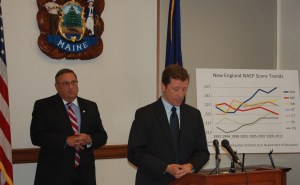
Governor LePage and Commissioner Bowen answer questions about Maine’s rankings in a recent education study released by Harvard University.
The following is a news release from the Office of Gov. Paul LePage.
AUGUSTA – Governor Paul LePage and Education Commissioner Stephen Bowen held a joint media conference today in the Cabinet Room at the State Capitol to discuss the results of a recent study released by Harvard University’s Program on Education Policy and Governance. Gov. LePage and Commissioner Bowen explained these results and what they mean for Maine. They also unveiled a new initiative to revitalize Maine’s educational system: the ABC plan.
From discussing proficiency-based diplomas and standards-based education systems to developing performance evaluation and professional growth systems for educators, the second session of the 125th Maine Legislature was eventful for the state’s public schools.
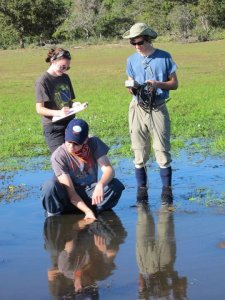
York students Patty McMurray, Andrew Fitzgerald and Todd Brockelman (left to right) gather water quality data in a freshwater channel of the Pantanal, a region of Brazil.
York Middle School science teacher Jeff Wilford might annually explore the swampy wetlands of Brazil, but don’t mistake him for Indiana Jones. It’s research he wrestles, not anacondas.
Wilford admits he’s not much of an adventurer, but when the opportunity arose to partner with Earthwatch and the National Geographic Education Foundation to travel with a team of educators to the Pantanal region of Brazil in 2003, Wilford dusted off his pith helmet.
Since 2006, Wilford has returned to explore the Pantanal each summer with students from York High School.
“We wanted to give students a real dose of what it means to be a biologist in a remote and challenged region of the world,” Wilford explained. “As well, we have strived to create an unmatched cultural experience.”
Don Mordecai, who served on the Maine Charter School Commission until his resignation earlier this month due to health reasons, died Monday at his home.


 Governor Paul LePage and I held a press conference this week to discuss the results of a recent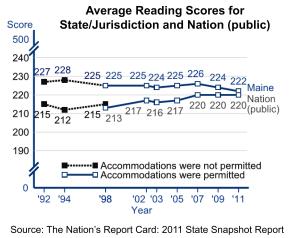
 Maine DOE Newsroom