Calling All Teachers of Social Studies Content PK-12!

With the emphasis on teaching about Maine Native Americans as part of the revised Maine Learning Results for Social Studies, Joe Schmidt, Social Studies Specialist at Maine Department of Education, continues to gather data from educators in the field in order to best support their efforts.

If you are a teacher of social studies content in grades pk-12, please complete this brief, anonymous survey no later than the end of the day on Thursday, February 20. Please share with others in your school as necessary.

Take Survey!

State Collaboration Helps Improve Early Childhood Programs in Maine

Through an ongoing partnership between the Maine Department of Education (DOE) and the Department of Health and Human Services (DHHS), the Office of Child and Family Services (OCFS), a subset of DHHS has been working to proactively plan for an anticipated $550 million increase in federal funding for the Child Care and Development Block Grant (CCDBG) program.

Through knowledge gleaned from the needs assessment and strategic plan of the Preschool Development Grant (PDG), a grant program administered by the Maine DOE in 2019. OCFS has been able to do advanced planning and implementation work to best meet the specific needs of Maine children and families. In addition to using information from the PDG program, OCFS also worked with other state level partners such as the Children’s Cabinet, and the Bipartisan Policy Center.

“I want to extend a well-deserved congratulations to our partners at DHHS for the amazing work they do,” said Maine Education Commissioner Pender Makin. “This is a testament to how vital our partnerships are with other state agencies and with our schools as we work to improve and expand Maine’s early childhood education programs.”

For more information about the Child Care and Development Block Grant (CCDBG) program, including information about the implementation plan, visit the OCFS website.

Staff at the Burchard A. Dunn School in MSAD 15 Team Up to Improve Student Inclusion in Pre-K

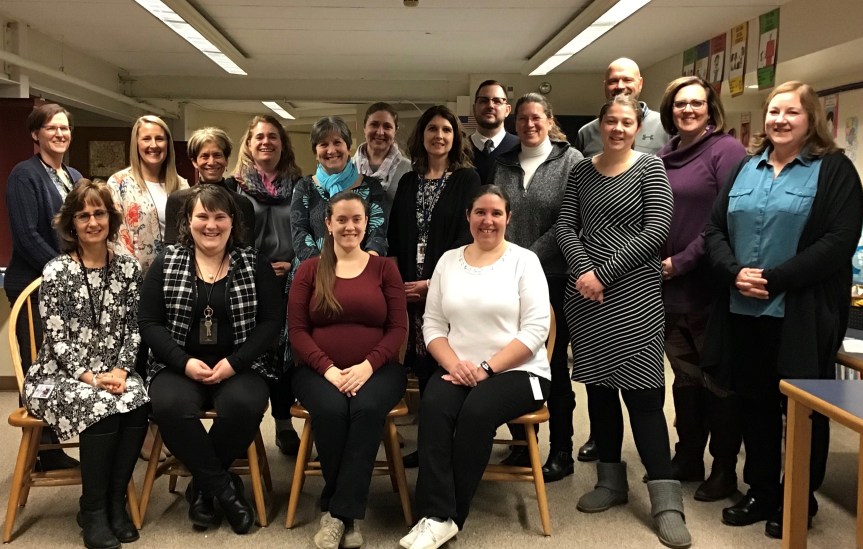
Beginning last September, a team of twelve dedicated staff members from MSAD 15 in Gray – New Gloucester and Child Development Services in Cumberland County joined forces with the Maine Department of Education, Child Development Services (CDS), The University of Maine Center for Community Inclusion and Disability Studies (CCIDS) and Maine Roads to Quality Professional Development Network (MRTQ PDN) to learn ways to improve their current inclusion practices within their three public Pre-K classrooms. “We’re doing this for the kids, everything we do is with their best interest in mind,” one preschool teacher noted when asked why they originally signed up for this professional learning opportunity.

Team members included district administration, special education staff, classroom teachers and their education technicians as well as an itinerant special education teacher from Child Development Services (CDS) Reach. The initiative included a continuum of professional development strategies from knowledge and skill building through individual and group training to guided reflective practice and application opportunities. School district team members started by completing a self-paced on-line training entitled Inclusive Environments in Public Pre-K. Next, the whole team participated in a one-day kick-off event hosted at Educare Central Maine in Waterville. This orientation session provided participants with a chance to meet the trainer and consultants, learn more about the education and support components and discuss the key indicators of high- quality indoor and outdoor classroom environments covered during the on-line training. After the orientation session, team members participated in the MRTQ PDN 30-hour Creating Inclusive Early Childhood Settings on-line training while also receiving onsite consultation visits and participating in a Professional Learning Community (PLC) lead by two CCIDS consultants.

In January, all partners convened at the school to discuss the process, tour the classrooms and present their learning. External evaluators from Early Childhood Associates in Massachusetts conducted focus groups to gain more specific feedback about the professional learning and its impact. Participants noted:

Working together with a specific early childhood focus strengthened our team and our work.”

“Having administrators involved was REALLY valuable!”

The teams were awarded $1,500 mini-grants for each pre-k classroom to enhance inclusivity. The funding came from a federally awarded Pre-K grant Maine received in 2019. The mini-grants were used to purchase sensory materials, equipment, furniture and other enhancements such as lighting, flooring and sinks!  Comments from participants demonstrate the impact of the professional learning:

“I am internally motivated to attend IEP meetings and say, yes, Dunn School has everything we need to service your child.”

My students seem happier, they’re excited, I feel comfortable meeting them where they’re at.”

“We didn’t know what we didn’t know!”

The Maine Department of Education in partnership with CDS, CCIDS and MRTQ PDN is considering ways to continue this project with other interested districts throughout Maine. As opportunities become available, notification will be provided to the field!

Read to ME Challenge to Kick-off February 3rd at Lincoln School in Augusta

Year five of the Read to ME Challenge is scheduled to begin on February 3, 2020.  Maine Department of Education Commissioner Pender Makin will launch the campaign by reading to children at the Lincoln School in Augusta.  She will follow up her reading by issuing a challenge to participate in the 2020 campaign.  The Department will be live streaming this event, and will provide those details soon. This simple but powerful campaign challenges adults to read to children for 15 minutes, to capture that reading episode via a photo or short video and then post it on social media to challenge others to do the same.  The Read to ME Challenge will run for the month leading up to Read Across America Day on Monday, March 2, 2020.

Schools and organizations are invited to join the challenge and to encourage community members to do the same. The collective voice of many key partners, leaders and those in respected positions will send a clear message about the vital importance reading to children plays in the social and economic well-being of Maine. Maine DOE also encourages partners to be creative and to use this opportunity to enhance ongoing literacy education outreach efforts.

If your organization is willing and able to promote the Read to ME Challenge, please follow this link to provide us with your contact information. Read to ME Challenge resources, including a guidance document, public service announcements in a variety of languages, fliers and a list of engaging ways to incorporate the challenge are available on the Read to ME webpage.

Reading aloud to children is one of the most cost effective and highly beneficial methods of building children’s literate abilities. The simple act of reading aloud to a child 15 minutes a day for five years results in 27,375 minutes of language exposure which can put children on the path to high literacy achievement.  Reading aloud exposes children to the world around them, helps them see reading as an enjoyable and valuable activity and often strengthens bonds with trusted adults.

Thanks for your consideration of this opportunity, and don’t hesitate to contact danielle.m.saucier@maine.gov (624-6734) with any questions.

Professional Learning Opportunity: Early Mathematics Diagnostic Interview (EMDI), A Diagnostic Interview Tool

Registration: 8:00 am, Session 8:30 am – 3:15 pm

Who is invited?

This professional learning opportunity is specifically designed for Pre-K-5 mathematics educators, including classroom teachers, special education teachers, Title 1 teachers, math or instructional coaches, and math support staff.

Why participate?

  • Learn about and practice using a diagnostic interview tool for mathematics and how to plan for instruction based on results
  • Recognize the developmental progression of and misconceptions in mathematics learning
  • Strengthen your own pedagogical and content knowledge in mathematics
  • Compare assessment practices and ways to use assessment to improve student learning
  • Take away the EMDI tool, ideas, resources, and materials to use in your school and classrooms

What are our key goals?

The key goals are to provide you with experiences, information, and resources to guide you in the areas of diagnostic assessment, identifying students’ mathematical needs, and developing knowledge of instructional strategies that have an impact on students’ mathematical learning.

What is our approach to professional development?

  • Do the math: Using video and hands-on explorations, delve into key elementary mathematics concepts using multiple approaches, including identifying types of questions and responses and varying types of mathematical
  • Connect to research: Discuss readings that connect each topic to research and take away powerful research-based approaches, tools, and resources to use in your school and
  • Collaborate: Work together and share ideas with other Pre-K-5
  • Leading change: Set goals and generate a plan for ongoing mathematics improvement for your school and

Cost: $90.00 per person for the 3-day series (includes continental breakfast, lunch, and materials)

Contact hours: 24 hours

 When?

Locations: Dates (Must attend all dates): Registration Links:
Big Cat’s Events Center, Ellsworth 2/4/20; 2/5/20; 4/9/20

Storm Date: 2/25/20

Register for Ellsworth Event
Northeastland Hotel, Presque Isle 2/6/20; 2/7/20; 4/10/20

Storm Date: 2/11/20

Register for Presque Isle Event
The Green Ladle, Lewiston 3/10/20; 3/11/20; 4/29/20

Storm Date: 3/19/20

Register for Lewiston Event
Hampton Inn, Saco 3/12/20; 3/13/20; 4/30/20

Storm Date: 3/25/20

Register for Saco Event

Space is Limited! Register by January 10, 2020

Questions?  Please contact: Jen Robitaille, Elementary Mathematics Specialist: 624-6673, jennifer.r.robitaille@maine.gov

No Cost Mandated Reporter Training Available to School Personnel

In 2015, Maine revised its mandated reporting law, requiring state-approved training for certain professions every four years. Specifically, it includes school personnel described as the following: teachers, guidance counselors, school officials, school bus drivers and school bus attendants.

Maine’s Network of Child Abuse and Neglect Prevention Councils is working to ensure that local school districts are aware of the changes and have the necessary resources to maintain compliance with Maine Statute. The local councils are able to provide in-person training at no-cost to the school districts.

As schools know, child abuse and neglect are serious issues, and school personnel often witness the challenges faced by Maine’s children.  In fact, according to the Office of Child and Family Services’ recent child welfare data, school personnel were responsible for over 20% of the total reported cases of suspected child abuse and neglect.  This demonstrates the importance of providing school personnel the most current, state-approved information for recognizing and reporting child abuse and neglect.  It is important that school personnel feel comfortable, confident, and fully understand their role as a mandated reporter. For information on how to access this free training, contact your local Child Abuse and Neglect Prevention Council or visit the Maine Children’s Trust website. Click here to read the full law. If you have any additional questions please email Denise Trafton at the Maine Children’s Trust, deniset@mechildrenstrust.org.

Free Adverse Childhood Experiences and Resilience Building Training for Childcare and PreK Teachers

The Preschool Development Grant (PDG), B-5, a collaboration between the Departments of Education and Health and Human Services, will be providing free trainings on Adverse Childhood Experiences (ACES) and resilience building. The PDG is a one-year planning grant to study and improve the birth-5 early care, education and service system in our state, and has 5 goals:

  1. Conduct a statewide needs assessment plan
  2. Develop statewide Birth to 5 Strategic Plan
  3. Maximize parental knowledge and choice
  4. Share best practices
  5. Improve overall quality of programming for children birth-age five.

To address goal 4, the PDG is providing funds to team up with Maine Resilience Building Network (MRBN) and offer a free training around Adverse Childhood Experiences (ACES) and resilience building. Strong Kids, Strong Families, Strong Communities: The Impact of ACES and Resilience Building will cover Adverse Childhood Experiences research, early brain development science, and protective factors such as positive relationships. Strategies to promote resilience building in classrooms and to support families and their children, birth-5, will be offered.

This training is intended for child care and preschool/prek staff, and will be offered in 12 sites throughout the state from 6:00-8:30 PM on the following days:

Tuesday, 9/24/19, Brunswick

Tuesday, 10/1/19, Caribou

Wednesday, 10/2/19, Houlton

Tuesday, 10/8/19, Owls Head

Tuesday, 10/15/19, Mexico

Wednesday, 10/16/19, Westbrook

Thursday, 10/17/19, Belfast

Monday, 10/21/19, Bangor

Wednesday, 10/23/19, Auburn

Tuesday, 10/29/19, Calais

Monday, 11/4/19, Augusta

Tuesday, 11/5/19, York

To find out more and to register, visit the “Upcoming MRBN Events” at  https://maineresilience.org/ or contact Karen.J.Bergeron@maine.gov


Funding Available for New or Expanding Pre-K Programs in 2020-2021!

Are you opening a new PreK program or expanding an existing program in FY21? – Maine Department of Education will provide funding for FY21 for new or expanded PreK programs!

If your SAU is opening or expanding a PreK program in the 2020-2021 school year, you are eligible to receive funding on your FY21 ED279 for children you enroll in these new or expanding PreK programs in 2020. This means you will receive the funding for enrollment in the same year that you enroll the PreK children, without a year delay.

Beginning in FY19, the Essential Programs and Services (EPS) funding formula added an allocation for PreK programs’ estimate student count. The PreK program estimate count allocation is intended to provide funding for PreK programming in advance of actual student enrollment, helping to offset the upfront costs associated with expanding or starting PreK programs. This PreK program allocation was first authorized into law on July 1, 2018 to begin in FY19 and continue indefinitely.

If you are expanding and would like to receive an FY21 estimate PreK allocation, please notify the Maine DOE by completing the FY21 Estimate PreK Count Data Form before October 15, 2019. There are 3 questions to be answered:

  1. Choose your SAU from a list
  2. Do you have an existing PreK program (FY20) – Yes/No
  3. Provide your SAU’s PreK Estimated Increase Count (new slots available in new or expanding program)

SAUs completing the form must also complete the PreK Program Application with DOE’s Early Childhood Team by April 30, 2020 and obtain program approval.

The FY21 Estimate PreK Count Data Collection form is meant to capture the FY21 estimate for new and expanding PreK program enrollment. The estimate student count data, in addition to the current (FY20) enrollment in an existing PreK program, will be used to provide funding on the FY21 ED279. SAUs’ PreK total enrollment number, as reported and verified October 1, 2020, should match the combined existing and estimated increase total that was used to calculate funds in the ED279. After October 1, 2020 an audit adjustment, based on actual enrollment reported in NEO on October 1, 2020, will be made to the PreK allocation assigned on the FY21 ED279. Please note that this may increase or decrease funding.

For more information about establishing or expanding a Pre-K program, please check out our webpage on the topic, or please contact Deb Lajoie at 624-6613 or deborah.j.lajoie@maine.gov.


Pre-K for ME: Open-Source Curriculum

Maine DOE is proud to announce the release of Prek for ME, an open-source curriculum for preschoolers.  Developed in response to public prek teachers looking for an evidence-based, whole child, content integrated curriculum that is low cost, Prek for ME builds on the Boston Public Schools preschool curriculum and contains a comprehensive program, including outdoor learning and technology activities appropriate for young children.

This is only one of many curriculum options from which school districts can choose as Maine DOE does not dictate curriculum.

Prek for ME can be found at: https://www.maine.gov/doe/learning/earlychildhood/PreK4ME.  Educators should read the guidance documents included with the curriculum materials to support successful implementation of the curriculum.

For more information contact Nicole Madore at nicole.madore@maine.gov.

Regional Conversations Regarding Serving Children with Disabilities from Birth to 5 Years of Age

As most of you are aware, L.D. 1715, “An Act to Reorganize the Provision of Services for Children with Disabilities from Birth to 5 Years of Age” has been carried over to the next Legislative session. This bill proposes the transition of responsibility for special education services for preschool-age children from Child Development Services to the public schools.

The Department recognizes that there are many questions and issues involved with the proposed transition, and that they may vary significantly by region. Because of this, and in preparation for the Committee for Education and Cultural Affairs’ continued consideration of L.D. 1715, the Department of Education feels that it is critical to receive input from regional stakeholders. We have established regional stakeholder meetings, based on the established Superintendent Regions.

Each of these regional stakeholder meetings will include all Superintendents and Directors of Special Education who are available to attend, and the department will be inviting representatives who meet the following criteria:

  • A designee of the Commissioner of Education
  • A representative of a Special Purpose Preschool who is contracted with CDS to provide services
  • An individual who, as a sole proprietor, is contacted with CDS to provide services
  • A representative of a Head Start agency or program
  • An early childhood teacher from a public 4-year old program that includes eligible children
  • A principal of a public elementary school that includes eligible children in its public 4-year-old program
  • A representative of a statewide association of speech, language and hearing therapists
  • A representative of a statewide association of occupational therapists
  • A representative of a statewide association of physical therapists
  • A parent of a child with a disability between 3 and 5 years of age who is currently receiving services from CDS
  • A representative of a childcare program

Due to the limited space available, additional representatives from the above list may be accommodated depending on the response received from Superintendents and Directors of Special Education.

Regional Stakeholder meetings are scheduled for the following dates and locations. All meetings will be from 10:00 to 3:00:

Midcoast
September 16th at the Senator Inn, Augusta

Western
September 16th at the Senator Inn, Augusta

Kennebec
September 17th at the Senator Inn, Augusta

Washington and Hancock
September 17th at the Black Bear Lodge, Orono

Penquis
September 18th at Jeff’s Catering, Brewer

Aroostook
September 18th at Caribou Inn and Convention Center, Caribou

Cumberland and York
September 19th at the Westbrook Armory, Westbrook

Please respond to Jonathan.Madden@maine.gov with your availability to attend as soon as possible.

Thank you and we look forward to hearing your valuable input.