The 4th Door: A Student-Centered Approach to Alternative Education in Ellsworth

At Ellsworth High School, the alternative education program known as “4th Door” is built on a simple but powerful belief: Students succeed when they feel seen, supported, and connected. Through a personalized and flexible approach, this program helps students reach their unique potential while contributing to their learning community.

The 4th Door serves approximately 30 students in grades 11 and 12 each year. Teacher Christopher Betts has led the program for the past eight years.

“This program works because I am working with students—not just the material,” Betts said.

From left to right: Alternative educator Chris Betts, and ed techs Greg Lounder and Kristi Alexander. 

Student Agency at the Center

A defining feature of the 4th Door is its emphasis on student agency. Entry into the program is intentional. Students are referred into the program by school staff, counselors, families, or they may self-refer. From there, students complete a reflective application that considers their goals, strengths, and readiness for an alternative learning environment.

Students and families meet with Betts, observe the program in action, and determine if it is the right fit. Once accepted, students sign a contract outlining shared expectations for success. The contract includes:

  • Attending classes, making progress, and completing assignments. 
  • Passing both alternative and mainstream classes. 
  • Limiting distractions that impact learning. 
  • Giving back to the learning community. 

These expectations create a foundation of accountability while reinforcing students’ ownership of their learning.


Personalized Pathways to Success

Each student in 4th Door follows a personalized learning pathway supported by clear structures and consistent guidance. The program emphasizes hands-on, project-based, and individualized approaches to meet diverse learning needs. Betts has developed a comprehensive Google Classroom, dedicating countless hours to curating a wide range of curriculum resources, scaffolded assignments, and instructional videos. He noted that alternative education teachers often act as “hoarders” of curriculum, collecting and organizing materials, so they can effectively meet students where they are.

Most of Betts’ students are enrolled in both mainstream and alternative classes. To support them in managing their coursework, he maintains individualized checklists that track progress across all classes. He works closely with students to set weekly goals, breaking larger assignments into manageable steps. This approach helps students build momentum, reduce overwhelm, and gain confidence.

The program’s flexibility allows students to:

  • Work at their own pace.
  • Explore topics aligned with their interests. 
  • Engage in meaningful discussions about real-world issues. 
  • Contribute to the development of learning materials. 

This model places students firmly in the driver’s seat while ensuring they are supported every step of the way.

The program is also adaptable to individual postsecondary goals. For example, one of Betts’ seniors has been accepted to Eastern Maine Community College (EMCC) and the University of Maine (UMaine) to study mechanical engineering. He plans to attend EMCC for two years and then UMaine. Students in the program say it allows them to reconnect with their education and work toward their goals.

Accountability with Support

The 4th Door maintains clear expectations while also providing a highly supportive setting. Participation is viewed as a privilege, and students are expected to demonstrate effort and consistent progress.

When challenges arise, the program uses restorative practices to help students reflect, repair, and move forward. A structured system outlines expectations, consequences, and opportunities for students to regain good standing, and the system reinforces both responsibility and growth.

“This system allows for checks and balances. Students know I have their backs and that I will advocate for them, but they have to demonstrate they want to be here,” Betts said. “They do that by engaging in the program and contributing positively to our learning community.”

Connecting Learning to the Real World

Betts has recognized that many of his students balance full-time school with employment. In response, he has incorporated a work-based learning component into 4th Door by partnering with local employers to support students who need to work while attending school.

“Some students need to work. It is not a choice. They are showing up to school exhausted,” Betts explained.

Through the work-study component, students can earn up to two academic credits while developing essential career-readiness skills. Betts tracks progress by collecting pay stubs and employer evaluations, which focus on areas such as punctuality, professionalism, and communication.

Relationships at Its Core

At the heart of the 4th Door are authentic relationships. Social-emotional learning is not a separate initiative but something embedded in daily interactions and experiences.

Students consistently describe the program as a safe and inclusive space where they can be themselves without fear of judgment. For many, this sense of belonging is transformative. One student, for example, who struggled to engage in a traditional setting due to an undiagnosed chronic illness credits the program with helping them stay on track and ultimately graduate.

Betts explained that the classroom serves as a “home base,” especially for students who are experiencing anxiety. In this environment, students can show up authentically, build meaningful connections, and learn alongside peers with diverse experiences and learning styles.

A Dedicated Team

The program is supported by a dedicated team consisting of one teacher and two educational technicians. Together, they create a structured yet flexible environment that prioritizes responsiveness, relationships, and student success.

With eight years of experience leading the program, Betts emphasizes a guiding philosophy that this work is not just about delivering content; it is about supporting students as individuals and helping them build a path forward.

This story was written in collaboration with Ellsworth High School (Ellsworth School Department) as part of an ongoing series to highlight alternative education programs across Maine. For more information about alternative education, please visit the Maine DOE Alternative Education webpage or contact Aubrie Howard, Maine DOE Student Success and Wellbeing Specialist, at aubrie.howard@maine.gov. To submit a good news story to the Maine DOE, please fill out the good news submission form.

Windham High School Launches New Career-Connected Learning Program, ‘Student Exploratory Adventures’

Pictured: Students dug their hands in the soil as they explored agriculture in Maine at Avalon Acres, a MOFGA certified organic farm in Hollis. Before this soil-filled adventure, they learned the art of indoor gardening from an RSU 14 STEM teacher, touring the Katahdin program’s hydroponic garden that grows lettuce and spinach for the Windham High School cafeteria. 

Windham High School has launched a hands-on, career-connected learning initiative called “Student Exploratory Adventures” (SEA), made possible through funding from the Maine Community Coordinators Collaborative’s (C3) Sunshine Mini-Grant Program.

SEA is designed to connect students with employers, community leaders, and industries across Maine, offering real-world experiences that extend learning well beyond the classroom. Through quarterly extended learning opportunities (ELOs), students explore Maine’s workforce and economic landscape while gaining exposure to potential career pathways in fields such as aquaculture, hospitality, law, agriculture, manufacturing, and forestry.

“The Aquaculture ELO really solidified my interest in biology, and I made new friends with similar interests,” one student shared.

“I gave it a five-star rating because it was something completely new to me and allowed me to experiment with different career paths,” another student reflected.


SEA emphasizes direct engagement through site visits to local businesses, cultural institutions, colleges, and community organizations, paired with conversations with professionals in these fields. These experiences encourage students to step outside their comfort zones and imagine futures they may not have previously considered.

“I hadn’t thought about a career in aquaculture before, but this experience gave me real insight into what that could look like,” one participant said.

While at Migis Lodge in Casco, students created their own charcuterie boards while learning about presentation, pricing, and profit. By applying math skills, they calculated that each board would need to sell for $20 to turn a profit. This hands-on adventure was led by the owner of Ironclad Eats Food Truck based out of Windham. 

SEA has been running throughout the 2025-2026 school year, offering one experience per quarter. SEA’s mission is to support students’ intellectual, creative, and social growth by fostering curiosity, confidence, and informed decision-making through hands-on learning. By connecting students directly with Maine’s workforce and communities, SEA is helping young people broaden their horizons and take meaningful steps toward their future.

Windham High School’s Director of Community Connections, Lorraine Glowczak, leads this effort and has demonstrated a commitment to high-quality, career-connected learning and expanding ELOs that link students and potential career pathways. (Check out this article by Glowczak.) Windham High School started its ELO program in 2022 with the support of the Maine DOE. SEA is an example of this impactful work, which was expanded and made possible in part through the Sunshine Mini-Grant Program.

Before diving into charcuterie board creation, students heard from staff at Migis Lodge in Casco about the wide range of careers in Vacationland's hospitality industry. Inspired by the visit, several students have applied and will be joining the Migis Lodge team this summer.
Before diving into charcuterie board creation, students heard from staff at Migis Lodge in Casco about the wide range of careers in Vacationland’s hospitality industry. Inspired by the visit, several students have applied and will be joining the Migis Lodge team this summer.

Since 2023, the Sunshine Mini-Grant Program has awarded 18 grants, totaling $88,000, engaging approximately 300 students statewide. Administered through Maine C3, the program supports schools with limited resources in piloting innovative ELOs while addressing barriers such as poverty, transportation challenges, and limited access to mentors. Collectively, these efforts have expanded student access to real-world learning experiences that inform career interests and future educational decisions.

For further information about ELOs and Maine’s efforts to expand career exploration for Maine students, please visit the Maine DOE ELO webpage or contact Maine DOE Extended Learning Coordinator Lana Sawyer at Lana.Sawyer@maine.gov.

This story was written in collaboration with Windham High School. To submit a good news story to the Maine DOE, please fill out the good news submission form.

Webinar Opportunity for Maine School Leaders: Preparation Saves Lives – Strengthening Your School’s Suicide Prevention, Intervention, and Postvention Protocols

In recognition of May as Mental Health Awareness Month, the Maine School Superintendents Association (MSSA), the Maine Center for Disease Control and Prevention (Maine CDC), the Maine Department of Education (DOE), and NAMI (National Alliance on Mental Illness) Maine have collaborated to provide a webinar, “Preparation Saves Lives – Strengthening Your School’s Suicide Prevention, Intervention, and Postvention Protocols,” scheduled for Thursday, May 21, 2026, from 9-10 a.m. This webinar is intended for school leaders, including superintendents, principals, and members of comprehensive health and safety planning teams (sometimes referred to as crisis management teams).

Recognizing that many school leaders have had to navigate leadership following crises—particularly those involving the death of a student due to suicide—this webinar will provide the tools needed for summer reflection and planning for suicide prevention, response, and recovery. Mary Gagnon, Senior Director of Prevention and Workplace Well-Being for NAMI Maine, will share her experiences over the past two years in supporting school administrative units (SAUs) with this work. She will provide resources and lessons learned to help school leaders prepare for and respond to crises, including the death of a student or other school community member following a suicide.

The following tools will be shared with participants throughout this webinar:

  • A checklist to help participants review their school’s suicide prevention, intervention, and postvention protocols, ensuring alignment with national best practices
  • Sample protocols for suicide prevention, intervention, or postvention, which participants are welcome to use within their SAU
  • A sample calendar with month-by-month suggestions for how suicide prevention, intervention, and postvention can be sustained

Those interested in attending may register for the webinar here.

In a show of support for those living with mental illness, and in an effort to fight stigma, the planning team from MSSA, Maine CDC, Maine DOE, and NAMI Maine, will wear green in recognition of Mental Health Awareness Month.  Please consider participating.

From Ideas to Impact: Early Learning Solutions Lab CoP Expands Through 2026

The Maine Department of Education (DOE), in partnership with the Maine Department of Health and Human Services (DHHS) Office of Child and Family Services, is continuing a monthly Early Learning Solutions Lab Community of Practice (CoP) as part of an ongoing effort to strengthen Maine’s mixed delivery system for early childhood education.

The landscape of early childhood education in Maine is evolving. The expansion of public preschool programs and recent legislation transitioning special education services for children ages three to five from Child Development Services (CDS) to public schools underscore the growing need for a strong, coordinated mixed delivery system. Such a system—one that intentionally integrates public schools and community-based early care and education (ECE) providers—is essential to ensuring all children have equitable access to high-quality early learning opportunities from birth through the early elementary years.

Building and sustaining a robust mixed delivery system requires communities and educational institutions to move beyond siloed approaches and embrace collaborative, inclusive strategies that respond to the diverse needs of children, families, and educators in their communities. As such, early childhood administrators and educators from both public schools and community-based programs are invited to join the Early Learning Solutions Lab CoP, which focuses on strengthening mixed delivery from a community-centered approach. By creating consistent opportunities for collaboration, reflection, and shared learning, this work helps ensure that all children and families have access to coordinated, high-quality early childhood experiences.

Building on the strong engagement and success from earlier sessions, the Early Learning Solutions Lab CoP will meet monthly from May through December 2026. The CoP will be held on the fourth Tuesday of each month from 1:30-2:45 p.m. Those interested in participating may register here.

Each month will focus on a key topic, with opportunities for participants to learn from subject matter experts, explore practical tools, and engage in meaningful discussion. Participation in all CoP sessions is not required but is highly encouraged.

A tentative schedule is as follows:

MonthTopicResources
May 26The BasicsInfant-Toddler and Preschool Maine Early Learning and Development Standards (MELDS)
June 23Sustainability PlanningHelp Me Grow
July 28Nature-Based ApproachesMaine Prevention Councils
August 25K Transition as a Whole-Year ApproachEarly Childhood Education Consultation for ME
September 22Community Partner Panel DiscussionEarly Childhood Special Education website
October 27Whole Family Partnership/EngagementAges and Stages Questionnaire
*November 17Data Sharing and PartnershipEarly Intervention health resource
*December 15Early Learning Solutions Lab Celebrations and HighlightsMaine Roads To Quality/Maine DOE supports

*scheduled for the third Tuesday of the month, due to a holiday

With questions, please contact Maine DOE Early Learning Team members Michelle Belanger at  Michelle.Belanger@maine.gov or Sue Gallant at Sue.Gallant@maine.gov.

Maine DOE to Offer School Finance Regional Trainings in the Summer of 2026

The Maine Department of Education (DOE) School Finance Team is pleased to announce a series of in-person regional training sessions to be offered throughout the summer of 2026. School and school administrative unit (SAU) staff engaged in financial operations, compliance, and program administration are encouraged to attend. This includes, but is not limited to, superintendents, business managers, finance staff, and special education administrators.

 The topics to be covered in all training sessions include:

  • The Essential Programs and Services (EPS) funding formula, including changes from LD 2226
  • Account coding
  • MaineCare
  • Early Childhood Special Education (ECSE) funding
  • Education Service Centers (ESC)
  • School closure cost analysis

Each training session will begin at 8:30 a.m. and run until about 3 p.m. Plans for specific venues are still being finalized, but the general locations and training dates are as follows:

  • Portland area—Tuesday, July 21, 2026
  • Farmington area—Wednesday, July 22, 2026
  • Augusta area—Thursday, July 23, 2026
  • Aroostook area—Tuesday, August 4, 2026
  • Bangor area—Wednesday, August 5, 2026

To register for a training session, please complete this form. Further information about training sessions will be available via the Maine DOE Event Calendar as the training dates approach. Please note that individual registrations are required for each person planning to attend a training session.

With questions, please contact Charlotte Ellis at charlotte.ellis@maine.gov.

Student Leadership on Display During Oxford Hills Comprehensive High School’s ‘Respect Day’

Pictured: Back row, left to right—Lilah (grade 10), Della (grade 10), Dayna (grade 12), Maisy (grade 9), Kali (grade 9), Emma (grade 12), Cedar (grade 12), Ronan (grade 12), Grady (grade 11), Asher (grade 11). Front row, left to right—Charlotte (grade 10), Elja (grade 10), Emma (grade 12), Rae (grade 12), Tristan (grade 11).

Oxford Hills Comprehensive High School recently hosted its annual “Respect Day,” a student-led event intended to support global citizenship and cultural understanding among youth by allowing students to engage in workshops offered by community partners and educators.

Designed and facilitated by students, Respect Day provides opportunities for youth to explore the concept of respect through a variety of lenses, such as healthcare, public safety, cultural experiences, arts, and identity. Students attended sessions and activities based on their own interests, creating a personalized learning experience that connected school, community, and future pathways.


“When students feel empowered, they become agents of change. We need to recognize that we’re not only in the business of preparing students to be leaders of the future but that they have a tremendous amount of power that can have a profound impact now,” Travis Palmer, Oxford Hills Comprehensive High School Social Studies Teacher and Civil Rights Team Co-Advisor, said.

Pictured (from left to right): Maisy (grade 9), Della (grade 10), and Cedar (grade 12) 

A key element of the day’s success was the level of student ownership over the event. In addition to selecting what workshops would be available at Respect Day, students helped prepare the broader school community for what to expect. Through school announcements, digital platforms, and peer outreach, they communicated the purpose of Respect Day and helped build excitement around the learning opportunities it would offer. Families were also encouraged to speak with students about the day’s activities, helping to build a shared understanding of its purpose.

“Respect Day is such a nice way to see my peers interacting with people and cultures that they would not usually get the chance to. When picking workshops and guests to come in and share with us, we always try to keep in mind what students would enjoy doing while still learning something new,” Cedar Worster, a senior at Oxford Hills Comprehensive High School, said. Worster is also a member of the Maine State Board of Education and is the 2025-2026 co-chair of the Maine DOE Student Cabinet.

Respet Day reflected a strong, collaborative school culture. Educators and staff supported students in ways that encouraged independence while reinforcing a sense of belonging. From facilitation of sessions such as Ukrainian egg-decorating to a community policing panel to culturally inclusive school meals, the day demonstrated a schoolwide commitment to respect in action.

When asked about the success of Respect Day, Principal Paul Bickford emphasized where the credit belongs: “The students pulled this off.”

Respect Day at Oxford Hills Comprehensive High School serves as a meaningful example of how schools can foster student agency and leadership, elevate student voice, and create inclusive learning environments that extend beyond the classroom.

Nominations Open for 2026 Maine Association for Health, Physical Education, Recreation, and Dance Teacher of the Year Awards

Nominations are now being accepted for the 2026 Maine Association for Health, Physical Education, Recreation, and Dance (AHPERD) Teacher of the Year awards. Nominations are due by Saturday, May 30, 2026.

Maine AHPERD Teacher of the Year awards are presented to health education, physical education, and adapted physical education teachers who have demonstrated outstanding dedication to their students and profession. The following teacher categories are eligible for consideration:

  • Elementary Physical Education
  • Middle School Physical Education
  • High School Physical Education
  • Adapted Physical Education
  • Middle School Health Education
  • High School Health Education

Maine AHPERD would like to recognize teachers throughout the state in all of these categories. The criteria to nominate a teacher can be found in the nomination form. Again, nominations are due May 30, 2026.

With questions, please contact Rick Kramer, Executive Director of Maine AHPERD, at executivedirector.mahperd@gmail.com.

The Maine Association for Health, Physical Education, Recreation and Dance (AHPERD) is a nonprofit organization for professionals and students in related fields of health, physical education, recreation, and dance. Maine AHPERD is dedicated to improving the quality of life for all Mainers by supporting and promoting effective educational practices, quality curriculum, instruction, and assessment in the areas of health, physical education, recreation, dance, and related fields.

Recognizing the Importance of Financial Literacy and Personal Finance Education

This article was written by Maine Department of Education (DOE) Financial Literacy Teacher Leader Fellow Mark Ashe, who currently teaches at Cape Elizabeth High School.

If you weren’t aware, April was National Financial Literacy Month. The seeds of this concept began with the National Endowment for Financial Education and the Jump$tart Coalition in the early 2000s, with the emphasis being on the education of young people. The United States Senate later formalized April as National Financial Literacy Month.

National Financial Literacy Month underscores the importance of basic financial knowledge, such as understanding the math behind APRs and compound interest or the factors that affect credit scores. There is a growing body of research that suggests that behavioral change is also critical to improving financial wellness. A study from the Journal of Family and Economic Issues found that increasing individuals’ “perceived financial knowledge” is positively associated with “positive financial behaviors.”  This means that financial confidence itself may be a significant driver of financial well-being. 

For instance, the stock market can seem incredibly complicated and intimidating to students as they begin to think about investing. Teaching students that they don’t need to know much about the economy to save successfully for the future can be empowering. Using a tool like Portfolio Visualizer can be useful to help young people see the historical importance of staying invested, even when bad things are happening in the world. Encouraging students to engage with a stock market simulation can help them learn how volatile individual stocks are and how chasing the latest “winners” can lead to poor investment results. Helping students understand behavioral strategies like “mental budgeting” (i.e., keeping multiple savings accounts for different financial goals) or writing down everything spent in one week or month can be just as important to financial wellness as understanding the power of compound interest and APRs. 

Financial Literacy Resources from the Maine DOE

The Maine DOE provides educators and schools with curated resources to support financial literacy education. A growing, and frequently revised, list of relevant materials can be found on the Numeracy Hub in the “Numeracy in Action” section. Resources highlighted currently include those from Intuit for Education, EconEd, and Next Gen Personal Finance. These educator-tested materials are accessible and easy to use, whether you are an experienced financial literacy educator or new to the field. Teachers can also log in to bi-weekly Maine DOE Humanities and Civics Virtual Support sessions for help planning and using Financial Literacy resources.

Financial Literacy Resources from the Finance Authority of Maine (FAME)

FAME supports financial literacy for both students and educators across the state. On May 8, 2026, FAME is hosting the 17th annual Fostering Financial Education in Maine Schools Conference, a free, statewide professional development opportunity for K-12 educators, school counselors, and others who support student financial wellness. This year’s theme, “Teach, Share, Empower: Educators Empowering Educators,” highlights the innovation and expertise found within Maine classrooms.

At the conference, attendees will have the opportunity to:

  • Participate in educator-led, classroom-ready sessions.
  • Connect and collaborate with peers from across the state.
  • Explore financial wellness resources from a variety of exhibitors.
  • Gain practical tools to support students’ financial well-being.

The conference also offers valuable support for educators, including substitute-teacher reimbursement and networking opportunities that extend beyond the event. Learn more and register here.

Leading Early Learning Fellowship: A Professional Learning Series for Elementary School Administrators

The Maine Department of Education (DOE) is pleased to announce that applications are now open for the fifth cohort of the Leading Early Learning Fellowship, which will launch during the 2026-2027 school year. Applications will be accepted through July 10, 2026.

As more Maine elementary schools expand their preschool offerings and implement whole-student approaches across the pre-K through grade 3 span, elementary administrators have expressed a need for professional learning tailored to early learning leadership. In response, the Maine DOE, in collaboration with two statewide early childhood organizations—the Maine Roads to Quality Professional Development Network and the Maine Association for the Education of Young Children—created the Leading Early Learning Fellowship, a dynamic professional learning series designed to meet these needs and support leadership development. Since its launch in 2021, the Fellowship has served five cohorts of elementary school leaders.

“Participating in the series has helped me to look at the decisions we make about our instructional programming and school community through the lens of early learning and what is developmentally appropriate for our youngest learners,” a participant from the first cohort said.

The Fellowship offers rich opportunities for participants to deepen their understanding of early learning pedagogy and best practices for supporting students and educators across pre-K through grade 3. The experience includes a blend of asynchronous learning modules, facilitated online professional learning communities, and in-person gatherings, which support participants in achieving the following outcomes:

  • Increasing their knowledge of early childhood development and pedagogy.
  • Strengthening early childhood leadership abilities within their school administrative units (SAUs) and communities.
  • Identifying resources and key components of high-quality early childhood programming.
  • Engaging with a network of colleagues to grow their understanding of early childhood.

“I really enjoyed the variety of materials and activities in which we were engaged—videos, utilizing the observation and reflection tools, and the readings. Also, it was a great group of people to interact with, both online and in-person,” a participant from the third cohort said.

To learn more, please review the informational guide, which includes full program details and the application link. The 2026-2027 cohort will include up to 30 participants. Again, applications will be accepted through July 10, 2026. Once capacity is reached, a waiting list will be created.

For additional information, please contact Maine DOE Director of Early Learning Lee Anne Larsen at leeann.larsen@maine.gov.

Alternative Education Association of Maine Hosts Spring Conference in Waterville

The Alternative Education Association (AEA) of Maine successfully hosted its 2026 Spring Conference on Friday, March 27, 2026, at Colby College in Waterville. The conference theme, “Building Resilience for All,”brought together alternative education teachers, administrators, superintendents, and school staff from across the state for a day of learning, collaboration, and renewed energy.

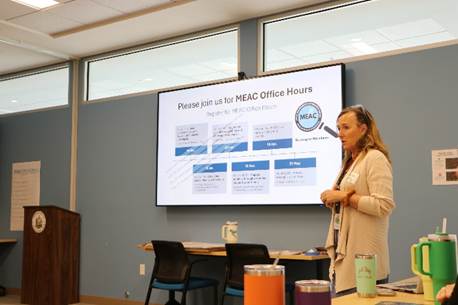
Nicole Davis, Maine DOE Emerging Technology Specialist, kicked off the AEA of Maine 2026 Spring Conference as keynote speaker and highlighted how alternative educators should navigate AI.

Nicole Davis, the Emerging Technology Specialist from the Maine Department of Education (DOE), kicked off the conference as the keynote speaker. Davis spoke about how Artificial Intelligence (AI) can spark powerful emotions—joy, fear, anxiety, excitement—and how alternative educators can navigate uncertainty, find confidence, and embrace AI as a meaningful tool to enhance teaching and learning.

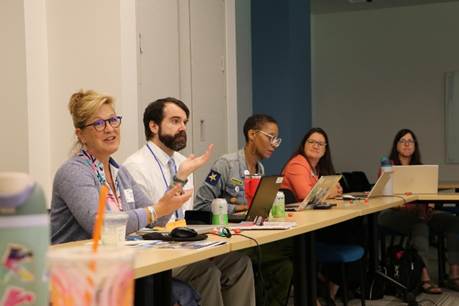
Alternative educators at the AEA of Maine 2026 Spring Conference connected, engaged, and learned alongside one another, strengthening their work and advancing their impact.

Throughout the day, participants engaged in a variety of impactful sessions designed to support both student success and educator well-being through the alternative education lens. Presentation topics included:

  • AI and Alternative Education 
  • Resonance Language (Empathy for Everyone) 
  • Restorative Practices 
  • From Awareness to Action: Strengthening Trauma-Informed Practice in Your Classroom 
  • Substance Abuse (Peer Support) from SEED (Students Empowered to End Dependence) 
  • Sustaining the Helpers: Practical Tools for Burnout and Compassion Fatigue 
  • Beyond the High School Model: Redefining Middle School Alternative Education 

Participants also had opportunities to share strategies, reflect on their practices, and build meaningful connections with colleagues dedicated to alternative education pathways.

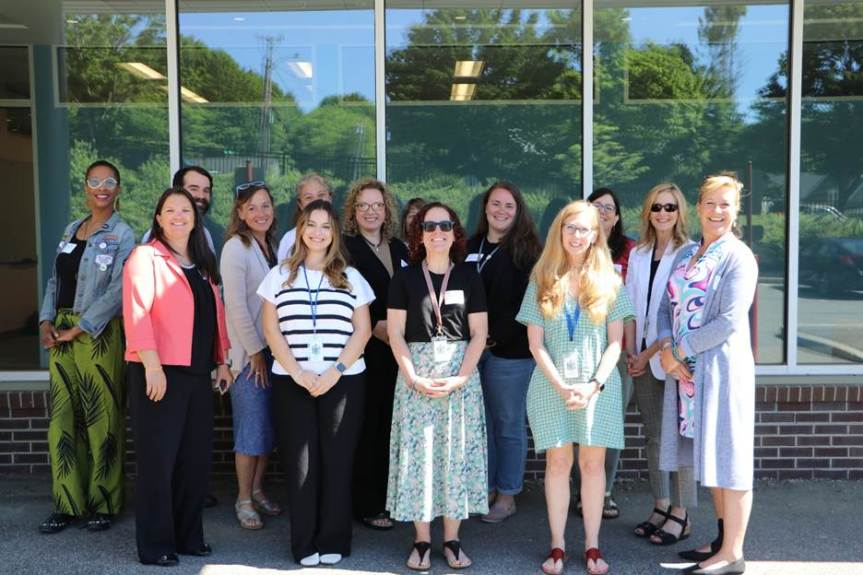
From left to right: Jacqui Holmes, Tracey Menard, Tristen Hinkle, and Ryan Verill of AEA of Maine are leading the charge in alternative education in the state.

AEA of Maine extends its sincere thanks to all presenters, participants, and organizers, as this continued commitment to innovation, equity, and resilience in education is what drives this work forward.

AEA of Maine hosts a Fall and Spring conference every year. to the AEA of Maine welcomes new and veteran alternative educators, administrators, superintendents, and school staff (e.g., education technicians, school counselors, school social workers, community partners, etc.) who support this work.

To learn about future AEA of Maine events or to get involved with AEA of Maine, please visit the AEA of Maine website or contact AEA of Maine President Tristen Hinkle at thinkle@msad54.org or AEA of Maine Vice President Tracey Menard at menart@portlandschools.org.

For additional information or resources on alternative education in Maine, please contact Aubrie Howard, Maine DOE Student Success and Wellbeing Specialist or visit the Maine DOE Alternative Education webpage.