Submitted by Jesse Bartke, Interim Principal at Oceanside High School and written by Jenny Goode, GT Teacher and Hannah Faesey, Social Worker
At Oceanside High School in Rockland, a system has been established that supports students to build a foundation of success as they enter High School and then encourages them to challenge themselves and focus their education on individual passions. This team has been working together supporting the 9th and 10th grade students in the building for the past 3 years. Oceanside’s Freshman Academy consists of the 9th grade level core subject teachers, the social worker, the student support coordinator, administration, and guidance. Over the course of a few weeks, they discuss every single freshman student, tracking their grades, peer interactions, attendance, behavior referrals, and social-emotional strengths and challenges on a comprehensive spreadsheet. This not only allows everyone to be on the same page about kids, but it builds close relationships between teachers and all of their students. They are able to see “the whole student” through the picture painted at the Freshman Academy level. “No students fall through the cracks,” observed an Oceanside High School administrator.
The meetings are fast paced and focused. When administration and guidance attends, they are able to give updates on students, to offer support to teachers on specific kids, and to close the communication loop between classroom and main office. “Everyone at the table knows what is happening with each of their students,” said a Social Studies teacher. “We are all aware of the challenges and successes of the students, which helps us prepare for what any given kid will need that day. We can wrap supports and interventions around a kid based on the information shared.”
With this close tracking, the team is able to intervene early with their students. Rather than waiting until the end of a quarter when a student is on a failure list, the close monitoring of the Freshman Academy allows timely and direct responses to smaller changes in grades, behavior, or social-emotional health. “I have nothing bad to say about Oceanside,” said a 10th grade parent. “The staff there is always willing to be creative and communicative with my student’s needs, and [my student] is not an easy case! I don’t know another school district that would’ve responded so quickly.”
The Freshman Academy teachers have their hands full. Besides teaching curriculum content, academic readiness, and social-emotional skills, each teacher has an advisory of about 18 students, and is responsible for being the “point person” for those students’ families to contact the school. At least once a quarter, teachers reach out to families to share successes, challenges, and updates with families, as well as invite them in to meetings with their student and teachers. While all of these meetings and additional communication are certainly more work, all of those on the Freshman Academy team wouldn’t want to be anywhere else. One first year teacher shared that he “feels supported by his team and administration” in the work he’s doing. “I am learning so much from the others at the table.”
At some point, teachers can only provide so many interventions at the classroom level. Freshman Academy identifies students for that have reached the Risk Review Team level. Risk Review is comprised of administration, the student support coordinator, the social worker, guidance, case managers, and the interventionist. They meet every month to discuss freshman who’s needs surpass what support teachers can give. Additionally, they might connect to outside resources because the needs of some students are greater than the school can provide. “This structure allows me to breathe a sigh of relief. We’re not letting any student fall through the cracks, and I trust that the Risk Review Team will support students when I can’t. I’m not alone in this,” said a 9th grade English teacher.
Adults at Oceanside are not the only ones to notice a difference. One 10th grade student, reflecting on his time in the Freshman Academy, said that he felt like he mattered in 9th grade, a feeling he hadn’t felt at school in a long time. “I knew all of my teachers cared about me. And they still do! I go to [my 9th grade English teacher] to calm down and I go to my [9th grade science teacher] for advice.” A current 9th grader said, “You all seem to know what’s going on! It’s helping me show up more than I did last year.”
In the 2017-2018 school year, freshman had the lowest truancy rate of any other grades at Oceanside, with 20.7% (compared to a school rate of 29%). At Oceanside, students need 6 credits to continue onto 10th grade. 67.2% of the class of 2018, who did not have Freshman Academy, received all 6 credits, but the class of 2021 with the Freshman Academy had 90.7% of the class complete these credits. Finally, as 8th graders, 13.25% of the class of 2021 passed all core classes by standards and grades. As 9th graders, the same class had 86% pass all of their core classes.
Given this success, Oceanside has expanded their Academy structure to the 10th grade in the 2018-2019 school year. Four core teachers, the social worker, and administration follow a streamlined structure for a pilot group of 10th graders. The Sophomore Academy is focused on the team of teachers, frequent parent communication, and monitoring student progress. The Risk Review Team continues to play an important role on the Sophomore Academy too, allowing the teachers to elevate students who need additional supports beyond those feasible in the classroom. “I can’t imagine not being part of a team like this, now that I’ve been on one,” said a Sophomore Academy teacher. “I wish all school staff could feel as supported and validated as I do.”
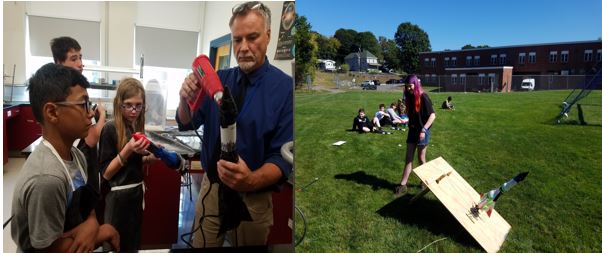
As the Freshmen and Sophomore Academies work to support students develop the skills that are necessary for them to be successful in high school, they are encouraged to pursue a pathway starting in their sophomore year. These pathways are the STEM and Liberal Arts Academies which are academic and experiential pathways intended to increase student understanding of the possibilities of further study and careers in fields connected to those concentrations. The STEM Academy was developed in 2015 with the first class graduating with the endorsement in 2016. The success of this Academy led to the development of the Liberal Arts Academy in 2016 with subsequent endorsement being available in 2017. At present, there are over forty students pursuing one of the Academy endorsements.
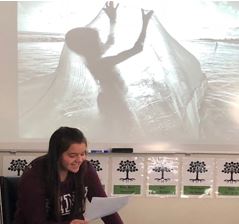
A Liberal Arts Academy endorsement can be achieved through three different pathways: visual and performing arts, culture, or humanities. STEM Academy students can choose either a science or math concentration. Academy participants benefit from taking challenging courses at the Honors or Advanced Placement levels, in addition to one-on-one mentoring from a teacher mentor and the Academy advisor. Career exploration includes participating in extended learning opportunities, job shadowing, and a capstone experience consisting of an internship or research project. As part of the Academy approval process, seniors must complete a portfolio reflecting their Academy journey by January of their graduation year. Seniors also give presentations of their experiences at the annual OHS Career Day and to the district’s eighth grade class. Successful completion of the endorsement is recognized on the Oceanside High School Diploma, the student’s official transcripts, and a white cord that is worn during the graduation ceremony to denote high academic achievement in STEM or Liberal Arts.
Students express that the most valuable part of the Academy experience is the two job shadows and twenty-hour internship experiences. The business community’s partnership is invaluable in giving our students the chance to explore careers. Testimonial from Academy graduates have noted how valuable the experience was in giving them a clearer direction regarding their college major and future aspirations. One student describes the internship as an experience that “really had a big impact on me. I didn’t just walk out of that hospital with a completed STEM endorsement and some experience under my belt. I walked out of there knowing my passion was to pursue a future in the medical field.” Another student described her involvement in Academy as “a cornerstone in my high school career. This program has given me the necessary tools to explore my career interests and who I am as a person.”
As our present seniors are finishing up their Academy portfolios, they are getting the chance to reflect on the work that they have done these past 3.5 years. One student noted that with the help of the Academy program “many more opportunities in the community and state were possible because of having a whole program behind me.” Another recognized that Academy “ had provided me with ambition. I have worked to achieve its endorsement and have learned to use the striving force I possess to succeed in school and beyond.” Sometimes the Academy experience guide students to the career of their dreams as happened to one senior who job shadowed at the hospital, and from that experience did an internship in the hospital pharmacy, which led him to realize that was the career for him. Sometimes Academy experiences redirect a student from what they thought they wanted to something more suited to their strengths, as it did for a young man who was convinced he wanted to be a naval architect, but after his STEM career explorations realized he wanted to pursue a career that incorporates engineering and business skills.
The students who fulfill the STEM and Liberal Arts Academy requirements have improved important abilities in personal responsibility and interpersonal skills, have challenged themselves academically, and have had the opportunity to get real-life career experiences that are invaluable. More information is available about the Oceanside High School STEM and Liberal Arts Academies on our website: Oceanside HS Academy.


 Mrs. Kennedy Selected to Study World War I in Europe
 JFDS Celebrates Maine BioScience Day

 The Bangor Region Chamber of Commerce through the Community Council Building Bridges program, in partnership with the Bangor School Department and Superintendent Dr. Betsy Webb, transported 7th grade students from William S. Cohen School and James F. Doughty School on a day-long tour of Chamber member businesses. The goal of the trip was to inform and excite students about their future and the many career opportunities available in our community.
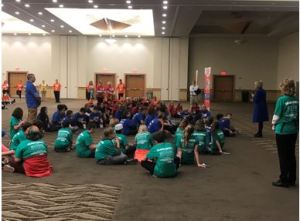 The day kicked off at the Cross Insurance Center with a keynote address from Ben Sprague, Mayor of Bangor, and remarks from James Doughty, Director of Marking from Bangor Savings Bank, the presenting sponsor of the event. The event was also made possible by the generous support of the University of Maine, Husson University, Emera, Darlings Auto, Bangor International Airport, GE, Cross Insurance Center, Cyr Bus, and nearly 100 hundred volunteers representing the business community.