Public Pre-K and Partnership Open Office Hours Scheduled

The Maine Department of Education (DOE) Early Learning Team is pleased to offer Open Office Hours focusing on technical assistance for public pre-k.

These office hours will feature Marcy Whitcomb, Public Pre-K Consultant, as well as Sue Gallant and Julie Raymond, Public Pre-K Expansion Consultants. Sessions are meant to be a time for educators, pre-k coordinators and administrators to come together to ask questions, celebrate successes and/or work through problems of practice in public pre-k that educators, administrators, and partnership programs may be experiencing.

Office hours are offered as part of the Maine DOE’s Pre-K Technical Assistance program and are intended to meaningfully support addressing questions and needs as well as provide networking opportunities; participants can join for the full hour, or just a part; for each session or only to obtain an answer to a question.

Pre-K Open Office Hour Sessions will be held the first Wednesday of each month, from 3:30 to 4:30 p.m., on the following schedule:

Month Day Topic
September 6th Starting the Year:  Family Engagement in the Classroom
October 4th ECCP classroom support with challenging behaviors
November 1st Student assessment and reporting
December 6th Celebrations and challenges
January 3rd Routine Reboot – coming back from the break
February 7th Bringing the outside in – nature-based play in winter
March 6th Incorporating STEM and technology in the pre-k classroom
April 3rd Transitioning our students – pre-k to k
May 1st Looking toward next year:  screenings, child find, enrollment

Please use and save the following Zoom link and password to access each meeting (the meeting link will be the same for each office hour session):

Public Pre-K Office Hours (1st Wednesday of the month) – Zoom link
Meeting ID: 831 6398 7276
Passcode: 07691734

To submit a topic or question prior to a session and/or for more information please email Marcy Whitcomb, Public Pre-K Consultant, at: Marcy.r.whitcomb@maine.gov

Webinar: SY 23-24 Enrollment – August 29, 2023

Join the Maine Department of Education (DOE Data Team for a webinar about entering student enrollments for 2023-2024. All students have been exited from Synergy and must be reenrolled for the new school year, this webinar will review the procedure for enrolling students manually and via uploads to State Synergy.

This webinar will be recorded and posted to the Maine DOE Data Youtube Playlist. It may take a few days for the recording to be posted, however, it will be available as soon as possible. Additional information about this webinar can be found on the Webinars page of the Helpdesk Website.

Please note that if this webinar is canceled there will be a notice posted on the Helpdesk Website at the top of the page.

Synergy Enrollment Webinar:

August 29th at 10:0 am – Join the Live event here


For questions about data reporting webinars please contact Alexandra.Cookson@maine.gov. For technical assistance with data management, contact the Help Desk at MEDMS.Helpdesk@maine.gov or 207-624-6896

Graduation Report Due August 30, 2023

Graduation reporting is due on August 30th by midnight. Synergy is now in the 2023-2024 School Year, which has locked all 2022-2023 student data. If updates to 22-23 exit codes need to be made for graduating students, please email MEDMS.Helpdesk@maine.gov or call 207-624-6896.

Resources:

For technical assistance with data management, contact the Help Desk at MEDMS.Helpdesk@maine.gov or 207-624-6896


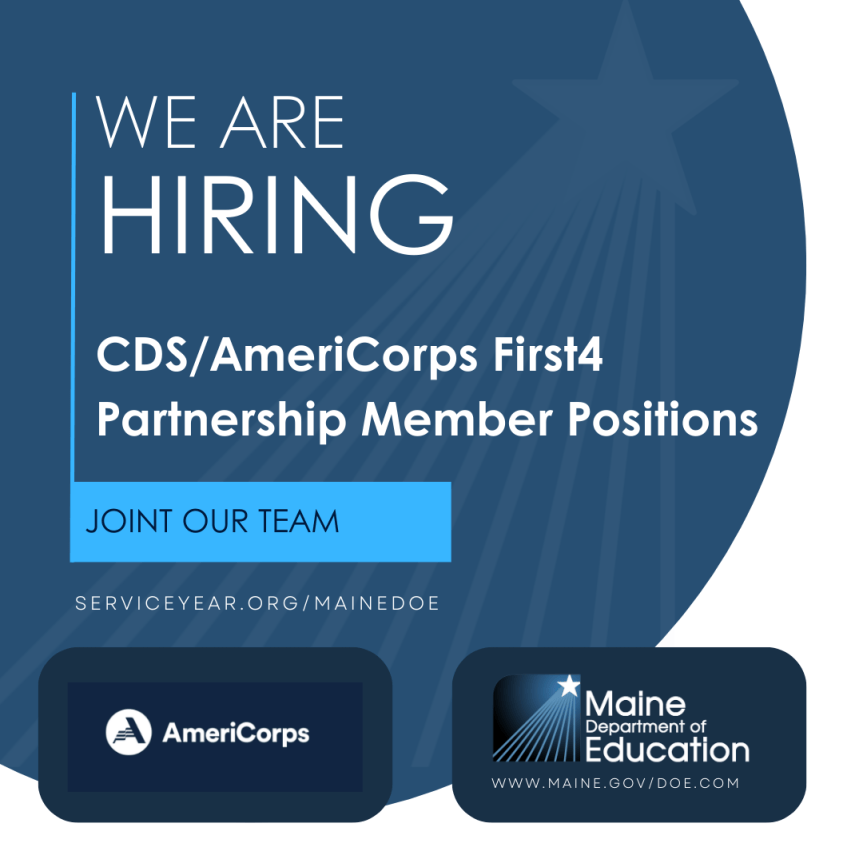
We Are Hiring: CDS/AmeriCorps First4 Partnership Member Positions

The Maine Department of Education is recruiting 17 AmeriCorps members to serve and support children with disabilities with building social-emotional skills and school readiness for children enrolled in CDS preschools across the state.  The investment in members will not only serve to ensure positive preschool experiences and improve child outcomes for those children, this opportunity will also provide important, dynamic training, 1:1 mentoring, and experience for each volunteer to utilize toward certification in the educational field. See the below job description for further details, including how to apply.

_______________________________________

Position Title:  CDS/AmeriCorps First4 Partnership Member
Location of position:  CDS Preschools at 9 CDS sites
Terms:  30 weeks at 23+ hours per week (1200 hr. members), 17 weeks at13 hours per eek (675 hr. members)
Living Allowance:  $1200-$1900/mo.
Incentives:  Training/PD toward Ed. Tech or 282 Certification funded and provided

About and/or mission statement:  CDS/AmeriCorps First 4 Partnership will recruit, train and empower 17 AmeriCorps members to serve and support children with disabilities with building social emotional skills and school readiness children enrolled in CDS preschools across the state.  The investment in members will not only serve to ensure positive preschool experiences and improve child outcomes for those children, this opportunity will also provide important, dynamic training, 1:1 mentoring and experience for each volunteer to utilize toward certification in the educational field.

Goals: CDS preschools serve children ages 3-5 with varying abilities and disabilities and are currently experiencing one of the most challenging times with staffing shortages and increasing numbers of students enrolling with social emotional and school readiness deficits post-pandemic that need support. Studies show that the early years of a child’s education are the most important for learning and development and all early learners deserve the opportunity and foundation that positive preschool experiences with ample supports can offer to thrive in their future educational years.  The CDS/AmeriCorps Partnership will provide those needed added supports and service, building and increasing social emotional skills, resiliency, and school readiness to improve upon child outcomes and also providing volunteers with dynamic experience including trainings and 1:1 mentoring to empower them to meet the needs of students now and in the future.

Position Overview: Members offer direct service and supports to CDS children and preschool classrooms.  They receive professional training and 1:1 mentoring with a classroom teacher in evidence-based special education and early childhood education practices including curriculum, data collection and analysis, and social-emotional learning.  Members will also participate in community efforts for recruitment and service.

Service activities:

  • provide direct support to children with disabilities in Child Development Services Preschool classrooms
  • build strong relationships & secure attachments with the children, which we know is vital for resilience & lifelong success
  • receive training to better understand special education policies and practices including understanding IEP and goals training, trauma-informed teaching & social-emotional development
  • collaborate with a team of like-minded people eager to impact children’s futures

Skills Required:

  • Ability to work with a team and interest in serving children with disabilities
  • Strong organizational skills and utilization of a database to manage trainings and service
  • Experience in community-based networking
  • Strong communication skills
  • Strong problem solving skills, adaptability

Apply: Jacquelyn.N.Hersom@maine.gov or   https://serviceyear.org/MaineDOE

19 Elkins Lane, Room 105, 105 State House Station, Augusta, ME 04333-0105 Phone: (207) 624-7792 • Email: Service.Commission@maine.gov • http://www.VolunteerMaine.gov EXAMPLE 2 – AYCC AmeriCorps Mentoring Program

Press Release: Mills Administration Announces Maine Jobs & Recovery Plan Initiative to Expand Educator Apprenticeships in Maine Schools

The Mills Administration announced today a new initiative to help Maine schools recruit, train, and retain educators through pre-apprenticeship and apprenticeship programs.

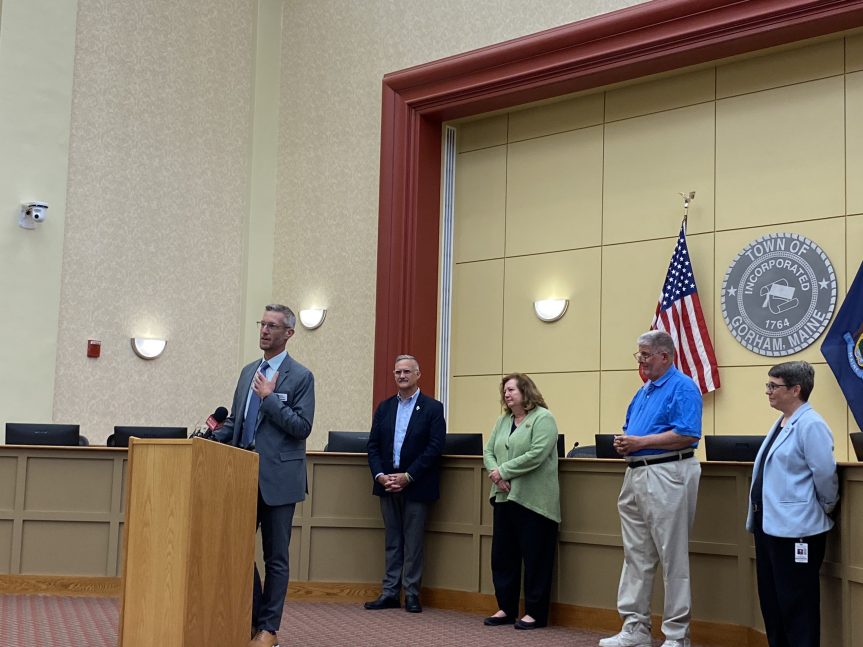
The initiative, funded in part by Governor Mills’ Maine Jobs & Recovery Plan, is part of a larger overall effort by the Mills Administration to connect employers with a skilled workforce and workers with career opportunities. The initiative was unveiled during a visit to the Gorham School District by Commissioner of Labor Laura Fortman and Deputy Commissioner of Education Dan Chuhta.

Under the initiative, schools and other education and community-related organizations can apply for competitive funding, with awards of up to $250,000 to begin local educator pre-apprenticeship and apprenticeship programs to help address Maine’s educator workforce shortage.

“As the daughter of a longtime public school teacher, I deeply and personally understand the lifelong impact that teachers have on their students, schools, and communities,” said Governor Janet Mills. “A teacher can make all the difference in the life of a student, and we should do what we can to ensure that those who want to advance in the teaching profession have the opportunity to do so. These apprenticeship programs are important to help educators take the next step in their careers. Using funding from my Jobs Plan, we will help Maine schools find the teachers they need and support educators on the path to fulfilling careers as they make a difference in the lives of our children.”

The initiative expands a program launched last year at Washington County Community College and the Gorham School District. The Gorham program – supported by the Maine Department of Labor and the Harold Alfond Center for the Advancement of Maine’s Workforce – partners with Southern Maine Community College and the University of Southern Maine to provide classroom training to current education technicians from multiple schools in Cumberland and York counties. These apprentices work in the classrooms during the school day while they advance their career to become certified Education Technicians II, creating a pathway to continue their education and become certified teachers.

The program was created after the Maine Department of Education last year released its Teach Maine plan, in partnership with educators and stakeholders, to bolster the teacher workforce through innovative recruitment and retention strategies, including programs like apprenticeships. With encouragement from the U.S. Departments of Education and Labor, Maine joined several other states in launching apprenticeships in educator occupations with new programs at Washington County Community College and the Gorham School District.

“The Maine Department of Labor works with employers to fulfill their workforce needs and works to connect Maine’s people to high quality jobs. One way that we do this is through mutually beneficial registered apprenticeships,” said Laura Fortman, Commissioner of the Maine Department of Labor. “Registered Apprenticeship is an excellent training model for schools to use, as it supports those already working in Maine’s schools to advance down the path of becoming a certified teacher, while continuing to earn an income.”

“The Maine Department of Education is committed to ensuring that everyone who wants to be a teacher in Maine has a pathway into the profession and is supported in the classroom. Teacher apprenticeships and pre-apprenticeships offer a meaningful pathway to recruit, prepare, and support aspiring educators and these programs are aligned to the strategies embedded in our Teach Maine plan to build a robust teacher workforce in our state. We are excited to partner with the Department of Labor to invest in pilot programs that will lead to an effective teacher apprenticeship model for Maine,” said Pender Makin, Commissioner of the Maine Department of Education.

“The Maine Education Association is committed to quality public education for our students and during a time when we have many open positions across the state we need to focus on innovative solutions to attract and retain the best into the profession. While increasing educator pay is crucial, teacher apprenticeship grants can also help show Maine is ready to invest in both the aspirations of our aspiring educators and the growth of our state. Together, we can cultivate a robust teacher workforce and pave the way for generations of students to thrive,” said Grace Leavitt, President of the Maine Education Association.

“As Maine faces a critical shortage of educators, these programs will provide aspiring educators with valuable hands-on experience in real classroom settings. This practical exposure allows aspiring educators to apply theoretical knowledge and develop practical teaching skills under the guidance of experienced mentors.   These programs will play a crucial role in preparing new teachers for the challenges and demands of the classroom, bridge the gap between theory and practice, foster skill development, and contribute to the overall improvement of education systems, said Eileen King, Executive Director of the Maine School Superintendents Association.

“The Educator Apprentice Program has been fundamental in many ways,” said Kathy Dol, a participant in Gorham’s educator apprenticeship program. “The structure of this program, relative to the small class size and expectations, allows for achievable success that has been nothing short of a welcome surprise. You can be sure this program will fit your extended educational goals. Education is a continuous area that allows educators to add to our toolbox that is never filled. That what I gain out of this apprentice program, and I thoroughly enjoy that.”

The expansion of teacher apprenticeship programs is supported by $600,000 in Federal funding, including $100,000 through the Governor’s Jobs Plan and $500,000 through U.S. Department of Labor’s State Apprenticeship Expansion, Equity, and Innovation (SAEEI) Grant. Using these grants, schools can partner with Maine Department of Labor’s Registered Apprenticeship Program to pilot new educator apprenticeship and pre-apprenticeship programs.

The number and size of grant awards will depend on the number of proposals received, anticipated number of apprentices served, and available funds. Interested applicants can find more information here. Proposals are due September 25, 2023.

This grant funding opportunity builds on the investment of $12.3 million awarded to expand apprenticeship through the Governor’s Jobs Plan and other Federal funds. The State’s Registered Apprenticeship Program currently has 1,292 active apprentices and 142 registered sponsors, representing 261 participating businesses in Maine.

Apprentices in Maine who completed their program in the last two years increased their wages, on average, by nearly 40 percent. Nationally, 94 percent of apprentices continue their employment with their apprenticeship sponsoring business once their training is complete.

The Maine Jobs & Recovery Plan is the Governor’s plan, approved by the Legislature, to invest nearly $1 billion in Federal American Rescue Plan funds to improve the lives of Maine people and families, help businesses, create good-paying jobs, and build an economy poised for future prosperity.

Since the Jobs Plan took effect in October 2021, the Mills Administration has delivered direct economic relief to nearly 1,000 Maine small businesses, supported more than 100 infrastructure projects around the state to create jobs and revitalize communities, and invested in workforce programs estimated to offer apprenticeship, career and education advancement, and job training opportunities to 22,000 Maine people.

For more about Maine Jobs & Recovery Plan, visit maine.gov/jobsplan. For more about Maine’s apprenticeship program, please visit here.


The Maine Educational Technology Directors Association Launches New Mentorship Program

The Maine Educational Technology Directors Association (METDA) will be launching a new mentorship program this fall that will provide a state-wide approach to providing professional development and support specific to Technology Directors who are in their first years as district decision-makers, resource managers, and instructional leaders.

Mentees will receive coaching from experienced mentors and have access to the expertise and resources of technology leaders in our state and beyond. The program will serve to elevate the success of Technology Directors in serving the needs of their local stakeholders while also building collective efficacy around best practices with educational technology across districts in Maine.

For more information, complete this form by 9/1/23.

What Really Works in Education 2023 Conference: High Leverage Practices & Collaboration for Inclusive Classrooms

Are you looking for strategies, tips, and practical techniques around high-leverage instructional practices and collaboration that work with diverse learners to create Inclusive Classrooms?  This conference is for you and your team!

For the first time ever, the popular What Really Works in Education conference is coming to Maine!  This year’s conference, hosted by the Maine Department of Education’s Office of Special Services and Inclusive Education, will engage learners around high-leverage practices by local, national, and international experts.

Participants will leave with tips, tricks, strategies, and tools to add to their educational toolkit from each session in the conference.

The one-day event will feature strategies on Collaboration and Inclusion for administrators, general and special education teachers, preservice educators, educational technicians, and related service personnel including strands on Collaboration and Behavior and Collaboration and Academics.

  • Date:  Wednesday, October 4, 2023
  • Location: University of Maine Augusta
  • Cost: $50 per participant which includes breakfast, lunch, and a copy of the 2023 book of Connecting High Leverage Practices to Student Success: Collaboration in Inclusive Classrooms (Jenkins & Murawski).
  • Register for the conference here.
  • For more information visit the Inclusion Conference website.

Keynote Speakers 

Dr. Wendy W. Murawski

Wendy W. Murawski, PhD, is the Executive Director and Eisner Endowed Chair for the Center for Teaching and Learning at California State University, Northridge (CSUN), where she is also a professor in the Department of Special Education and the Director of SIMPACT Immersive Learning. Dr. Murawski is the national Past President of the Teacher Education Division (TED) of CEC and award-winning researcher, author, and educator, including Teacher Educator of the Year for the state of California. Dr. Murawski holds an EdS, MEd, and MBA and  is an internationally known speaker and frequently requested keynote speaker, presenting in Europe, Asia, Africa, and North America. She has published extensively around inclusive education, co-teaching, collaboration, and Universal Design for Learning, including 18 books and numerous chapters, blogs, and peer-reviewed articles. Prior to higher education, she was a general and special education teacher in Virginia and in California. Currently, Dr. Murawski is the CEO of 2 TEACHâ (www.2TeachLLC.com), an educational consulting company dedicated to promoting inclusive education, and 2 TEACHâ Global, championing inclusive education around the world.

Dr. Melissa C. Jenkins

Melissa C. Jenkins, PhD, is an assistant professor of Special Education at the University of Mary Washington in Fredericksburg, VA and co-author of Connecting High-Leverage Practices to Student Success: Collaboration in Inclusive Classrooms. She brings over 18 years of public school experience to her role as a teacher educator, having worked in Virginia public schools as a special education teacher, instructional coach, and central office administrator. Dr. Jenkins is dedicated to helping educators bring high-quality, inclusive practices to schools. She is also a consultant with 2 TEACHâ Global educational consulting. She loves speaking and writing about collaborative practices, early mathematics intervention, and positive behavioral support. When not working, Melissa enjoys practicing yoga to find literal and figurative balance in life.

Why Inclusion?

The federal Individuals with Disabilities Act (IDEA) requires that each public agency (SAU) must ensure that to the maximum extent appropriate, children with disabilities, including children in public or private institutions or other care facilities, are educated with children who are nondisabled; and special classes, separate schooling, or other removal of children with disabilities from the regular educational environment occurs only if the nature or severity of the disability is such that education in regular classes with the use of supplementary aids and services cannot be achieved satisfactorily. §300.114

Over 20 years of research studies have consistently demonstrated that the inclusion of students with disabilities in general education classrooms results in favorable academic, social, and economic outcomes. This includes positive benefits for typical peers in classrooms who benefit from involvement and relationships with students who have disabilities in inclusive settings.

Effectively including students with disabilities in the general education classroom requires teachers and school administrators to further develop an understanding of the individual strengths and needs of the whole student.

For more information about Inclusion in Maine or the What Really Works in Education conference, contact Tracy Whitlock at tracy.w.whitlock@maine.gov.

Lamoine Students First Middle School Students from Maine to Compete at National SkillsUSA Competition in Atlanta

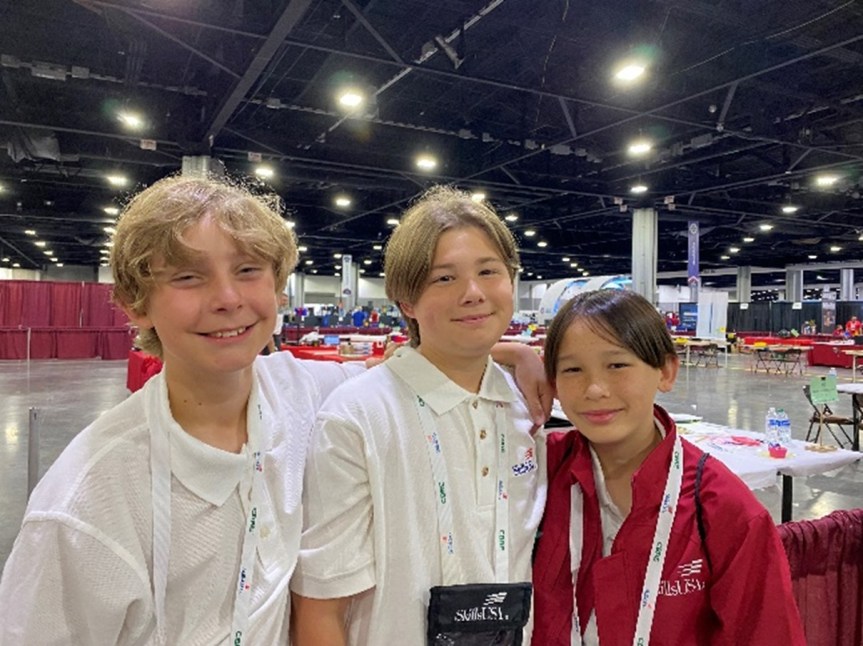
In June, three students from Lamoine Consolidated School’s Team Engineering Challenge team made history by being the first middle school team to go to Atlanta, Georgia to compete at the National Leadership and SkillsUSA Conference. Benjamin Baldridge, Ian Frost, and Jordan Chan fundraised over $10,000 to attend the weeklong conference and compete in the world’s largest skill competition after winning gold at the State Championships in Bangor back in March.

“The Team Engineering Contest is designed to evaluate and recognize outstanding students for excellence and professionalism in the areas of critical and creative thinking skills and the decision-making process to solve a problem,” said Lamoine teacher Miranda Engstrom who accompanied the team to Atlanta. “The contest fosters creativity, innovation, teamwork, and problem-solving skills.” Students demonstrate an occupational skill and present a clear explanation of the topic through displays, examples, experiments, and practical testing operations.

The conference and competition ran from June 19-24 with students competing for 16 hours over the course of three days. The Lamoine students earned 9th place overall, and students also earned special Skill Point Certificates for meeting a threshold contest score. Students can then use these certificates in their employment portfolios to show proficiency and workplace readiness for a particular specialty.

These students are three of 42 middle school Career and Technical Education (CTE) students at Lamoine who compete at the Maine SkillsUSA competition. They are excited to attend the Maine State Leadership Conference again next March and try to qualify for Nationals again.

“They are excited to share with their peers and teachers all they learned during their conference and showcase their treasures they collected when we were in Atlanta,” said Engstrom. “They wish to thank the many generous donors that helped them fundraise to get them there, helped them grow as leaders and thinkers, and make memories that will last a lifetime.”

Professional Learning Series: Conceptual Classrooms & Educational Programs for Teachers

The Maine Department of Education (DOE) Interdisciplinary Instruction (II) Team is excited to introduce “Conceptual Classrooms & Educational Programs for Teachers” (ConCEPT), an innovative initiative aimed at enhancing your teaching practices and student engagement through concept-based inquiry strategies. Grounded in evidence-based research, this program offers a comprehensive learning experience that will equip you with valuable tools and knowledge to transform your classroom approach.

What does ConCEPT offer?

  • Connection to Research: Discover evidence-based strategies and practices that support effective concept-based inquiry in the classroom.
  • Mapping and Planning: Learn how to design curriculum and instruction using concept-based frameworks, empowering your students’ learning journey.
  • Collaboration: Engage in collaborative activities and discussions with fellow educators, fostering a community of shared ideas and experiences.
  • Sustainable Change Leadership: Acquire leadership skills to drive sustainable educational change in your school community.
  • Customization: Tailor your learning experience to suit your team’s unique pathway, ensuring maximum impact on your teaching practices.

Why should you participate in ConCEPT?

  • Enhanced Curriculum Design: Develop concept-based inquiry curriculum and instruction design skills that align with the latest educational standards.
  • Strengthened Pedagogical and Content Knowledge: Deepen your understanding of both pedagogy and content across various subject areas.
  • Active Learning Strategies: Discover dynamic and engaging active learning strategies to invigorate your classroom environment.
  • Take Away Ideas and Materials: Gain valuable resources, ideas, and materials to enrich your teaching practices.
  • Integrated SEL Strategies: Learn how to integrate Social-Emotional Learning (SEL) effective strategies to create a nurturing and inclusive classroom atmosphere.
  • Learning from National Experts: Benefit from the expertise of renowned national educators who will guide and inspire you throughout the program.

Who is ConCEPT designed for?

ConCEPT is open to teams of 3-6 members from K-12 schools. Participants may include Classroom Teachers, Instructional Coaches, Curriculum Coordinators, and other Administrators (Superintendent/Principal). Teams must include at least one Classroom Teacher and at least one Administrator (e.g., Coach, Coordinator, building/district Supervisor, etc.). The rest of the team may be made up of any combination of participants.

Program Details:

  • Cost: Participation in ConCEPT is entirely free!
  • Contact Hours: You can earn up to 24 contact hours during the program.
  • Reimbursement: Districts/schools are eligible for reimbursement of costs associated with planning, such as substitutes or after-contract hours, up to $5000.
  • The II team will be offering a series of informational webinars dedicated to providing comprehensive insights into the ConCEPT pilot program. These live webinars are scheduled to take place during the last week of August and will be recorded for accessibility throughout September.
  • The application period will be open throughout the entire month of September.

Join us in this exciting educational journey that will empower you to create enriching concept-based learning experiences for your students. We look forward to seeing you continue to thrive as educators and positively impact your classrooms and school communities.

We look forward to sharing further details about the webinar schedule and registration process soon. Stay tuned for updates on our website and social media channels.  School administrators and educators are encouraged to visit the Maine DOE Interdisciplinary Instruction team’s website during the month of September to access the application form and learn more about the selection criteria and ConCEPT pilot program requirements. Don’t miss the chance to part of a transformative educational pilot that will support positive change

For further information or to enroll in the ConCEPT program, please contact Kathy Bertini, the Interdisciplinary Instruction Team Coordinator, at (207) 816-0294 or kathy.bertini@maine.gov. You can also visit the Maine DOE website for additional details.

MCI Teacher Ethan Brownell Named 2023 Maine History Teacher of the Year

Ethan Brownell, at teacher at the Maine Central Institute (MCI), has been named the 2023 Maine History Teacher of the Year, an award presented annually by the Gilder Lehrman Institute of American History, the nation’s leading organization dedicated to K-12 American history education.

Brownell has been teaching for 12 years – 10 of which have been at MCI where he currently teaches AP US History, AP US Government and Politics, Model UN, Sociology, and 11th grade American History & Government. Additionally, he advises the Model UN and Youth & Government and co-advises the tabletop gaming club.

Inaugurated in 2004 and now celebrating its twentieth anniversary, the History Teacher of the Year Award highlights the crucial importance of history education by honoring exceptional American history teachers from elementary school through high school. The award honors one K–12 teacher from each state, the District of Columbia, Department of Defense schools, and US Territories.

In addition to a $1,000 honorarium, Brownell receives a core archive of American history books and Gilder Lehrman educational materials, recognition at a local ceremony in their honor, and becomes one of 53 finalists for the 2023 National History Teacher of the Year Award. In fall 2023, ten finalists for the National History Teacher of the Year will be announced.

Brownell believes that teaching social studies “helps us examine the human experience in all its beauty and ugliness. History, geography, and civics help us to understand the world we live in and those we share it with. We learn critical skills to help us contextualize events and communicate with each other in a hyper-connected world. Also, it’s just fun to study the past and it’s stories. The more we know about human experience, the more interesting we, the world, and each other will be – it’s a beautiful feedback loop.”

“I love to talk about things that I care and that my students care about,” Brownell shared. “I have the privilege to teach a wonderfully diverse set of students, and it’s amazing to see them sharing their own experiences across time and space. Model UN and Youth & Government are amazing vehicles for this: seeing my students engage with others from around the state on vital issues past, present, and future makes me hopeful.”

Brownell is honored to be recognized through this award. “My first experience with the Gilder Lehrman Institute was at their Reconstruction summer institute with Eric Foner and Martha S. Jones. It was an amazing week doing one of my favorite things: being a student and learning in a collaborative atmosphere. It means a lot to be recognized by an organization that helped me so much in my own practice.”

In order to be considered for the History Teacher of the Year award, eligible teachers must first be nominated by a colleague, parent, or student. After receiving a nomination, teachers must submit a resume, teaching materials, and a letter of recommendation to be considered for the state award. History Teacher of the Year winners are selected by a committee of educators and education professionals in their state. For more information on the award process, visit the Gilder Lehrman Institute website.