Windham Primary School Summer Technology Program Motivates Student Learning, Improves Comprehension During School Year

According to ID Tech, research indicates that approximately two months of reading and math skills are lost over a single summer. Often referred to as ‘summer slide’ or ‘summer learning loss,’ the students most affected by this educational shortfall are in grades 1 through 8. Many elementary school teachers across the nation find that they need to re-teach basic math and reading skills when students return to classes in the fall.

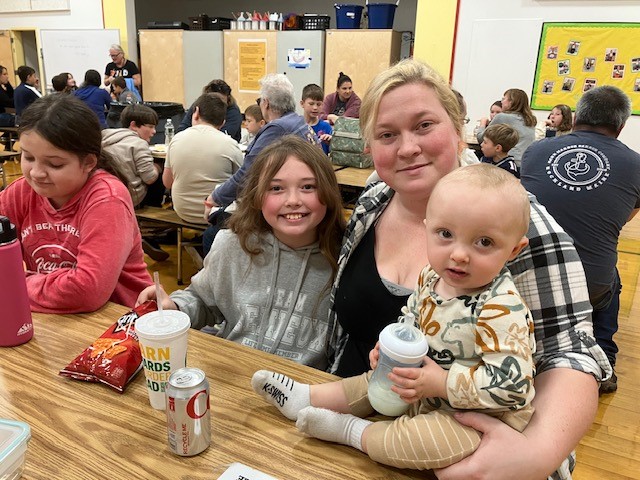
However, that is not the case for many students at Windham Primary School (WPS) who have participated for the past three years in the free Summer Technology Program. The students not only gain learning targets once school begins in the fall but develop a love of learning and can easily engage in the regular classroom setting.

WPS Instructional Interventionist Debbie Greenlaw has led this summer program since its inception. She stated that students who participate in at least 35-60 minutes a week of reading and math exercises during the summer months continue to make great educational strides.

“Since starting this program, I have noticed that students are more inspired to stay engaged in the classroom and the overall testing scores have improved,” she said. “Students have also increased in phonemic awareness, meaning they can recognize and master the spoken parts of words, syllables, etc.”

Students can choose to participate from among one to three online summer curricula. Two include reading programs, one known as Lexia and the other as Raz-Kids, and one math program known as I-Ready.

“Part of the reason why the Summer Technology Program works so well is because the three online curricula promote fun learning adventures with computer-generated animation that young students love. They don’t even know they are learning, improving their math and literacy skills. Also, each program creates personalized learning paths for students with scaffolding activities to use at their own pace.”

There were several reasons parents encouraged their children to participate in the program. One parent, Beth Leighton had both of her daughters, WPS second-grade student Addison, and her sister Leah, a fourth-grade student at Manchester, join the summer program because they were receiving additional help during the school year and had made considerable progress.

“I didn’t want them to lose it over the summer and thought this would be the best way to keep them going since they both enjoy the online programs,” Leighton said.

Leighton believes the summer program prevented her daughters from summer learning loss.

“I do believe the program helped them when it comes to being excited and engaged at the start of the new school year,” she said. “In the past years there were a lot of anxious feelings about starting back up and struggles in getting back on track with the reading and math, and this year they were both excited to start school and so far, no emotions over school being ‘too hard’.”

WPS Principal Dr. Kyle Rhoads initiated the idea for promoting the Summer Technology Program and reached out to Greenlaw to lead it.

“We experienced that during the school year, the use of academic technology programs by many of our learners was a motivating learning tool,” he said. “Many of our learners were engaged by the gamified nature of the programs. We believed there was an opportunity to expand the use during the summer and at home. We felt strongly that we would need a staff member to oversee and facilitate the use by families and Mrs. Greenlaw was just right for leading this program.”

Greenlaw enjoys observing the feeling of triumph the students experience.

“Every student has their own unique way of learning, and it is my personal goal to figure a way to help the students become more confident with their reading,” she said.

Greenlaw is quick to point out that the success of the summer technology program is a team effort.

“I had a lot of support and assistance from the WPS Technology Department and teachers Matt Calder and Rebecca Miller. I couldn’t have done it without their assistance. I also want to give a big shout-out to Kellie Sampson at Central Office who helped me stuff all the envelopes with gifts for the students and mailed them out for me so efficiently. And of course, the parents who supported their children along the way. But most of all, it was the students themselves who worked so eagerly on their own literacy and math skills during the summer months that moved me most of all.”

This story was provided by Lorraine Glowczak, Director of Community Connections & Storytelling Ambassador for RSU 14. To submit a story or an idea, email Rachel Paling at rachel.paling@maine.gov.

How Project G.R.O.W. (Garden Roots & Outdoor Wellness) is Impacting Students at Mt. Ararat High School

Project G.R.O.W. (Garden Roots & Outdoor Wellness) at Mt. Ararat High School has taken off! The program is led by Darcy Baggett and Becca Norklun.

Throughout the 2022/2023 school year, they had garden involvement in a variety of ways, all of which contributed to meeting their impact goal of 1870 student hours.

In the Fall, the team was able to partner with both the Interact Club and the Brunswick Area Rotary Club to build a tool shed. Two adults and five students built it together over a weekend using the MAITC (Maine Agriculture in the Classroom) grant-funded shed kit. This now enables them to house all of their new tools and equipment, also purchased with the funding, out of harm, and in a locked space.

Perhaps the most exciting project of the year was the collaborative sculpture project, organized by the school’s Art Department, their Community Pathways Program, and Project GROW. They invited internationally known environmental sculptor, Patrick Dougherty and his son, Sam Dougherty to work with roughly 200 students over the course of two full days to make large garden sculptures out of local saplings. It was featured on local news and in local papers – a huge success that students are still talking about!

Check out this video with more info!

Project GROW Garden Group met weekly, even throughout the winter, to plan the garden’s development, write area businesses and collaborators, harvest and sow Maine native seeds from their own school property, and more. The Leadership group is led by two Garden Coordinators, and eight students of varying high school ages. In the Spring, this group continued their work in the physical garden space, planting, harvesting, and planning new sections of the project’s “campus.”

Science teachers brought their students out to the garden during class time to teach them about the environment, plant and animal biology, and conduct soil science. An estimated number of students who were involved in the program through science classes is 100; some classes did this one time, others used the garden several times throughout the year for their research and outdoor exploration.

The health classes also used the garden to explore healthy living options, such as growing one’s own food, and discussing garden work as an opportunity for physical exercise. More specifically, t

he teacher of the “Fit for Life” course brought her students to the garden each semester, creating short-term visits with long-term impact for approximately 50 students.The Functional Life Skills class, Alternative Education Program, and the Community Pathways programs each used the garden this spring as a place for healthy, hands-on, outdoor learning. Collectively, these programs serve approximately thirty students and do a variety of things appropriate for their students’ needs.

This year, the district’s extended school year program for students with special needs was offered at Mt. Ararat High School, which means that 95 elementary and middle school students had access to Project GROW, as well. Every rain-free day of the 4-week program, these young students could be seen walking the gardens, sampling green beans, exploring our stick sculptures, and playing games.

“As a garden coordinator, it was an incredibly rewarding and unexpected scene this summer,” said one of the Project GROW organizers.

While their goal for student use has been met this year, they still hope to increase garden access even further. The Project organizers believe all academic disciplines at MTA can benefit from the use of Project GROW.

Follow along on their new Instagram account: @MTA_ProjectGROW

This story originated in the Maine Agriculture in the Classroom Newsletter where you can find more good news, grants, resources and more. To submit a story or an idea to showcase the great things happening in Maine schools email Rachel Paling at rachel.paling@maine.gov.

Media Release: Maine DOE Launches New Podcast Highlighting Voices From Maine Schools

Commissioner Pender Makin Hosts What Holds Us Together, First Episode Features Maine Teachers of the Year Matt Bernstein and Joshua Chard

The Maine Department of Education (DOE) launched a new podcast today hosted by Commissioner Pender Makin featuring conversations with educators, school staff, and students. The monthly podcast, What Holds Us Together, highlights the great things happening in public schools across Maine and how public education connects us.

The podcast launched with a conversation between Makin, 2023 Maine Teacher of the Year Matt Bernstein, and the newly named 2024 Maine Teacher of the Year Joshua Chard. The three discuss what they love about teaching and schools in Maine, the importance of public education, student voice, elevating the education profession, their message to aspiring teachers, and so much more.

“Public education is the most precious common good that we share. Every month, I’ll highlight the inspiring and amazing things happening in Maine schools through conversations with educators, school staff, and students across our state,” said Maine Education Commissioner Pender Makin in the podcast’s trailer.

What Holds Us Together can be listened to and subscribed to on all major podcast platforms, including Apple and Spotify. New episodes to be released on the third Thursday of every month.

Coming Soon! Maine DOE’s New Public School Podcast “What Holds Us Together”

The Maine Department of Education (DOE) is excited to launch, “What Holds Us Together,” a new podcast celebrating Maine schools. Each month, Commissioner Pender Makin will highlight the inspiring and amazing things happening in Maine schools through conversations with educators, school staff, and students across our State.

Public education is a precious and profound common good we share. Join us as we explore and celebrate the ways that local schools impact students and build connections with the community around them.

Be on the lookout for our first episode, as Commissioner Makin talks with 2023 Maine Teacher of the Year Matt Bernstein and the newly named 2024 Maine Teacher of the Year Joshua Chard about what they love most about teaching and Maine schools.

Listen to the podcast trailer here:

Subscribe today on Spotify or Apple Podcasts, and stay tuned!

St. George School Receives National Recognition for Innovative CTE/Makerspace Project

St. George Municipal School Unit (MSU) was recently selected as one of the 32 national semifinalists for the national Yass Prize, recognizing the “contemporary, inventive, and diverse in-district offerings” provided by St. George School. The small, rural St. George School was chosen among nearly 2,000 applicants representing 27 million students from every sector in education and every grade across all 50 states. Other applicants for the prize included private schools, education technology companies, national school networks, and educator recruitment programs.

The Yass Prize is a national competition with a mission “to identify and support more best-in-class education providers who can tackle the big education challenges of the day and deliver an education for students that is Sustainable, Transformational, Outstanding and Permissionless.” As a semifinalist, the school receives $200,000, and the grand prize is $1,000,000.

The school was selected first as a quarterfinalist and now as a semifinalist because of its innovative CTE/Makerspace Project, a partnership between St. George MSU and Mid-Coast School of Technology (MCST) to construct a PreK–8th grade Career Technical Education (CTE)/Makerspace building. The new building will include a shop space for boatbuilding, woodworking, and metalwork as well as a Makerspace with 3D printers, laser cutters, CNC routers, robotics, and sewing machines.

“The CTE/Makerspace Project grew from the requests of teachers, parents, and community members in 2016 to bring shop back to St. George School. It connects to the legacy of the Grace Institute, a local nonprofit that provided culinary arts and shop classes to St. George students from 1936-2011,” said Superintendent Mike Felton. “It took shape as the Makerspace Initiative in 2016. And it’s rooted in the generations of St. George educators, staff, families, and community members who prioritized hands-on/minds-on learning that engaged students and connected them to their community.”

St George has also received funding from the Maine Department of Education (DOE) to support the CTE/Makerspace efforts through a Rethinking Responsive Education Ventures (RREV) grant. RREV funding is provided through the US Department of Education and has allowed Maine to invest in education innovation across the state. You can read more about RREV here.

Governor Janet Mills and Maine DOE Deputy Commissioner Dan Chuhta visited the school last spring to learn more about the project and Congresswoman Chellie Pingree selected the CTE/Makerspace Project as one of only fifteen projects her office submitted for Community Project Funding in the federal budget.

Down the road in Port Clyde, Herring Gut Science Center was chosen as a Yass Prize quarterfinalist. This year, Herring Gut received funding through the Maine DOE’s Maine Outdoor Learning Initiative, a statewide initiative created by Governor Mills to offer immersive, hands-on, outdoor learning to middle and high school students across Maine during the summer. Read more about the Maine Outdoor Learning Initiative here. Maine DOE Commissioner Pender Makin joined students at Herring Gut over the summer as they learned about coastal habitats and species.

View news coverage of the Yass Prize from News Center Maine, Pen Bay Pilot, and The Courier-Gazette.

You can vote for St. George MSU to receive the Yass Parent Choice Award, which will provide the school with another $100,000.

Fighting Food Insecurity and Building Career Skills with Madison ELO Program

After spending the school day teaching math and sustainable agriculture at Madison Area Memorial High School, Joshua Bishop works after hours to run the school’s Extended Learning Opportunities (ELO) program. The ELO program at Madison focuses primarily on agriculture with the goal of teaching students valuable work skills while also helping to fight food insecurity in Somerset County.

One of the program’s main projects is its ELO Summer Garden which consists of multiple gardens all built from the ground up. Bishop’s students have gained agricultural work experience by maintaining these gardens and have also given back to their community. The garden’s pumpkin patch provided over 70 pumpkins for the local elementary school. Bishop and his students are also creating Bulldog Salsa and Pickles from the garden. This project builds upon their agricultural knowledge while also incorporating marketing and business skills, as they are creating a full business model for these foods.

“We are teaching students how to be employable while also giving them the ability to help them and their families’ lives by teaching them how to grow their own food,” said Bishop.

Beyond group ELOs, such as the garden, the program also offers students individual opportunities where they can earn credits through the Jobs for Maine Graduates (JMG) virtual platform called LMS. This opportunity has allowed students who need extra credits in order to graduate on time to recover those credits in a meaningful way related to their career interests. Through LMS, one of Bishop’s students was able to earn credits in geography and sustainability to complete her graduation requirements on time and also gain experience doing research in those fields.

“I love making an impact on my students’ lives,” said Bishop. “Whether it be helping them with curriculum-based skills or building transferrable skills for the real world, I aim to make an impact for each and every student.”

Bishop would like to thank Kennebec Valley Farms and Kathy Bertini from the Maine Department of Education.

Extended Learning Opportunities (ELOs) are hands-on, credit-bearing courses outside of the traditional classroom with an emphasis on community-based career exploration. These opportunities are personalized for students and help them explore options for their professional lives. They help students engage in learning through instruction, assignments, and experiential learning. The Maine Department of Education (DOE), along with state-wide partner Jobs for Maine Graduates (JMG), have made a concerted effort to provide working models, support, and funding opportunities for Maine schools to set up ELO programs within their school communities. To learn more about Maine’s initiatives with extended learning opportunities, visit: https://www.maine.gov/doe/index.php/learning/elo or reach out to Maine DOE ELO Coordinator Rick Wilson at rick.wilson@maine.gov.


Augusta Adult and Community Education Engages in Vital Refugee Education Initiatives

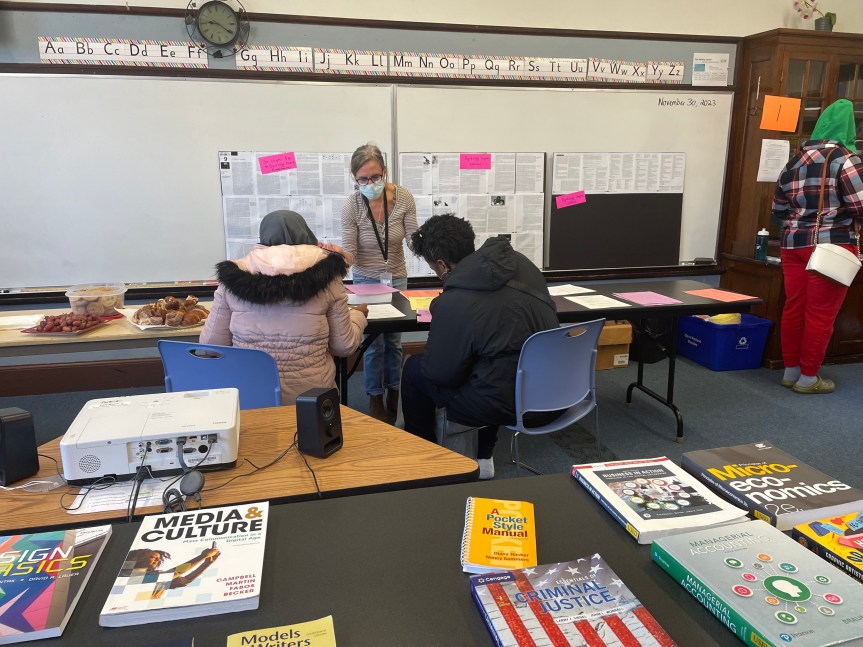
Augusta Adult and Community Education’s Director, Dr. Kayla Sikora, and Career Navigator, Karin Morin, participated in the State Refugee Advisory Council meeting recently. Hosted at the UMA Bangor campus, this participation demonstrates Augusta Adult and Community Education’s commitment to refugee education and integration.

In addition, Augusta Adult and Community Education has announced that they are a recipient of the Refugee Adult Education grant, generously awarded by the Office of Maine Refugee Services, Catholic Charities of Maine to provide essential educational support to refugees in the Augusta community.

“We intend to allocate additional capacity and staff hours to enhance the services we offer and to expand our Career Navigation services,” said Sikora. “In addition to expanding our Career Navigators schedule, AACE feels that it is important to hire an interpreter,” Sikora explained that hiring an interpreter for 10 hours a week will have several benefits for their organization as well as for the multilingual learners and the Career Navigator. By increasing the instructional hours provided for multilingual services, they will be able to provide learners with 45 instructional hours each semester, including career navigation services and interpreter services.

At the meeting, Dr. Sikora and Mrs. Morin received crucial updates from various stakeholders in refugee services, including the state refugee coordinator, healthcare coordinator, and resettlement agencies. This collaborative effort ensures that Augusta Adult and Community Education remains at the forefront of refugee education, responding effectively to the evolving needs of the refugee population.

In a show of solidarity and commitment, Dr. Sikora and Mrs. Morin posed for a photograph alongside members of the Maine Catholic Charities team and the Refugee Advisory Council. This partnership reinforces Augusta Adult and Community Education’s unwavering commitment to fostering a welcoming environment and providing educational opportunities for refugees in Maine.

Dr. Sikora expressed her enthusiasm, stating, “We are honored to be recipients of the Refugee Adult Education grant and remain dedicated to empowering refugees through education. This meeting strengthens our resolve to continue serving our diverse community.”

Augusta Adult and Community Education is looking forward to an ongoing partnership with the State Refugee Advisory Council and related agencies as they work together to create pathways to success for refugees in the Augusta area.

Healthy Acadia ELO Coordinator Creating Opportunities for Rural Washington County Students

As an Extended Learning Opportunities (ELO) Coordinator, Healthy Acadia’s Corrie Hunkler has led a pilot to expand the organization’s youth employment and career exploration programs while creating ELO opportunities for students in the coastal Washington County region. The project aims to create and promote ELO opportunities by developing new and existing partnerships with community-based organizations and local high schools.

As part of this initiative, Hunkler has worked with several high schools to support and develop their ELO programs and offerings. At Narraguagus High School, Hunkler assisted with the creation of a Learning Korean and Photography ELO for alternative education students. She collaborated with students at Jonesport-Beals High School and community mentors to create Sports Management and Dental Hygienist ELOs. Students at Jonesport-Beals are also offered several formal ELO courses including Career Exploration, Cultural Explorations, Community Service Learning, and Fishing Industry Exploration and Innovations.

Through Community Service Learning at Jonesport-Beals, high school juniors and seniors got the opportunity to mentor students at a local elementary school. This experience allowed the student mentors to build relationships with the younger students while also learning about goal setting and community service.

Under Hunkler’s leadership, this pilot has expanded and brought awareness to local ELO programs and opportunities. “I love working with kids, helping them develop deeper, more meaningful ways to expand their education,” said Hunkler. “I love that ELOs help connect schools to communities and use these connections to enrich and expand the learning opportunities for small, rural schools.”

Hunkler would like to thank the students and school leaders she has partnered with throughout this project.

Extended Learning Opportunities (ELOs) are hands-on, credit-bearing courses outside of the traditional classroom, emphasizing community-based career exploration. These opportunities are personalized for students and help them explore options for their professional lives. They help students engage in learning through instruction, assignments, and experiential learning. The Maine Department of Education (DOE), along with state-wide partner Jobs for Maine Graduates (JMG), have made a concerted effort to provide working models, support, and funding opportunities for Maine schools to set up ELO programs within their school communities. To learn more about Maine’s initiatives with extended learning opportunities, visit: https://www.maine.gov/doe/index.php/learning/elo or reach out to Maine DOE ELO Coordinator Rick Wilson at rick.wilson@maine.gov.

Maine Outdoor Learning Initiative: Maine Students’ Forestry and Recreation Careers Blossom Thanks to Friends of Katahdin Woods and Waters Summer Program 

Friends of Katahdin Woods and Waters, in partnership with the Katahdin Learning Project and numerous local outdoors-oriented organizations, facilitated multiple summer experiences for 217 youth grades 6-12 from the Katahdin Region and beyond this summer as part of the Maine Outdoor Learning Initiative. 

The Maine Outdoor Learning Initiative was launched by the Maine Department of Education in 2022 at the request of Governor Mills with the goal of expanding student access to hands-on, immersive experiences allowing them to explore while learning in Maine’s beautiful bounty of natural resources. Summer 2022 focused on coastal education and career exploration opportunities; this year the Initiative was expanded to include inland forestry opportunities. More than 1,000 middle and high school students participated in programs across Maine this past summer.  

Through the programs offered by the Katahdin Learning Project, a program of the Friends of Katahdin Woods and Waters, career development conversations took place during hiking, camping, paddling, and mountain biking trips across the region. During their excursions, students got to experience hiking, biking, fishing, camping, outdoor cooking, canoeing, wading, stargazing, team building, plant identification, career discussions, fire-starting, and more!   

After spending time outdoors engaged in these activities, one student remarked, “I make better decisions, my brain feels much more clear. I’ve started to ride my bike. And you get to appreciate nature and see beautiful views.” 

Pictures from a day hike this summer:

During their summer programs, students also engaged in career-related conversations with Maine professionals from logging and outdoor recreation businesses and nonprofits, exposing them to multiple support networks, and enabling them to understand possible next steps in their forestry or recreation careers. 

“I truly have learned a lot, and I’ve been able to reflect on my abilities, passions, hobbies, and think about exactly what career would fit me best,” said one high school participant. “I have never thought about a future career path in that sense before.” 

“Students have formed lifelong connections to their place and the people in it,” said Kala Rush, Education Director for Friends of Katahdin Woods and Waters. Rush explains that some youth arrived at their summer programs unaware of how to explore their interests or were hesitant to initiate career-related conversations. Many arrived knowing little about Maine’s vast and varied woods and backwoods. Through career discussions along a hiking trail or on a paddling trip, they strengthened bonds with not only the lands and waters of Maine but importantly, the people whose careers are based on forest stewardship and outdoor recreation. 

Pictures from an overnight paddle this summer:

A key tenet of The Katahdin Learning Project is the support of students along varied developmental pathways.  It is hoped that by combining outdoor adventures with career discussion and mentorship, students develop a love for the outdoors and a desire to grow and thrive as individuals. Katahdin Learning Project students are able to begin their next school year with knowledge, experiences, support, and connections critical for making decisions about their next steps in life. 

“I want to go to college to work just like you guys,” said one of the elementary students who participated. 

“We now have multiple young adults who want to continue with additional training and head into a career in the outdoor industry,” said Rush. “They know who to reach out to in their community and feel well-supported.” The summer 2023 programming provided participants with a great breadth of new experiences, connections, and resources for their personal, academic, and career futures.” 

Looking ahead, The Katahdin Learning Project hopes that students who participated in the summer career exploration program return to their schools comfortable and ready to share their experiences while staying connected to summer leaders and co-participants.  

Community organizations collaborating with Friends of Katahdin Woods and Waters included The Katahdin Gear Library, Katahdin Area Trails, The Outdoor Sports Institute, Skowhegan Outdoors, and Syntiro, a Maine-based nonprofit that provides professional development and services, focusing on career exploration, and promoting equity and social justice. 

Pictures from an overnight hike this summer:

 A project of the Maine Department of Education, The Maine Outdoor Learning Initiative, was offered to middle and high school students during the summers of 2022 and 2023. The summer programs provided opportunities for students across Maine to participate in either marine and coastal ecology or inland forestry experiences allowing and encouraging them to learn about and interact with nature through hands-on, interactive projects and experiences.  Career exploration opportunities that connect them to Maine-based industries were a key component of all programming.   

Governor Mills’s Emergency Education Relief (GEER) Program funds received from the US Department of Education supported the implementation of this project.  The $1.3 million dollar project was fully funded with GEER funds to support The Maine Outdoor Learning Initiative. The contents are those of the author(s) and do not necessarily represent the official views of, nor an endorsement, by the USDOE or the U.S. Government. 

Read more about the Maine Outdoor Learning Initiative and see a listing of summer programs. To learn about more outdoor education initiatives and opportunities provided by the Maine DOE  visit our website. 

Additional RSU 14 School Resource Officer Forges Positive Relationships with Younger Students

Feeling a sense of security is crucial to childhood development and educational success. This includes having trustworthy adults one can turn to when feeling unsafe or apprehensive. Parents and teachers are a perfect example. At RSU 14, adding a School Resource Officer to the mix to introduce police officers as friendly adults who are here to help, not to punish or threaten, has added to that sense of security.

That is one of the many factors considered by adding School Resource Officer (SRO) Windham Police Officer Robert Hamilton, as a new presence at the Windham Primary School (WPS) and Raymond Elementary School (RES), building positive interactions with students.

“I am here to help ensure the safety of the kids and staff to create a safe and positive learning environment while building a connection and positive relationships with students,” said Hamilton. “We want students to feel comfortable with who we are and what we provide for the community. We want them to know we are people who can be trusted.”

WPS Principal Dr. Kyle Rhoads says that Hamilton has been a visible and welcoming role at the primary school, offering a sense of safety.

“Officer Hamilton will continue to assure our community that WPS is a safe place for learning and that we continue to attempt to improve the safety of our school,” Rhoades said. “When children feel safe, they can do their best learning.”

RES Principal Beth Peavey said that Hamilton’s presence will offer a positive, inclusive school community and a necessary resource.

“It is the hope that the SRO will serve as a mentor and provide educational programs to educate students on safety, bullying prevention, and the importance of making positive choices,” she said.

Manchester School has always shared an SRO with Windham Middle School, but Officer Hamilton will be making his appearances with the fourth- and fifth-grade students there as well and Manchester Principal Danielle Donnini also welcomes him into the fold.

“Some of us remember Officer Hamilton as a student and we are so happy to welcome him back into our school community,” she said. “Having a depth of understanding of our local communities will be a real asset for the students, the school community, and our families.”

Indeed, Hamilton has always been an invested member of the school district. Having lived in Windham all his life and having graduated from Windham High School in 2012, he has worked for the Windham Police Department for the past five years. He says there was something about serving on the police force that drew him to the occupation.

“I was always drawn to the idea of protecting and serving,” Hamilton said. “I am also a big people person so getting to interact and communicate with the public daily while also doing my part to keep them safe was a big influence in me wanting to become a police officer.”

Hamilton said that he is looking forward to the opportunity to interact with the younger students.

“I love that I get to be a part of helping the kids grow and develop as people and not just students,” he said. “I love that I get to see all the hard work kids put into the school year pay off at the end of the year as kids move on to the next grade. I love that I get to hang out and just have fun with the kids.”

Hamilton says that his hope for the students is that he can work to build positive relationships through teaching and mentorship with them. He also said that he hopes the students and faculty to help him learn and grow within his new position.

Peavey spoke for the entire school district in welcoming Hamilton to his new role.

“His presence is a valuable addition to our school community,” she said. “We look forward to working with him to ensure safety within the school community as well as to build positive relationships with our students, families, and staff.”

When Officer Hamilton is not at work protecting and serving RSU 14 and the Windham community, he can be found playing golf, softball, fishing, and spending time with his family. He lives with his wife and two dogs in Windham.

This story was provided by Lorraine Glowczak, Director of Community Connections & Storytelling Ambassador for RSU 14. To submit a story or an idea, email Rachel Paling at rachel.paling@maine.gov.