MEDIA RELEASE: Maine Department of Education Resources on Helping Young People Safely Navigate the Internet

During his State of the Union address this week, President Biden called for increased measures to ensure young people are protected on the internet and while using social media. The Maine Department of Education offers parents, educators, and students a number of free resources, by grade level, to help young people safely navigate the internet and avoid dangers that can impact their physical and mental health.

The Maine Department of Education’s comprehensive web-based social emotional learning resource SEL4ME embeds specific lessons in interest safety at every grade level. For example, the second grade module Be Fine Online helps students learn ways to stay safe when online, including the importance of never revealing their personal information; sixth graders have lesson like Be Aware What You Share in which they gain a deeper understanding of internet safety and social media and on cyberbullying; the eighth grade lesson User Beware: The Scary Side of the Internet helps students understand that not everything on the internet is safe, including how to spot online predators and the dangers of sexting; and in 11th grade, students have access to Cyber Bullying and Digital Citizenship which goes into the effects of online bullying and the virtual footprint that can follow them into the work place.

SEL4ME is free to all Maine schools, families, and community partners and offers more than 450 PreK-12th grade learning modules. Each grade level hosts lessons within the five key elements of social emotional learning (SEL): self-awareness, self-management, social awareness, relationships, and responsible decision making. Educators, families, and students can learn more and sign up here.

The Maine Department of Education’s Digital Learning Specialists, in partnership with the MLTI Ambassadors, also provide professional learning, resources, and support for digital citizenship, social media use, online safety, and cyber security. MLTI also partners with Common Sense Education to share digital citizenship and online safety resources with educators. Educators can also reach out to specialists directly to explore ways to integrate these skillsets into their instruction to help students stay safe online.

“The internet is a tremendous resource for students to explore and activate their passions, develop skills and knowledge, build connections, and expand their digital literacy, and Maine educators and schools are constantly integrating technology into teaching and learning in innovative ways,” said Education Commissioner Pender Makin. “We’re also committed to making sure students have the tools and resources they need to navigate the internet safely and avoid the very real dangers that President Biden outlined in his State of the Union speech that pose a threat to the physical and mental health of our young people. We encourage educators and families to take advantage of our free resources.”


Paid Professional Learning Opportunity Provided by Maine DOE

The Maine Department of Education (DOE) is accepting applications from individuals interested in learning more about the competitive grant process. Selected applicants will be trained to serve as peer reviewers who assist the DOE in reviewing, assessing, and scoring competitive grant proposals for the 21st Century Community Learning Centers (21st CCLC) Program. The 21st CCLC program is a federally funded education program that helps schools and communities develop before-school, after-school, and summer educational programs that support students and their families.

This year’s Request for Proposals (RFP) for the 21st CCLC program was released to the public on January 5, 2022 and is available online at https://www.maine.gov/dafs/bbm/procurementservices/vendors/rfps. The DOE anticipates receiving proposals from local education agencies, community-based organizations, and other eligible entities seeking awards under this RFP.

Qualifications:
Peer Review applicants will be selected based on their experience in providing effective academic support, enrichment, youth development, and related support services for children and youth. The most qualified candidates will be individuals who have experience in the administration of high-quality youth development programs within schools and communities. Examples of the experienced individuals sought include, but are not limited to:

  • 21st CCLC program directors and site coordinators
  • Teachers and principals
  • College and university staff
  • Youth development workers
  • Community resource providers

Required Tasks:
Selected applicants must be able to participate in an online training and review grant proposals through a web-based system. Applicants will work individually to read each assigned proposal and create detailed, objective, constructive, and well-written comments on approximately 10 proposals based on the criteria established in the RFP.  These comments will be submitted to the DOE prior to participating in the scheduled consensus scoring sessions. It is anticipated that peer reviewers will have a three week window in which to complete their individual review of assigned proposals. Following the individual review of proposals, each successful applicant will be required to participate in a series of two online/virtual consensus scoring sessions hosted by the DOE. It is during these consensus scoring sessions that the peer review team will score each application.

Selected applicants must complete the following tasks during the following date(s):

Task Date(s) Time(s)
Participate in an online training webinar March 31, 2022 1:00 PM – 2:30 PM
Review grant applications through a web-based system and provide individual, written comments on each application (which must be submitted to the DOE) April 18, 2022 – May 6, 2022 Any Time
Participate in online/virtual consensus scoring sessions with other members of the peer review team (applicants MUST be available on all four scoring days, but will only be selected to participate for two days) May 10, 2022 – May 11, 2022; or
May 12, 2022 – May 13, 2022
9:00 AM – 4:00 PM

Compensation for Services:
Selected reviewers who complete the required tasks will be provided an honorarium of $85 per assigned application.

Previous participants have also found that serving as a member of the peer review team is an excellent opportunity for professional development and growth. It is likely that, if selected, applicants will be exposed to new program models, strategies, and practices. These new concepts may provide ideas and support for ongoing work as well as future grant writing efforts. Most importantly, the time given to this effort will help ensure the funding of quality education programs for the children and families of Maine.

How to Apply:
Interested parties should contact Travis Doughty at travis.w.doughty@maine.gov to obtain a copy of the 2022 peer reviewer application and then return the completed application along with a current resume or CV.

Pursuant to Title IV, Part B of the Elementary and Secondary Education Act, as amended by the Every Student Succeeds Act of 2015, peer reviewers may not include any applicant, or representative of an applicant, who has or will submit a proposal in response to the current grant competition.

Deadline:
The Maine Department of Education will continue accepting peer reviewer applications through March 17, 2022, or until the needed positions are filled. Interested parties are encouraged to apply as soon as possible.

Contact:
For more information, contact State Coordinator Travis Doughty at travis.w.doughty@maine.gov or 624-6709.

Child Care Subsidy Program Available

The Early Learning Team at the Department of Education is pleased to share updated information from our colleagues at the Office of Child and Family Services (OCFS). The Child Care Subsidy Program continues to take applications from families looking for low or no cost childcare options in Maine. The program allows the family to choose a child care provider that they know and trust.

Eligibility requirements include the following:

  • The parent/guardian must be employed, in school or job training, or retired; and
  • The family must meet income requirements at or below 85% of the Maine median income. For example, income eligibility requirements for a family of four are at or below $76,643.00 a year.

School Administrative Units are encouraged to share information with families in their schools. This flier can be distributed to families and/or displayed in school/community locations.

To learn more or apply, families are encouraged to visit the OCFS site here.


Available Funding for School Lead Remediation, Grant Applications Due April 19, 2022

The following message comes from Maine CDC Drinking Water Program, Department of Health & Human Services.

On February 18, 2022, the U.S. Environmental Protection Agency (EPA) announced $20 million in available grant funding to assist communities and schools with removing sources of lead in drinking water.

Under the Water Infrastructure Improvements for the Nation (WIIN) Act, EPA is announcing the availability of $10 million for projects to conduct lead service line replacements or to implement corrosion control improvements, and $10 million for projects that remove sources of lead in drinking water (e.g., fixtures, fountains, outlets, and plumbing materials) in schools or childcare facilities.

This grant focuses on reducing lead in drinking water through drinking water infrastructure, treatment improvements, and facility remediation in schools and childcare facilities in states and tribal communities. In alignment with the goals of the federal Justice40 Initiative, EPA is seeking to deliver at least 40 percent of the benefits to underserved communities.

Timeline for Grant Applications:

  • Questions must be submitted by April 4, 2022.
  • Applications are due by April 19, 2022.
  • Awardees are expected to be announced by early summer 2022.
  • The project period is expected to be four years.

For more information:

Public Meeting Notice for LD 313 Work Force Group on Career and Technical Education

On Wednesday, March 3, 2022 from 8:00 to 10:00 am, the Work Force Group for LD 313 will hold its next meeting hosted by the Maine Department of Education.

LD 313 was passed in the 130th legislature and is focused on several topics regarding Career and Technical Education. If you would like to join as an attendee and listen to the discussion, you can use the following link at the time of the meeting.

Work Force Group for LD 313 03/3/22 Meeting link: https://mainestate.zoom.us/j/85318244952 

If you have any comments on the discussion, you can send an email to cte.doe@maine.gov.


Maine DOE Update – February 25, 2022


From the Maine Department of Education


Reporting Items

EPS High-Cost Out-of-District Report (EF-S-214) Open for Reporting on March 1; The Deadline is April 15

The EF-S-214, also known as the EPS High-Cost Out-of-District Report will be open for data entry to Maine public schools on March 1 in the Maine Department of Education’s NEO Portal. | More

| Visit the DC&R Reporting Calendar |

News & Updates

Maine DOE Seeks Public Comment on School Improvement Grant Eligibility Waiver

The Maine Department of Education (DOE) is seeking public comment on a waiver request related to the federal School Improvement Grant (SIG) program. Through this eligibility waiver request, the Maine DOE intends to further support Maine schools during a period of exceptional challenges due to COVID-19. | More

Maine Department of Inland Fisheries and Wildlife Commissioner Judy Camuso Participates in Read to ME Challenge

Maine Department of Inland Fisheries and Wildlife Commissioner Judy Camuso recently took part in the Read to ME Challenge by reading Poppy by the author Avi to Mrs. Perkins’ fourth grade class at Canal Elementary School. Following the reading, Camuso and the students learned about and dissected owl pellets. | More

Maine Schools Sharing Success Stories

| Submit your Maine School Success Story |

Professional Development & Training Opportunities

| Visit the Professional Development Calendar |


Latest DOE Career/Project Opportunities View current Maine Department of Education employment opportunities here
 

Maine DOE Seeks Public Comment on School Improvement Grant Eligibility Waiver

The Maine Department of Education (DOE) is seeking public comment on a waiver request related to the federal School Improvement Grant (SIG) program. Through this eligibility waiver request, the Maine DOE intends to further support Maine schools during a period of exceptional challenges due to COVID-19.

Pursuant to Sections 8401 (b) and 8401(d)(2) of the Elementary and Secondary Education Act (ESEA) and Section 421(b) of the General Provisions Act, the Maine DOE is seeking approval from the U.S. Department of Education to:

  • Waive the eligibility requirements for SIG funds; and
  • Extend the period of availability of SIG funds until September 30, 2022.

If granted, this eligibility waiver request would give the Maine DOE authority to support a greater number of schools with their continuous school improvement efforts through the end of summer. To have the largest possible impact, the Maine DOE plans to utilize the remaining $812,951.51 in SIG funds to provide a Summer Leadership Academy designed to help educators address the academic and non-academic needs of students impacted by COVID-19.  School Administrative Units (SAUs) may, however,  seek individual school-level allocations instead. SAUs must contact the Maine DOE by March 11, 2022 if they do not agree with these remaining SIG funds being used on their behalf to implement a Summer Leadership Academy.  Preliminary school-level funding amounts have been posted to the Maine DOE website.

Please note that any eligible SAU electing to receive individual school allocation(s) must utilize funding specifically to administer independent programming at each school within the SAU.  In addition, Section 1003(a) of ESSA requires that each school that receive funds directly must:

  • Submit an online funding application to the Department, outlining how the school anticipates utilizing the allocated SIG funds to support continuous improvement efforts;
  • Obligate all allocated SIG funds on or before September 30, 2022; and
  • Liquidate (invoice) all allocated SIG funds on or before September 30, 2022.

As part of the statutory requirements for seeking this eligibility waiver, the Maine DOE must solicit and respond to public comment on its waiver request as well as provide evidence of the available comment period.  This 15-day public comment period shall begin on February 25, 2022 and conclude on March 11, 2022. A copy of the full waiver is available here.

Questions related to this announcement as well as public comments on the waiver request may be sent to Travis Doughty at travis.w.doughty@maine.gov.

Educator Spotlight: Aspiring World Languages Educator Attends 2022 NECTFL Conference on National Scholarship

The Maine Department of Education congratulates Nadine Bravo, an aspiring world languages teacher, for being selected as this year’s recipient of the Northeast Conference on the Teaching of Foreign Languages (NECTFL) Future Language Educator Scholarship. The scholarship provided funding for Bravo to attend the 2022 NECTFL Conference which took place in New York. Nadine was selected to receive this scholarship among a pool of applicants nation-wide due to her promise as an aspiring world languages educator.

As a multicultural and multilingual individual born and raised in Halle, East Germany, Bravo has spent time in Lithuania, Russia, the United States, and Chile, even surviving the Chilean earthquake of 2010 while she lived here. With much world experience, plus a BA in FLL (Russian, German, Spanish, English), some master’s-level coursework, and 20 years of experience tutoring German and English under her belt, Bravo dreamed about pursuing a graduate degree as a world languages teacher with a certificate to teach English as another language.

“It has always been rewarding watching students learn and grow with the languages,” said Bravo. “However, I had never obtained proper teacher certification, which limited my employment opportunities. The onset of the pandemic and an injury on the job were the catalyst to get the process of graduate school rolling.”

Bravo is now in her first year of graduate school and has had opportunities to tutor German in the linguistics department at the University of Southern Maine, which has helped confirm that she made the right decision about returning to graduate school.

Bravo attributes the opportunity to fill out an application for the NECTFL Future Language Educator Scholarship to her mentor teacher, Sarah Collins at Gorham Middle School, who pointed her toward a Language Educators newsletter put together by Maine Department of Education’s Interdisciplinary Instruction & ESOL/Bilingual Programs Specialist April Perkins. A link to the upcoming conference was available in a newsletter and Bravo took the opportunity to apply.

“When I came across the conference program, I felt so inspired and wanted to attend all the workshops and lectures offered regarding my target languages,” said Bravo. “I am currently in a tight financial situation and try to take advantage of any sort of financial support while furthering my education,” she added.

With three different types of scholarships available for the conference, the application process was demanding and complex but not impossible, says Bravo. Her application package included various elements such as letters of recommendation, a list of relevant organization affiliations, testing scores, a statement, methods assignments, and transcripts, among other things.

“I decided to go overboard and shared everything that could have been relevant,” said Bravo. “One of the most rewarding items I received after my first observation in my internship placement was a stack of student notes with feedback. It does not get any better than receiving genuine feedback from your students and learning about your strengths and weaknesses,” she added.

The conference took place earlier this month, bringing opportunities and experience for Bravo to pursue her dream of working as a world languages teacher in Maine.

“It is important not only to learn the language and grammar, but also to be exposed to different cultures, customs, and traditions, said Bravo, who has a goal of teaching students in Spanish and German. “Learning a world language is the gate to other cultures. I want to be that gate, facilitating my students’ access to an additional way of life,” she added.

Bravo expresses her gratitude to all the people who have paved the road for her return to graduate school, including graduate advisor, Mike Katz, and other supportive faculty at USM including her two professors, Dr. Mindy Butler and Dr. Alec Lapidus, who employ her as their graduate research assistant.

Currently, Bravo has accepted a long-term substitute teacher position in the Gray-New Gloucester Middle School. She is hopeful about her future career as a world languages teacher.

To sign up for the Language Educators Newsletter, click here or reach out to April Perkins at april.perkins@maine.gov.

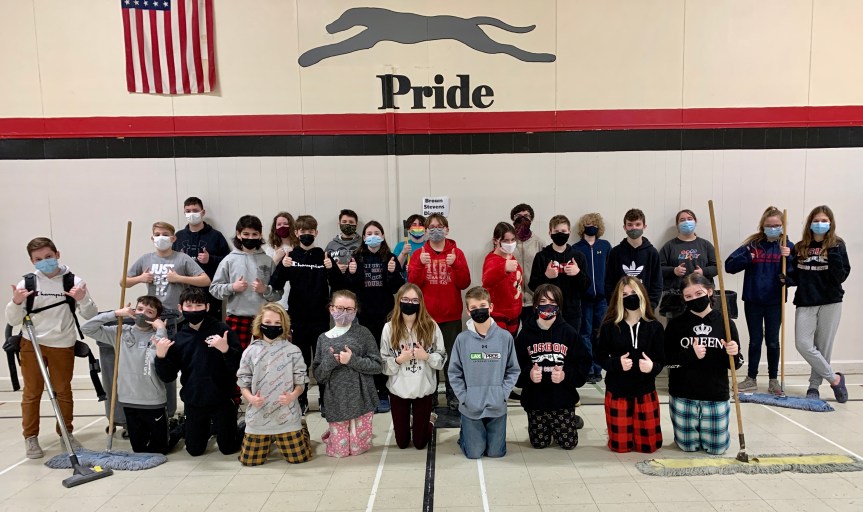
PWS Cleaning Crew: A Story of Inspiration and True Collaboration During a Difficult Time

Upon their return from winter break, the teachers and students of Philip W. Sugg (PWS) Middle School in Lisbon learned that their night custodian was going to be out for an extended period of time, along with two other night custodians at the district’s elementary school, who were also going to be out. This left the district with a skeletal crew that was struggling just to keep up with their regular cleaning schedules.

“I’m very well aware that middle schoolers are perhaps the most misunderstood humans on the planet,” said Nicole Sautter PWS 7th grade teacher and 2020 Androscoggin County Teacher of the Year. “I knew this could very well be an opportunity for them that would not only allow others to see who they truly are, but also provide them a much-needed purpose in their life that would bring them a sense of power in a tumultuous time – and that is how the PWS Cleaning Crew came to be.”

Since early January, PWS Middle schoolers have stepped up and volunteered their time after school to keep the building clean: trash removal, recycling, vacuuming, sweeping classrooms and hallways while some staff clean bathrooms and refill toiletries, among other things.

Here is their story:

“The COVID-19 pandemic has created many unanticipated challenges for the Lisbon students and staff over the last two years,” said Richard Green, Lisbon School Department Superintendent.  “It has been my observation that the students and staff within the Lisbon School Department have always faced and addressed these challenges with a real determination and effort that is unlike anything that I have ever seen. The effort from the Philip W. Sugg Middle School (PWS) students and staff to help coordinate the cleaning efforts within their school as a result of staffing shortages, is a perfect example of this dedication.”

Sautter adds that it’s refreshing to see middle schoolers excited about making a difference. They’re internally motivated and have shown a solid understanding of what it means to be an involved citizen.

“I’m so grateful for these kids. There’s no way we could cover this school without their help,” said Mike Powell, Lisbon Schools Department Custodian/Bus Driver/Maintenance.

“On behalf of the Lisbon School Department, I would like to commend and thank all of the PWS students and staff who have gone above and beyond to help keep their school clean and safe during these unprecedented times,” added Superintendent Green.

EPS High-Cost Out-of-District Report (EF-S-214) Open for Reporting on March 1; The Deadline is April 15

The EF-S-214, also known as the EPS High-Cost Out-of-District Report will be open for data entry to Maine public schools on March 1 in the Maine Department of Education’s NEO Portal.

School districts should sign into the report as early as possible to allow time for data entry as well as the two-step submission process. The Department must approve the report by April 15 to allow time to make possible EPS adjustments.

Adjustments to the Special Education High-Cost Out-of-District allocation will be based on costs exceeding:

  • $19,176 for placements in Regional Special Education Programs;
  • $28,764 for placements in other school administrative units; and
  • $38,352 for placements in private schools.

Below are a few important things to note about the EF-S-214 report:

  • School districts will need to project the tuition cost for the full fiscal year.
  • This report is required for all publicly funded school districts, including districts that do not meet the High-Cost Out-of-District tuition threshold, these districts must login and submit “no students to report.”

The report can be located by logging into NEO at: https://neo.maine.gov/DOE/NEO/Accounts/Account/Login

Navigate to→ Special Education → Forms → EFS-214

Questions about the report should be directed to Stephanie Clark, Fiscal Compliance Associate for the Maine Department of Education at Stephanie.clark@maine.gov or 207-624-6807.