Carrabec Community School P.E. Class Individualizes Learning Through New Heart Rate Monitors

Physical Education at Carrabec Community School looks more colorful as students’ wrists glow with a mix of blue, yellow, and red. The glow comes from the new heart rate monitors that students are using as part of Heidi Day’s Physical Education class. The monitors use colors to indicate students’ heart rates as they play and learn through Physical Education. 

“The goal in this process is to make the learning personal and relevant to each individual. This system should help the students make the connection between the perceived rate of exertion and their heart’s ability to adjust to the intensity they are putting forth,” said Heidi.  

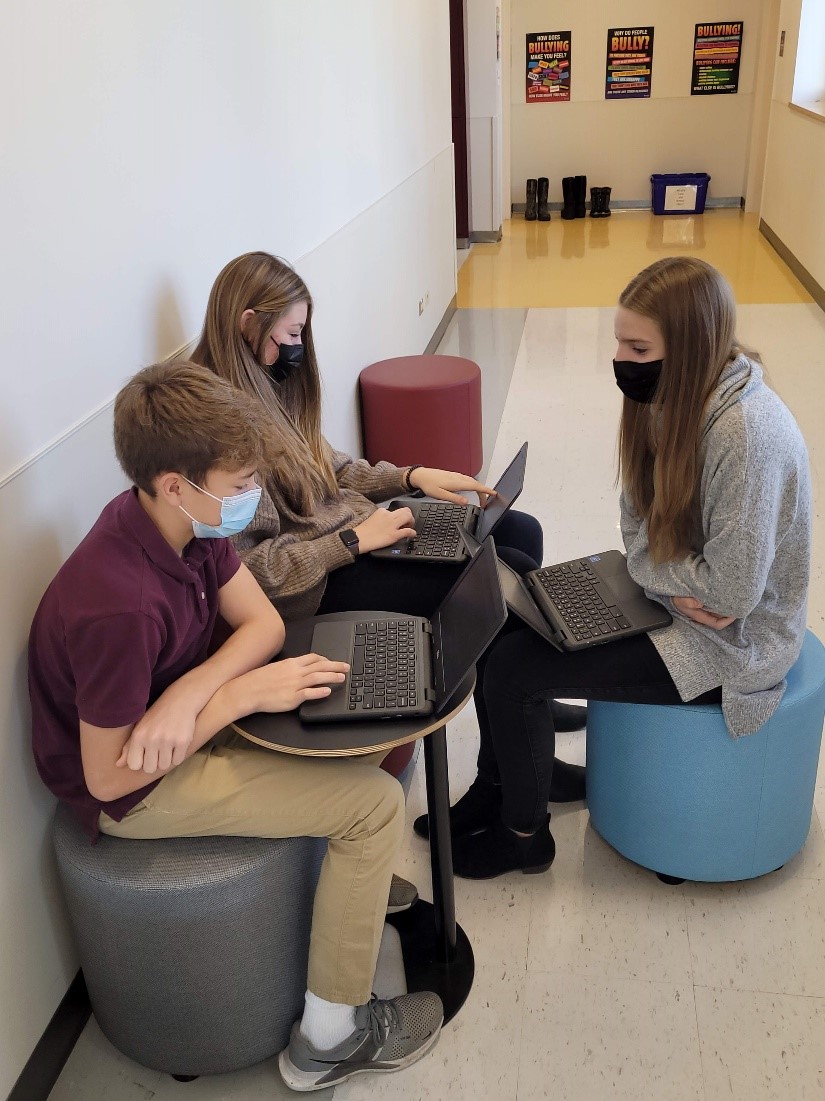
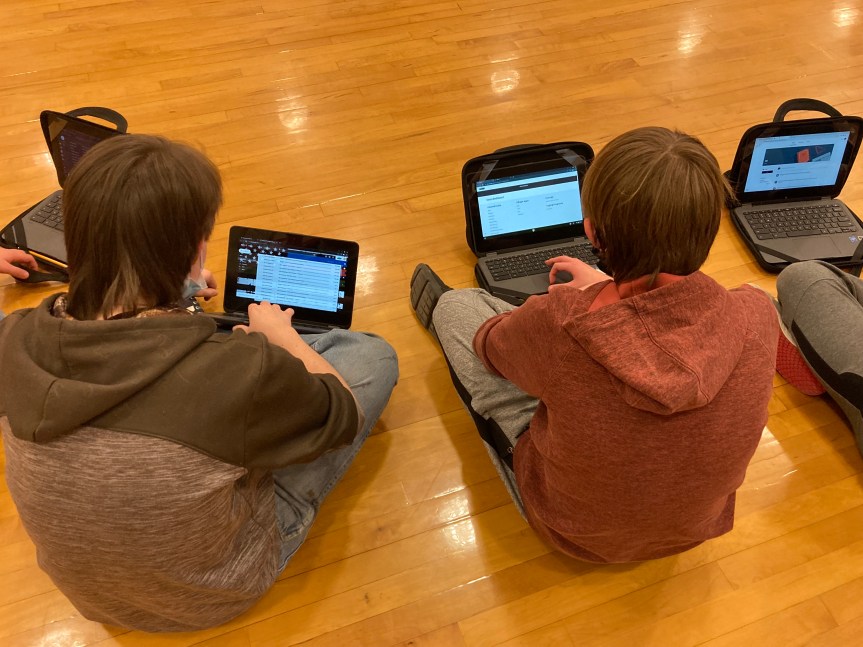
Students have learned the drill. They come to class, get their assigned heart rate monitors, log them in by holding them on a scanner attached to Heidi’s computer, and keep an eye on the color. As students exercise, their heart rate data is saved on the monitor. Once the class is over, students put their monitors back on the scanner to upload their heart rate data. An e-mail is sent to them and their parent/guardian with the amount of time they spend in blue, resting heart rate, yellow, target heart rate, and red, max heart rate. Students then use a spreadsheet on their laptops to record the number of minutes in each category.

“Students will set appropriate personal goals and work weekly to achieve those standards. The spreadsheet allows tracking that averages the time the student has spent in the resting, target, and max heart rate zones. This process becomes a means of self-assessment for my students, making their experience in physical education personal and success achievable,” Heidi explained.  

The heart rate monitors are working well, and students are excited by what color their monitor is, but Heidi has worked hard for that excitement. Last year Heidi attempted to integrate the monitors, but found the process overwhelming. 

Heidi explained, “I love technology. However, I am limited in my skill set as well as my patience when trying to implement something new. I feel like it takes me three times longer than it should, and I get so frustrated I tend to avoid the trouble altogether.”  But through perseverance and help from the MLTI 2.0 ambassador program, Heidi has found success. 

“Honestly, without [the Ambassador’s] help, I don’t believe I would have been able to implement this addition to my class. He has been there to troubleshoot through the challenges, making changes and adjustments as necessary, allowing me to still focus on my students. Ask for help!  I’m so glad I did!  I am excited to have this new process in place, but I know with all the daily tasks I have to complete, there would be little chance of me learning it all on my own and implementing it without support!” 

This story was written and coordinated by MLTI Ambassador Erik Wade as part of the Maine Schools Sharing the Success Campaign. To learn more, or to submit a story or an idea for a story, email rachel.paling@maine.gov. 

MLTI Virtual Student Conference T-Shirt Design Competition: MLTI Launches Space2Connect!

MLTI (Maine Learning Technology Initiative) would like to encourage students to collaborate and share the creative work taking place in their schools – with that in mind MLTI will be hosting a T-shirt Design Competition.

A panel of judges will choose a winning design. The winning design will be printed on t-shirts that will be worn by everyone at the 19th Annual MLTI Student Conference, which will be held on Thursday, May 26th virtually over Zoom.

MLTI Launches Space2Connect! is the theme for the 19th annual MLTI Student Conference. The intent of the conference theme is to reflect the many interpretations of space and connection as they relate to Maine students and their use of technology.  Primary events at the conference will address concepts such as outer space and astronomy and the power of technology to enhance science. In addition, a student’s design might explore how technology connects us in physical and virtual spaces or other concepts that arise from the Space2Connect theme.

Review T-Shirt Design Competition eligibility and submission guidelines

Competition Timeline & Important Dates

  • Competition opens: February 1, 2022
  • T-shirt designs due: March 1, 2022 (no late entries will be accepted)
  • Finalists selected and Winner Announced: March 11, 2022.

Submit your entry with this 2022 MLTI Student Conference T-Shirt Design Competition Submission Form

For more information or answers to questions, please contact: Brandi Cota, Project Manager, Maine Learning Technology Initiative Brandi.M.Cota@Maine.Gov.


MLTI Virtual Student Conference Slated for May 26th

The Maine Learning Technology Initiative (MLTI) team is excited to announce that the 19th annual MLTI Student Conference will take place virtually on Thursday, May 26, 2022. Though this is our third year holding the MLTI Student Conference virtually, we are dedicated to making this year an innovative virtual conference experience like never before! The conference will be open to all MLTI 7th and 8th grade students and their teachers and will include interactive and hands on workshops where participants will be engaging and creating both digitally and in-person with provided materials.

This year the MLTI team is partnering with the University of Maine System and their Maine College of Engineering, Computing, and Information Science (MCECIS). By the time today’s middle schoolers are ready to enter college, they will have access through the University of Maine system to expanded educational opportunities and state of the art classrooms and labs for engineering, computing, and information science.

Please save the date for the 2022 MLTI Student Conference and check our website for more announcements coming soon, including a call for proposals, t-shirt design contest, a surprise guest announcement, presenters, and session information.

We look forward to seeing all of you on Thursday, May 26, 2022 and sharing an exciting and innovative day with you and MLTI students!

Download the Flyer

For more information reach out to Brandi Cota, Maine DOE MLTI Project Manager at Brandi.M.Cota@Maine.Gov

Bath Middle School Takes Hands-on Approach to Learning About Ocean Sustainability

Inspired by the Expeditionary Learning model, Bath Middle School has taken a hands-on approach to examining the issue of ocean sustainability.  As part of this project, as citizen scientists, the 7th-grade students took to the local waterfront to collect data on the invasive green crab species and graphed their results.

Students also visited the Maine Maritime Museum in downtown Bath to learn about the history of Maine’s fishing and shipping industry.  Working with Museum educators, they generated timelines through the examination of the museum’s artifacts.

The culminating activity was for students to design and build a product that would address an issue that threatens the sustainability of our oceans such as pollution, climate change, or invasive species.  On Thursday, December 16th, parents, and the community were invited to attend an event that displayed the students’ work.

parents at event

In a “Shark Tank” format, the top five projects were pitched to a panel of judges to determine a winning product.  Students created videos, websites, and prototypes to convince the judges of their product’s ability to impact and help solve an issue that puts the sustainability of our oceans at risk.

After much deliberation, the judges determined that the winning product was Compostable Condiments designed by Sadie C. and Laura K.  This product proposed using an invasive seaweed to make a biodegradable substitute for the plastic used in takeout packets like ketchup.

Congratulations to all the 7th graders for their innovative ideas that could help to preserve one of Maine’s most essential natural resources.

This story was written and coordinated by MLTI Ambassador Holly Graffam as part of the Maine Schools Sharing the Success Campaign. To learn more, or to submit a story or an idea for a story, email rachel.paling@maine.gov. 

Integrating Podcasting at Caribou Community School 

Creation and innovation are core elements to middle school learning, thanks to Kim Barnes and Heather Anderson, who both teach 8th grade English language arts (ELA) and social studies at Caribou Community School. In a recent unit of study about resiliency, Mrs. Barnes and Mrs. Anderson had the creative idea that podcasting would be a great way for students to demonstrate their knowledge on the topic. 

Mrs. Barnes said the idea was conceptualized from the work she did with the revised ELA Standards and thought that podcasting was a truly “authentic way to braid [the] standards into the work [they] were already doing.” 

Though they knew they wanted to use podcasting in their unit, Mrs. Barnes and Mrs. Anderson also felt they needed some support with teaching their students the more technical aspects. They reached out to the Department of Education’s Maine Learning Technology Initiative (MLTI) Ambassadors who were able to create and present lessons to the Caribou 8th grade students. This all-day event focused on supporting the work Mrs. Barnes and Mrs. Anderson were doing in the classroom, as well as leading the students through the process of podcasting on their Chromebooks. The Ambassadors explained the value and possibilities of podcasting and then demonstrated how to create and edit podcasts using WeVideo. Students then practiced the process of podcasting in pairs or small groups by choosing a topic of their own, or just discussing a predetermined prompt. One group took the opportunity to begin a sports podcast, where they discussed recent events in sports and even planned out how often they should record the podcast in order to continue with it. 

From this experience, Mrs. Barnes noticed that the engagement of the students skyrocketed. Students reported that they really enjoyed the creative part of making podcasts and, immediately, many of them began listening to other podcasts outside of class for fun. Some students were also motivated to begin a school podcast.  

The busy day proved to be quite fruitful. Mrs. Anderson and Mrs. Barnes felt that the event not only helped the students, but it also really energized them, as teachers. One student shared that the work with podcasting “is changing [his] perspective about reading and writing to a more positive one as ELA has always been a struggle for [him].” 

This story was written and coordinated by MLTI Ambassador Rob Dominick as part of the Maine Schools Sharing the Success Campaign. To learn more, or to submit a story or an idea for a story, email rachel.paling@maine.gov. 

Maine Learning Technology Initiative (MLTI) Showcased on National Stage

Maine Department of Education (DOE) Director of Innovative Teaching and Learning Beth Lambert, was invited to present at the 2021 National Edtech & Innovation Conference and Expo in Las Vegas, NV, this fall. The presentation showcased Maine’s MLTI (Maine Learning Through Technology Initiative) and its recent evolution from the nation’s first statewide 1:1 technology initiative in 2002 to its current iteration, MLTI 2.0.

The presentation featured Maine’s success in sustaining the 1:1 technology initiative for the past 20 years and the process for re-imagining the program to continue to be relevant in 2021, which included the creation of an advisory board of current Maine educators and stakeholders.

Participants got the chance to learn the details of how the newly designed program emphasizes individualized and local level support through the MLTI Ambassador program, which provides a technology integration coach in each school; providing a state infrastructure specialist to work with districts to update infrastructure for learning needs in 2021 and beyond; and, creating local, regional, and statewide professional learning communities, all while still providing 1:1 laptops for students.

Maine is incredibly proud of the work that has gone into sustaining and expanding the MLTI program, both within the Department and through the critical input we have received and partnerships we have made with educators, students, and stakeholders that have been working with us to make this program the very best it can be. Thank you!

To learn more about MLTI 2.0 visit the Maine Department of Education website or contact Brandi Cota MLTI Project Manager Brandi.M.Cota@Maine.Gov

Video Article: Teaching World History Through Gaming

In celebration of National Game Design Month, check out this video article that MLTI Ambassador Erik Wade created about how Piscataquis Community Secondary School Social Studies Teacher Ryan Botting and how he used the game civilization to revolutionize the teaching of his history class.

National Game Design Month started in 2010 to celebrate game designers and draw new people into game design.  For the past 11 years, people have celebrated National Game Design Month by creating digital and physical games and using games in unique ways.  It is a group of like-minded people who are “joined by a love of games and a desire to share their creativity with others.”

Start a Student Leadership Ambassadors of Maine (SLAM) Club

Are you looking for a way to engage with your students? And for ways for your students to engage safely with other students throughout the state?

Checkout this free, interactive, student leadership opportunity that requires no prior experience for students and staff.

Weekly chances for students to win prizes and opportunities to earn tech tools (mics, webcams, 3D printers) for your school!

The newly imagined MLTI 2.0 (Maine Learning Technology Initiative) invites interested educators and students to join others from around the state and start a SLAM, Student Leadership Ambassadors of Maine, club in their school. This initiative will be guided by Kern Kelley, who, along with his trailblazing Tech Sherpas, has been a national leader in student agency. Once a week, each SLAM group will virtually join other SLAMmers from across the state. During these meet-ups, students will learn presentation and tech skills and will produce a livestream tech help show on our youtube channel.

MLTI 2.0 hopes to have SLAM clubs in every school in Maine. To help you get started, MLTI will provide your club with either a live-stream webcam or recording microphone. There will be more opportunities to earn additional equipment for continued participation.

We hope you will consider starting a SLAM club at your school or that you will forward this to someone in your school who might be interested. To register your SLAM club please complete this form.

To check out our weekly SLAM show, visit our youtube channel, or watch our introductory video here.

To learn more about MLTI 2.0 SLAM visit our webpage.

For more information on SLAM or other MLTI 2.0 initiatives, contact Beth Lambert, Director of Innovative Teaching and Learning at beth.lambert@maine.gov.

Maine DOE MLTI Team Presents at ACTEM 21 Annual Conference

The 34th annual ACTEM Conference was a virtual event for the second year in a row and offered over fifty sessions from a variety of Maine educators, educational consultants, and edtech vendors. The Maine Department of Education’s MLTI team offered eleven sessions that showcased their diversity of knowledge and experience.

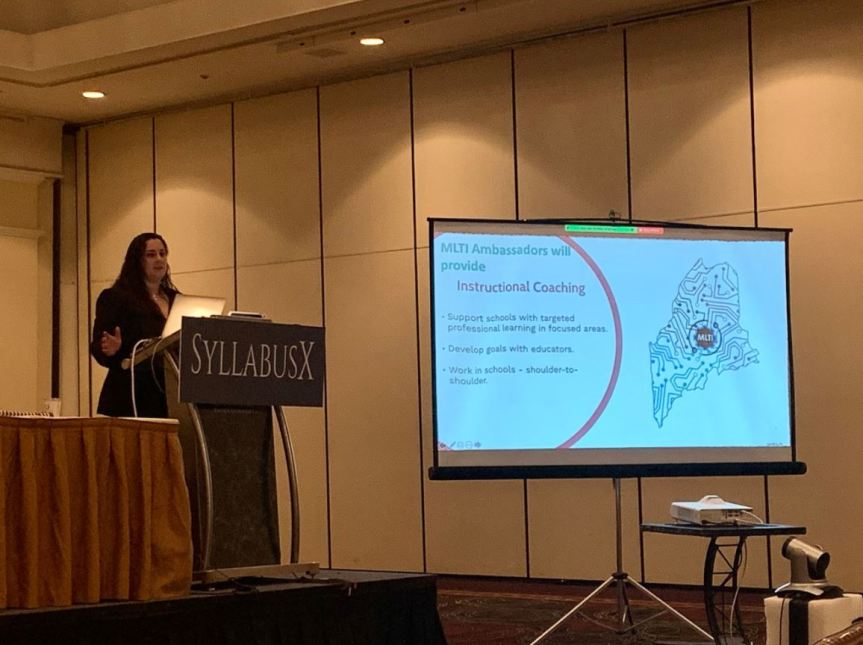
On Thursday afternoon, Digital Learning Specialists, Jon Graham and Emma Banks, led a “Meet the MLTI Ambassadors” session, which provided an overview of professional learning under MLTI 2.0. The Ambassadors (Rob Dominick, Holly Graffam, Kate Meyer, Erik Wade and Jonathan R. Werner) were able to introduce themselves, discuss what drew them to the position, and each shared some aspects of their role within MLTI. The recording of the session has been made publicly available by ACTEM and is available here for viewing:

The ten sessions hosted by the Ambassadors were largely developed from their classroom experiences and several drew heavily from the realities of the past two school years. Kate Meyer’s, “Let’s Talk: Using Parlay Ideas to Practice Civil Discourse,” and Holly Graffam’s, “EdPuzzle, FlipGrid & HyperDocs to Build a Video/Audio Library,” spoke to apps that they used regularly in both in-person and hybrid education settings. Holly also tapped a Technology Engineering teacher, Scott Daigle, to co-present, “Add a Little Fruit to Your Tech Diet with Pear Deck.” Erik Wade, the only Minecraft certified Educator in the state of Maine, brought his expertise to his offering, “Engage, Explore, and Create with Minecraft Education Edition.” Rob Dominick, a Google certified educator and trainer, presented sessions on two popular Google tools in, “Making G Sheets FUNCTIONal,” and, “Powering Up Google Slides.” Aside from the exploration of specific tools, Erik Wade blended science and outdoor education in his sessions, “Engaging Students through Citizen Science” and, “Authentic Integration of Technology and the Outdoors.”

Two additional sessions, facilitated by Jonathan R. Werner, arose from his experience with a pair of concepts that have proven highly successful in shaping educators’ practice both during the pandemic and going forward. The first, “Ready to LAUNCH: Bringing Design Thinking to Your Classroom,” offered educators a glimpse of how Jon Spencer and A.J. Juliani’s, LAUNCH Cycle, with its reliance on iterative thinking and prototyping practices, might apply to a range of classrooms and disciplines. His second session, “Irresistible: Fighting Back Against Addictive Tech,” focused on ways educators can help address the tensions that emerge when our reliance on tech to facilitate teaching and learning bumps up against the tech industry’s aggressive efforts to distract and entertain its consumers.

All of the MLTI Ambassadors’ sessions, as well as dozens of other sessions from ACTEM `21, (plus over a hundred sessions from previous conferences) are available through the ACTEM website for members.

ACTEM’s Vendor Expo Hall provided another opportunity for the MLTI team to connect with some educators from across the state. The MLTI “table” featured a Bitmoji classroom inspired space that offered links to some of the key programs tied to the team. During the afternoon expo time, a rotating group of Ambassadors joined in-person. Some educators joined and made introductions in the chat, while others came right in with their cameras on for some face-to-face discussion. It was a relaxed and welcoming environment. This proved to be another vital step in making contact to educators, especially those at the MLTI Ambassadors’ respective schools, as the MLTI 2.0 professional learning program comes together.

The MLTI Ambassadors are available to provide professional learning to all MLTI schools.  If you are not sure which Ambassador has been assigned your school, check out our interactive map.  If you are interested in connecting with an MLTI Ambassador, contact information is here.  If you are looking to learn more about MLTI 2.0, please check out our website.

Woodland Consolidated School Awarded Technology Grant 

Woodland Consolidated School, a kindergarten through 8th grade school in Northern Maine, is about to be the beneficiary of a major technology upgrade in its classrooms!

Technology Director Lisa Milliard applied for a Rural Utilities Services grant to acquire much needed technology for her school. The Rural Utilities Service is part of the Rural Development division of the US Department of Agriculture (USDA). Through the Distance Learning and Telemedicine Grant that Ms. Millard applied for, Woodlands Consolidated School will be receiving 65-inch interactive displays for every classroom at the school. 

Principal Gillian Laird-Sleeper said that the driving force for the upgrade came from Milliard because she “felt that the school needed some updated technology both in implementation and delivery of lessons, as well as student use of technology.” 

Sixth-grade teacher Sandy Swan, and 7th-grade teacher Cody Tompkins, will be just two of the many beneficiaries of this technology upgrade. They are both thrilled about what the interactive displays will do for their classrooms.

Swan mentioned that she’s hoping the tools that come with the new displays will allow for more creativity for her and her students. While her current board allows her to write, save, and erase, she said, “I cannot manipulate what I put on the board whatsoever.” She hopes this new technology will allow her “to complete lessons more effectively.”  

Tompkins agrees and described the impact of the interactive display as a “true game changer” for his classroom. “A smart board would allow for home to school access for the students who are remote either due to quarantine or exposure to COVID-19,” he says. He also noted that the interactive features would allow more manipulation of materials like graphing in math, diagramming sentence structure in English, and highlighting vocabulary in reading.  

The application of the interactive displays will certainly serve the Woodland Consolidated School staff and students well. As Swan put it, “I cannot wait to see what the tools, gallery and multi-touch options hold in store for us.” 

For more information (requirements, terms, application process) about USDA Rural Utilities Service grants visit: https://www.rd.usda.gov/programs-services/telecommunications-programs/distance-learning-telemedicine-grants. Grant applications are accepted through grants.gov.