Media Release: 2023 Maine Teacher of the Year State Finalists Announced 

Four Maine teachers were announced today as the State Finalists for the 2023 Maine Teacher of the Year program. Eighth grade social studies and English Language Arts teacher Heather Anderson from Aroostook County, ninth grade humanities and social studies teacher Matthew Bernstein from Cumberland County, fourth grade math, writing, and science teacher Ashley Bryant from Oxford County, and high school social studies teacher Emily Albee from Penobscot County were all selected to move forward in the Teacher of the Year process and were chosen from the 2022 Maine County Teachers of the Year.

“I am in awe of the work of all of Maine’s educators and their commitment to their students and Maine schools. Maine’s teachers make possible the daily miracle that is public education,” said Maine Education Commissioner Pender Makin. “I couldn’t be prouder of these four Teacher of the Year State Finalists for representing the best qualities of Maine’s amazing educators. They exude optimism for public education, a commitment to their profession and to building relationships across their communities, and the energy and drive to make education wonderful for all their students, and for all students in Maine. Congratulations to each of you for this very well-deserved honor.”

One of the four State Finalists will be named the 2023 Maine Teacher of the Year, an honor awarded each year to one teacher in Maine. The announcement will be in October after the final stages of the selection process are complete. Maine’s Teacher of the Year serves as an advocate for the teaching profession, Maine schools and students, and represents Maine in the National Teacher of the Year program.

Each educator was nominated by a member of their community for their exemplary service in education and dedication to their students. They were selected by a distinguished panel of teachers, principals, and business community members from a pool of hundreds of other nominated teachers in their communities. The Maine Department of Education, Educate Maine, the Maine State Board of Education, and the Maine County and State Teacher of the Year Association made the announcement about the finalists.

“Maine is fortunate to have so many outstanding educators working to ensure the social, emotional and academic well-being of our students,” said Dr. Jason Judd, Executive Director, Educate Maine. “These State Finalists are exemplary models of the vibrant teaching that goes on in Maine classrooms. Congratulations to them and to their districts.  We look forward to working with them as they continue their journey as teacher leaders and ambassadors for the profession.”

“The quality of Maine schools is propelled by the strength of our teaching workforce and these state finalists embody all that we look for in the profession – talent, hard work, dedication, and strong beliefs that all Maine students deserve a high quality and supportive education,” said Maine State Board of Education Chair Desjardins. “Congratulations to all!”

“Maine educators exemplify professionalism, compassion, and commitment to their students, families, and communities,” said Heather Whitaker, 2020 Maine Teacher of the Year and Co-President, Maine County and State Teacher of the Year Association (MCSTOYA). “Our finalists, who represent teachers from across the state, are leaders in the field.  We are eager to learn from their expertise as we work together in our shared commitment to Maine public education.”

More information on the State Finalists and the Maine Teacher of the Year program:

Heather Anderson
Caribou Community School, Caribou
2022 Aroostook County Teacher of the Year

“I feel so fortunate to have had this opportunity to collaborate with other amazing educators, to reflect on my own teaching practices, and to shine a light on the incredible educators in Aroostook County and in the great state of Maine.” 

Heather Anderson teaches 8th grade social studies and English Language Arts at Caribou Community School, part of RSU 39, where she believes that strong relationships are the building blocks of positive school experiences and success for students. By fostering mutual respect, actively listening, sharing interests, and providing guided choices, Anderson works hard to celebrate her students’ strengths and pinpoint students’ needs both individually and collectively. Recently, in response to mental health needs she witnessed during the 2021-2022 school year, Anderson worked collaboratively with her co-teacher and strived to build engaging units that focused on overcoming difficulties through resiliency. She is currently working with her humanities team to bring awareness to social issues through a middle-school-read project and the implementation of a new Civil Rights Team in her district. Anderson partnered with her community to bring in programs from her local mental health agency to supplement her curriculum and provide students with educational opportunities and coping strategies. Anderson earned her Bachelor’s degree in Elementary Education with a concentration in psychology, from the University of Maine and also holds a Master’s Degree in Education from the University of New England as well as two endorsements, for Teaching Principal and Early Elementary. She is the 2022 Aroostook County Teacher of the Year and, as a lifelong learner, is always looking for new opportunities to grow as an educator.

Matthew Bernstein
Casco Bay High School, Portland
2022 Cumberland County Teacher of the Year  

“I’m extremely humbled and grateful for this recognition and, even more so, for the opportunity to work with inspiring colleagues, families, and students and for the guidance I’ve received throughout my career from so many in my community. The recognition I am receiving currently is only possible because of how much others have done, and continue to do, to support me and because I have the gift of working with incredible students.” 

Matt Bernstein is a 9th grade humanities social studies teacher at Casco Bay High School in Portland, Maine. Bernstein has a Bachelor of Arts in History with a European History concentration from Bowdoin College where he was also a Bowdoin Teacher Scholar. He is the 2022 Cumberland County Teacher of the Year. Bernstein’s pedagogy is centered around student voices and student activism. He believes that the purpose of education is to help students find their way of contributing to a more equitable world. Bernstein is also passionate about creating opportunities for students to experience joy and belonging at school on a daily basis and, to that end, he believes in cultivating meaningful relationships with students, often through his work as a 9th grade crew advisor, that are grounded in deep listening and holistic support. Bernstein has served as a team leader, crew team leader, and is currently a professional learning community coach where he facilitates ongoing professional learning with his colleagues. He is also a member of the Portland Public Schools Social Studies Vertical Content Team, collaborating with teachers across the district and local experts to develop Wabanaki Studies curriculum. Bernstein also embraces opportunities to deepen his knowledge and practice. He was recently named a 2022 National Endowment for the Humanities Summer Scholar, participating in a seminar entitled “Teaching the Holocaust through Visual Culture.” While not teaching, Bernstein is playing or coaching soccer and basketball, reading a book, or trying to determine where to find Portland’s best slice of pizza.

Ashley Bryant
Sacopee Valley Middle School, Hiram
2022 Oxford County Teacher of the Year  

“Being recognized as a finalist for Maine Teacher of the Year is an honor. As a member of the Sacopee Valley School district, of which I was a student myself and am now lucky enough to teach in as a professional, I am endlessly proud and thankful for the supportive and collaborative nature of this community.” 

Ashley Bryant teaches fourth grade math, writing, and science at Sacopee Valley Middle School, part of Maine School Administrative District #55 located in Hiram, Maine. Bryant, a Maine native, graduated from the University of Maine at Farmington with a Bachelor of Science degree in Elementary Education with a concentration in English and from the University of Southern Maine with a Masters of Science Degree in Education. Bryant spends each summer teaching -pre-kindergarten, preparing and engaging with the youngest of public school learners. She is the 2022 Oxford County Teacher of the Year. As a lifelong learner, Bryant continuously seizes professional development opportunities to best serve her students and community. In 2013, she became a National Board Certified Teacher in the area of Early Adolescence English Language Arts; she cites the experience as one of the most beneficial opportunities of her career to build on her strengths and identify and improve on areas for growth. Bryant believes all students should feel welcomed, safe, and represented at school which is why she co-advises the school’s Civil Rights Team and supports the inclusion of Social Emotional Learning. Personally connecting with and caring about each individual student has a significant impact on readiness to learn so she makes building positive relationships a top priority. Professional development about Multi-Tiered Systems of Support and fair and equitable grading also influence Bryant’s craft. If she’s not at school or collaborating with other educators, she’s reading, exercising, or at a beach with her husband and their daughter.

Emily Albee
Hampden Academy, Hampden
2022 Penobscot County Teacher of the Year  

“I continue to be honored and grateful to serve as the 2022 Penobscot County Teacher of the Year, working with a tremendous and talented cohort of 15 other county teachers. To be included as 1 of the 4 finalists for Maine Teacher of the Year energizes me to continue to advocate for students, teachers, and education in Maine.” 

Emily Albee is a social studies teacher working with grades 9-12 at Hampden Academy, part of Regional School Unit 22, in Hampden, Maine. Albee earned a Bachelor of Science in Elementary Education with a second Major in History, a Master’s Degree in Education focusing on Middle Level Social Studies, a Certificate of Advanced Study in Technology and Social Studies, and a Graduate Certificate in Innovation Engineering all from the University of Maine. Albee considers it the honor of her lifetime to work with young people. She enjoys helping students discover their curiosity for learning and ways to meaningfully engage with the world around them. She works hard to present diverse social studies content through an equity lens while helping students build an understanding of the impact of the past on the present. Albee enjoys learning from her students and has never experienced the same day twice in her classroom. She continues to commit to her lifelong learning journey by engaging with various leadership experiences in her district. Her experiences range from coaching middle school track, to securing funding to purchase bees for the HA Beekeeping Club, promoting restorative practices, and participating in a ride along with the Penobscot County Sheriff Department as research for her Law & Ethics students. Albee is an active union member and serves as the Co-Chair for the Human, Civil Rights, and Social Justice Committee of the Maine Education Association. Albee enjoys spending time with her family and traveling the world.

The Maine Department of Education’s Teacher of the Year program is administered through a unique partnership with Educate Maine, the Maine County and State Teacher of the Year Association (MCSTOYA) and the Maine State Board of Education. Funding for the program is generously provided by Bangor Savings Bank, Dead River, Geiger, Hannaford, Maine Lottery, the Silvernail Family, and Unum.

For more information about the Maine County Teacher of the Year Program and to see a list of County Teachers of the Year, and Maine Teachers of the Year, visit http://www.mainetoy.org.

###

Media Release: Maine Education Commissioner Pender Makin Joins US Secretary of Education Miguel Cardona, New England State Education Chiefs for Regional Education Summit in Rhode Island

Maine Education Commissioner Pender Makin joined U.S. Education Secretary Dr. Miguel Cardona and Commissioners of Education from every New England state for the Reimagining Education & New England’s Workforce (RENEW) Summit 2022 hosted by education officials in Rhode Island. Makin also participated in a panel discussion with Secretary Cardona to discuss the ways that Maine is accelerating learning through interdisciplinary, project-based instruction.

“This Summit brings together the unique and diverse perspectives of education and business leaders from across New England to learn from one another as we collectively identify strategies to strengthen public schools. It was an honor to serve alongside Secretary Cardona as a panelist today to share the innovative educational approaches we are supporting in Maine schools. Multiple pathways, including Extended Learning Opportunities, CTE programs, the Maine Outdoor Learning Initiative, and other interdisciplinary, project-based, applied learning activities, effectively engage students in higher order thinking and real-world problem solving,” said Maine Education Commissioner Pender Makin. “These approaches not only efficiently accelerate learning across multiple content areas, they also prepare students for success in post-secondary education, jobs, and careers.”

The Summit convened education and workforce leaders from across New England for a robust discussion on building strong college and career pathways and accelerating learning in the wake of the COVID-19 pandemic.

“As Secretary of Education, I hope to maintain intentional partnership with this group of New England chiefs as they continue to move opportunity forward in our country,” said U.S Secretary of Education Dr. Miguel Cardona. “I want to share my gratitude towards this group for working to make sure education is equitable for students. We are working to reimagine education, everyone here should be proud of what they’ve accomplished. The worst thing we can do now is become complacent.”

“I’m excited about the potential that exists in the room today, the value that each of our New England states brings to our collective effort to expand career-connected education,” said U.S. Assistant Secretary for Career, Technical and Adult Education Dr. Amy Loyd. “I’m grateful to these public and private sector leaders whose work will help young people build rewarding futures.”

Held at the International Tennis Hall of Fame in Newport, the inaugural RENEW Summit featured panel discussions and cross-sector, cross-state breakout groups, allowing participants to highlight successes, analyze challenges and establish strategies to break down barriers and bolster student achievement. New England School Chiefs traditionally hold an annual meeting to promote collaboration and share best practices to address pressing issues in education; last year, they convened in Massachusetts.

At RENEW, the six New England School Chiefs, including Frank Edelblut (NH), Daniel French (VT), Infante-Green (RI), Pender Makin (ME), Jeffrey Riley (MA), and Charlene Russell-Tucker (CT), signed a resolution in support of regional collaboration to accelerate student learning and build college and career pathways. Within the resolution, the school chiefs pledged to actively engage workforce, higher education, state and local government officials, and community leaders to collaboratively marshal strategies and resources necessary to meet collective goals.

The RENEW Summit will be held in Vermont next year.

New England School Chiefs expressed excitement for the partnership and added the following:

“New England’s School Chiefs meet regularly to share information, collaborate, and work together to strengthen public education across our region. The RENEW Summit is the culmination of strong relationships, communication, and one common goal: help students leap ahead in academic achievement while preparing them for the global economy,” said Commissioner Infante-Green. “Together, we are establishing a bold vision that we hope inspires regional collaboration around the country. We are grateful to have hosted the inaugural annual RENEW Summit and look forward to strengthening these partnerships in the years ahead.”

“Throughout the pandemic, as the education leaders from each of the New England states, we met weekly to collaborate and make sure we were bringing forth the best options to support our students,” said New Hampshire Education Commissioner Frank Edelblut. “This spirit of collaboration has continued as we work with and support each other in recovery efforts and to make sure we create pathways to bright futures for all of our students.”

“It’s a pleasure to be part of this summit and collaborate on ways to make learning more engaging and relevant for students, both in terms of their time in the classroom and by connecting them with opportunities related to college and a career,” said Massachusetts Education Commissioner Jeffrey C. Riley. “As we in Massachusetts work on initiatives like Early College, Innovation Pathways, and Deeper Learning, it’s helpful to hear how our neighboring states are preparing their students and find areas where we can learn from each other.”

“Working with my colleagues around New England, discussing shared challenges and learning about new and novel solutions was immensely valuable to Vermont’s pandemic response,” said Vermont Secretary of Education Dan French. “Now we are moving toward education recovery and building an education system for the 21st Century, focused on quality and equity. I am looking forward to continued partnership with our neighbors to discuss our shared goals and shared challenges, and build a better future for New England’s students.”

“This collaborative effort will help us develop important new connections so that together, as a region, we can build a career pathways coalition which will not only benefit all New England students and businesses, but serve as a national model,” said Connecticut Education Commissioner Charlene Russell-Tucker. “I am pleased to be joined by Connecticut’s Higher Education, Business and Workforce Development leaders at this summit to share best practices and successes, while continuing to grow our partnership with our New England counterparts.”

###

Media Release: Computer Science Education Showcase Highlights Maine’s Interdisciplinary, Project-Based Approach to Computer Science

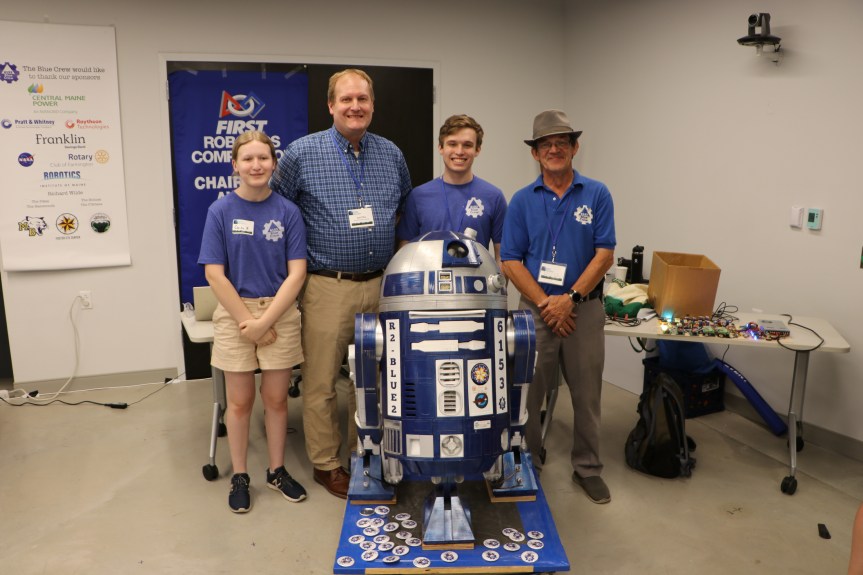
Students and educators from across Maine showed off their computer science skills at the Maine Department of Education’s Computer Science Education Showcase at the Roux Institute. The showcase highlighted innovative computer science education programs in schools across Maine, with hands on, interactive exhibits featuring robotics, artificial intelligence (AI), 3D design and printing, coding, augmented reality/virtual reality (AR/VR), data science, cybersecurity, and more.

Maine has long been a leader in integrating technology and learning, and that holds true with computer science education. Instead of computer science being a separate course only some students take or an “add on”, Maine provides the support and resources to encourage all schools to provide interdisciplinary, project-based computer science learning experiences that incorporate computational and critical thinking, innovation and design processes, and applied learning at all grade levels and across all subject areas.
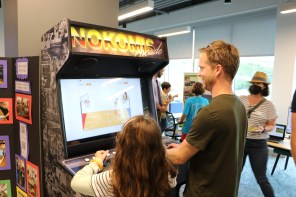
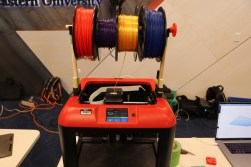
The Computer Science Education Showcase illustrated the state’s approach, with VR headsets transporting users to Maine State Parks which a student developed over the course of last summer, 3D printing demonstrations, a full-size arcade game developed by students, 6th graders demonstrating their block coding skills, a wide array of apps and websites around difference content areas created by students, and a robotics room with world champion level robotics teams. All Pre-K through 12 grade levels were represented, with educators highlighting how they were incorporating computer science education at younger grade levels, including having 5th grade students partner with kindergarten students to teach them basic coding skills and a new mobile makerspace that will rotate between elementary schools offering computer science education for Pre-K through fifth grade students.
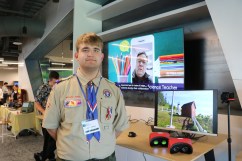
Maine Department of Education Commissioner Pender Makin, University of Maine President Joan Ferrini-Mundy, 2022 Presidential Scholar Sirohi Kumar, Bethel second grade teacher Alice Lee, Jackson Labs Vice President for Education Charlie Wray, and the Roux Institute’s Chief Administrative Officer Chris Mallett participated in a panel discussion on how Maine is paving the way for students and teachers to be successful in the world of computer science. The discussion focused on reaching more students, making computer science more accessible to all, taking an interdisciplinary approach to computer science education, and how the critical and computational thinking, collaboration, and creative design skills developed through computer science education are critical to success in nearly every career and 21st century life.

“Computer science is about approaching a problem with optimism, logic, critical thinking, design thinking, creativity and vision. We need to make computer science accessible for every educator and every student and continue this tradition that we’ve started in Maine of interdisciplinary, project-based computer science education across all grades that is really contextualized in a way that is meaningful for kids,” said Education Commissioner Pender Makin.
“There is this perception of computer science that it’s for an elite group, and in reality that’s not the case–it can be used for everything including art, science, and music. I think computer science education should be framed for everyone at a very young age that computer science can solve whatever problem or scenario you have regardless of what field it is,” said Sirohi Kumar a 2022 Presidential Scholar from Mount Desert Island.

“The more we can engage with computer science at the Pre-K through 12 level, the more ready everyone is for whatever comes afterward. These students here tonight are getting a head start with these skills. It’s going to matter for your futures,” said University of Maine President Joan Ferrini-Mundy.

“Building those skills of computer science at the youngest level—problem solving, debugging, innovating, and creativity. These basic skills are really what our young learners need to take off academically,” said second grade teacher Alice Lee from Bethel.

“We now live in a world that is immersed in big data and the amount of data being generated is so tremendous that this next generation has this great opportunity to enter so many career fields where computer science has a touchpoint. It’s not just being a software engineer or computer scientist, but all of us can learn and solve problems with big data and the amount of careers that can come out of good computer science education is endless,” said Jackson Labs Vice President for Education Charlie Wray.
“This concept of computer science for everyone is important. These competencies and literacies are no longer siloed; they work across the spectrum. The logic and reasoning that comes from computer science paired with the creativity of a liberal arts education, it’s the intersection of these skills that all of us have the potential to develop that is going to propel the Maine economy and the Maine workforce of the future,” said the Roux Institute’s Chief Administrative Officer Chris Mallett.

The Maine Department of Education and the Mills administration continue to support and bolster computer science education in Maine:

  • The DOE works continually with educators, business leaders, and others to update and adapt Maine’s statewide computer science education plan and the Department’s work is guided by seven key principles;
  • Governor Mills signed onto Governor Hutchison’s computer science compact;
  • The DOE hired a computer science specialist to work with schools and has committed additional resources to support educators and schools in integrating authentic, project-based Pre-K through 12 computer science education;
  • Governor Mills signed a bill providing $50,000 in professional learning support for educators on computer science, with an emphasis on educators in rural areas and serving marginalized communities, and another $50,000 will be awarded this coming school year;
  • Next month’s Educator Summit will feature several professional learning opportunities for educators on computer science education;
  • The DOE developed its first Pre-K through 12 online computer science learning progression last year focused on computational thinking and a new progression will soon be launched; and
  • The DOE is doubling the number of Maine Learning Technology Initiative (MLTI) Ambassadors that work in schools to support the integration of technology and learning, including computer science education.

###

Media Release: Governor Mills Announces Maine Outdoor Learning Initiative to Provide Maine Students Hands On, Outdoor Coastal Learning Experiences this Summer

Delivering on a promise from her State of the State Address, Governor Janet Mills announced today the launch of the Maine Outdoor Learning Initiative to provide Maine students with hands-on, outdoor learning experiences this summer.


The Initiative, developed by the Maine Department of Education using Federal funding, will give middle and high school students the opportunity to participate in marine and coastal ecology learning programs, including marine research and exploration, boat building, sailing, career exploration with marine businesses, island immersion programs, and more.


For example, The Ecology School will take students on field trips to sand beaches, tidepools, and salt marshes to learn about Maine’s coastal ecosystems. The Herring Gut Coastal Science Center will expose students to sea run fish streams, oyster farms, mudflats, hatcheries, and laboratories, while also touring marine businesses across the Midcoast to let students see firsthand potential careers in Maine’s maritime industries. Sailing Ships Maine will offer students the chance to sail aboard a commercial training ship as an active member of the crew.


This outdoor learning Initiative will benefit at least 1,000 students from across Maine, with a focus on students from low-income families from regions of Maine where they do not typically have access to such experiences. 


“The Maine outdoors is one of our greatest treasures. At a time when devices and screens too often grab the attention of our kids, getting them outside and connected to our state has never been more important,” said Governor Janet Mills. “In my State of the State Address, I promised that we would partner with outdoor organizations to create new learning opportunities and help young people who may have lost ground in school during the pandemic. Today I’m delivering on that promise. Our Maine Outdoor Learning Initiative will help our students learn, grow, develop new skills, and build an appreciation for the outdoors that will lead to new, lifelong interests.”


“The Maine Outdoor Learning Initiative offers hands on, highly engaging programs that allow Maine’s young people to explore and learn from our state’s amazing bounty of natural resources,” said Pender Makin, Commissioner of the Maine Department of Education. “Being outside connecting with nature and each other is so important in helping students recover from the pandemic. These outdoor learning experiences will build teamwork and leadership skills, reduce stress and anxiety, and develop new skills in our vast outdoor classroom which will translate to success inside the classroom as well. We thank all of the organizations that stepped up to be a part of this exciting initiative.”


This kind of experiential learning is highly engaging and allows students to problem solve and learn new skills in real world settings, build teamwork and leadership skills, increase self-confidence, and develop an appreciation of nature.


Spending time outdoors has been shown to help reduce stress and anxiety and to equip students with skills and knowledge that can help them succeed inside the classroom. Being able to interact with nature while building connections with peers is also beneficial students’ recovery following the disruptions and difficulties caused by the pandemic.    


The organizations that will receive funding through the Initiative welcomed the announcement:


“Governor Mills’ new Maine Outdoor Learning Initiative is such a breath of fresh air for Maine kids and for innovative education throughout the state. Through the support of the Maine Department of Education, Maine kids in middle school and high school will have access to experiential education experiences that get kids outside this summer to explore Maine’s amazing diversity of coastal ecosystems,” said Drew Dumsch, Ecology School Executive Director. “As part of the Initiative, The Ecology School is proud to be offering three sessions of the new Governor’s Academy for Coastal Ecology this July and will be offering up to 180 camperships for Maine students entering grades 6-9 to attend a free week of camp at our River Bend Farm campus in Saco.” 


“Schoodic Institute is thrilled to work with the Maine Outdoor Learning Initiative to create hands-on coastal education opportunities here in Downeast Maine for under-resourced schools and low-income families,” said Nicholas Fisichelli, President and CEO of Schoodic Institute at Acadia National Park. “Furthermore, the early-career internship positions created through this initiative will be springboards for bright careers in outdoor education in Maine.”


“Downeast Institute is delighted to have received support from the Maine Outdoor Learning Initiative,” said Dianne Tilton, Executive Director of the Downeast Institute. “We have been helping students for years to enjoy science and math using outdoor marine science activities, and are excited to expand our program this summer.”


“All of us at Herring Gut Coastal Science Center are excited to bring the wonders and possibilities of marine science and aquaculture careers to Midcoast youth,” said Tom Mullin, Executive Director, Herring Gut Coastal Science Center.  The middle school and high school students will have a chance to have some fantastic hands on experiences made possible by these grants.”


“We are thrilled to have been awarded the
Maine Outdoor Learning Initiative grant from the State of Maine,” said Adam Shepard Executive Director of Rippleffect. “The programs at Rippleffect, focused on connecting participants to themselves, each other, and the natural world around them, are more important now than ever. This grant will help us continue to grow these opportunities for all children in Maine.”


“Thanks to the support of the Maine Outdoor Learning Initiative, Sailing Ships Maine will be able to connect more Maine students who need step-up experiences, the chance to disconnect from social media, and the opportunity to engage human-to-human in problem solving challenges that build connection and confidence,” said Alex Agnew, Executive Director of Sailing Ships Maine. “By taking a leap and going to sea for a multi-night tall ship sailing experience, students’ minds can be broadened about the potential of their lives at the same time they are gathering valuable skills in leadership, teamwork, science, technology, engineering and math in a fascinating and engaging hands-on learning environment. We are thrilled to be a partner in this initiative for Maine students!”


“Maine Maritime Academy is excited to have been selected as a grant recipient through the Maine Outdoor Learning Initiative in support of Summer Coastal Ecology Programs. With the expansion of the Discovery Voyage program, MMA will be able to introduce students from around Maine to the coastal estuaries and marine environments that are vital to the economic sustainability of the coastal ecosystems of our state,” said Kimberly Reilly, Vice President of Enrollment Management and Marketing for Maine Maritime Academy. “Maine Maritime Academy’s location on Castine Harbor allows students to go beyond the classroom and affords them the opportunity to be on the water for an up-close exploration of coastal environments.”


“Hurricane Island Center for Science and Leadership is honored to receive DOE funding to support new and expanded experiential science education initiatives in partnership with The Game Loft, The University of Maine 4-H Camp & Learning Center at Bryant Pond, The Apprenticeshop, Hurricane Island Outward Bound School, along with teachers and leaders at partner schools across the state,” said Tara Elliott, Grants Coordinator for Hurricane Island Center for Science and Leadership. “This support from the DOE will bring  new students to Hurricane Island’s sustainable campus for hands-on learning and will expand our education initiatives into the school year, bolstering support for teachers and schools implementing place-based learning while also getting students more time doing science outside. We hear firsthand from students and teachers about the uniquely impactful experience of learning on Hurricane Island, and we are grateful to be able to offer these experiences to a greater number of Maine youth.”


Organizations participating in the Maine Outdoor Learning Initiative include: Herring Gut Coastal Science Center in Port Clyde, Hurricane Island + Bryant Pond in Bryant Pond, Hurricane Island + Game Loft, Maine Maritime Academy in Castine, Sailing Ships Maine in Portland, the Ecology School in Saco, Boothbay Sea and Science Center in Boothbay, Casco Bay High School and Rippleffect in Portland, Downeast Institute for Applied Marine Science and Education in Beals, Hurricane Island Foundation in Rockland, Laudholm Trust in Wells, Rippleffect in Portland, Schoodic Institute at Acadia National Park, and the University of Maine System Cooperative Extension summer camps at Blueberry Cove and Tanglewood.


The Initiative is funded by nearly $900,000 in Federal funding from the Governor’s Emergency Education Relief Funds. Full program descriptions can be found here.

Media Release: Maine School Safety Summit Brings Together More than 300 Educators, School Leaders, and Law Enforcement Personnel to Collaborate on School Safety Issues

The Maine Department of Education’s Maine School Safety Center held its annual Maine School Safety Summit this week at Windham High School, with a focus on how educators, school leaders, law enforcement, and communities can increase collaboration and communication around school safety strategies. The three-day summit attracted more than 300 participants from across the state with roles ranging from school principals, social workers, and nurses to school resource officers, first responders, and emergency preparedness professionals.

Nearly 50 workshops were offered on a wide range of school safety topics, including trauma awareness; supporting the safety and well-being of young people; brain science; restorative practices; social media use; emergency operations planning; food security linked to school security; behavioral threat assessment; bus safety; and more. Staff from the Maine Department of Education’s Office of School and Student Supports and Office of School Facilities and Transportation also helped lead several workshops.

The Maine School Safety Center (MSSC) was created two years ago, and codified into law this year, with the mission of developing a safe school infrastructure that will deliver high quality, up-to-date best practices, procedures, training, and technical assistance and support to Maine schools. MSSC offers school supports and services on school emergency management, threat assessment and mental health, restorative practices, training, and school safety and security. MSSC has provided hundreds of trainings, courses, and professional learning experiences to support school staff and school leaders throughout Maine.

MSSC’s approach to school safety is comprehensive and is guided by the beliefs that supporting the well-being of students and a healthy school environment is essential to the reduction of behaviors that threaten the safety of the school community; everyone who comes in contact with students and a school system has a responsibility to help create and sustain a healthy school environment and ensure a student’s well-being; the school environment, culture, approaches to discipline, and interface with the community are crucial to the well-being of all students, and particularly to those students who are alienated from the school program and those with behavioral and/or mental health issues; and schools and communities need to collaborate to create a systematic approach to school safety.

“This summit was planned long before the tragedy in a Texas elementary school last month, but that event, and so many others, certainly underscore the fact that school safety and security, emergency prevention, and emergency response preparedness remain top concerns for students, staff, families, and communities nationwide and here in Maine,” said Education Commissioner Pender Makin in her keynote address. “This three-day event offers a wide variety of professional learning opportunities and technical assistance to help schools and their community partners enhance all aspects of school safety, ranging from culture and climate to hazard planning to crisis response and recovery planning. What is clear throughout all of the sessions, and reinforced by who is here attending the summit, is the overarching message that partnerships, relationships, communication, and collaboration are the keys to this work.”

“We all know that when we put our minds and our hearts together, we can be brilliant. Throughout the last 27 months, we have all worked together to stay safe, to keep our schools open and to make sure that we took care of our students and each other–both professionally and personally,” said Eileen King, Executive Director of the Maine School Superintendents Association. “Keeping our students and staff safe is the priority, change is the reality, and collaboration must be the strategy.”

“School boards across the state engage in and support sound school safety practices for students and staff,” said Steve Bailey, Executive Director of the Maine School Board Association. “Through the leadership of the DOE’s Maine School Safety Center, and the collaboration with other partner agencies and associations, this identified effort to expand and promote safety practices and important inter-agency relationships will be an important next step to helping keep our schools safe, while also knowing what to do and who to turn to should additional resources be needed.”

“Safety is a top priority for students and for school staff, and with safety encompassing so many things, physical and emotional/mental health, security, cyber, food security, and more, we need to do what we can to work collaboratively to address these issues and provide the public education our students deserve,” said Grace Leavitt, President of the Maine Education Association.

“It’s imperative that law enforcement and educators have an open line of communication and a collaborative working relationship,” said Chief Kevin Schofield, Maine Chiefs of Police, Windham Police Department. “It’s incumbent upon all of us to take this issue seriously and work together to make sure our students and schools are as safe as possible.”

The Maine School Safety Summit was sponsored by the Maine Department of Education, Maine Juvenile Justice Advisory Group, Maine School Superintendents Association, Maine Chiefs of Police Association, Maine Sheriff’s Association, Maine Principals Association, Maine Department of Corrections, Maine School Resource Officers Association, Strategies for Youth, and Maine School Board Association.


MEDIA RELEASE: Maine DOE Welcomes 9 Interns for the Summer

The Maine Department of Education (DOE) has welcomed nine new summer interns this year, who began their work on May 31st. The interns were selected for positions in the Maine DOE by the University of Maine’s Margaret Chase Smith Policy Institute’s Maine Government Summer Internship Program. Over the course of the summer, the interns will assist in daily operations in the Maine DOE and gain professional experience and perspective. The Maine DOE is delighted to welcome the interns along with their energy and ideas.

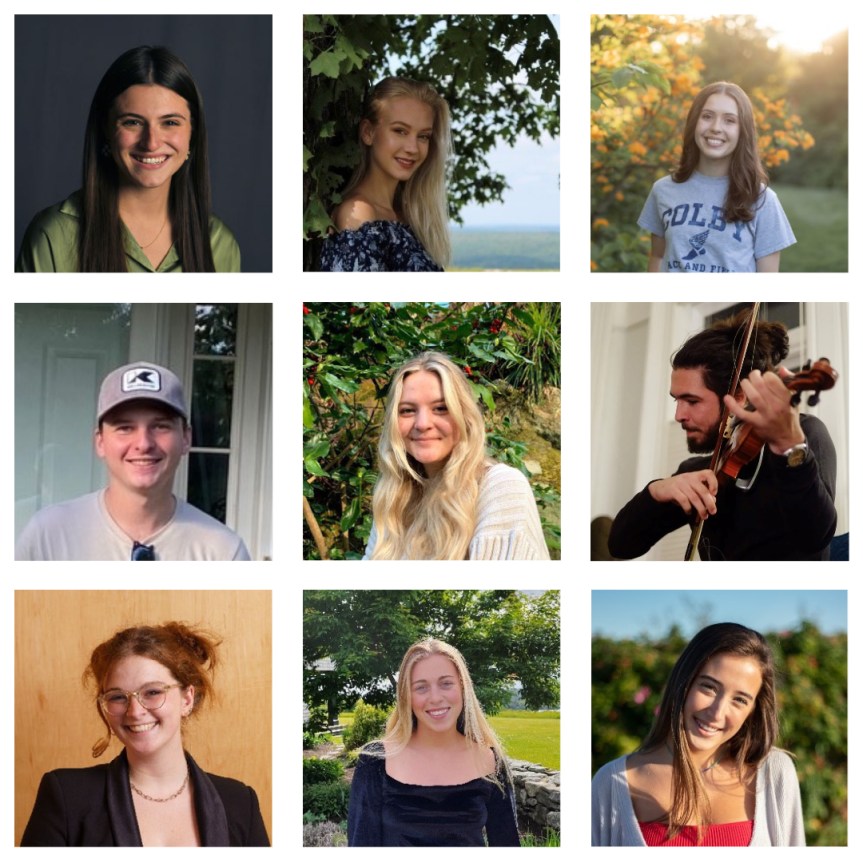
woman smiling in green shirt
Alexa Bryant, Communications Team Intern

Alexa Bryant is a rising junior at Middlebury College majoring in political science and minoring in Chinese. She is originally from Parkland, Florida, but now lives in Hartland, Maine. As the Communications Team Intern, Alexa is excited to publish content to the Maine DOE channels this summer. When out of office, she enjoys paddle boarding and cooking.

woman leaning against tree
Erin Frankhauser, Computer Science Education Research Assistant

Erin Frankhauser is from Pittston, Maine. Currently, she is a double major in criminology and psychology at St Thomas University. After completing her undergraduate degree, she hopes to attend graduate school with the long-term goal of being a social science researcher. As a Computer Science Research Assistant this summer, she will be working with the Maine DOE Computer Science Specialist to develop and test a landscape study survey tool that will be used in the Fall of 2022.

woman standing in a field
Grace Harvey, Innovative Education Assistant

Grace Harvey is a rising junior at Colby College from Old Town, Maine. She is double majoring in sociology and science, technology and society. After Colby, she hopes to continue onto law school. This summer, Grace will be working on the Maine Opportunities for Online Sustained Education (MOOSE) team as an Innovative Education Assistant and hopes to aid in creating a more equitable learning option for students around the state.

man in a brown shirt
Chase Holak, Records Management and Operations Intern

Chase Holak is a business economics major at University of Maine Farmington. He is originally from Doylestown, Pennsylvania. This summer he will be working as the Records Management and Operations Intern, assisting in procurement and ensuring that all the Maine DOE’s records are organized.

woman smiling in a white shirt
Carrie Jeffrey, Climate, Culture, and Resiliency Team Intern

Carrie Jeffrey is a George Washington University student from Blue Hill, Maine. She is double majoring in political science and journalism and minoring in graphic design. Outside of the office, she enjoys running, painting, and volunteering at the Smithsonian National Museum of Natural History in the Butterfly Museum and Insect Zoo. This summer, she will be interning with the DOE as the Climate, Culture, and Resiliency Team Intern, and is hoping to meet a wide variety of people and gain more insight into governmental processes.

man playing violin
Gus LaCasse, Computer Science Education Research Assistant

Gus La Casse is from Trenton, Maine. He attends University of Maine Orono for political science and environmental ethics. This summer, he will be working on a survey pertaining to Computer Science Education in Maine schools as a Computer Science Education Research Assistant.

woman in a suit
Cat Merkle, MTSS Framework Content and Web Development Assistant

Cat Merkle is a rising senior from New Jersey studying education and environmental science at Colby College. She was excited to come across this internship opportunity because her experience in Colby’s Education Program has inspired her to pursue a career in educational policy. In her free time, she is involved in Student Government, ultimate frisbee, Colby Cares About Kids, a cappella, and she loves to play music with her band. This summer, she is really looking forward to meeting other student interns interested in education policy and learning more about the Multi-Tiered Systems of Supports (MTSS) framework as the MTSS Framework Content and Web Development Assistant.

woman in a black dress
Ella Pierce, Learning Through Technology Data and Media Assistant

Ella Pierce is from Camden, Maine. She is a rising junior at Wellesley College where she studies political science and psychology on a pre-law track. This summer, she will be working with the Learning Through Technology team to create a database of Maine schools’ social media presence and highlight the exciting and innovative happenings in Maine schools as the Learning Through Technology Data and Media Assistant.

woman smiling
Piper Strunk, Innovative Education Assistant

Piper Strunk is a rising junior at Bates College. She is an economics major and education minor from Cape Elizabeth, Maine. This summer she will be working with the Office of Innovation as an Innovative Education Assistant, helping to improve the existing MOOSE modules. She is thrilled to be a part of this program and looks forward to helping create meaningful and engaging educational content for all students across Maine.

Media Release: Maine Department of Education Awards $2.5 Million in RREV Funding to Support Education Innovation

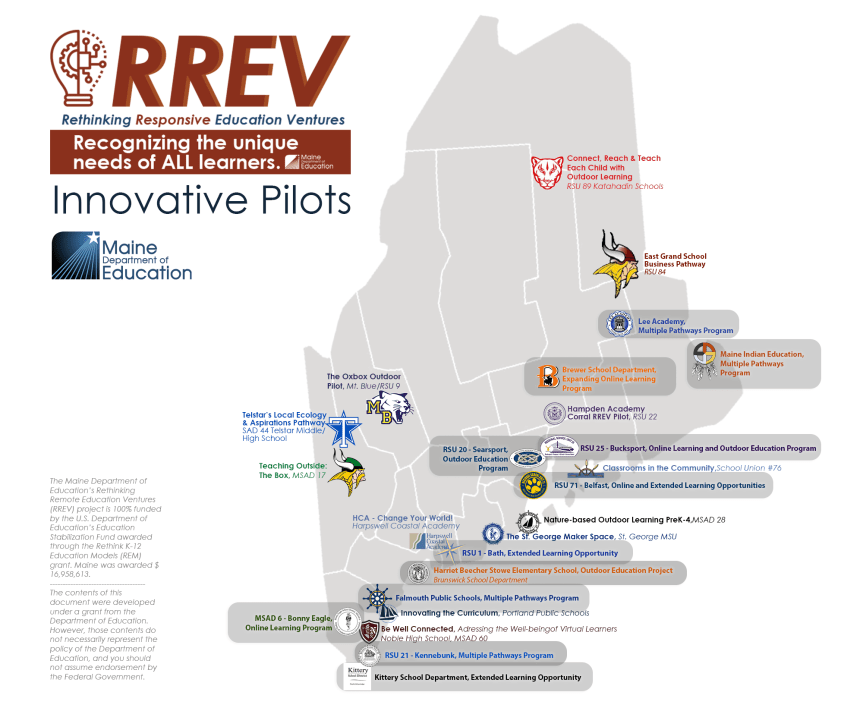
The Maine Department of Education (DOE) today awarded $2.5 million in Rethinking Responsive Education Ventures (RREV) funding to support education innovation in twelve school administrative units (SAUs) across Maine. These funds will be used to support educational research and design projects focused on alternative education strategies, interdisciplinary/experiential learning, environmental stewardship, Wabanaki culture and heritage, outdoor education, and internship opportunities, as well as supporting unique approaches to remote learning.

Awardees for this third round of RREV funding include Lee Academy, Brunswick, RSU 21 in Kennebunk, Maine Indian Education, RSU 1 in Bath, Brewer, RSU 71 in Belfast, MSAD 6 in Bonny Eagle, RSU 25 in Bucksport, Falmouth, RSU 20 in Searsport, and Kittery. The first round of RREV investments were made last fall, a second round in March, and total RREV investments now near $6 million.

“RREV investments help fuel educational research and design and the innovation and creativity of Maine educators,” said Education Commissioner Pender Makin. “We’re excited to invest in these educator-led efforts to deepen student engagement through interdisciplinary learning, expand learning beyond the traditional classroom to include the outdoors and environmental stewardship, explore Wabanaki culture and heritage, expand alternative education strategies, and allow students to explore career paths that fuel their passions.”

The Maine DOE was awarded $16.9 million from the U.S. Department of Education’s Rethink K-12 Education Models Funding. As one of 11 States to receive funding, Maine created RREV to support the work of visionary educators to develop innovative pilot programs around remote and outside of the classroom learning, including professional development and pilot design classes. Courses in innovative design process are available through several of Maine’s public and private universities at no cost to Maine educators who wish to participate. In addition to the innovative pilot development classes, the Department is also offering asynchronous, innovative principles webinars which are available to all educators in self-paced, independent modules.

“RREV has not only helped us to reinvent how we deliver instruction but how we look at changing education as a whole,” said Renita Ward-Downer, Director of Instruction in Brewer.

“Maine Indian Education’s RREV pilot project will allow us to build a connected and immersive, community-based middle school experience that empowers students to always put first their Wabanaki knowledge,” said Beth Clifford, Curriculum Coordinator for Maine Indian Education. “We are eager to develop place-based and project-based educational experiences that connect learning and communities to increase student engagement and academic outcomes, promote partnerships and collaboration, and deepen our understanding of the world around us. Wabanaki history, culture and life will be a core element of programming.”

For more information on how to get involved in RREV and to learn more about the pilots, visit https://www.maine.gov/doe/rrev.  View the map of all RREV recipients.

Media Release: Maine Child Nutrition Programs Continue Feeding Children Beyond School Year with Summer Food Service Program Hot Lunch Summer

As the school year comes to an end, Maine children can access nutritious meals through the U.S. Department of Agriculture’s Summer Food Service Program, administered by the Maine Department of Education (DOE). These meals are available at hundreds of sites across Maine and will be listed on the Maine DOE’s Hot Lunch Summer website.

“No child should worry about going hungry when the school year ends,” said Education Commissioner Pender Makin. “Hot Lunch Summer ensures that Maine children continue to receive the healthy, nutritious meals they rely on during the school year and we thank the schools and organizations that have stepped up to make the distribution of these meals possible.”

The Summer Food Service Program may be offered statewide in areas or at sites where more than 50 percent of the children are eligible for free or reduced meal benefits under the National School Lunch Program or where census track data supports the need. Eligible sponsoring organizations include schools, nonprofit residential summer camps, government agencies, and tax-exempt organizations including faith-based organizations.

The Maine DOE launched a statewide ad campaign to raise awareness that the Summer Food Service Program exists and clearly explain the logistics of where, when, and how Maine children and adolescents can access complementary meals. The multi-media campaign includes a fun, original song entitled ‘Hot Lunch Summer’ for broadcast radio, an accompanying sing-along video in several lengths including a 30-second broadcast and streaming television ad, a series of colorful shareable graphics for social media, and a series of printed materials for distribution at schools and meal sites. The campaign, which will run through July, is expected to generate more than 5.25 million impressions.

To find nearby Summer Meal sites, please visit www.hotlunchsummer.com, or text “Summer Meals” to (914)342-7744.  Information will be available mid-June.

For more information about the Maine DOE’s Summer Food Service Program, contact adriane.ackroyd@maine.gov, call 592-1722 or visit https://www.maine.gov/doe/schools/nutrition/programs/sfsp

###

In accordance with federal civil rights law and U.S. Department of Agriculture (USDA) civil rights regulations and policies, this institution is prohibited from discriminating on the basis of race, color, national origin, sex (including gender identity and sexual orientation), disability, age, or reprisal or retaliation for prior civil rights activity.

Program information may be made available in languages other than English.  Persons with disabilities who require alternative means of communication to obtain program information (e.g., Braille, large print, audiotape, American Sign Language), should contact the responsible State or local Agency that administers the program or USDA’s TARGET Center at (202) 720-2600 (voice and TTY) or contact USDA through the Federal Relay Service at (800) 877-8339.

To file a program discrimination complaint, a Complainant should complete a Form AD-3027, USDA Program Discrimination Complaint Form which can be obtained online at: https://www.usda.gov/sites/default/files/documents/USDA-OASCR%20P-Complaint-Form-0508-0002-508-11-28-17Fax2Mail.pdf, from any USDA office, by calling (866) 632-9992, or by writing a letter addressed to USDA. The letter must contain the complainant’s name, address, telephone number, and a written description of the alleged discriminatory action in sufficient detail to inform the Assistant Secretary for Civil Rights (ASCR) about the nature and date of an alleged civil rights violation. The completed AD-3027 form or letter must be submitted to USDA by:
(1)       mail:
U.S. Department of Agriculture
Office of the Assistant Secretary for Civil Rights
1400 Independence Avenue, SW
Washington, D.C. 20250-9410; or
(2)       fax:
(833) 256-1665 or (202) 690-7442; or
(3)       email:
program.intake@usda.gov

This institution is an equal opportunity provider.

The Maine Human Rights Act prohibits discrimination because of race, color, sex, sexual orientation, age, physical or mental disability, genetic information, religion, ancestry or national origin.

Complaints of discrimination must be filed at the office of the Maine Human Rights Commission, 51 State House Station, Augusta, Maine 04333-0051. If you wish to file a discrimination complaint electronically, visit the Human Rights Commission website at https://www.maine.gov/mhrc/file/instructions and complete an intake questionnaire. Maine is an equal opportunity provider and employer.

MEDIA RELEASE: New Career Exploration Resource for Students Launches

The Maine Department of Labor (DOL) and Maine Department of Education (DOE) have launched a new student career discovery dashboard that presents data on in-demand jobs and wages in a manner that is accessible to students in grades 6-12.

Students can explore these data in a variety of ways, such as by geographic region, career clusters of occupations with similar features, and the typical educational requirement of the career. Students can find information about the role of each career cluster in Maine’s economy with a specific data point, like how many jobs there are today, what Maine workers earn in the career, and how many job openings are projected in the next ten years.

“It is exciting to see the Maine Departments of Labor and Education collaborate to bring the Center for Workforce Research and Information website online,” Maine Legislature Representative Paul Stearns said.  “The site features a wonderful exploration tool to give students, parents and educators the information that they need to make sound, data driven career decisions.”

MDOL’s Center for Workforce Research and Information (CWRI) collaborated with the Maine Department of Education and a group of Maine educators in the design of the student-friendly dashboard. The dashboard includes a video for help navigating the webpage and an introductory guide for counselors, teachers, and students with an overview of available data on jobs and wages in Maine.

“It is never too early to explore your career options and interests,” Labor Commissioner Laura Fortman said. “This new tool gives students and their teachers a user-friendly way to look at potential careers, which jobs are currently in-demand, and what steps they can take to foster the skills they would need to reach their goals.”

“Career exploration tools like this help students see what kinds of careers match their passions and interests, learn valuable insights and information about possible careers, and plan for their futures,” Education Commissioner Pender Makin said. “We’re excited to offer this interactive dashboard to students and teachers and to see the creative ways they utilize this data in their classrooms.”

The dashboard can be interacted with on the Maine Department of Labor’s Center for Workforce Research and Information (CWRI) website: https://www.maine.gov/labor/cwri/student_portal/

The Center for Workforce Research and Information produces data on jobs and wages in Maine, a ten-year job outlook, and a range of other data products pertaining to Maine’s economy and labor market. The student friendly resource has been designed to complement existing online resources such as Get My Future and My Next Move, available to help students find careers that align to their aspirations, interest, and personality.

The 2020 Maine Learning Results Life and Career Ready standards were designed to support the development of key elements of career readiness with career awareness expectations for students in grades K-5 and career exploration and planning expectations for students in grades 6-12.

###

Contacts for Educators/Schools for More Information:
For more information about the CWRI student dashboard, contact Mark McInerney, Director of the Maine Department of Labor’s Center for Workforce Research and Information, at
mark.mcinerney@maine.gov. 

For more information about learning experiences that support students’ career exploration, contact Rick Wilson, Maine Department of Education, Career Exploration Specialist at rick.wilson@maine.gov.  

For more information about the integration of the Maine Learning Results Life and Career Standards into the design of learning experiences for students, contact Jason Anderson, Interdisciplinary Instruction Team Coordinator at jason.anderson@maine.gov. 

MEDIA RELEASE: Three New Maine State Board of Education Members Appointed by Governor Mills

The Maine Department of Education (DOE) and the Maine State Board of Education today announced the newest members of the Board and their committee assignments.

The Board consists of nine members appointed by the Governor along with two nonvoting student members also appointed by the Governor. Board members serve staggered, five-year terms and nonvoting student members serve staggered, two-year terms.

New Maine State Board of Education Members:

Mark Balfantz
Mark Balfantz of Portland was appointed to the State Board of Education in February of 2022.  He will fill seat 8 in the first congressional district.  Mr. Balfantz served in the United States Marine Corps for 10 years.  He is a Maine citizen who has served on his local school board in Portland for three years.  He is the Vice President, General Counsel and Lending Compliance Officer at Kennebunk Savings Bank.  Mr. Balfantz has years of experience as an attorney as well as a background in financial investment.  He understands policy and financing in addition to the comprehension of the Department of Education’s goals and challenges having served at the local level.  He holds a BS in Business Administration with focus on Finance and attended Temple University’s Beasley School of Law.  He has been a member of the Maine Bar Association since 2016.

Kristin Bishop
Kristin Bishop of Madison was appointed to the State Board of Education in April of 2022.  She will fill seat 4 in the second congressional district.  Ms. Bishop is not a stranger to serve on the State Board of Education as she served as a student member of the Board from 2012 to 2014.  Currently, she is the Program and Outreach Coordinator for Civic Engagement at Colby College.  Ms. Bishop holds a BA in Education and Government & Legal Studies from Bowdoin College.  She is currently pursuing her graduate studies at Thomas College in Waterville, Maine and expects to complete her MBA the summer of 2022.  Ms. Bishop holds a lifelong dedication to public service and community engagement and has been involved with numerous higher education service and civic organizations.
Committee appointments: Career and Technical Education

Thomas Keller
Thomas “Tom” Keller of Newcastle was appointed to the State Board of Education in March of 2022.  He will fill seat 6 in the first congressional district.  Mr. Keller is a retired educator and has been a classroom teacher, a school administrator, a Scientist and educational researcher.  He’s worked in education policy, and is the Founding President of STEM Education Strategies, LLC, an organization in which he works collaboratively with educators and institutions to streamline the system of science education.  He believes that there is value in interconnecting various sectors of education, that good assessment facilitates good instruction, that teacher competence breeds confidence, and that policies must support high-quality learning.  Dr. Keller has served as an Executive Director of the Maine STEM Council, he is a member of the University of Maine at Augusta Board of Visitors and serves in many other educationally formulated organizations.  Dr. Keller holds a BS in Zoology from Texas A&M University and his Ed.D. from the University of Massachusetts at Amherst.
Committee appointments: Certification and Higher Education Committee

Fern Desjardins, Chair of the Maine State Board of Education, stated that the new members have brought knowledge and experiences that already benefit the work of the Board in carrying out its duties and responsibilities.

“Their energy and enthusiasm in getting appointed to the board’s committees and in being of service in any way needed to help the board accomplish its goals is greatly appreciated. Their contributions will help advance the work of the State Board in carrying out its policy-making, administrative and advisory functions,” said Desjardins.

For more information about the State Board of Education, visit their website https://www.maine.gov/doe/about/leadership/stateboard.