Updates to Mandated Reporting Laws and a Reminder of the Maine DOE Model Policy for Child Sexual Abuse Prevention Education and Response

During the Second Regular Session of the 132nd Maine Legislature, LD 2105, An Act to Update Maine’s Mandated Reporting Laws, was passed. On April 13, 2026, it became Public Law Chapter 667.

The Maine Department of Education (DOE) is sharing this information to ensure school administrative units (SAUs) are aware of the law’s implications for schools, as it requires SAUs to adopt and implement policy and education regarding child sexual abuse prevention education and response.

The following is a summary of the impact of the updates to the mandated reporting laws on SAUs:

  1. School personnel, along with other designated professionals, shall immediately, within 24 hours, report or cause a report to be made to the Department of Health and Human Services (DHHS) when they know or have reasonable cause to suspect that a child has been or is likely to be abused or neglected or that a suspicious child death has occurred.
  2. The individual with first-hand knowledge of the suspected abuse or neglect is expected to make the report whenever possible. When the person reporting is acting in a professional capacity within an institution, agency, or facility, that individual must also immediately notify the person in charge or a designated agent, who is then responsible for ensuring the report is made. Staff may also report directly to DHHS. Internal reporting procedures may be established but must not conflict with statutory requirements. All mandated reporters are required to complete DHHS-approved training at least once every two years (previously every four years).

Policy Review and Recommended Actions

The Maine DOE has received inquiries regarding whether SAUs must revise their child sexual abuse prevention and response policies in light of these statutory changes. The need for revision depends on how local policies are written. SAUs should:

Model Policy Requirements

Maine law requires SAUs that operate a public preschool program or serve students in kindergarten through grade five to adopt a written policy on child sexual abuse prevention education and response that is consistent with the model policy developed by Maine DOE.

The Maine DOE model policy, originally developed in 2015 and subsequently updated, was created in consultation with DHHS, the Maine Coalition Against Sexual Assault (MECASA), the Maine School Management Association (MSMA), and other stakeholders representing school boards, administrators, educators, and families. The policy reflects nationally recognized best practices that include:

  • Child sexual abuse response and reporting procedures.  
  • Training requirements for school personnel on prevention and awareness.
  • Age-appropriate prevention education for students aligned with the Maine Learning Results and delivered by qualified instructors.
  • School-based response protocols.
  • Access to resources for victims and non-offending caregivers for services and support.  

Technical Assistance and Resources

The Maine DOE has developed model policy guidance in partnership with the Children’s Safety Partnership to support SAUs in policy development and implementation. The Maine DOE, MECASA, and regional sexual assault prevention and response centers are available to provide technical assistance and training.

For more information, please contact Susan Berry, Maine DOE Health Education and Health Promotion Specialist, at susan.berry@maine.gov.

Maine DOE Update – July 31, 2026

From the Maine Department of Education


News & Updates

Maine DOE Annual Summit Brings Maine Educators Together for a Day of Learning, Collaboration, and Inspiration

Educators, school leaders, and education partners from across Maine gathered at Thomas College in Waterville on July 29 for the 2026 Maine Department of Education (DOE) Annual Summit, kicking off the three-day ElevatED professional learning experience with a day centered on collaboration, innovation, and practical strategies to support students across the state. The Summit was followed by the second annual Every Teacher a Leader Conference, held July 30-31 in partnership with Educate Maine and the Teach Maine Center. |  More

Maine DOE, Educate Maine Announce Semifinalists for 2027 Maine Teacher of the Year

Eight exceptional educators from across the state are semifinalists for 2027 Maine Teacher of the Year. On Thursday, July 23, 2026, the Maine Department of Education (DOE) and Educate Maine officially announced these semifinalists, who will deliver keynote speeches, submit professional portfolios, and participate in an expert panel discussion about educational equity, teacher leadership, and education policy as part of the next phase of the Maine State Teacher of the Year selection process. |  More

Lewiston High School Teacher Donna Olsen Named 2026 Maine History Teacher of the Year

Since 2004, the Gilder Lehrman Institute’s History Teacher of the Year recognition program has recognized exceptional K-12 educators for their remarkable work in teaching American history. The program celebrates one outstanding teacher from each state, the District of Columbia, Department of Defense schools, and U.S. Territories and recognizes educators for their dedication, creativity, and effective use of primary sources. Nominees are recommended by students, colleagues, or school leaders and selected by state committees of historians and educators. |  More


Maine Schools Sharing Success Stories

Presque Isle High School Pathways Program Supports Student Success Through Alternative Education

Presque Isle High School’s Pathways Program, part of MSAD 1, is an alternative education program that serves students in grades 9-12 from Presque Isle, Mapleton, Chapman, Castle Hill, and Westfield. The program provides a safe, supportive environment where students reconnect with learning through flexible instruction, personalized schedules, academic support, and positive relationships with staff. Through these opportunities, students build the academic, social, and life skills needed for graduation and post-secondary success. |  More

Bruce Whittier Middle School Students Put Fire Science Skills to the Test in 15th Season of ‘MidKnight FireSlayers’

This spring, the Bruce M. Whittier Middle School “MidKnight FireSlayers” celebrated the completion of their 15th season in partnership with Poland Fire Rescue. The MidKnight FireSlayers program provides middle school students with hands-on learning experiences in fire safety and fire science, guided by a dedicated team of firefighters and educators. |  More

Calais Elementary Summer Program Demonstrates the Power of High-Quality Summer Learning

This summer, Calais Elementary School demonstrated what is possible when evidence-based instruction, strong community partnerships, and engaging learning experiences come together to support student success. |  More

New Regional ELO Program Is Growing Tomorrow’s Real Estate Professionals

A new regional Extended Learning Opportunity (ELO) pilot has given students in southern Maine a firsthand look at careers in real estate, demonstrating how strategic partnerships between schools and local businesses can expand career-connected learning opportunities across several school districts while helping students build valuable professional networks. |  More

Space Week Maine 2026: Inspiring the Next Generation of Explorers

At its best, education does more than transfer knowledge; it sparks wonder. That spirit was alive across the state throughout Space Week Maine 2026 this spring, as classrooms, auditoriums, and learning spaces were transformed into launchpads for discovery—not by rockets alone but by curiosity. |  More

Submit good news to the Maine Department of Education here.


Professional Learning/Training Opportunities

View the Maine Department of Education’s Events Calendar here.

Career/Project Opportunities:

Find education-related jobs in Maine.

Maine DOE Annual Summit Brings Maine Educators Together for a Day of Learning, Collaboration, and Inspiration

Educators, school leaders, and education partners from across Maine gathered at Thomas College in Waterville on July 29 for the 2026 Maine Department of Education (DOE) Annual Summit, kicking off the three-day ElevatED professional learning experience with a day centered on collaboration, innovation, and practical strategies to support students across the state. The Summit was followed by the second annual Every Teacher a Leader Conference, held July 30-31 in partnership with Educate Maine and the Teach Maine Center.

Designed to support Maine’s broad education workforce, this year’s Annual Summit featured timely, solution-focused, and science-backed learning opportunities that reflected the diverse needs of schools and communities across the state. Educators explored topics ranging from school climate, attendance, and family engagement to career pathways, outdoor learning, inclusion, artificial intelligence, educator wellness, and school safety, while connecting with colleagues and experts from across Maine.

The day began with welcome remarks from Education Commissioner Pender Makin, who highlighted the incredible importance of public educators in any democracy, but especially in today’s ever-changing landscape.

Commissioner Makin
Commissioner Makin

Following Commissioner Makin’s remarks, representatives from the Maine School Management Association (MSMA) Maine Loves Public Schools campaign presented their recent “Learning from Maine” project. Hosted by Derek Pierce, a former Maine principal, the video series takes viewers inside Maine schools, highlighting the incredible stories happening in Maine classrooms, which airs on Maine Public, YouTube, and many other easily accessible platforms.

Derek Pierce
Derek Pierce

During the presentation, Pierce urged educators to reach out with story tips and ideas for the next season. You can find more information about Learning from Maine here.

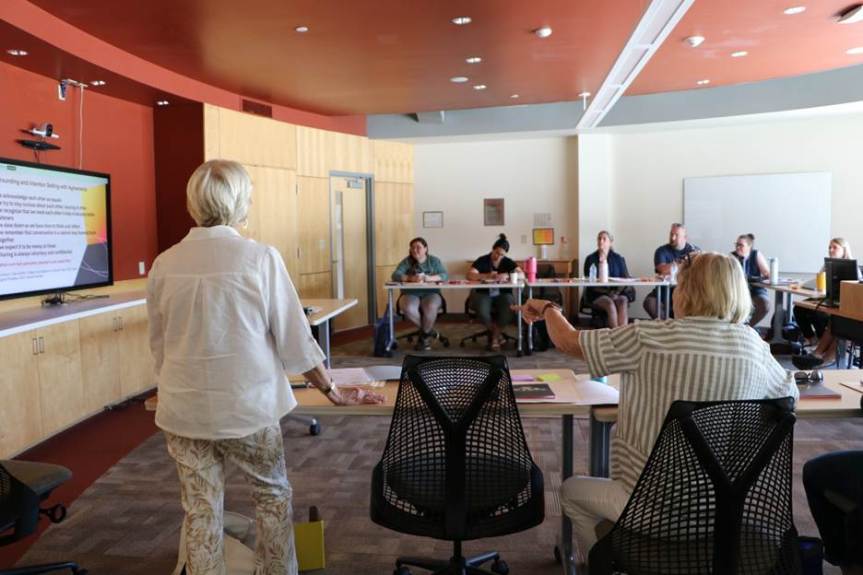
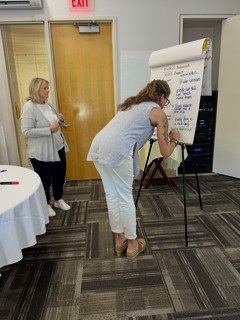
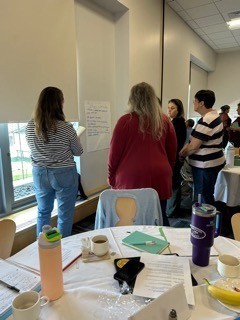
Throughout the day, participants selected from a wide variety of breakout sessions designed to provide practical tools and strategies they could bring back to their schools. Topics included reducing bias-motivated harassment, building resilient school communities, promoting student attendance, strengthening family partnerships, expanding career-connected learning, implementing Universal Design for Learning, advancing climate education, and supporting educator belonging, among many others. The Summit’s emphasis on meaningful professional learning encouraged participants to exchange ideas, ask questions, and build connections that will continue well beyond the event.


After lunch, conference participants enjoyed an informative and captivating keynote presentation by internationally recognized educator and neuroscientist Dr. Jared Cooney- Horvath, whose engaging session, “From the Laboratory to the Classroom – Principles of Learning,” explored the science of learning and its implications for classroom practice. Attendees also had the opportunity to participate in two extended learning sessions led by Dr. Horvath that explored the foundations of thinking and learning in greater depth.


In addition to professional learning sessions, attendees visited informational tables hosted by Maine DOE offices and partner organizations, connecting directly with staff to learn about programs, initiatives, and resources available to support schools year-round. Many educators also took advantage of opportunities to speak with members of the Maine DOE Certification Team and other Department staff about certification, technical assistance, and upcoming professional learning opportunities.


Conference participants were invited to complete a feedback survey and asked to describe their experience in three words. The responses reflected an overwhelmingly positive experience, with the most frequently used words including informative, engaging, helpful, interesting, inspiring, collaborative, enlightening, fun, organized, positive, and reflective.

This word cloud was created from survey responses where participants were asked to describe the 2026 Annual using 3 words.

The Annual Summit continues to serve as a cornerstone of the Maine DOE’s commitment to supporting educators through high-quality professional learning that is responsive to the evolving needs of Maine schools. Since its inception, the Summit has brought together educators from every corner of the state to share ideas, celebrate successes, and strengthen Maine’s education community through collaboration and shared purpose.

As educators prepare for the upcoming school year, the ideas, strategies, and relationships built during the Maine DOE Annual Summit will continue to strengthen classrooms, schools, and communities across the state.

New Regional ELO Program Is Growing Tomorrow’s Real Estate Professionals

Students in the southern Maine regional ELO real estate program gather for a group picture.

A new regional Extended Learning Opportunity (ELO) pilot has given students in southern Maine a firsthand look at careers in real estate, demonstrating how strategic partnerships between schools and local businesses can expand career-connected learning opportunities across several school districts while helping students build valuable professional networks.

The program was developed through a partnership between local ELO Coordinators, including Katie Schilnder, who led the coordination, and Katy Foley, Keller Williams Realty CEO and broker, who served as the lead community partner. Foley was an impactful lead; in addition to her expertise in real estate, she previously worked at JMG (Jobs for Maine Graduates) and has developed ELOs for several years. With support from a Maine Community Coordinators Collaboration (Maine C3) Sunshine Mini Grant, the program brought together 21 students from Portland High School, Deering High School, Greely High School, South Portland High School, Scarborough High School, Yarmouth High School, Freeport High School, and Cape Elizabeth High School to explore careers within the real estate industry.

The semester-long program was held at the Keller Williams office in Portland and introduced students to a wide range of real estate-related professions. Through weekly sessions, students learned about residential and commercial sales, lending, title services, property management, inspections, and other business operations. Students were able to hear directly from industry professionals, participate in hands-on learning experiences, and gain exposure to how brokers and other real estate professionals handle transactions from the beginning to the end.

“One thing that impressed me the most was that not once did I see a young person who needed to put their phone away,” Schindler said. She described how, over the course of the ELO, the youth were incredibly attentive, which spoke volumes about the program’s quality and engagement.

In addition to more traditional classroom learning, students had the opportunity to engage in job shadowing and earn industry-recognized licenses by completing coursework. Some students have even gone on to earn their real estate licenses.

This program, made possible through the partnership of schools, local businesses, organizations, and educators, highlights the growing role of ELO models in expanding access to career-connected learning and pathways—not only in individual communities but across regions.

Real estate-focused ELOs are available to students beyond southern Maine. In western Maine, Vivienne from Telstar High School developed a strong interest in real estate, and her ELO Coordinator, Carrie Lynch, developed an ELO to support her goals and interests and provide hands-on career exploration.

Here is what Vivienne shared about her experience:

Through my ELO, I had the unique chance to intern at Wheelers Insurance while also using my time to study for and earn my Maine Real Estate Sales Agent license. My favorite part of my ELO was the strong feeling of accomplishment and the knowledge I gained along the way. I especially enjoyed seeing what careers in insurance and real estate truly look like on a day-to-day basis, rather than just learning about them in a classroom. The greatest benefit of my ELO was earning my sales agent license after passing both the national and state exams on my first try, which is an opportunity I would not have had at such a young age without the support of this program and my ELO Coordinator, Mrs. Lynch. I chose this ELO because I carefully considered what would best prepare me for life after graduation and what skills would have the greatest long-term impact on my future. Even if I decide not to pursue insurance or real estate as a career, the communication, professionalism, and real-world business skills I developed will benefit me in many areas of my life. I gained invaluable in-person experience and a deeper understanding of professional expectations from working with a highly reputable agency. This program has already helped shape my future, and I am incredibly grateful for the opportunity it provided.

Vivienne (far left) gathers with fellow students for a group photo.

As students completed the program and presented their final projects for the regional ELO, they left with a better understanding of the real estate industry, professional connections, and workplace experience to bridge the gap between their interest in an occupation and a future career in it. The success of the Regional Real Estate ELO offers, as Scarborough High School ELO Coordinator Christy Zavasnik put it, “a great model to build on in other regions and a very popular field of interest with many pathways and possibilities.”

Through this series of intentional and thorough career-connected learning sessions, students gained a deeper understanding of the skills, training, and career pathways available within the industry.

This article was written by Vagni Das, a recent graduate of Yarmouth High School. As part of her extended learning experience, she is interning at the Maine DOE. To submit a good news story to the Maine DOE, please fill out the good news submission form.

Calais Elementary Summer Program Demonstrates the Power of High-Quality Summer Learning

A Calais Elementary Summer Program student holds a lobster during an educational excursion to Eastport with the Eastport Windjammers.

This summer, Calais Elementary School demonstrated what is possible when evidence-based instruction, strong community partnerships, and engaging learning experiences come together to support student success.

Maine Department of Education (DOE) Associate Commissioner Fortin-Trimble recently visited the school’s academically rigorous Summer 2026 program, funded through the Maine DOE Title I Summer Grant, to see firsthand how students, educators, and families are working together to prevent summer learning loss and create engaging, high-quality learning experiences.

During the visit, Associate Commissioner Fortin-Trimble observed students participating in small-group phonics instruction, building foundational literacy skills by decoding consonant-vowel-consonant (CVC) words, practicing blends and digraphs, and strengthening early reading fluency. Classrooms reflected purposeful, data-informed instruction where teachers knew each student’s strengths, goals, and next steps.


The Calais program reflects many of the characteristics identified by the Wallace Foundation as hallmarks of effective summer learning. Successful programs combine strong academic instruction with engaging enrichment opportunities, maintain high attendance, create welcoming learning environments, and build meaningful partnerships with families and community organizations. At Calais Elementary School, those research-based practices were evident throughout the five-week program.

Students attended Monday through Thursday for targeted reading and mathematics instruction designed to accelerate student learning. Teachers administered reading and math assessments at the beginning and end of the program, using the results to establish individualized learning goals, create flexible instructional groups, and adjust instruction throughout the summer.

Every participating student (100 percent) maintained or improved both reading and mathematics performance over the course of the program. Beyond maintaining skills, 73 percent of students demonstrated measurable growth in mathematics, and 71 percent in reading. The program also exceeded its attendance goal, averaging 89 percent attendance across the five weeks.

Learning extended beyond the classroom through experiences that connected students with their community. Through a partnership with the local community pool, students participated in twice-weekly swimming lessons that developed water safety skills.


Students also traveled to Eastport for an educational excursion with Eastport Windjammers, where many students saw minke whales, porpoises, seals, bald eagles, and other marine wildlife for the first time. These experiences reinforced classroom learning while helping students develop a stronger connection to Maine’s coastal environment and Washington County.


The success of the Calais Elementary Summer Program reflects thoughtful planning, strategic use of Title I funds, and the dedication of students, families, educators, support staff, and community partners. By combining individualized instruction, ongoing assessment, nutritious meals, enriching experiences, and strong community partnerships, the program helped students return to school ready to continue learning and succeed in the year ahead.

This story was developed through a collaboration with Calais Elementary School. To submit a good news story to the Maine DOE, please fill out the good news submission form.

Lewiston High School Teacher Donna Olsen Named 2026 Maine History Teacher of the Year

Donna Olsen, a teacher at Lewiston High School, has been named the 2026 Maine History Teacher of the Year by the Gilder Lehrman Institute of American History.

Since 2004, the Gilder Lehrman Institute’s History Teacher of the Year recognition program has recognized exceptional K-12 educators for their remarkable work in teaching American history. The program celebrates one outstanding teacher from each state, the District of Columbia, Department of Defense schools, and U.S. Territories and recognizes educators for their dedication, creativity, and effective use of primary sources. Nominees are recommended by students, colleagues, or school leaders and selected by state committees of historians and educators.

Olsen began her career in education in 2008 and has worked in Lewiston schools since 2011. She holds a bachelor’s degree in history, a master’s degree in teaching and learning, and a certificate of advanced study in literacy. She has also completed advanced graduate work in comprehensive literacy. Her extensive experience includes teaching Advanced Placement U.S. History, serving as a curriculum leader in Lewiston schools, working with the Maine Council for the Social Studies, and teaching as an adjunct instructor at the University of Southern Maine. Together, these experiences demonstrate her leadership in social studies education.

“Donna’s teaching philosophy is deeply rooted in an inquiry-based framework, a methodology that transforms her classroom from a place of passive learning into a dynamic laboratory of historical investigation,” Jonathan Radke, principal of Lewiston High School, shared.

“History teachers play an essential role in helping students understand the past, build critical thinking skills, and develop a deeper appreciation for the people and events that shaped our nation,” James G. Basker, president and CEO of the Gilder Lehrman Institute, said. “We are proud to recognize educators who go above and beyond to make history engaging, meaningful, and relevant in their classrooms.”

As the 2026 Maine History Teacher of the Year, Olsen will receive a $1,000 honorarium, a curated collection of American history books and educational materials from the Gilder Lehrman Institute, and recognition at a local ceremony. She will also join 52 other honorees as a finalist for the 2026 National History Teacher of the Year award.

The national winner will be announced this fall at a special ceremony at the Harvard Club of New York City and will receive a $10,000 grand prize. To learn more about the History Teacher of the Year award, or to view the full list of 2026 state honorees, visit the Gilder Lehrman Institute website.

Space Week Maine 2026: Inspiring the Next Generation of Explorers

At its best, education does more than transfer knowledge; it sparks wonder. That spirit was alive across the state throughout Space Week Maine 2026 this spring, as classrooms, auditoriums, and learning spaces were transformed into launchpads for discovery—not by rockets alone but by curiosity.

At the heart of Space Week is Sharon Eggleston, founder of Space Day Maine and the guiding force behind what has become a meaningful educational tradition in the state. Now in its 28th year, this program reflects Eggleston’s enduring vision: creating opportunities for students to engage directly with scientists, engineers, astronauts, educators, and innovators whose work expands how young people see the world and the universe beyond it. Those who know Eggleston understand that her focus has never been on recognition but on students. Quietly, steadily, and with remarkable dedication, she built a program that has inspired tens of thousands of young learners across Maine to think bigger, dream boldly, and look upward.

Throughout Space Week Maine 2026, and into the following days, young learners statewide built, tested, explored, questioned, and imagined their way through immersive lessons in space education, STEAM (science, technology, engineering, arts, and mathematics) learning, astronomy, environmental science, and innovation. Through hands-on workshops, demonstrations, keynote lectures, classroom presentations, and interactive experiences, students were invited not simply to learn science but to experience it—to see themselves in futures shaped by discovery, creativity, and possibility.


An extraordinary coalition of educators, presenters, volunteers, and organizations from across North America came together for Space Week Maine 2026, as well. This year’s collaborative team included participants from Arizona, New Jersey, New York, Montreal, Colorado, and communities throughout Maine—each contributing expertise in aerospace, engineering, astronomy, robotics, environmental science, aviation, and experiential education. Together, they represented a shared belief that learning is strongest when it is collaborative, hands-on, and connected to real-world possibility.

The Lunar Lander, which was built by one of the presenters and towed from New York to Maine so it could sit in front of the Mt. Ararat Middle School to Welcome students to Space Day
The Lunar Lander, which was built by one of the presenters and towed from New York to Maine so it could sit in front of the Mt. Ararat Middle School to Welcome students to Space Day.

Space Week Maine 2026 reached its capstone on Friday, May 1, 2026, with the 28th anniversary of Space Day Maine, hosted at Mt. Ararat Middle School in Topsham. Maine Senate President Mattie Daughty introduced the celebration, followed by welcome messages from Senator Angus King and Maine native astronaut Jessica Meir, who is serving aboard the International Space Station as commander of NASA’s Crew-12 mission. Meir’s remarkable journey—from marine biologist and researcher in extreme environments to astronaut, spacewalker, and mission commander—stood as a powerful reminder that extraordinary paths in science often begin with simple curiosity.

Featured keynote speaker Brian Ewenson challenged students to think boldly about humanity’s future in space, while the closing presentation connected students with living history through remarks from Logan Jaeren and Fred Haise, whose leadership during Apollo 13 helped define resilience in the face of adversity.


Among the many educators who shared their expertise, Dianea Phillips (Mars Desert Research Station astronaut) invited students to think like planetary explorers through immersive analog Mars mission experiences, while Dr. Danny Jaques highlighted entrepreneurial pathways into aerospace innovation. Also featured was James Falletti, M.A., of New Jersey, an award-winning science educator, photographer, and forthcoming author whose presentation explored how Maine’s native birds have influenced aerospace engineering through biomimicry—from wing structure and feather mechanics to flight efficiency—illustrating how the natural world often serves as humanity’s first blueprint for innovation.

They represented only part of a much larger educational tapestry. Space Week Maine 2026 was shaped by dozens of educators, scientists, engineers, presenters, community leaders, partner organizations, and volunteers, each contributing their expertise, passion, and time to create meaningful learning experiences for students. From astronomy and robotics to materials science, geology, aviation, environmental stewardship, engineering design, and space medicine, the breadth of programming reflected a deeply collaborative effort in which every presenter, volunteer, and partner organization played an essential role in the week’s success.

Additional programming and support from organizations including the Maine Space Grant Consortium, Challenger Learning Center of Maine, 021 Squadron Civil Air Patrol, Maine Mineral & Gem Museum, Lockheed Martin, and many local educational and community partners further strengthened the week’s mission of inspiring future innovators.

Perhaps what made Space Week Maine 2026 most meaningful was its reminder that inspiration belongs to everyone. In participating classrooms were future NASA engineers, astronauts, aerospace technicians, mission planners, pilots, robotics designers, marine biologists, environmental scientists, educators, innovators, and problem-solvers whose careers are shaping not only space exploration but also life here on Earth.

For 28 years, Eggleston has helped Maine students look up—to the stars, to science, and to the limitless possibilities ahead. And somewhere among the students who built, discovered, questioned, and dreamed during Space Week Maine 2026 were future explorers already beginning their journey.

This story was written by James Falletti, on behalf of Space Day Maine, in collaboration with Mt. Ararat Middle School (MSAD 75). To submit a good news story to the Maine DOE, please fill out the good news submission form.

Bruce Whittier Middle School Students Put Fire Science Skills to the Test in 15th Season of ‘MidKnight FireSlayers’

This spring, the Bruce M. Whittier Middle School “MidKnight FireSlayers” celebrated the completion of their 15th season in partnership with Poland Fire Rescue. The MidKnight FireSlayers program provides middle school students with hands-on learning experiences in fire safety and fire science, guided by a dedicated team of firefighters and educators.

Throughout the season, students participated in weekly sessions at the fire station, where they gained firsthand experience through realistic emergency response scenarios. Activities included cold-water rescues, 911 dispatch simulations, search-and-rescue operations in smoke-filled environments, vehicle extrication exercises, hose deployment drills, and training with firefighters’ hand tools.

The season concluded with the program’s annual cook-off event and graduation ceremony.


During the cook-off, students teamed up with firefighters in a friendly competition against a rival team of parent volunteers. The MidKnight FireSlayers emerged victorious once again, earning bragging rights and retaining the coveted “Golden Spoon” championship trophy.

Over the past 15 years, more than 250 students have participated in the MidKnight FireSlayers program. Many alumni have continued their studies in fire science through the Lewiston Regional Technical Center and postsecondary programs, with some ultimately pursuing careers in the fire service.

Teachers Shannon Shanning and Tami Wight expressed their sincere appreciation for the members of Poland Fire Rescue and their commitment to this work.

“Their impact extends far beyond the skills they teach,” the teachers shared in a joint statement. “Through their mentorship and encouragement, they help students build self-confidence, improve attendance, set meaningful goals, and strengthen their connection to the community.”

This story was submitted by Bruce Whittier Middle School (RSU 16). To submit a good news story to the Maine DOE, please fill out the good news submission form.

MEDIA RELEASE: Maine DOE, Educate Maine Announce Semifinalists for 2027 Maine Teacher of the Year


Eight of the 16 total 2026 Maine County Teachers of the Year remain in the running for 2027 Maine State Teacher of the Year.

AUGUSTA, Maine—Eight exceptional educators from across the state are semifinalists for 2027 Maine Teacher of the Year. On Thursday, July 23, 2026, the Maine Department of Education (DOE) and Educate Maine officially announced these semifinalists, who will deliver keynote speeches, submit professional portfolios, and participate in an expert panel discussion about educational equity, teacher leadership, and education policy as part of the next phase of the Maine State Teacher of the Year selection process.

The semifinalists for 2027 Maine Teacher of the Year are: 

Abigail McCoy

Androscoggin
Abigail (Reuscher) McCoy
Chemistry and Forensic Science Teacher
Lewiston High School, Lewiston Public Schools


Kathy Theriault

Aroostook
Kathy Theriault
Mathematics Teacher
Wisdom Middle/High School, MSAD 33


Adrianne Shetenhelm

Cumberland
Adrianne Shetenhelm
English and Alternative Education Teacher
Windham High School, RSU 14


Gretchen Livingston

Kennebec
Gretchen Livingston
Spanish Teacher
Cony Middle and High School, Augusta Schools


Gina Welch

Oxford
Gina Welch
Pre-K Teacher
Crescent Park Elementary School, MSAD 44


Marcy Soucy

Penobscot
Marcy Soucy
4th and 5th Grade Math and Reading Teacher
Fairmount School, Bangor School Department


Jeremy Bourque

Somerset
Jeremy Bourque
Digital Media Instructor
Somerset Career and Technical Center, MSAD/RSU 54


Rachel Norgang

Waldo
Rachel Norgang
2nd and 3rd Grade Teacher
Monroe Elementary School, RSU 3


As members of the 2026 Maine County Teacher of the Year cohort, these educators embody the dedication, innovation, and classroom leadership synonymous with this recognition. Throughout their year of service, they act as ambassadors for their students, colleagues, and school communities, celebrating and elevating the teaching profession as a whole.

“Congratulations to the 2027 Maine Teacher of the Year semifinalists on this impressive and well-deserved recognition,” Maine Education Commissioner Pender Makin said. “We are honored to champion you and your peers through this important program, which highlights the challenging and often underappreciated work of educators and the ways in which unwavering dedication in the classroom can be life-changing for students.”

“We are proud to celebrate and recognize these outstanding educators,” Jodi Mezzanotte, M.Ed., Director of Educator Engagement at Educate Maine, said. “Their dedication, leadership, and commitment to their students, the teaching profession, and colleagues across the state reflect the very best of public education in Maine.”
 
The selection process for Maine State Teacher of the Year is rigorous and designed by educators to offer candidates an opportunity to reflect on their instructional practice. In January, each candidate was nominated for this recognition by a member of their community. Candidates first participated in the county selection process, in which a distinguished panel of teachers, principals, business leaders, and community members chose them from among hundreds of nominees as 2026 Maine County Teachers of the Year. These 16 teachers began the selection process for 2027 Maine Teacher of the Year in May, showcasing their instructional practices through a classroom video and written reflection. 

The Maine State Teacher of the Year finalists will be announced in the fall, with a grand reveal of the 2027 Maine Teacher of the Year in October. That teacher will represent Maine in the National Teacher of the Year program. 

The Maine Teacher of the Year program is administered by Educate Maine through a unique partnership with the Maine DOE, with support from the Maine County and State Teachers of the Year Association and the Maine State Board of Education. Funding for this program is generously provided by Bangor Savings Bank, Geiger, the Maine State Lottery, and Unum.

For more information about the Maine Teacher of the Year program, and to see a list of Maine County Teachers of the Year and Maine State Teachers of the Year, please click here

Presque Isle High School Pathways Program Supports Student Success Through Alternative Education

Students from Presque Isle High School’s Pathways Program participate in a spring cleanup at Mantle Lake Park in Presque Isle.

Presque Isle High School’s Pathways Program, part of MSAD 1, is an alternative education program that serves students in grades 9-12 from Presque Isle, Mapleton, Chapman, Castle Hill, and Westfield. The program provides a safe, supportive environment where students reconnect with learning through flexible instruction, personalized schedules, academic support, and positive relationships with staff. Through these opportunities, students build the academic, social, and life skills needed for graduation and post-secondary success.

One student’s story in particular highlights the impact of Pathways.

“When this student first joined the program, they experienced selective mutism and were hesitant to come into the building,” Pathways lead teacher Laura Roope said. “Now, as a senior, they’re an active leader in the classroom.”

The student joined Pathways midway through freshman year after struggling in middle school and during the transition back to in-person learning following the pandemic. Over time, the student gained confidence, built friendships, and participated in both Pathways and mainstream classes.

This spring, the student will graduate and attend the University of Maine at Presque Isle, where the student plans to pursue a career in early childhood education.

“This student always had above-average ability,” Roope said. “They just needed the right support, confidence, and a sense of belonging.”

Stories like this, Roope said, are part of what has kept her dedicated to alternative education for nearly two decades.

“I have the best job in the district,” Roope expressed.

Individualized Learning and Flexible Support

The Pathways Program tailors schedules and coursework to students’ goals, academic needs, and learning styles. Some students attend the program full time, while others remain connected to mainstream classes and receive additional support as needed.

“When I first started the year in regular classes, I couldn’t handle the noise and chaos because of my migraines. Here, it is quiet and not chaotic,” a Pathways Program student said.

In a single classroom through Pathways, students may simultaneously work on biology, algebra, English, credit recovery, or independent reading. Roope and her co-teacher personalize pacing and instruction while maintaining high expectations.

“We expect students to act as if they are in a work setting,” Roope said. “We’re preparing them for life after high school and teaching them to find answers independently.”

Roope said many students thrive when given greater ownership over their learning in a flexible environment.

“Students value having control over their pace and asking for help when they need it,” Roope said.

Pathways classrooms are collaborative and discussion based.

“Sometimes, one student asks a question about history or current events, and suddenly the entire room is involved in a meaningful discussion,” Roope said. “There’s social-emotional learning happening alongside the academics.”

Building Relationships and Supporting Student Growth

Relationship building and social-emotional support are central to the Pathways Program. Every other week, students participate in structured circle discussions that encourage communication, empathy, reflection, and respectful listening. Staff also use these conversations to identify students who may need additional support or connection to school-based mental health resources.

“A lot of these students are going to get upset or frustrated, and that’s okay,” Roope said. “The important thing is supporting them as they work through those feelings and return ready to learn.”

Students and families also review individualized expectations during the intake process, helping establish clear communication and shared accountability from the beginning. The program uses restorative and trauma-informed approaches when addressing behavioral and emotional challenges. Rather than immediately removing students from the learning environment when they are experiencing behavioral and emotional challenges, staff work with students to reflect, de-escalate, and rebuild trust.

“We work to keep communication open and involve families as partners,” Roope said. “When everyone works together, students are more successful.”


Connecting Learning to Community

Community-based learning and service projects help students in the Pathways Program to connect academics to real-world experiences. Students participate in environmental cleanups, local park projects, and outdoor learning opportunities across Aroostook County. Partnerships with organizations, including the Francis Malcolm Science Center and the Aroostook National Wildlife Refuge, provide hands-on experiences connected to science, history, and environmental stewardship.

“These experiences help students build confidence and feel connected to their community,” Roope said.

This year, Pathways students are studying the environmental and historical impact of the former Loring Air Force Base through interdisciplinary projects focused on biodiversity, ecosystems, military history, and environmental restoration. Pathways also partners with the local elementary school to deliver Catch My Breath, an initiative that is helping younger students to build skills related to vape and smoking prevention, healthy decision making, self-esteem, bullying prevention, and peer pressure.

“One of my favorite things is going over to the elementary school and teaching them about bullying, peer pressure, empathy, and anti-vaping,” a Pathways Program student said. “I like working with kids and teaching them things they can take with them as they grow.”


Early Intervention and Ongoing Support

The Pathways Program also plays an important role in the district’s dropout prevention and early intervention efforts.

“Freshman year, I didn’t really go to school. Now, I’m able to be in this program, and I will graduate high school next year,” a Pathways Program student said.

Some students initially connect with the program through academic monitoring, coaching, study hall support, or credit recovery before transitioning into more intensive programming, if needed. Teachers, counselors, social workers, and administrators regularly review student progress and identify students who may benefit from additional intervention and support.

“I transferred from Caribou and thought I wasn’t going to graduate school. Then I transferred into Pathways for science credit recovery. Now, I’m in Pathways full time, and I’m actually going to graduate on time, which wouldn’t have been possible without this program,” said another Pathways Program student.

“We aim to eliminate barriers and help students rediscover the joy of learning,” Roope said.

As schools across Maine continue exploring ways to support students with diverse strengths and challenges, programs like Pathways demonstrate how alternative education can provide flexible, relationship-centered opportunities that help students reconnect with school and prepare for life after graduation.