Kathy Harris-Smedberg, Assistant Superintendent of Schools at Bangor School Department
Downeast School, Grades PreK-3, Bangor, Maine

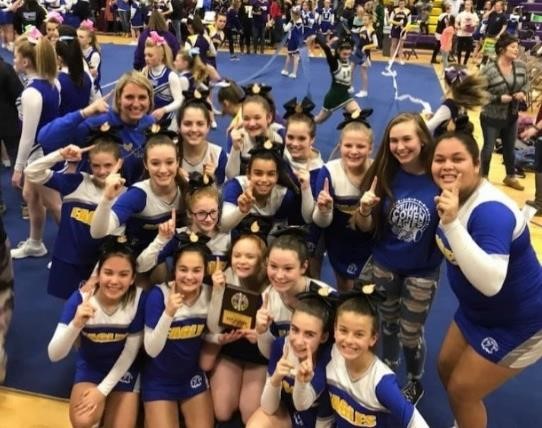
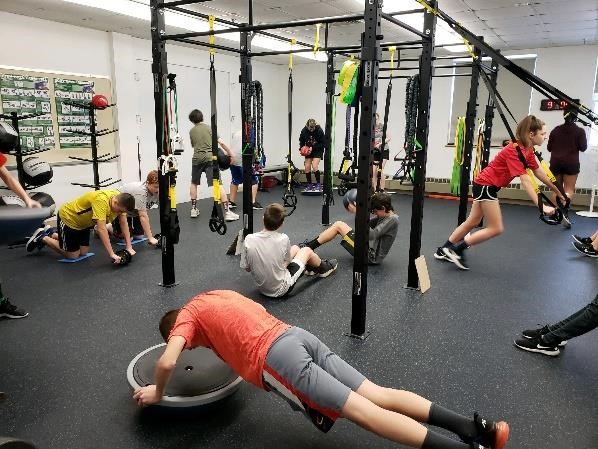
William S. Cohen School, Grades 6-8, Bangor, ME


Kathy Harris-Smedberg, Assistant Superintendent of Schools at Bangor School Department
Downeast School, Grades PreK-3, Bangor, Maine
William S. Cohen School, Grades 6-8, Bangor, ME
The Maine Department of Education will be holding off on this opportunity while we sort out a few remaining logistics. We have taken this notice down for the time being to minimize confusion.
We hope to offer it again very soon. Thank you for your patience.
For more information, contact Nicole Madore at Nicole.madore@maine.gov
As Maine districts have experienced increasing numbers of students and parents who speak languages other than English, there has also been an increase in the availability of machine or automated translation/interpretation software and apps. While these tools may seem like a convenient (and oftentimes free) way to meet a district’s civil rights obligations for communicating with parents, they have not yet reached the level of accuracy necessary to serve as a substitute for a qualified human translator/interpreter. Meaningful communication with parents, including parents whose children have an Individualized Education Plan (IEP), is not only a civil rights requirement, but it also serves to strengthen family engagement and promote positive relationships between families and schools.
A 2015 guidance document from the US Department of Justice and US Department of Education clarifies that even a bilingual person without appropriate training cannot be used by a school to translate/interpret for parents. Whether for the vital communications listed in this guidance document or for more casual interactions, best practice is always to utilize trained professionals, such as through a phone interpretation service or translation/interpretation agency.
For a list of translation/interpretation providers, please refer to the Maine Department of Education website. For parent notices required under the Every Student Succeeds Act, the Maine Department of Education has partnered with TransACT to give districts free access to notices in 17 languages.
For further information about translation/interpretation please contact April Perkins, Director of ESOL/Bilingual Programs & Title III at (207) 624-6627 or april.perkins@maine.gov. For further information about supporting students with an IEP, please contact Maine DOE’s Office of Special Services at (207) 624-6713.
Submitted by Debra McIntyre, Assistant Superintendent for MSAD28/FiveTown CSD
This process began last summer when we convened a group of teachers representing K-12 staff to begin working on the idea. We researched what other school districts across the nation had implemented and tweaked some of their processes and procedures to work for our own specific learning communities. We had to plan for many different implementation aspects including specific grade spans, students’ access to technology, and how the Remote School Day would impact staff members and families. We also needed to determine which students did not have access to internet service in order to provide them with a hotspot device. After full board approval, we forged ahead to discuss the possibility with the MDOE. After contemplation and discussion, it was decided that we would be able to use a Remote School Day this winter, as we have more than the required 175 student days.
Finally, it looked like Mother Nature would assist us with a day that would have normally been a “No School Day” and we called a Remote School Day. Our younger students had individual work that had previously been sent home and our students in grades 7-12 participated via technology through either Google Classroom or Schoology. Staff members held office hours from 10:00 – 4:00 to assist and answer any questions that arose. Technology support was also available.
As you can imagine with anything new, there were successes, challenges, supporters and dissenters. There are still tweaks to be worked out and challenges to overcome, however, the attendance was excellent and the overall feedback was encouraging. Overall, the parent survey indicated 82% felt the Remote School Day was a success. Our next steps will be to review the specific feedback from parents, staff and students to refine our implementation in the hopes that we will be able to use Remote School Days as an option for making up some of our snow days in the future.
We received many pictures from families, sharing their experiences. We believe the picture below captures the spirit of the day.

Submitted by Christopher Howell, Assistant Superintendent in RSU 14, Windham Raymond Schools
RSU 14, Windham Raymond Schools, has been working very hard to help their students become responsible and safe in their digital lives. At the end of the 2017-2018 school year, RSU 14 committed to educating their staff with the Common Sense Digital Citizenship curriculum. Common Sense Digital Citizenship curriculum is a program that educates students, teachers, and the rest of the community in being safe and responsible while using online platforms. Common Sense uses research based digital citizenship resources, “which were created in collaboration with researchers from Project Zero, led by Howard Gardner at the Harvard Graduate School of Education.” (Common Sense)
Common Sense Education recently recognized Windham Middle School as a Common Sense School for the school’s commitment to digital citizenship. “We applaud the faculty and staff of Windham Middle School for embracing digital citizenship as an important part of their students’ education,” said Liz Kline, VP, Education Programs, Common Sense Education. “Windham Middle School deserves high praise for giving its students the foundational skills they need to compete and succeed in the 21st-century workplace and participate ethically in society at large.”
All RSU 14 students and staff, grades 3-8, initiated the learning process this year by completing 5 lessons per grade level. 1,509 students in RSU 14, received their first year of Digital Citizenship. Using the provided curriculum creates a platform for teachers to begin discussions on important topics such as online safety, reliable sources, online bullying, and many more. Teachers are very happy to have been given the time to learn alongside their students. Using the lessons provided by Common Sense Media, allows for some much needed discussions between all involved.
 Written and Submitted by Marci Dionne and Amy Pichette, LearningWorks Afterschool Program Directors. Photos by Molly Haley Photography.
Senator Angus King visited the LearningWorks 21st Century Community Learning Center Afterschool program in Biddeford on Friday, February 8th.

Six student leaders, their grandparents and parents met with the Senator and explained what they enjoy most about the after school program. Dillyn said “The program gives us a leg up in school. We learn about engineering, science, and math.” Jayden explained the steps in the engineering design process to Senator King. Kendra said, “We get to choose which club we join, either drama, prop and set design, science experiments, mask making or coding.”

Afterschool staff touched upon some of their favorite aspects of the program: the social and emotional growth and development of the students as well as access to new experiences and opportunities they would not have without the program. These experiences build self-confidence, background knowledge, and help children aspire to learn and explore their world.
Submitted by Denise Kimball, Principal of Somerset Valley Middle School in RSU 19
Somerset Valley Middle School is located in Hartland, Maine. It is currently grades 3-8. The district is in the process of consolidating due to a new high school/middle school construction project. The new school will open in the fall of 2019. At that time, Somerset Valley Middle School will become Somerset Elementary, grades PreK-4.
Somerset Valley Middle School is focused on providing our students with a safe, happy place to learn and grow. We offer free breakfast, lunch, and a healthy snack to our students daily.
Over the past couple of years we have had some major changes in our content area instruction. RSU 19 has been providing time for the teachers to develop our curriculum and district assessments. This past year the district adopted Envisions, which is a math program for grades 3-5. All teachers have received training and they have lots of opportunities to discuss what is working in their classroom and what their challenges are. Students are learning a lot and really enjoy working with Envisions.
This year, Somerset was invited to work with Darlene Bassett, the state’s Literacy Coach. Darlene trained our Language Arts teachers in grades 3-8 in Jan Richardson’s Guided Reading Framework. This framework gives the teachers the structure needed to provide the students with a structured, focused guided reading lesson. Jenn Massow, our fourth-grade teacher, is our lead teacher in this work. Teachers from Somerset County will be invited to visit Jenn’s classroom to see the Framework in action.
Somerset is also involved in a lot of other initiatives. We have partnered with Northern Light Healthy Maine. Each week a group of students work together to find ways of getting the word out on how to live a healthy life. They sponsored a spirit week back in October and are planning one for February. These students send messages by word of mouth, posters and different activities. Once a month we have an activity called Lunch & Learn. During these lunches, students learn about healthy habits. They enjoy this time because they get to win prizes for their participation. This group also joined us for our parent conferences, passing out literature to our parents about healthy life habits.
We work hard to try and improve student academic and behavioral outcomes. We are very involved with PBIS (Positive Behavioral Interventions and Supports). Somerset has a matrix of behaviors that the students and staff developed at the beginning of the year. We celebrate the students that follow these expectations by giving out Panther Paw tickets. Students can win daily, weekly and quarterly prizes. The quarterly prizes usually involve the whole school on Panther Pride Day.
Recently, Somerset had a Giving Tree Contest. The grade level that brought in the most nonperishable items for our local food cupboard would be treated to a pancake breakfast. Grade 4 won! As a school we collected over 1200 items. The local food pantry was thrilled.
Seventh & eighth graders at Somerset Valley Middle school entered the Young Writer’s “Stranger Sagas Contest.” We had 14 winners and three Honorable Mentions out of 13,500 entries. The winners will have the opportunity to have their stories published. How exciting for our middle school writers.
Somerset is also involved in some work with bullying prevention. We partnered with Project Love and Duct Tape to learn about kindness and how it can affect our everyday lives. In February the Maine Parent Federation will be hosting a Bullying Workshop for parents.
Somerset Valley Middle School staff and students are dedicated to becoming lifelong learners. We are constantly working together to form a positive school community where everyone can learn and be successful.
The Tobacco and Substance Use Prevention and Control Program with the Maine Centers for Disease Control and Prevention (MECDC), in partnership with the Maine Department of Education (Maine DOE), is seeking additional schools that would like to implement the social emotional learning (SEL) program, Second Step, funded by a grant through MECDC.
The MECDC received a portion of the State Opioid Response grant to provide community-based substance use prevention as part of the grant’s larger goal to reduce the prevalence of non-medical use of opioids. The Second Step Curriculum is research-based and available for grades PreK through 8th grade. Many of the skills within the Maine Learning Results for health education in elementary school align with goals of Second Step, such as nurturing skill building and preventing problematic developmental behaviors that are part of the trajectory toward later substance use.
If you are interested in adding Second Step to your school’s curriculum and you are not already part of the MECDC pilot and have not already been contacted by the Maine CDC from your application from the last round, please complete this brief 5 minute application survey.
Please note: If you applied in the last round and have not heard from the Maine DOE or CDC, please feel free to apply again. We may not have had enough information from you in the last application to proceed.
For more information, contact Cheryl.Cichowski@maine.gov at Maine CDC or Emily.Poland@maine.gov at the Department of Education.
The purpose of this award is to recognize the contributions of Maine School Nurses by honoring one school nurse who has demonstrated leadership and excellence in the practice of school nursing. This title recognizes a nurse who has demonstrated excellence and leadership in the following: care provision, program management, health education, professional development, community involvement, and research.
Please consider honoring the excellence of your school nurse. Nomination packets are due April 1. Instructions for nominations and more information can be found on the MASN website, or you may contact Deb Braxton, the coordinator for School Nurse of the Year for MASN: dbraxton@capeelizabethschools.org
The National Congress on School Transportation (NCST) is accepting change requests from any interested party on the National School Transportation Specifications and Procedures.
All change requests must be made on the NCST 2020 Change Request Form: The form and instructions are located on the NCST website.
The deadline for submission of change requests is March 31, 2019. All requests must be submitted by that date in accordance with the form instructions to allow the NCST Writing Committees time to review and properly research the proposals before the 2020 Congress.
Under the Congress’ procedures, the Writing Committee Chairs must notify all persons submitting change requests for the status of their respective requests following the committees’ deliberations and decisions. This feedback to submitters must occur well prior to the on-site Congress.
The job of researching suggested changes to the National School Transportation Specifications and Procedures is performed by the NCST Writing Committees. Questions about the NCST 2020 Change Request Form and submittals may be addressed to Patrick McManamon at patrick.mcmanamon@vermont.gov .
For information about Maine school transportation, please contact Pat Hinckley, Transportation and Facilities Administrator, at pat.hinckley@maine.org .


