COVID-19 Infographics Available for Schools, Families, and Youth 

The Maine Department of Education (DOE) and the Maine Center for Disease Control (CDC) have collaborated on two COVID-19 graphic tools to aid school staff in screening a child for COVID-19 if the child appears or feels unwellAn additional pre-screening tool with a list of COVID-19 symptoms has been created for schools to distribute to families to help them determine if a child is well enough to attend school. 

  • FOR DISTRIBUTION TO FAMILIES: COVID-19 Pre-screening Tool for School Attendance (Updated 8.3.20)In addition to English, this tool will be translated into the top ten languages spoken by Maine students: Arabic (Jordan), Chinese (People’s Republic of China), French (France), Khmer (Cambodia), Kinyarwanda (Rwanda), Kiswahili/Swahili (Congo, DRC), Portuguese (Angola), Somali (Somalia), Spanish, Vietnamese (Vietnam). These additional versions will be available as soon as possible. 
  • FOR SCHOOL NURSES AND OTHER STAFF TASKED WITH EVALUATING STUDENT HEALTH: COVID-19 Child Feels or Appears Unwell Flowchart (Updated 8.4.20) 

The two infographics above have also been linked to the Framework for Returning to Classroom Instruction and the Maine DOE’s COVID-19 webpage under Health Resources.  

In addition, the CDC has produced a series of factsheets for young adults, ages 15-21. The factsheets cover a variety of topics, including what test results mean, how to stay safe at the pool or beach, how to wear a face covering and other preventive measures.  

If schools have further questions about these health resources, please contact Maine DOE School Nurse Consultant Emily Poland at emily.poland@maine.gov.

Get to Know the DOE Team: Meet Paula Nadeau

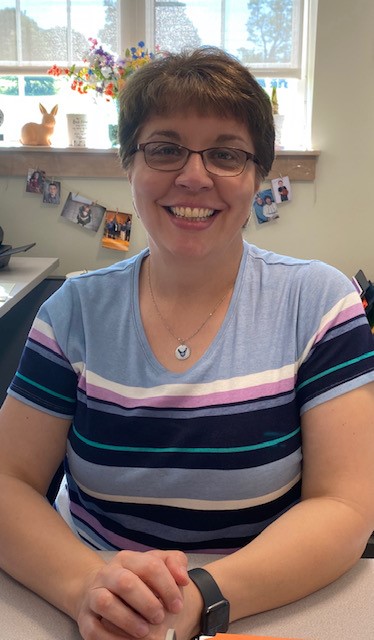
Maine DOE Team member Paula Nadeau is being highlighted this week as part of the Get to Know the Maine DOE Campaign. Learn a little more about Paula in the brief question and answer below.

What are your roles with DOE?

My role within DOE is Office Specialist I. What that means within Child Nutrition is that I take care of RFPs, contracts, our website, scheduling webinars and training and whatever else comes my way. Now that our meetings and upcoming trainings are virtual, that’s added a new spin to it all.

What do you like best about your job?

I couldn’t ask for a better group of people to work with. I also love that no two days are really ever the same; I can come in thinking it is going to be a relatively quiet day and before I know it, it is 4:00 and I haven’t stopped.

How or why did you decide on this career?

How I chose this career? Well, that’s a long story and it chose me.

What do you like to do outside of work for fun?

Outside of work, I love to spend time in my craft room, sit on my front porch reading a book or working on my somewhat green thumb.

Mountain Valley High School Rolls Out the Bikes!

Every year when students enrolled in Todd Papianou’s Lifetime Pursuits physical education class at Mountain Valley High School when they return from April vacation, they are given the opportunity to choose their next unit. The Lifetime Pursuits course is an outdoor skills based class, and in the spring, students are able to choose between kayaking, canoeing, and biking. This year, things looked a little bit different.

About 15 years ago, in a combined effort between RSU 10 and the Dirigo District (RSU 56), Todd Papianou, a physical educator at MVHS, applied for and was awarded a federal physical education program grant, specifically, the Carol M. White Physical Education Grant. With the award from the grant, he and a group of physical educators were able to purchase 110 bicycles to be shared between 4 schools.

Papianou collaborated with the Bike Coalition in conjunction with the DOT to pilot bike education curriculum in Maine. With the Coronavirus impacting schooling and forcing a switch to distance learning, Todd jumped at the opportunity to adjust his bike curriculum and continue to make it accessible during this period of remote learning. His adjusted unit has a focus on bike awareness and commuter safety. To make this work, he has implemented a new plan that uses content, videos, and teaching tools produced by the League of American Bicyclists.

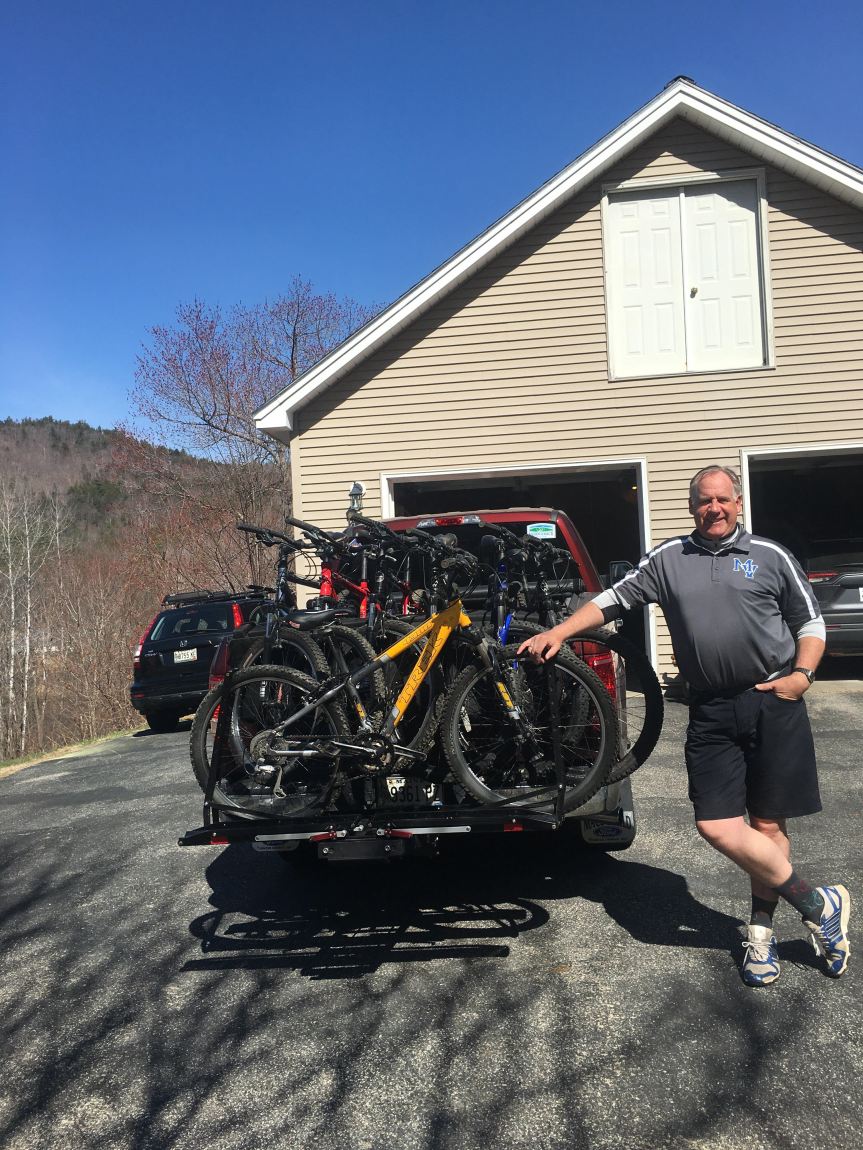
Papianou knew that he wanted to get the bikes out to students, but was not able to at first. The school was being deep cleaned and he couldn’t get in. After a conversation with his principal, Matt Gilbert, they decided that it was time to “roll out” the bikes. After gaining permission from the principal, Todd rushed home, got his trailer, and headed back to the school so that he could load up the bikes. He brought all 25 bikes home and stored them in his barn which became a makeshift bike shop. He then tuned each bike before sending them out to his students.

Over the course of two days, Todd Papianou and Matt Gilbert drove around delivering bikes to students by placing them at the end of each student’s driveway. Todd said that the bike roll out was exciting and that he was happy to see both students and parents (from a distance) while dropping off the bikes. He has received a lot of positive feedback from parents who were grateful that their children now had an additional option to get outside and to get active.

Todd has taken advantage of new technology to assist in the bike roll out and distance learning. He set students up with an app called Strava, which tracks ride analytics including distance and time. This data was shared between himself and his students so that he could see the progress they were making. In relation to using this new technology, Todd said “Being ready for the past decade with a comprehensive ‘Commuter Bike/Trail Bike Unit’ online already makes me feel proud that I had the foresight to prep and commit myself to Senator King’s vision to transition our learning/teaching delivery to include technology.”

To wrap up the school year, Todd planned an in-person assessment day for his students to show of their new skills, demonstrate bike control, and return the bikes. On this day, Todd focused on discussing what worked and what didn’t work in regards to remote instruction with his students. Todd said that both personally and professionally, the biggest takeaways from distance learning were that “nothing replaces instantaneous feedback, discussion, and banter…[and that] teachable moments arise and present themselves.” In a time where many of us have been stuck at home, Todd provided an option to get outside and be active for his students, his determination and innovation made the bike roll out highly successful.

This article was written by Maine DOE Intern Aidan Sachs in collaboration with Todd Papianou, a physical educator at MVHS as part of the Maine Schools Sharing Success Campaign. To submit a story or an idea email it to Rachel Paling at rachel.paling@maine.gov.

How We Carry On: A Day in the Life of a Morse High Schooler

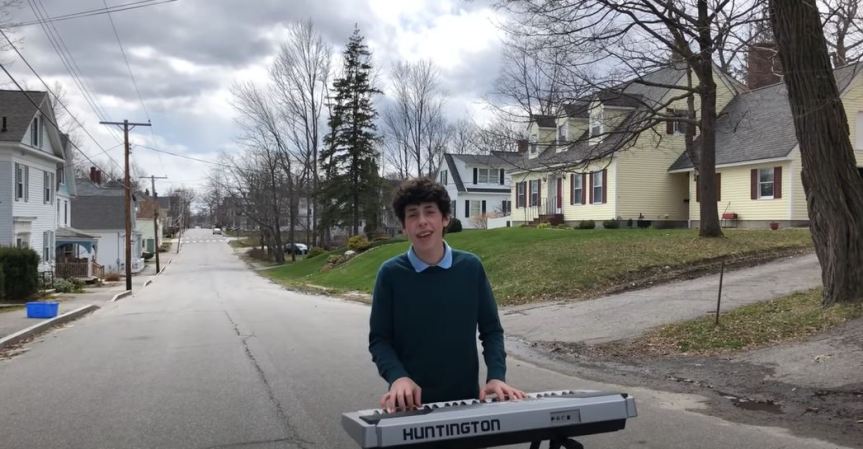
Morse High School, Bath, ME: Amidst the uncertainty and chaos that ensued following the onset of the Coronavirus pandemic, rising juniors at Morse High School, Isabel Strelneck and Isaac Ensel, came up with an inspiring idea to bring friends back together and bring joy to their community. Together, they rallied over 40 of their classmates to work together to produce a music video to show their community what their lives as high schoolers have looked like since the onset of social distancing. You can watch the video here.

One day, Isaac Ensel called Isabel Strelneck and asked her to listen to the song “Carry On” by Fun. As she listened, he described how a music video would be a perfect way to capture their daily lives, and the vision for the project became clear. Isaac and Isabel filmed some portions of the video together, from a distance, and reached out to friends to get clips from their days. In the video, you can see everything from practicing lacrosse to an online English class. Isabel and Isaac were able to create and provide a platform for their friends to share and validate their own experiences during this time of uncertainty.

Isabel says that they were inspired by wanting to bring joy to people and to talk to friends who they had not seen recently. The two filmmakers said “we created this video to bring light to the pandemic while demonstrating what students have been doing” Isabel and Isaac wanted to document this rare time, and making a music video was something they had always wanted to do. The combination of these ideas has made an amazing impact on their community.

When asked how well the video captured how she and her friends are handling this time of social distancing, Isabel said “I think it’s harder to describe how I’m feeling and spending time during quarantine, but the video shows a good representation of the ways [my friends and I] are trying to get through it…If anything, it was also a reminder to me that there’s a positive side to all this time-so many new things to try and practice.”

Teachers, classmates, and community members alike have left comments on the video sharing their love and support. Leah Heyman, a science teacher at Bath Middle School, and former teacher of many students in the video wrote “I love this, miss you! An amazing way to work together, [and] stay connected.” Many others chimed in with praise, love, and pride. “This is SO SWEET! Got me a little teary-eyed. So great to see all those fantastic Morse students!” commented another viewer.

When asked what the message behind the video was, Isabel said that “the message behind the video is that [Coronavirus] is impacting every single person differently, but there’s ways to make the best of it and ‘carry on’…it’s also a reminder that we can all stay connected even when we can’t be together at school.” With well over 5,000 views on YouTube, Isabel and Isaac have been able to spread this message to their community and beyond. Isabel and Isaac hope that their video can make people’s day, bring them joy, and hopefully inspire them. After reading through the comments on the YouTube page, as well as having conversations with community members, Isabel said that she and Isaac “really weren’t expecting people to have emotional reactions to the video but rather for it to be something enjoyable, but it touched a lot of people and we think that’s really cool.”

In talking with Isabel, who is also a member of the Commissioner’s Student Cabinet, she reflected further on the impact her video has made on the community. When asked further about responses from teachers and fellow students looked like she responded with:

At first, Isaac and I thought it would be a fun, lighthearted video that would only reach our closest friends. Once we posted it, students thought of it as fun and entertaining, as we originally thought it would be, but teachers and adults treated it more sentimentally. We’ve received many thank-yous and grateful notes on how the video had impacted people’s lives and made a difference in their day. It may have been how much time we spent working on the video or something else, but we overlooked the possibility that it could really be so meaningful-a lot of people have reached out to us, even saying they’ve cried from it! -Isabel Strelneck

Watch the “How We Carry On” music video created by Morse High School juniors Isabel Strelneck and Isaac Ensel here!

This article was written by Maine DOE Intern Aidan Sachs in collaboration with rising juniors at Morse High School, Isabel Strelneck and Isaac Ensel as part of the Maine Schools Sharing Success Campaign. To submit a story or an idea email it to Rachel Paling at rachel.paling@maine.gov.

Team Long Run Provides Free Programs to Keep Kids Physically Active all Summer

Team Long Run, a non-profit organization that supports active play for kids, has a series of free programs they have developed and are distributing to schools, community organizations, and families who are trying to help kids stay active and fit during a time when many summer programs have been disrupted by COVID-19.

Getting Started Running Program – is a free, online training program made for kids 12 and up. It’s designed by Team Long Run founder Chuck Wilcoxen, who has 18 years of experience coaching running at the university level and holds Olympic-level certifications from the IAAF and USATF. The program features daily videos which outline the exercises for the day, and lasts for 8 weeks. The program can be accessed here. This program also comes with a series of printable worksheets available on the Team Long Run website.

Active Play for Any Age – a series of videos, in which Chuck and some of Team Long Run’s participants demonstrate activities that are perfect for the younger crowd. The program can be accessed here.

Thank you to schools, educators and anyone who can help spread the word about these no-cost options for keeping kids physically active while they stay physically distanced this summer.

For further questions about Team Long Run or these programs, please visit https://www.teamlongrun.org/ or contact Hilary Harper-Wilcoxen, Director of Mission Advancement, Team Long Run at hilary@teamlongrun.org.


Get to Know the Maine DOE Team: Meet Lisa Perry

Maine DOE team member Lisa Perry is being highlighted this week as part of the Get to Know the Maine DOE Team Campaign, learn a little more about Lisa in the brief question and answer below.

What are your roles with DOE?

My role in the Department is secretary to the Adult Education team.  I process contracts, invoices, work with the clients that have taken their HiSET and Diplomasender, which is where clients can get their diplomas/transcripts. I work with the Adult Education staff in processing Maine College and Career Access and AEFLA Contracts and everything in between.

What do you like best about your job?  

I love working with the Adult Education Team and the Adult Education programs.  They help so many people that otherwise may not be able to get their high school diploma and help them on a career pathway for college and anything else they may need to succeed in life.

How or why did you decide on this career? 

When I was at Endicott College and did my work study I was placed in adult education.  I loved working with the people and my boss.  I knew this was what I really wanted to do.  I took a few detours to get there but I really love my job.

What do you like to do outside of work for fun? 

I love spending time with my family.  I have 5 grandchildren ranging from 15 to 5 months.  We do a lot of family trips up until the COVID-19.  But we still enjoy BBQ’s and get togethers.

The Learning Space a Huge Success – Maine DOE Thanks Teacher Contributors!

At the end of March, in the midst of transitioning their own classrooms to emergency distance learning, Maine teachers went above and beyond the call of duty to develop over forty original video lessons (aligned with Maine’s Learning Results) to provide exceptional learning opportunities for Maine students in grades 3-5, which aired on Maine Public Television’s new program, The Learning Space, a project of Educate Maine, the Maine Department of Education, Maine Public, and additional partners (MSMA, MCLA, MSTOYA, NBCTs of Maine, MEA, MPA, MADSEC, Dead River Company, Finance Authority of Maine, John T. Gorman Foundation, Kennebunk Savings, Maine Community Foundation, University of Maine at Augusta, Machias Savings Bank).

HeatherTLSEach weekday at noon, students throughout Maine tuned in to Channel 10, where Heather Whitaker, Maine’s 2020 Teacher of the Year, greeted them with a warm smile and a heartfelt welcome!

Over the next two months, teachers throughout Maine piqued students’ curiosity and challenged them to think deeply, to wonder, to reflect, and to discover through lessons such as: nature notebooking, mini-comics, found poetry, positivity beats, penny science, using maps to ignite storytelling, reading photographs like a historian, understanding plate tectonics, what density is, how the water cycle works via a can crush experiment, math mysteries, fun with equivalent fractions and trail mix, fraction splat, and the cool ways to collect and graph data via a scavenger hunt!

Students listened carefully to Vivaldi’s “Spring,” traveled to Kenya on a special field mission, learned how to create sculptures in the style of Andy Goldsworthy, using materials found in nature, such as twigs, sticks, and pine cones. Students learned how to plant a garden, how to make music with their bodies, and how to make Agua Fresca en español (a refreshing fruity drink) via an introductory Spanish lesson. Check out an archive of episodes! 

Maine authors Lynn Plourde and Tamra Wight shared writing tips with students, and throughout the series, students met these notable Mainers: Margaret Chase Smith, Samantha Smith, and Louie the lobster—who taught the students how a bill becomes a law! In thinking about self-assessment, students learned how they can demonstrate and/or reflect on their learning using simple building blocks or other found objects in their homes. Many lessons included mindful moments and breathing exercises to help students center themselves and manage their emotions—helpful all the time, but especially during this time of emergency distance learning.

We owe a debt of gratitude to the following teachers for not only designing such a wide range of creative and engaging lessons, but also for adapting their lessons for a television audience. For many, this included learning new technology skills, filming multiple “takes” of their lessons to produce high quality video segments, and perhaps, most importantly, a willingness to be vulnerable in putting themselves and their work out on such a public platform. THANK YOU SO MUCH FOR ALL YOU DO!

Ingrid Bergstrom teaches specially-designed instruction at the Harrison Lyseth Elementary School in Portland.

Paula Bourque, National Board Certified Teacher (NBCT), is an instructional literacy coach in the Augusta Public Schools.

Heidi Bullen, NBCT, teaches third grade at the Crescent Park School in RSU 44/MSAD 44.

Tracy Deschaine, NBCT, teaches math and science at Orono Middle School in RSU 26 and is the 2019 Penobscot County Teacher of the Year.

Cassandra Dunphy teaches at Readfield Elementary in RSU 38.

Marielle Edgecomb teaches math at The Peninsula School in RSU 24 and is the 2017 Hancock County Teacher of the Year. In the fall, Marielle will be teaching math at Sumner Memorial High School.

Talya Edlund is an instructional math coach in RSU 5, and the 2015 Cumberland County Teacher of the Year, as well as the 2016 Maine Teacher of the Year.

Nesrene Griffin teaches at the Robert V. Connors Elementary School in Lewiston.  Nesrene is the 2017 Androscoggin County Teacher of the Year.

Elizabeth Heidemann, NBCT, is a veteran Maine public school Teacher, and co-founder of Go2Science.  Elizabeth is a Presidential Award-Winning Teacher, and the 2016 Knox County Teacher of the Year.

Hillary Hoyt, NBCT, teaches science at the Leroy H. Smith School in RSU 22.

Carrie Lamothe is an instructional math coach in the Saco Public Schools.

Cherrie MacInnes teaches at Greely Middle School in RSU 51/MSAD 51 and is the 2016 Penobscot County Teacher of the Year.

Betsy Mayo teaches at the Songo Locks School in RSU 61/MSAD 61 and is the 2003 Maine Teacher of the Year.

Stacey McCluskey, NBCT, teaches at the Carrabec Community School in RSU 74/MSAD 74.

Angela McLaughlin, NBCT, teaches at the Asa C Adams School in RSU 26 and is the 2015 Penobscot County Teacher of the Year.

Argy Nestor is a veteran Maine public school teacher, and is currently the Director of the Sweetland School. Argy was also the previous Director of the Maine Arts Commission, the 2014 recipient of the National Art Education Association’s Distinguished Service Award. Additional recognitions include: Maine Middle Level Outstanding Middle Level Educator of the Year (2005), Maine Art Education Advocate of the Year (2013), and the Maine Teacher of the Year (1995).

Samantha Person teaches physical and health education at the Waterboro Elementary School in RSU 57/MSAD 57.

Connie Russell, NBCT, teaches at the Mabel I Wilson school in RSU 51/MSAD 51 and is the 2018 Cumberland County Teacher of the Year.

Daniel Ryder is the director of the Success and Innovation Center at Mt. Blue High School in RSU 9. Dan holds multiple recognitions, including: 2016 WCSH Inspiring Educator Award, 2017 Apple Distinguished Educator Award, and a 2019 NEA Foundation Horace Mann Award for Teaching Excellence.

Benjamin Segee teaches science and G/T at Leonard Middle School in RSU 34.

Julie Speno teaches Spanish at Camden-Rockport Elementary in RSU 28/MSAD 28.

Heather Sumner teaches music at Ocean Avenue School in Portland Public Schools.

Rebecca Tapley teaches math and science at Brooklin School, Brooklin Public School District, and is the 2016 Hancock County Teacher of the Year.  In the fall, Becky will be a math STEM Education Specialist at Maine Math and Science Alliance.

Brooke Teller is an instructional coach for the Portland Public Schools and is the 2017 Cumberland County Teacher of the Year.

Heather Whitaker is an alternative education teacher at Gorham Middle School, Gorham Public Schools.  Heather is the 2019 Cumberland County Teacher of the Year and the 2020 Maine Teacher of the Year.

Kaitlin Young teaches music at the SeDoMoCha Elementary School and the SeDoMoCha Middle School in RSU 68/MSAD 68.  Kaitlin holds a Professional Music Teaching Certificate and is a Teacher Member Support at Se Do Mo Cha Schools.  In 2017, Kaitlin is the 2017 Piscataquis Teacher of the Year and the 2018 Maine Teacher of the Year.

Upcoming and Ongoing Virtual Sessions and Recordings Offered by the Maine DOE

Check out the Maine Department of Education’s Professional Development Calendar for upcoming professional development offerings. The Department continues to offer office hours for School Based Mental Health Supports and School Counselors each week. Now is the time to register for two of our upcoming series, one on Reading Differentiation using Jan Richardson’s Practices and our Pre K for ME Curriculum Training 

Be sure to browse our webinar library for recorded sessions, we have recordings on a range of topics, everything from ESEA Office hours to World Languages! We have newly uploaded sessions on Physical Education, Health Education and coming soon will be playlists for Business Managers in addition to a series of recorded sessions about ESSER (Elementary and Secondary School Emergency Relief Funds).

Find the Professional Calendar here.

Find the Webinar Library here.

MEDIA RELEASE: Maine Adult Education Programs to provide laptops to remote learners with help from Maine Community Foundation grant

FOR IMMEDIATE RELEASE

Contact Maine CF:  Carl Little
Contact Maine DOE:  Kelli Deveaux

AUGUSTA—Maine Community Foundation (MaineCF) is partnering with the Maine Department of Education (DOE) to ensure that adult learners have the technology they need to continue their studies. A grant of $75,000 from MaineCF will fund laptops for 56 adult education programs to allow students to remotely complete their high school equivalency or workforce training programs.

The partnership is based on the mutual belief of MaineCF and Maine DOE that better access to educational opportunities will help improve the quality of life for Maine people. While much attention has been given to Pre-K to 12 schools in Maine, adult education programs are a key support for Maine’s most at-risk students and workforce development to strengthen Maine’s economy.

The shift to remote learning during the COVID-19 pandemic has exposed the fragility and fragmentation of technology access in Maine. The progress of many adult education students has been stalled by their inability to participate in online classes. MaineCF hopes that closing the technology gap will help adult education students complete their programs and continue their path to lifelong learning.

“Adult Education students already are facing significant barriers in their pursuit of education,” noted Cherie Galyean, MaineCF director of strategic learning and staff member behind the foundation’s Access to Education strategic goal area. “MaineCF does not want technology to be one of those barriers. Our hope is that this grant will help address the problem of digital inequity and help adult learners continue on their path to success.”

MaineCF worked with Maine DOE’s Adult Education team to survey the adult education programs in Maine and found technology access was a barrier that needed to be addressed.

“Though adult education programs quickly transitioned to remote learning, students without computer devices were unable to continue,” said Dr. Gail Senese, Maine DOE director of adult education. “As a result, hundreds of students enrolled in high school equivalency and workforce training programs were unable to earn their credentials, college transition learners were cut off from classes preparing them for postsecondary admission, and English language students were left isolated,” she noted. “The advocacy of Maine Community Foundation for adult learners is demonstrated in a generous donation, resulting in the acquisition of 375 devices, including laptops and Chromebooks, that local programs will be able to provide to the most in-need students.”

School and daycare center closings also have impacted adult learners who need flexible learning schedules as they care for their children. Adult education programs have expanded their capacity to provide remote instruction to ensure that learning can continue, regardless of schedule or location. But access to technology remains critical for these students.

“Many of our students do not have the necessary technology at home to access online learning classes, and we know that with access comes opportunity,” said Biddeford Adult Education Director Paulette Bonneau. “These computers take away one more barrier to our students’ success, allowing them to continue their learning without interruption and to learn anytime, from anywhere.”

The Department of Education is expected to deliver the laptops to adult education providers regionally by the end of the month to be distributed as soon as possible to students with the greatest need.

“Adult education programs are vitally important and are successful because they provide adult learners with a more flexible schedule to fulfill their education needs anytime during the year,” said Maine Education Commissioner Pender Makin. “The need for these devices to help them continue this important work is critical and the DOE is extremely grateful to MaineCF for its generosity in providing this much-needed funding to Maine’s adult education programs.”

###