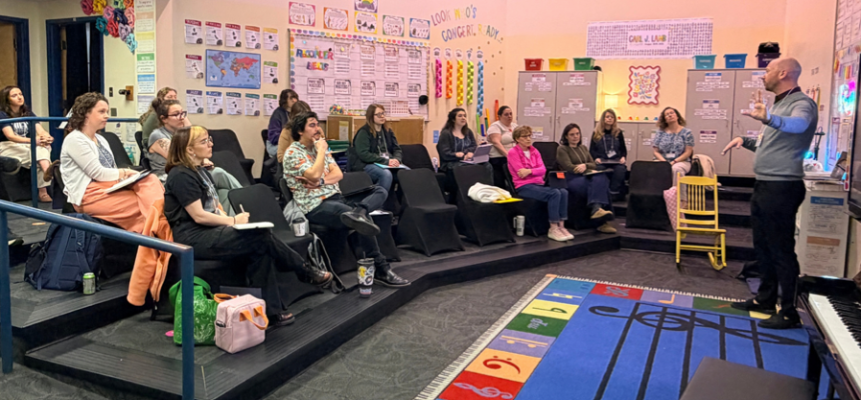
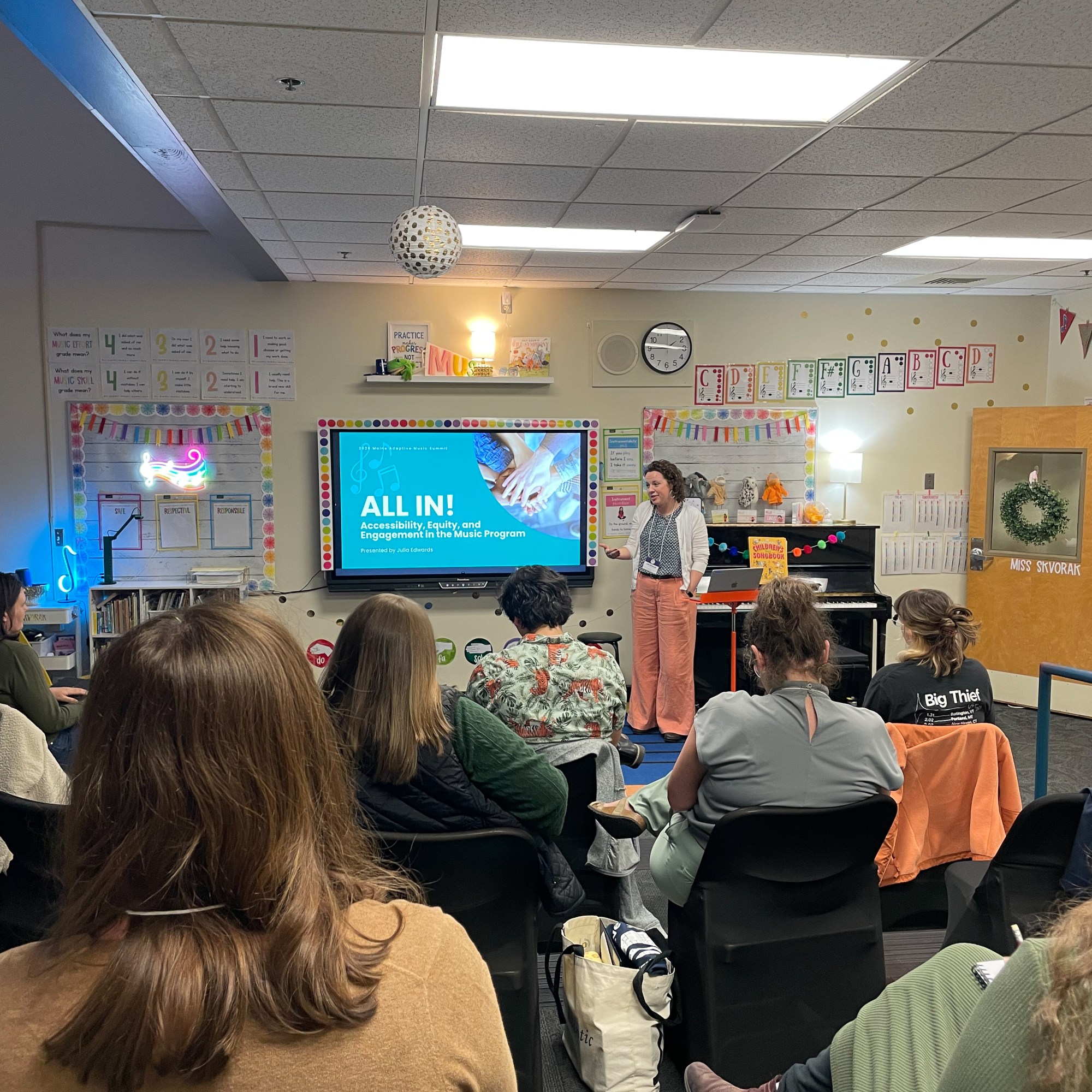
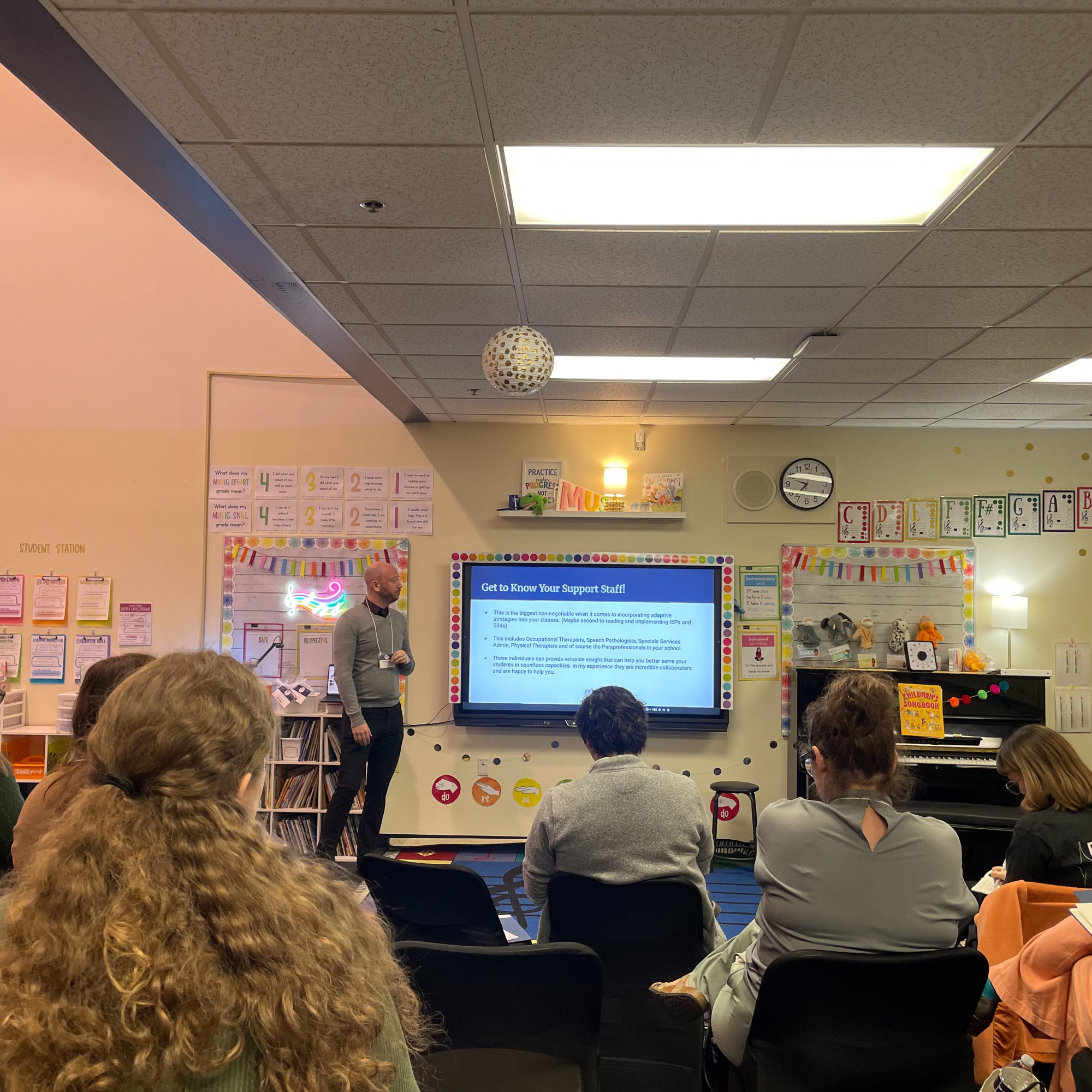
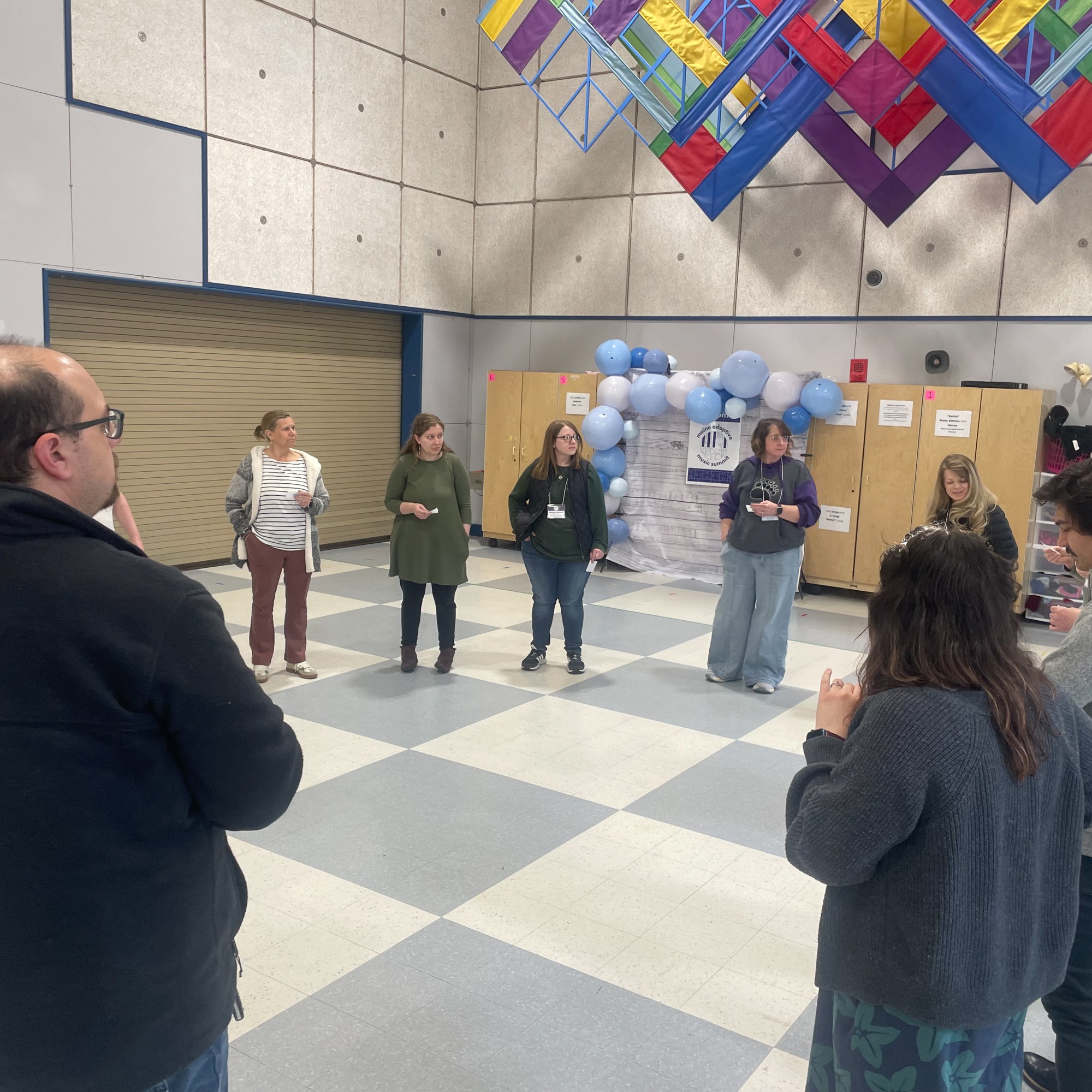
Carl J. Lamb Elementary School in Springvale opened its doors on Saturday, April 11, 2026, to host the second annual Maine Adaptive Music Summit. Organized by Carl J. Lamb music teacher Hattie Skvorak, the summit brought together music educators, special education teachers, and educational technicians for a full day of professional development focused on adaptive music education.
Adaptive music is about finding creative ways to make music class work for every student, whether that means modifying instruments, adjusting teaching approaches, or finding new strategies to support students with disabilities or learning differences.
The summit was born out of a gap Skvorak identified in available professional development.
“We were hearing feedback from ed techs that they wanted professional development on how to support their students in the special areas, with music being one of them,” Skvorak explained.
Skvorak said hosting the summit at Carl J. Lamb was an excellent opportunity.
“It was so wonderful to have other people in our space and see all the great things that our special educators and teams are doing,” Skvorak expressed. “It was so nice to hear them speak so highly of our school and all the work that we’re doing and the collaborative efforts being made between specialist teachers and special education teachers.”
A standout moment from this year’s summit was a presentation from Julia Edwards, the 2026 Maine Teacher of the Year, who spoke about making concert settings accessible for students, performers, and audiences alike.
“One of the things that is particularly meaningful about this event is the focus on collaboration,” Edwards said. “The focus spreads beyond the music classroom and celebrates the role music can play in other therapies and classrooms.”
Other sessions at the summit included “Opening the Doors to a Unified Choral Rehearsal” with choral music teacher Michael Gallagan, “Assisting Students During Specials” with special education teacher Ashley Walker, and “Music and Communication in Speech Therapy” with speech language pathologist Fran Bodkin, among others.
This year’s lineup also intentionally expanded beyond general music to include sessions relevant to secondary ensemble teachers, ensuring that band, choral, and orchestra educators all left with practical takeaways.
“Hattie Skvorak has done a remarkable job seeing a need and using her organizational magic to highlight innovative practices and celebrate the diversity in how our students learn,” Edwards added.
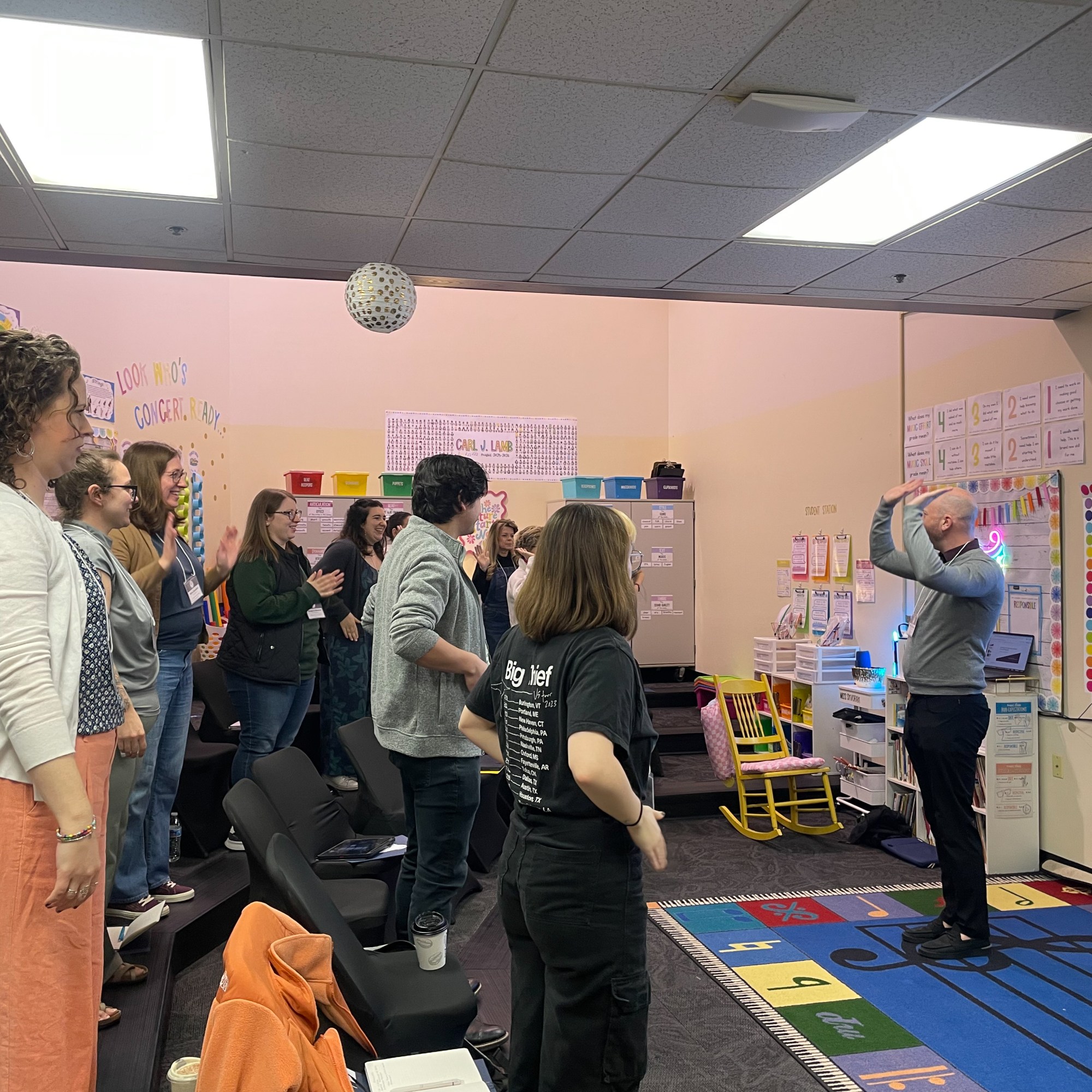
Carl J. Lamb ed tech Janelle Brooks attended the summit for the first time this year and described the day as eye-opening. She said her favorite moment came during Gallagan’s session, when the whole room was brought together to sing and keep rhythm.
“Listening to everybody come together with their voices making music was definitely my favorite part,” Brooks acknowledged.
Brooks said she also found it valuable to see how other districts approach adaptive music.
“It was really good to hear them talk about how their district does things,” Brooks added.
With presenters traveling from as far as New Hampshire, and additional participants joining via Zoom, Skvorak said she hopes to eventually include all of New England in the summit and is already thinking about what next year could look like.
“It seems like it’s starting to catch on beyond Maine,” Skvorak said.
This story was submitted by the Sanford School Department. To submit a good news story to the Maine DOE, please fill out the good news submission form.
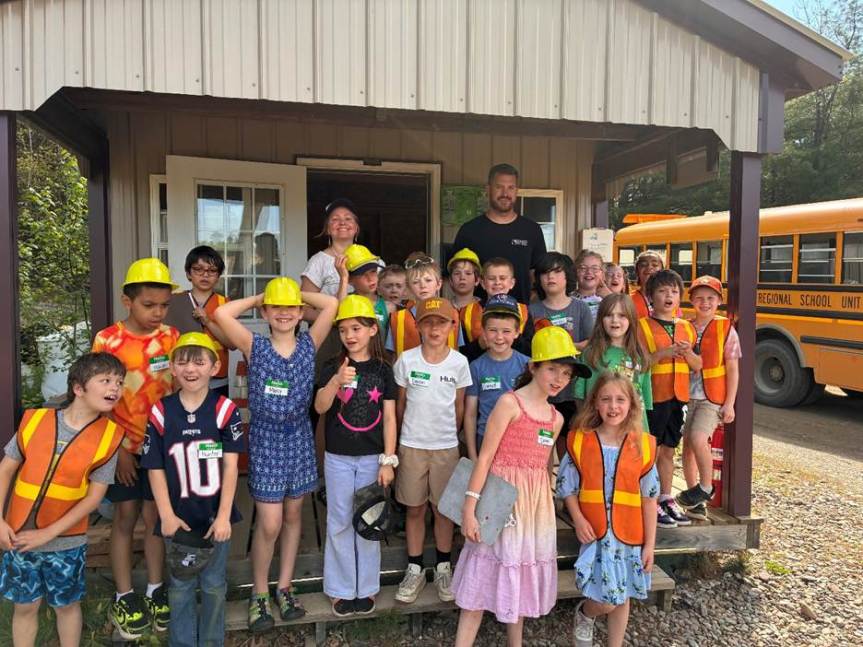
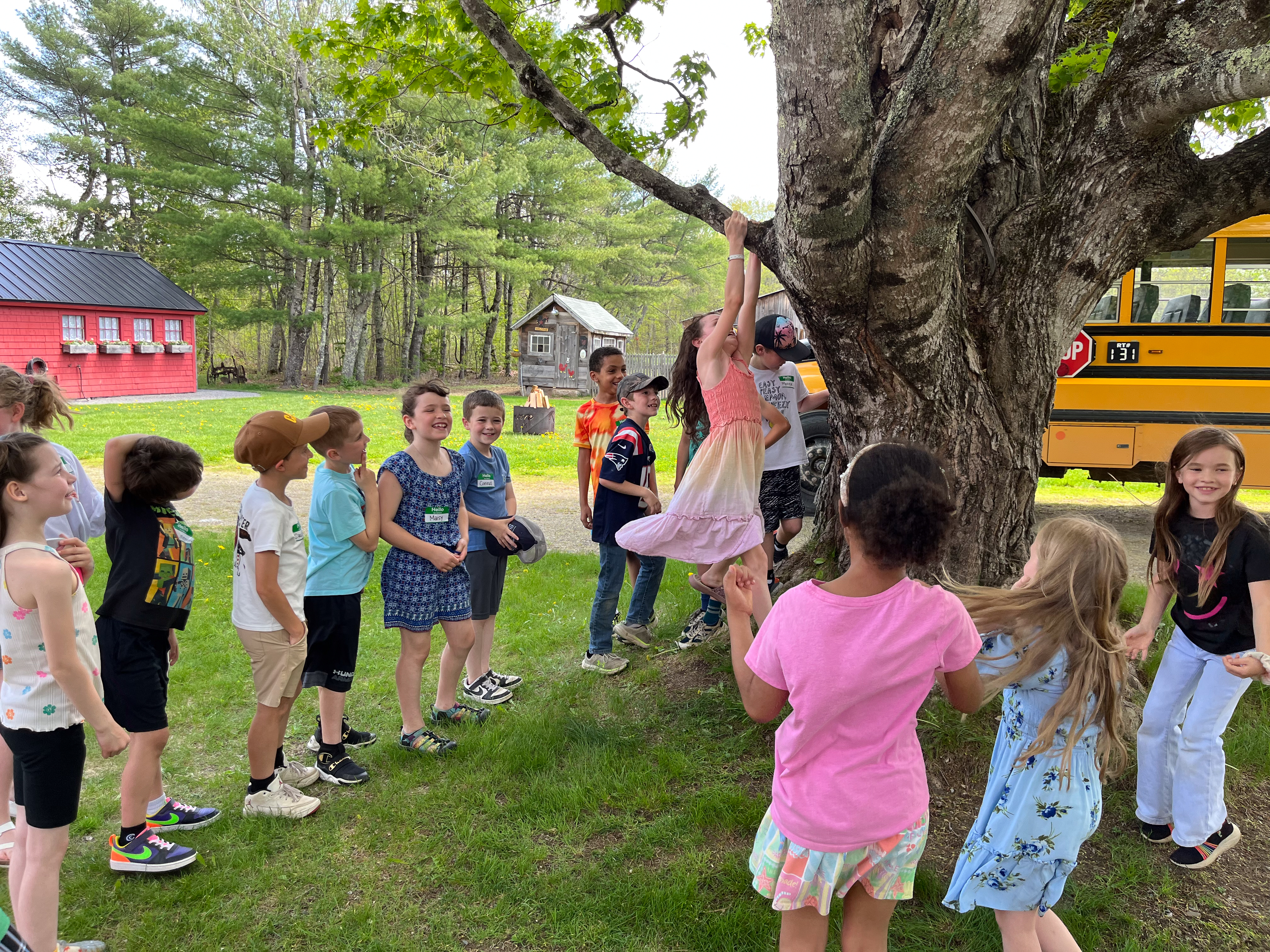
2026 Waldo County Teacher of the Year Rachel Norgang (standing in the back of the group) poses with her students.
When students in Rachel Norgang’s second- and third-grade classes at Monroe Elementary School learn about economics, they don’t just read about businesses in a textbook. They visit gravel pits, tour working farms, explore event venues, and meet artists whose work is displayed around the world.
Norgang, who was recently named the 2026 Waldo County Teacher of the Year, has spent the past four years bringing her students out into the Monroe community for an annual “Entrepreneur Roadshow.” This field experience is part of a place-based social studies unit on the economy, designed to help students understand economic concepts such as goods and services, wants and needs, and the distinct roles businesses play in communities.
“Making this lesson place-based and focused on local businesses is more engaging for students,” Norgang said. “My first goal is student learning, and not far behind that is another goal: to increase buy-in and support for our school within the greater Monroe community.”
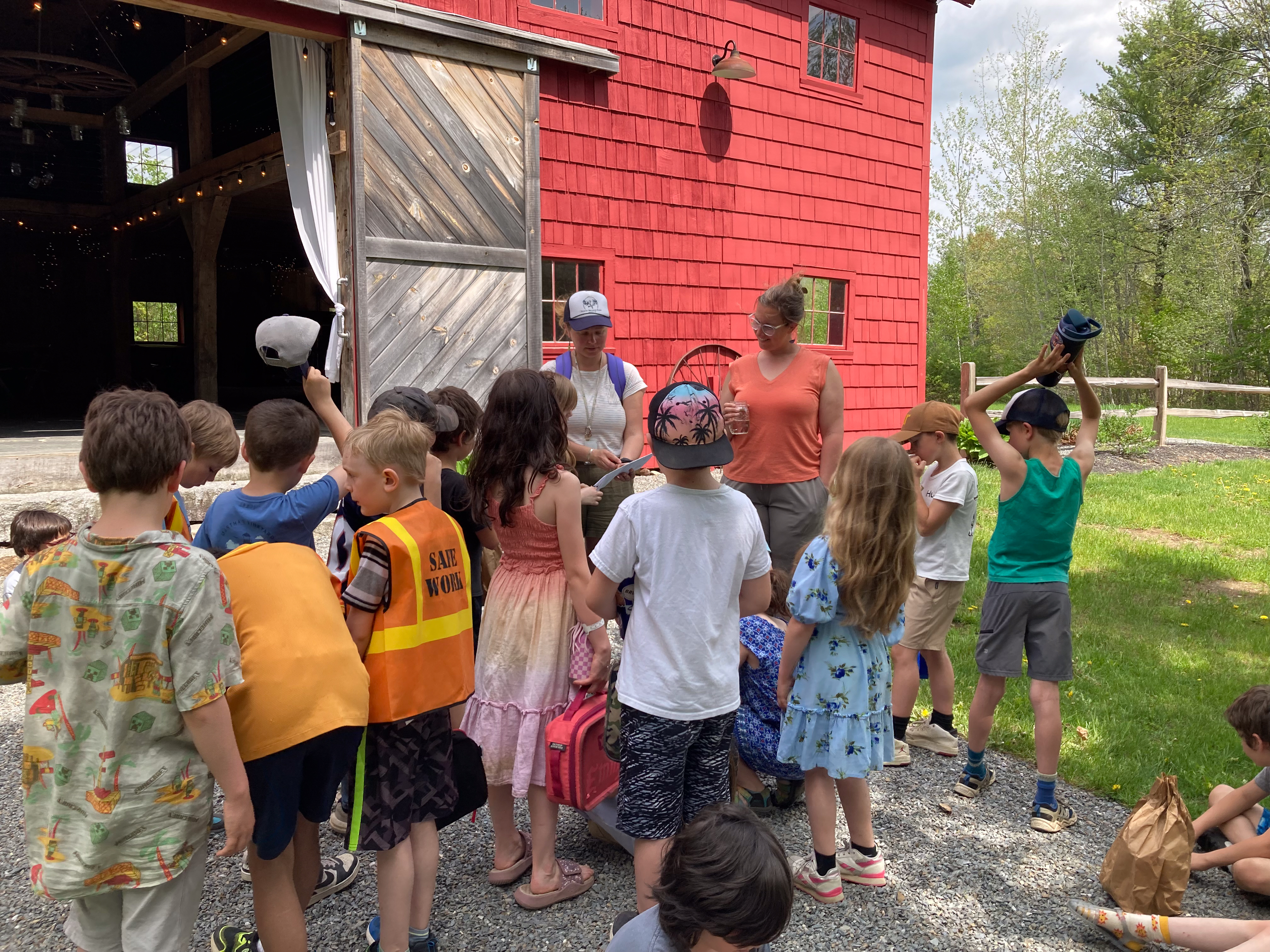
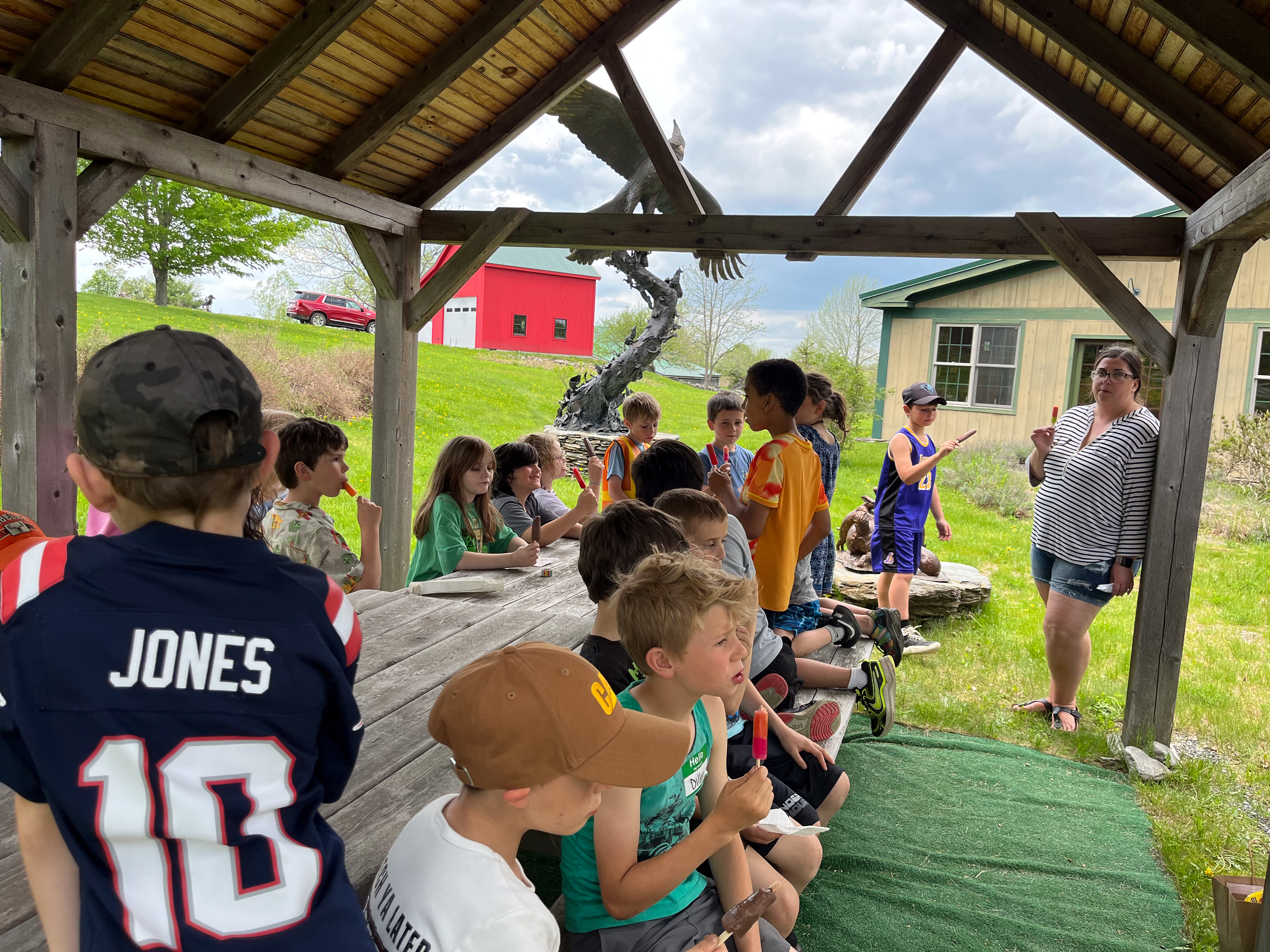
After some learning in the classroom, students spend an entire day meeting local entrepreneurs and seeing firsthand how businesses operate.
This year’s Entrepreneur Roadshow included visits to four Monroe-area businesses:
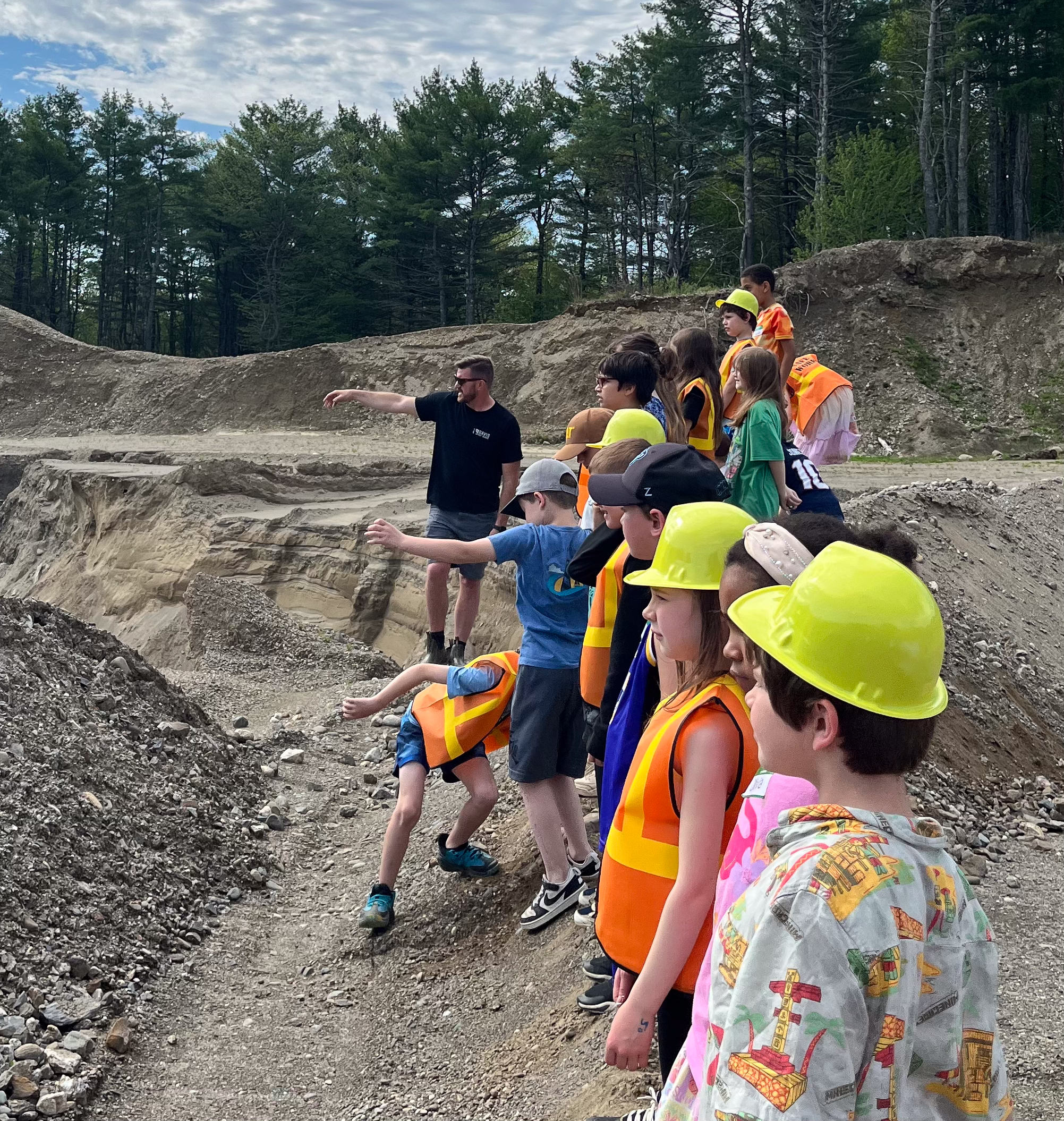
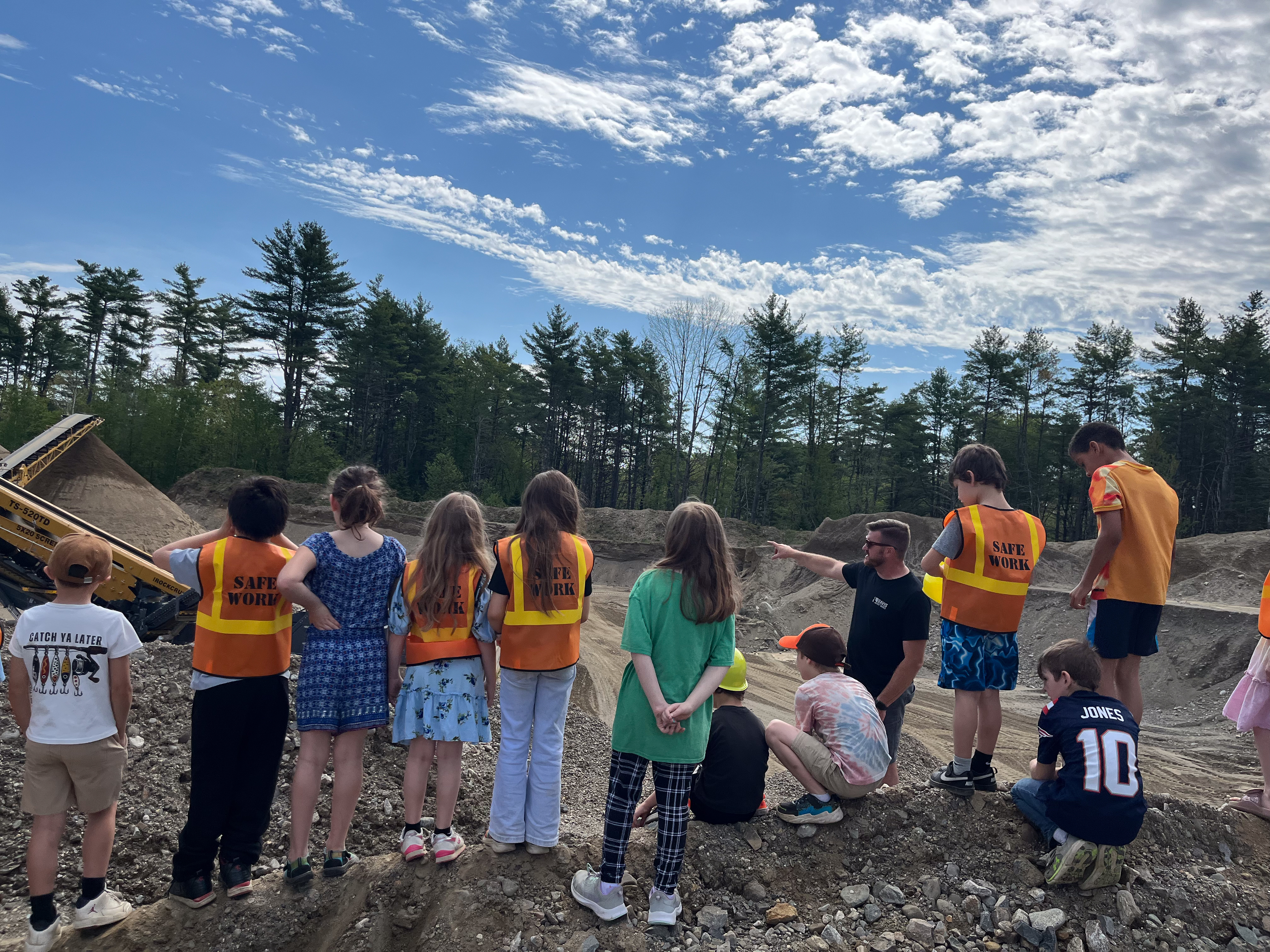
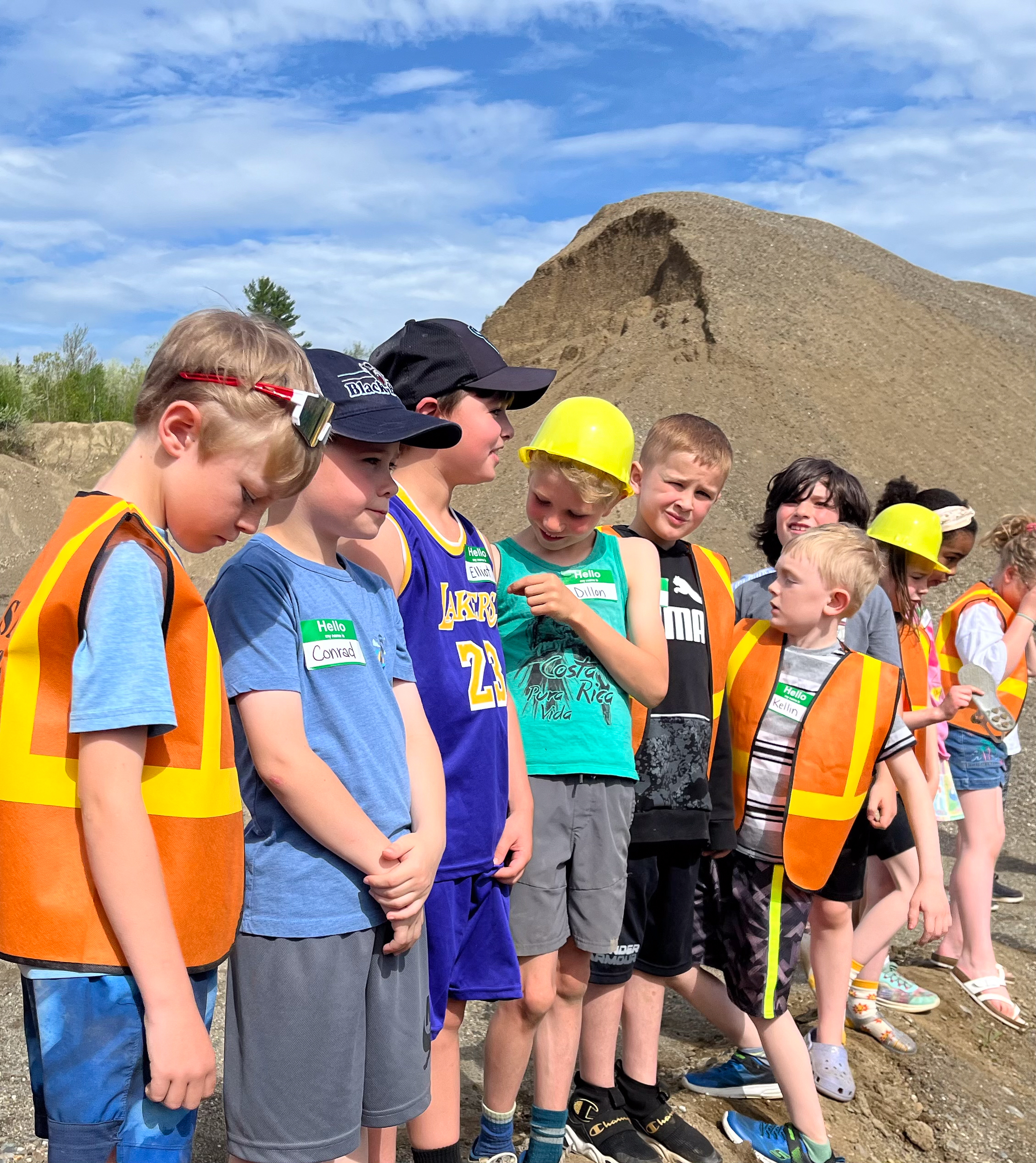
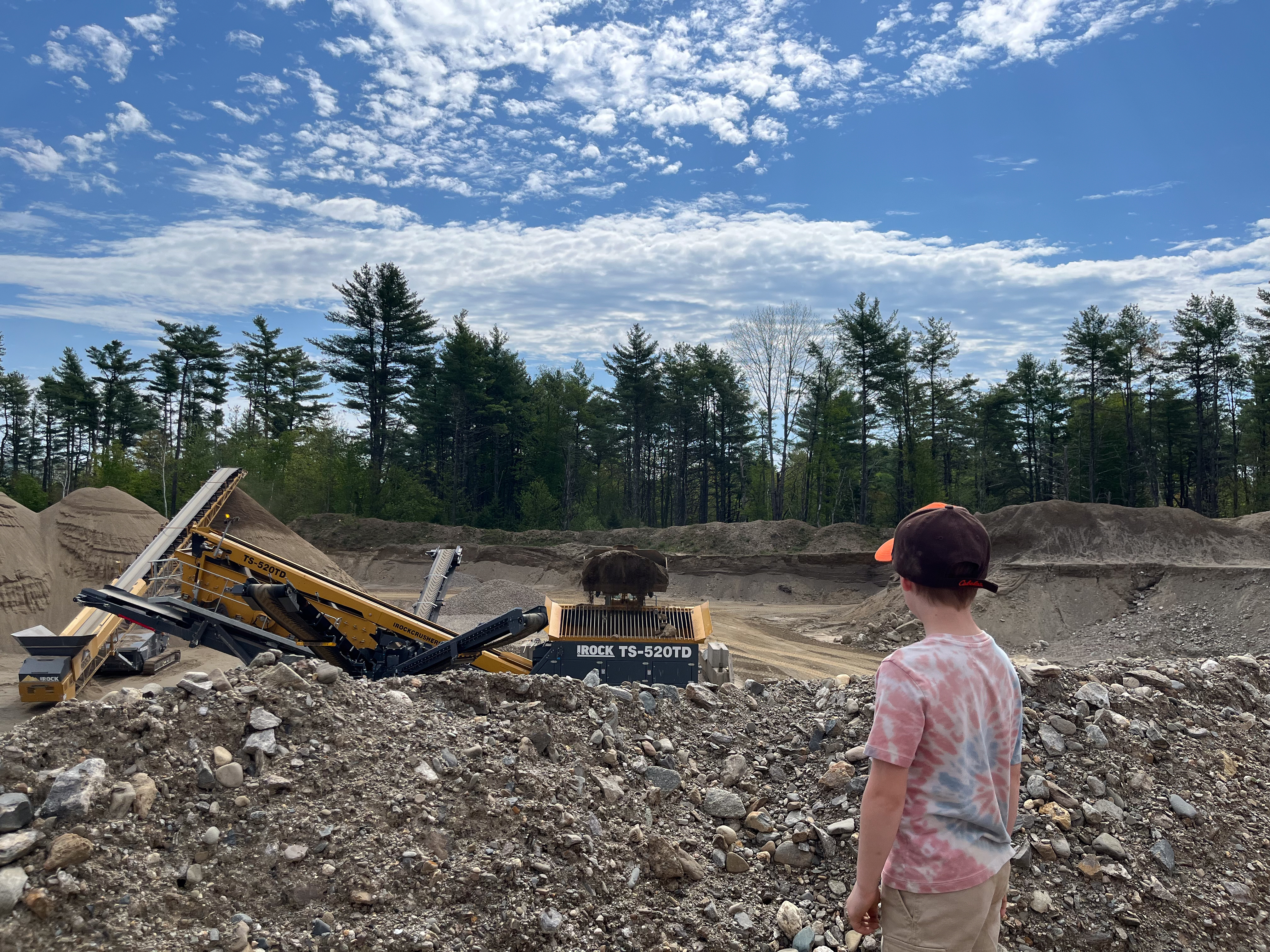
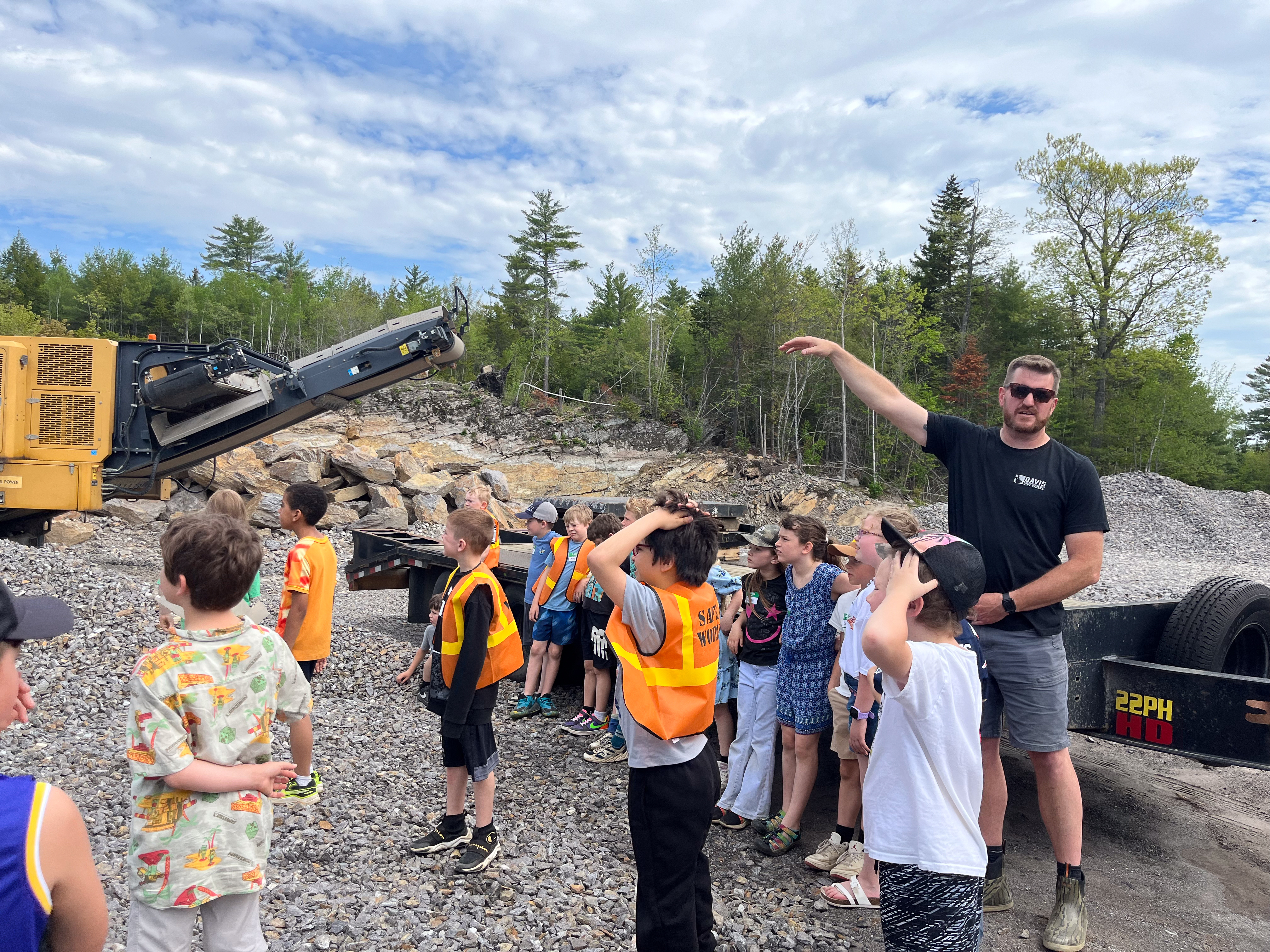
Davis Dirtworks, where owner Derek Davis showed students a working gravel pit and quarry operation, explained heavy equipment, and answered questions about running a business.
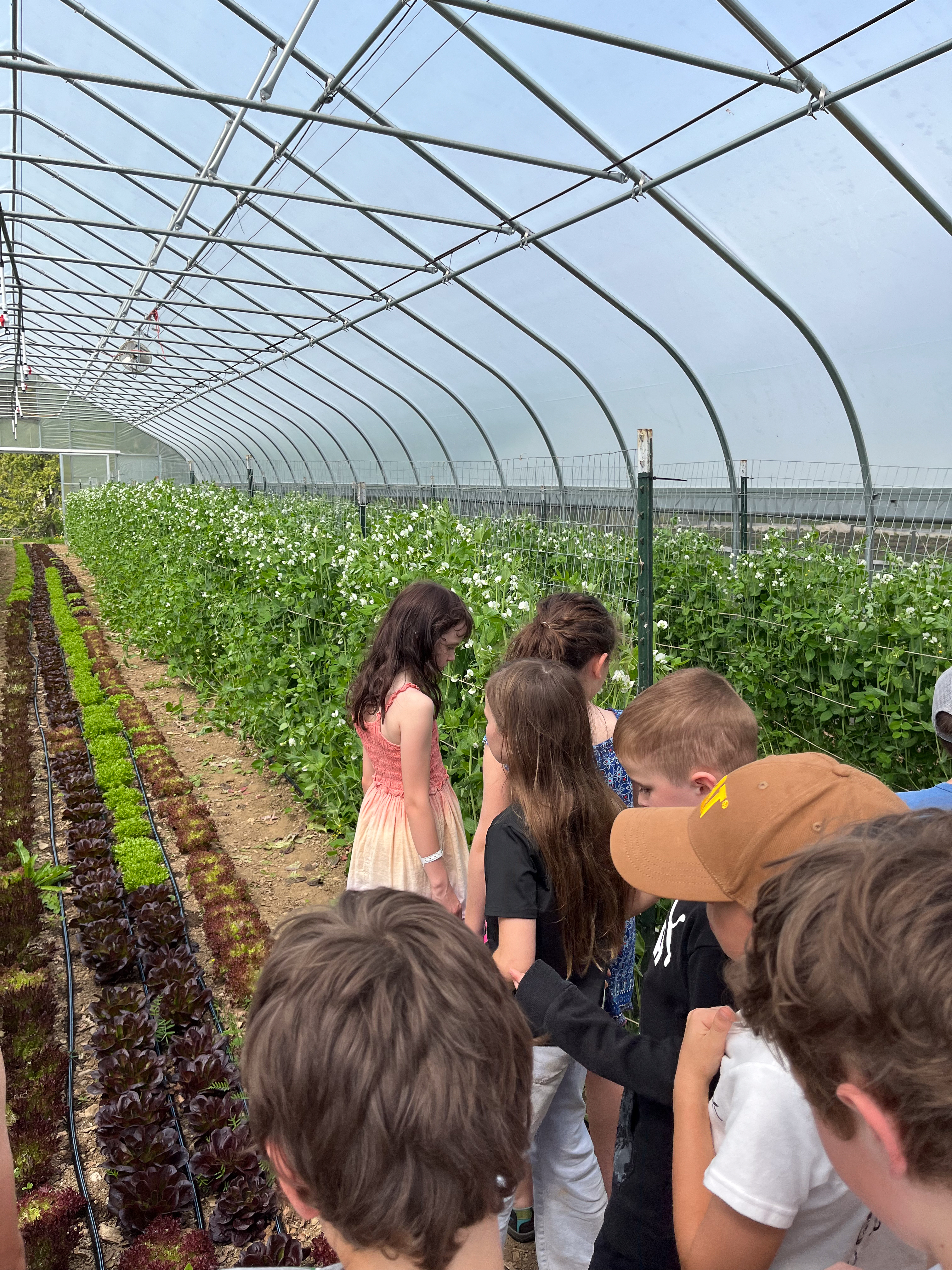
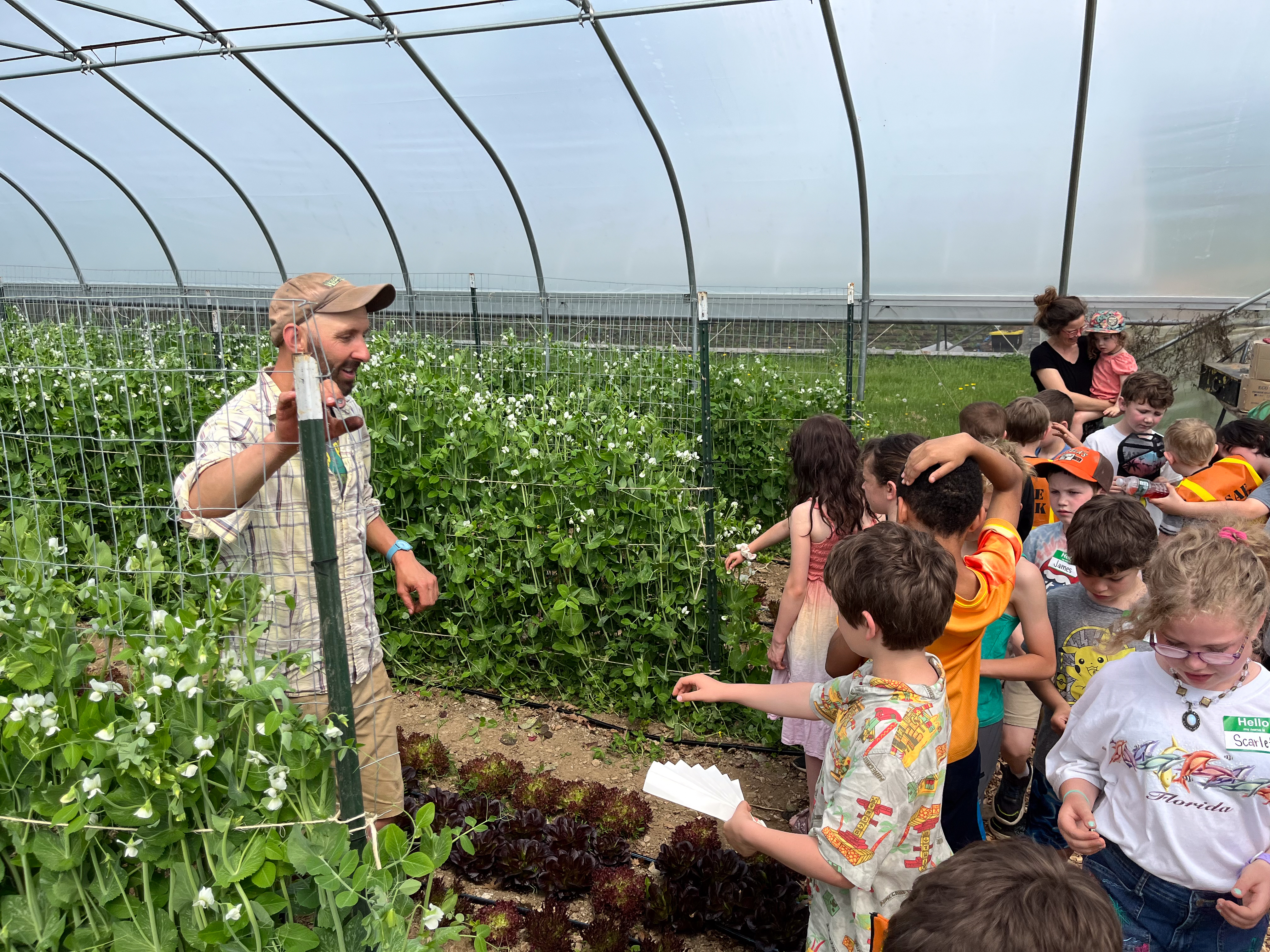
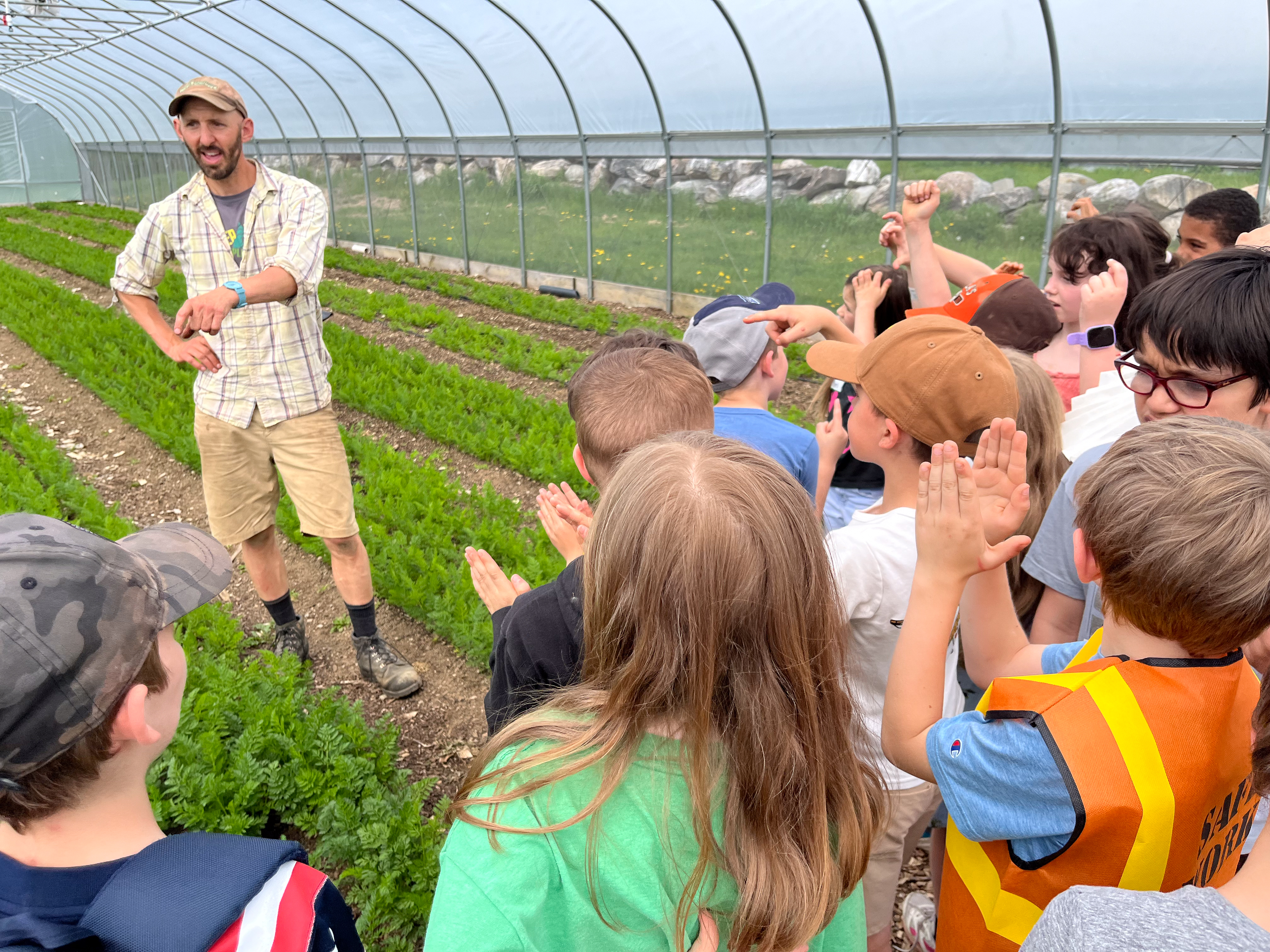
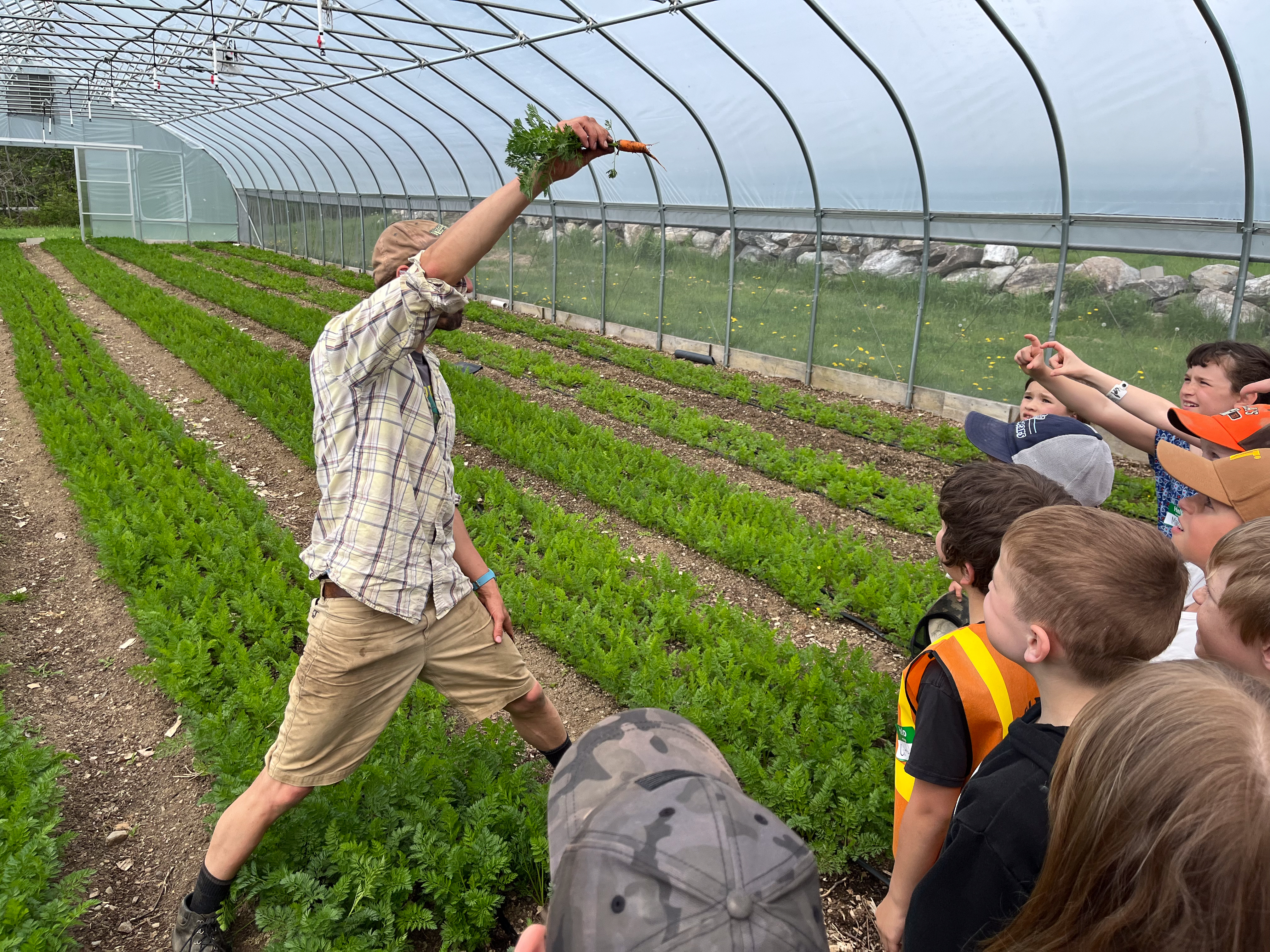
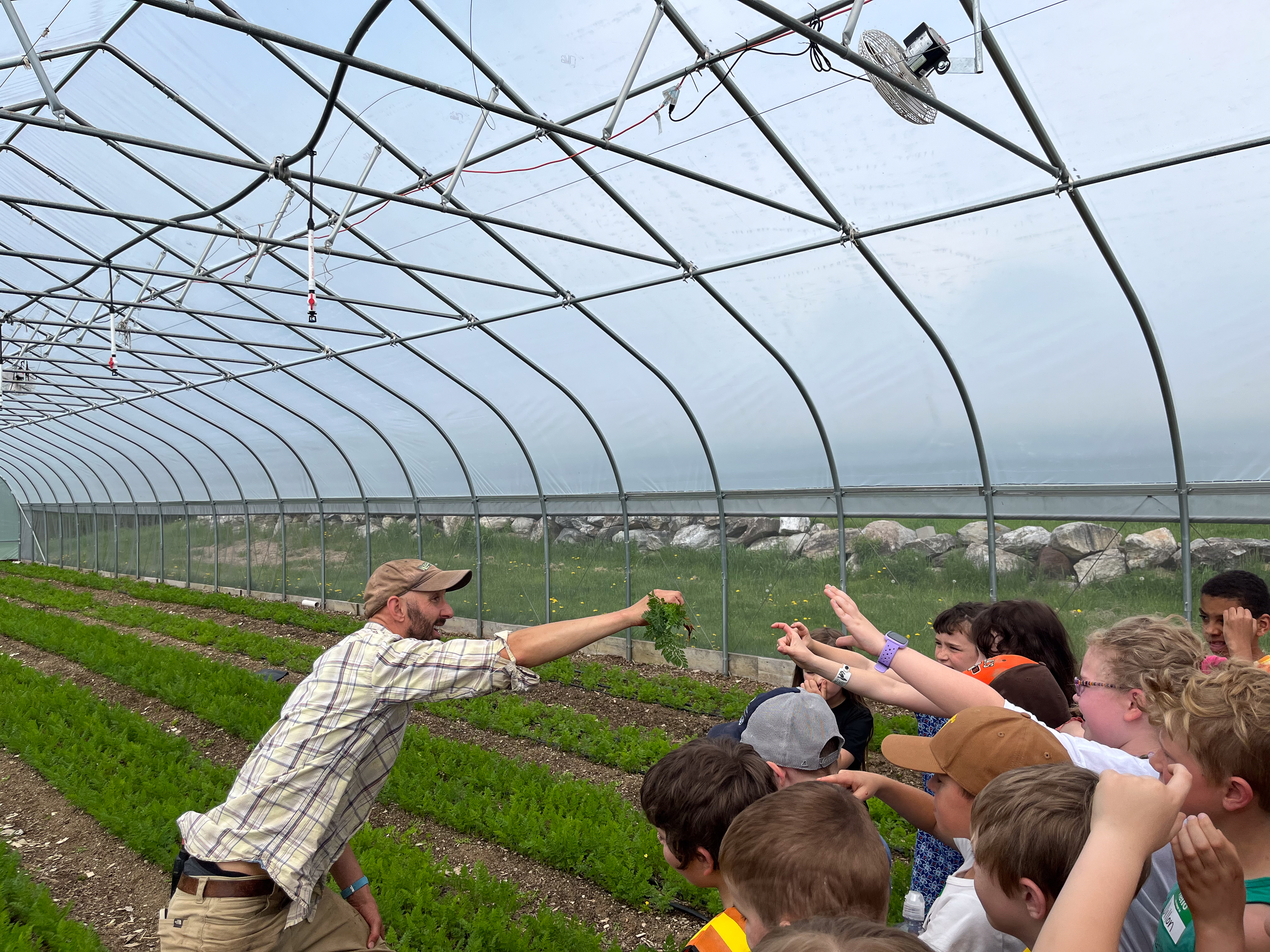
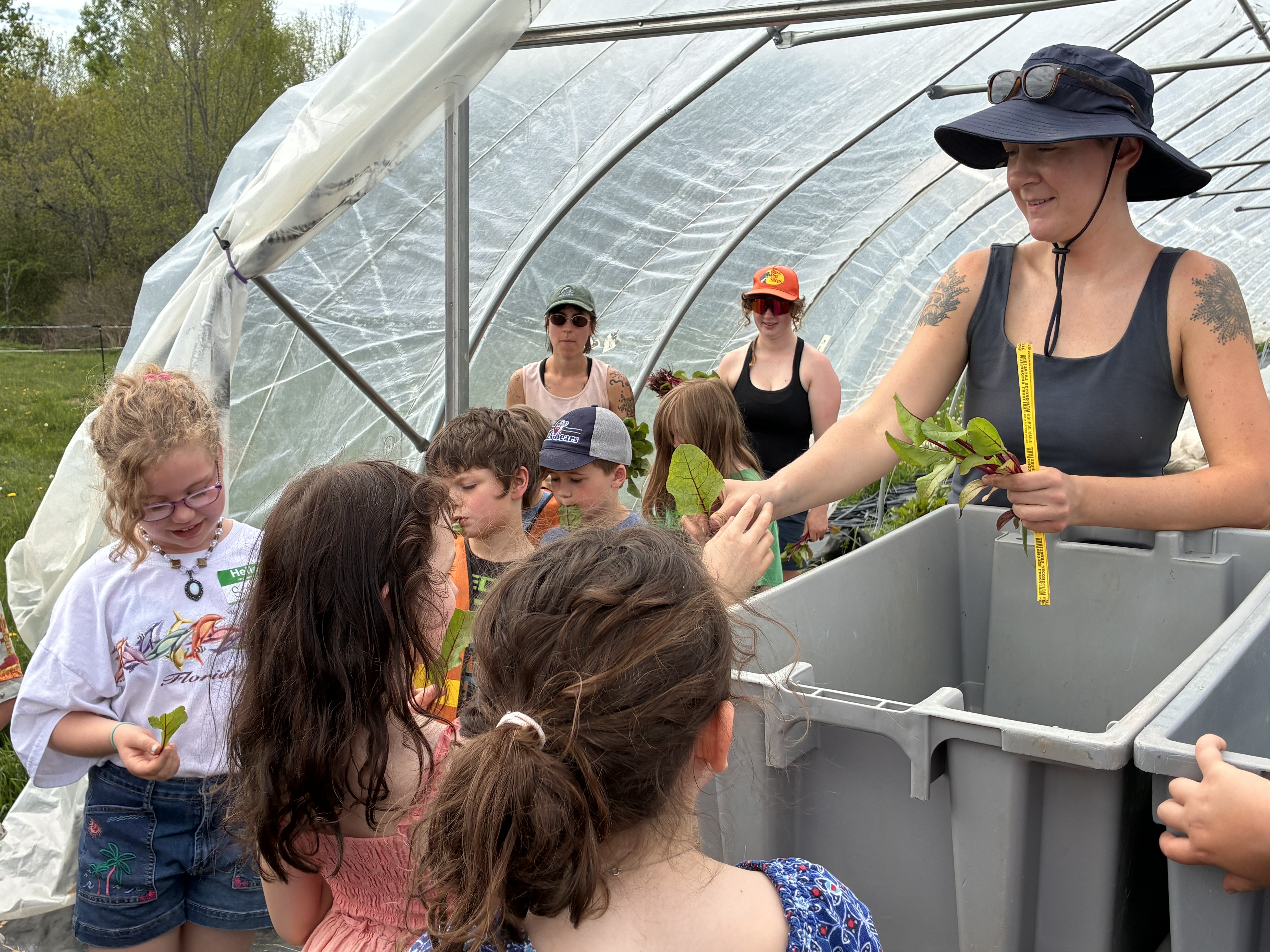
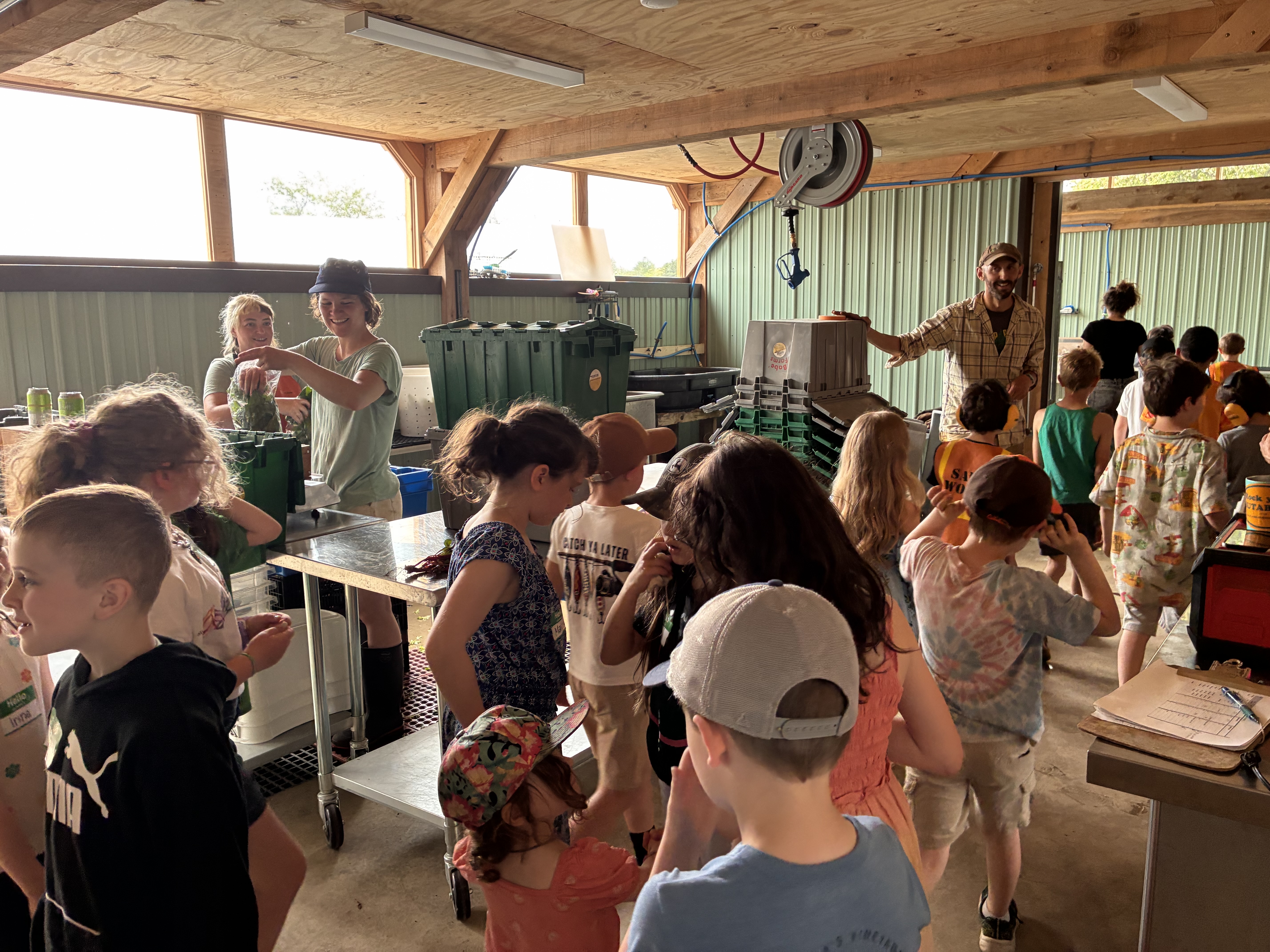
Second Frost Farm, where owners James Gagne and Naomi Brautigam guided students through hoop houses, vegetable fields, wash stations, and cold storage rooms. Students also sampled sauerkraut made from farm-grown produce.
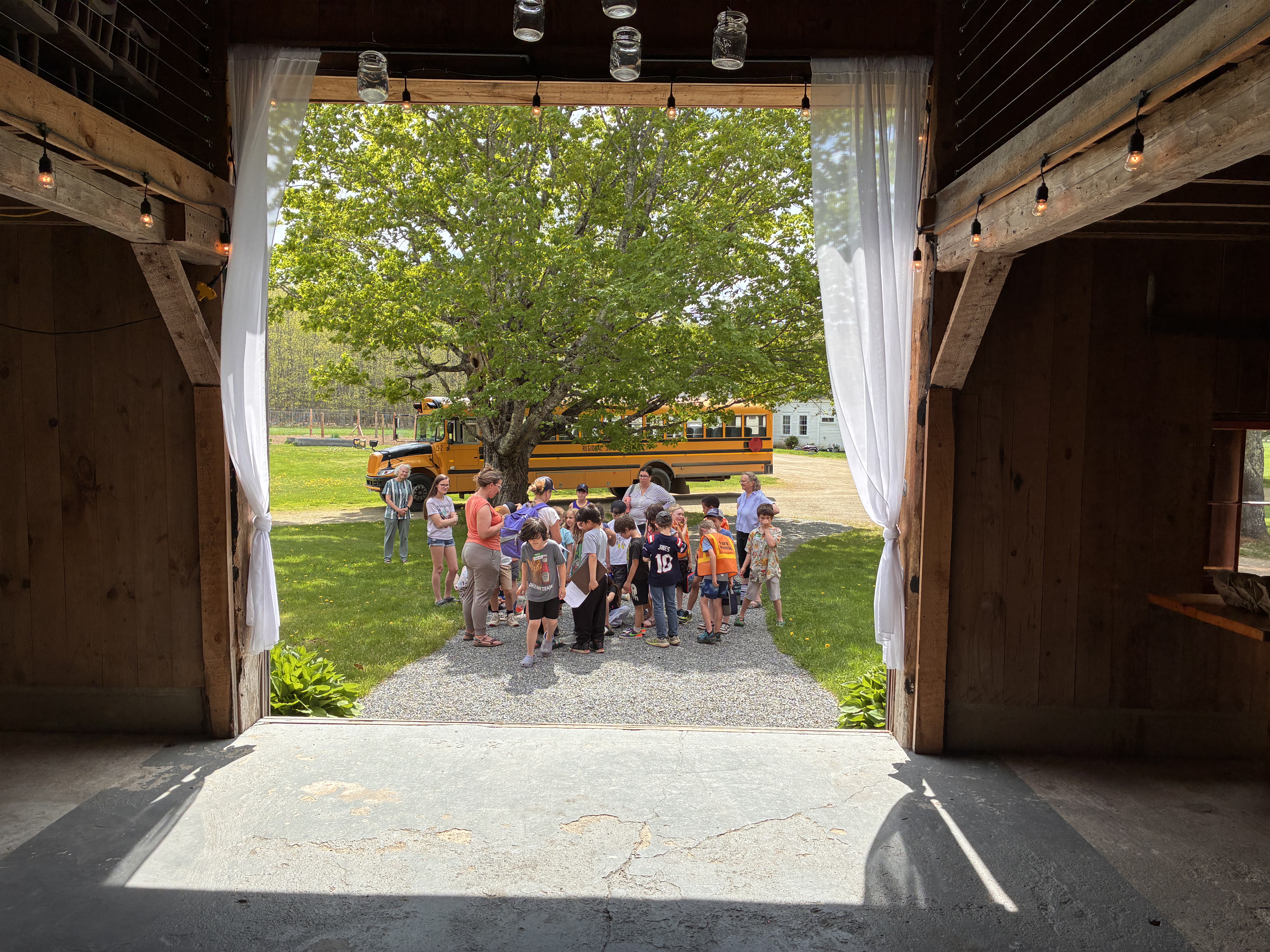
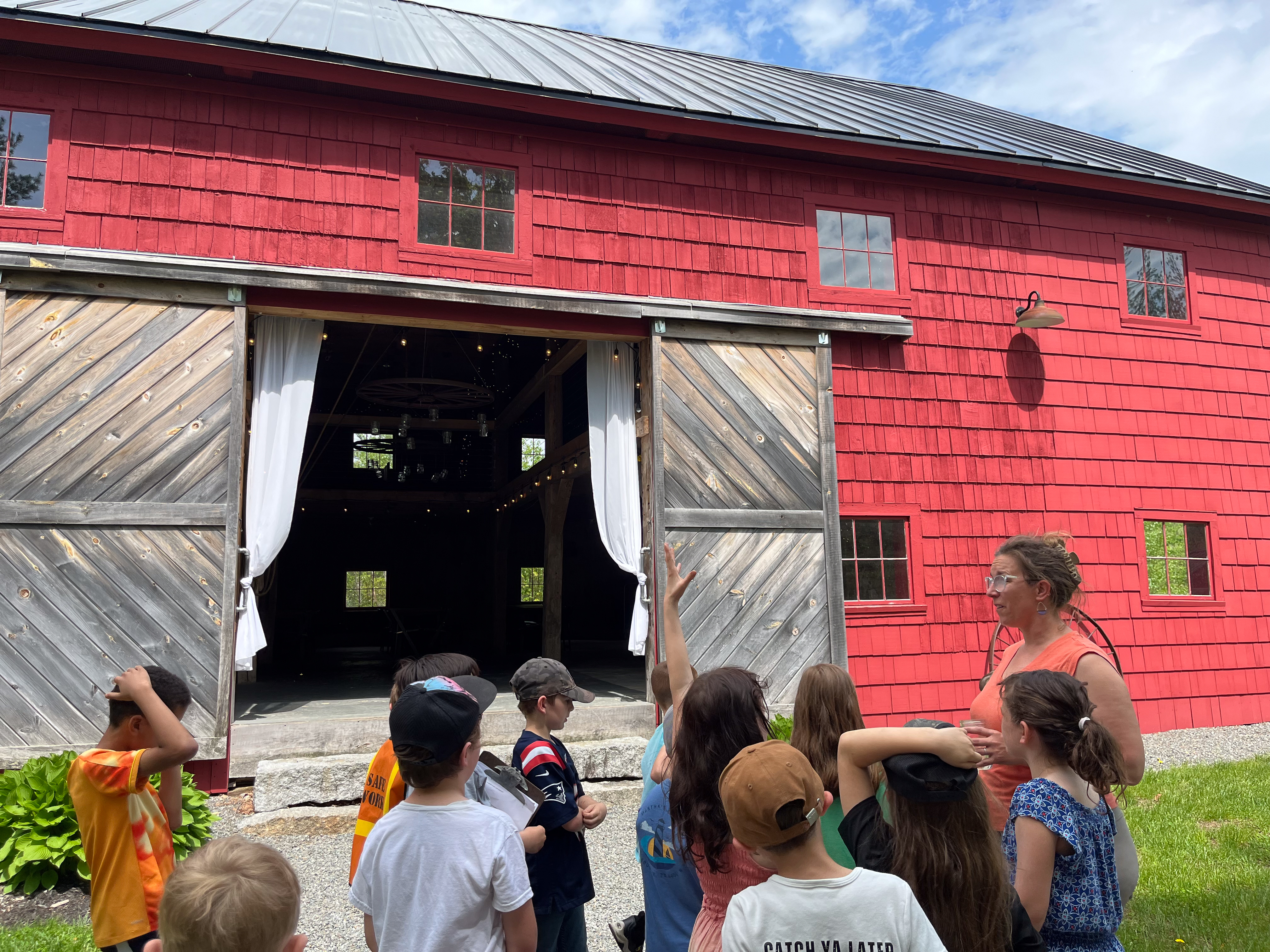
The Barn at Rosemoore, where owner Ashlie Stubbs welcomed students to tour the event venue, learn about hosting weddings and celebrations, and enjoy lunch in the barn.
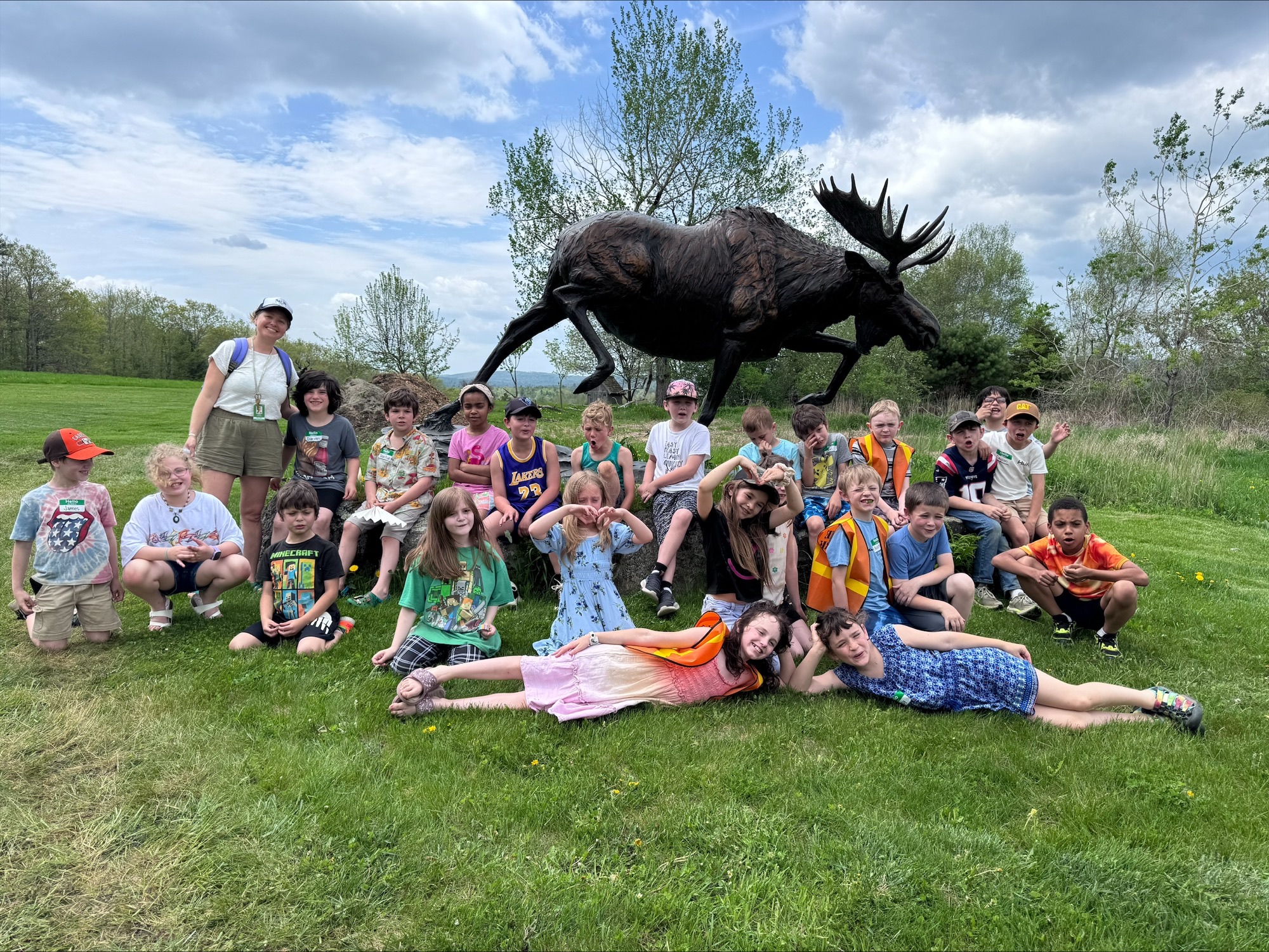
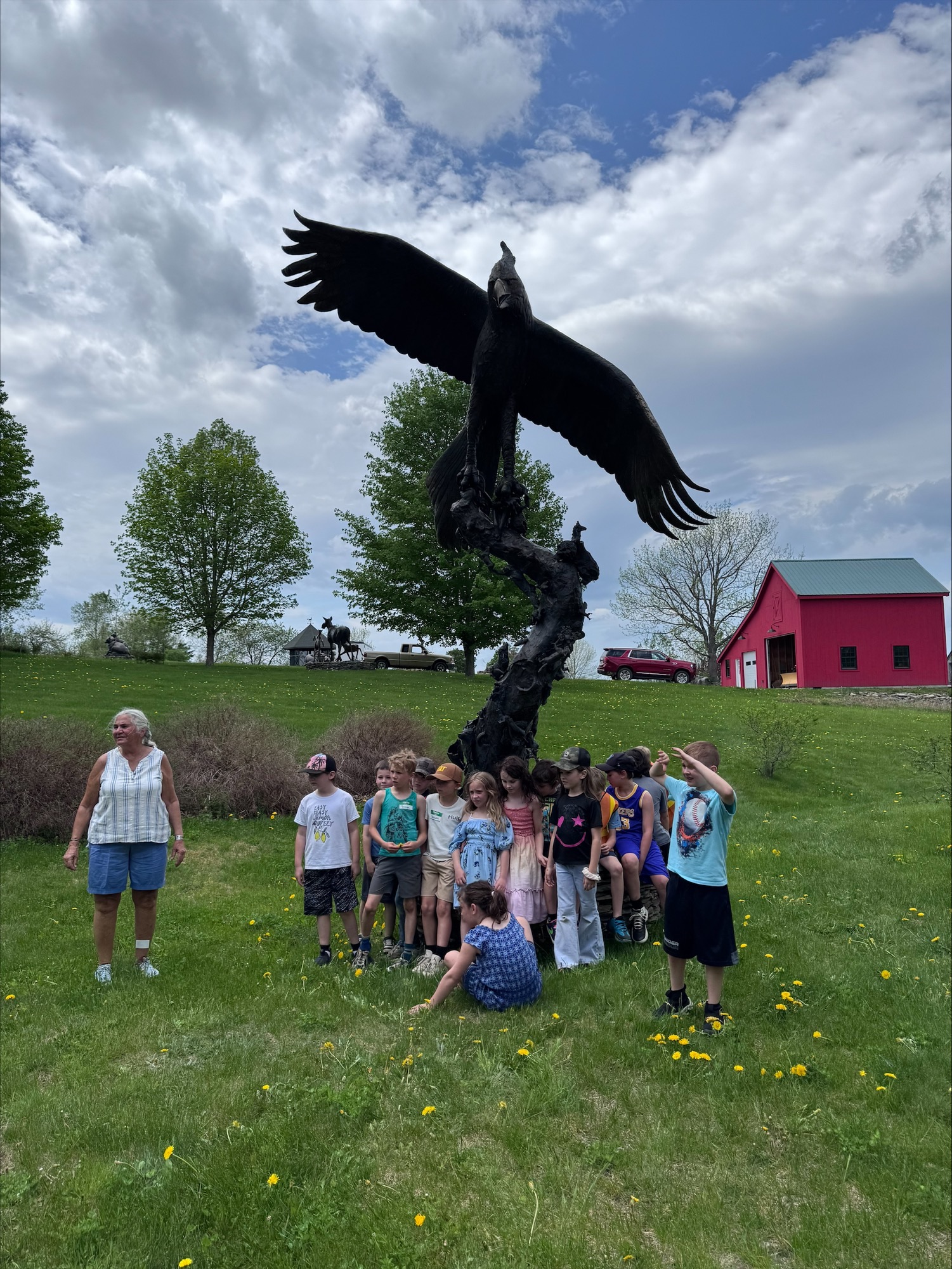
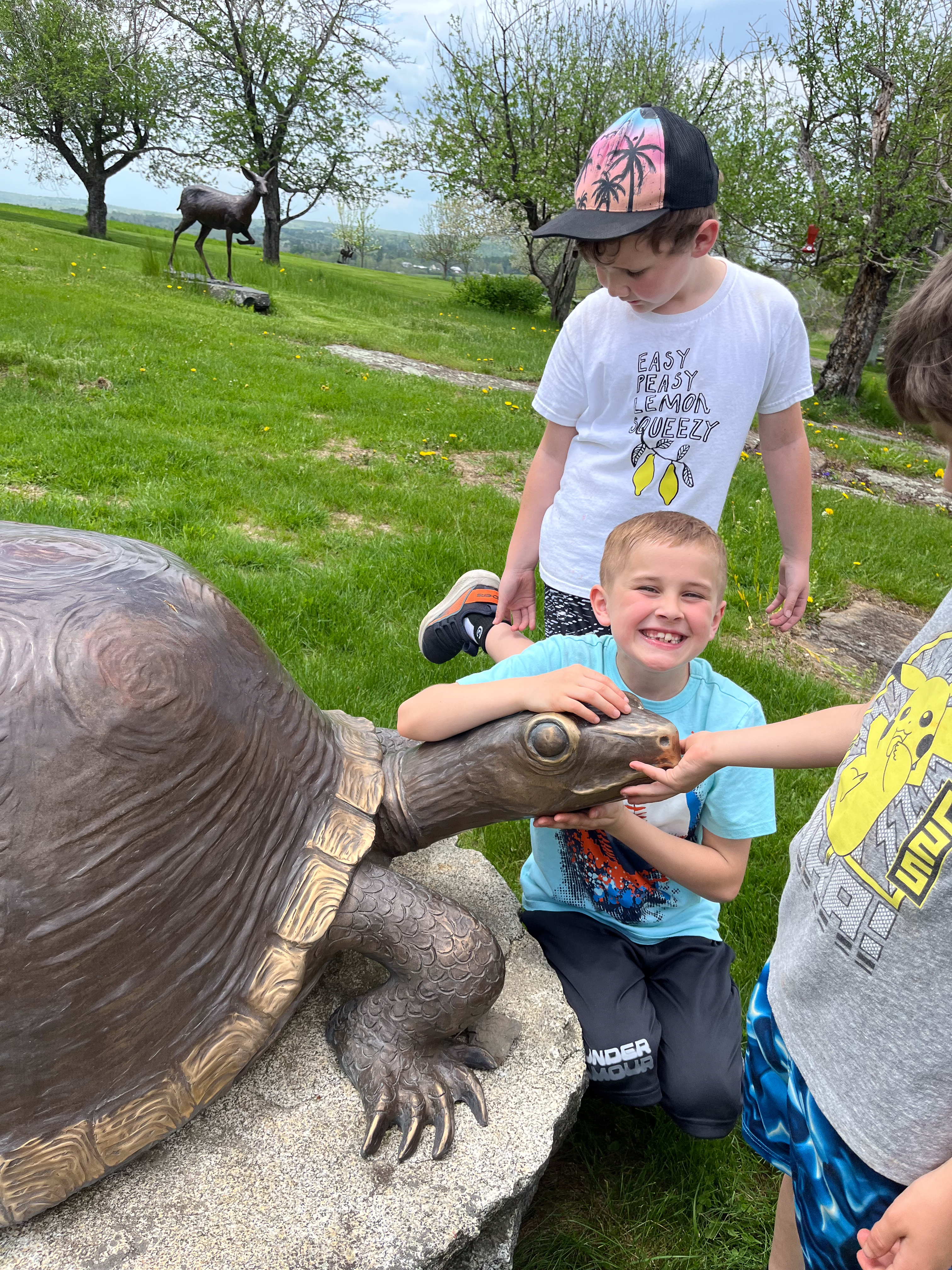
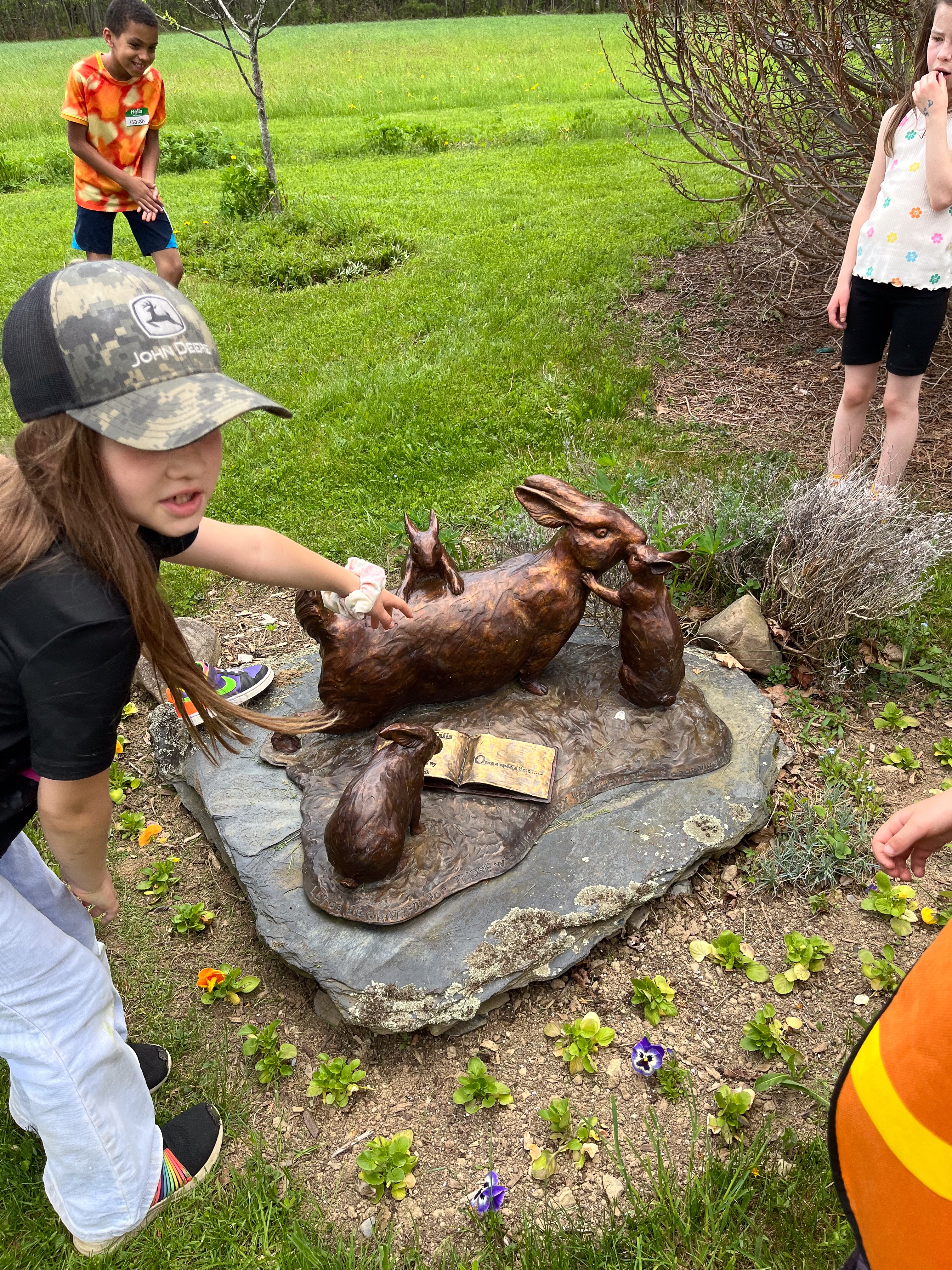
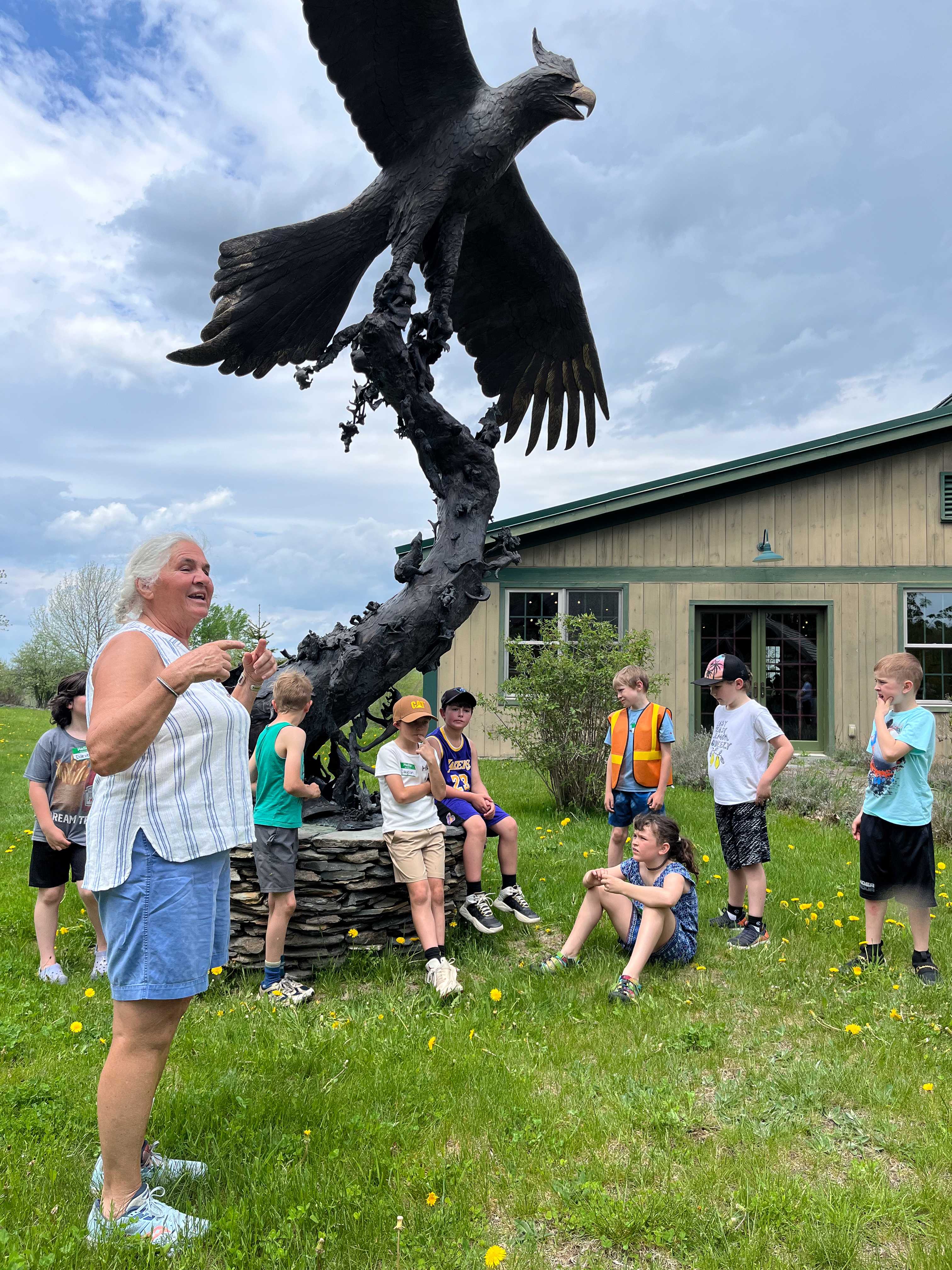
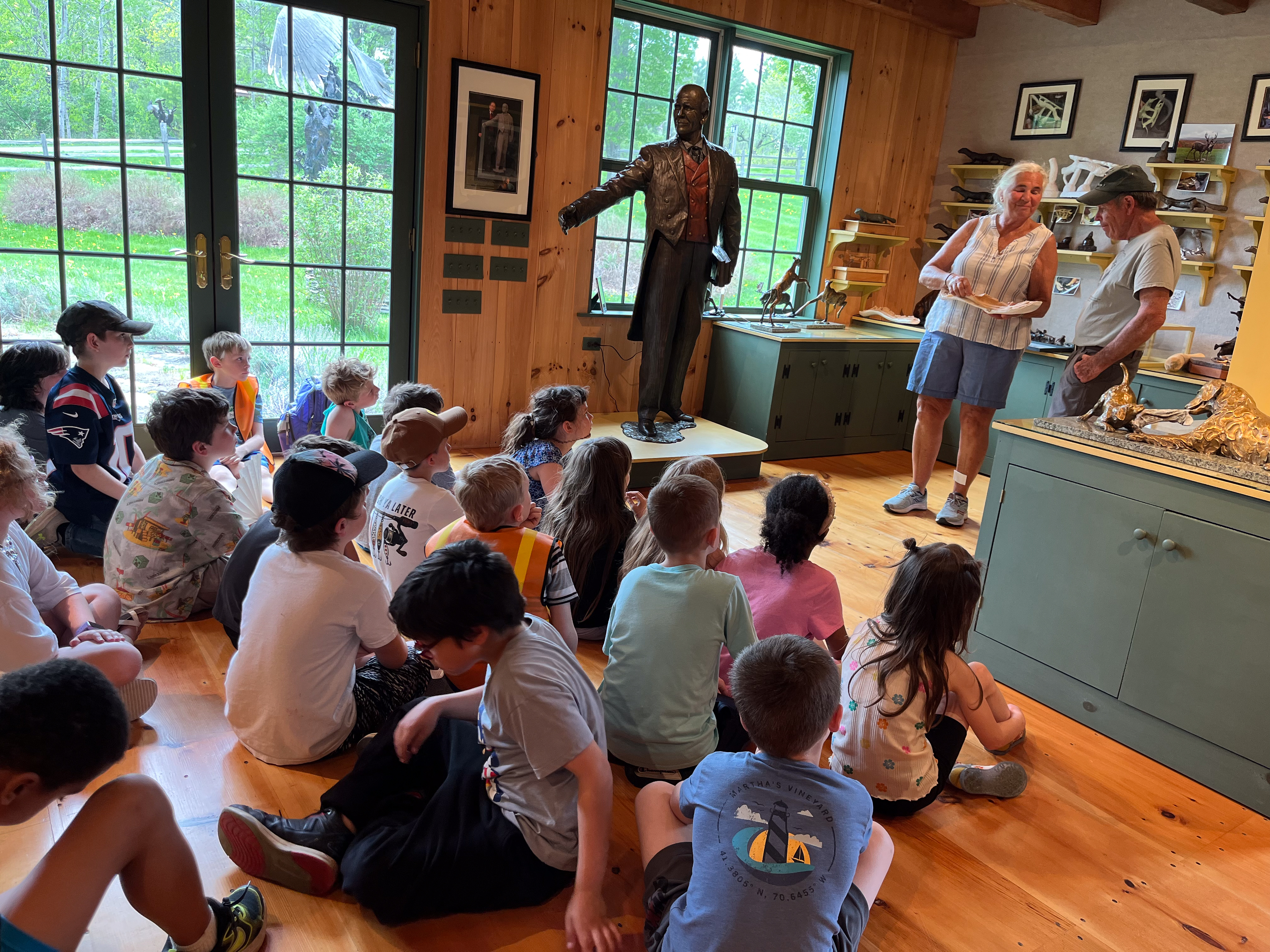
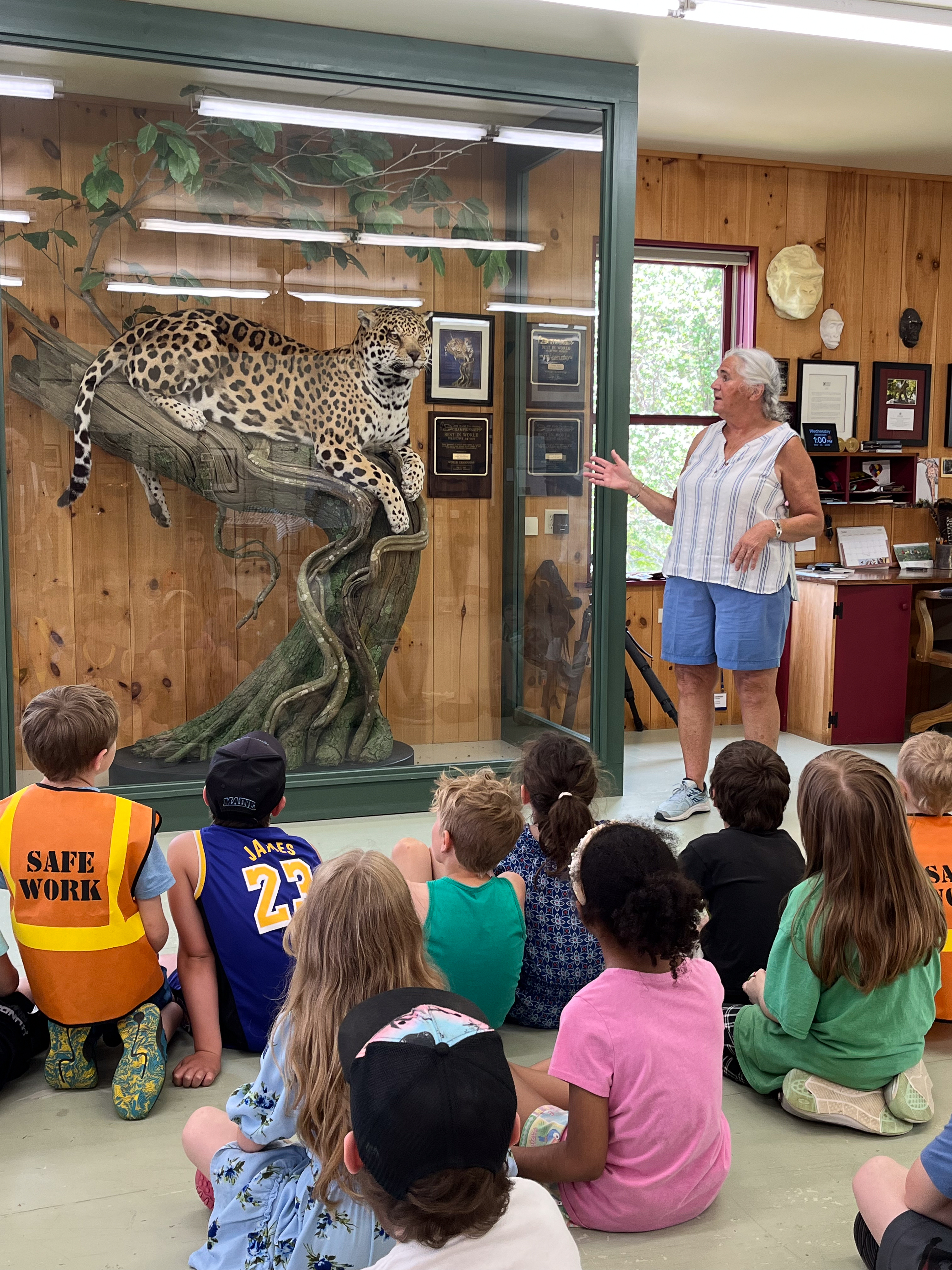
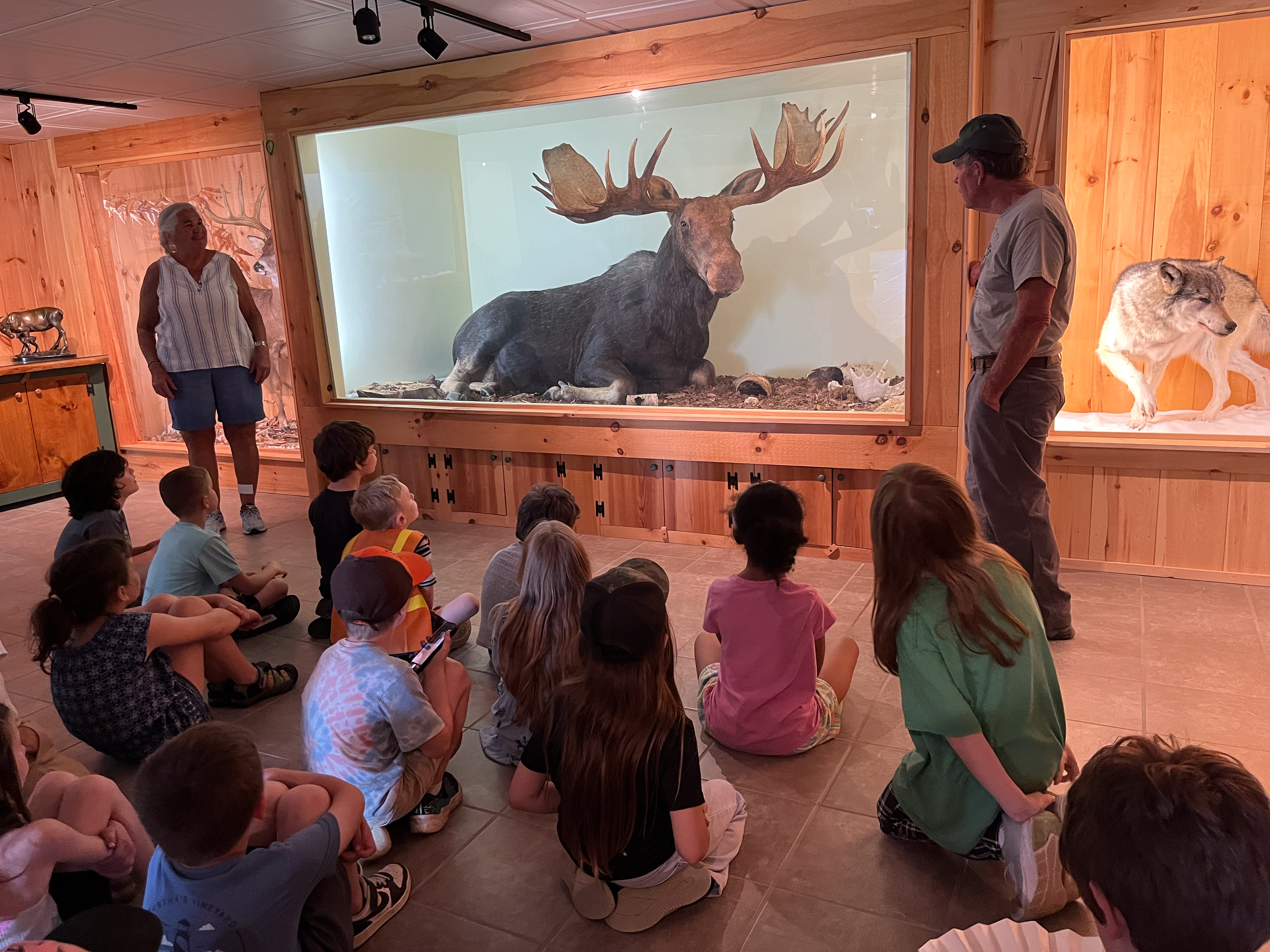
The studio and grounds of bronze sculptor Forest Hart, where students explored outdoor sculptures, toured the artist’s workspace, and learned about the creative and business sides of professional art.
Throughout the day, students asked thoughtful questions such as:
Why did you decide to start your business?
What is the hardest part of running your business?
What is your favorite part of running your business?
What does a successful year look like?
What advice do you have for us in school and life?
The experience left a lasting impression on students.
After tasting sauerkraut at Second Frost Farm, one student enthusiastically declared, “This is the best thing my tongue has ever touched.”
Another student, inspired by the work of sculptor Forest Hart, remarked, “This guy should be famous.”
Back in the classroom, students reflected on what they learned before launching into a persuasive writing project. Using facts gathered during the field trip and opinions they formed about the businesses, students began creating advertisements designed to attract customers.
“We are convincing people to go to the businesses!” one student explained during a lesson discussion.
Students brainstormed the most compelling features of each business, developed persuasive hooks, and drafted advertisements highlighting the products, services, and experiences offered by these local entrepreneurs.
Some of the student-created opening lines included:
“Do you hear that engine roaring? It’s probably Derek from Davis Dirtworks!”
“Do you see that bronze sculpture right in your way? That was built by Forest Hart!”
“Have you heard of Second Frost Farm? They have a variety of vegetables.”
“Would you believe you can have a baby shower at The Barn at Rosemoore?”
Students are now revising and illustrating their advertisements before recording narrated presentations that will be shared digitally with business owners, families, and the broader community.
Norgang credits Monroe Elementary School Principal Jodie Dupuy for helping make projects like this possible.
“I have a great principal who supports and encourages connections to the community,” Norgang said.
The Entrepreneur Roadshow exemplifies the power of place-based education—connecting classroom learning to real-world experiences, while strengthening relationships between schools and their communities. For Norgang’s students, economics is no longer an abstract concept. It’s the farm down the road, the quarry in town, the event venue hosting celebrations, and the artist creating sculptures in their own community.
Through experiences like these, students gain a deeper understanding of how local businesses contribute to the economy while developing critical thinking, communication, and writing skills that will serve them well in the future.
This story was written in collaboration with Monroe Elementary School in RSU 3. To submit a good news story to the Maine DOE, please fill out the good news submission form.
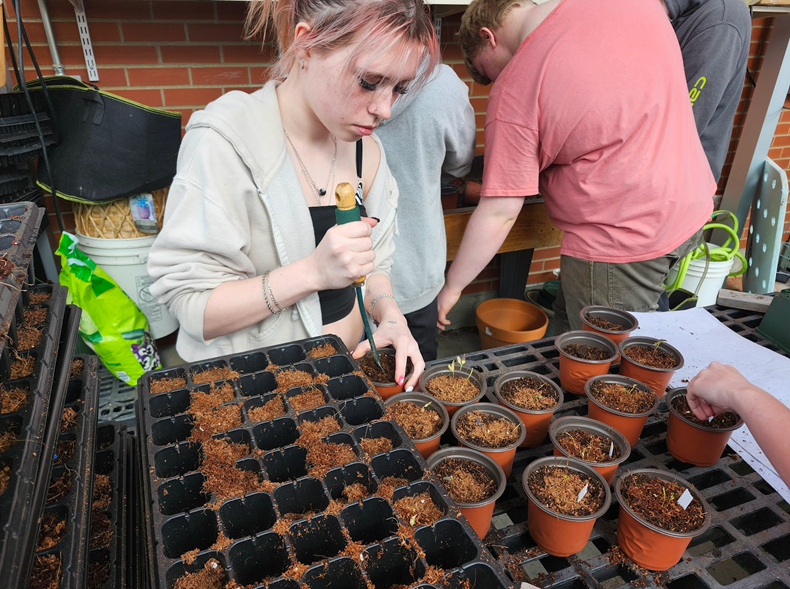
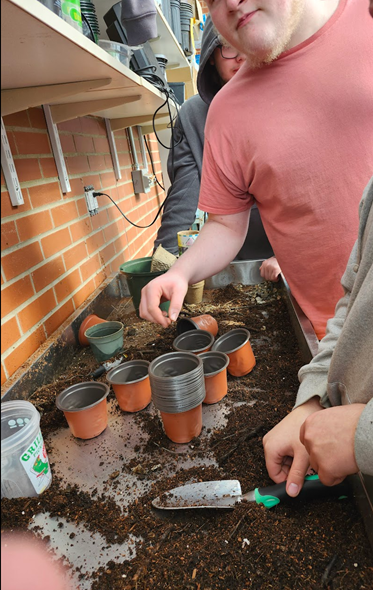
An ALP student gains hands-on experience in plant care and propagation.
For some students, success in school begins when learning becomes more flexible, personalized, and connected to real life. At the Alternative Learning Program (ALP) located within Mt. Blue High School, alternative education teachers are working to create that environment through relationship-based instruction, project-based learning, and opportunities that extend beyond the traditional classroom.
ALP serves high school students from across RSU 9, including the communities of Chesterville, Farmington, Industry, New Sharon, New Vineyard, Starks, Temple, Vienna, Weld, and Wilton. Marian Harrison and Andrew Williams run ALP, which supports students through individualized learning pathways, community engagement, and flexible instructional approaches designed to help students reconnect with school and build confidence as learners.
“Alternative means more opportunities,” Harrison said. “We’re able to leave the confines of the classroom more often, focus on relationships, and give students more voice and choice in how they learn.”
The current model was redesigned approximately three years ago. Harrison, who has more than two decades of experience working in day treatment and alternative education settings, worked collaboratively with her school administrators to reimagine what alternative education could look like within the district, shifting toward a model centered on experiential learning, student ownership, and interdisciplinary instruction.
Harrison said the redesigned ALP model reflects a return to the relationship-centered approach that originally drew her to the work.
“We offer the same rigor,” Harrison said. “We just deliver it differently.”
Williams, who joined the program in 2024, said his path into alternative education began while working with students in both California and Maine who struggled in traditional school settings.
“I kept finding myself drawn toward helping students who needed school to look different,” Williams said.
Flexible Learning Built Around Student Voice
ALP currently serves approximately a dozen students in grades 9-12, with separate freshman and upper-class cohorts designed to meet different developmental and academic needs. Students apply to the program through an interview and referral process involving staff, families, counselors, and administrators.
Harrison and Williams said the program works best for students who want to graduate but may struggle within larger or more rigid educational settings.
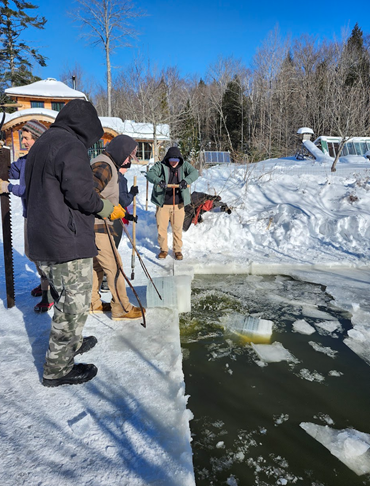
ALP students explore winter ecology by learning about ice fishing, ice layers, and how seasonal climate conditions shape the frozen landscape.
“Some students are highly independent and feel boxed in by traditional structures,” Harrison explained. “Others are quieter students who get lost in larger classrooms. The smaller environment works well for both.”
Rather than following a strictly traditional bell schedule, the program incorporates flexible pacing, project-based learning, independent work, and community experiences throughout the school day. Students help shape many aspects of instruction, including projects, themes, and demonstrations of learning.
“ALP is a more hands-on learning experience. It helped me focus and stay in school,” an ALP student said.
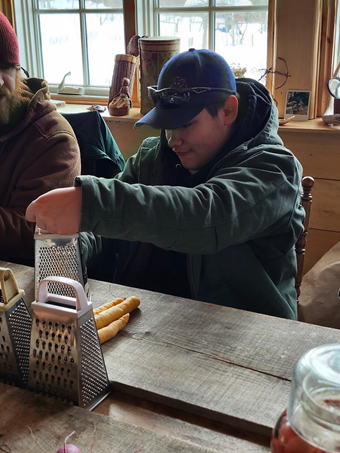
An ALP student gains hands-on experience in the kitchen, learning how to create nutritious homemade meals as part of everyday learning.
“Students are really the drivers of what we do,” Williams said. “We build the standards into projects and experiences that connect to their interests.”
That flexibility allows students multiple ways to demonstrate mastery of academic standards. During a recent Maine history unit, for example, students created original board games featuring historical themes, geography, industries, and vocabulary tied to the curriculum.
“ALP is flexible when it comes to work and when it needs to be done. This fits my learning style, which is how I learn best,” an ALP student said.
“The standards stay the same,” Harrison said. “The pathway to demonstrate learning can look different.”
The program also integrates cross-curricular learning whenever possible. Students participating in hunting trips, firefighting training through the Foster Career and Technical Education (CTE) Center (the region’s CTE school), or community projects may document and reflect on those experiences through writing, science observations, or history connections that count toward coursework.
“English doesn’t live in a vacuum,” Williams said. “If a student is having meaningful experiences outside the classroom, we can often connect that back to academic learning.”
Learning Beyond the Classroom
Experiential learning is embedded throughout the program and frequently takes students into the community.
Through “Adventure Fridays,” students help plan and participate in off-campus learning experiences focused on environmental education, service work, and life skills. Recent activities have included stacking wood for community members, exploring local outdoor spaces, and practicing communication skills through interactions with unfamiliar community members.
“We’re teaching social skills and problem-solving while also building relationships and helping students connect with their community,” Harrison said.
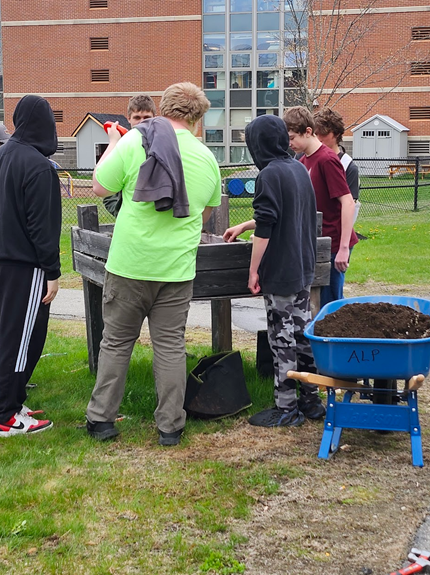
Students also participate in greenhouse and aquaponics projects within the school, including raising tilapia and growing seedlings for both school and community gardens. Freshmen participate in a long-term “Mission to Mars” project that combines environmental science, inquiry-based learning, food systems, and engineering through work in the school’s greenhouse and hoop house.
Freshmen ALP students nurture both plants and knowledge as they learn about plant growth and care for the greenhouse, an important component of the ALP experience.
“We can spend time really elaborating on projects in a way that’s harder to do in a traditional classroom,” Harrison said.
Community partnerships also extend learning opportunities. Students assist with environmental cleanups, community gardens, and leadership activities throughout the school building. Recently, ALP students helped facilitate activities for the school’s unified program after being asked to step into leadership roles.
“They stepped up immediately,” Williams said. “When students feel trusted and valued, they often surprise themselves.”
Relationships and Restorative Support
Relationships and restorative practices are central to the program’s structure and culture. Students have access to district social workers and school-based support services, while Harrison and Williams prioritize communication, accountability, and relationship-building throughout the day.
“A lot of our work is helping students rebuild confidence in themselves as learners,” Harrison said.
“The teachers of ALP are easy to talk to and are my reason for coming to school every day,” an ALP student said.
ALP staff maintain ongoing communication with families through phone calls, meetings, and individualized planning.
“We’re all trying to make this work together,” Harrison said. “It has to be collaborative.”
The district’s support for the program has also been critical to its growth, according to Harrison and Williams. Leadership within RSU 9 has supported the program’s flexibility and encouraged innovative approaches to instruction and student engagement.
“Alternative educational opportunities are a much-deserved opportunity for some of our students who need alternative settings and learning ideas from their educators and school. It is about what learning can be about for them,” RSU 9 Superintendent Christian Elkington said. “Under the guidance of Ms. Harrison and Mr. Williams, students are given the opportunity to think, ‘What if we tried it this way?’ or, ‘What if we learned this standard through…?’ A true collaborative, shared, family spirit is alive, thanks to our students and staff.”
Building Real-World Skills
Although the environment is intentionally flexible, Harrison and Williams emphasized that expectations remain high. Students are expected to participate actively, manage responsibilities, collaborate with peers, and contribute to the learning community. Many projects emphasize workplace readiness, communication, budgeting, and problem-solving skills.
One real-world example is the student-run school store, which helps fund many of the program’s projects and field experiences. Students manage inventory, pricing, budgeting, and federal nutrition compliance requirements while learning business and financial skills.
“We do not have a dedicated budget,” Harrison said. “So, students help run the store, and that gives us opportunities to fund projects and experiences ourselves.”
Educators say students are often surprised by the level of responsibility expected within the program.
“A lot of students come in thinking alternative education will be easier,” Williams said. “Then they realize we actually work really hard here.”
As schools across Maine continue exploring student-centered, flexible learning models, programs like ALP demonstrate how alternative education can provide students with rigorous academics, meaningful relationships, and opportunities to engage in learning in ways that feel relevant and authentic.
“Without ALP, I would have dropped out,” an ALP student said.
“The energy in alternative education is different,” Harrison said.
This story was written in collaboration with Mt. Blue High School (RSU 9) as part of an ongoing series to highlight alternative education programs across Maine. For more information about alternative education, please visit the Maine DOE Alternative Education webpage. To submit a good news story to the Maine DOE, please fill out the good news submission form.
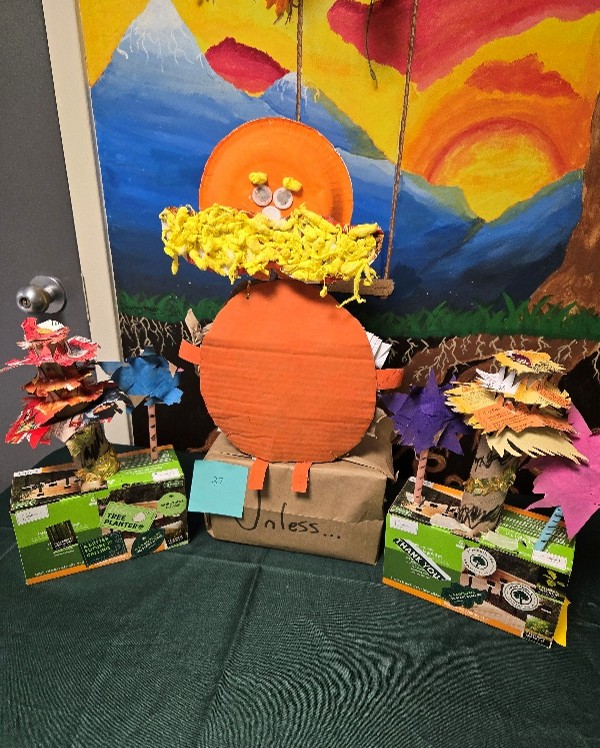
An Athens Community School student’s work as part of the “One School, One Book” Earth Day Project.
From April 6-16, 2026, Athens Community School held its annual “One School, One Book” project, designed to use literature to connect classrooms, families, and communities and bring attention to important issues.
This year, Athens Community School selected The Lorax by Dr. Seuss as the book that all students would be reading for the project to coincide with Earth Day on April 22. Following the themes of the book, students and their families then participated in a variety of eco-friendly activities throughout the project, including a bottle drive and a trip to Waterville Creates for a viewing of The Lorax movie.
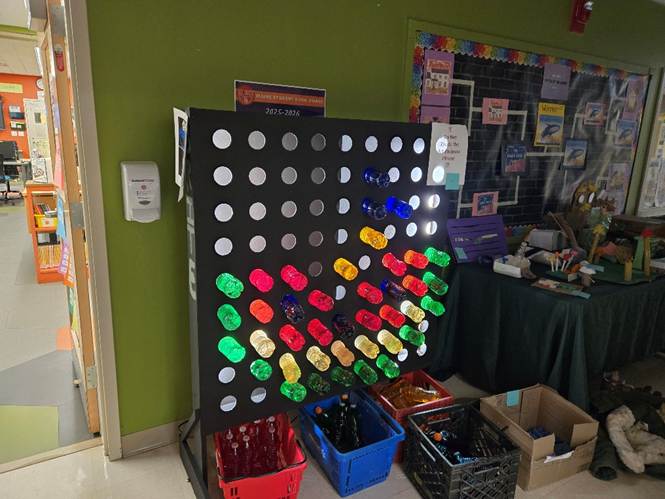
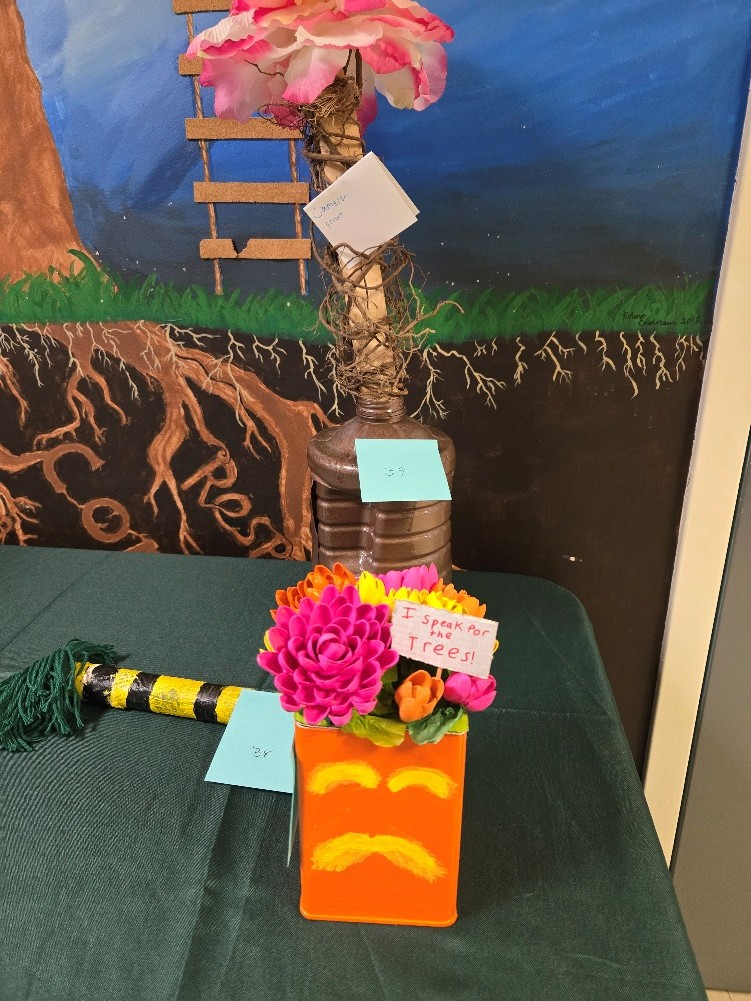
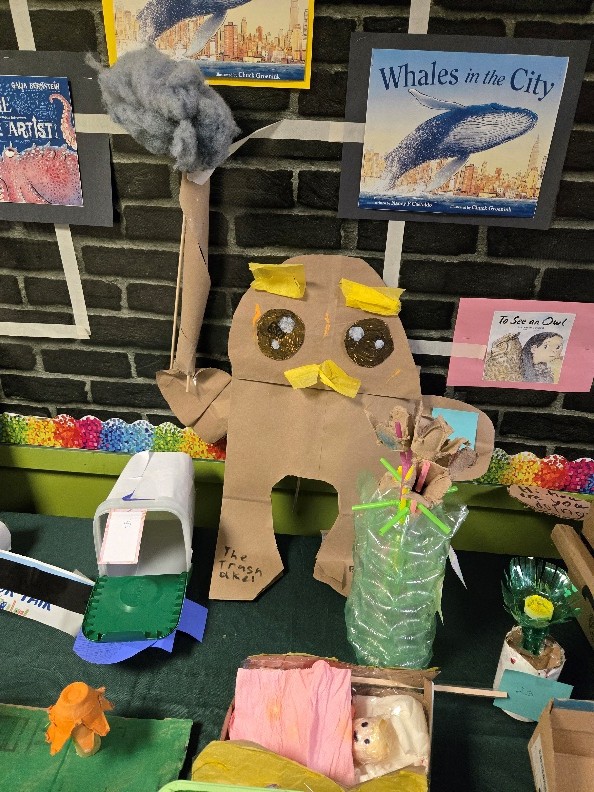
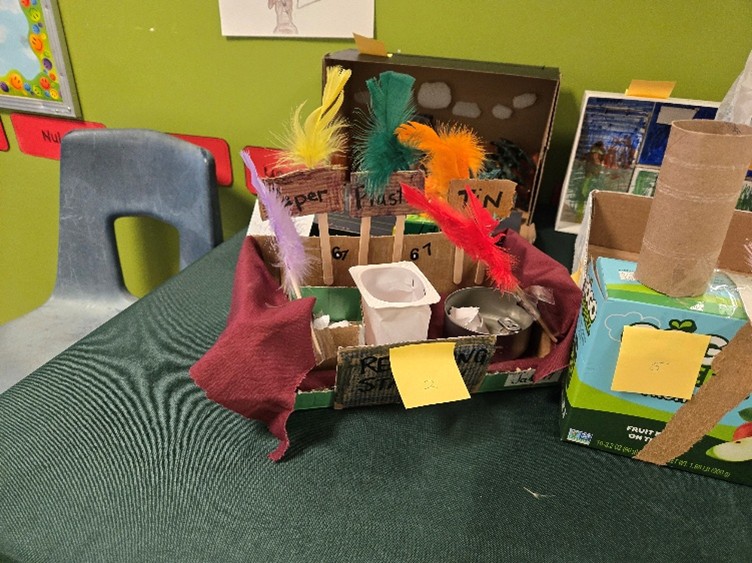
One of the highlights of the project was the “Trash Art” competition, which encouraged students to use recyclable objects to create artwork for categories such as “The Spirit of the Lorax,” “Most Creative,” and more. The school favorite was a Lite-Brite board made of recycled wood and plastic water bottles, which served as the pegs (pictured below).
Lite-Brite board
To celebrate student and family participation in the project, two local businesses donated prizes for those who completed a feedback survey: a reusable shopping bag with the Athens Community School logo and a “Save the Bees” flower kit. Student participants also received a homework pass to forgo one homework assignment.
More student proejcts:
The project was spearheaded by Aneta Lempicka, the Athens Community School’s Title I teacher, with support from school librarian Hannah Luce, who assembled and distributed family activity packets.
Local families said they enjoyed the change of pace, with one remarking, “We are a VERY busy family, so this gave us all a chance to slow down and do something fun together.”
This story was written in collaboration with Athens Community School. To submit a good news story to the Maine DOE, please fill out the good news submission form.
Since launching in the fall of 2024, the Extended Learning Opportunities (ELO) Program at Mountain Valley High School in RSU 10 has provided students with meaningful, real-world learning experiences that connect classroom instruction to careers, higher education, and long-term success. Led by Christopher Brennick, Mountain Valley High School ELO Coordinator, the program has quickly become a model for how authentic, community-connected learning can raise student aspirations and expand access to opportunity, particularly in rural western Maine.
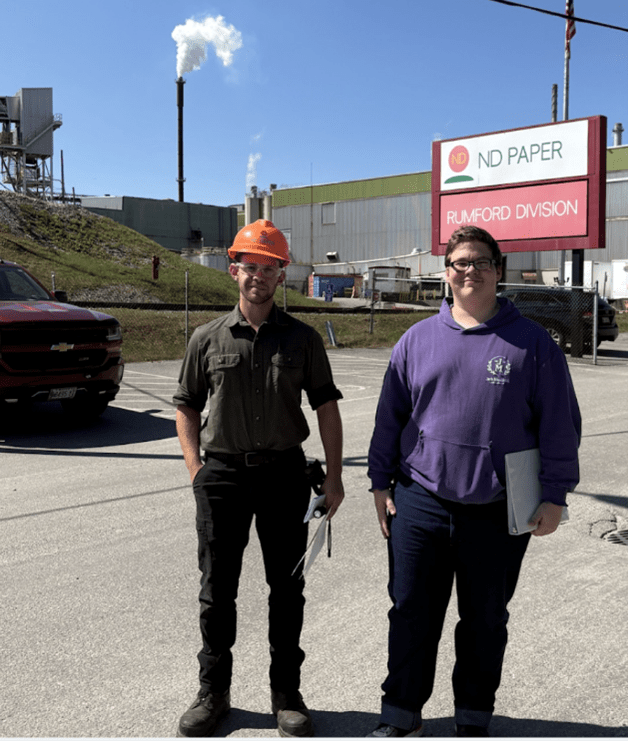
Through internships, work studies, job shadows, college tours, and immersive simulations, the program allows students to engage directly with professionals across healthcare, education, engineering, manufacturing, finance, skilled trades, and public service. To date, the program has supported 21 internships, two work studies, eight paid work studies, one unpaid internship, and 20 experiential trips to 18 sites, reaching 351 student participants, with many students participating in multiple experiences.
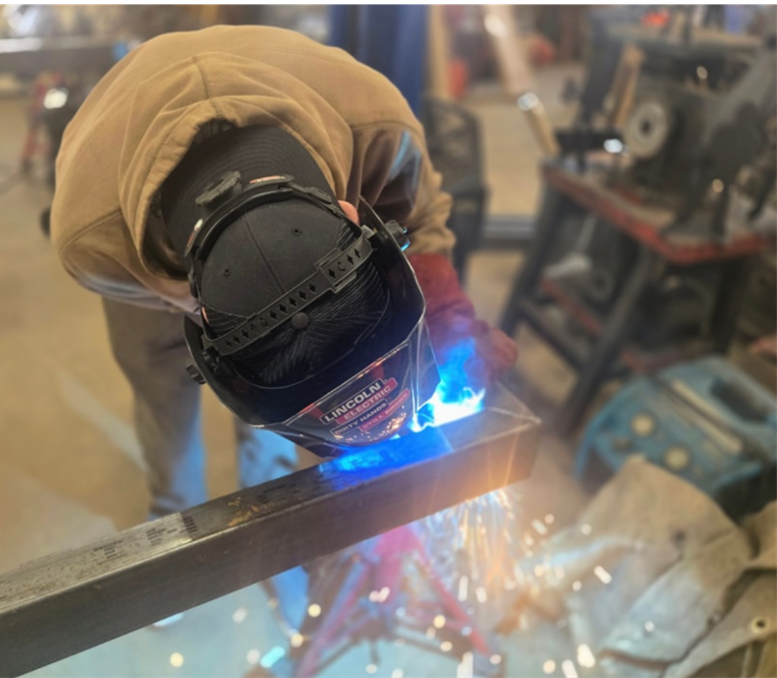
Student Miles Smith completes welding work during his ELO at Concord River Fabrication.
The program includes semester-long internships in healthcare, education, construction, engineering, finance, counseling, and skilled trades; work studies focused on building essential workplace skills; job shadowing with organizations such as the National Weather Service and the Rumford Police Department; and extensive college and employer tours across Maine and New England. Students have also participated in immersive simulations such as YMCA Youth and Government and the Maine Motor Transport Association’s “Go Your Way, Maine” career exploration experience.
Mountain Valley High School Principal Thomas Danylik emphasized the transformative impact of the program, particularly for students in a rural region.
“As a principal taking on a new initiative, you never truly know what sort of impact a program will have on students, but I can assure you that we are a better school because of the work being done by Mr. Brennick and our ELO program,” Danylik said. “Living in a rural part of Maine can make it difficult for students to see what opportunities exist outside of their everyday life. A major focus for us has been ensuring our students are exposed not only to opportunities within their own community but also to what lies beyond the River Valley.”
Danylik noted that through the program, every student has the opportunity to step onto a college campus or visit a major employer, while smaller groups participate in immersive learning experiences across the state.
“Individual students are gaining firsthand experience in career fields with some of the most respected businesses in Maine,” Danylik added. “To say this program has had a positive impact on our school is a gross understatement. Mr. Brennick’s ability to think outside the box and help students discover their passions is admirable, and Mountain Valley is fortunate to benefit from such an outstanding ELO program.”
The impact of these opportunities is evident in the relationships students build and the pathways that emerge. One student completing a pharmacy ELO at Rumford Hospital was able to observe procedures in the operating room, engage in conversations with hospital leadership, and explore collaboration between the pharmacy and emergency department. Another student’s semester-long furnace technician work study led directly to a paid summer position and continued employment while pursuing postsecondary training in the field. These experiences benefit students while also providing community partners with motivated, high-quality talent.
Students are also developing empathy, professionalism, and problem-solving skills through authentic workplace challenges. Their reflections highlight the depth of learning that occurs when students engage in real-world environments.
“Another struggle I experienced this week was frustration,” one student wrote, reflecting on her hospital placement. “There’s a patient who has been here since last Christmas. She asks every day when she can go home. I want to be able to watch her go home to her family.”
Families have noticed the impact on their students, as well.
“I am so grateful for this program,” Amber Durant, parent of an ELO student, said. “My son has explored job experiences in both finance and engineering, working alongside professionals he aspires to be. These experiences have helped him make more informed decisions as he applies to colleges.”
The program has been made possible through a combination of funding sources, including the U.S. Department of Labor’s Workforce Opportunity for Rural Communities (WORC) grant, the Maine Department of Education (DOE) ELO Expansion 2.0 grant, and the Sunshine Mini Grant. Together, these investments have expanded access to career exploration and postsecondary exposure for students in rural communities. Mountain Valley High School’s efforts demonstrate how innovative, community-connected learning can deepen student engagement, support informed postsecondary decisions, and help students envision futures rooted in real experience, meaningful relationships, and opportunity.
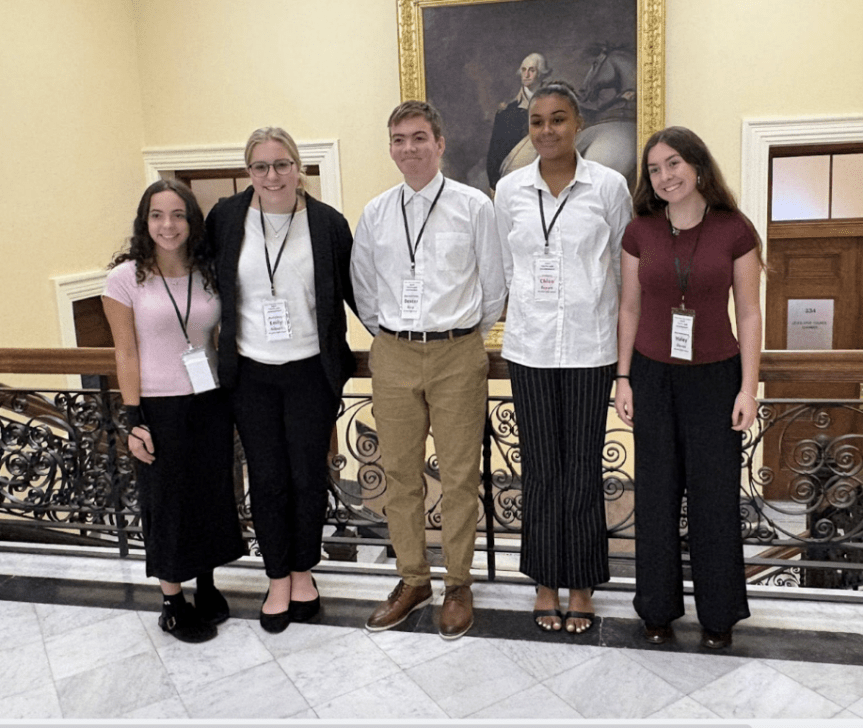
Mountain Valley High School students participate in the YMCA Youth and Government program at the Maine State House in Augusta. This program helps students understand the inner workings of state government.
This story was written in collaboration with Mountain Valley High School. To submit a good news story to the Maine DOE, please fill out the good news submission form.
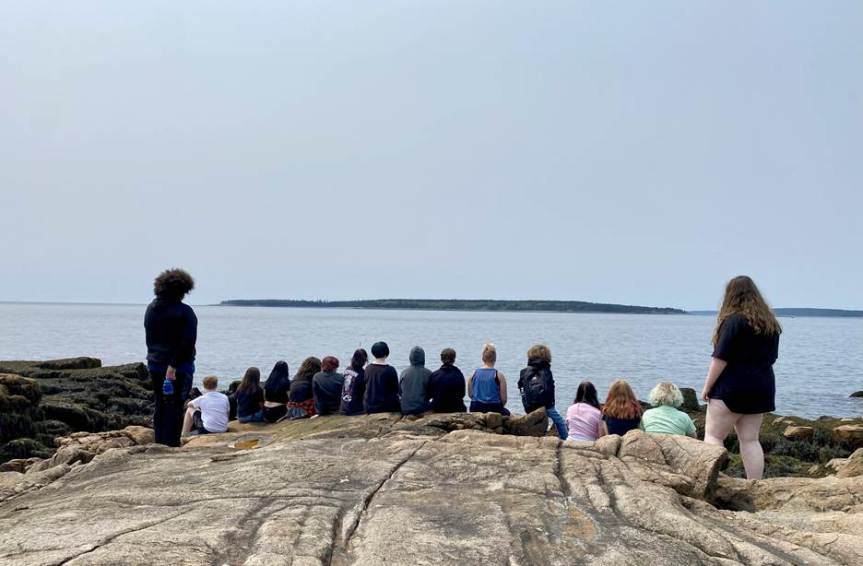
A group of Innovations students enjoys the coast of Maine at Ship Harbor Trail in Bass Harbor.
Brewer School Department’s alternative education programs have developed into a connected system of supports that begins in middle school and continues through multiple high school pathways, offering students flexible options for learning, engagement, and graduation.
What began as a small, in-person alternative education program called “ALPHA,” serving about 25 students, has expanded into a multi-tiered system that now includes a middle school alternative education program called Innovations Academy, as well as high school alternative education pathways through the ALPHA Academy in-person program, the online and hybrid Nu Program, and Extended Learning Opportunities (ELO). Together, these programs serve approximately 126 students across grades 6-12.
Staff describe the model not as separate programs but as a connected pathway built around one guiding idea: Students do not all take the same road, but they all deserve a road that leads to success.
“We didn’t build this as one fixed program,” Chris Moreau, Alternative Education Program Coordinator and Nu Program teacher, said. “We built it because students needed different ways in.”
Middle School Innovations Academy: Early Engagement and Flexible Foundations
Brewer’s middle school alternative education program, Innovations Academy, serves approximately 26 students in grades 6-8 and offers flexible schedules and individualized supports that blend academic instruction, social-emotional learning, career exploration, and community engagement. Cami Carter oversees Innovations Academy alongside her educational technician, Danny Schlaefer, creating programming designed to help students build confidence, resilience, and readiness for high school.
Innovations Academy students do not follow a single uniform schedule. Instead, programming is tailored to each student’s needs, strengths, and learning style. Instruction combines academic skill-building with applied, hands-on learning experiences. Project-based learning is a central component, allowing students to connect math, science, and problem-solving to real-world situations.
“We’re trying to make learning something students can access,” Carter said. “A lot of students haven’t had success in traditional settings. This gives them a different entry point.”
Community-based learning is a defining feature of Innovations Academy. Every week, students leave the classroom to explore careers, businesses, colleges, and community organizations throughout the region. Over the course of two years, students have explored more than 60 career pathways, including marine science, health care, plumbing, culinary arts, theater, athletics, landscape architecture, and the trades.
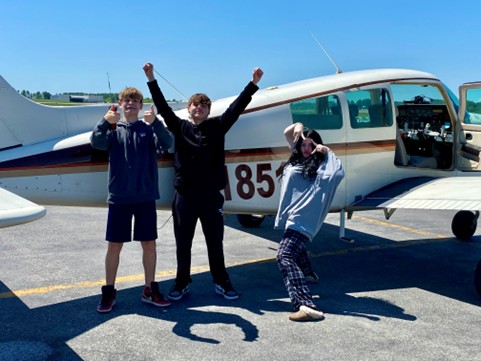
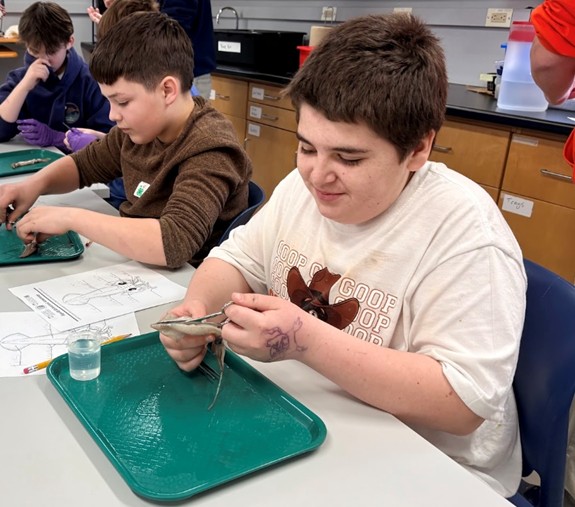
From left to right: Current and former Innovations Academy students Trysten Roy, Zander Doph, and Bria Davis prepare to assist with flying a plane at Maine Instrument Flight school.Innovations Academy students Vinny Arruda and Eli Infinger dissect squid at the UMaine 4-H Camp and Learning Center.
Experiences have included working with the Penobscot Theatre Company to learn about technical theater careers, visiting the University of Maine at Orono for hands-on science exploration, touring technical education programs, and engaging with Maine Maritime Academy through tugboat experiences. Students also participate in outdoor and community-based learning such as hiking, horseback riding, and ocean exploration.
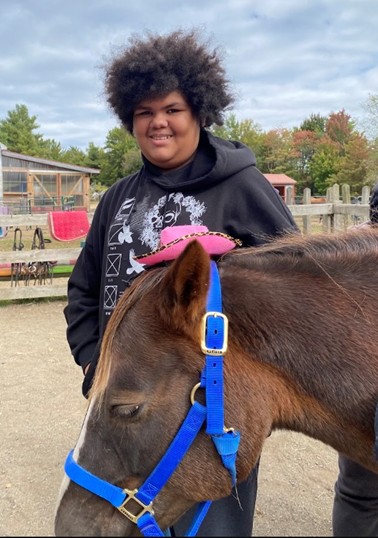
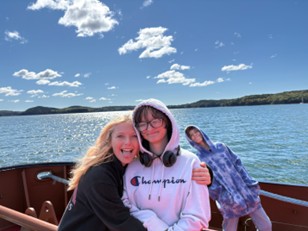
Innovations Academy student Brady Young poses with his new best horse friend at Lincoln Pony Pals.Innovations Academy students Tori Splan, Khloe Smith, and Paul Davison enjoy the ocean on a tugboat at Maine Maritime Academy after learning about various maritime careers.
“We want students to start seeing what’s possible,” staff said. “Even if they don’t know yet what they want to do, they begin to understand what exists.”
Carter said these experiences are designed not only to expose students to careers but also to help them build confidence, as they navigate unfamiliar environments, interact with adults, and persist through discomfort in new situations.
“Watching their world open up is one of the best parts,” Carter said.
Beyond academics, Carter emphasized that the program is intentionally built around relationships and emotional support. Teachers, support staff, and counselors often serve multiple roles throughout the day as instructors, mentors, advocates, and consistent/trusted adults for students navigating anxiety, family challenges, or school disengagement. Students are also connected with school-based counseling, social work supports, and community resources when needed, reinforcing a broader wraparound system designed to remove barriers to learning.
The Transition to High School: Building Individual Pathways
A key focus of Innovations Academy is preparing students for the transition to high school, with an emphasis on ensuring the shift does not disrupt support systems or academic progress.
Carter works closely with students and families to build individualized transition plans that may include traditional high school enrollment or placement into Brewer’s alternative education pathways. Staff said the goal is not to place students on a fixed track but rather to design pathways that can shift as students’ needs evolve.
Through grant funding, eighth-grade students are able to participate in summer transition activities, high school visits, scavenger hunts, and meetings with teachers, administrators, tutors, and ELO staff before entering ninth grade. These experiences help reduce anxiety and build familiarity with the high school environment.
“We’re already thinking about graduation in middle school,” Carter said. “That transition matters.”
Carter also continues to support many students into high school, maintaining communication, monitoring academic progress, and helping students navigate challenges during the critical first year of ninth grade. Staff emphasized that maintaining these trusted relationships is often what keeps students engaged and on track. Last year, all 14 eighth-grade students who transitioned to ninth grade remained on track to earn graduation credits.
Carter said the system is designed to remain flexible. Students may move into traditional high school, the ALPHA Academy, Nu Program, or a combination of supports, depending on their needs.
“It’s not about locking them into a path. It’s about finding what works,” Carter said.
At the high school level, the alternative education system expands into three interconnected pathways, each designed to provide structure while allowing flexibility and movement between programs.
The ALPHA Academy, founded by alternative educator David Morris and co-taught for more than 20 years alongside fellow alternative education teacher Steven Bloodsworth, provides in-person instruction centered on core academics with flexible pacing and individualized support. Morris and Bloodsworth serve not only as teachers but also as advisors, mentors, and a consistent adult presence, building long-term relationships with students that often extend beyond academics.
The Nu Program, overseen by Chris Moreau, blends online coursework with structured in-person supports and regular check-ins. Moreau said the Nu Program was designed not as a fully remote model but as a flexible option that allow students who struggle in traditional school settings, face attendance barriers, or experience anxiety to maintain strong relationships, have accountability, and receive counseling support.=
Moreau said Nu Program has evolved significantly since its early pandemic-era roots, expanding as student needs grew and systems adapted.
“Alternative education thrives on relationships,” Moreau said. “Whether students are in person or online, they still need connection, consistency, and someone who knows them well.”
The ELO program, overseen by Kevin Napolillo, connects students directly to real-world learning experiences through internships, certifications, and community partnerships. Students explore career pathways in fields such as construction, health care, education, and technical trades while earning credits and building postsecondary skills.
Across all three pathways, students receive academic monitoring, counseling support, and consistent engagement with staff who track both academic and personal progress. Students can move between programs as their needs change, reinforcing the idea that pathways are flexible rather than fixed.
Alternative Education Pathways as a Key to Success
Moreau said this flexibility has been key to improving outcomes and keeping students connected to school systems that might otherwise have lost them.
For decades, graduation rates at Brewer High School remained steady between 85 and 87 percent, but in the past few years, they have climbed to just below 95 percent due to these innovative alternative education pathways.
Additionally, the Brewer School Department has adopted a local Disrupted Diploma option modeled after the Maine Department of Education’s (DOE) Educational Disruption Diploma. Brewer High School’s Disrupted Diploma requires students to earn 13 credits and, because it is district-based, allows some students to earn a diploma before completing four full years of high school.
Superintendent Gregg Palmer said the option has been a lifeline for a small but significant group of students, opening pathways to better employment opportunities, community college, military service, and other postsecondary options. Palmer said the pride students show when earning a Disrupted Diploma reflects how meaningful and hard-earned the accomplishment is.
A System Built on Relationships, Flexibility, and Belief in Students
Across both middle and high school programs, staff emphasize that relationships remain the foundation of student success. Students are supported by teams that include teachers, counselors, administrators, school psychologists, social workers, and community-based partners. The programs also work closely with school-based health services and mental health supports to ensure students receive wraparound care when needed. For example, Dr. Alison Glanville, Director of Psychological Services, works closely with the ALPHA and Innovation Academys, providing weekly mental health sessions to students.
Moreau said alternative education is not about lowering expectations but about removing barriers and helping students access success in ways that work for them.
“We don’t see this as separate programs,” Moreau said. “We see it as one system that adjusts to students.”
That system includes structured supports, frequent check-ins, individualized planning, and ongoing communication with families. Family input is considered central to placement decisions and ongoing student success.
“We’re not just focused on credits,” Moreau said. “We’re focused on keeping students connected long enough to succeed.”
Moreau also noted that alternative education continues to shift as stigma around nontraditional pathways decreases, with more families recognizing that multiple routes can lead to the same outcomes.
Looking Ahead
Brewer School Department’s alternative education programs continue to evolve with a focus on strengthening transitions between middle and high school, expanding career-connected learning and increasing access to flexible pathways that respond to student needs.
Moreau said the long-term vision is a system where students can move fluidly between supports as their needs change, without losing connection to school, adults, or academic progress.
“Students don’t all take the same road,” Moreau said. “Our job is to make sure there is a road for each of them.”
This story was written in collaboration with the Brewer School Department as part of an ongoing series to highlight alternative education programs across Maine. For more information about alternative education, please visit the Maine DOE Alternative Education webpage. To submit a good news story to the Maine DOE, please fill out the good news submission form.
Students at Rowe Elementary School in the Portland Public Schools have stepped into leadership roles this year in a big way during the school’s first-ever community meeting assembly for third- through fifth-grade students.
Inspired by community meeting assemblies at Portland’s Presumpscot and Longfellow Elementary Schools, Rowe’s social emotional learning (SEL) staff worked together to launch a similar tradition, designed to bring students together while creating meaningful opportunities for leadership, collaboration, and school connection.
The first meeting was held in December and was led almost entirely by students. Thirty-two fifth-grade student leaders spent two months preparing for the event and ultimately ran the meeting from start to finish. Students took on a wide range of leadership responsibilities, including serving as masters of ceremonies, writing and delivering the event script, welcoming and seating guests, greeting the audience in nine different languages, and creating and presenting the event slideshow.
“After attending community meeting assemblies at both Presumpscot and Longfellow Elementary Schools, SEL staff were inspired to start a community meeting tradition at Rowe,” school counselor Kate McAlaine shared. “On December 11, Rowe’s third- through fifth-grade students gathered for our first-ever community meeting, and what a joyful celebration it was!”
Staff facilitators worked closely with students throughout the preparation process, helping to guide and support their leadership development. Facilitators included McAlaine, third- through fifth-grade social worker Amy Leonard, music teacher Aiden Boardman, and reading specialist Susan Donohoe.
“Their work made this gathering a meaningful and energizing way to bring our upper grades together,” McAlaine added. “We are so proud of our student leaders, performers, staff, and all of our classes for making this first community meeting such a positive and inspiring moment for our school!”
The event highlighted the power of student voice and leadership while strengthening school community and belonging, laying the groundwork for what Rowe Elementary School hopes will become a lasting tradition.
This story was submitted by Rowe Elementary School (Portland Public Schools). To submit a good news story to the Maine DOE, please fill out the good news submission form.
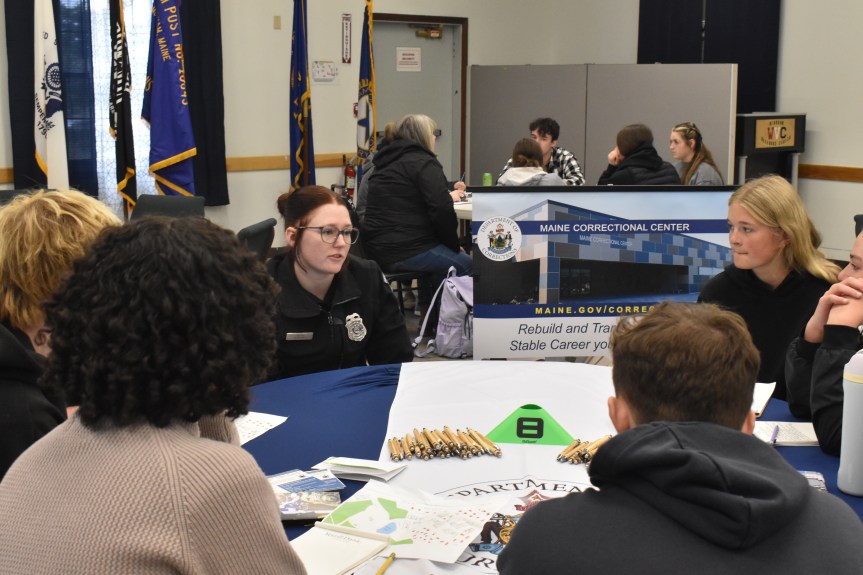
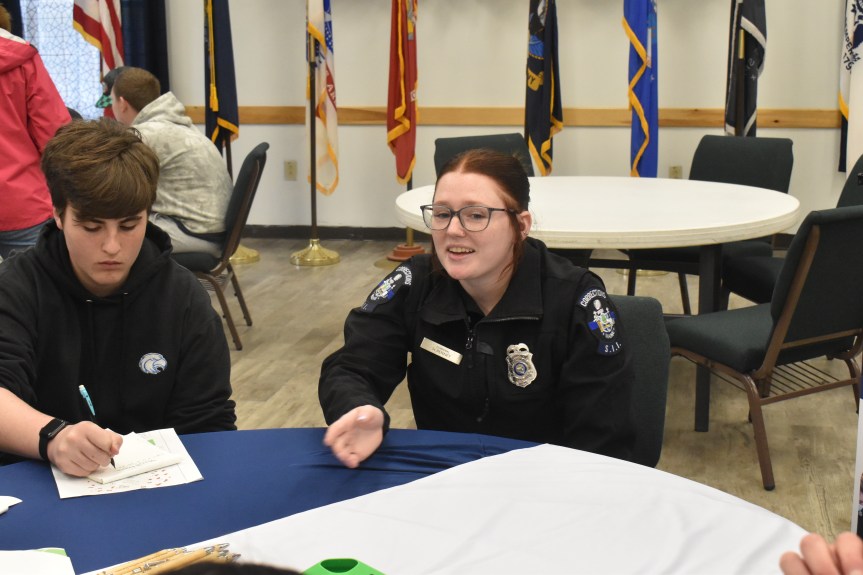
Corporal Hailey Penney, a 2022 Windham High School (WHS) graduate now serving in the Maine Correctional Center’s Special Investigations and Intelligence Unit, returned to WHS as an expert in the annual Mock CSI event, a career-connected curriculum she participated in as a student four years ago.
“When will I ever use this after high school?” It’s a question that teachers have heard echo through classrooms for decades. From math equations to lab reports to literary analysis, students often wonder how today’s lessons will matter in their future. But what happens when learning moves beyond the classroom and into the real world—where students are exposed to the ways in which math, science, and English are not only useful but necessary to succeed?
To help students see the real-world value of their learning, Windham High School teachers John Ziegler (math) and Adrianne Shetenhelm (alternative education English) launched a hands-on interdisciplinary unit in 2016. The collaboration brought their classes together for a mock CSI experience that challenged students to apply math, writing, and critical-thinking skills to a simulated crime scene.
“As the project proved its impact over the next few years, the partnership grew to include Lauren Ruffner’s science, along with real-world support from the Windham Police Department and the Windham Fire Department, transforming the unit into a fully immersive learning experience,” Shetenhelm said.
This collaborative interdisciplinary unit continued again this year on Thursday, April 30, with the “crime” occurring in the parking lot at Windham Veterans Center. What made this year’s unit so special, though, was a meaningful turning point when one of Shetenhelm’s former students, Hailey Penney, a 2022 graduate, joined in on the collaboration.
“A full-circle moment for me this year was having Hailey back on the scene, four years after she was in the unit as a student; she came back as an expert,” Shetenhelm said.
Penney, now Corporal Penney, works for the Maine Correctional Center in the Special Investigations and Intelligence unit. She was invited to join mock CSI day to help the “rookie” detectives and evidence techs in refining their questioning techniques. She talked about her career pathway and how other students may follow a similar path if they are interested.
Corporal Penney helped student ‘rookie’ detectives refine their questioning skills and share how others can follow a similar career path.
“After contacting the Maine Correctional Center to see if we could have someone speak to our students, it was clear that Hailey would be the perfect choice,” Shetenhelm said. “Hailey’s superiors spoke so highly of her capabilities and her speedy progression in the field. I was not surprised, and I am so proud of her.”
Corporal Penney said that she doesn’t remember being interested in law enforcement before the mock CSI event.
“I believe this is because of my prior lack of knowledge as to what law enforcement officers do. Being introduced to Windham Police Department Detective [Jason] Andrews and Sergeant [Seth] Fournier and learning about what they do in their careers significantly changed my perception. I was inspired to make a difference,” Penney said.
Penney added that being a part of a “real-life crime scene” during mock CSI day, gathering information and interviewing witnesses and suspects, sparked an interest in her that she didn’t know she had.
“Before this, I remember feeling as if I had not found my passion yet,” Penney said. “I am very grateful that I was involved with this event because I’m not sure if I would have considered a career in corrections or law enforcement otherwise.”
Being the expert now, Corporal Penney said she enjoyed talking with the students about her story and how her career became a passion.
“There were so many students who were engaged in this event and open to speaking with me. I gave two students Maine Department of Corrections challenge coins because I was very impressed with their thought processes and efforts that went into this year’s mock CSI unit,” Penney said. “My hope is that students were able to take something away from our conversations and have a better understanding of law enforcement, like I did when I experienced the CSI event.”
It’s Shetenhelm and Ziegler’s hope for their students, too. As a result, they plan to continue this annual career-connected learning as long as they can. To do so, they will begin to write a new “crime” this summer.
“Each year, we write a new narrative over the summer and recruit staff volunteers and actors in the fall,” Shetenhelm said. “We begin working with the Windham Police Department and other experts to ensure the story is realistic. By the fourth quarter, the unit begins—preparing English students to investigate and interview witnesses while math and science students learn to analyze evidence. On the day of the field trip, one question remains: Have we prepared them enough to connect the dots on their own, just as they must after graduation?”
Shetenhelm added that they hope to team-teach with Corporal Penney next year.
“I couldn’t be prouder and more honored to be a part of her story and to be working alongside her,” Shetenhelm expressed.
This story was submitted by Windham High School (RSU 14). To submit a good news story to the Maine DOE, please fill out the good news submission form.
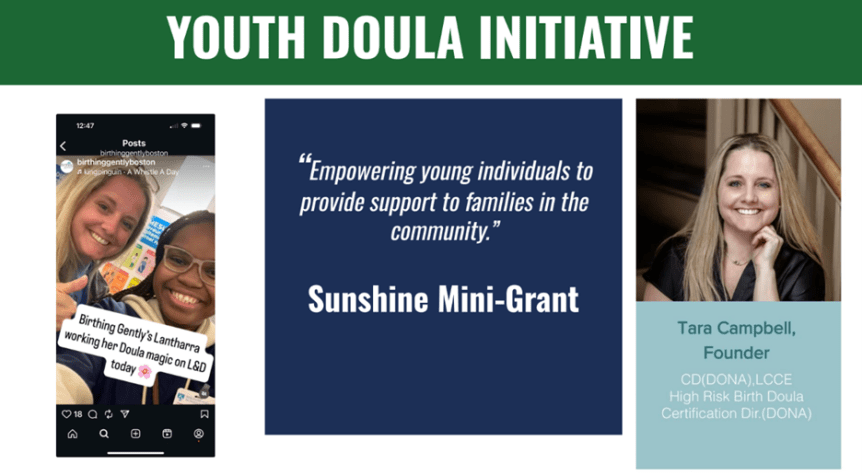
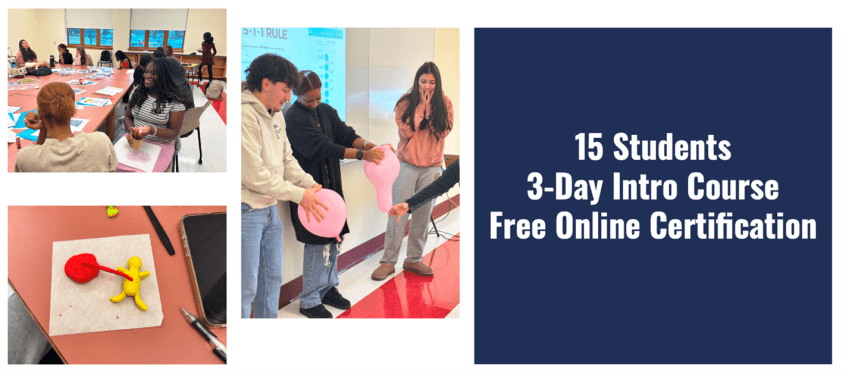
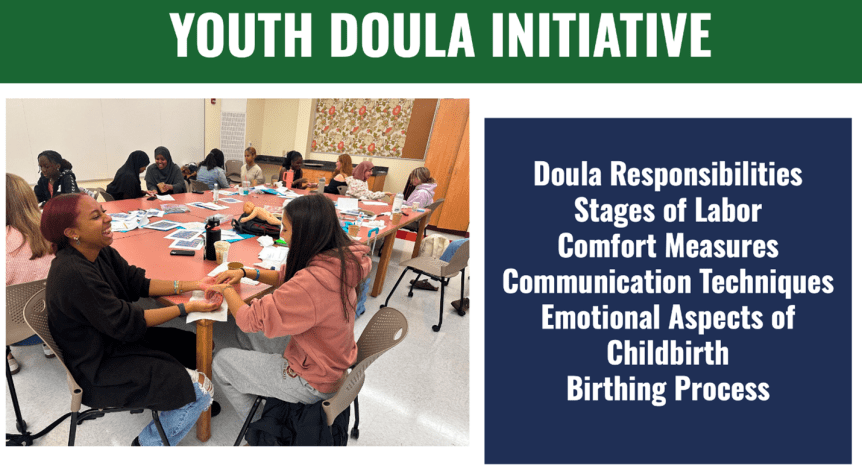
The Maine Department of Education (DOE) along with several school and community-based organizations continue to advance high-quality, career-connected learning through extended learning opportunities (ELOs) that connect students with real-world experiences, local partners, and emerging career pathways. An example of this work is the Youth Doula Initiative, a three-day community-based ELO that recently engaged 15 South Portland High School students in hands-on learning focused on maternal health, pediatrics, and public health.
Slated for two more sessions this school year, the ongoing Youth Doula Initiative was developed through a partnership between Justine Carlisle, Jobs for Maine Graduates (JMG) ELO Navigator at South Portland High School, and Tara Campbell, founder of Birthing Doula and Birthing Gently. After researching opportunities that could provide authentic clinical exposure for students under 18 years old, Carlisle connected with Campbell, who has extensive experience in introducing young people to the doula profession. Carlisle described the initiative as one of the most meaningful programs she has facilitated, noting that childbirth touches nearly every family; yet, misconceptions and gaps in understanding are common. Through this experience, students gain accurate, practical knowledge about anatomy, medical options, and the social-emotional responsibilities of healthcare providers.
Campbell shared that the Youth Doula Initiative has “a significant positive impact on both students and their communities,” noting that participants gain essential healthcare knowledge while learning how trust-based, relatable support can improve outcomes for pregnant families. She also emphasized that the initiative opens ethical, paid pathways through Medicaid-supported doula work and continued no-cost training opportunities.
Youth Doula Initiative
Through the Youth Doula Initiative, students have not only the opportunity to explore an accessible healthcare career but also gain meaningful experience that deepens their understanding.
“I was super excited to learn about something I thought was years beyond me in school,” senior Esperanza Kunieki said. “We learned about different aspects of birthing—things I didn’t even know about—and it really excites me to learn more about this career.”
Another senior, Zeila Monteiro, shared, “The Youth Doula Initiative helped me understand what it truly means to be a doula and gave me a deeper understanding of each stage of pregnancy. It focuses on communication, support, and emotional reassurance, which are important skills for us as young adults.”
The Youth Doula Initiative reflects the broader impact of Maine’s ELO framework, empowering students through authentic learning, strengthening community partnerships, and preparing young people to make informed, confident decisions about their futures. The initiative was supported in part by the statewide Sunshine Mini Grant Program, which advances the mission of the Maine Community Coordinators Collaborative (C3). Since 2023, the Sunshine Mini Grant Program has awarded $88,000 across 18 grants, reaching approximately 300 students statewide. These grants help schools with limited resources to pilot innovative ELOs by addressing barriers such as transportation challenges, poverty, and limited access to professional mentors. Collectively, the program has expanded access to experiential learning that informs students’ career interests and post-secondary planning.
For further information about ELOs and Maine’s efforts to expand career exploration for Maine students, please visit the Maine DOE ELO webpage or contact Maine DOE Extended Learning Coordinator Lana Sawyer at Lana.Sawyer@maine.gov.
Youth Doula Initiative
This story was written in collaboration with South Portland High School. To submit a good news story to the Maine DOE, please fill out the good news submission form.
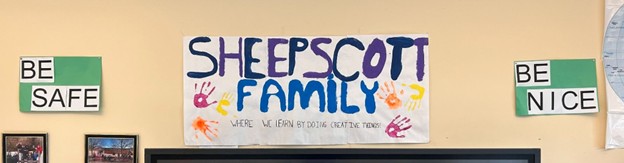
Sheepscot students created this poster. Teacher John Hawley shared, ‘This says it all. I know there’s only one T in Sheepscot, but the sign was too perfect, and I didn’t have the heart to tell the kids they spelled it wrong.
At Mt. Ararat Middle School in MSAD 75, mornings in the Sheepscot Alternative Education Program begin not with a bell or worksheet but with music. On “Jazzy Tuesdays,” as students enter the classroom, the sounds of Herbie Hancock’s piano drift throughout the room, along with genuine and boisterous welcomes from alternative education teacher John Hawley and educational technician Huey Sheffler. As students find their seats, they settle into a “moment of chill” before the day begins.
“That time is intentional,” Hawley said. “We’re asking students to be fully present, so we create space for them to arrive, reset, and feel grounded before the day begins.”
A Different Approach to Learning
The Sheepscot Team has been redesigned from a small population in an all-day, secluded model to a thriving, project-based learning alternative education environment. Today, it serves 32 seventh- and eighth-grade students—about 16 students per grade—with a focus on relationships, project-based learning, and social-emotional learning.
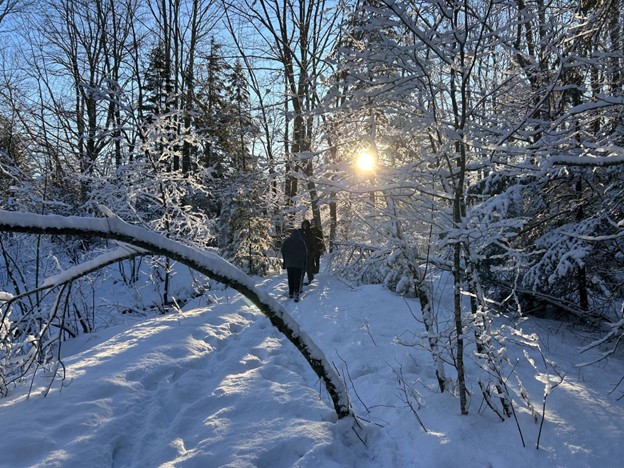
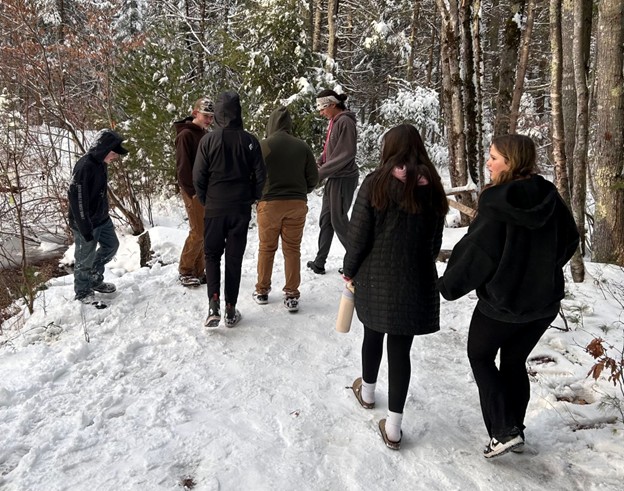
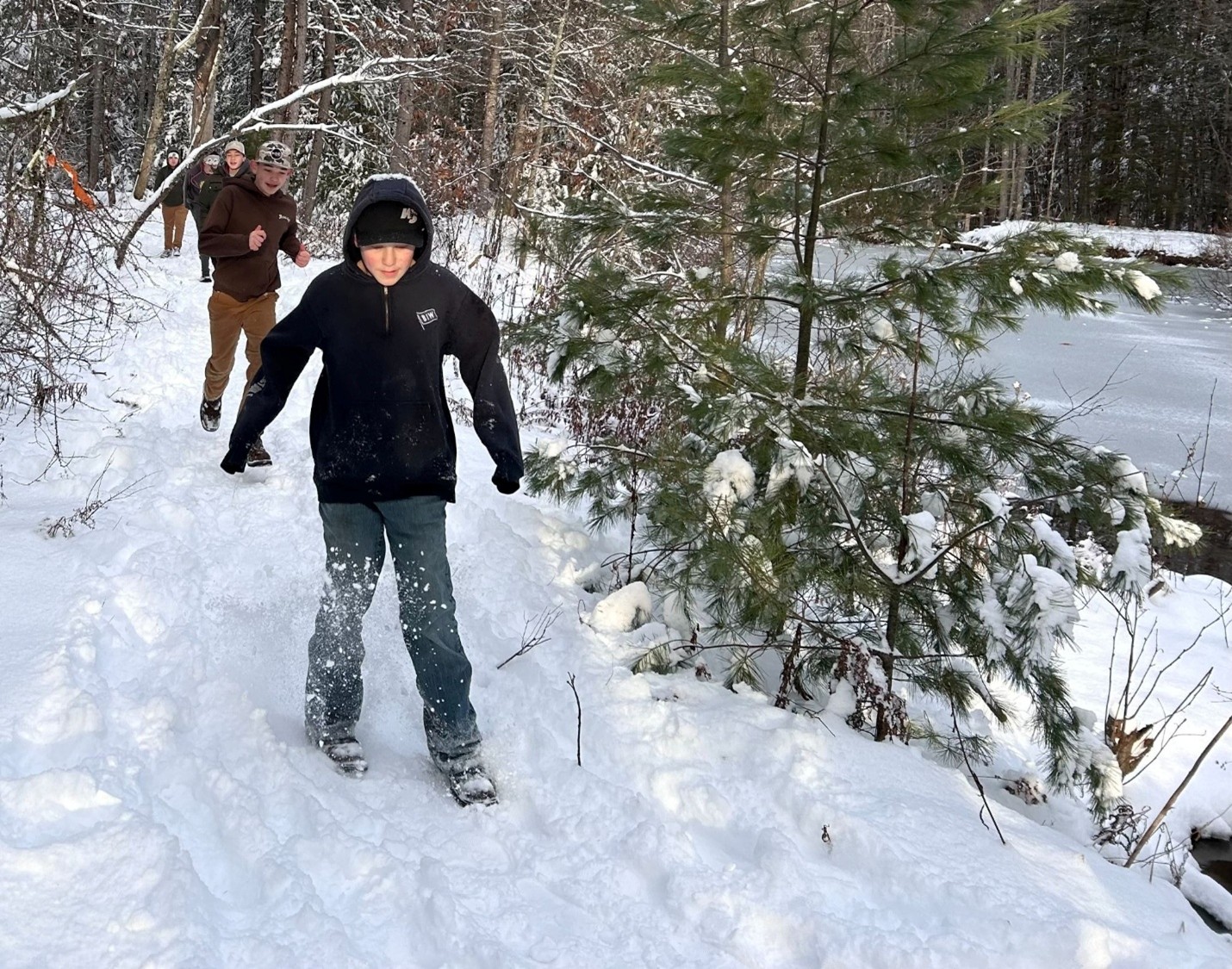
Each day follows a consistent but flexible structure. After the morning’s “moment of chill,” students and staff head outside for their daily pond loop walk, regardless of the weather. The walk takes about five minutes and allows students to ground themselves in nature and connect with their classmates and teachers in a non-scripted manner.
“We go outside every day, no matter what,” Hawley said. “It’s part of who we are. Movement and fresh air help students regulate and get ready to learn.”
Sheepscot students on a pond loop walk following a fresh snow
Back in the classroom, students watch CNN 10 and generate questions about current events, which later fuel weekly review games and discussions.
From there, the day shifts into the heart of the program: project-based learning.
Learning That Feels Real
In Sheepscot, projects are not an add-on; they are the foundation of learning. Students explore rigorous academic projects through immersive, hands-on experiences that connect to real-world systems. Eighth graders are currently engaged in the “World Game,” where they design countries, manage resources, and navigate global relationships.
“You learn everything here, just in a different way,” one student shared. “It actually makes sense because you’re doing it. I feel smart in here.”
The seventh graders are currently working on a “Shark Tank”-style challenge to develop solutions to reduce plastic waste and address climate impacts. Each group approaches the problem differently, highlighting creativity, student voice, and healthy debate among students.
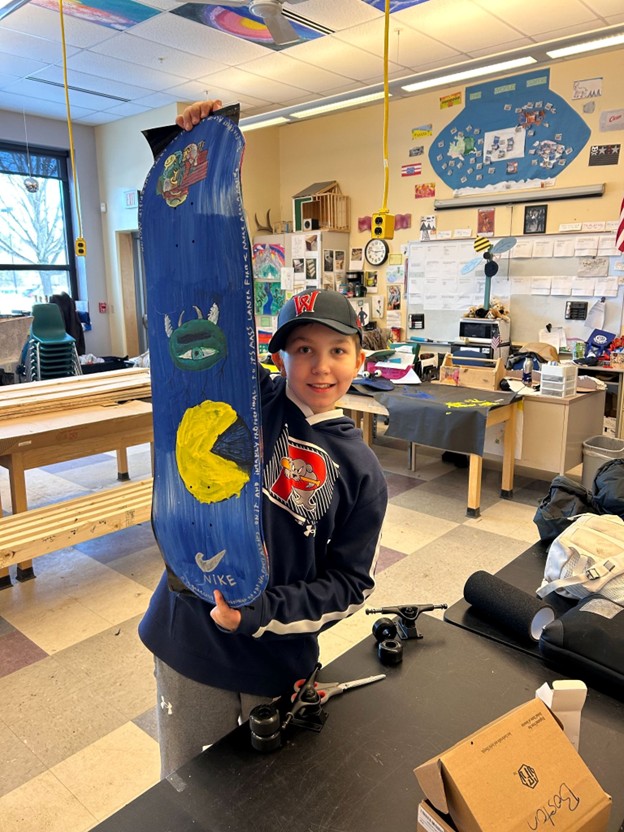
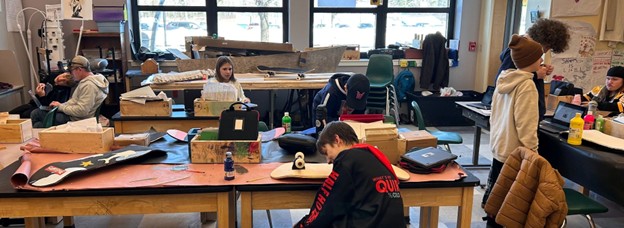
Other projects have included building skateboards to demonstrate Newton’s Laws of Motion and designing interdisciplinary units based on student interest, such as an exploration of ancient Pompeii.
Sheepscot students designing and building skateboards
“We give students choice through project menus,” Sheffler explained. “That ownership is what drives investment.”
An example of a project menu exploring the amendments to the US Constitution
Building Skills for Life
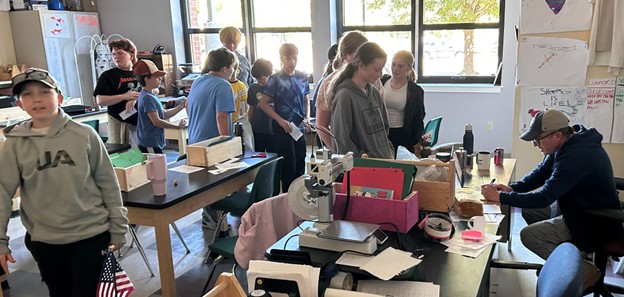
Beyond academics, the program integrates real-world skills into daily learning. Students participate in systems that simulate adult responsibilities, including personal finance and economic decision-making.
They earn paychecks based on attendance, work habits, and grades, allowing students to earn raises based on these behaviors. Students also learn about the stock market with investment profiles, credit scores, and stock market simulations. Students will soon experience a “bank run” that will wipe out their hard-earned savings.
A sample paycheck and Sheepscot students in line to deposit their weekly paychecks
“They feel the impact of their decisions, and that sticks with them,” Sheffler said.
Hawley and Sheffler intentionally include members of their school community in their learning. The Mt. Ararat Middle School office staff are invested members in the personal finance unit and have stock profiles. This approach teaches students that what they are learning in Sheepscot goes beyond their classroom walls.
Student Voice and Civic Engagement
Sheepscot students also engage deeply with civics and democratic processes. Through mock trials, elections, and student-led discussions, students explore topics like the presidency and Supreme Court.
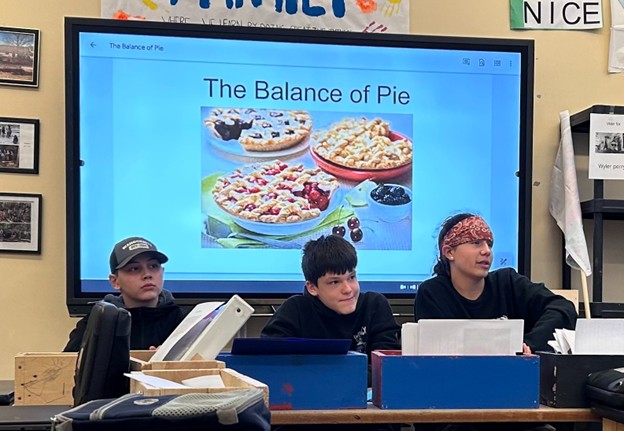
In one activity, Sheepscot students simulated the three branches of the U.S. government. They elected a president who wanted the class to bake apple pies. The rest of the team served as a divided legislature trying to pass a bill for either blueberry or cherry pie. Three students were confirmed by the legislature to serve on the Supreme Court to uphold the rules of the process. By using structured argument and legislative-style processes, the bill for blueberry pie was vetoed, and the team enjoyed baking and eating apple pie.
“It sounds simple, but they’re learning how to think, debate, and listen,” Sheffler noted. “Those are lifelong skills.”
Sheepscot students participating in a mock Supreme Court confirmation hearing
Pathways Into the Sheepscot Team
Enrollment in the Sheepscot Team is intentional and collaborative, with a clear, structured process. First, sixth-grade teachers recommend students for the Sheepscot Team. Next, the principal and counseling team review these recommendations with Hawley and Sheffler. They prioritize students based on need, school engagement, and overall fit for the program. They also work to ensure students will be positive and productive contributors.
Selected students then become candidates. Hawley contacts families to explain the program to them and obtain permission to move forward with the process. This step helps to establish an early foundation for positive relationships. Hawley and Sheffler then interview candidates to assess readiness for a project-based model of teaching and learning. Finally, candidates participate in a “Sheepscot experience.” This allows both staff and students to reflect on whether the program is the right fit for seventh grade.
“This only works if students want to be here,” Hawley emphasized. “It’s an opportunity, not a placement.”
Accepted students receive a “golden ticket” invitation. Hawley and Sheffler say they want students to know that it is a privilege to be part of this community.
An important piece to the enrollment process is how the Sheepscot Team begins building connections with prospective students early. All sixth graders participate in rotating five-week enrichment blocks that occur throughout the school year, introducing students to project-based learning and the program’s routines. Students work in teams and build team identities by creating team names, mottos, and handshakes. Then, they take on various challenges.
These enrichment blocks strengthen the Sheepscot Team’s connection with the school by including all students. They also allow Hawley and Sheffler to start to build relationships with future Sheepscot Team students, ensuring that the students entering the program are a good fit.
Connected to Community
While the program offers a distinct learning environment, it is not isolated. Students participate in mainstream classes and school activities, and staff across the school community engage with Sheepscot projects.
Families stay connected through regular updates and project sharing, and a new alumni initiative invites former students back to mentor and support current participants.
“We’re not an island,” Sheffler said. “This is part of a larger community that believes in these kids.”
A Model That’s Working
With a growing waitlist and strong student outcomes, the Sheepscot Team stands as a powerful example of what’s possible when education is designed around relationships, relevance, and student voice. Students, staff, and families all have stories of transformation, new friendships, and moments when a student who once dreaded school suddenly can’t wait to show up.
“There’s a sense of joy here,” Hawley reflected. “Students feel like they belong, and that makes all the difference.”
As Maine schools continue to explore innovative approaches to learning, programs like Sheepscot offer a compelling reminder: When students are engaged, supported, and seen, they thrive.
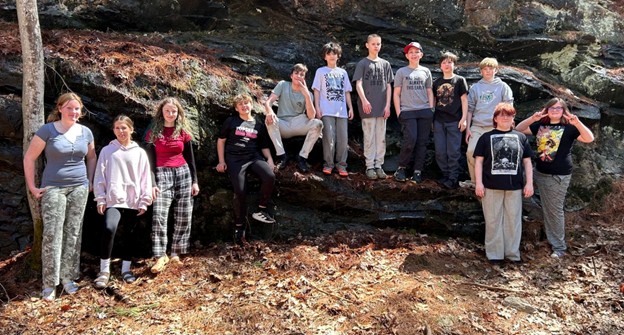
Sheepscot 7th graders
This story was written in collaboration with Mt. Ararat Middle School in MSAD 75 as part of an ongoing series to highlight alternative education programs across Maine. For more information about alternative education, please visit the Maine DOE Alternative Education webpage. To submit a good news story to the Maine DOE, please fill out the good news submission form.